


WWW.THECOLLECTOR.COM
How Christmas Cards Came to Be (From Henry Cole to Norman Rockwell)
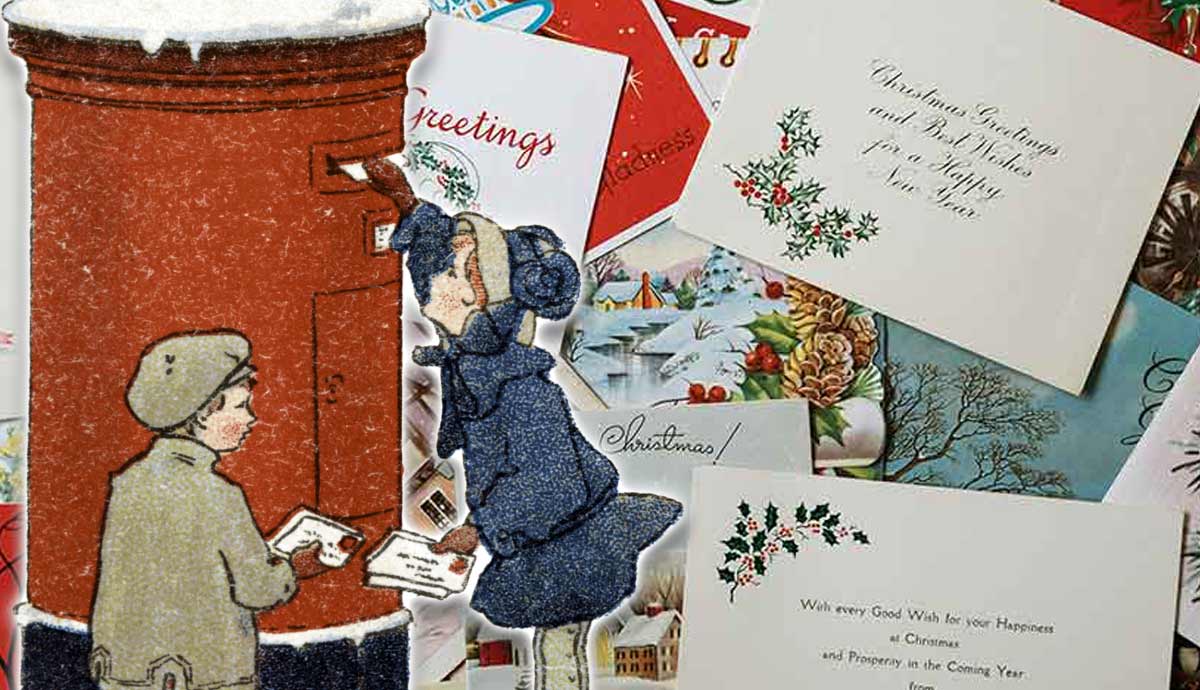
The worlds first commercially produced Christmas card was designed by John Callcott Horsley for Henry Cole in 1843. But thats only the tip of the iceberg when it comes to the origin of the humble Christmas card. Read on to find out how one whimsical idea transformed into one of the most singular traditions in the history of civilization.The First Card for ChristmasChristmas card, designed by John Callcott Horsley for Henry Cole in 1843. Source: Wikimedia CommonsThe very first commercial Christmas card was sent in 1843 by the future founding director of the Victoria and Albert Museum in London, Sir Henry Cole. A busy civil servant accustomed to sending lengthy letters with holiday greetings within, Henry Cole commissioned the artist John Callcott Horsley to design a jolly image with a festive greeting, leaving just enough space for Cole to simply sign his name.Henry Cole wrote of the event in his diary on December 17, 1843:In the evening, Horsley came & brought his design for Christmas Cards.Horsleys card was designed in a triptych style, with the centerpiece depicting three generations of the Cole family around a large wooden table, raising a toast to the receiver. An eye-catching pink banner drapes below them, with the message A MERRY CHRISTMAS AND A HAPPY NEW YEAR TO YOU. Either side of the joyful image are black and white sketches capturing scenes of acts of giving: feeding the hungry and clothing the naked.Cole was delighted with the finished piece and commissioned a printer to transfer the design onto 1,000 cards that could be personalized on the back with a handwritten note. Cole used as many as he needed and then offered the rest for sale at a shilling per card. This was an expensive purchase at the time. He advertised the sale in the Athenaeum paper with the words:Just published. A Christmas Congratulation Card: or picture emblematical of Old English Festivity to Perpetuate kind recollections between Dear Friends.The commercialization of Christmas had begun.Home-Made CardsA 1916 hand-sewn Christmas Card. Source: Time and Tide MuseumEarly Christmas cards were made by an expensive production line. A printer would produce the image on a piece of card no bigger than a business card by todays standards. They would be printed in black and white and then colored in by hand. Valentines cards were already an established trade, so the introduction of the Christmas card marked an expansion in business for card printers.After the arrival of Coles first Christmas card, the trend caught on. For a time, hand-painted cards were made inexpensively at home, in place of the more extravagant commercial cards. But when the printing press developed in the 1860s, cheaper printing allowed for more complex and varied designs.Two major developments propelled the Christmas card business:The rotary press enabled high-speed, high-volume, and consistent production. The gravure presses introduced continuous rolls of paper rather than individual sheets, which meant continuous printing and increased production rates.Adoption of stereotype plates. These were invented in the 18th century, but became readily available throughout the 19th century. The primary benefit was in the speed of delivery.With these improvements, Christmas cardsand greeting cards in generalwere given a lease of life. What were once niche and expensive novelties turned quickly into affordable, mass-produced items. Before long, elaborate and colorful cards flooded the market. These were made using Chromolithographya method for creating vibrant prints with separate plates for each color.Thus, the printing press removed the necessity for hand-coloring, which had previously contributed to the high cost of a Christmas card. Further, the cheapest cards were sold in multi-packs for pennies and were popular among the working classes. This new accessibility across class divides meant that by the 1870s, the practice of sending cards was cemented in British Christmas culture.Father of Christmas CardsA Louis Prang Christmas card, 1884. Source: Henry Ford MuseumIt took several decades for the Christmas card to make its way to other countries, but once it did, there was no looking back.Louis Prang, a German printer living in Boston, owned a print shop that specialized in chromolithographed artist prints. In the mid-1870s, Prang began creating small Christmas notelets for the American market. Prang already produced business cards, so his Christmas cards werent a huge step away from his status quo. His first design featured a simple painted flower with the message Merry Christmas in sloping font.From here, the first generation of American Christmas cards was conceived. Traditional nativity scenes, the baby Jesus, or Cole-like depictions of family gatherings, cropped up in stores in every major city. Prang pioneered variety, with quirky images and fun rhymes. One card depicted a traveling band of frogs, armed with musical instruments. The message reads, O Children, join our merry band and carry a banner for the good of the land. A jolly time just to remember that Christmas comes on the 25th of December.A print in the London Illustrated News pokes fun at the popularity of Christmas cards, 1884. Source: Postal MuseumWith this, people began collecting Christmas cards in the same way that coin or stamp collecting would take off. By 1880, Louis Prangs business was selling nearly five million holiday cards per annum. In the same year, Prang established Christmas card competitions, wherein the public could submit their designs for print. This furthered the popularity of the practice.Prang gathered notable artists to judge the competition and secured an exhibition at the American Art Gallery in New York for the winner. The prize money totalled $2,000 for the top designs, and there were over 800 entries. Prang was savvy and reserved the right to produce the images on his Christmas cards free of royalties.The competition was a great success, and in 1881, Prang organized a second contest. This time, there were 1,500 entrants.Prang would become known as the father of the American Christmas card. But, as is always the way, bigger fish were entering the pondNear and FarChildren posting Christmas cards, Alexander Baird and Son Limited, early 20th century. Source: Postal MuseumPrangs innovations made the Christmas card accessible for Americans. By 1915, the book-style card was introduced by a company that would become inextricable with the modern greeting card, and the book style became the standard format almost instantly.In 1915, Joyce Hall published a holiday card from his Kansas City postcard printing company, the Hall Brothers. The cards were folded in the middle and posted inside a protective envelope.Hall Brothers became Hallmark, and commissioned work from artists such as Salvador Dali and, most notably, Norman Rockwell, whose iconic and sentimental images of Santa, elves, snow, and Christmas trees became synonymous with not only Christmas cards, but the season itself.Rockwell designed a series of cards for Hallmark, which are still regularly reprinted. However, Hallmarks most popular Christmas cards often depict licensed characters such as Snoopy or traditional biblical scenes. One of the most popular depicts three cherubs, heads bowed in prayer. The message reads: God bless you, keep you and love youat Christmastime and always. The card remains a staple in the Hallmark yearly output.By the early 20th century, Hallmark had helped turn the Christmas card into a reliable, repeatable commercial product for a mass consumer market. Cards were now affordable, widely distributed, and designed to be displayed.Design for LifeChristmas Cards, by Annie Spratt. Source: UnsplashBack in Britain, the first royal Christmas card was sent in 1914 during World War I and included a simple message of goodwill to British and Allied troops and their families. Queen Elizabeth II and Prince Philip popularized the photographic Christmas card through the Royal Households annual greeting card, which often features a family portrait. These images are widely reproduced by the press each December, reinforcing the cards role as a public-facing symbol of continuity and tradition. Each year, King Charles sends around 750,000 Christmas cards across the Commonwealth.But the digital age is reducing the popularity of the Christmas Card tradition. Email, messaging apps, and social media now offer faster and cheaper ways to send seasonal greetings, often replacing the handwritten note and stamped envelope. Six in ten adults are receiving fewer Christmas cards, and 75% of them arent bothered about it. Rising stamp costs have contributed to a decline in sales, with many feeling that a more instant connectiona text or callis substitution enough. Regardless, Americans continue to send roughly two billion Christmas cards each year. And in Britain, the annual greeting card awardsThe Henrieskeep Sir Henry Coles legacy alive.
0 Комментарии
0 Поделились
22 Просмотры

 English
 Arabic
 French
 Spanish
 Portuguese
 Deutsch
 Turkish
 Dutch
Dutch
 Italiano
 Romaian
 Portuguese (Brazil)
 Greek
Greek