


WWW.THECOLLECTOR.COM
Did Mozarts Marriage of Figaro Predict the French Revolution?
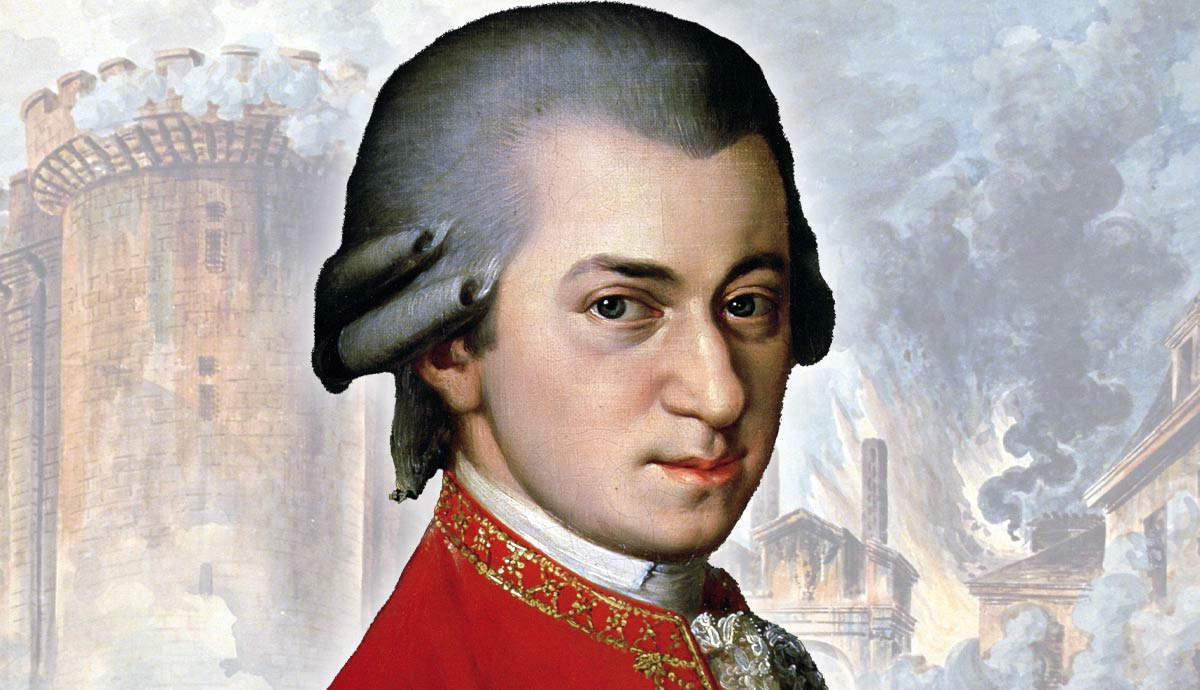
In the 18th century, the Austrian newspaper Wiener Realzeitung poetically declared, What is not allowed to be spoken in our time is sung. The statement certainly applies to one of Mozarts most famous operas: Le nozze di Figaro (The Marriage of Figaro).Indeed, the story of the clever barber Figaro, staged for the first time in 1786, perfectly embodied the spirit of the times. In the years leading to the French Revolution, the lower classes grew increasingly dissatisfied with the status quo, calling for more political and civil rights. In this sense, Figaros successful battle of wit against his master seemed to foreshadow the imminent revolt against the existing social and political order in Europe. For this reason, The Marriage of Figaro is often referred to as the embodiment of the French Revolution.A Revolutionary PlayDrawing of a costume for the character of Figaro in Le Mariage de Figaro by Beaumarchais. Source: Gallica, Bibliothque nationale de FranceIn 1783, Austrian composer Wolfgang Amadeus Mozart was looking for a subject for a new opera, hoping to repeat the success enjoyed the previous year by The Abduction from the Seraglio. After a couple of failed attempts, he finally decided to write an opera based on Beaumarchais irreverent play Le Mariage de Figaro (The Marriage of Figaro). The comedy was the sequel to Le Barbier de Sville (The Barber of Seville). In 1782, Italian composer Giovanni Paisiello had already turned Beaumarchais first chapter of the Figaro Saga into a highly successful opera.Portrait of Wolfgang Amadeus Mozart by Barbara Krafft, 1819. Source: The Prague PostWritten around 1778, The Marriage of Figaro quickly gained notoriety because of his explicit attack against the aristocracy and its privileges. The French censors immediately prohibited public performances of the play. However, countless illicit copies of the work began to circulate throughout Europe. In 1784, when Beaumarchais was finally free to stage his Marriage of Figaro, the story of the clever barber was already a hit. The social satire and political message of the play even caused a riot during its first performance in Paris.The manuscript of Le Mariage de Figaro. Source: Bibliothque nationale de FranceWhen Beaumarchais began writing his second comedy revolving around Figaro, the English colonies in North America had just set in motion their rebellion against the King of England, demanding political independence and their right to choose their own government. From the early stages of the American Revolution, the French playwright sided with the American rebels. He even supplied them with arms bought with his personal funds. Beaumarchais also advocated for France to support the American colonies. In 1775, the author suggested creating a private trading company through which the French government could channel aid overseas.Figaros struggle of wits against his master, the Count of Almaviva, echoed Beaumarchais life, full of intrigues and adventures. The son of a watchmaker, he became a member of the French aristocracy through marriage. Before venting his frustration with the upper classes on the stage, Beaumarchais was already a known advocate for social justice and equality. In 1773, he ridiculed the French elites and exposed government corruption in a series of pamphlets written during a lawsuit against a magistrate. No writer in the eighteenth century protested more than he did, declared Frdric Grendel in his Beaumarchais: The Man Who Was Figaro.The Revolution Already in ActionDrawing of a scene in Act IV of Le Mariage de Figaro. Source: The Metropolitan Museum of Art, New YorkThe plot of The Marriage of Figaro revolves around the antagonism between Figaro and his master, the despotic Count of Almaviva. In the first chapter of the saga, Figaro, a witty barber living in Seville, helps the young aristocrat win the affection of Rosina. Some years into their marriage, however, the former romantic hero has no qualms about cheating his wife. Indeed, he is determined to seduce Suzanne, Figaros fianc and the countess maid. Upon learning of the counts nefarious intentions, the barber relies on his cunning and resourcefulness to bet his master in an entertaining game of wit that inevitably ends with the defeat of the aristocrat.Figaro was not the first servant to challenge his master on stage. The character of the crafty valet was a staple of comedies. His first appearance dates back to Ancient Rome, where Plautus peppered his plays with slaves who often defied their masters. In Beaumarchais plays, however, this character developed a clearly defined class consciousness his predecessors lacked. The defiance of Figaro against the corrupt Count Almaviva turned into an open attack against the existing social hierarchies.The political message of Beaumarchais comedy is evident in the famous monologue pronounced by Figaro in Act 5, Scene 3:Because youre a nobleman you think youre a great genius. Nobility, fortune, rank, status: so much to glory in. But what did you do to get where you are? You took the trouble to be born, and thats all.Given the direct condemnation of aristocratic privileges, it is unsurprising that Napoleon Bonaparte would later describe The Marriage of Figaro as the revolution already in action.Two Irreverent Artists: Mozart and Lorenzo Da PonteWolfgang Amadeus Mozart. Source: Dallas Symphony OrchestraUnlike Beaumarchais, Mozart was never actively involved in politics. While it would be incorrect to describe the Austrian composer as a revolutionary, he was undoubtedly shaped by the idea of the Enlightenment. A gifted musician, Mozart was also an acute observer of the social and cultural landscape.In 1791, when the French Revolution was already well underway, he echoed Figaros rejection of the idea of social status as a reflection of personal worth: It is the heart [alone] that confers the patent of nobility on a manalthough I am no count, I surely have more honor within me than many a count.Mozarts aversion to social injustices also stemmed from his personal experience. As a musician, he relied on the benevolence of the aristocrats and the court to earn his income. While Mozarts genius ensured him a considerable level of success, the fickleness of his patrons made financial security almost impossible. In particular, the composer loathed the time spent in the service of Archbishop Colloredo. Besides the lack of creative freedom, young Mozart resented being treated as a household servant. I didnt know that I was a valet de chambre, recalled the musician in a letter to his father, Leopold, and that broke my neck.After his death, the uneasiness of the Austrian composer to tailor his works to meet the tastes of the fickle musical scenes gave rise to the image of Mozart as a rebellious spirit.Portrait of Lorenzo Da Ponte. Source: Columbia University Department of MusicIn 1783, at the court of Joseph II, the irreverent prodigy met another artist who shared his temperament: the Italian poet Lorenzo Da Ponte. Born Emanuele Conegliano in the Republic of Venice, he became Lorenzo Da Ponte after his Jewish family converted to Catholicism. Following a common custom, young Emanuele was named after the minister officiating the baptism.While his parents urged him to become a priest, Lorenzo Da Ponte soon grew restless with religious life. As a result, he moved to Venice, where he spent his time between gambling and pursuing affairs with several women. His freethinking and libertine lifestyle eventually led to his expulsion from the city. Da Ponte spent the last period of his adventurous life in New York, where he taught Italian literature at Columbia College, now Columbia University.Figaro: A Revolutionary BarberA piano transcription from The Marriage of Figaro. Source: National Library of AustraliaWhen Mozart and Da Ponte met in Vienna, the former priest was busy writing a libretto for Antonio Salieri, Mozarts biggest rival at the Viennese court. He has promised after that to write a new one for me, reported the composer to his father, but who knows whether he will be able to keep his word as you are aware these Italia gentlemen are very charming to your face. Despite Mozarts initial misgivings, he and Da Ponte soon embarked on a fruitful collaboration.As Mozart planned to showcase his talent with Italian operas, the operatic genre in vogue at the time in Vienna, he asked Da Ponte to turn Beaumarchais hit into a libretto. At the time, however, Emperor Joseph II had banned the revolutionary play. To avoid censorship, Da Ponte had to cut the most controversial scenes. I have omitted and shortened anything that could offend the sensibility and decency of a spectacle at which His Sovereign Majesty presides, assured the poet. Ultimately, the emperor decided to allow the opera to be performed in the courts theater. His ongoing conflict with the aristocracy on taxation might have influenced his final verdict.A scene from The Marriage of Figaro performed at the Metropolitan Opera. Source: Metropolitan Opera, New YorkWhile the changes introduced by Da Ponte toned somewhat down the political message of the play, Mozarts The Marriage of Figaro was no less critical of class privileges than the original piece. The idea of setting the action in a modern setting was also novel in the operatic world. Instead of telling the stories of mythological heroes or ancient gods and goddesses, The Marriage of Figaro revolved around the feelings and struggles of household servants.Meaningful of censorship, Da Ponte did not include Figaros famous monologue in his libretto. However, his barber did not lose his sarcasm and defiance against his master. Se vuol ballare, Signor Contino, il chitarrino le suoner (If, my dear Count, you feel like dancing, its I wholl call the tune), sings Figaro upon learning of the counts plan to seduce Susanna, his fianc.The revolutionary quality of the opera was also subtly conveyed by Mozarts musical score. Far from relegating Figaro and the other servants to the role of comic relief, the melodies conveyed their feelings and inner turmoils, emphasizing their nobility of spirit and humanity.In the end, Susanna, disguised as the countess, manages to expose the counts infidelity and lustful nature. In a poignant scene, the aristocrat begs his wife for forgiveness on his knees in front of all his servants. Contessa, perdono (Countess, forgive me) sings the humiliated count.The Marriage of Figaro & The End of the Ancien RegimeA drawing depicting the three estates of France: Clergy, Nobility, and Commoners. Source: Library of CongressPerformed just a few years before the siege of the Bastille in Paris, The Marriage of Figaro seemed to foreshadow the imminent social and political upheaval that would end the Ancien Regime. As a result, the opera is often described as the embodiment of the French Revolution.After Mozarts early death, the lack of autobiographical accounts led to the circulation of exaggerated stories and dubious theories that turned him into an almost unearthly figure. For example, in Mozart and Salieri, the Russian author Pushkin described him as an immortal genius inside a buffoons, an idle hooligans, skull.Contrary to these dubious theories, Mozart was deeply immersed in the cultural scene of his times. In particular, as a child of the Enlightenment, he shared the philosophers ideas regarding equality, freedom, and the power of human reason.A cahier de dolances (list of grievances) compiled before the Estates General in 1789. Source: University of OregonThe Marriage of Figaro, staged as French society was on the brink of revolution, perfectly reflected the ongoing cultural and social shift in Europe, with the middle classes demanding the abolishment of the privileges enjoyed by the elite.What is the Third Estate? wrote Emmanuel-Joseph Sieys in The Third Estate, his famous 1789 pamphlet, Everything. What has it been until now in the political order? Nothing. What does it want to be? Something. Against the resistance of the aristocracy, argued Sieys, the sole hope of the new social forces lies in its own intelligence and courage. Wits and inner resourcefulness were also the only effective weapons of Figaro and his fianc in the opera, conscious of their worth and unwilling to accept the counts despotic power.Prise de la Bastille (Storming of the Bastille) by Jean-Pierre Houel. Source: Cincinnati EnquirerIn 1787, Don Giovanni, the second opera born from the collaboration between Mozart and Da Ponte, reminded the contemporary audience of the changes simmering below the surface. Night and day I slave for one who does not appreciate it. I put up with wind and rain, eat badly, never sleep, I want to be a gentleman and give up my servitude, sang Leporello in the opening scene. Two years later, his demands would be shared by the crowd storming the Bastille, thus signaling the beginning of the bloody French Revolution and the wave of 19th-century uprisings that would follow.
0 Comentários
0 Compartilhamentos
17 Visualizações

 English
 Arabic
 French
 Spanish
 Portuguese
 Deutsch
 Turkish
 Dutch
Dutch
 Italiano
 Russian
 Romaian
 Greek
Greek