


WWW.THECOLLECTOR.COM
9 Interesting Facts About Washington State History
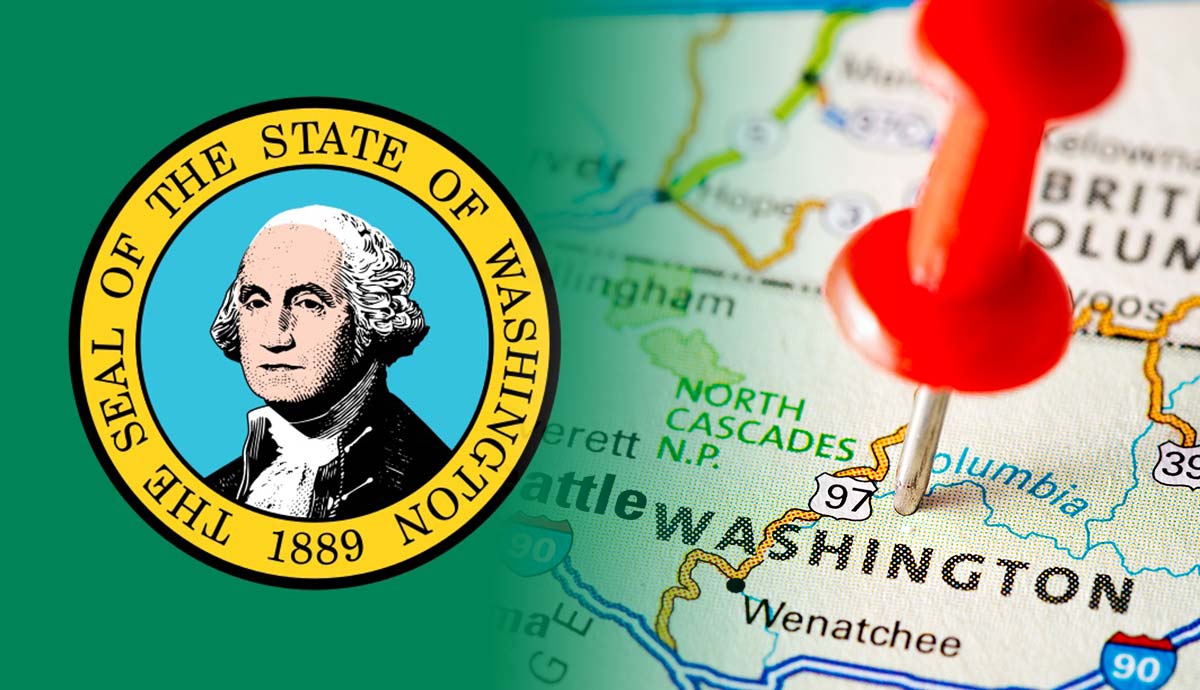
From prehistoric times to becoming a territory, a state, and beyond, Washington State has a long story to tell. The 42nd state of the United States is a beautiful and storied land, replete with national splendor, human drama, and history-making moments.Here are 9 interesting facts about Washington States history.1. Washington State Is Named After the American PresidentGeorge Washington, artist and publisher unknown, ca. 1900. Source: Library of CongressOne of the most well-known facts about Washington State is that it was named after the first president of the United States.An act passed by the US Congress created Washington Territory in 1853. This name, however, was not what was originally intended. The territory was to be named Columbia after the Columbia River and the District of Columbia. Kentucky Representative Richard H. Stanton submitted a proposal to have the territorys name reflect the nations first president instead.Decades later, when Washington became an official state, renaming proposals were put forward, citing confusion between the territory/state and the capital of the US, Washington DC. None of these proposals garnered much support. So, the name of Washington stuck when it transitioned to statehood on November 11, 1889.2. Cataclysmic FloodsThe bleak landscape of the Scablands. Source: Bruce Bjornstad/International Union of Geological Sciences (IUGS)Evidence of human habitation in Washington dates back to about 13,000 years ago, around the end of the Missoula floods. During the last Ice Age, present-day Washington State pressed up against the Cordilleran Ice Sheet. For several thousand years, the ice dam on the Clark Fork River ruptured and reformed, causing a series of massive floods to sweep through the eastern part of Washington.These floods carved their memory into the geology of the state. The result of floods of unprecedented proportions, the Channeled Scablands, a barren area scoured by erosion, occupies the southeastern portion of Washington State.The Scablands are a fascinating result of natural processes and provide valuable insight into geologic history and processes of erosion. In fact, the debate over how the Scablands were formed lasted four decades!The Scablands are also a useful analog for geologists studying the channeling processes that occurred on Mars when it had water.3. A Land of Native DiversityA Yakama warrior, c. 1903. Image from The crime against the Yakimas, Lucullus Virgil McWhorter, 1860-1944. Source: Wikimedia CommonsBefore the arrival of European Americans, the land that now encompasses Washington State is thought to have been the home of 125 native tribes speaking a total of 50 languages and dialects. Despite the colonial conquest and the destruction of the native way of life, the diversity is still reflected in the demographics of Washington.There are 29 federally recognized tribes, and of all the states, Washington has the fifth-highest number of reservations and tribal areas. Three other tribes have recognition pending. Another four are in the process of attempting to gain recognition.There are 20 reservations in Washington, with the largest being home to the Yakama Nation. Today, there are over 140,000 Native Americans living in Washington.4. A Target of Several Colonial PowersNorth American borders proposed by the Spanish near the end of the American Revolutionary War. Source: Maps on the WebThe Spanish were the first Europeans to make claims on the area that is now Washington State. Their claims of exclusivity ended in 1790 when they signed a treaty with the British, which opened the area up to explorers from other nations.In the 19th century, the British and the Americans established joint occupancy of the lands in the west but had boundary disagreements for decades. On the other hand, Spain ceded its claim on everything north of the 42nd Parallel. Settlers representing British and American interests made inroads into the area, encountering many challenges. Then, Britain abandoned its claim to anything south of the 49th Parallel after the Treaty of Oregon in 1846.The treaty, however, did not cover the San Juan Islands in the Strait of Georgia. After a bloodless war in 1859, the British Empire and the United States agreed on joint military occupation. Wilhelm I, Kaiser of the German Empire, mediated the dispute in 1872. A commission then ruled in favor of American ownership.The early 19th century also saw Russian claims to part of the Pacific Northwest coast, but its settlements were costly to maintain. The Spanish and the Russians ceded their claims to the area of what is now Washington State in treaties signed with the United States in 1819 and 1824, respectively.5. The Founding of SeattleThe city of Seattle with Mount Rainier visible in the background. Source: pxhere.comThe city of Seattle is the largest city by population and land area in Washington State. It has a population of approximately 750,000 residents. It is located in Puget Sound on the coast. Although Seattle was founded in 1851, the history of settlement in the area goes back to at least the end of the last glacial period, between 8,000 and 10,000 years ago.When European Americans settled in the area, it was home to many Native American villages. Relations between the two entities were anything but smooth. There were deadly attacks by settlers against Native Americans and vice versa. A group of pioneers, the Denny Party, was responsible for the establishment of Seattle. They had traveled over the Oregon Trail from Illinois to Portland before moving north and founding their settlement.The early years of Seattle were characterized by the timber industry. Vast swathes of climax forest were cleared to provide wood, especially for San Francisco, which was in constant need.6. Seattle FireThe aftermath of the Great Seattle Fire on June 6-7, 1889. Source: Wikimedia CommonsOn June 6, 1889, an intense fire ripped through the central business district of Seattle. The blaze started at 2:45 in the afternoon and lasted until the small hours of the morning of June 7.The fire was started accidentally by John Back. As he was working in the Clairmont and Company cabinet shop, he overheated a glue pot, which boiled over and ignited the wood chips and turpentine on the floor. The fire spread quickly, burning down an entire block and setting fire to a liquor store which exploded. The alcohol fed the flames, and the fire spread even faster.Seattles infrastructure was incapable of handling the blaze. By the time the fire died out, around 3:00 in the morning, 25 city blocks had been razed.Miraculously, there were no deaths recorded, although there were reports that a young boy named James Goin had perished in the flames. There are no reliable records from the time to corroborate this claim, however.The fire prompted many changes to be made in Seattle. A professional fire department was established, replacing the previous volunteer organization. Additionally, far more buildings were built out of bricks, replacing the wooden structures that had fueled the devastating conflagration.7. Washington State Made a Huge Contribution to the War Effort in WWIIA Boeing B-29 Superfortress at the Museum of Flight in Seattle. Source: Wikimedia CommonsWashington State made huge contributions to the US efforts during World War II. One of the nations big names in the airplane business, Boeing, was founded in Seattle in 1916. During the Second World War, it produced huge quantities of heavy bombers that were critical to the victory over the Axis powers. Although the company is now located in Crystal City, Virginia, there are still more Boeing employees in Washington State than anywhere else.With its well-built port infrastructure along the coast, Washingtons cities also provided invaluable resources in manufacturing ships for the war effort. Seattle, Bremerton, Tacoma, and Vancouver* all lent their port facilities to this enterprise.*There are two cities named Vancouver. The larger one is located in British Columbia, Canada, while Vancouver, Washington, founded in 1825, is the fourth-most populated city in Washington State.8. Volcanic DevastationThe mushroom cloud of ash and tephra caused by the eruption of Mount St. Helens on May 18, 1980, Rocky Kolberg. Source: Wikimedia CommonsOn May 18, 1980, the biggest volcanic eruption in United States history occurred when Mount St. Helens erupted. The volcano, located in the southwest of Washington State, started erupting months earlier after a series of earthquakes caused by magma flow fractured and weakened its peak.An explosive eruption caused a plume of ash and tephra to rise 80,000 feet into the atmosphere, blanketing the surrounding area and leaving death and destruction in its wake. Ash fell in eleven US states and several Canadian provinces, reducing hundreds of square miles to wasteland.Fifty-seven people died as a result of Mount St. Helens eruption. Damages were estimated to be around $1 billion (around $3.5 billion today).9. Washington State and the Birth of GrungeItems associated with the grunge band Nirvana in Experience Music Project/Science Fiction Hall of Fame, Seattle, Theresa Arzadon-Labajo/Flickr. Source: Wikimedia CommonsWashington State is well-known as the birthplace of grunge music, having produced many bands associated with the genre. Considered a hybrid between punk and metal, the style of music emerged during the mid-1980s and surged in popularity in the 1990s. Bands such as Nirvana, Green River, Sound Garden, Pearl Jam, and Alice in Chains all originated in and around the Seattle area.With the boom in its popularity, grunge spread to other parts of the United States, from California to New York. Bands from all over the world started to emulate this style, and it became a truly global phenomenon.While many of the original bands despised being labeled as grunge, the name stuck, and it continues to influence the alternative music scene to this day.Now home to almost eight million people, Washington is a state with a unique history that spans an interesting array of subjects, from massive floods to struggles for ownership to the modern music scene. It is a dynamic place filled with beautiful cultures, entrepreneurial spirit, and a rugged natural beauty.
0 Yorumlar
0 hisse senetleri
26 Views

 English
 Arabic
 French
 Spanish
 Portuguese
 Deutsch
 Dutch
Dutch
 Italiano
 Russian
 Romaian
 Portuguese (Brazil)
 Greek
Greek