


WWW.THECOLLECTOR.COM
How the United States Artillery Decided Wars and Earned the Nickname King of the Battle
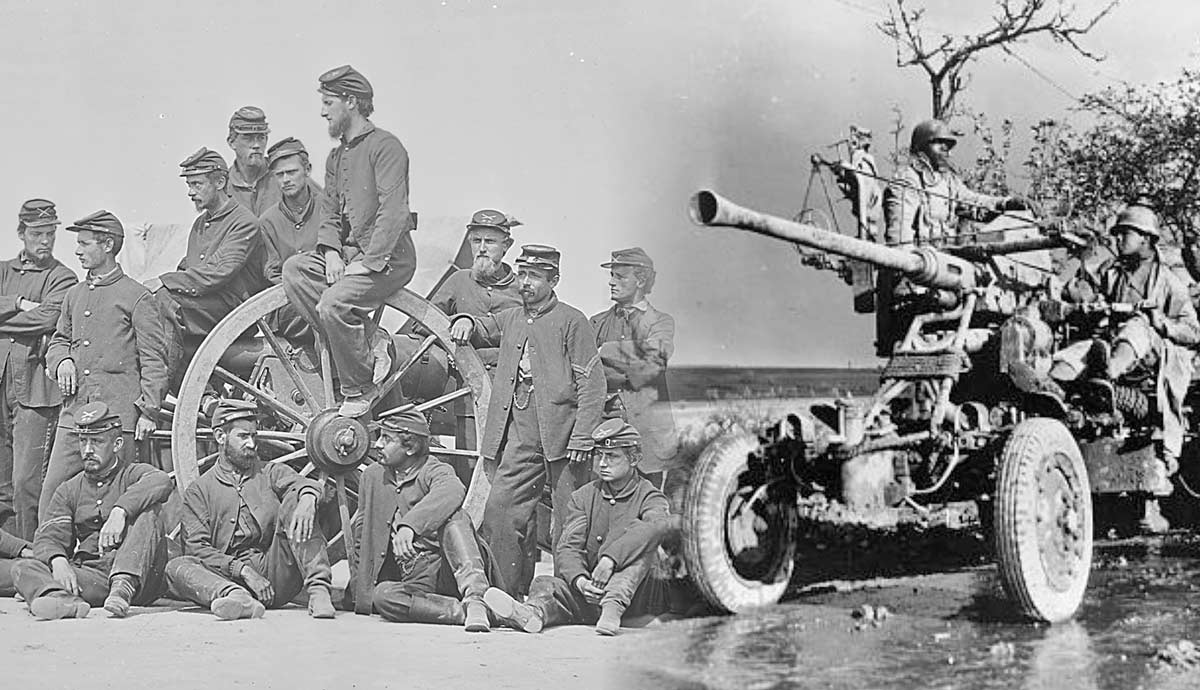
The history of the United States artillery dates from the nations founding. Playing a pivotal role in the American Revolutionary War due to figures like Henry Knox and Alexander Hamilton, artillery has played a major contribution for the United States military success over the years. Although the artillery arm is aptly named the King of Battle, indirect fire was not always an easy tactic to deploy and use, but technological advances over the years have made artillery more precise and deadly than ever before.The American Revolutionary WarHenry Knox, major general of the artillery in the American Army, John Norman, 1782. Source: Library of CongressArtillery pieces in the American Revolution, then known as bombards, were hindered by many limitations. Indeed, artillery during the American Revolutionary War was considered a direct fire asset as gun crews had to observe their targets first-hand. In the 18th century, deploying artillery was much like a chess match: emplacing heavy cannons dragged by horses and gun crews took ample time, requiring deliberate strategy on where, when, and how to deploy guns.Major considerations included timing advances or retreats alongside infantry lines and deciding what enemy units to target. If gunners targeted their British artillery counterparts, each unit risked being destroyed and allowing enemy infantry to gain precious ground. If infantry lines were targeted, however, artillery crews were vulnerable to counterfire from enemy batteries. Artillery units which chose poorly were commonly overrun by cavalry and risked having their guns being turned against their own men. As such, George Washingtons Continental Army required purposeful synchronization between battlefield commanders to maximize the effects of the wars most powerful assets.Artillery played a crucial role in the American Revolution. When Washington was besieging Boston during the winter of 1775-76, Colonel Henry Knox and his men hauled an artillery train 300 miles from Fort Ticonderoga in upstate New York to Boston, where their arrival forced the British evacuation. On Christmas night, 1776, Knox brought his guns across the icy Delaware River to attack a Hessian outpost at Trenton on Christmas night, earning promotion to general and overall artillery commander. American artillery also played a major role at the ensuing Battle of Princeton, as well as at the decisive Siege of Yorktown in 1781.War of 1812The bombardment of Fort McHenry, 1814. Source: Smithsonian InstitutionDuring the War of 1812, artillery was employed in a similar fashion to the American Revolutionary War with two major innovations. The first introduced shrapnel as a complementary blast effect in addition to traditional black powder explosions. Named after British surgeon Henry Shrapnel, this evolution caused devastating effects to human targets by spreading hot metal upon impact. The second advancement, rocket-based artillery, allowed faster rates of fire and easier maneuverability. Early rockets were notoriously inaccurate, but their psychological impact is undeniable. Rockets were frequently employed during the War of 1812, notably observed by Francis Scott Key at the Battle of Fort McHenry in 1814. Observing the rockets red glare, Keys poetry captured the essence of the eras advancements in artillery technology in what became the United States national anthem.Artillery proved crucial as both an offensive and defensive weapon during the war. Future president General William Henry Harrison, for example, exploited artillery against British and Native American troops to defend a vulnerable outpost, causing the enemy to retreat. The Battle of Plattsburgh similarly witnessed artillery fire on both land and sea, leading to an American victory and an end to fighting in the northern United States. Although America and Britain signed a treaty to end hostilities in December 1814, the news did not reach New Orleans beforeGeneral Andrew Jackson employed his guns to decisive effect against a superior British force in January 1815.The Civil WarKeystone Battery of Pennsylvania, 1861-1865. Source: Library of CongressThe American Civil War saw major advancements in field artillery technology and tactics. Most importantly, by the 19th century, cannons were rifled, meaning their barrels had metal grooves to spin the projectiles and ensure a more accurate trajectory. This innovation allowed gun crews on both sides to provide artillery fire with greater accuracy from farther distances, leading to their modern deployment as indirect fire assets.While modern artillery is guided by state-of-the-art targeting equipment, forward observers, and even unmanned aerial surveillance platforms, Civil War bombardment observation was carried out from hot air balloons, which had first been employed for such a purpose during the French Revolutionary Wars. Artillery spotters flying hundreds of feet over the battlefield communicated with artillery batteries using unique flag signal combinations, allowing gunners to target enemy formations without direct line of sight. These new capabilities encouraged the greater use of artillery during the Civil War.The Unions victory over the Confederacy was largely fueled by an unassailable advantage in the manufacture of artillery pieces. The most significant deployment of artillery during the Civil War occurred on the final day of the Battle of Gettysburg. As Confederate General Picketts infamous charge led thousands of infantrymen towards Union soldiers on Cemetery Ridge, General Meade ordered a 90-minute artillery barrage, overwhelming the enemys assault. Artillery continued to play a pivotal role in holding off waves of incoming rebel cavalry during the Battle of Palmito Ranch, the final engagement of the war before General Lees surrender at Appomattox Courthouse.World War IAmerican 155mm artillery in France, 1917-1918. Source: Library of CongressThe nature of trench warfare in World War I compelled artillery units to adopt modern techniques and strategies. Creeping fire, for instance, was introduced to guide infantry across no-mans land by maintaining a constant wall of fire just ahead of advancing friendly troops, and the tactic is still used in battle today. American commanders used telephone communication in addition to traditional target identification techniques such as aerial reconnaissance and signal flag communication. By waging artillery warfare without direct sight of the enemy, World War I was the first widespread conflict that required the integration and coordination of artillery, intelligence, infantry, communications, and aviation assets.Having entered the First World War in its latter stages, the United States achieved immediate successes through skilful artillery deployment. During the first major American offensive at Cantigny in May 1918, American troops captured crucial terrain from the Germans through indirect fire support. On its first independent operation, the US Army employed howitzer teams to help their infantry counterparts break through enemy lines with a constant barrage. This dedicated support was paramount in countering other technological advancements of the conflict including chemical weapons, tanks, and modern machine guns. From the Second Battle of the Marne to the final Allied operation, the Meuse-Argonne Offensive, the King of Battle proved paramount to the US Armys ability to conduct combined operations with its allies, and some of the artillery innovations from the era remain part of modern doctrine today.World War IIAmerican artillery troops in Belgium, 1944. Source: Library of CongressIn the two decades following World War I, the United States advanced the capabilities of its artillery by developing howitzers that could shoot further, more accurately, and with different types of munitions for particular targets. One of the most important innovations was the use of self-propelled cannons. Limbered artillery inherently represents an enticing target for the enemy, and the towed artillery of previous conflicts was difficult to maneuver and deploy to support troops in combat and withdraw from action to avoid counterfire. Although not among the common weapons of choice during World War II, American assets including the M7 Priest laid the foundation of modern self-propelled artillery that combined speed and maneuverability with firepower.On the European front, it is difficult to identify a battle involving US forces where artillery did not play a vital role in achieving victory. From the Allied invasion of Europe on D-Day to the Battle of the Bulge, defeating the Germans was only possible through operations combining artillery and aerial bombardment with infantry assaults on the ground. Artillery additionally led to Americas earliest World War II successes in North Africa including at the Battle of Kasserine Pass. The situation in the Pacific, however, was different altogether. While naval gunfire and mortars proved vital in defeating the Japanese in island warfare, landing heavy field artillery pieces was logistically challenging. Despite this fact, earlier advancements in field artillery, including the development of armor-piercing munitions and streamlined targeting procedures, enabled limited use of artillery in the Pacific.Photograph of President Harry Truman. Source: Smithsonian InstitutionUltimately, the decision to drop atomic bombs against Hiroshima and Nagasaki to prevent further bloodshed was made by President Harry Truman. Truman, a former WWI artillery officer, understood the horrors of what warfare does to soldiers on both sides. While Trumans decision remains controversial, there is no denying the effect of American artillery on the nations history. As the decades passed, American howitzers and rockets continued to see action all over the world. Namely, their persistent use in Korea, Vietnam, and during the Global War on Terrorism proves their timeless utility.By liberating the nation from British colonial rule, helping the Union defeat slavery, and supporting the Allied victory over Nazism, US artillery holds a significant place in Americas fights for justice. Just as it has done so throughout its history, modern US artillery continues to develop new technology and tactics to adapt to the constant evolution of warfare.
0 Σχόλια
0 Μοιράστηκε
42 Views

 English
 Arabic
 French
 Spanish
 Portuguese
 Deutsch
 Turkish
 Dutch
Dutch
 Italiano
 Russian
 Romaian
 Portuguese (Brazil)