


WWW.THECOLLECTOR.COM
8 Famous Populist Movements From Antiquity to the 19th Century
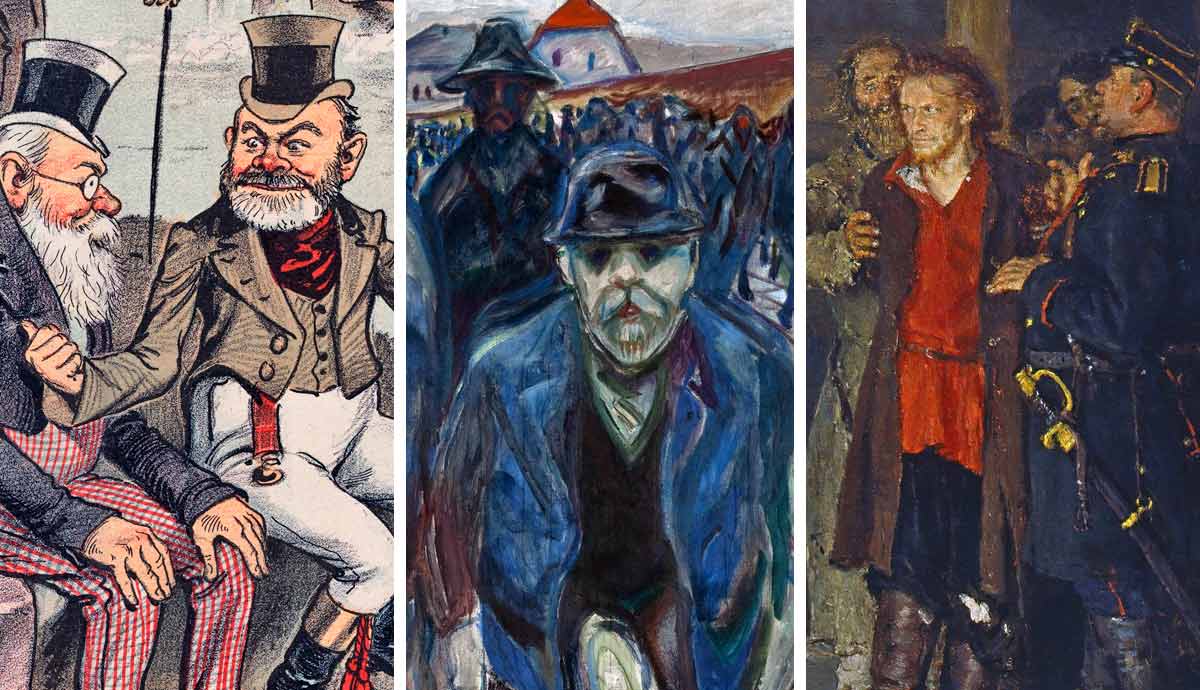
In the current political climate, populism is often mentioned in a derogatory way, usually regarding right-wing movements. However, populism can be found both on the right and left sides of the political spectrum. The core of populism is the people versus the elite narrative. Throughout history, it has not been uncommon for politicians and political leaders to use populist strategies to gain votes or power.1. Gracchi Reforms: A Populist Movement in Ancient RomeThe Gracchi, by Jean-Baptiste Claude Eugene Guillaume, 1822-1905. Source: Wikimedia CommonsIn the late Roman Republic, populist ideas began to appear with the Gracchi Reforms. The reforms originated from the work of Tiberius Sempronius Gracchus (163-133 BCE) and his brother Gaius Sempronius Gracchus (154-121 BCE) in the 2nd century BCE.As a tribune of the plebeians, Tiberius worked to safeguard common people and seek societal improvements. The Senate soon grew concerned after seeing how many people backed his cause. A violent crowd opposed the change, and the elite murdered both him and his supporters.His brother followed the same path to tribune status but shared his unfortunate demise, too. The senatorial officials planned and executed the deaths of Gaius and his supporters when they sought social and economic equality.The death of the Gracchi brothers was a pivotal moment in ancient Roman political history because they displayed escalating conflict between upper-class rulers and the plebeians. The Senate demonstrated its refusal to surrender power by violently suppressing reforms and intensifying social conflicts. The next few decades brought additional populist leaders who destabilized the Roman Republic before it transformed into an empire.2. Hussite MovementJan Hus at the Council of Constance, by Karl Friedrich Lessing, 1842. Source: Wikimedia Commons / Stdel Museum, Frankfurt, GermanyIn medieval Bohemia, a populist movement that shaped the modern Czech Republic took form in the 15th century. The movement named itself after its leader, Jan Hus.Jan Hus studied theology and became aware of the Catholic Churchs issues early in his career. He demanded reforms and taught people to focus on God and the Bible instead of the Churchs authority. Hus believed that teaching the Holy Word in Czech would help ordinary people understand it better while also supporting financial reforms for society. Today, scholars identify Hus as the first pioneer who led the way for the Protestant Reformation. Indeed, his teachings gained increasing support from followers who joined his movement.The authorities arrested Hus and put him in prison before burning him alive for heresy in 1415. Huss followers, known as Hussites, became upset when he died, so they chose to act alone. Their long struggle, coupled with armed resistance, eventually led the Hussites to victory over the authorities who allowed them to worship in the Czech language, giving people stronger Czech national feelings.The Hussite Wars (1419-1434) transformed Bohemian society while opposing the Catholic Churchs power after Hus was executed. Internal Hussite disagreements did not prevent the movement from developing new military tactics, which helped it resist multiple crusades against it. Their actions established the basis for Czech nationalism and religious transformation throughout European territories.3. The LevellersOliver Cromwell, by Samuel Cooper, based on a work from 1656. Source: Wikimedia Commons / National Portrait Gallery, LondonIn early modern England, a political movement developed that displayed clear populist features. The members of this movement, named Levellers, promoted an equal society and called for freedom of religion for all. During the English Civil Wars of 1642-1651, the Levellers appeared to protect common peoples rights and supported the parliament against the king but lost support when the Republic emerged.The Commonwealth government used force to silence the Levellers, putting them in prison and killing them. Their legacy, however, endured. Indeed, the Levellers were rather active in writing and authoring many texts concerning the improvement of society and elaborating the foundations of democracy. They also fought for social and economic justice before the Enlightenment Era, which made them pioneers in Western Europe.Although the Levellers did not achieve their original objectives, their concepts spread into subsequent British democratic movements and beyond. Their writings predicted democratic concepts that later formed the foundations of contemporary democratic systems. Their vision helped drive the wider movement for constitutional rights, motivating future generations to fight for political and social changes.4. The Jacobin MovementPortrait of James Francis Edward Stuart, by Alexis Simon Belle, circa 1712. Source: Wikimedia Commons / National Portrait Gallery, LondonThe French Revolution (1789-1799) was probably one of the most consequential moments in modern European history. Its influence also reached the rest of the world. Toward the end of the 18th century, the population sought to replace their restrictive government with a fair system that would give people decent lives. The revolution could not happen by itself; it gained traction because of revolutionary movements like the one led by the Jacobins.The Jacobins were one of the leading and most radical political groups during the revolution. In 18th-century France, the Enlightenment Era was led by prolific thinkers and authors who debated and shared their philosophical and political ideologies. A group of men who shared their ideals, spirit, and urge to change the status quo decided to form a group, the Jacobin Club.The clubs members started developing revolutionary ideas and programs based on Enlightenment ideals, asking for democratic institutions and the end of the aristocracys rule. After the fall of the monarchy in 1792, they gained more recognition and power; however, that didnt last long. The movement had inner conflicts, and because of those differences, the Jacobin Club ceased to exist in 1794.The Jacobins collapse did not erase their permanent effects on French political development. They shaped the direction of the revolution and republican evolution. Despite their breakup, the Jacobins political ideals motivated future political ideas in France and other countries.5. ChartismWorkers on their Way Home, Edvard Munch, from 1913 until 1914. Source: Wikimedia Commons / Munch Museum, OsloChartism, a British working-class movement, emerged in the 19th century. It advocated political changes, better worker rights, and improved working conditions for everyone. Chartism became a leading popular movement that championed fair treatment and economic fairness for working-class people.The movements title came from the Peoples Charter, which presented specific worker demands. The early phase of their efforts gained substantial popularity and support across society. However, government crackdowns and internal disputes caused the movements decline during the mid-19th century. Although the movement might have ended, the working class gained voting rights through new laws in 1867 and 1884.The principles of Chartism shaped various British labor movements and social reform efforts that followed. The demands of Chartism finally transformed into legislation during the subsequent decades following its initial movement in 1838. Chartism created a vital historical record establishing its importance in democratic development and worker rights protection.6. Narodniki: A Russian Populist MovementArrest of a Propagandist, by Ilya Repin, 1880-1889, 1892. Source: Wikimedia Commons / Tretyakov Gallery, MoscowBefore the Bolshevik revolution in Russia, there was a populist movement that called for reforms and a better and more equal society. It was the Narodnik Movement, a movement of emancipated people asking for equality and political rights.Narod in Russian means people, and that is what this movement represented: people fed up with the oppressive regime of Tzarist Russia. The movement received widespread support from the everyday Russian people. It was one of the first in Russia, laying the groundwork for much bigger movements and revolutions.Although the movements supporters did not achieve their goals, they managed to awaken the people and, most importantly, their dissatisfaction and rage. The Narodniks served as intellectual forefathers to both the socialist revolutionaries and the Bolsheviks. Their movement aimed to rally peasants against autocratic rule, which became fundamental to future revolutionary ideologies. The Narodniks unsuccessful attempts to create change contributed to the establishment of revolutionary movements that eventually dismantled the tsarist government.7. Populist Movement in AustraliaMembers of the Anderson Dawsons ministry leaving Government House after the swearing-in ceremony in Queensland. In 1899, Andre Dawson led the first Labor Party government in Australia. Photograph from The Queenslander, December 9, 1899. Source: Wikimedia CommonsThe most powerful populist movement in Australian history occurred towards the end of the 1800s. The movement emerged during harsh times when workers and farmers faced high unemployment, economic instability, and critical social and economic conditions.It all started with strikes and workers dissatisfaction. Farmers and workers began forming unions, which became essential to the movement. Unions fought for better working conditions and organized people to fight for their rights.Good organization among different unions led to the formation of the Australian Labor Party, which fought for better working policies and conditions. The party ultimately gained a lot of support in Australia and became one of the most important political parties in the country.8. Agrarian Populism in the USA political parallel Statement of responsibility, by Opper Frederick Burr, 04-16-1884. Source: Wikimedia Commons / Boston Public LibraryAt the turn of the 19th century, US farmers and agricultural workers developed a powerful political and labor movement. They banded together to fight against their unfavorable positions and harsh workplace conditions. They wanted political and financial improvements, so they started the Peoples Party, which became known as the Populist Party.The party focused on bringing all farming workers together to achieve the desired improvements. Following its union with the Democrats in 1896, the Populist Party influenced the Democratic Partys platforms through its original ideas.Although the Populist Party no longer exists as an official organization, its principles remain embedded within Democratic Party policies, which defend workers interests and support labor unions.Populism and its features can be found in every part of the world throughout history. The various populist movements mentioned in this article undeniably shaped the countries in which they developed and shaped the course of political history.
0 Reacties
0 aandelen
35 Views

 English
 Arabic
 French
 Spanish
 Portuguese
 Deutsch
 Turkish
 Italiano
 Russian
 Romaian
 Portuguese (Brazil)
 Greek
Greek