


WWW.THECOLLECTOR.COM
7 Facts About the First Continental Congress (1774)
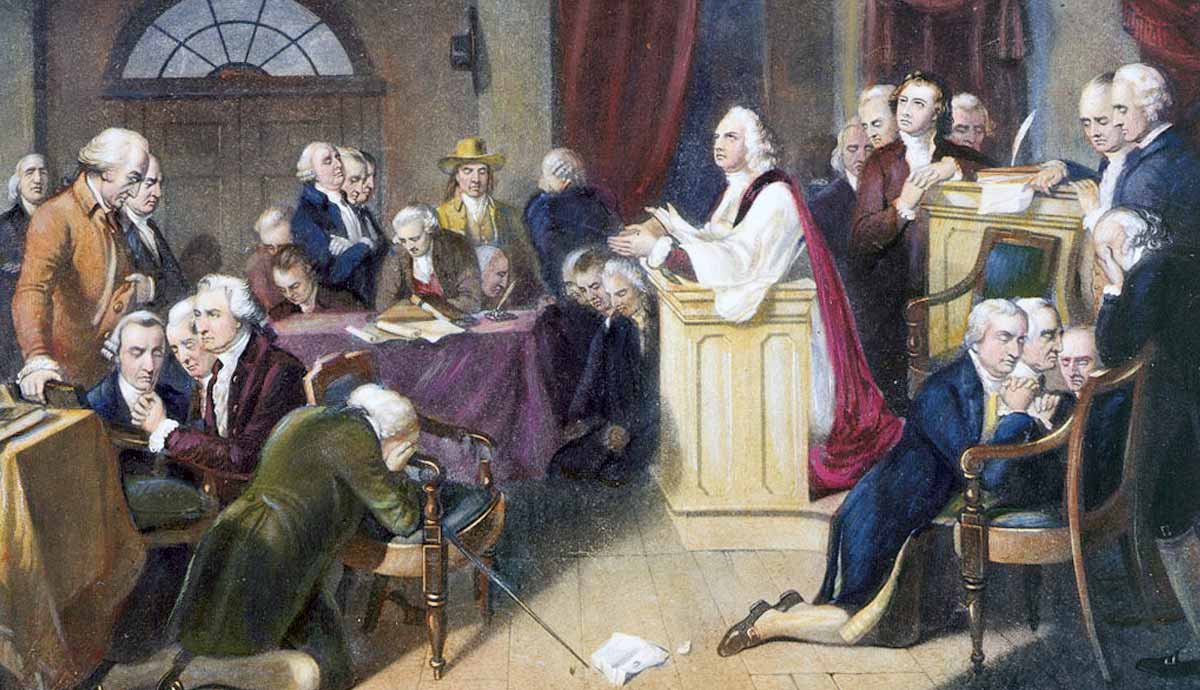
In September 1774, representatives from twelve of the 13 British colonies in North America met in Philadelphia for what became known as the First Continental Congress. Sparked by Britains harsh rule, these representatives aimed to reimagine their rights as colonial subjects without breaking away from England. Important American figures like George Washington, John Adams, and Thomas Jefferson debated approaches ranging from boycotting British goods to issuing a unified declaration of rights. The work done during this time further pushed the American colonies towards independence.1. It Was Sparked by Anger Over the Intolerable ActsPrime Minister of England Lord North forces the Intolerable Acts, depicted as tea, down the throat of America, 1774. Source: Library of CongressThe First Continental Congress was a direct response to the Intolerable Acts passed by the British Parliament in 1774. These laws, which included the closing of Boston Harbor following the Boston Tea Party, pushed many colonies to their breaking point. The Quartering Act sparked the most outrage as it required American colonists to house, feed, and pay the salaries of British soldiers in North America.Because of these acts, people in places like Massachusetts felt their rights were being trampled on, and they were not willing to take it anymore. In the eyes of many colonists, the British were going too far, and leaders in the colonies decided they needed a unified front if they had any hope of restoring their liberties.Each colony would send delegates to a meeting in Philadelphia where they could discuss what to do next. That meeting became the First Continental Congress. While some people were still holding onto the idea of peace with Britain, others started to feel that outright rebellion might be the only way forward.2. Not Every Colony Was RepresentedMap of the modern United States with the 13 original colonies highlighted. Source: Wikimedia CommonsIn September 1774, delegates from all the colonies except Georgia made the trip to Philadelphia. Georgias leaders were dealing with issues of being a frontier colony, such as fighting with local native populations and they did not have the men to spare for such a venture. Still, the rest of the colonies showed up, determined to tackle their shared grievances as a unified people.It was the first time such a diverse group of colonial representatives had sat down together to seriously plan their next steps. Prior years would have found each of these colonies attempting to find solutions individually. The American colonies did not, prior to this meeting, view themselves as one people but rather as citizens of their own individual colonies. This meant that while these delegates had similar issues, they all brought with them their own grievances unique to their colony.Even though they had different local concerns, they realized they stood a better chance against Britain if they united. The delegates matched the diversity of the people they represented, some were loud and fiery, while others were more reserved and cautious. But all of them had grown frustrated with what they saw as heavy-handed British rule. By excluding Georgia, the Congress was technically missing part of its collective voice. Despite that small gap, the meeting symbolized a remarkable moment in history.3. Major Figures From the Revolution Were PresentJohn Adams portrait, by Gilbert Stuart, c. 1800. Source: National Gallery of Art, WashingtonThe First Continental Congress was not just a random gathering of minor colonial officials. Some of the most notable names in American history took part, including George Washington from Virginia and cousins John and Sam Adams from Massachusetts. While these men are well known today, they were considered the premier citizens of their time and their selection as delegates mirrored their importance.Washington carried a quiet sense of authority, shaped by his background as a military leader and landowner. Meanwhile, John Adams was already known for his strong opinions and legal expertise, having defended the British soldiers involved in the Boston Massacre. His cousin Sam Adams was a founding member of The Sons of Liberty, a semi-secret political organization instrumental in orchestrating protests back in Boston and helped spark movements like the Boston Tea Party. There were also other key figures like John Jay of New York, who would later become the first Chief Justice of the United States Supreme Court.4. They Wrote a Predecessor to the Declaration of IndependenceDeclaration of Independence, July 4, 1776. Source: Wikimedia CommonsOne of the most significant outcomes of the First Continental Congress was a unified declaration of colonial rights. Leading up to 1774, individual colonies had complained about British policies, but never before had they come together to list them in a single document. This declaration spelled out specific problems, protesting the Intolerable Acts and other restrictive measures.The delegates insisted that as English subjects, they were entitled to the same rights as citizens living in Britainespecially when it came to taxation and representation. They argued that these liberties were a right, not a privilege, and were not something colonial assemblies were willing to compromise on. This statement was not a full leap into independence; many delegates still held onto hope that the king and Parliament would back off on these policies. Nevertheless, the declaration signaled a shift. Colonists were no longer satisfied with being treated like second-class subjects. Although some members of the Congress remained cautious, their unified statement of rights helped set the stage for bigger and bolder actions in the years ahead.5. They Wanted to End Trade With EnglandThe Destruction of Tea at Boston Harbor, by Nathaniel Currier, 1846, depicting the 1773 Boston Tea Party. Source: Wikimedia CommonsAlong with voicing their rights, delegates at the First Continental Congress agreed that words alone were not enough. They needed a plan to pressure Britain into accepting their demands. The result was the Continental Association, a pact that essentially called for a widespread boycott of British goods. The idea was one of simplicity, if the colonies stopped buying items from Britaineverything from tea to textilesParliament might be forced to address their complaints.The delegates recommended each colony form local committees to make sure everyone stuck to the boycott. Some towns went so far as to inspect shipments at ports or shame anyone caught purchasing British goods.The delegates also agreed to cut off exports to Britain if their complaints were still ignored by a certain deadline. This tactic hit Britain where it hurt economically and united colonists in a shared cause. While not every colonist jumped on board immediately, the Association showed how a coordinated effort, carried out at local levels, could create real tension with the mother country.6. Not Everyone Involved Saw Eye to EyeCarpenters Hall, Philadelphia, Pennsylvania, where the First Continental Congress met in 1774, c. 2006. Source: Wikimedia CommonsIt is important to remember that not everyone at the First Continental Congress was itching for independence right away. Some delegates felt that the colonies should still try to mend relations with Britain, believing war would be disastrous and unsuccessful. They favored a more conservative approach, pushing back on unfair laws, but keeping the overall relationship with the Crown intact.Others, especially those from Massachusetts like John Adams, had grown fed up after events like the Boston Massacre and the closure of Boston Harbor. They argued that united action was the only way to stop the continued diminishment of their rights.Tensions flared during debates, with both sides presenting passionate arguments. Despite these differences, they managed to find enough common ground to release a declaration of rights and adopt the Continental Association. While independence wasnt officially on the agenda yet, the fractures between colonists who still wanted reconciliation and those who believed in standing firm were already visible.7. It Set the Stage for the Second Continental CongressA depiction of the Second Continental Congress voting on the United States Declaration of Independence, c. 1801. Source: Wikimedia CommonsBy the time the First Continental Congress wrapped up in October 1774, delegates had a better sense of their collective strength, but they also realized the fight was not over. They agreed to meet again if Britain failed to respond to their demands in a reasonable way.Unfortunately, tensions only got worse, especially after skirmishes broke out at Lexington and Concord in April 1775. That led to the calling of the Second Continental Congress, which would eventually appoint George Washington as commander of the Continental Army and steer the colonies toward the Declaration of Independence.While the First Continental Congress itself did not declare independence or start a war, its significance lies in the unity it built among the colonies. It forced leaders from different regions to coordinate, share resources, and stand up for each others rights in a way they never had before. By drafting a joint response, the delegates laid the groundwork for what would become a full-scale revolution, making the First Continental Congress a milestone on the road to American independence.
0 Kommentare
0 Geteilt
44 Ansichten

 English
 Arabic
 French
 Spanish
 Portuguese
 Turkish
 Dutch
Dutch
 Italiano
 Russian
 Romaian
 Portuguese (Brazil)
 Greek
Greek