


WWW.THECOLLECTOR.COM
Mexicos Founding Father and His (Very) Controversial Portrait
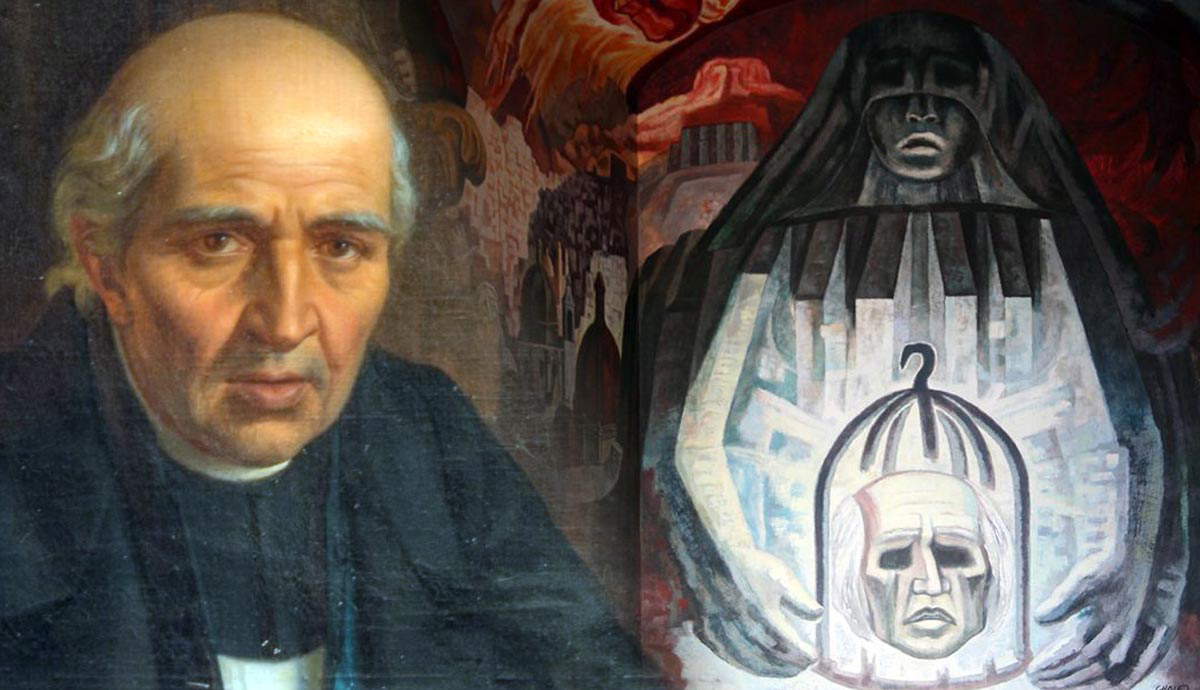
Who was Miguel Hidalgo? To put it in perspective: George Washington is the father of American independence; Mahatma Gandhi symbolizes Indias struggle against British colonial rule. Mexico has Miguel Hidalgo. Yet outside Mexico, few recognize his name. Figures like Benito Jurezwho famously dubbed himself the consummator of Mexicos second independenceor Pancho Villa enjoy far more international fame. But Hidalgo, a priest who ignited Mexicos War of Independence in 1810, remains a fascinating, if not outright antiheroic, figure for those willing to look closer.From Revered Leader to Scorned MartyrThe Battle of the Alhndiga de Granaditas, Jos Daz del Castillo, 1910. Source: Instituto de Cultura de MorelosHidalgos legacy is complicated. As a priest, he was known for his encyclopedic knowledge, fluency in several languages, artistic talents, and concern for the poor. Yet he was also infamous for multiple affairs, a fondness for revelry and gambling, and, once the war began, his controversial decision to allow the unruly revolutionary forces to commit massacres against Spaniardswomen and children included. One stark example: in September 1810, as the revolutionary mob neared Guanajuato, hundreds of frightened families locked themselves inside the Alhndigaa fortified granary. Hidalgo and his enraged followers set fire to the doors, stormed the building, slaughtered the occupants, and then looted and razed the city.Hidalgo tolerated these excesses, a fact he later acknowledged during his trial. Captured in 1811, Hidalgo was dragged on a grueling journey to the remote city of Chihuahua, where he was executed inside what is now the state government palace. A small niche marks the exact site of his execution. A Tarahumara indigenous man reportedly severed Hidalgos head with a single blow, earning twenty pesos for the gruesome task. But Hidalgos remains didnt stay there. His head was salted and sent back to central Mexico, where it was locked inside a cage and hung atop the very building in Guanajuato where the massacre occurred. For ten years, it remained exposed to the elements and birdsa brutal warning to potential rebels. Father Hidalgo received the ultimate punishment: the dishonor of not having a proper burial, and worse, that the only face the public would remember was that of a sun-bleached skull.When independence finally triumphed, the new Mexican government ordered the cage removed and the head, now faceless, given a heros burial. That should have been the end of it all. But it was only the beginning.Portrait or Pretender? The Austrian Priest LegendMiguel Hidalgo y Costilla, by Joaqun Ramrez, 1865. Source: Wikimedia CommonsThere are no photographs of Father Miguel Hidalgono images of his head or the infamous Alhndiga cage. Photography arrived in Mexico nearly two decades later, in the 1840s. Hidalgos visagea man entering old age, graying, nearly bald, with a noble, kindly expressionwas immortalized instead in paintings by a young artist called Joaqun Ramrez. One such portrait hung in Mexico Citys National Palace in 1865.Fast forward to the turn of the millennium, an era ripe with rumors and historical revisionism. A persistent whisper emerged: since Hidalgo was never painted from lifetrueno one really knew what Mexicos founding father looked likehalf true. Worse yet, the widely accepted image by Ramrez was said to be a colossal fraud, actually a portrait of an Austrian priest. This rumor was fueled by Luis Gonzlez de Alba, a former student activist, ex-convict, psychologist, science popularizer, and noted provocateur.According to Gonzlez de Alba, when Emperor Maximilian of Austria sought to create an official pantheon of Mexican heroes, he found no known images of Hidalgo and thus he enlisted an Austrian priest from his entourage to sit for what would, quite curiously, become the portrait of Mexicos founding father. The story goes that this was how Mexico got its iconic image of the man who sparked its independence. Many Mexicans still believe this today.They Lied to Us: The Bicentennial ControversyCanto a Guanajuato (detail, Miguel Hidalgos head inside the cage), by Jos Chvez Morado, 1965. Source: INAHThe Bicentennial in 2010 reignited the debate. The rumor became so widespread that some, including a state governor, called for a crusade to remove Hidalgos portrait from textbooks and find the true face of the nations Founding Father. Important newspapers and TV channels reproduced the story. A headline blared loudly in one particularly vocal newspaper: They lied to us. According to the myth, Mexicans had been paying homage to a Belgian or Austrian priest who never did anything for the country.Like all great conspiracies, this one refuses to die and has resurfaced repeatedly. But is it true? Is Hidalgos face really based on a European priest, not the revolutionary whose head was once hung as a warning in central Mexico?In Search of Miguel Hidalgos True FaceFirst Mexican post stamp, design by Jos Villegas, 1856. Unknown artist. Source: Mexico DesconocidoThe 1856 Postage StampIn fact, the Austrian priest theory collapses quite quickly. Mexico issued its first postage stamp on August 1, 1856a half real blue stamp crudely printed and roughly cutbut it unmistakably depicts Miguel Hidalgo. A quick glance reveals the same man Ramrez painted a decade later. This stamp proves Hidalgos image wasnt simply concocted in 1865.One might argue that the balding man with the aquiline nose and priestly collar was simply a product of the engravers imagination. So to determine whether this face had a historical basisand wasnt merely artistic licensehistorians need to look further back, to earlier sources that suggest the image was not conjured from thin air.Lucas Alamns TestimonyIllustration of Miguel Hidalgo in a book by Lucas Alamn, unknown artist, 1849. Source: Biblioteca Bicentenario, AguascalientesLucas Alamn, a prominent Mexican thinker, politician, and historian, wrote one of the countrys first histories when independent Mexico was barely three decades old. Many witnesses of the revolutionary war were still alive.From the first edition (1849), Alamns history included a portrait of Hidalgo nearly identical to the postage stamp and Ramrezs painting. And in fact, he took that illustration from an even older book. When Alamns history and the portrait appeared, hardly a generation had passed since Hidalgos death, and many still remembered him personally. Remarkably, Alamn met Hidalgo himself as a 17-year-old in Guanajuatothe site of the massacre. His physical description leaves little doubt that, while no photograph existed, both the postage stamp and Ramrezs portrait capture Hidalgos likeness fairly well:I had the opportunity to see and speak with Hidalgo oftenhe was a frequent visitor to my home, Alamn wrote. He was of medium height, stooped shoulders, dark complexion, lively green eyes, head bowed slightly toward his chest, quite gray and bald, seemingly over sixty, yet vigorous though not quick in movement; taciturn in everyday dealings but lively in debate, much like a scholar in heated argument. He was modestly dressed, wearing the typical garb of small-town priests.The Divergent Fates of Hidalgos Likeness and His RemainsPhotograph of the Column of the Angel of Independence, unknown photographer. Source: WikicityWhile Hidalgos face has followed a relatively smooth trajectorytraced through paintings, engravings, postage stamps, eyewitness descriptions, and schoolbook illustrationshis skull has led a far more erratic existence. One was fashioned by memory and myth, stabilized by artistic convention and national need; the other wandered through crypts, display cases, and forgotten vaults, marked by uncertainty and decay. The face became iconic, almost serene in its reproducibility; the skull, meanwhile, remained elusive, physically real yet symbolically unstable. And yet, in 2010, on the bicentennial of Mexican independence, these two diverging paths unexpectedly met.When Mexican independence was secured, the cage holding Hidalgos skull was removed by the victors around early 1821. The head was buried alongside other revolutionary heroes in a city cemetery, where they remained until 1823. That year, a solemn procession moved the skulls to Mexico Citys cathedral. There, according to contemporary accounts, bones were jumbled in a niche later infested with cobwebs and rats. In 1895, the bones were exhumed, cleaned, sun-dried, photographed, and reburied.Their final resting place was secured in the 1920s, beneath the iconic Independence Angel column. During the 2010 bicentennial, the relics were restored and studied scientifically. Some voices called for modern forensic techniques to reconstruct Hidalgos face.But the results brought embarrassment. First, the bones of Vicente Guerrerothe man who finally secured independence in 1821showed no evidence of execution, contrary to legend. Mariano Matamoross remains turned out to be those of a woman. And Hidalgos skull, marked HA, was identified with more certainty but was heavily damaged after years exposed to the elementshis face entirely lost, replaced by a hollow void. The dream of bioarchaeology resurrecting Hidalgo vanished.A Nations Father, Restored: Truth Beyond the Faceless SkullPhotograph of the skulls of the heroes, unknown photographer, 2010. Source: El PasMiguel Hidalgos head has had an eerie journey. Severed from his body, it traveled across Mexico, displayed in various towns before being hoisted high to dry in the open air, then shuffled back and forth across the country. For decades, his skull and the bones of other freedom fighters lay forgotten in a humid, unlit chamber of Mexicos cathedral, jumbled with other remains in a damp recess no one wanted to enter. From time to time, concerned citizens petitioned to have them moved to a more dignified resting place, but the bureaucracy proved as unyielding as stone. No one claimed responsibility, and every official insisted the task fell outside their jurisdiction.One cant help but wonder if the Father of the Nations ghost rebelled against this barbaric fate, spawning the enduring rumor that no one could ever know his true face.But thanks to a young man who saw him in Guanajuatothe teenager Lucas Alamn, who grew into a scholar and historianwe can confidently reject the myth that Hidalgos features were lost forever. His faceless skull may stare darkly into the void, but the historical person and his face remain recoverable.Controversial man, yes. Antihero, perhaps. Father of the Nation, beyond doubt.
0 Commenti
0 condivisioni
20 Views

 English
 Arabic
 French
 Spanish
 Portuguese
 Deutsch
 Turkish
 Dutch
Dutch
 Russian
 Romaian
 Portuguese (Brazil)
 Greek
Greek