


WWW.THECOLLECTOR.COM
Did the Romani Spread the Art of Belly Dance?
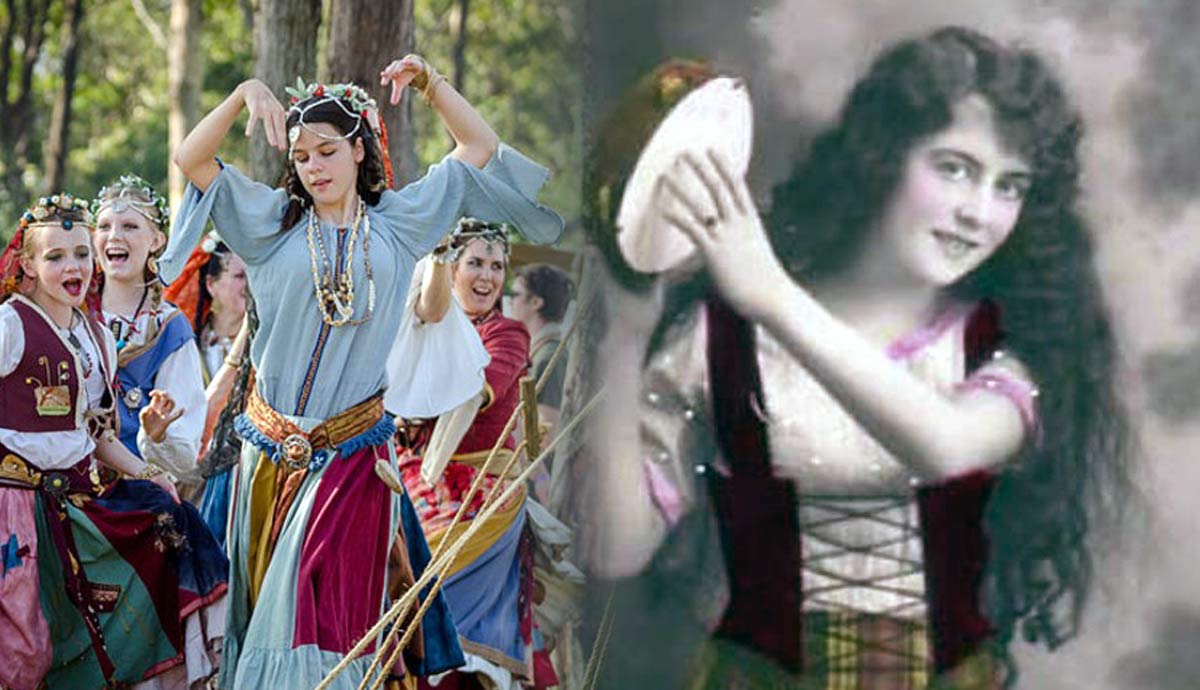
By the time belly dance emerged as a distinct form in North Africa, the Middle East, and Europe it carried echoes of Roma traditions interwoven with local styles. Despite its widespread appeal, belly dance has long been overshadowed by the stereotypes that cling stubbornly to its practitioners. Roma women, in particular, have historically been both celebrated and marginalizedpraised for their artistry while constrained by the strict rules of their own communities. The image of the Roma dancer has frequently been romanticized in Western art and literature, epitomized by figures like Esmeralda, the sultry heroine of Victor Hugos The Hunchback of Notre Dame.Who Are the Romani?Romani Festival, by K Kendall. Source: FlickrCommonly (and offensively mislabelled) referred to as Gypsies, the Romani people have a complicated history that has been overshadowed by a multitude of myths and stereotypes. Lets clear up a common misconception: despite what the term Gypsy might suggest (and what Tudor authorities misjudged in extant texts) they are not from Egypt.In reality, their origins can be traced back to northern India, specifically the regions of Punjab and Rajasthan. They embarked on their great migration approximately a thousand years ago, spreading their vibrant cultural legacy via their rolling homes called vardos across Central Asia, the Middle East, North Africa, and Europea slow overland odyssey that would make any travel blogger weep with envy at the sight. However, wherever they went, misconceptions and whispers of thieves seemed to follow. The Romani, with their closed communities and colorful garb, have been the historical other for as long as theyve been traveling.But why did the Romani leave India in the first place? Frustratingly, neither anthropologists nor historians really know for sure. That hasnt stopped researchers from wildly speculating and drawing up dramatic conclusions and timelines that wouldnt be outrageous as plots for historical fiction narratives. One popular theory claims that the Romani were a military collective formed of different ethnic groups to resist the Islamic invasion of India. Think of them as the ragtag resistance fighters of their day, standing their ground with sheer grit (and maybe a few swords) in exchange for the rare chance to climb the caste ladder.Romani Mother and Child, by Robert Henri, 1906. Source: PicrylOne event that we know surely affected this group happened around the 11th century, when Mahmud of Ghazni, an Afghan general with a flair for invasions, swept into northern India. His forces disrupted life as the Romani knew it, pushing them westward if they refused to convert. Muslims saw him as a warrior of his faith, not unlike the European crusaders, but those in place in India already saw him as a raider of beautiful temples and sacred spaces.Over the following centuries, the Romani migrated in waves, blending diverse Indian ethnicities into what eventually became a distinct people who rarely married outside of their communities. As they moved into the Byzantine Empire, their shared language and traditions helped them stand out, solidifying a unique identity no matter their ever-changing surroundings.So, why did they leave? Probably to escape war, caste oppression, and the general chaos of medieval India.The Romani name comes from the word Rrom, meaning man in their language, which is closely related to Sanskrit. As they traveled, the Romani adapted to their new homes by blending their traditions with local customs. Music, oral stories, and expressive dance were central to their way of life, making them sought-after performers wherever they went. While their artistry brought joy to audiences, the Romani themselves often faced prejudice, marginalization, and even racially based enslavement in places like Romania and Moldavia.In the Middle East, this meant adapting traditional folk dances into what we now recognize as belly dance. Their influence didnt just enrich the arts but also ensured their traditions survived despite centuries of oppression.Whats So Special About Romani Music and Dance?Traveling Vardo. Source: Wikimedia CommonsRomani music and dance are like the ultimate fusion dishesfamiliar yet tantalizingly unique. Rooted in centuries of creativity and improvisation, Romani performances weave together personal narratives handed down through generations. It is a tradition with a twist if you will. It takes a large dose of Indian movement and hide drums and then blends it, creating a sort of spiced dish that can only come when different flavors are integrated from far-flung places.Now, lets debunk another myth: some say the Roma have no music of their own. This isnt true. However, they do have an unparalleled gift for taking the music of others, infusing it with their signature passion and artistry, and spinning it into gold. Gadje (non-Romani folk) often find themselves preferring Romani interpretations of their own music because, frankly, they just make it so much more interactive. Adding their soaring Romani lyrics to a borrowed melody transforms it into something uniquely theirs, leaving audiences captivated.Think for a moment about these words from a traditional Romani song: Far to the south and the east I began. I gathered my people from many a clan. From the sons of the kings to the sons of Kali, All were my people, protected by me.Colorized postcard, gypsy woman with tambourine. Source: GetArchiveAnd then there is the dance. Romani dance isnt about synchronized lines or flashy choreography. It is all about improvisation and self-expression. You wont catch them linking arms in a Balkan-style line dancetheir concept of marime (ritual cleanliness) would make that idea downright impossible. Instead, Romani dancers move as individuals, communicating through their steps, showing off their skills, and connecting via storytelling with their bodies. Every gesture tells a story, whether it is a flirtatious flick of the wrist or an energetic stamp of the foot.From quite a young age, Romani children are immersed in the art of their peoples music and dance, learning through imitation and encouragement. It is not just movement: it is a way to explore identity, gender roles, and their place within the wider travelling community. Whether performing a Basso or a Kolo at weddings or captivating crowds with their breathtaking improvisation, Romani dancers turn every step into a celebration of life, a tale of their cultures resilience, and their own talent showcasing beauty and artistry.Women in Roma Culture: The Hypocrisy of Autonomy and OppressionPainting of Roma Woman, by Vikentios Bokatsiambis, 1856-1932. Source: GetArchiveRoma women have long walked a lofty tightrope in their communities. While they could wield economic influence through fortune-telling, dancing, or the selling of their handmade crafts, their societal roles were rigidly circumscribed.Take, for example, the practice of women performing for audiencesdancing with a fiery passion often considered unwomanly in the dominant society, embodying the exotic allure that Gadje audiences craved. Their movements were a swirling, undulating enchantment, yet within their own communities, these same women had to avoid even accidentally brushing a mans leg with their skirts, an act considered so polluting it could result in his social ostracism for up to a year.It is hypocrisy as old as patriarchal times: Roma women could be the familys breadwinners, either by dancing or fortune-telling to keep their communities afloat financially, all while being the keepers of tradition. However, participation in decision-making was an entirely different story; men ruled the Roma courts and made family decisionslike hastily arranging marriages of minors as if they were simply trading livestock. Women earned admiration for their skills, both inside and outside of the traveling clans, but this respect rarely translated into personal agency. It is almost as if their accomplishments came with an invisible asterisk: Not applicable for leadership positions!Men perform Romani dance, by Jolynne Martinez. Source: FlickrOutsiders, of course, had their own skewed interpretations. They often romanticized the Gypsy woman, conjuring images of a liberated and mysterious figure, a whimsical free spirit dancing through life with the grace of a gazellewhile chained to a kettle for dinner duty. This idealized vision often came complete with the enchanting wrappings of magic, leading to the perception that so many Roma women were practically practitioners of witchcraft. This trope was perpetuated by tales like that of Sinnetta Lambourne, who scandalized aristocratic England not just by marrying into nobility, but by daring to exist as a Roma woman near any form of privilege.Esmeralda, the sultry dancer immortalized in Victor Hugos The Hunchback of Notre Dame, followed suit. Disneys version of Esmeralda cranked the fantasy to eleven, transforming her into a symbol of defiant beauty with a penchant for justice and a flair for tambourine-shaking.So while Roma women have historically been vital to their communities survivaleconomically and artisticallytheir roles were, and often still are, steeped in contradiction. They could dance for kings, but they couldnt rule their own homes. Roma women could predict the future of paying customers but had no formal role in arranging their daughters fates. While the world might have romanticized their freedom, the truth was far more complicated: autonomy existed only in the margins, where skirts might swish near a mans leg but never touch.How the Roma Became Belly DancersModern Romani Dancers. Source: Wikimedia CommonsAs the Roma settled in diverse locales, they absorbed the rhythms and melodies of their surroundings, weaving them together with the rich threads of their Indian heritage. Take Turkey, for instance, where they encountered the spirited folk dance Karsilama. Infusing it with their signature vivacity, they birthed the infectious 9/8 rhythm that would come to characterize modern Turkish belly dance. Similarly, in Egypt, the earthy tones of Saidi traditions melded seamlessly with their expressive style, giving rise to Balady, the soul of Egyptian belly dance.Through every migration and cultural interaction, the Roma transformed their experiences into art, creating a dance tradition that celebrates both their origins and the diverse influences they encountered along the way.Fast forward to the 1960s, and American belly dancers swept in like fashion magpies. They snatched up Roma-inspired costumes, tambourines, and even some folk moves. These makeuped and bedazzled performers took the impressive techniques and made them more fit for Vaudeville. Little did they realize that the Romani people didnt just perform belly dance for gentlemens eyesthey were its cultural and creative backbone.From opulent Ottoman courts to the chaos of bustling bazaars and now shiny modern stages, the Roma were the reason that belly dancing, in all its many forms, spread throughout the known world. In a way, these travelers shaped the dance into a true testament to making lemonade out of societal lemons.The Traveling Lifestyle: Wagons, Work, and Wowing the GadjeRomani woman and child in Hungary. Source: GetArchiveFor centuries, the Romani people have traveled the roads, their lives once intrinsically linked to their distinctive vardoshorse-drawn wagons that serve as both homes and cultural symbols. These beautifully decorated vehicles, adorned with intricate carvings and vibrant colors, embodied a rich heritage, reflecting a story of hardship and wonder that traced back over a thousand years. The vardo was more than a practical shelter; it was a sanctuary, a mobile space for family life, and often a hub for trade and business.Historically, the Romani were misidentified as Egyptians, a misunderstanding that stemmed from their striking features and nomadic lifestylehence the misnomer of Gypsy. This mislabeling has fueled stereotypes that persist to this day. In Scotland, they were referred to as tinklers, a nod to their tinsmithing skills and unique customs. The Tudor period bore witness to severe persecution, exemplified by Henry VIIIs Egyptians Act of 1530, which aimed to expel them, while Queen Marys edict declared that being Romani was itself a crime that could result in death.Palm reading, a Romani tradition. Source: UnsplashDespite the oppressive measures taken against them, the Romani have adapted and thrived on the fringes of society. Traditional crafts like metalworking, basket weaving, and fortune-telling became essential for their survival. The role of drabardifemale fortune tellerswas notably significant, as their practices were woven into so many fables surrounding Romani culture. Music and dance, too, played a central role, enchanting audiences while often reinforcing the mystique surrounding their insular and therefore much whispered-about community.In modern times, while many Romani have settled into more permanent lifestyles, the spirit of their nomadic heritage remains alive for some. Although the traditional horse-drawn vardo is a rare sight today, with luxury campers taking their place, the essence of wandering continues. Each sighting of a vardo on a quiet lane serves as a poignant and more and more limited reminder of a culture marked by resilience and the enduring pursuit of freedom. For the Romani, the journey is not merely a path through the landscape but a testament to their enduring identity and the raw beauty of their way of life, forged through centuries of both hardship and dazzling feats of artistry.So, Did the Romani Spread Belly Dance?Romani Encampment, by Franois Nicholas Riss, 1842. Source: Wikimedia CommonsThe short answer? Absolutely. The Romani played a crucial role in spreading belly dance as they traveled, hawking their talents wherever the road took them. With their natural gift for absorbing and reinterpreting local traditions, the Romani transformed regional dances into something entirely their own, infusing them with emotion, improvisation, and their signature skill. Just look at the history of Spanish Flamenco and there youll find the rhythmic stomps and skirt swirls of the Romani in every expressive twist.As they performed for Gadje audiences, their movements mesmerized, their music captivated, and their flair for showmanship brought belly dance to corners of the world it may never have reached otherwise. Then, as others sought to simulate and profit from their art form, it continued to change and morph outside of their influence. From bustling markets to royal courts, their dances told stories, preserved cultural heritage, and opened up new artistic possibilities.Belly dance, as we know it today, owes much to the Romanis nomadic spirit and enduring creativity. They didnt just spread a dance formthey wove a legacy of rhythm, expression, and resilience that continues to inspire aspiring dancers and audiences alike.
0 Kommentare
0 Geteilt
20 Ansichten

 English
 Arabic
 French
 Spanish
 Portuguese
 Turkish
 Dutch
Dutch
 Italiano
 Russian
 Romaian
 Portuguese (Brazil)
 Greek
Greek