


WWW.THECOLLECTOR.COM
What Was the Dawes Act of 1887?
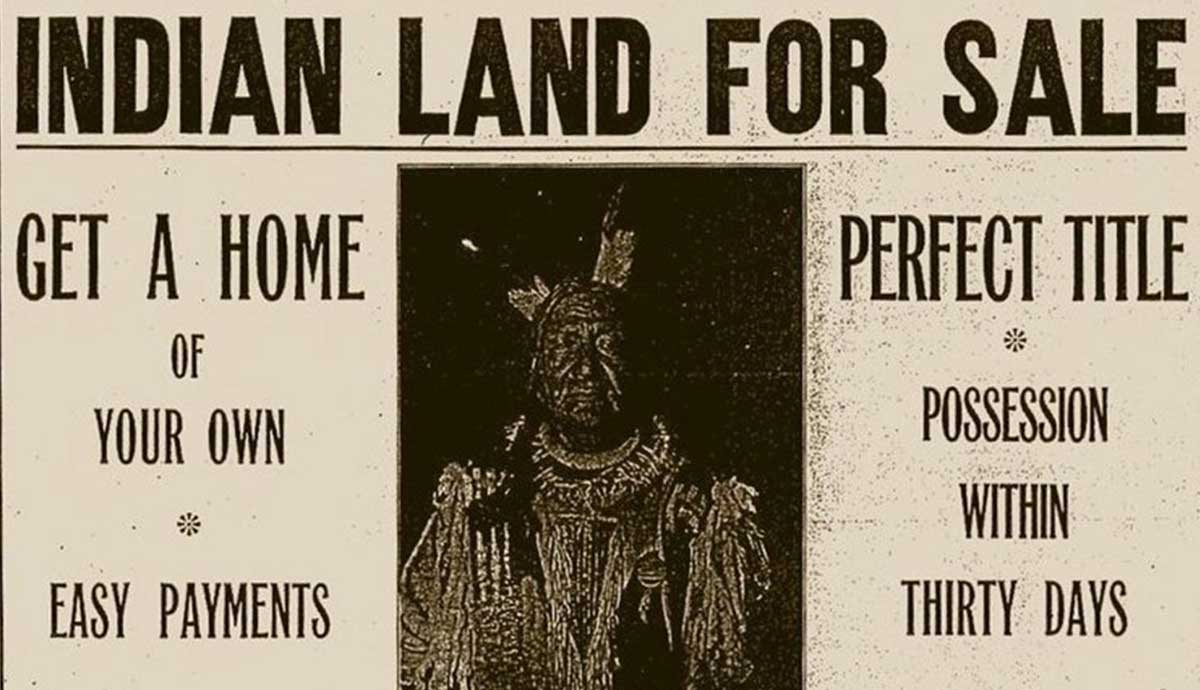
The United States achieved Manifest Destiny in 1848 when it formally gained California from Mexico at the end of the Mexican-American War. Twenty years later, the Transcontinental Railroad finally tied the nation together from east to west by providing a narrow belt of mass transportation through the interior. But what should be done about the many Native American tribes living in the West? Hostilities were increasing between white settlers and Native Americans as the railroad brought more and more settlers westward. A plan was concocted to remove the incentive for Native Americans to leave government-created reservations and encounter settlers: the Dawes Act of 1887. What was this plan, how did it work, and was it fair to Native Americans?Setting the Stage: Native Americans in the WestA map of Native American tribes in the western United States between 1860 and 1890, sometimes known as the Indian Wars era. Source: United States ArmyNative Americans had been pushed west since the colonial era, with the Indian Removal Act of 1830 relocating most Native Americans in the south and east to the west of the Mississippi River. Thirty-five years later, with the end of the American Civil War, citizens finally turned their attention to the vast West, most of which had been won from Mexico at the end of the Mexican-American War in 1848. Manifest Destiny had been achieved, and Americans were excited to explore and settle the vast Mexican Cession. However, this land was already populated by many Native American tribes, including those who had been forced westward years earlier.Many of these tribes were not content to have their territory simply taken by white settlers. In Texas, the Apache and Comanche tribes had been embroiled in conflicts with settlers and state government since the 1830s. These tribes would later become well-known during the Indian Wars era, as would the Cheyenne and Utes to the west and north. The Sioux would become famous for the Battle of Little Bighorn in 1876, colloquially known as Custers Last Stand. There were many smaller tribes in the West, but they lacked the size and might to resist armed settlers or the US Army.Setting the Stage: The Transcontinental RailroadAn image of buffalo hunters shooting American bison in the Great Plains region of the western United States from a moving train. Source: PBSA technological advancement in the 1860s suddenly allowed white settlers to move swiftly and deeply into Native American territory: the railroad. The completion of the Transcontinental Railroad in 1869 allowed settlers to travel quickly into the West and no longer rely on slow-moving wagon trains. Native Americans often resisted the building of the railroad, knowing that it would bring trouble in the form of settlers and land-seeking corporations. The completion of the railroad at Promontory Summit, Utah, on May 10, 1869 heralded a dangerous new (final) era for Native Americans in the West.Quickly, additional railroads were built in the West. The discovery of valuable minerals and ores in the West brought mining companies, which could ship out heavy equipment on the railroads and ship back carloads of ores to be turned into metals. Companies, including leather tanners, also quickly pursued a new resource out West: the vast herds of American bison. In 1870, a German company figured out how to significantly improve the use of bison hide, causing demand to soar. During the 1870s, settlers, miners, and buffalo hunters increasingly encroached on Native American lands.1870s: The Indian WarsA 1907 painting by Frederic Remington depicting US Army cavalry during the Indian Wars era of the late 1800s. Source: The Metropolitan Museum of Art, New YorkWithin just a few years of the completion of the Transcontinental Railroads, some Native American tribes began organizing to resist government demands that they settle onto reservations. The Indian War era lasted from 1866 to 1890 and saw just over 1,000 actions between Native Americans and the US Army, employing an average of 16,000 soldiers throughout the duration.To protect settlers and businesses in the West, the army frequently built and staffed forts on the frontier. When white settlers, miners, ranchers, farmers, or loggers claimed harassment or violence by local tribes, the Army typically responded with tremendous force with little or no investigation. The economic boom in the North and Northeast during the Gilded Age encouraged aggressive companies to find, extract, and ship natural resources back east.Violence peaked in the mid-1870s when several tribes united to attempt to repel growing numbers of settlers and miners. In 1875, the Great Sioux War between the US Army and the Sioux and Cheyenne tribes in the Wyoming, Montana, and Dakota regions erupted as tribes refused to remain on reservations developed in 1868. This war famously included the Battle of Little Bighorn, where Civil War veteran George Custer was killed along with all of his men by a much larger force of Indigenous fighters. After this victory, the united tribes dispersed, making it easier for the US Army to hunt down and defeat each unit. The Sioux quickly surrendered in 1877, marking the end of large-scale resistance against the federal government.Crafting the Dawes ActA photograph of US Senator Henry L. Dawes (R-MA), who created the controversial Dawes Act of 1887, taken during the Indian Wars era. Source: Library of CongressAlthough the Great Sioux War had ended, there was still restlessness among Native Americans in the West. To avoid further fighting, many wanted to pacify the Native Americans through tactics to encourage assimilation; in this case, the adoption of white American values. In 1878, Congress began sending teams to study the culture of Native Americans on reservations.During the Indian Wars era, the federal government rescinded previous policies of considering tribes to be sovereign nations and now considered them wards of the state. Beginning in 1883, a group of Protestant reformers met in New York to try to save the Native Americans.These reformers believed that the Native Americans needed to be civilized and would only prosper once they had adopted traditional white, Protestant culture. US Senator Henry L. Dawes (R-MA) proposed granting individual Native Americans plots of land similar to those given through the Homestead Act of 1862. This may have seemed like a good deal to many, but Native Americans would actually lose tremendous amounts of their land. On average, Native American communities that were nomadic utilized much more than the 160-320 acres being proposed per individual by Congress. Signing up for the allotment would also better allow the government to track each Native American family, limiting the ability for future resistance.1887: Implementing the Dawes ActA photograph of US President Grover Cleveland, who signed the Dawes Act on February 8, 1887 in a misguided belief that it would protect Native Americans. Source: Ashland UniversityDawes allotment bill was passed by Congress and signed by US President Grover Cleveland on February 8, 1887. It granted each Native American head of household either 160 acres of farmland or 320 acres of grazing land for ranching. Although some considered the law a benefit for protecting Native Americans by virtue of giving them legal title to plots of land, the law was not implemented graciously. Often, Native Americans were underpaid or tricked out of their land, as they were relatively unfamiliar with modern commerce and legal agreements. Tribal land that remained after allotments were doled out would be opened for settlers, resulting in the loss of almost 100 million acres of Native land.A poster advertising land taken from Native Americans for sale to white settlers in the late 1800s. Source: PBS Learning MediaAdditionally, most Native Americans in the West were unfamiliar with farming and ranching, having been nomadic and relying heavily on the bison. However, the destruction of the bison herds in the early 1870s had removed many tribes ability to resist remaining on reservations. Without access to a resource upon which they had relied for centuries, many tribes were forced to accept the Dawes Act. Sadly, the Dawes Act was tightened in the 1890s through new amendments that allowed the federal government to seize and re-sell allotments that were not being used productively by Native Americans.Physical Effects of the Dawes ActA graphic explaining the physical results of the Dawes Act of 1887, also known as the General Allotment Act. Source: Stanford UniversityThe Dawes Act transformed much of the West by opening it to settlers. Typically, Native Americans received less desirable land in their allotments, leaving prime territory for white settlers or companies. The adoption of allotmentsand their ability to be bought or sold for cashtransformed Native American economics. Companies or the government could negotiate to purchase allotted land, often resulting in further seizure of Native American land through broken deals and fraud.By the 1930s, many Indian Reservations were no longer majority-owned by Native Americans; they had been sold off piece by piece. Much of this land had been used for hunting grounds and foraging for agriculture, further depriving Native Americans of resources. The loss of natural resources forced greater acceptance of white-owned enterprises, such as stores and businesses. In many areas, tribes lost so much of their ability to grow or hunt their own food that they became reliant on government-supplied rations. Many reservations became impoverished.Cultural Effects of the Dawes ActA photograph of Native American youths in the late 1800s or early 1900s wearing formal clothing preferred by white, upper-middle-class Americans. Source: PBSMany Native Americans, now forced to live permanently on allotted land, could no longer practice their traditional culture. Government-run schools were set up for Native American youth and forcefully assimilated them into white culture. Students were taught only English, could not wear traditional clothing, and were only allowed extracurricular activities deemed acceptable in white culture. Long hair was cut, and traditional ornamentation was removed, often by threat of force. Abuse was rife at these schools, with most violence against students unreported.By the 1920s, the majority of Native American youths attended federally-run schools. These schools weakened students cultural heritage and emphasized conformity with white culture. Additionally, the Dawes Acts use of individual allotments changed many tribes culture of collectivism toward pro-capitalist individualism. This often weakened tribal unity, as individual members could now seek financial gain by selling their allotments. Finally, the Dawes Act shifted power away from tribal governments and toward state governments, which were often hostile toward Native American rights.Legacy of the Dawes Act (1887-1934)The General Allotment Act of 1887, also known as the Dawes Act, is often considered the defining end of Native American autonomy in the United States. Source: Forest History SocietyToday, the Dawes Act is frequently criticized as significantly weakening Native American sovereignty and power in the United States. Some saw it, even in the 1880s, as an outright plot to steal Native American land. Others saw it as misguided paternalism, with Senator Dawes and other Protestant reformers believing that it would reduce violence between Native Americans and settlers and formalize Native American rights. Many reformers of the era, which quickly flowed into the Progressive Era (1890s-1920), believed that their personal values could save the downtrodden.The Dawes Acts surplus lands became known for land rushes in the 1890s, especially in Oklahoma. Images of settlers rushing into newly-opened territory to stake a claim became popular in entertainment. Later amendments to the Dawes Act made it easier for Native Americans to sell off their allotments, often to unscrupulous individuals, and increased the incidence of fraud and intimidation in convincing Native Americans to sell their land. This situation continued until the 1920s when the federal government finally reversed course and began strengthening legal protections for Native Americans again with the Indian Citizenship Act of 1924.Reservation System Post-1934A present-day map of the United States showing the size and location of Indian Reservations. Source: Native HopeToday, the West has many Indian Reservations. These are lands officially set aside for federally recognized Native American tribes and administered by the Bureau of Indian Affairs (BIA). Unfortunately, these reservations are only a fraction of the land occupied by these tribes in the 1860s. Much of this loss of tribal land was the result of the Dawes Act, which allowed white settlers to purchase surplus land left over after allotments to registered Native Americans were made. Today, approximately one-quarter of Native Americans live on reservations or lands set aside in trust for tribes.In terms of land, allotment of Native American territory ended in 1934 with the passage of the Indian Reorganization Act. At this point, the loss of Native American land slowed dramatically, but not completelyallotments could no longer be considered surplus but could be voluntarily sold. The Act returned a degree of tribal self-government on the reservations and implemented affirmative action for Native Americans seeking employment in the BIA. Thus, the modern reservation system could be considered the post-Dawes era in Native American history.Compensation for the Stolen Land?Recent decades have seen federal government initiatives to help compensate Native Americans for lands and resources taken in violation of treaties. Source: Native American Agriculture FundShould Native Americans be compensated today for lands taken many decades ago? For some, this is a sensitive and controversial question. Many believe that tribes should be paid for lands taken unscrupulously during the allotment era of 1887 to 1934. However, this is complicated by the fact that there were many voluntary sales of allotments during this time, leading to debates over which sales of Native American land could be considered acceptable and which were influenced by intimidation or fraud.From 1946 to 1978, the Indian Claims Commission handled financial claims made by recognized tribes over the loss of their lands in alleged violation of some 370 treaties made between the United States and those tribes. During its three-decade tenure, the Commission awarded over $800 million in compensation to tribes; it did not, however, have the authority to restore land rights. After the Commission ceased to exist in 1978, tribes could still make claims in the US Court of Claims (federal claims court). Between 2012 and 2022, a buyback program was instituted by the US Department of the Interior as a result of a court order and repurchased land to be added to Indian Reservations and trusts.
0 Comments
0 Shares
16 Views

 Arabic
 French
 Spanish
 Portuguese
 Deutsch
 Turkish
 Dutch
Dutch
 Italiano
 Russian
 Romaian
 Portuguese (Brazil)
 Greek
Greek