


WWW.THECOLLECTOR.COM
What Year Did the Titanic Sink?
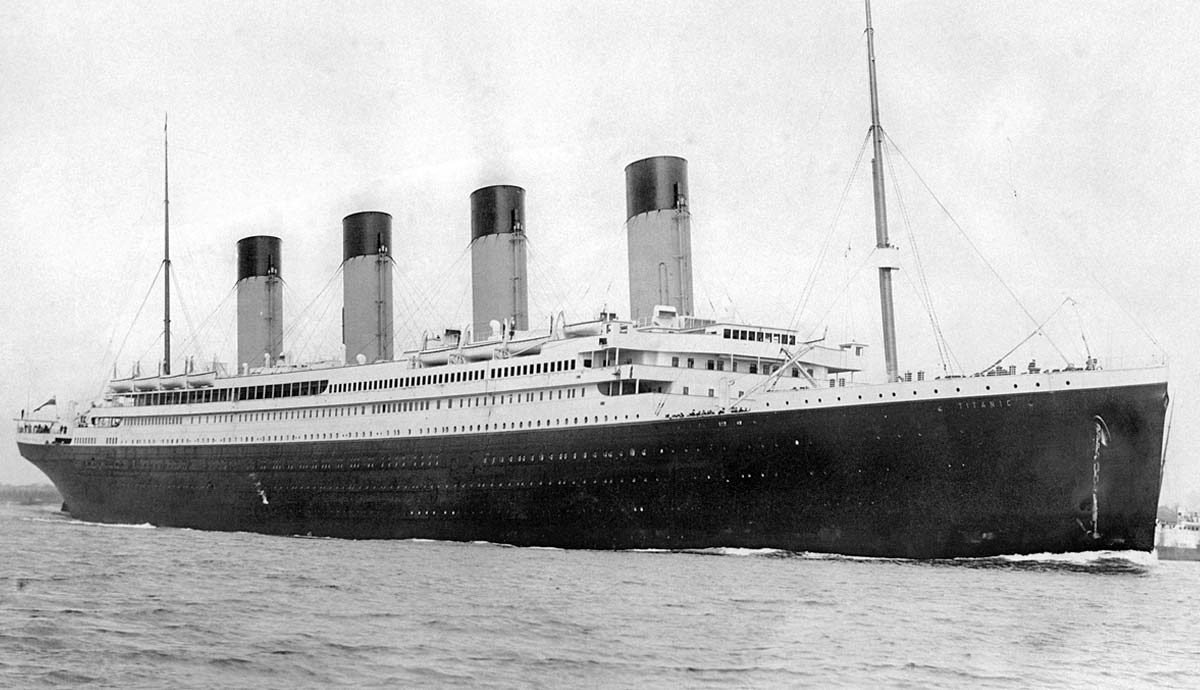
When the White Star Line introduced the RMS Titanic to the world, it was considered unsinkable. However, it did sink, and on its maiden voyage in April 1912 to New York City. It was a famous tragedy, immortalized in pop culture by James Camerons 1997 film Titanic. The story is terrifying, and perhaps even more so when it is known that the whole film is based in fact. This is the story of the Titanic, how it sank, and what year the Titanic sank.Building the TitanicThe Titanic Quarter, Belfast, Ireland, where the Titanic was built, photograph by William Murphy, 2016. Source: FlickrThe RMS Titanic was a product of the White Star Line shipping company. White Star Line was a British company owned by an American parent corporation, the International Mercantile Marine Co., which was owned by the famous financier J.P. Morgan.The Titanic was one of three ships dreamed up by Morgan and White Star Lines chairman, J. Bruce Ismay. They would be known as the three Olympic-class ocean liners: the RMS Olympic, RMS Titanic, and HMHS Britannic.At the time, Ismay and Morgan were facing stiff competition from the British Cunard Line and the German Hamburg America and Norddeutscher Lloyd lines. Particularly the Cunard Line, as it had recently unveiled the worlds fastest passenger ships, the Lusitania and the Mauretania.Ismay was not concerned with speed, however, but with size. Thus, he and Morgan planned for the Olympic-class liners to be the largest and most luxurious ships in the world, attracting customers to a modern interpretation of oceanic voyages.The Titanic and its sister ships were built more like floating hotels than ocean liners. They were decorated in several styles that communicated the luxury the designers drew on from hotels such as the Ritz in London. First-class cabins were in the Empire style, while the rest of the ship varied from Louis XV to Renaissance styles in the cabins and public areas for the first and second class passengers.A reconstruction of the First Class Grand Staircase on the RMS Titanic, photograph by Cliff, 2021. Source: World History Encyclopedia/FlickrThe construction of the Titanic began in early 1909 alongside its sister ship, the Olympic. The task was given to Belfast shipbuilders Harland & Wolff, who were told to spend what was needed on the ships, meaning money was no object in the construction of the vessels for the White Star Line. In the end, 3 million (in 2023, this equaled about 370 million) was spent on the first two Olympic-class ships.The Titanic took about 26 months to build and was an incredible challenge for the shipbuilders. The Titanic and Olympic were the largest vessels ever built at the time, which meant that everything that went into building the ships had to be the largest ever built as well. The last thing fitted to the Titanic was the largest hand-forged anchor ever created, which had to be pulled to Belfast by a team of 20 Clydesdales. When it was finished, the Titanic was a massive 882 feet (269 meters) long and 92 feet (28 meters) wide.RMS Titanic was launched for sea trials on May 31, 1911, in front of 100,000 onlookers. In the custom of the White Star Line, the ship was not formally named, nor was it christened with champagne. After several sea trials, during which it was tested for speed, braking, and maneuverability, the Titanic was ready for its maiden voyage, which was set for April 10, 1912.The Titanics Maiden VoyageTitanic passing through the Belfast Lough en route to the Irish Sea for her trials, April 2, 1912. Source: Picryl/Wikimedia CommonsThough the Titanic was registered to Liverpool as its home port, it set off from Southampton, England, along the south coast as it provided a more express service according to White Star Line. The Titanic, along with its sister ship the Olympic, would then sail once every three weeks from Southampton via Cherbourg, France, and Queenstown, Ireland, to New York.White Star Line even planned the Olympic-class route to allow passengers to get to Southampton. Special trains were scheduled from London and Paris to transport them to Southampton, where the company had also built a special deep-water dock to accommodate the size of the ships.RMS Titanic departing Southampton on April 10, 1912. Source: Picryl/Wikimedia CommonsOn its maiden voyage, the Titanic had about 885 crew members. Most were recruited within the month before sailing, and 40% were Southampton natives who were not permanent staff with White Star Line. The captain of the ship, however, was the companys most senior captain, Edward John Smith. Captain Smith had been heralding the White Star Lines maiden voyages since 1904 and was transferred to the Titanic, especially for its first trip.On its first journey across the Atlantic, the Titanic carried 1,317 passengers, 324 of whom were in First Class, 284 in Second Class, and 709 in Third Class. The ship could have accommodated 2,453 passengers but was under capacity due to a coal strike in the UK at the time.Many who had planned voyages had them canceled in the spring of 1912 because of the miners demonstration. Though the coal strike ended a few days before the Titanic set sail, it did not have much effect and the Titanic was only able to sail because of borrowed coal from other ships of the White Star Line.John Jacob Astor IV and Madeleine Force Astor circa 1910. Source: FlickrThough it was under capacity, the Titanic still hosted some of the most famous people of the time as passengers. Among the many financiers, athletes, artists, activists, entrepreneurs, and socialites on board, the most notable are millionaire John Jacob Astor IV with his wife, Madeline Force Astor, painter and sculptor Francis Davis Millett, Macys owner Isidor Straus and his wife Ida, millionairess Margaret Molly Brown, and industrialist Benjamin Guggenheim.Additionally, White Star Lines chairman, J. Bruce Ismay, and the designer of the Titanic, Thomas Andrews, were aboard the ship for its maiden voyage to assess its performance. J.P. Morgan intended to travel on the Titanic but canceled his voyage at the last minute.On board the Titanic, as was the custom with its designation as a Royal Mail Service (RMS) ship, was also mail that was allowed 26,800 cubic feet of space. Finally, several types of cargo were brought on board with passengers, the most valuable of which was a large neoclassical painting called La Circassienne au Bain by French artist Merry-Joseph Blondel.The Titanic stopped in Cherbourg, France, and Queenstown, Ireland to pick up additional passengers on its way to New York. On April 11, 1912, it cleared the rainy Irish coast and sailed onward for three days without incident. The Titanic had covered 1,807 nautical miles, only 193 miles short of its destination when tragedy struck.When Did the Titanic Sink?The front page of the April 16 issue of The World Newspaper announcing the sinking of the Titanic on April 15, 1912. Source: Library of Congress, Washington DCThe Titanic sailed through the waters of the Atlantic, nearing Newfoundland, and received warnings from several other ships about drifting ice. Captain Smith, however, refused to pay attention to the warnings, as he claimed that he could not imagine any condition which would cause a ship to founder.One of the ships lookouts spotted an iceberg directly in front of the Titanic around midnight on April 14. He alerted the bridge, where the First Officer attempted to order the crew to steer around it. However, it was too late as the starboard side of the ship had already struck the iceberg, creating several holes below the waterline.Sixteen watertight compartments sat in the hull, which had been breached by being dented. The dents were so severe that they caused the ships steel plates to buckle, causing water to rush into the watertight compartments. Five of these compartments were breached, and a sixth was also compromised.The breach of the five compartments made it clear that the Titanic was going to sink. Indeed, by design, the ship could not float if more than four compartments were filled. Thus, the Titanic began sinking bow-first into the depths, with water spilling into more watertight compartments as its angle became steeper.The Sinking of the Titanic, by Henry Reuterdahl, April 27, 1962. Source: Wikimedia CommonsThe crew and passengers were ill-equipped and unprepared for such an emergency. Contemporary logic was that ships were largely unsinkable, so lifeboats were only kept aboard as a transfer from one vessel to another in the case of an accident. There were only enough lifeboats onboard the Titanic to carry about half of the already limited number of passengers. If the ship had been full, the lifeboats would have only carried about a third of the passengers and crew.To make matters worse, the crew had not been trained in lifeboat evacuations and sent several of the boats out barely half-full, as they had no idea how many people they could fit in one boat. The protocol of letting women and children access lifeboats first was generally followed, which was reflected in survival rates from the disaster. Women survived at a rate of 75% and children at 50%, while mens survival rate was only about 20%.The survival rate also depended on the class of the passengers. For the most part, third-class passengers were left to fend for themselves as the ship sank and water poured into the lower cabins. Animals were released from their cages, and, in the end, only three of the several pets brought aboard survived.Titanic Lifeboats on the way to the RMS Carpathia. Source: Library of Congress, Washington DCAround 2:15 am on April 15, 1912, the sinking rate quickly increased as the top deck of the ship dipped underwater and water flowed through open doors and hatches. As the stern came out of the ocean and the propellers were exposed, the Titanic broke into two pieces between the second and third smokestacks, as the ship could no longer handle the immense force placed on the keel.The stern remained afloat for a few minutes before finally sinking around 2:20 am with several hundred people still clinging to its vertical deck. These passengers and crew were dunked into 28 F (-2 C) water. Though the lifeboats had room for around 500 more passengers, only five people were rescued from the water after the ship sank fully.After several distress signals were sent to no avail while the Titanic sank, RMS Carpathia finally arrived at the scene at around 4 am. It was the fastest to respond to Titanics earlier calls for help after at least two other ships had failed to respond. In all, 706 passengers and crew survived the sinking and were transported aboard the Carpathia to New York. In total, 1,517 people died during the sinking.The Lasting Impact of the Titanic SinkingCrowd awaiting Titanic survivors, by Bain News Service, April 1912. Source: Library of Congress, Washington DCThe RMS Carpathia took three days to sail into New Yorks Pier 54 and was met by a crowd of 40,000 people. Immediate relief was provided to survivors, they were given food, clothing, and shelter by several charitable organizations. However, most passengers headed onwards almost immediately. Several wealthy passengers chartered private trains, and the Pennsylvania Railroad even commissioned a special free train to transport survivors to Philadelphia.Before the Carpathia could even reach New York, investigations were being called by the US Senate. These hearings began on April 19, 1912, and concluded on May 25 after several survivors were subpoenaed to appear before Congress only days after the harrowing incident.In all, fewer than a third of the people on board the Titanic survived its sinking. Only 214 crew members survived. The Captain and First Officer went down with the ship. The survival rate was sharply divided. In First Class, 97% of women survived, while in Third Class, 46% of women survived. Wealthier passengers were prioritized over those who were trapped in the lower classes.French brothers Michel (age 4) and Edmond Navratil (age 2) of Nice, France, seated on their mothers lap. Their father died in the disaster. Source: Library of Congress, Washington DCSeveral trips were made from Canada to collect bodies that remained in the water in the weeks following the disaster. Overall, 333 bodies were recovered, and about two-thirds of them were identified and either taken by relatives or shipped to locations across the United States and Europe.The Titanic was considered unsinkable, which led to several problems with safety. This was analyzed after the fact and was the catalyst for introducing several measures to improve navigational safety on passenger ships. The international community came together to establish regulations and maritime standards, the most important being the Convention for the Safety of Life at Sea (SOLAS). In addition to safety regulations, navigational technology was developed based on the disaster of the Titanic. For example, radio acoustic ranging navigation was introduced after the disaster, which was the basis for modern sonar.For several decades after the sinking, the Titanic was lost below 12,000 feet (3,800 meters) of water in the North Atlantic. However, on September 1, 1985, the wreckage was discovered by a French-American expedition led by Dr. Robert Ballard and Jean-Louis Michel. The expedition found the wreckage 350 nautical miles off the coast of Canada.Titanic Memorial, Washington, D.C., by Harris & Ewing, 1931. Source: Library of Congress, Washington DCAfter its discovery, Congress passed the RMS Titanic Maritime Memorial Act of 1986, which directed the initiation of multinational conservation efforts and developed guidelines for exploration, salvage, and research surrounding the Titanic. In the nearly four decades since its discovery, several thousand artifacts, preserved due to the absolute cold of the water, have been recovered. In 1987, one expedition alone salvaged 1,800 objects from the ship.Several memorials have been established in countries affected by the disaster, including Southampton, Liverpool, New York, Washington D.C., and Belfast. The event has also inspired several creative endeavors, the most famous of which is James Camerons Titanic (1997), which became the highest-grossing movie in the world up until that time and won eleven Academy Awards, including Best Picture and Best Director.The sinking of the RMS Titanic on April 15, 1912, is still the deadliest peacetime shipwreck in history. It is a disaster that still fascinates the general public and researchers alike. The people who perished aboard the Titanic did so as a result of several factors, but it serves as a cautionary tale for those sailing the Atlantic, even today.
0 Commenti
0 condivisioni
18 Views

 English
 Arabic
 French
 Spanish
 Portuguese
 Deutsch
 Turkish
 Dutch
Dutch
 Russian
 Romaian
 Portuguese (Brazil)
 Greek
Greek