


ALLTHATSINTERESTING.COM
Archaeologists In Virginia Have Uncovered Long-Lost Native American Settlements Described By John Smith In 1608
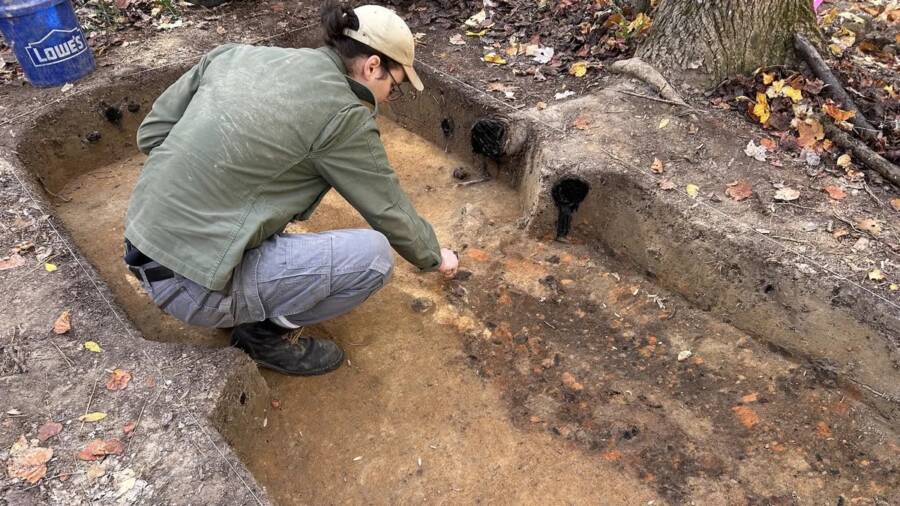
Julia KingA team from St. Marys College of Maryland has unearthed 11,000 Indigenous artifacts along the Rappahannock River.Over 400 years ago, English explorer John Smith wrote of several Indigenous settlements along a river in modern-day Virginia. Smiths journals also described an attack on his men by Native Americans from one of these villages. Yet, no evidence of them had ever turned up. Some scholars disputed Smiths claims outright. Now, however, archaeologists may have vindicated the explorers records. For months, a team of researchers from St. Marys College of Maryland has been surveying the land around the Rappahannock River for signs of these early settlements. At first, their work seemed like a lost cause. Then, this summer, the team unearthed thousands of artifacts, including beads, pieces of pottery, stone tools, and tobacco pipes. In total, they uncovered around 11,000 objects that may corroborate John Smiths journal entries. Lost Villages On Rappahannock Tribal LandWhen Captain John Smith explored the Rappahannock River in 1608, he wrote down his observations of the land belonging to the Rappahannock tribe. Smiths journals describe a thriving civilization with at least 14 villages mapped along the rivers northern banks, including three heavily fortified towns atop Fones Cliffs: Wecuppom, Matchopick, and Pissacoack.Smith noted the tribes sophisticated use of the terrain, describing villages surrounded by flat fields and cleaner gardens than those in England. Despite initial hostilities including an ambush at Fones Cliffs in which warriors camouflaged as bushes rained arrows upon Smith and his men relations eventually warmed through the mediation of Mosco, a Native American guide. Public DomainEnglish explorer John Smith wrote extensively of Native American tribes in Virginia.As the Washington Post notes, the U.S. government only formally recognized the Rappahannock tribe in 2018. The tribe had been trying to reclaim its ancestral land for years, but that effort proved to be difficult. Indian people have long known of the land and our history and presence here, said Rappahannock chief Anne Richardson. But so often things arent considered real until theyre found or discovered.'John Smith was meticulous in keeping records of his travels across America. He spent much of his time mapping the land and writing about the Native American groups he encountered. But he was also a notorious self-promoter. Most historians agree that his maps and basic observations were largely accurate, but other journal entries such as his encounters with Pocahontas are clear embellishments, if not outright fabrications. Public DomainSmiths map of Virginia, which shows Native American territories.This has caused some scrutiny to be applied to his records in more recent years, which has, in part, contributed to the erasure of some of the Rappahannock tribes history. Smith wrote about their villages along the river, but since modern researchers had not found any physical evidence to back that up, Smith was dismissed even when oral histories of the tribe corroborated his account. My people have lived here since the beginning, Richardson explained on the podcast Tribal Truths back in 2022. Rappahannocks would have been able to look down both sides of the river here and see potential enemies or guests coming before they ever got here. And so this was a very strategic place for them to live, for many reasons.The oral history of the tribe was often dismissed as well. Oral history gets a bad rap in some quarters because memories are not perfect, but documents arent either, Julia King, a professor of anthropology at St. Marys College of Maryland who led the recent excavations at Fones Cliffs, told Live Science. The strategy is to read both with and against the grain of both sources and to question everything.As frustrating as that has been for the Rappahannocks, though, new discoveries between 2022 and 2025 have supported their oral history and Smiths account.Thousands Of Artifacts Found Along The Rappahannock RiverJulia KingA collection of some of the artifacts unearthed along the Rappahannock River.King and her fellow excavation team members looked both to old documents and the tribes oral history to identify the locations of centuries-old villages along the river. They trekked through the woods, dug shallow pits, and hunted for physical proof of the Rappahannock tribes presence. Finally, after months of searching, they started to find Rappahannock artifacts thousands of them. The presence of these artifacts confirms both oral histories and documents that suggested settlements were located here in 1608, when Captain John Smith spent several weeks mapping the Rappahannock River, King said. Nearly 11,000 artifacts were uncovered during their excavations, ranging from small beads and shards of painted pottery to stone tools and pipes. All of it was found on land the Rappahannocks have been trying to reclaim land that John Smith correctly identified as the tribes more than 400 years ago.After reading about the Indigenous artifacts unearthed along the Rappahannock River, learn about Jamestown Colonys Starving Time. Then, go inside the story of John Rolfe, the English colonist who married Pocahontas.The post Archaeologists In Virginia Have Uncovered Long-Lost Native American Settlements Described By John Smith In 1608 appeared first on All That's Interesting.
0 التعليقات
0 المشاركات
17 مشاهدة

 English
 French
 Spanish
 Portuguese
 Deutsch
 Turkish
 Dutch
Dutch
 Italiano
 Russian
 Romaian
 Portuguese (Brazil)
 Greek
Greek