Going Back to the History Books: How Recent DNA Analysis is Rewriting Feline History
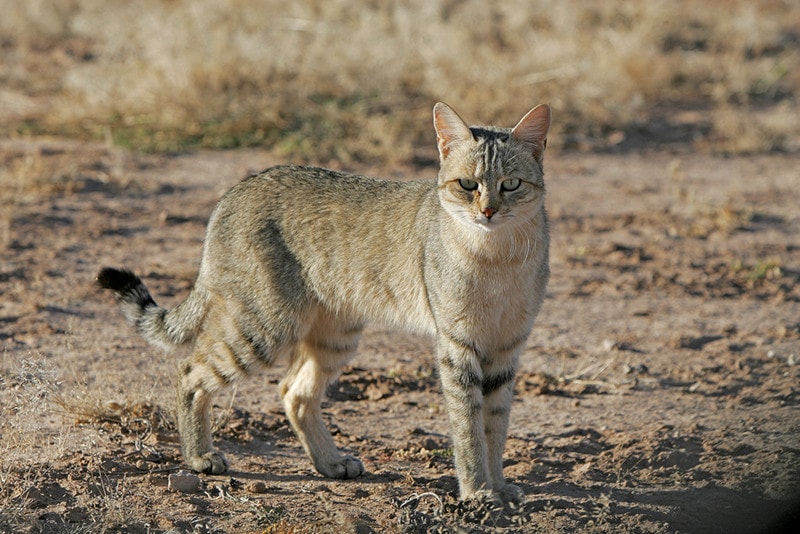
If there is one thing that scientific research has proven, its that we can never know anything for certain; just as we start to feel confident about our knowledge, along comes a new study that completely undermines what had previously been proven. Thats exactly what appears to have happened with a recent DNA comparison of modern feral and domesticated cats with that of ancient felines.Until now, there has been near consensus on the theory that the modern domestic cat, Felis catus (aka Felis silvestris catus), moved both genetically and geographically from the African wildcat (Felis lybica lybica) around 10,000 years ago. Although the origins of the domestic cat are not in question, DNA analysis suggests that the fluffy feline companions we know and love today may have only been around for a mere 2000 years.Image Credit: JodieAndCan, ShutterstockWe know that cats held a place of respect and worship for the ancient Egyptians that knowledge is, quite literally, set in stone but the recent research appears to contradict the previously held belief that African wildcats made their way from Northwest Africa with Neolithic Farmers as they migrated across Europe, and were genetically altered by domestication shortly thereafter. Instead, the DNA indicates that this migration occurred in two distinct waves, with the introduction of the European wildcat, Felis silvestris (aka Felis silvestris silvestris) across much of Europe occurring around 9500 to 6300 years ago, and a second wave from northern Africa no earlier than around 2000 years ago.Not only does this alter the history of feline domestication, but it also alters the assumed genetic path.Based on previous knowledge, it was believed that the domestic cat was a direct descendant of the European wildcat. What this new DNA analysis indicates is that Felis catus is actually the result of domestication and hybridization of the African wildcat (F. l. lybica), making it a relative, not a descendant, of F. silvestris. It also suggests that the domestication of the cat has been a much quicker process than we previously believed, showing that humans are more receptive to training than we may have realised!Image Credit: Jesus Cobaleda, ShutterstockSo, what does this mean for the modern-day feline?When cats were believed to have experienced ten millennia of living alongside humans with relatively little physiological alterations compared with what we see in the myriad dog breeds, it suggested a more robust and resilient creature, resistant to the often unwise and ignorant interference of selective breeding by humans. In light of this revelation, one cant help but be concerned that we are just at the beginning of their morphological makeover.With fundamentally unhealthy breeds like the Dwelf, Munchkin, and Scottish Fold becoming more popular, are we just seeing the tip of the iceberg of just how far our misguided attempts at creating the perfect cat might go?Lets hope not.Feature image Credit: Erwin Niemand, ShutterstockDid You Know? Our breaking news articles are featured in our weekly emails. Dont miss out on the latest and sign up for our newsletter below!




 Arabic
 French
 Spanish
 Portuguese
 Deutsch
 Turkish
 Dutch
Dutch
 Italiano
 Russian
 Romaian
 Portuguese (Brazil)
 Greek
Greek