


WWW.THECOLLECTOR.COM
8 Facts About Ulysses S. Grant You Didnt Know
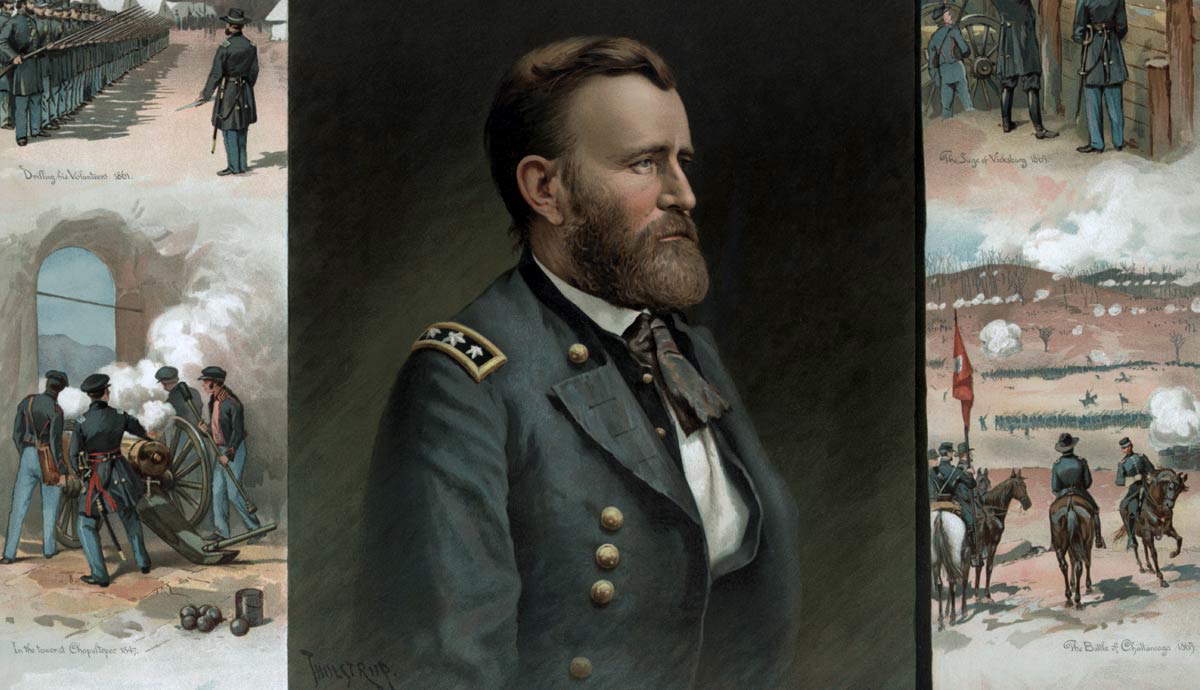
Hiram Ulysses Grant, better known to the world as Ulysses S. Grant, served many roles throughout his 63 years of life. Grant was a decorated military man, a dedicated father and husband, and president of the United States. His actions in life led to him earning a permanent place in foundational US history. However, Grant was a multifaceted man of many reputations and, occasionally, paradoxes. Who was the true man behind the legend of the history books, and what shaped him into that person?1. Grant Was a Gifted WriterGrant working on his memoirs. Source: National Park ServiceWhen Ulysses S. Grant put pen to paper, he tended to make an impact. After a bank scam left him broke in the early 1880s, Grant wrote a series of essays about his life adventures and time in the Civil War that were published in magazines. He then worked with friend Mark Twain to publish his memoirs. Some alleged that Grant didnt write the autobiography himself but that Twain did it. However, the original handwritten copy in Grants script proved this false, though Twain supported his friend with proofreading services. Twain also assisted Grant with securing a contract to maximize his royalties with a publishing company.Grants writing desk that he used at his St. Louis home before the Civil War. Source: Missouri Historical Society / Wikimedia CommonsGrant finished his two-volume memoir just days before he passed away. The book was an instant bestseller, and Charles Webster Publishing cut Grants wife Julia the biggest royalty check that had ever been written at that time: $200,000. Grants book, Personal Memoirs, is still in print today and is considered a classic piece of American literature.2. Ulysses S. Grant Wasnt His Real NameGrant depicted in scenes of his military career from West Point to Appomattox. Source: Library of Congress / Wikimedia CommonsGrant was born Hiram Ulysses Grant in 1822. Since childhood, he hated his initials, which spelled H-U-G. When he joined West Point Military Academy in 1839, he enrolled as Ulysses Hiram Grant to avoid his given initials. His benefactor, who sponsored his appointment, then made a paperwork error, listing the young mans middle name as Simpson, confusing his mothers maiden name for his middle name. Grant didnt mind and retained his new name, conveniently giving the patriotic young man the initials U.S. Grant. His fellow West Pointers called him Uncle Sam, a nickname that was later shortened to Sam. Grants initials would spawn other new nicknames throughout his career, including Unconditional Surrender Grant during the Civil War. One of his less flattering nicknames during that time was The Butcher.3. He Never Held Elected Office Before the PresidencyPortrait of Grant taken by Matthew Benjamin Brady around 1870. Source: Library of Congress / Wikimedia CommonsUnlike most presidents in United States history, Grant never held an elected office before ascending to the presidency in 1868. Despite this, he was a shoo-in for the job. Grant hadnt expressed interest in running but was courted by the radical Republican movement, people who were frustrated with current president Andrew Johnsons progress in Southern Reconstruction. Grant was incredibly popular with the public, especially in the North, and won the Electoral College vote with a 3 to 1 margin over his opponent, New York Governor Horatio Seymour.4. In His Day, He Was the Youngest President Ever ElectedA postwar photo of Grant. Source: Library of Congress / Wikimedia CommonsWhile John F. Kennedy currently holds the record as the youngest-ever elected US president (43 years old), Grant held the title for a time until Kennedy was elected and took office in 1961. Grant was 46 years old when he took office in 1869. However, Theodore Roosevelt, who was not elected but succeeded the assassinated William McKinley, holds the title of youngest-ever serving president, ascending to the role at age 42. Roosevelt resumed his duties as president when he was elected in 1904 at the age of 46.5. Grants Reputation as a Drunk Haunted His CareerA chromolithograph of the general from 1866. Source: Library of Congress / Wikimedia CommonsAfter serving in the Mexican-American War, Grant remained an officer in the US Army. His work took him across the country to posts on the western frontier and in the Northwest. Grant was very close with his wife and was missing out on watching his young children grow up. The loneliness he felt led to increasing consumption of alcohol to quell his depression. As a result, he sometimes shirked his duties and ended up resigning from the army in 1854.These experiences resulted in Grant being labeled a drunk or alcoholic by some contemporaries and historians. In fact, Grant biographer Ron Chernow is frequently blamed for over-emphasizing this idea. However, in recent years, his reputation as an alcoholic has been challenged, and his name has been cleared by researchers. While there is no denying that Grant drank alcohol and was an occasional binge drinker, he was by no means an alcoholic.6. A Love of Cigars Did Him InThe Ulysses S Grant Memorial in Washington D.C. Source: DBKing / Wikimedia CommonsGrant earned a reputation as a prolific cigar smoker, with some sources quoting a twenty-stogie-a-day habit. However, while Grant did smoke heavily during the Civil War, consuming twenty cigars on at least one day, historians believe that his daily consumption was not regularly at this level. The young man first tried smoking at West Point, found that it irritated his lungs, and quit. However, during the Mexican-American War, he returned to the habit, and it stuck. He is reputed to have been an appreciator of fine tobacco and was fond of the Mexican cigars he encountered during wartime. Civil War staffer Ely Parker recalled that smoking seemed to be a necessity for Grant and that he smoked the hardest when deep in thought. Unfortunately, Grants tobacco habit contributed to his demise when he developed throat cancer as a result of his smoking habit. His cancer killed him on July 23, 1885, when he was 63 years old.7. He Had a Complicated Relationship With SlaveryGrants father, Jesse, spent time living with John Brown, a zealous abolitionist. Source: Library of Congress / Wikimedia CommonsGrant grew up in a home where his father was a staunch abolitionist, a man who had spent time living with John Brown as a youth. However, his in-laws owned an expansive plantation with 30 slaves. His wife owned four slaves when they married, and there is evidence that Gant himself briefly owned a man named William Jones, whom he freed before the start of the Civil War. It is unknown whether or not Grant purchased Jones or was given his service as a gift from his in-laws. This led to Grants designation as the last president to own slaves at any point in his life.Grant on horseback in an 1890 illustration. Source: Library of Congress / Wikimedia CommonsGrant was said to suffer some embarrassment at his extended familys relationship with slavery. While living with his father-in-law on his plantation after his first stint in the military, Grant worked on the farm alongside enslaved people and was said to be too gentle to manage [slaves], according to neighbors. Unlike his commander-in-chief, Abraham Lincoln, whose main goal at the start of the Civil War was simply to preserve the Union, regardless of the state of slavery (If I could save the Union without freeing any slave, I would do it), Grant wrote, the North and South could never live at peace with each other except as one nation, and that without slavery.8. He Suffered From MalariaA red blood cell infected with malaria, giving it a knobby appearance. Source: National Institute of Allergy and Infectious Disease / Wikimedia CommonsMalaria, a mosquito-borne protozoal disease, wreaked havoc during the Civil War era, with more than one million cases in the Union Army. The relationship between mosquitoes and malaria was not discovered until 1897, but 19th-century doctors did know that quinine had an effect on the disease, improving symptoms. However, while Grant suffered from malaria episodes during the Civil War, he likely contracted it earlier, possibly during his time as a soldier in the Mexican-American War or even as a child. He suffered frequent attacks of the disease while he was living with his wife in late-1850s St. Louis after his resignation from the army. In fact, his suffering is believed to have been to blame for some of his actions in which he was accused of drunkenness. His erratic behavior and physical sickness from the disease, including during the siege of Vicksburg, was inaccurately attributed to drinking.While Malaria is no longer the scourge it was during Grants time, it remains one of the worlds most common diseases in modernity, with nearly 290 million people infected worldwide annually.
0 Comments
0 Shares
22 Views

 Arabic
 French
 Spanish
 Portuguese
 Deutsch
 Turkish
 Dutch
Dutch
 Italiano
 Russian
 Romaian
 Portuguese (Brazil)
 Greek
Greek