


WWW.THECOLLECTOR.COM
Boom, Bust, and Boom! The History of Nevada
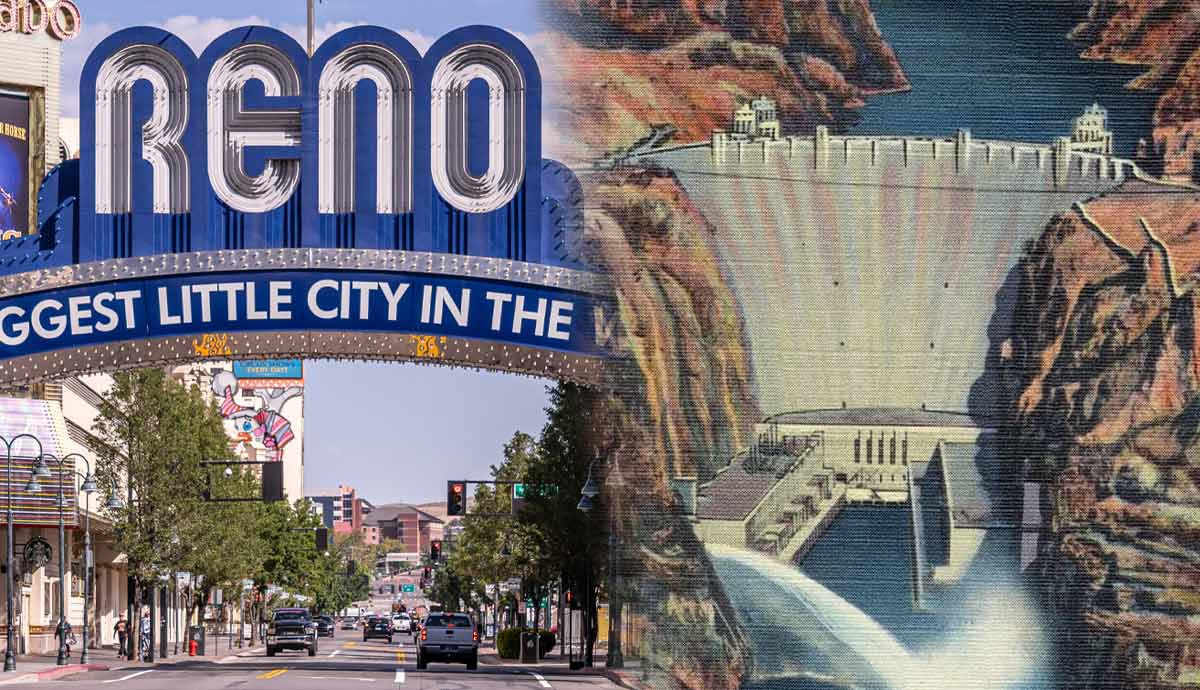
Nevada, the 36th state admitted into the Union, has a rich and unique history. Behind the glitz and glamor of the neon-lit resorts and casinos of the cities, Nevada is filled with abandoned mines, ghost towns, and a legacy of struggle. There is far more to the states past than first meets the eye.Nevada Before NevadaFaded over millennia, the petroglyphs near Lake Winnemucca are the oldest in the United States. Source: Wikimedia CommonsAlthough the inaugural date for the state of Nevada is October 31, 1864, this does not mean the land did not have a history beforehand. The history of human habitation in this area stretches back many thousands of years. In fact, Nevada is the home to the oldest known rock art in the United States. These petroglyphs are located near Lake Winnemucca and are estimated to be between 10,500 and 14,800 years old. The archaeological record suggests that settlements in the area date back even further to around 20,000 years ago.Relatively little is known about the people who inhabited the region so long ago. Around 700 years ago, the ancestors of the Shoshone and the Northern and Southern Paiute People entered the region. Several hundred years later, their descendants would be the ones to meet European settlers for the first time, ushering in a new era for the land and its people.Red Rock Canyon, Nevada. Source: goodfon.comThe Spanish were the first Europeans to make contact with the Indigenous people but held little regard for any sense of Indigenous land rights. By 1790, most of North and South America had been claimed or annexed by the Spanish Empire, from the southern tip of South America all the way to the edges of what is now Alaska. The Spanish named the area Nevada, an adjective in Spanish meaning snowy or snow-covered, in reference to the snow-covered mountains in winter.War with the nascent United States would challenge claims on the North American continent, and the two nations would come to blows as the United States expanded westward. From 1846 to 1848, the Mexican-American War was fought, which ended in disaster for Mexico. The Treaty of Guadalupe-Hidalgo ended the conflict, and Mexico was forced to cede vast amounts of territory. Among these lands was Nevada, the first part of the Utah Territory, and then, as a separate entity, Nevada Territory, in March 1861.Statehood in the Civil WarThe location of Nevada in the United States. Source: Wikimedia CommonsAlthough Mexico and the Spanish Empire before it had claimed what is now Nevada, neither of these nations made any serious attempts at settling the area. In the early 19th century, American settlers had already reached the territory, but their presence was not permanent.The first permanent non-Indigenous settlers were Mormons, who, in 1851, set up waystations on their route to the California gold fields. The first population boom occurred in 1859 after the discovery of silver deposits. The Comstock Lode ushered in a new era for the area as pioneers flocked to the west, making their homes in Carson City, which had been established one year earlier.With the boom in population, the foundation was laid for Nevada to become a state. The following years, however, plunged the nation into conflict as the South seceded and the North fought bitterly to save the Union in the American Civil War.It is a common misconception that the Union sought statehood for Nevada to access its wealth, which would help the Union cause. When Nevada achieved statehood in late 1864, the truth was that the war was already winding down, and the Union was well on its way to victory over the Confederacy.Carson City in the early 1860s. Source: aroundcarson.comNevada and its electoral votes were considered valuable for the re-election of Abraham Lincoln, who faced significant opposition. A three-way race for the presidency was on the cards for 1864, as the Republican Party had split into two factions. Lincoln led the moderate faction called the National Union, which believed the Confederate States should be readmitted into the Union with a reasonable set of conditions. Facing him was General John C Fremont, who had formed the Radical Democracy Party and wanted harsher penalties for the Confederate States.The Democrats were represented by General George B. McClellan, who wanted to exonerate the Confederate states completely. Fremont and the Radical Democracy Party withdrew from the race before voting.Nevada was perceived to be heavily pro-Unionist and strongly Republican, and by thus achieving statehood would likely throw significant weight behind Lincoln. On October 31, 1864, Nevada became the 36th state and contributed to Lincolns re-election several days later. The admission also meant that Lincoln had another state that would back his anti-slavery amendments.In the following years, the state territory would expand at the expense of its neighbors. The southernmost point of Nevada was taken from Arizona, but since Arizonans had had significant Confederate sympathy during the war, their protests carried little weight.Economic StruggleMiners in Mohawk Mine in Goldfield, Nevada, c. 1900-1905. Source: Wikimedia CommonsIn the 1870s, the boom times for Nevada were tempered by federal decisions that reduced the value of silver. The United States had yet to formally declare its move to the gold standard, but the process had already begun, and Nevadas silver miners found themselves with significantly reduced profits. Many Nevadans tried their hand at ranching, but inconsistent fortunes did not bode well for this industry either.Nevadas population declined, but the bad times for the state would not last forever. At the turn of the century, new strikes of silver were discovered in Tonopah in the south, while gold was discovered nearby in aptly named Goldfield, and copper was found in Ely to the north. These discoveries reversed Nevadas fortunes, and the states economy began to recover.Technological advancements led to a great demand for minerals in the 20th century, and, coupled with the huge demand generated by the First World War, Nevadas mining industry surged.With the newfound economic prosperity, railroads were built, and irrigation infrastructure was laid. Transport costs were greatly reduced as a result, and ranching became a viable industry.However, economic prosperity did not last. Like the rest of the country, Nevada was plunged into economic disaster during the Great Depression, an era that initiated hard times and was felt globally.Downstream Face of Boulder Dam (Hoover Dam). Source: rawpixel.comThe legalization of gambling and the initiation of the Hoover Dam project would help limit the damage to Nevadas economy and aid in industrial development. Gambling turned the city of Reno into a tourist hotspot but also attracted crime syndicates who wished to capitalize on opportunities linked to the trade. These syndicates were also linked to the prostitution trade (which is currently legal in licensed brothels in ten of Nevadas 16 counties). As such, a well-developed criminal underworld thrived.Meanwhile, government expenditure in Nevada was the highest per capita of any state during the Great Depression. As a result, Nevadans generally suffered less than their out-of-state compatriots.Rapid Urban Expansion: Las Vegas & Nuclear TestingLas Vegas. Source: needpix.comThe economic fortunes tied to Nevadas southern region in the early 20th century resulted in a significant increase in population. As a result, the city of Las Vegas was founded in 1905. Within the city limits is an old Mormon fort built in the area as a halfway point between Salt Lake City and Los Angeles.Like in Reno, crime syndicates opened their operations in Las Vegas, and the city thrived as entrepreneurs were drawn to the city to grasp opportunities for commercial expansion. In March 1936, the Hoover Dam was completed, and Las Vegas became its first customer.The dams construction formed Lake Mead, and combined with the pull of gambling and the states liberal laws on marriage and divorce, Las Vegas became a major destination for tourists.Panorama of Lake Mead. Source: Wikimedia CommonsThe criminal element, however, made Las Vegas a dangerous place. Mafia bosses competed with each other and eventually drew the attention of police authorities who spent decades trying to stamp out the criminal operations.Meanwhile, from the 1940s onward, another industry brought prosperity to Nevada. The Department of Defense saw Nevada as a perfect place to train in harsh conditions and, most importantly, to test nuclear weapons. The opportunities surrounding the opening of military bases also led to higher employment rates, helping Nevada flourish.In the 1950s, the state became a tourist hotspot for those wishing to see the explosions and mushroom clouds of nuclear weapons testing! The Nevada Test Site, 65 miles north of Las Vegas, was the site of many hundreds of tests. In the 1950s, many of these tests were conducted above ground and were visible from many parts of the city, drawing huge crowds of onlookers and journalists who came to witness the events.In 1967, Nevada passed the Corporate Gaming Act, which removed financial background checks for applicants seeking gambling licenses. This attracted corporations and entrepreneurs to the state, who invested in casinos, slowly replacing mafia control with legitimate investment. From the 1990s, this trend saw Nevada cities, particularly Las Vegas, change, with hotels, casinos, and resorts being built that offered far more family-oriented experiences.Nevada TodayReno, Nevada, 2020. Source: Wikimedia CommonsWhile Nevadas fortunes steeply climbed in the latter half of the 20th century, the 21st century has brought new challenges that could completely reverse this trend. The legalization of gambling in other states and the advent of online gambling have threatened Nevadas dominance of the gambling industry, hurting tourism in the processan industry also greatly affected by the COVID-19 pandemic.Before the surge in unemployment caused by the pandemic, Nevada had an unemployment rate of 4%, which was exactly on par with the national average. In 2020, the national average skyrocketed to 15% before returning to 4% within two years. At the same time, Nevada was hit incredibly hard, and the state unemployment rate rose to 31% in April 2020 before recovering. The state unemployment rate as of September 2024 remains at 5.5%, the highest in the United States.Coupled with an increasingly unaffordable housing market and high rent, prospects for young Nevadans are not as high as they had been for their parents and grandparents.Nevertheless, the Silver State still echoes the deeds of the pioneers and entrepreneurs who built it. It is a place of beauty and opportunity with a unique character among the 50 states. As the times change, much of the states history has yet to be written.
0 التعليقات
0 المشاركات
25 مشاهدة

 English
 French
 Spanish
 Portuguese
 Deutsch
 Turkish
 Dutch
Dutch
 Italiano
 Russian
 Romaian
 Portuguese (Brazil)
 Greek
Greek