


WWW.THECOLLECTOR.COM
Celtic Kingdoms in Britain: Did the Catuvellani Rule the Silures?
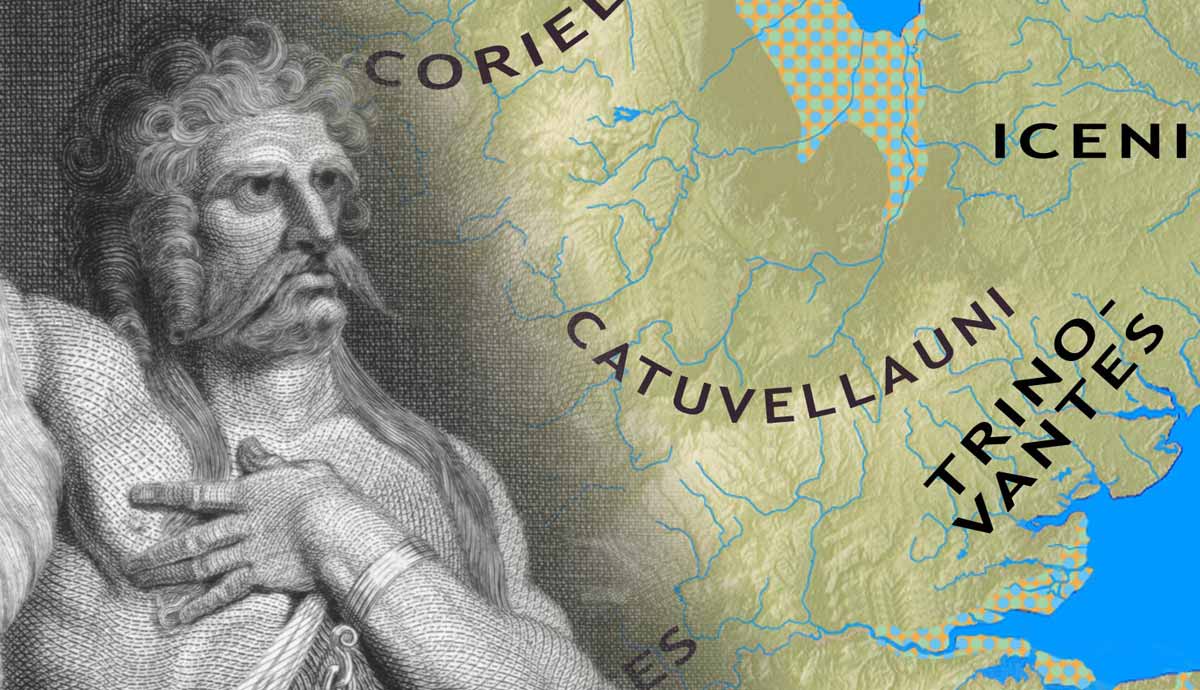
In the pre-Roman era, Britain was populated by Celtic tribes, and the Catuvellani were among the most powerful. During Caesars invasion of Britain in 54 BCE, their king, Cassivellaunus, was the leader of an alliance of tribes that resisted the Romans. It was based around the London area, encompassing a large portion of the surrounding country. However, there is some evidence to suggest that their influence may have extended even further than generally thought. It is possible that the Silures tribe, as far west as southeast Wales, may have been subject to the Catuvellani.Geography of the Catuvellauni and the SiluresMap of the tribes of southern Britain, based on Ptolemys description in c. 150 CE. Source: Wikimedia CommonsTo begin with, let us examine what we know about the distribution of the tribes of pre-Roman southern Britain. In the southeast corner, there was the Cantiaci tribe, which gave its name to the modern county of Kent. To the west was the Atrebates tribe, which extended at least as far west as Winchester. Still further in that direction was the Durotriges tribe, extending into the West Country. Immediately north of these three tribes were three other tribes. Approximately speaking, above the Cantiaci were the Trinovantes, in the Essex area; above the Atrebates were the Catuvellauni, in the London area; and above the Durotriges were the Dobunni.This latter tribe touched the eastern border of what is now southern Wales. Bordering them to the west, inhabiting southeast Wales, was the Silures tribe. Although they appear far away from the Catuvellauni, they were only separated from them by a single tribe, albeit a large one. Nevertheless, there is some evidence that the Silures were subject to the kings of the Catuvellauni.Evidence From the Activities of CaratacusCaractacus at the Tribunal of Claudius in Rome, Andrew Birrell, 1792. Source: Wikimedia CommonsOne piece of evidence comes from the recorded activities of a king named Caratacus. He was from the Catuvellauni tribe. His father, Cunobelinus, had been the powerful king of the tribe and was on generally friendly terms with the Romans. Cunobelinus eldest son, Togodumnus, succeeded him and was ruling during the Claudian invasion of Britain in 43 CE. Caratacus, although not the king at that time, still held a prominent position and joined Togodumnus side in fighting against the Romans.However, very early on in the Roman invasion, Togodumnus was killed. This is reported by Dio Cassius. However, he does not explain what happened to Caratacus, despite having mentioned him earlier. Presumably, Caratacus may have succeeded Togodumnus as king of his tribe, although Dio does not specifically mention this. If this did happen, then it could only have been a very brief rule, since the Romans swiftly conquered Catuvellauni territory in the wake of Togodumnus death.Caradog, by Thomas Prytherch, 1906. Source: National Library of WalesThe next reference to Caratacus in the history of the Roman invasion of Britain is seen in the writings of Tacitus. He refers to Caratacus as leading the Silures in southeast Wales in guerrilla warfare against the Romans. The final battle between Caratacus and the Romans, in which the former was defeated, occurred in 50 CE. Hence, Caratacus appears to have been active as the ruler of this tribe in southeast Wales for some seven years.The fact that Caratacus was a prince of the Catuvellauni tribe in the southeast of England makes his appearance shortly afterward as the leader of the Silures in southeast Wales rather conspicuous. Was he a fugitive prince who was warmly welcomed by the Silures and set up as their ruler? Or, alternatively, had the Catuvellauni tribe already exerted some level of control over the Silures, thus making Caratacus leadership role perfectly natural and even expected? The latter is certainly a distinct possibility, even if it cannot be definitively confirmed.Evidence From Roman RecordsSilver coin of the Dobunni tribe, c. 30-45 CE. Source: Wikimedia CommonsAs mentioned earlier, the Catuvellauni and the Silures were separated by the large Dobunni tribe. It would obviously not be possible for the Catuvellauni kings to have dominated the Silures if the Dobunni tribe was not also subject to them. Is there any evidence that this was the case? As it happens, there is some evidence from the writings of Dio Cassius.After referring to the initial defeat of Togodumnus and Caratacus, prior to the battle that killed the former, Dio mentions that the Romans subdued a part of the Bodunni. He states that this tribe was ruled by the Catuvellauni. Now, who were the Bodunni? No other records speak of a tribe by that name. For this reason, many scholars agree that Dio intended to refer to the Dobunni.If soand this conclusion does seem likelythen this would mean that the power of the Catuvellauni extended at least as far as the border of Wales.Evidence From ArchaeologyIllustration of a Celtic chariot burial discovered at Chlons in 1901. Source: Wikimedia CommonsCan archaeology reveal anything useful about this issue? Unfortunately, unlike most of the tribes in England, the tribes of Wales did not mint coins, so we cannot learn anything through this corpus of evidence. Nevertheless, one interesting archaeological find which might be relevant is a chariot burial in Pembrokeshire. Chariot burials were very common among the tribes of what is now eastern England, stretching from at least as far north as Yorkshire to at least as far south as Essex.The fact that only a single chariot burial has been found in Wales suggests that it was not common there. Of course, more may still be found, but the evidence as we now have it suggests that the Welsh tribes did not generally use chariot burials.Could this be evidence that members of the elite class from the tribes of eastern England had spread as far west as Pembrokeshire? If so, this would put them past the Silures.Bronze terret ring from a chariot, Lesser Garth, near Cardiff, c. 1st century BCE. Source: Museum WalesOf course, this could just be a trace of Caratacus relocation to Wales after the defeat of Togodumnus in 43 CE. After all, it is clear that Caratacus did not just arrive there in the territory of the Silures with a few warriors by his side. This is evident from Tacitus report that Caratacus wife and daughters were captured after his defeat in 50 CE. He had thus relocated his whole family to Wales.Therefore, perhaps the chariot burial in Pembrokeshire, which dates broadly to the middle of the 1st century CE, could have been the burial of one of Caratacus men. On the other hand, individual pieces of chariots have been found in the territory of the Silures from long before Caratacus arrival there. One example is a bronze terret ring found near Cardiff, dating to the 1st century BCE. It has a red enamel inlay, just like those found much further east.This supports the possibility that Catuvellauni warriors may have been present in south Wales from as early as the 1st century BCE.Evidence From Later TraditionFolio from Brut Tysilio found in the Jesus College MS 28, showing Tenvantius described as the Earl of Kerniw on the first line, 1695. Source: Bodleian Library, OxfordOne final piece of evidence comes from later medieval tradition. Geoffrey of Monmouth, in his Historia Regum Britanniae of 1137, preserved extensive amounts of authentic Welsh tradition. Togodumnus, for example, appears as Guiderius, a form of his name which must have undergone centuries of corruption.Therefore, it is notable that in his account of the reign of Cassivellaunus, Geoffrey mentions a nephew of the king named Tenvantius. This is widely accepted as the historical Tasciovanus, a king attested through coinage evidence in the second half of the 1st century BCE. Notably, Geoffrey calls him the Duke of Cornwall. A Welsh translation of Geoffreys account calls him the Earl of Kerniw. While Kerniw is indeed a Welsh word for Cornwall, it is also the name of a large region, attested in medieval times, in southeast Wales, the territory of the Silures.Historian Miles Russell attempted to explain Cornwall as a mistake for Catuvellauni, but this is transparently unconvincing. Understanding it as a mistake for the attested region of Kerniw in southeast Wales is more consistent with Geoffreys description and it does not require any corruptions of spelling.Did the Catuvellauni Really Rule the Silures?Gold coin of the Catuvellauni tribe, c. 1st century CE. Source: Wikimedia CommonsIn conclusion, what does the evidence suggest regarding the possibility that the Catuvellauni ruled over the Silures? Between the former and the latter was the Dobunni tribe, and evidence from Dio Cassius suggests that the Dobunni were indeed subject to the Catuvellauni kings. We cannot fail to note that Caratacus, after the death of his brother and the defeat of his tribe in 43 CE, appeared shortly afterward as the leader of the Silures until 50 CE. This suggests that the Silures may have already been subject to the Catuvellauni, thus making it easy and natural for Caratacus to make himself their new ruler.Furthermore, archaeology shows what may be signs of this subjugation. Evidence of chariots like those of eastern England have been found near Cardiff and in Pembrokeshire, dating to the 1st century BCE/CE, respectively. Finally, later tradition makes a nephew of Cassivellaunus the Earl of Kerniw, a territory that was in the land of the Silures. None of this evidence is definitive, but together, it supports a reasonable case that the Silures may have been subject to the Cassivellauni.
0 Commentaires
0 Parts
20 Vue

 English
 Arabic
 Spanish
 Portuguese
 Deutsch
 Turkish
 Dutch
Dutch
 Italiano
 Russian
 Romaian
 Portuguese (Brazil)
 Greek
Greek