44 Historic New Years Eve Photos In Color, From The Times Square Ball Drop To Surfing Celebrations
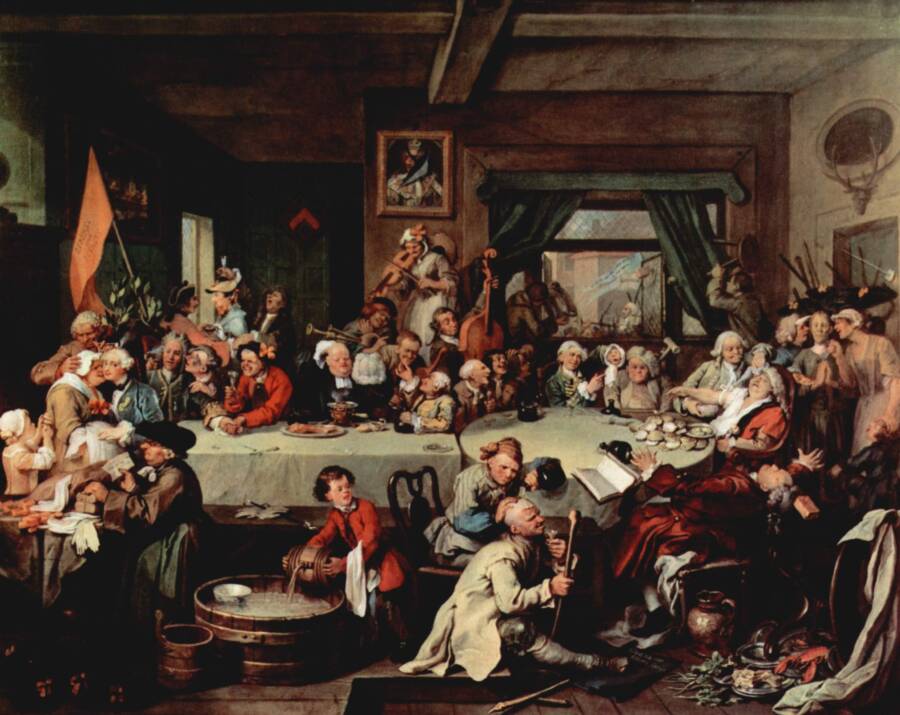
Every December 31st, billions of people prepare for one of humanitys oldest celebrations: the transition from one year to the next. From gathering in Times Square to singing Auld Lang Syne at a bar to simply kissing at midnight, modern New Years Eve rituals feel timeless and, in a way, they are. The history of this global celebration stretches back millennia, evolving from ancient festivals to the rowdy parties of today.See our gallery of colorized vintage New Years Eve photos below to experience celebrations from the past as they truly were. Then, read on to learn more about the history of New Years Eve festivities.Click here to view slideshowThe Beginnings Of New Year's CelebrationsThe concept of marking a new year predates modern civilization. Around 4,000 years ago, the Babylonians in ancient Mesopotamia celebrated Akitu, a multi-day festival held around the spring equinox in late March. Though it may seem odd now, this timing made sense from the perspective of agriculture spring marked the start of a new planting season. Akitu also held special significance as a sacred religious festival, during which the Babylonians reaffirmed their loyalty to the king and their beliefs that their gods determined humanity's fate for the coming year.The ancient Egyptians, meanwhile, celebrated their new year with the annual flooding of the Nile, which brought life by ensuring that lands would be fertile. The Persians aligned their new year with the vernal equinox, while the early Greeks celebrated it during the winter solstice. While there were plenty of differences between these ancient celebrations, they all shared a common thread: humanity's desire to mark the passage of time and celebrate a sense of renewal or rebirth.In the same way, the Romans once observed the vernal equinox as their start of the new year. By the time of Julius Caesar, however, the New Year's celebration had been moved to January 1st.This move was meant to honor the god Janus, who represented new beginnings and change. A two-faced deity, Janus was believed to have one face looking back at the past and another face gazing forward to the future. In short, Janus perfectly embodied the spirit of New Year's reflection.Romans celebrated with offerings to Janus, exchanged gifts of figs and honey with others in the hopes of inspiring sweetness in the year ahead, and decorated their homes with laurel branches, symbolizing victory. Despite Rome's influence, however, January 1st didn't immediately become the standard day to celebrate the new year everywhere. According to Medievalists, during the Middle Ages, for instance, certain places in Europe celebrated the new year on different dates. Some, for example, marked it on December 25th, the same day Christmas is now celebrated, while others chose March 25th, to coincide with the Feast of the Annunciation.It may have been disorganized and chaotic, but this was also a time when the roots of paganism still endured, even as Christian influence grew. In fact, the Catholic Church initially viewed New Year's festivities with some suspicion because of how closely related the celebrations were to pagan indulgences. Throughout medieval Europe, church authorities often discouraged or banned many types of New Year's revelry, sometimes pushing Christians toward more solemn religious observances instead. This mattered little to the common people, who continued marking the occasion with feasts, gift-giving, and merrymaking.The Modern Calendar Reaffirms New Year's DayIn 1582, Pope Gregory XIII introduced the Gregorian calendar, which reformed Julius Caesar's Julian calendar and firmly reestablished January 1st as New Year's Day. Though some countries adopted the change quickly, others initially resisted and only confirmed the change for their people later on.Shockingly, England and its American colonies didn't switch until 1752 meaning that different parts of the Western world were still celebrating the new year on different days at that point. And according to Historic UK, the fight to make this change was a brutal one, as rioters lamented the loss of 11 days in September and grew angry over concerns that their lives would shortened by 11 days. Public DomainAn Election Entertainment by William Hogarth, circa 1755. This artwork depicts the time of the English calendar riots that spawned the call, "Give us our 11 days!"Fortunately, that was not the case, and the country and the American colonies eventually got in line with most of the West in adopting the Gregorian calendar. However, some countries held out even longer, with Turkey only adopting the change in 1927.Once that calendar system became the global standard for most of the world, New Year's celebrations began to evolve. By the 19th century, they were once again marked by social gatherings, dancing, and enjoying food and drinks. The wealthy revelers often hosted elaborate parties, while working-class communities gathered in taverns and public squares to ring in the new year together, assuming they didn't have to work that day. But America's most famous New Year's celebration the Times Square Ball Drop is much more recent than other festive traditions.The Origins Of The Times Square Ball DropIn 1904, The New York Times moved its headquarters to Longacre Square, which the city promptly renamed Times Square in the newspaper's honor. To celebrate, the paper's owner and publisher Adolph Ochs hosted a wild New Year's Eve party in Times Square, featuring a massive fireworks display. The event was so successful that Times Square immediately became New York City's ultimate New Year's destination.However, by 1907, fireworks had been banned in the area due to safety concerns. Needing an alternative spectacle, Ochs drew inspiration from a maritime tradition known as a "time-ball" which involved a sphere dropping at a specific time at observatories to help crews of passing ships keep track of the time. The first New Year's Eve ball, constructed of wood, iron, and 100 lightbulbs, descended on New Year's Eve 1907. Weighing 700 pounds and measuring five feet in diameter, the ball captivated the enormous crowd gathered below it in Times Square.Sueddeutsche Zeitung Photo/Alamy Stock PhotoA crowd gathered in Times Square to celebrate New Year's Eve in the 1930s.Over the decades, the ball has undergone multiple transformations and upgrades, and the ball drop has become practically synonymous with American New Year's celebrations, broadcast to millions of viewers worldwide each year. Other cities have embraced the tradition with their own quirky variations Dillsburg, Pennsylvania drops a giant pickle, for instance, while Tallapoosa, Georgia lowers a stuffed opossum.Modern New Year's Eve has become a truly global phenomenon, with spectacular celebrations unfolding from Sydney to London to Rio de Janeiro. Each country adds its own unique flavors some Spanish revelers eat 12 grapes at midnight for good luck; some Danes smash plates against friends' doors to wish others a lucky year ahead; and some Filipinos believe that polka dots bring prosperity in the new year.Despite these diverse traditions, the fundamental spirit remains unchanged from ancient Babylon to today's Times Square: humans marking the passage of time, reflecting on what's behind us, and hoping for good things ahead.After viewing this gallery of colorized vintage New Year's Eve photos, see our galleries of colorized photographs from Victorian London and World War II.The post 44 Historic New Years Eve Photos In Color, From The Times Square Ball Drop To Surfing Celebrations appeared first on All That's Interesting.











 English
 Arabic
 French
 Spanish
 Portuguese
 Turkish
 Dutch
Dutch
 Italiano
 Russian
 Romaian
 Portuguese (Brazil)
 Greek
Greek