



WWW.THECOLLECTOR.COM
Sitting Bull: 8 Facts About the Lakota Hero
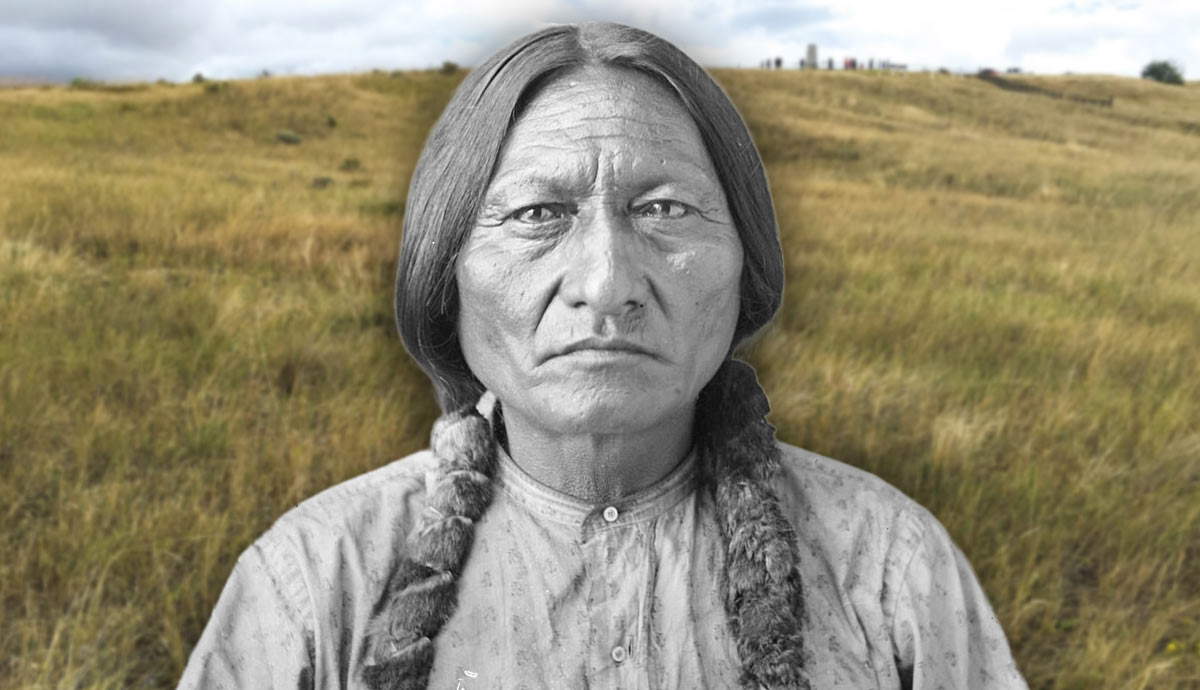
Insurmountable tensions between Indigenous peoples and American settlers, both desperate to perpetuate their way of life, resulted in deadly outcomes during the latter part of the 19th century. Through these struggles of clashing cultures, a number of impressive figures gained fame as a result of their dedication to preserving and supporting their people. One of these leaders was Sitting Bull, a Lakota man who would be one of the last to succumb to the pressures of the US government. His iconic life resulted in his remembrance as a hero of American history.1. Sitting Bull Was a Respected WarriorSitting Bull around 1883. Photograph by David F. Barry. Source: Daniel Guggisberg Historical Photographs Collection / Wikimedia CommonsSitting Bull, born Jumping Badger, entered the world sometime in the early 1830s. His nickname was Slow in reference to his calm and careful demeanor. He was born in what Americans referred to as the Dakota Territory into the Hunkpapa tribe. The Hunkpapa is one of the seven divisions within the Lakota, grouped with the Nakota and Dakota into the Oceti Sakowin. This alliance is also commonly referred to as the Sioux Nation. Sitting Bull became a member of the Kit Fox Warrior Society and the Strong Heart Warrior Society, and was heavily involved in tribal welfare matters. He helped expand his peoples hunting grounds and gained a reputation as a steadfast warrior who had great concern for his people. As time went on and conflict with white settlers increased, Sitting Bull became an outspoken critic of Americas obsession with Manifest Destiny.2. His Accomplishments Started at a Young AgeBison were essential to many aspects of the Lakota lifestyle. Source: Agricultural Research Service / Wikimedia CommonsWith his father and two uncles all prominent chiefs within the tribe, Sitting Bull was expected to live up to their standards and model the four cardinal Lakota virtues: bravery, fortitude, generosity, and wisdom. His accomplishments began stacking up when he was still just a boy. He killed his first bison at the age of ten. At age fourteen, he counted coup for the first time, a Plains tribes tradition that involved getting in close proximity to an opponent and touching them without being injured or, worse, killed. This act was lauded as exceptionally brave, as the warrior was taking a great risk compared to shooting an enemy from afar with a gun or arrows. The coup resulted in Sitting Bull being awarded his adult name, a tradition typically reserved for when young men achieved a life-changing milestone or otherwise earned it. The teen was bestowed with his fathers name, Tatanka-Iyotanka, or Sitting Bull.3. Sitting Bull Was a Leader at the Battle of Greasy GrassThe legendary battlefield today. Source: National Park Service Gallery / Wikimedia CommonsBy the time the Battle of the Little Bighorn, or the Battle of Greasy Grass, rolled around in 1876, Sitting Bull had decades of experience as a warrior. In mid-May of that year, Sitting Bull participated in a ritual called the Sun Dance, which involves fasting, prayer, and cutting flesh. The Sun Dance was often utilized in the pursuit of a vision, and Sitting Bull shared the vision he received during this particular ritual. His prophecy showed him a great defeat of a group of white men who invaded an Indigenous camp.Just over a month later, General George Custer and his command showed up, looking for Sitting Bulls people. They found the nomadic village and attacked. The Lakota contingency, allied with Cheyenne and Arapaho people, wiped out Custers entire unit in a defeat that would cause the US government to double down on their efforts to exterminate Americas Indigenous population.Battle of the Little Bighorn by Kurz & Allison, 1889. Source: Library of Congress / Wikimedia CommonsThough Sitting Bull was still an esteemed political leader and decision-maker in his community, he did not participate directly in the Battle at the Greasy Grass. He was considered beyond fighting age at the time, though he did bless his nephews with his personal medicine as they entered the battle. His role also extended to encouraging and monitoring the efforts of the younger warriors he mentored.4. He Lived in Canada for a TimeThe only known photo of Sitting Bull taken during his time in Canada. Source: Saskatchewan Archives / Wikimedia CommonsAfter the defeat of US forces at Little Bighorn, the government increased its efforts to confine all Native Americans to the reservation system. The embarrassment of the defeat on the eve of Americas centennial only angered US officials further. Sitting Bull was among those who recognized the military power of the United States but was determined to retain his freedom. As a result, he led a contingency of his people to Canada and settled at Wood Mountain in the Northwest Territories.However, food and resources were limited, and the Canadian government was hesitant to become too involved for fear of angering the United States. In addition, Canada also had an interest in expanding their own white presence in the area. Eventually, the lack of food supplies became problematic to the point that many Indigenous people chose to return to the US and submit to the reservation system to avoid starvation. Sitting Bull would be among the last to do so, surrendering to the Standing Rock Reserve in North Dakota in 1881.5. He Was Impressed With Annie OakleyAnnie Oakley and Sitting Bull were fond of one another. Source: Richard K. Fox / Library of Congress / Wikimedia CommonsIn 1884, Sitting Bull received permission from his reservations Indian Agent to travel. On one of his trips, he met sharpshooter Annie Oakley. Sitting Bull was so impressed with the young woman that he paid $65 to take a photo of the two of them together. The following year, Sitting Bull joined Buffalo Bill Codys Wild West Show, where Oakley performed, and the two enjoyed a great friendship. Sitting Bull gave Oakley the nickname Watanya Cicilla, meaning Little Sure Shot. According to Oakley, he informally adopted her, asking her to take the place of the daughter he lost not long after the Battle of the Greasy Grass. When she heard of Sitting Bulls arrest and subsequent death in 1890, Oakley was quoted as saying that if Sitting Bull had been a white man, someone would have hung for his murder.6. Sitting Bull Made the Acquaintance of Grover ClevelandSitting Bull met a number of dignitaries while on tour, including the president. Source: Library of Congress / Wikimedia CommonsWhile he was on tour with Buffalo Bill Codys Wild West Show, Sitting Bull traveled around the country. One of the tour stops was Washington DC, where Sitting Bull met acting President Grover Cleveland. Sitting Bull referred to Cleveland as the new White Father at Washington. The meeting, however, was short and was referred to as a quick handshake.7. He Was Killed by Reservation PoliceCapture & Death of Sitting Bull by Kurz & Allison. Source: Cowans Auctions / Wikimedia CommonsAfter his stint with Buffalo Bill Cody, Sitting Bull returned to the reservation. He continued to be an outspoken critic of US government policy. As the last decade of the 19th century dawned, Sitting Bull became interested in a new spiritual movement that was spreading through various Indigenous tribes across the country. Known as the Ghost Dance, the premise of the movement was that participation would eventually cause the white man to vanish from Native homelands. The US government was wary of these spiritual developments, looking upon them as a threat to white supremacy. Sitting Bulls interest in the Ghost Dance cast him in a negative light with reservation officials.In 1890, over forty reservation police officers, Indigenous men called metal breasts due to their badges, were sent by reservation agent James McLaughlin to arrest and question Sitting Bull about his affiliation with the movement. At approximately 6 oclock on the morning of December 19, Sitting Bulls family was awoken when the officers broke down their door.Sitting Bull was hauled from his bed and dragged outside. A struggle ensued, and a crowd gathered. Gunfire erupted, and when the firefight ceased, Sitting Bull lay dead at the age of fifty-nine. He had received a bullet wound to the chest. Six police officers were killed and one injured, along with members of the crowd. Sitting Bulls seventeen-year-old son, Crow Foot, was killed as well. It was reported that Crow Foot called out, My uncles, do not kill me. I do not wish to die before he was bludgeoned and shot.8. A College Is Named for HimSitting Bulls legacy is still an important aspect of Lakota culture, as evidenced by this 2022 photo. Source: Thayne Tuason / Wikimedia CommonsSitting Bull College is a tribal higher education institution named for the Lakota hero. The main campus is located on the Standing Rock Reservation in North Dakota, and there are two satellite campuses in South Dakota. Originally called Standing Rock Community College, when it was chartered in 1973, the school further expanded to offer bachelor of science programs and continued to expand its accreditation and offerings. In March of 1996, the Standing Rock tribal council voted to amend the schools charter and changed its name to Sitting Bull College. As of 2024, there are over seventy staff and more than three hundred students enrolled at the institution.
0 Commentarii
0 Distribuiri
1 Views








 English
 Arabic
 French
 Spanish
 Portuguese
 Deutsch
 Turkish
 Dutch
Dutch
 Italiano
 Russian
 Portuguese (Brazil)
 Greek
Greek