When Europe United to Stop the Ottomans at Vienna in 1683
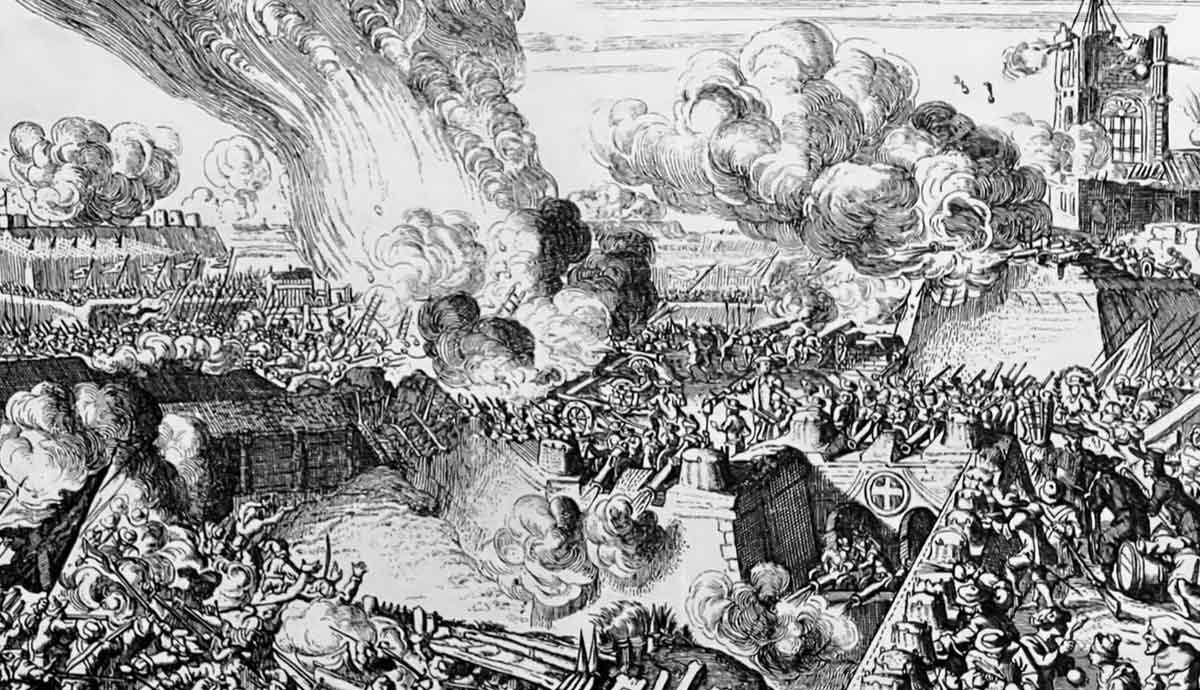
The Ottoman Empire was an omnipresent boogeyman for Christian Europe in the Early Modern period. By 1683, they were at their zenith, poised to advance into Central Europe and defeat their rival, the Holy Roman Empire. A hastily formed alliance of European states defeated the besieging Ottoman army and pushed Ottoman frontiers back in the Balkans.A Forever WarPolishLithuanian cavalry attacking the Ottomans and the Tatars during the Battle of Lww (1675) by Jzef Brandt, 1905.The Ottoman Empire was the constant threat in the minds of the Austrian Habsburgs and other central European states such as the Polish-Lithuanian Commonwealth. A continuous low intensity war, punctuated by outbreaks of larger scale fighting, continued from the Fall of Constantinople in 1453. The Ottomans expanded westward, taking Belgrade in 1521, Hungary in 1526, until finally Suleiman the Magnificent was repulsed at the gates of Vienna in 1529. The borderlands were open to continuous raiding by both sides while Tatar allies of the Ottomans conducted slave raids deep into Christian territory.This land war was matched by fighting in the Mediterranean where Spanish, Ottoman, Italian, Knights Hospitaller, and French ships vied for supremacy. The Ottomans appeared unstoppable and even serious defeats like Lepanto in 1571 were only temporary setbacks. The naval war was just as cruel, a series of battles and sieges of island fortresses. Both sides took slaves and the Barbary Corsairs from North Africa raided as far north as Ireland and Iceland in their slave raids.Both sides were prevented from fighting to a decisive conclusion by external factors. In addition to countering their other perennial rival, France, the Habsburgs were often faced with internal disturbances on religious and other matters. France occasionally cooperated with the Ottomans, earning Louis XIV the nickname Most Christian of Turks. Similarly, the Ottomans had to deal with rebels and an eastern rival, Safavid Persia. Successive sultans continued to keep an eye towards the west, looking to expand their realms and honor their predecessors by succeeding where they had failed.The Road to Vienna: Prelude to the SiegeDefeat of the Ottoman Army at Vienna by Gaspar Bouttats. Source: MeisterdruckeVienna was unfinished business for the Ottomans. They had succeeded in reaching it in 1529 but it remained the furthest point they had penetrated into Europe. Preparations for its capture began years beforehand by Ottoman planners. Engineers constructed and repaired strategic roads and bridges while stockpiles were made of ammunition and other supplies in fortresses close to the borders of the Holy Roman Empire.The main driving force on the Ottoman side was Kara Mustafa Pasha, the Grand Vizier, who had previously led successful campaigns in Ukraine, Poland, and Moldova. Utterly devoted to expanding the Ottoman state, detractors complained he was unbribable. He was opposed by the Imperial Army commanded by Charles V, Duke of Lorraine. Charles was also a professional soldier with 20 years of experience fighting the French and Ottomans. Neither emperor, Leopold I or Mehmed IV, took an active part in the battle.Count Ernst Rdiger von Starhemberg was left as commander of the citys garrison. He was ably assisted by a Saxon engineer, Georg Rimpler. Rimpler had served with several armies and immediately rushed into action to restore Viennas dilapidated defences. He knew the Ottomans would eventually storm the city so their only hope was to subject them to constant attrition. He enlisted the citys populace to construct new palisades, firing points, and entrenchments around the perimeter. Suburbs immediately outside the walls were demolished to deny the Ottomans cover as they advanced. These preparations continued right up until the arrival of the Ottoman army.The Battle for EuropeThe Battle of Vienna by Johann Heinrich Roos, 1683. Source: ArtveeThe Ottomans had probably the single largest military in the region but were rarely able to mass it as they had to fight on so many fronts. The elite were their Janissary infantry and Sipahi cavalry but they also included skilled engineers, miners, levies from their tributary states, and the omnipresent akinji light cavalry raiders. They were also supported by swarms of Tatar horsemen from the Crimean Khanate. An estimated 120,000 soldiers besieged Vienna with more troops from allies and vassals posted at strategic locations further from Vienna.The Habsburg military was numerically smaller but well trained. Unlike Ottoman militaries, many European armies had adopted methods of drill and standardization that enabled units to fight as one. Musketeers and pikemen worked in concert while the cavalry, consisting of cuirassiers and dragoons, supported them.The siege itself began on July 14. Kara Mustafa first invited the defenders to surrender. This was common in the early modern period. Cities and fortresses surrendered that without a fight were granted generous terms while those resisting to the last could expect little quarter. The offer was rejected out of hand by Starhemberg as just days previously the Ottomans had massacred the inhabitants of Perchtoldsdorf when they surrendered. The Ottomans surrounded the city and immediately began digging long lines of trenches for their soldiers and artillery. They cut off all supplies to the Viennese. Tunnels were also dug to enable the Ottomans to plant mines under the city walls and demolish them.Fighting at the WallsTurkish siegeworks at Vienna by Daniel Suttinger. Source: Wikimedia CommonsThe defenders knew they could never hope to defeat the Ottoman army on their own, they could only delay them. The attackers knew they had to focus their efforts on the weakest part of the defences, the Hofburg. Other parts were unsuitable for the miners or artillery so both sides concentrated their best forces to fight in this sector, dominated by the Burg and Loebl bastions.The first three weeks of fighting were concentrated on the outer palisade. This hastily constructed defence of timber and earth prevented the Ottomans from bombarding the main walls and it cost them heavy casualties to take it. From there they could fight their way into the ditch before the walls and begin storming the walls. The ditch became known as the Pit of Hell as those inside were exposed to fire from above by both sides. Little by little, the Ottoman advance continued despite a tenacious defense.The fighting took a terrible toll on the morale of both sides. Even nighttime offered no respite as raiding parties would venture into enemy territory. The battle continued underground as Turkish miners clashed with Austrians digging their own tunnels. Rimpler met his end here, dying near the end of July when the Ottomans set off a mine. The fighting at the bastions lasted until early September when the Ottomans blasted several breaches in the walls and prepared to storm the inner city. By September 8 it seemed that the end was nigh.A Grand AllianceBattle of Vienna by Pauwel Casteels. Source: MeisterdruckeTime had not stood still outside the city. Only 15,000 professional soldiers had been left to defend Vienna but Charles of Lorraine now assembled an imperial army to relieve the city. Contingents began to trickle in from the various duchies and principalities of the Empire. The largest were those from the states next in line to be attacked, as thousands of Bavarian and Saxon soldiers joined the army.While the Imperial forces were still heavily outnumbered on their own, they were reinforced by the Polish army led by King Jan III Sobieski of Poland-Lithuania. This predominantly cavalry force was composed of some of the finest horsemen in Europe. Their elite were the famous winged hussars, heavy cavalry who had extensive experience fighting Muslim armies. The Lithuanian army was delayed by fighting against a simultaneous invasion of southern Poland by Imre Thokoly, the Hungarian vassal of the Ottomans.Financially, the army was supported by the Pope as a new Holy League similar to that at Lepanto. This hodgepodge army of competing allegiances and loyalties was held together by Charles of Lorraines diplomatic charm. The Habsburg army was populated by Irish, Italian, Scots, French, English, and German officers, while his allied forces were reluctant to submit to a mere duke. He convinced them with persuasive arguments and no grand ambition. Known for his simple appearance, he won over soldiers and courtiers alike. Lorraine only desired to relieve Vienna. Alone of the allied commanders he had fought against the Turkish army and seen the city under assault week after week.Breaking the SiegeBattle of Vienna by Anonymous. Source: Kunsthistorisches Museum, ViennaEmperor Leopold had wanted a cautious advance but the allies ignored this in favor of the shortest route possible towards the city. The risks were huge, the baggage train could not keep up with the advancing soldiers and the army could only carry a few days rations with them. They advanced from the plain of Tulln into the Wienerwald, a mostly uninhabited forest west of the city that the Habsburgs used as a hunting reserve.The allied army assembled on the Kahlenberg ridge on September 11. Turkish soldiers had managed to warn the camp and the Ottomans summoned reinforcements from Hungary. Ottoman skirmishers succeeded in provoking Imperial soldiers into an unplanned advance. An Ottoman soldier described it it looked like a flood of black pitch was pouring downhill, crushing and burning everything that opposed it. Lorraine struggled to keep his troops in line as every gap was exploited by Ottoman counterattacks.By mid-afternoon, both Lorraine and Sobieski had a choice. They could continue the battle and risk it all or pause to consolidate their position. The risk that the Ottomans might still take the city convinced them to push on. The battle had raged over twelve hours when Sobieski made his final charge at six in the evening. Over 10,000 cavalry led by the Winged Hussars charged into a disorganized mass of Ottoman infantry and cavalry. It shattered the last resistance and the allied army began to plunder the tent city that made up the Turkish camp.End of an EraKing John III Sobieski sending a Message of Victory to the Pope after the Battle of Vienna by Jan Matejko, 1883. Source: Vatican Museums via Wikimedia CommonsSobieski famously paraphrased Caesar with Venimus, vidimus, Deus vicitWe came, we saw, God conquered. The Ottomans took nearly as many casualties in the day-long battle as they had in the preceding two month-siege. Altogether, the Ottomans lost an estimated 40,000 during the campaign. The victorious Christian armies helped themselves to a vast amount of plunder as the retreating Turks abandoned their supply train.Kara Mustafa was executed at the end of the year on the orders of the sultan. His defeat at Vienna cost him his position and life. He was strangled with a silk cord, the traditional method for high ranking Ottomans. Sobieski for his part was deemed Defender of the Faith by the Pope. Lorraine fought on until 1688 when he left the Turkish front to fight the French in the Nine Years War (1688-1697).What became known as the Great Turkish War would drag on for another 16 years. The Holy League continued their campaign into Hungary and the Balkans. Peace would come in 1699 at a heavy cost to the Ottomans, who also found themselves under increasing pressure from Venice and Russia. The knock on effects would see the Ottomans cease their aggressive expansionism and adopt a more cautious military strategy in the 18th century. Vienna in 1683 marked the high point of their conquests, from then they began a gradual decline.













 Arabic
 French
 Spanish
 Portuguese
 Deutsch
 Turkish
 Dutch
Dutch
 Italiano
 Russian
 Romaian
 Portuguese (Brazil)
 Greek
Greek