6 Armies That Switched Sides During a War
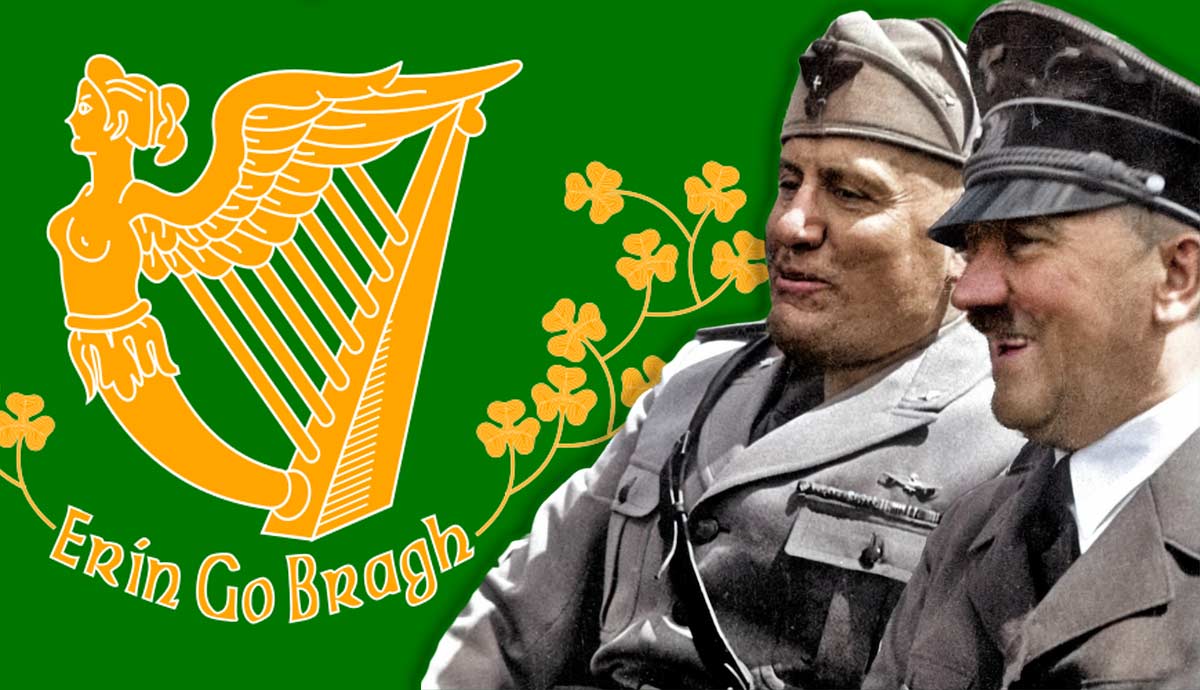
Turncoats and traitors have often taken center stage in history. Figures like Brutus, Judas, Benedict Arnold, Rudolf Hess, and countless others have all captured the popular imagination due to their betrayals. What is less common is for a whole army to switch sides, whether its over the course of a conflict or a battle itself. Often, these defections proved to be decisive, dramatically turning the tide and gifting victory to their new allies.1. The Battle of Bosworth Field (1485 CE), Wars of the RosesRichard III and Henry VII, stained glass window installed in St James Church, photo by John Taylor. Source: FlickrThe final showdown of the Wars of the Roses saw an army switch sides during the battle. At the Battle of Bosworth, Lancastrian Henry Tudor (the future Henry VII) defeated and killed the Yorkist Richard III. Henrys victory established the Tudor dynasty and kickstarted Englands assent to the international order.In the prelude to the battle, the rebellious Tudor had landed in Wales and was marching on London. Richard marched out to meet him, intercepting his army just south of the town of Bosworth in Leicestershire. Whilst the two armies maneuvered into position, a third force led by Lord Stanley arrived at the battlefield. As the Lancastrian and Yorkist armies moved closer together, Stanley withheld his troops, still unsure of who to intervene on behalf of.The Battle of Bosworth Field, by Philip James de Loutherbourg, 1804. Source: Wikimedia CommonsFor most of the Wars of the Roses, the Stanleys had supported the Lancastrian cause. However, Lord Stanleys brother, Sir William Stanley, had been a determined Yorkist. Lord Stanley himself had never made a definitive decision, playing off both sides to help grow his own prestige and estate. In the run-up to Bosworth, he had fallen out with Richard III over land disputes. As retribution, Richard had Stanleys son hostage, thinking it would stop him from intervening on behalf of Henry.During the battle itself, Henry understood his limits as a general and gave the command of his smaller force to the Earl of Oxford. Seeing his superior numbers, Richard divided his army into three, hoping to encircle the Lancastrians.Portrait of Henry VII. Source: Wikimedia CommonsThere is plenty of debate about how the battle itself played out, including where exactly the battleground was and why the commanders involved made the decisions they did. What is generally agreed upon is that, seeing that he was lagging behind his army, Richard broke with his knights and charged at Henry. Seeing Richard breaking cover, Stanley decided this was his moment to strike, riding to Henrys defense.The story then goes on to say that Richard got extremely close to Henry during his charge but was repelled, and Stanleys forces soon overwhelmed him. In the ensuing melee, Richard was killed, and his allies fled the field. The victorious Lancastrians rushed to confirm and crown Henry, kickstarting one of Britains most prolific royal dynasties. At the Battle of Stoke Field two years later, the Yorkist claim to the throne would be completely eradicated.As for Lord Stanley, his gamble paid off. He was handsomely rewarded by Henry, gaining the highest honor in his inner circle. It remains to be seen how England would have developed had the Stanleys intervened on Richards behalf instead.2. The Battle of Sekigahara (1600 CE), Sekigahara CampaignBattle of Sekigahara, one of the last battles of the Sengoku Jidai. Source: nakasendoway.comSekigahara was another dramatic battle in which an army switching sides proved decisive. It is commonly seen as one of, if not the most important, battles in Japanese history. Sekigahara ushered in the Tokugawa Shogunate, which would govern Japan for over two centuries until its defeat during the Meiji Restoration.The battle was between loyalists to the ruling Toyotomi clan and rebels who followed Tokugawa Ieyasu. The showdown was an attempt to fill a power vacuum during a time of persistent unrest known as the Sengoku Jidai. A failed invasion of Korea and factional infighting had left five-year-old Toyotomi Hideyori as heir to the throne. The Toyotomi forces were led by Ishida Mitsunari, leader of the regent Council of the Five Elders and defender of the Toyotomi claim.As the Tokugawa army marched on Osaka Castle, Mitsunari prepared for an open battle near Sekigahara, a town in the Gifu prefecture. The night before the battle, some allies of Mitsunari communicated with Tokugawa forces and promised to betray their coalition during the battle. Many of them were upset with the existing political order.The morning brought fog so thick that the armies accidentally met on the field and quickly retreated. When they engaged again, they entered a bloody stalemate, with neither side willing to give ground.Great Battle of Sekigahara, by Tsukioka Yoshitoshi, 1868. Source: Ukiyo-eLike Bosworth, there is significant debate about the timing of the defection. Initial sources say Ieyasu fired on the position of Kobayakawa Hideaki in an attempt to spur him to action. Hideaki was the most important defector on the day and would swing the tide of the battle. Subsequent generations of historians have disputed this claim. They say this story is Tokugawa propaganda, and instead, Hideaki had already defected when the battle began.What is clear is that after Hideaki, the rest of the treasonous generals defected. With all of these new forces now against them and the fact that many Toyotomi-supporting armies had been delayed in reaching the battlefield, Tokugawa forces soon won the day, routing their opponents.The Tokugawa clan quickly became the dominant force in Japan, and three years later, they appointed Tokugawa Ieyasu as Shogun. For the defectors, it was a mixed reception. Most achieved pardons and were richly rewarded. However, some clans, like the Mori, were punished. Even though the actual events of the battle are unclear, the Battle of Sekigahara still remains a pivotal moment in Japanese history, with defections in the Toyotomi army proving critical.3. Polish Haitians (1802-1804), Haitian RevolutionToussaint LOuverture, Leader of the Haitian Revolution, by Franois Cauvin, 2009. Source: National Portrait Gallery, LondonThe story of Polish Haitians is one of the strangest examples of an army switching sides in military history. The impact of the defection can still be seen to this day, both in Poland and Haiti.In the midst of the wars between the Great Powers raging across Europe, Napoleon needed French colonial power to fund his campaigns. An easy source was the colony of Saint-Domingue (now Haiti). However, the island was in turmoil. The slaves there had risen up and seized control of the island, proclaiming the same ideas of liberty that had triggered the French Revolution.Realizing France needed the colony and its valuable sugar, Napoleon sent a substantial army to retake the island. To aid them, France sent just over 5,000 Polish troops to join them in holding the island.Poland had been at the mercy of the Great Powers of Austria, Prussia, and Russia. Thirty years earlier, the country had been divided between these three powers and ceased to exist. The remnants of the Polish forces hoped that Napoleon could inspire them to achieve their own self-determination, so they were willing to aid his European conquest as best they could.Arriving in September 1802, these 5,000 soldiers were thrown into combat immediately. Conditions were brutal, with incredibly high rates of disease. Out of the entire Polish contingent sent to Saint-Domingue, only a thousand remained. Those who survived suffered at the hands of their French superiors, who inflicted cruel punishment to maintain discipline.Map of the division of Poland between the Great Powers in the 17th century, by Halibutt. Source: Wikimedia CommonsSoon, the Poles who survived found more in common with the rebelling Haitians, particularly their ideal of independence. Five hundred or so defected to join their struggle, often hindering the French war effort from within. The Polish soldiers helped the Haitian rebels continue their struggle for another two years, fighting guerrilla warfare in the hills and forests.Although the majority of the actual fighting was done by the freed slaves themselves, the defection of the Polish soldiers embarrassed the French Empire, giving legitimacy to the early island nation. When Haiti gained its independence in 1804, the Poles were spared in the retributive massacres that took place. They were treated as equals in the newly established republic, settling in the town of Cazale.Their impact is still visible to this day. Polish religious symbols include a black Virgin Mary, believed to have been carried back from Haiti by Polish soldiers. Many of the Polish-Haitian descendants are still on the island to this day. The defection of the Polish battalions during the Haitian war for independence is one of the clearest examples of the universal struggle against oppression.4. Saint Patricks Battalion (1846-1848), Mexican-American WarThe Saint Patricks Battalion flag, by John Patrick ORiley. Source: Wikimedia CommonsSaint Patricks Battalion is another group that switched sides over the course of a war and whose legacy would live on after. Like the Polish Haitians, the battalion was motivated by mistreated soldiers finding more in common with those they were fighting than their own army.Tensions between Mexico and the United States began following Americas annexation of Texas in 1845. Skirmishes along the border escalated into a full war. Within two years, US troops would enter Mexico City and annex what we today recognize as Texas, California, Nevada, Utah, Arizona, Colorado, New Mexico, and Wyoming, with the Rio Grande a barrier between the two nations.During the conflict, several European settlers switched sides, joining Mexico in its struggle. They went on to form Saint Patricks Battalion, an artillery company. Like all defections on this list, historians debate why the settlers, who were predominantly Irish, switched sides. Some believe the defection was due to their shared Catholicism with Mexico against a Protestant USA.Others argue it was their treatment at the hands of American generals. A third theory has emerged that, like the Polish Haitians, they found commonality with the Mexican defenders, feeling they were also fighting a greater, oppressive force (the US and Britain, respectively).Nicknamed after the Irish patron saint, Saint Patricks Battalion was thrust into combat quickly. They were crucial in repelling American forces at the Battle of Monterrey, allowing the Mexican army to retreat before the city surrendered.Saint Patricks soon grew to over 7,000 men. They once again grew their reputation at the battle of Buena Vista. Their artillery prowess was crucial in shattering US positions and infuriating the American commander, future President Zachary Taylor. After the battle, many within the Battalion received war honors from the Mexican government.A map of the campaigns of the Mexican-American War. Source: The US ArmyThe most decisive clash the Battalion faced was the Battle of Churubusco, where a much larger American force tried to destroy the retreating Mexican army. Saint Patricks held firm, as they were some of the most experienced soldiers in the Mexican military. However, their supporting forces soon ran out of ammunition and crumbled, forcing a retreat into a nearby monastery.The Battalion took its last stand in that monastery, reportedly shooting others around them who attempted to surrender. In the final stages of the battle, many in the Battalion used it as a chance to headhunt US officers. This lends credence to the idea that many defected to Saint Patricks Battalion due to the maltreatment they endured at the hands of their officers.After the Battle of Churubusco, those who escaped would retreat to Mexico City. Defeat came soon afterward. Fifty members of the Battalion who were captured were executed in what became the largest mass execution in US history. The battalion disbanded soon after the war, and the survivors returned home or settled in Mexico.In terms of its legacy, the US government denied the existence of Saint Patricks Battalion until 1915. Conversely, the Battalion is still celebrated in Mexico to this day. The name of Saint Patrick is seen on street names and monuments around all of their iconic battle sites.5. The Soviet Union & Italy, WWIIMolotov and Ribbentrop meet. Source: Wikimedia CommonsPerhaps the most impactful on this list, the Second World War saw two major nations switch sides, as events in the conflict forced their hands.The first country to switch sides was the Soviet Union. Initially, Stalin had devised a non-aggression pact with Nazi Germany. Known as the Molotov-Ribbentrop Pact, the agreement contained a secret plan to divide Poland when Germany invaded in 1939. Then, the Soviets would not interfere, whilst Hitler invaded the rest of Europe. With obvious ideological differences between the two powers, the Nazi-Soviet Pact was motivated more by pragmatism than any lasting desire for peace.This was evident as it was shattered within two years, and the Soviet Union allied itself with the Allied Powers. In the summer of 1941, Germany invaded Russia through Operation Barbarossa, beginning the bloodiest theater of the war. Four years of brutal combat would take up to forty million lives.Another country which began the war on the side of Germany was Italy. This was a much stronger alliance, as the two fascist leaders, Mussolini and Hitler, shared a vision for the world they wanted to create.Adolf Hitler and Benito Mussolini in Munich, Germany, by Eva Braun, 1940. Source: National Archives CatalogIt took Fascist Italy a year to get involved in the war, helping to defeat France and fighting the British in North Africa. They even sent soldiers to the Eastern Front, facing off against the Soviet machine.However, Italy and Mussolini were not fully prepared for war. Italian armies often found themselves outgunned and were overpowered by their enemies. This came to a head in 1943 when the Allies used Africa to launch an invasion of Sicily.Panicked by the swift collapse of their defenses, the Italian cabinet realized that their time was up. They asked King Victor Emmanuel III to remove Mussolini and began negotiations with the Allies.Germany saw what was happening and so decided to intervene. Wehrmacht forces flooded into Italy, dividing the country into two. In the north, the newly formed Republic of Sal remained loyal to the Nazis. This began the brutal Italian campaign, as the Allies slowly moved northward through the country, receiving assistance from the Italians who had defected to their cause.The fighting was brutal as Italy descended into a quasi-civil war. Eventually, partisans and the West managed to overwhelm the Nazi defenders, who withdrew shortly before the surrender of Germany. Mussolini was captured and executed, ending the Italian involvement in the war.6. The Battle of Castle Itter (1945), WWIICastle Itter, photographed by Steve J. Morgan in 1979. Source: Wikimedia CommonsIf any instance of an army switching sides deserves its own blockbuster movie, its the Battle of Castle Itter. One of the strangest episodes of World War II, this battle saw German soldiers join forces with a US regiment, French prisoners of war, and the Austrian resistance to fight off elite German troops just three days before the end of the war in Europe.Located within Austria, Castle Itter served most of the war as part of the Dachau concentration camp network. It was used to hold an eclectic mix of French prisoners. These included former prime ministers douard Daladier and Paul Reynaud, commanders in chief Maxime Weygand and Maurice Gamelin, trade union leaders, and even an 18-time Grand Slam champion, tennis player Jean Borotra.On May 4, 1945, US soldiers attempted to seize the castle and free the prisoners. The SS soldiers guarding the castle withdrew, allowing those held inside to seize it. In the nearby town of Wrgl, Major Josef Gangl was in charge of scattered Wehrmacht soldiers. He refused to retreat, instructing his men to protect Wrgl from SS reprisals.Hearing of Gangls predicament and that the SS division was returning, American troops rushed to aid him and defend the castle. The narrow terrain only allowed fourteen US and ten defecting German soldiers to reach Castle Itter. Breaking through an SS roadblock, they reached the castle and started helping the French prisoners who had begun preparing its defenses.Jean Borotra (left) and Ellsworth Vines at the International Lawn Tennis Challenge (Davis Cup), 1932. Source: Wikimedia Commons/Bibliothque nationale de FranceAs morning struck, this ragtag group soon found itself under attack from 150 SS soldiers. A desperate struggle ensued, with the one usable Sherman tank soon destroyed. The nearby 142nd Infantry Regiment was their only hope of salvation. The commander of the defenses, John Lee, knew he needed to get a message to them. Unfortunately, their remaining radio was not functional.At this moment, tennis star Jean Borotra stepped in. Borotra volunteered to leave the castle, evade SS fire and reinforcements, and deliver the message to the 142nd. As he somehow managed to accomplish all of this, the relieving American force raced to the castle, soon defeating and capturing the remaining SS soldiers.The only death suffered by the defenders of Castle Itter was Gangls, who died during the battle protecting Paul Reynaud. Lee was given a Distinguished Service Cross. The battle was one of only two times in the war that Allied and German soldiers fought on the same side.











 Arabic
 French
 Spanish
 Portuguese
 Deutsch
 Turkish
 Dutch
Dutch
 Italiano
 Russian
 Romaian
 Portuguese (Brazil)
 Greek
Greek