Trkiyes Must-See Historical Sites by Region
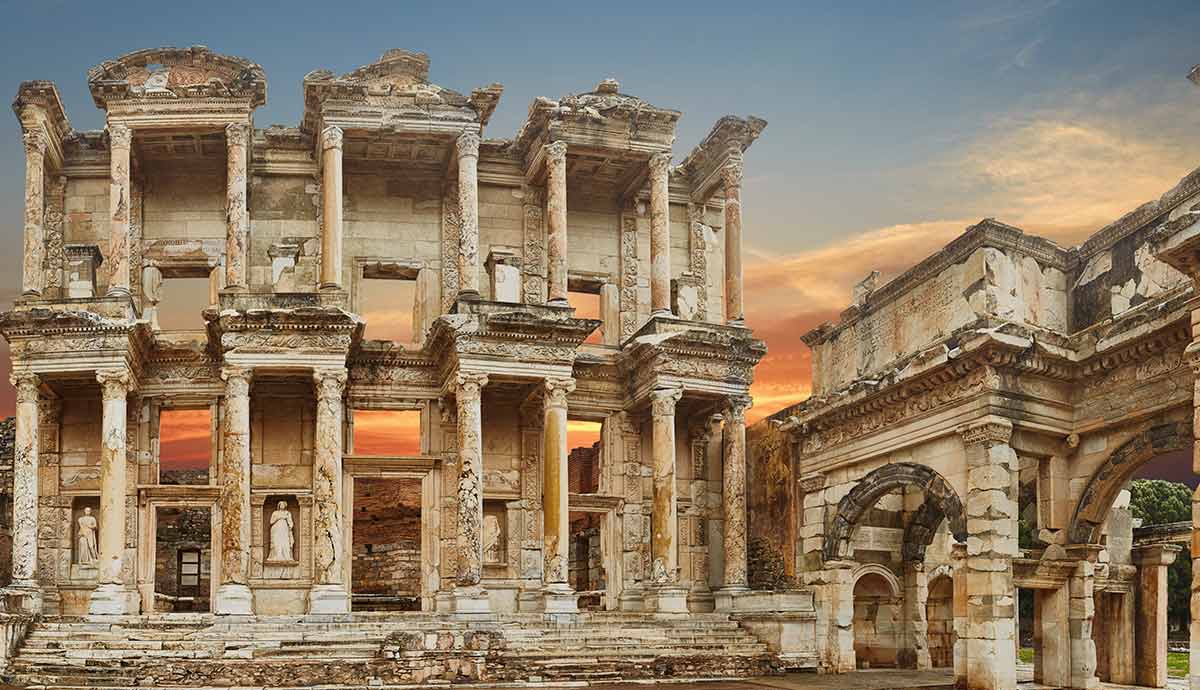
From the earliest known human settlements to the grandeur of the mighty Ottoman Empire, Trkiye has just about seen it all. It has been the link between East and West since time immemorial, and it boasts a flurry of exquisite historical sites that tell the stories of human, social, and cultural evolution. Visiting every site in the entire country in one fell swoop is near-impossible, even for the most avid historian. Instead, grouping the most noteworthy by region might make itinerary planning infinitely more manageable.In this guide, well do just that.Trkiyes HistoryHagia Sophia, photo by Meyra. Source: PexelsTrkiyes history is layered with civilizations that shaped the world on a broader scale. The land has been inhabited since prehistoric times, with some of the worlds earliest known settlements discovered here. It was home to the Hittites, followed by the Greeks and Romans, who left behind monumentally impressive cities. The Byzantine and Ottoman empires would go on to define much of its medieval and early modern history, shaping both its architecture and culture.Different regions enjoyed (and endured) distinct historical influences, which is why the country boasts such inherent regional differences. From the people to the traditions, daily habits, food, and even landscapes, Trkiye is essentially three worlds rolled into one.West (Aegean & Marmara): The regions most influenced by the ancient Greek and Roman civilizations, given their proximity. Highlights like Ephesus and Pergamon are found here.East (Anatolia): Marked by early civilizations like the Urartians and later heavily shaped by the Seljuks and Ottomans.North (Black Sea): A blend of Greek, Pontic, and Ottoman heritage, with many more medieval castles and fortresses.Top Sites in Western Trkiye (Aegean & Marmara)TroyPhoto of Troys amphitheater by Brian Harrington Spier. Source: Wikimedia CommonsTroy is a historic city near the Dardanelles Strait in northwestern Trkiye, where history and myth collide. It was an important center of trade and warfare long before the famous conflict between the Greeks and Trojans. Archaeologists have discovered nine layers of settlements, each built on top of the previous one, dating from the Early Bronze Age to the Roman Period. This shows that Troy was not just one city but a series of civilizations, each contributing to its history before being conquered, destroyed, or abandoned.Troy likely reached its peak around 1700-1200 BCE, coinciding with the legendary Trojan War. While the details of the war are partly mythological, there is evidence that the city was destroyed around 1180 BCE, possibly by the Sea People or the Mycenaean Greeks.Various civilizations laid some kind of claim to Troy, from the Persians to Alexander the Great. Eventually, the city became a regional capital under Roman rule, and its legacy was recognized even by Julius Caesar and Emperor Augustus.EphesusEphesus, one of the best-preserved Greco-Roman cities, boasts the Temple of Artemis, one of the Seven Wonders of the Ancient World. Source: World History EncyclopediaOnce a thriving city of commerce and philosophy, Ephesus would eventually become a major Christian center. However, it was first one of the most important cities in the Roman Empire. It was a place of wealth, power, and ideas where merchants, philosophers, and pilgrims crossed paths. The grand Library of Celsus, with its elegant faade still standing, once held thousands of scrolls and is believed to have been one of antiquitys greatest libraries.The extraordinary Library of Celsus, photo by Benh LIEU SONG. Source: Wikimedia CommonsNearby, youll see a massive amphitheater, once capable of holding 25,000 people, which hosted political debates, theatrical performances, and gladiatorial contests.More importantly, Ephesus was home to the Temple of Artemis. Although not much of it remains, ancient writers described it as a breathtaking structure, larger than the Parthenon, where worshippers honored the powerful goddess. Youll just have to use your imagination.PergamonA powerful Greek kingdom and later a Roman stronghold, Pergamon is home to the steepest ancient theater in the world. Source: World History EncyclopediaHigh above the forested plains hugging the Aegean coastline, Pergamon is one of ancient Greeces most important symbols. It was once the heart of a powerful kingdom and a city renowned for its art, education, and military might. Its acropolis still commands jaw-dropping views and is lined with temples and palaces. Pergamon also boasted a library believed to rival Alexandrias. Scholars believe the word parchment (from pergamena) was derived from here, as the city developed a method of writing on animal skins when Egypt cut off its papyrus supply.The jaw-dropping Altar of Zeus, a reconstruction in the Pergamon Museum, Berlin, photo byGarret Ziegler. Source: Smart HistoryPergamon was also home to the Great Altar of Zeus, a colossal masterpiece of Hellenistic sculpture, now controversially housed in Berlins Pergamon Museum (much like the Gate of Babylon).The Hagia Sophia (Istanbul)Constantinople, later Istanbul, was the heart of the Byzantine Empire, Greece has never quite come to terms with losing the ancient city in 1453. Source: PxhereFew cities have shaped history quite like Istanbul, especially where Europe is concerned. The city once known as Byzantium, then Constantinople, has stood at the junction of Europe and Asia for eons, a monumental prize sought by emperors, sultans, and conquerors for centuries. As the capital of the Byzantine Empire, it became a beacon of culture, trade, and religion before transforming into the heart of the Ottoman Empire.Today, Istanbul still thrives under the influence of its layered past, and nowhere better captures that than the Hagia Sophia.The Hagia Sophia was built by Emperor Justinian in 537 CE and was the largest cathedral in the world for nearly a thousand years. Its large dome appears to float above the spacious interior, and beautiful golden mosaics shine in the light. When the Ottomans captured the city in 1453, they turned it into a mosque, adding minarets and beautiful Islamic calligraphy. This transformed the building into a stunning blend of two cultures and religions.Topkapi Palace (Istanbul)The administrative and royal center of the Ottoman Empire, Topkapi Palace, is filled with opulent rooms, stunning Islamic art, and the legendary Spoonmakers Diamond, photo by Ninara. Source: Wikimedia CommonsFor nearly 400 years, Topkapi Palace was the beating heart of the Ottoman Empirewhere sultans ruled, grand viziers plotted, and the empires most influential figures lived in opulent splendor. Built by Mehmed the Conqueror after he seized Constantinople, the palace became a sprawling complex of pavilions, lush courtyards, and endless chambers. From here, the empire was governed at its height, stretching from Hungary to Arabia, with envoys and ambassadors bringing gifts and saucy secrets to the sultans court.Walking through Topkapi today, you can wander into the Harem, where the sultans wives and concubines lived under the watchful eyes of the all-powerful eunuchs. The Imperial Treasury holds some of the worlds most extravagant jewels, including the Spoonmakers Diamond, a dazzling 86-carat gem shrouded in legend. The Holy Relics Room contains items believed to belong to the Prophet Muhammad, making it a site of deep religious reverence among Muslims the world over.Hierapolis & PamukkaleBuilt atop natural hot springs, Hierapolis was a sumptuous spa city of the Greco-Roman worldhot, photo by the Archive Team. Source: Wikimedia CommonsFew places blend history and nature as beautifully as Hierapolis and Pamukkale. Perched high above Trkiyes famous white travertine terraces, Hierapolis was an ancient Greco-Roman spa city where people flocked to bathe in mineral-rich thermal waters, believing in their healing powers. Founded by the Attalid kings of Pergamon in the 2nd century BCE and later expanded by the Romans, it became a retreat for the elitecomplete with temples, baths, and a sprawling necropolis where many chose to be buried, hoping for eternal rest in this sacred land.One of the citys highlights is its well-preserved Roman theater, a grand structure with elaborate carvings. The necropolis, stretching for well over a mile, is one of the best-preserved in Trkiye, filled with sarcophagi, tombs, and massive funerary monuments. But perhaps the most fascinating part of Hierapolis is the Plutonium, an ancient cave dedicated to Pluto, the god of the underworld, where priests performed rituals amid toxic fumes believed to be divine.Pamukkales pools, photo by Kubilay Bal. Source: UnsplashJust below the ruins, Pamukkales dazzling white terraces, created by the buildup of calcium deposits from thermal waters, are surreal. You can walk barefoot across the pools, soaking in the same warm waters that have drawn people here for thousands of years.East (Anatolia)Gbekli Tepe (c. 9600 BCE)Gbekli Tepe is the worlds oldest known temple complex, predating Stonehenge by 6,000 years, photo by Zhengan. Source: Wikimedia CommonsHidden beneath the rolling hills of southeastern Trkiye, Gbekli Tepe has managed to rewrite everything we thought we knew about early civilization. Built an astonishing 6,000 years before Stonehenge, this temple complex wasnt created by settled farmers but by hunter-gatherers. This challenges the long-held belief that organized agriculture led us to create organized societies. Instead, it suggests something rather revolutionarythat it was the human desire to gather and worship that sparked the shift to farming, not the other way around.The site consists of massive T-shaped limestone pillars, some towering over 16 feet high, arranged in circular enclosures. Each pillar is decorated with intricate carvings of animals like lions, vultures, snakes, and wild boars, hinting at a sophisticated belief system tied to life, death, and the overall natural world. No signs of permanent settlement have been found, reinforcing the theory that this was purely a sacred place where ancient people came together for rituals long before the first cities even existed.Hattusa (c. 1600 BCE 1200 BCE)Hattusa was the capital of one of the great civilizations of the Bronze Age, photo by Bernard Gagnon. Source: Wikimedia CommonsHattusa was the heart of the Hittite Empire during the Bronze Age, rivalling great cities in ancient Egypt, Persia, and Babylon. It was protected by colossal fortifications that protected grand palaces and temples. Inside, archaeologists discovered archives filled with thousands of cuneiform tablets detailing Hittite laws, treaties, and myths. One of the most notable of these tablets is the Treaty of Kadesh, which is recognized as one of the earliest known peace agreements made with Pharaoh Ramesses II of Egypt.Youll enter Hattusa by passing through the Lion Gate, where two massive stone lions have stood guard for over 3,000 years. Further in, the Kings Gate shows a relief of a warrior deity, while the vast Great Temple once buzzed with priests making offerings to the storm god. A short drive away is the Yazlkaya rock sanctuary, with striking carvings of Hittite gods. This was a sacred open-air temple where important ceremonies were held.Hattusa is about a three-hour drive from Ankara. The site is spread out, so driving or cycling between the ruins makes for a much easier visit.Ani (10th 13th century CE)Dubbed the City of 1,001 Churches, Ani was a medieval Armenian capital along the Silk Road, Photo by Heidi B. Source: Wikimedia CommonsOnce a busy stop on the Silk Road, Ani was a city of great wealth, power, and faithso grand it earned the name City of 1,001 Churches. Now abandoned, its hauntingly beautiful ruins stand against the endless Anatolian steppe.At its height, Ani was the capital of the Bagratid Armenian Kingdom, home to tens of thousands of people and filled with stunning architecture that rivaled the great cities of its time. The cathedral and its stunning dome still dominate the skyline, while the Church of St. Gregory of Tigran Honents hides intricate frescoes that have miraculously survived centuries of neglect and decay.The citys formidable walls, considered impenetrable at the time, failed to stop a series of invasionsByzantines, Seljuks, Mongolsall of whom left their indelible mark. Yet, by the 14th century, Ani was in steep decline, eventually forgotten to time.North (Black Sea)Sumela Monastery (4th century CE)Carved into a cliffside in the Black Sea region, Sumela Monastery is a spectacular showpiece of monastic life in the Byzantine era, photo by Rotadefterim. Source: Wikimedia CommonsSitting high on a sheer cliff in Trkiyes Black Sea region, Sumela Monastery seems almost otherworldlya hidden sanctuary suspended between the sky and the forested slopes below. Founded in the 4th century CE, this Byzantine monastery was a place of devotion, scholarship, and solitude, where monks withdrew from the world to seek spiritual enlightenment.The complex is carved into the rock face and is an amazing work of architecture. Walking up the winding path to the entrance, youll go through stone archways and enter the main chapel. Inside, youll find bright frescoes on the walls and ceilings. These paintings, which date from the 14th to 18th centuries, show well-known biblical scenes like the Annunciation, the Transfiguration, and the Last Judgment. Although the colors have faded a bit, they are still very impressive.Gallipoli (20th century CE)A pivotal World War I battlefield, Gallipoli saw fierce fighting between the Ottoman army and Allied forces. Today, the memorial sites honor both sides of the conflict, especially the ANZAC troop, photo of Lone Pine Cemetery at Anzac Cove by Esther Lee. Source: FlickrHistory may remember Gallipoli as a brutal battlefield, but nowadays, it is a place of remembrance. In 1915, this rugged peninsula became the stage for one of World War Is bloodiest campaigns, as Allied forcesprimarily ANZAC (Australian and New Zealand Army Corps) troopslanded on its shores, aiming to seize control of the Dardanelles Strait. Facing fierce resistance from Ottoman forces under Mustafa Kemal (later Atatrk, the founder of modern-day Trkiye), the campaign dragged on for eight grueling months, marked by trench warfare, unimaginable losses, and acts of bold bravery on both sides.The Gallipoli you visit today is a beautiful yet somber open-air memorial, with cemeteries, trenches, and monuments dotting the vast surrounding landscape. The ANZAC Cove memorial honors the thousands of young soldiers who fought and fell here, while the Turkish 57th Infantry Regiment Memorial pays tribute to the Ottoman troops who defended their homeland. At anakkale Martyrs Memorial, the words of Atatrk echo a rare sentiment in war: There is no difference between the Johnnies and the Mehmets they lie side by side here in this country of ours.











 Arabic
 French
 Spanish
 Portuguese
 Deutsch
 Turkish
 Dutch
Dutch
 Italiano
 Russian
 Romaian
 Portuguese (Brazil)
 Greek
Greek