0 Reacties
0 aandelen
15 Views
Bedrijvengids
Elevate your Sngine platform to new levels with plugins from YubNub Digital Media!
-
Please log in to like, share and comment!
-
YUBNUB.NEWSRepeat Offender Blinds Woman in Random AttackA woman slashed across the face by a serial criminal allowed to roam the streets of Seattle has just learned she is permanently blind in her injured eye. The attack was utterly avoidable if authorities0 Reacties 0 aandelen 15 Views -
YUBNUB.NEWSDeputy AG Destroys the Lefts Latest Conspiracy Theory About the Epstein FilesFor four years, the Biden administration sat on the Epstein files and offered the public nothing. Trump made their release a campaign issue, then followed through last month by signing the Epstein Files0 Reacties 0 aandelen 15 Views -
YUBNUB.NEWSThe Minnesota Fraud Scandal Is So Much Worse When You Put It This WayThe scale of the Minnesota fraud scandal keeps getting larger, and the political consequences keep getting closer to Tampon Tim Walz.During an interview on Jesse Watters Primetime on Friday, White0 Reacties 0 aandelen 15 Views -
Fan Allegedly Collapses at Tool Show in HonoluluFan Allegedly Collapses at Tool Show in Honolulu, Police Investigation Still UnderwayOver the weekend, Tool played two shows at Honolulu’s Blaisdell Arena (signifying their first performances in Hawaii since 2011). According to various sources, a fan collapsed during one of the concerts, and their condition remains unknown as police continue investigating the possible cause(s).What We Know...0 Reacties 0 aandelen 17 Views
-
The Pantry Staple That Helps Thicken Runny Soup Every TimeThe Pantry Staple That Helps Thicken Runny Soup Every Time...0 Reacties 0 aandelen 17 Views
-
Medieval town-building sim Noble Legacy just made its world more dangerous, but it's handing you the tools to matchMedieval town-building sim Noble Legacy just made its world more dangerous, but it's handing you the tools to match If the terrifying rush of technological advancement has you craving a return to the days of yore, the best medieval games are a great escape. From character-focused adventures like Kingdom Come Deliverance 2, through the all-encompassing spectrum of Medieval Dynasty, to the...0 Reacties 0 aandelen 18 Views
-
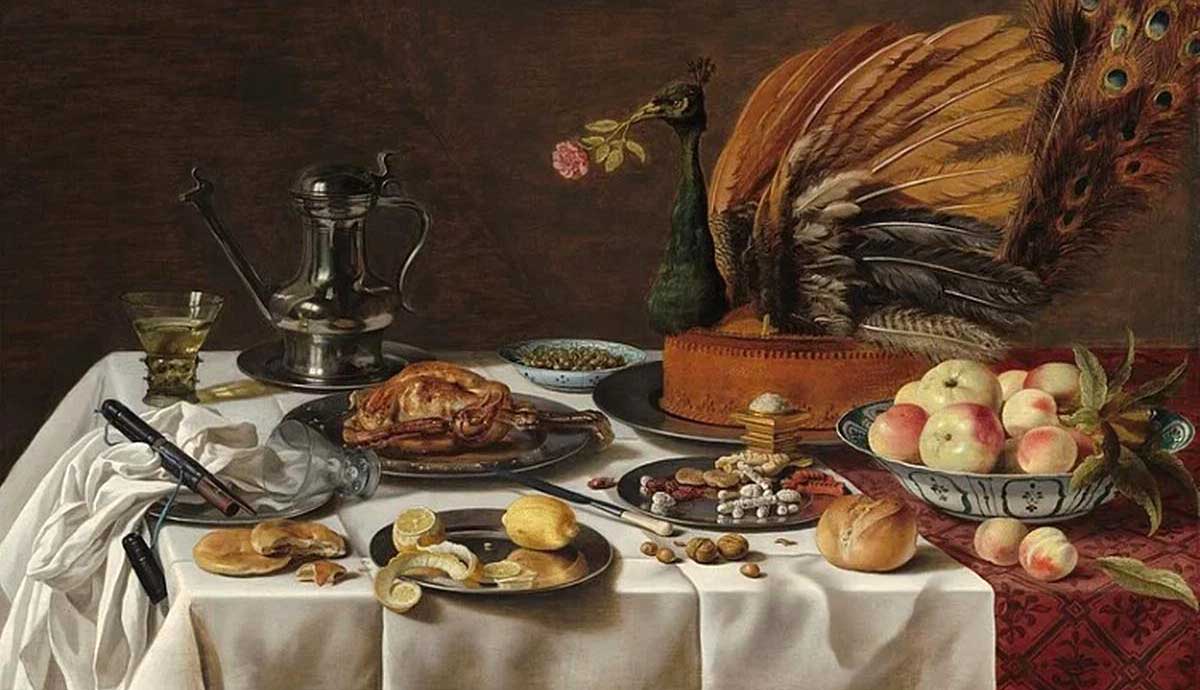
WWW.THECOLLECTOR.COMWhat Were Feasts Like in the Tudor Court?Tudor Englands royal court was a center for culture, politics, and food. The royal court displayed the wealth and influence of the Tudor monarchy, especially when King Henry VIII reigned. The feasts served there reflected the season and the bounty of the land, revealing layers of culinary history that shaped both the palate and societal norms. Food availability in Tudor England was not just a matter of extravagance. The diet was influenced by seasons and geography, forcing the court to adapt its culinary offerings in response to the harvest. Still, they did have more availability than the common peasant. This connection to the natural world created a rich and varied dining culture. In order to understand this, it requires a deeper look into royal menus, popular dishes, and available ingredients.Banquets at the Tudor CourtHampton Court. Source: Wikimedia CommonsThe wealth of the court meant good food day-to-day. However, one part of the splendor of the Tudor Court was the feasts and festivals, such as Christmas. Course after course was brought in, with food going from basic to more extravagant. Besides traditional items like lamb, a version of macaroni and cheese, and meat pies, there were more expensive and exotic style dishes. Menu items also featured items that were in season, something that has come back in trend in modern restaurants. During a winter feast, one might find venison paired with preserved fruits, while a summer banquet could include fresh peas and berries served in flavored syrup.Food was a way to show off the wealth and importance of the Tudor Court, but its presentation was key; dishes were often decorated like sculptural works of art, with some meals showcasing edible decorations that resembled ships or animals. One theatrical performance was baking a hollowed pie that were then filled with live birds. The pie would be cut and the birds would dramatically fly out to the delight of the guests.Eating at the Tudor CourtQueen Catherine of Aragon, by Lucas Horenbout, 1525. Source: Wikimedia CommonsOutside of the fancy parties and banquets courtiers still enjoyed regular meals, usually without the king who would eat alone or with only a few guests. You could eat twice a day, at 10:00 AM and 4:00 PM. Meals could top at around 5,000 caloriescertainly contributing to Henry VIIIs waist expanding from 32 inches to 56. Surprisingly, there were no forks these were reserved as serving utensils, and since fingers were a large part of eating there were rules to help prevent people from touching communal food that others would eat. You had to make sure to clean your hands before coming to eat. Spoons and knives werent provided by the court; you were expected to bring your own. There were other rules to follow to in order to behavior properly. Like today, wiping sweat onto a napkin or using it to blow your nose was considered rude.Food That Was AvailableCandied fruit, something found in the Tudor time-period. Source: WHAWith better access than most at a wide range of ingredients what were some of the normal everyday staples? Red meats such as venison, beef, and wild boar were utilized. For example, one year in Queen Elizabeths reign had receipts that totaled 8,200 sheep, 2,330 deer, 1,870 pigs, 1,240 oxen, 760 calves, and 53 wild boars. Birds like pheasant, partridge, and quail, were commonly enjoyed, and of course fish.The royal courts access to fruits and vegetables fluctuated with the seasons. Root vegetables like turnips and carrots were year-round, while summer heralded an array of fresh produce, including peas, beans, and strawberries. Herbs were also grown.Spices were signs of wealth and opulence in Tudor dining. They had sugar from Cyprus and various spices from trade routes with China, Africa, India and like cinnamon and cloves, hard to imagine when now any grocery store has cinnamon on its shelves.Bread was served as the cornerstone of Tudor meals. There were significant differences in quality; common folk ate coarse rye bread while nobles savored fine white bread. This was due to grain costs. Grains used in baking included wheat and barley.Favorite Royal DishesPortrait of Henry VIII. Source: National Portrait GalleryArtichokes were an item on the menu during King Henry VIIIs reign, since he loved them. His first wife Catherine of Aragon enjoyed seal or porpoise. This would be roasted and served with mustard. She also had orange marmalade, a special treat as the oranges that she had from Spain were not able to grow in the cold English climate. Anne Boleyn hinted at a pregnancy by talking about an intense craving for apples.One example of a royal menu from the Tudor Court included the following:First Course:Cheat Bread and Manchett,Beare and AleWyne,Flesh for Pottage (thick broth),Chines of Beef,Venison in Brewz or mult,Pestells of Reed Deere,Carpes of Young Veale in Arm farced,Custard garnished, or FrittersSecond Course:Jelly, Ipocras, Creames of Almonds,Pheasant, Hern, Bitterne, Shovelard,Cocks, Plovers or Gulles,Larkes or Rabbits,Venison in fine past,Tarts, FritterThe availability of sugar in the Tudor Court meant desserts played a key feature in the menu. King Henry VIII was also known to eat sweet preserves.Foods That Were Not Available in EnglandChristmas Pie, by William Henry Hunt, 1847. Source: Wikimedia CommonsMuch of what was available was dictated by the climate and weather. What could be grown locally, what could be farmed or hunted, or what could be imported easily meant it could be on the menu. While sugar and spices traveled easily over great distances, meats and fresh produce could not. Winter menus featured preserved items while summer offerings celebrated fresh ingredients. The lack of fresh foods in colder weather challenged cooks to innovate with what was available. By studying menus, diaries, and other written accounts of what was eaten it can tell us items that were often available at court.Since Queen Catherine of Aragon loved oranges, citrus fruits such as oranges and lemons were around in the Tudor time period, but only for special occasions or if they were preserved. They never would have made an appearance at common tables as they do today.0 Reacties 0 aandelen 15 Views -
ALLTHATSINTERESTING.COMInside The Forgotten Story Of Anna Strong, The Woman Who May Have Spied For George WashingtonAntony Platt/AMCThough few confirmed historical depictions of Anna Strong exist, she was famously portrayed in the television show TURN: Washingtons Spies. During the American Revolution, those who rowed across New Yorks Long Island Sound might have seen the flutter of laundry on a distant hill in Strongs Neck. On some days, they may have spotted a black petticoat; on others, they may have noticed some neatly arranged white handkerchiefs. Most probably dismissed what they saw as nothing but a housewifes work. But as the traditional story goes, the clothing had been carefully arranged by a woman named Anna Strong, a Revolutionary War spy.Some historians believe that Strong used her laundry to send messages to members of George Washingtons Culper Spy Ring, a highly effective intelligence network during the war that helped spread news about British troop movements. But the spy ring operated in absolute secret, and the wider American public didnt even know about its existence until the 20th century. It remains unclear exactly how many members there were in the network, but Strong is often thought to have been a key participant.So who was Anna Strong? This is her story, including the theory that she was the mysterious Agent 355 an unknown female spy who supposedly helped change the course of the Revolutionary War.The Revolutionary War Breaks Out And Changes The Strong FamilyVery little is known about Anna Smith Strongs early life. She was born on April 14, 1740, in Setauket, Suffolk County, New York, and, at the age of about 20, she married a man named Selah Strong III. Her husbands family bought land on a peninsula known as Little Neck, which later became known as Strongs Neck. The couple had a farm, and Anna gave birth to nine children. Meanwhile, the wider world was changing rapidly. In the 1760s, the British Parliament had imposed unpopular taxes on its American colonies to help pay for debts that emerged due to the Seven Years War (also called the French and Indian War). Colonists were outraged by the Stamp Act of 1765, which taxed items like pamphlets and playing cards, and by the Townshend Acts of 1767, which taxed items like paint, glass, paper, and tea.Tension over taxes like these led to the Boston Tea Party in 1773 and then, in 1775, it led to war between the American colonies and Great Britain. Public DomainThe Boston Tea Party of 1773, one of the events that moved Great Britain and its American colonies closer to war. On Long Island, the Strong family threw their support to the American Patriot side. Selah served as a representative to the first Provincial Congress of New York, and, according to the New York Historical, he fought in the Revolutionary War and saw action during the Battle of Long Island. But in 1778, Selah was captured and imprisoned on the HMS Jersey. He was charged with surreptitious correspondence with the enemy, or being a spy. Anna, the daughter of the Chief Justice of the Supreme Court of the Colony of New York, was seemingly able to use her connections to get her husband released. For his safety, he then fled to Connecticut. But Anna Strong stayed behind, apparently to protect the family property from the British. Before long, however, she had reportedly joined the Culper Spy Ring.Anna Smith Strong Purportedly Becomes A Spy For George WashingtonThe Culper Spy Ring began on the orders of George Washington in 1778, when Washington made Major Benjamin Tallmadge his director of military intelligence. Before long, Tallmadge had recruited a network of spies, many of whom hed known from his youth on Long Island.Public DomainBenjamin Tallmadge, the ringleader of the Culper Spy Ring. During the Revolutionary War, the Culper Spy Ring would pass on vital intelligence. They alerted Washington to imminent British attacks and helped reveal the treason of the infamous Benedict Arnold. In order to operate undetected, Tallmadge developed codes and pseudonyms, and elaborate ways of sending messages between himself, his spies, and George Washington. And its believed that Anna Strong became a vital part of this system, using a unique type of code. From her farm on Strongs Neck, Anna awaited word from her fellow spies. After getting intelligence from her neighbor, Abraham Woodhull, Anna would reportedly arrange her laundry to send a message to a courier named Caleb Brewster. If she hung a black petticoat, it meant that there was a message ready for Brewster to pick up from Woodhull. Sometimes, the male spies also met in coves nearby, so to indicate which of the six coves would serve as a meeting place, Anna would hang one to six handkerchiefs. New York Public Library Digital CollectionsStrongs Neck, where Anna Strong purportedly hung her laundry sending symbols to other Revolutionary War spies.Then, when the Revolutionary War ended, Anna Strongs life seemingly went back to normal. Her husband returned, and they had their 10th child: George Washington Strong. Anna died almost 30 years after the war ended, on August 12, 1812, in relative obscurity. Her service and the service of other Culper Spy Ring members would go unreported until the 20th century. Since then, some have speculated that Anna Strong could be the legendary Revolutionary War female spy known only as Agent 355.Was Anna Smith Strong Really Agent 355?Who was Agent 355? Rumors about the mysterious female spy emerged thanks to the Culper Spy Rings coded messages. George Washington was 711, for example, and 371 meant man. Meanwhile, 355 was used to refer to a lady, and in a coded message sent from Woodhull to Washington on August 15, 1779, this part stood out: I intend to visit 727 [Culper code for New York] before long and think by the assistance of a 355 [lady in the code] of my acquaintance, shall be able to outwit them all.Some historians firmly believe that this lady in question was Anna Strong. Some think that she was someone else entirely, perhaps someone based in Manhattan. And its also possible that 355 wasnt even a spy at all. Public DomainA depiction of a female spy during the American Civil War, often mistakenly used as an illustration of Agent 355.Indeed, some historians even doubt the accuracy of Anna Strongs story and her work as a spy during the Revolutionary War. The Journal of the American Revolution reports that while her legend was passed down over generations, and some historians believe there is convincing evidence of Anna Strongs role, others are not as convinced. However, they do think theres a possibility that Anna played at least some role in passing on messages. The clothesline story is apocryphal; I treat it as folklore, Beverly Tyler, the historian for the Three Village Historical Society in Setauket, stated. [But Anna Strong] had to communicate with [another spy] in some way, whether it was the clothesline or some other regular method. In the end, Anna Strongs story may never be fully known. As a spy, she would have operated in the shadows of the Revolutionary War. But if local legends are to be believed, she played a small but vital role in the conflict. By simply hanging her laundry near her home, she would be all but invisible to the British soldiers. But to her fellow American Patriots, she could be a shining beacon, passing on crucial information as the war went on. After reading about Anna Smith Strong, discover the story of William Dawes and how he rode alongside Paul Revere. Or, learn about Nathan Hale, the 21-year-old who spied for George Washington and was hanged by the British.The post Inside The Forgotten Story Of Anna Strong, The Woman Who May Have Spied For George Washington appeared first on All That's Interesting.0 Reacties 0 aandelen 15 Views -