0 Kommentare
0 Geteilt
24 Ansichten
Verzeichnis
Elevate your Sngine platform to new levels with plugins from YubNub Digital Media!
-
Bitte loggen Sie sich ein, um liken, teilen und zu kommentieren!
-
YUBNUB.NEWSSexist, Racist Newsom Press Office TOOL DRAGGED for Literally Trashing Nicki Minaj for Daring to DisagreeBefore we even get started, we want to nip Izzy's claim that this is all just about a Nicki Minaj song because deep down, we know it's not.And so does he.She?It? Advertisement They?Whatever.This was ugliness0 Kommentare 0 Geteilt 24 Ansichten -
YUBNUB.NEWSSalvadoran Abrego Garcia Is Released From US DetentionKilmar Abrego Garcia (C) departs the U.S. Immigration and Customs Enforcement Baltimore Field Office the day after a federal judge ordered his released from detention in Pennsylvania in Baltimore, Md.,0 Kommentare 0 Geteilt 24 Ansichten -
YUBNUB.NEWSGavin Newsom was steaming mad after Trump issued this military orderChess Ocampo via Shutterstock Gavin Newsom has been waging war against Donald Trump since he took office. But Trump just handed the California governor his worst defeat yet. And Gavin Newsom was steaming0 Kommentare 0 Geteilt 24 Ansichten -
YUBNUB.NEWSMass Sh**ting Leaves Dozens Of Casualties At Jewish Celebration Before Hero Steps InAlthough anti-gun activists in the US cite Australia as a violence-free utopia due to the nations strict firearms laws, a recent tragedy in Sydney shows that nowhere can be completely protected from0 Kommentare 0 Geteilt 24 Ansichten -
YUBNUB.NEWSUnarmed Hero Wrestles Weapon Away From Suspected Terrorist Shooter, Video ShowsVideo circulating on social media Sunday appears to shows an unarmed man taking down one of the suspected gunmen allegedly involved in a mass shooting targeting the Jewish community in Bondi Beach, Australia.0 Kommentare 0 Geteilt 23 Ansichten -
This Is Where To Get The Best Chicken Sandwich In Your StateThis Is Where To Get The Best Chicken Sandwich In Your State Da...0 Kommentare 0 Geteilt 50 Ansichten
-
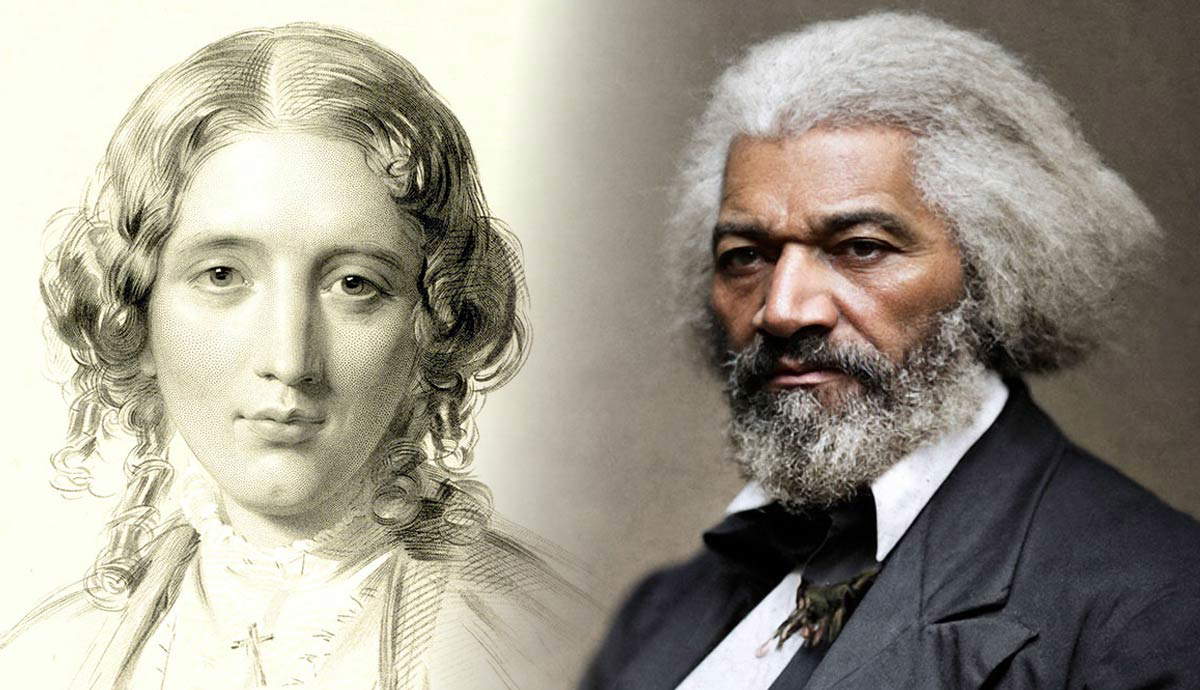
WWW.THECOLLECTOR.COM6 Famous Abolitionists You Should KnowThe first African American slaves arrived on the Virginia coast in 1619, marking the beginning of a long and tragic history. Not only would the institution of slavery last for over 200 years, but its ramifications echoed long after in the form of racism and oppressionchallenges still present today. In order to bring about the changes that would end the system of slaveholding in the United States, political and sometimes quite literal blows were struck. On the front lines were abolitionists who made freedom their lifes work, fighting to make a difference in the lives of future generations.1. Frederick DouglassFrederick Douglass, circa 1879. Source: National Archives and Records Administration via Wikimedia CommonsBorn enslaved, Frederick Douglass rose from subjugation to become one of the United States first civil rights leaders. Douglass was born in Maryland in February 1818, and not knowing his exact birth date, later selected February 14. His mother, Harriet Bailey, was also enslaved, and his father was unknown and believed to be a white man, perhaps Aaron Anthony, the man who claimed ownership over him.Frederick Augustus Washington Bailey had several siblings, and spent a great deal of his childhood in the care of his grandmother, Betsey Bailey. His mother died in 1826 and Frederick was moved between multiple masters. Young Frederick seemed to recognize the importance of literacy, and asked a member of his masters household to teach him to read. She did, until the master put a stop to it. Still, in the following years, Frederick continued to work on his reading and writing skills in private.Frederick Douglass in the 1840s. Source: Explore PA History via Wikimedia CommonsAfter 20 years of confinement, Frederick fled slavery in 1838, heading north and changing his last name to Douglass. Arriving in New York City, he married a young freedwoman named Anna, who had aided in his escape. Deciding New York was too risky, the couple moved to New Bedford, Massachusetts, and went on to have five children.Douglass worked as a laborer and became involved in local antislavery causes. He was an excellent speaker, and soon, his skills were in demand by groups eager to hear about his experiences as a slave and his promotion of abolitionist views. He even published his first autobiography in 1845. Fredericks growing fame made him vulnerable to those who sought to recapture him, and he spent time in Europe to avoid slave catchers. However, his friends in the abolitionist movement volunteered to purchase his manumission free and clear, and Douglass was able to return to the US a free man and moved his family to Rochester, New York. He continued his abolitionist work and became involved in politics, contributing to the Underground Railroad, and starting his own newspaper, the North Star. Frederick continued to write, not only for his paper but also in the form of additional books about his experiences.Douglass, his second wife (right), and her sister. Source: National Park Service via Wikimedia CommonsWhen the Civil War drew to a close, Douglass wasnt satisfied with simple emancipation for Americas slaves. He continued his fight, focusing on equal citizenship, arguing that freedom was nothing without rights. Womens rights became another focus of his efforts. He moved to Washington, DC, and served in various positions under five different presidents. Anna died in 1882. In 1884, Douglass remarried, this time to Helen Pitts, a white woman 20 years his junior, sparking controversy. The pair spent time traveling to Europe, Africa, and the Caribbean. Douglass died at 77 from a heart attack and remains today one of the pivotal figures of American abolition.2. John BrownJohn Brown was unafraid to use violence to make his point. Here, his trial is depicted. Source: National Archives via Wikimedia CommonsJohn Brown believed that action was the only way to address slavery, and he wasnt afraid of violence to achieve his means. He grew up in an abolitionist family, and spent his early life working a variety of jobs and contributing to various antislavery causes. He gave land and resources to fugitive slaves, assisted with the Underground Railroad, and established the League of Gileadites, which worked to protect escaped slaves from their would-be capturers.Brown met Frederick Douglass in 1847, at which time Douglass made a remark that illustrates Browns fervency for the abolitionist cause, saying it was as if his own soul had been pierced with the iron of slavery. Brown eventually moved to Kansas, the site of bloody controversy in regard to the issue of slavery. The territory was clearly split between pro and anti-slavery believers, and Bleeding Kansas ensued. Brown was in the thick of it, leading a group of antislavery guerilla fighters and killing proslavery settlers without mercy. He brought his plans east again, gathering a group of 21 men to raid the military arsenal at Harpers Ferry in 1859. The plan was to use the captured weapons to create an abolitionist army that would free slaves by force. Brown was wounded in the raid and captured. He was tried and convicted of treason and was hanged on December 2, 1859. He remains a controversial figure, with some disagreeing with the brutality of his methods, while others champion his unwavering dedication to the cause.3. Harriet Beecher StoweHarriet Beecher Stowe. Source: National Portrait Gallery via Wikimedia CommonsUpon meeting her in 1862, President Abraham Lincoln allegedly remarked to author Harriet Beecher Stowe, So, youre the little woman who wrote the book that made this great war! Indeed, Stowe was the best-selling author of Uncle Toms Cabin or Life Among the Lowly. The book is argued by some to be the most influential novel ever written by an American. Stowe highlighted the plight of the slaves in the US, and conditions in the slaveholding South, bringing attention to the truth of the industry and the stark contrasts between the North and the South.Born into an abolitionist New England Family, Stowe infused her tale with Christian themes, appealing to the spiritual side of her readers and questioning whether or not slavery and Christianity could ethically exist together. Stowes writing was widely read, and made the idea of the abolitionist movement seem more rational to those who were suspicious of its potentially radical ideas. The book was banned in some areas of the South or denounced as pure fiction, leading Stowe to publish a follow-up companion book that provided documentary evidence to support her writing. Stowe once argued that there is more done with pens than with swords, and if the legacy of Uncle Toms Cabin is any indication, she was exactly right.4. Harriet TubmanHarriet Tubman photographed by Horatio Seymour Squyer, circa 1885. Source: National Portrait Gallery via Wikimedia CommonsAraminta Ross was born into slavery in Maryland in 1822. The woman, later known as Harriet Tubman, had her first experience with attempted escape when she was 13. Running errands for her master, she observed a slave attempting to flee. She refused to assist the slave catcher in locating the escapee, and in his anger, he threw a two-pound weight, hitting Ross in the back of the skull, fracturing it. For the rest of her life, she dealt with a variety of consequences, including chronic headaches, seizures, and narcolepsy. In addition, she seemed to have a strong desire for liberation.She married in 1822, changing her last name to match her mother Harriets, and taking her husband John Tubmans last name. Harriet and her brothers made their escape in 1849, with their sights set on Philadelphia. Though her brothers fears caused them to turn back, Harriet reached her destination, connecting with abolitionists upon her arrival. She returned south in 1850 to aid family members in escaping, and from then on, dedicated her time to serving as a conductor on the Underground Railroad, aiding other slaves on their journey north.Over the course of 10 years, Tubman brought 70 people north, allegedly accruing a bounty as high as $40,000 (over 1.5 million dollars in modern money) on her head. After retiring from the Railroad, Tubman worked as a nurse during the Civil War, and as a spy for the Union. She became the first woman in history to organize and lead a military raid when she led a group of scouts into South Carolina to free approximately 750 slaves and burn numerous Confederate plantations. She was inducted into the Military Intelligence Corps in 2021.5. William Lloyd GarrisonWilliam Lloyd Garrison was a newspaperman and a famous abolitionist. Source: Wikimedia CommonsWriter William Lloyd Garrison used the press to make his voice heard, speaking out about the evils of slavery for over three decades. He joined the abolitionist movement in 1830 at the age of 25. In January 1831, he published the first issue of his antislavery newspaper, The Liberator. Garrison voiced the opinion that the only option was immediate emancipation for all slaves, a viewpoint that was radical even among abolitionists at the time. Still, Garrison refused to budge, and even attracted a following. He believed that the US Constitution was pro slavery, leading to complicated relationships with some fellow abolitionists, including Frederick Douglass. Garrison published his last issue of The Liberator at the conclusion of the Civil War, wrapping up after 1,820 consecutive issues.6. Anthony BenezetA historical marker in Pennsylvania denotes the location of Anthony Benezets former home. Source: Wikimedia CommonsBenezet, a French immigrant to America, was a Quaker who made an impact through education. He believed education should be available to all people, including women, African Americans, and those with disabilities. He created a number of inclusive educational programs throughout Pennsylvania. Benezet was an abolitionist who believed that the idea of black inferiority was false and baseless. He wrote to a number of organizations and people, including Queen Charlotte, wife of King George III, London Yearly Meeting, and the Quaker Church, calling on them to denounce and eradicate slavery. His anti slavery pamphlets spread not only through America, but became popular abroad as well. Upon his death in 1784, Benezet willed his assets to be used to support the education of African American and Native American peoples.0 Kommentare 0 Geteilt 24 Ansichten -
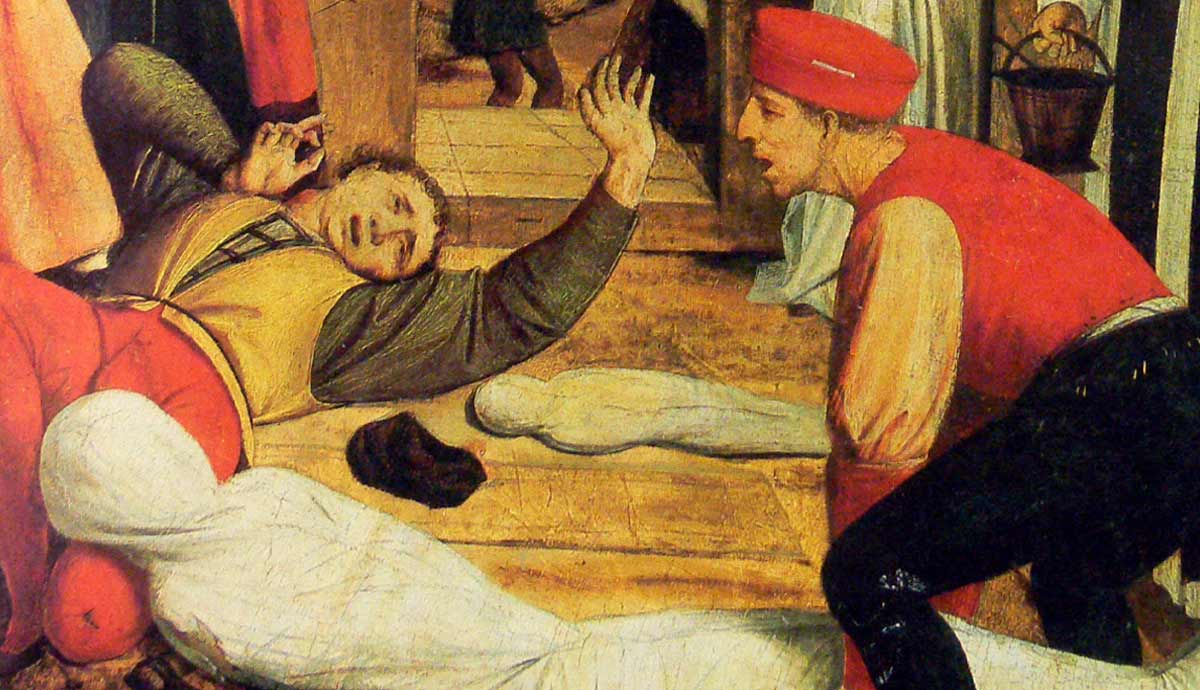
WWW.THECOLLECTOR.COMHow Did Justinians Plague Affect the Byzantine Army?At the height of his power in the mid-6th century CE, Emperor Justinian I strove to restore Rome to its former glory. Soon, his armies regained North Africa from the Vandals and were now involved in a campaign to regain Italy from the Ostrogoths. However, as Justinians generals marched across the land of the old Romans, a very different type of adversary emerged Justinians Plague. Spread by flea and rat-borne bacteria brought to the empire on grain ships from Egypt, the plague claimed millions of lives and greatly affected the Byzantine army.The State of Justinians Imperial Army Before the OutbreakThe empire in 555 under Justinian I, its greatest extent since the fall of the Western Roman Empire, vassals shaded in pink.To understand the extent to which the plague affected Justinians army requires understanding the pre-epidemic state of the Byzantine Army. For the Roman Empire to fight two wars simultaneously (in North Africa and Italy) it needed a huge number of soldiers as well as supplies, and other logistical needs for the soldiers. Estimates vary among historians today, but most agree that the approximate size of Justinians military forces totaled around 300,000 to 350,000 soldiers.Historian Agathias, writing decades after the first epidemic, compared the idealized number of soldiers (645,000) in the older, unified Roman Empires army with the prevailing army of only about 150,000 in his time. Although Agathias numbers were likely exaggerated so as to critique the policies of the imperial government, the extreme comparison he made demonstrated the enormous manpower problems the empire faced immediately after the plague.The True Extent of the DevastationSaint Sebastian pleads with Jesus for the life of a gravedigger afflicted during the plague of Justinian. (Josse Lieferinxe, (1497 1499). Source: WikipediaWhen the plague hit the Byzantine Empire, it did so rapidly and with extreme devastation. It first emerged in the Egyptian port of Pelusium in 541 CE and by the spring of 542 CE, it had reached the epicenter of the empire, Constantinople. The densely packed capital soon turned into a plague-ridden city. Court historian Procopius talked about the horror in his History of the Wars text in which he described the widespread destruction. Procopius estimated that approximately 10,000 people died each day in the city at the height of the plague.According to Procopius, the entire city of Constantinople collapsed socially due to the plague and healthy citizens were overwhelmed with the tasks of caring for the sick and burying the dead. Going by his depictions, the city was filled with bodies, and the emperor ordered the construction of mass graves on the outskirts of the city to bury them. Although Emperor Justinian eventually survived the plague, he too at one point fell ill due to the disease and was in a coma for several weeks.How the Army Was AffectedA map of the Byzantine Empire in 550 (a decade after the Plague of Justinian) with Justinians conquests shown in green. Source: WikipediaLike all other members of society, soldiers were equally susceptible to contracting the plague. Furthermore, because military camps and garrisons were usually overcrowded, the environments in which they lived provided perfect conditions for the plague to spread. Some historians estimate that the plague reduced the empires total population by 25 to 50 percent over its two centuries long cycle of recurring outbreaks. Consequently, the pool of available recruits for the Roman army shrank dramatically.The Impact on Military CampaignsBelisarius, byJean-Baptiste Stouf, ca 17851791. Source: J Paul Getty MuseumThe war against the Ostrogoths in Italy, which began successfully under General Belisarius soon stagnated after the outbreak, as the constant drain on resources and personnel prevented the military from achieving a decisive victory. When Belisarius returned to Italy in 544 CE, he did so with a severely diminished force and was unable to achieve a decisive victory against the resurgent Ostrogothic forces. The war continued for another decade until 554 CE. Its prolonged duration can largely be attributed to the plague-weakened state of the Roman military.Similarly, the plague limited the militarys ability to respond to the ever-present invasion threat posed by the Sasanian Persian Empire. The situation led to the empire agreeing to a peace treaty in 562 CE that had mixed outcomes. While the treaty secured the contested territory of Lazica for the Romans, it also obliged the Byzantine Empire to make substantial annual payments in gold to Persia.How the Byzantine Army Tried to Overcome Personnel ShortagesByzantine Siege Assault, in Codex Grcus Matritensis Ioannis Skyllitzes (BNE MSS Graecus Vitr. 26-2), c. 12th century CE. Source: Biblioteca Nacional de EspaaBecause the number of native-born soldiers available as recruits was severely reduced by the plague, the Byzantine Empire needed to recruit huge numbers of foreign mercenaries to supplement their remaining forces. The greater reliance on mercenaries led to a new set of problems. Among them were issues related to the loyalty of mercenaries and the cost of hiring them. These factors burdened the already strained imperial treasury and ultimately weakened the empire, making it susceptible to the Arab-Muslim conquests.0 Kommentare 0 Geteilt 24 Ansichten -
WWW.THECOLLECTOR.COM6 Interesting Historic Events That Happened on Christmas DayDecember 25th, Christmas Day, can feel like a day that the world stops. Shops are closed, workers stop, and most people stay home with family and friends. For this reason, it may seem surprising that some important historical events have occurred on Christmas Day. Sometimes this is directly related to the Christmas spirit, and sometimes it is just a coincidence. Discover six interesting historical events that have happened on Christmas Day.1. Coronation of William the Conqueror as King of England (1066)William the Conqueror portrait, 1597-1618. Source: National Portrait Gallery, LondonWhile it might seem a strange choice to us today, Christmas Day was a popular day for coronations in the 11th and 12th centuries. Charlemagne was crowned Holy Roman Emperor on Christmas Day, 800. Baldwin of Boulogne was crowned the first king of Jerusalem on Christmas Day, 1100. Count Roger II of Sicily was crowned the first king of Sicily on Christmas Day, 1130. Henry III was crowned Holy Roman Emperor on Christmas Day, 1046. Boleslaw II the Generous was crowned King of Poland on Christmas Day, 1076.Last but not least, William the Conqueror was crowned king of England on Christmas Day, 1066. The event took place at Westminster Abbey, setting the precedent for future English and British kings, except for King Edward V and King Edward VIII, neither of whom was crowned at all.Our most reliable source of information about Williams Coronation is a poem, Hastingae Proelio, written by Guy, the Bishop of Amiens, celebrating the Norman victory at the Battle of Hastings. In the finale of this poetic epic, Guy gives a detailed description not only of the battle and its aftermath but also of the coronation ceremony.Norman Knights on the Bayeux Tapestry, c. 11th century CE. Source: Wikimedia CommonsAccording to Guy, the day began with a procession from the nearby Palace of Westminster. William was preceded by the two leading churchmen of the era: the Archbishop of Canterbury, Stigand, and the Archbishop of York, Ealdred. Ealdred also officiated at the coronation. The pair was accompanied by Geoffrey de Mountbray, the Norman Bishop of Coutances.After the arrival of the procession at Westminster Abbey, William was seated on a raised dais. The idea was that the king should be raised both physically and symbolically above his subjects. All the traditional aspects of an English coronation followed: the chanting of the Kyrie, the anointing of the King with oil, and the swearing of the coronation oath. William promised that he would Rule all his people as well as the best of kings before him, if they would be loyal to him.The coronation concluded with the customary investiture with the regalia and the enthronement of the king. Finally, Mass was said, and a blessing was given.A few years later, during Eastertide of 1070, William was crowned for a second time at Winchester Cathedral. Three papal legates were sent to confirm the Roman Catholic Churchs acceptance of his rule.2. Election of Pius IV as Pope (1559)Portrait of Pope Pius IV, by Scipione Pulzone, 1560s. Source: BonhamsIt israre for a newpope to beelected on Christmas Day. Since the end of the Papacy of Saint Peter nearly 2,000 years ago, there is only one recorded occasion of a new Pope being elected on the 25th of December: Pope Pius IV (Giovanni Angelo Medici), who reigned as Bishop of Rome from Christmas Day 1559 until his death.The previous pope, Paul IV, died on August 18, 1599, and cardinals were summoned to conclave to choose a new pope on September 5th.What followed was the longest conclave of the 16th century, lasting 112 days. There is no time limit on the election of a new Pope, and theoretically, it should take as long as God wills it to take.The longest conclave ever began in 1268 and took two and a half years, and fairly long conclaves are now common.The Sistine Chapel, as it may have appeared in the 15th century, c. 19th-century drawing. Source: WGAAt the time, there were 55 cardinals in Europe, and 47 traveled to the Vatican to participate. Prestigious names in the group included Jean du Bellay (Dean), Francois de Tournon (Sub-Dean), the Cardinal of Santa Fiora (Camerlengo), Robert de Lenoncourt (Protopriest), and Allesandro Farnese (Protodeacon). The cardinals split into factions, with the most powerful being the Spanish faction of 17 cardinals headed by Cardinal Sforza. Eager to please King Philip II of Spain, they preferred Cardinal Carpi or Cardinal Morone for the job. There were also slightly smaller French and Italian factions.From September 5th until December 24th, 68 fruitless ballots were held, as a two-thirds majority is required to elect a new Pope. A common strategy at the beginning of a conclave was for a whole faction to split the numbers by voting for a random series of minor candidates. This was a delaying strategy: a foolproof way of putting off the election until more votes could be secured. Meanwhile, the number of cardinals present dropped to 44.Philip II of Spain, by Sofonisba Anguissola, 1565. Source: Museo del PradoGiovani Angelo Medici received a steady number of votes throughout the election process, but these began to increase rapidly towards the middle of December. We know that he voted, on various occasions, for a wide selection of other cardinals. Francis de Tournon, Rodolfo Pio di Capri, Pedro Pacheco de Vilena, Ercole Gonzaga, and Ippolito dEste are just a few of the men he thought appropriate for the job.We dont know exactly what happened on the morning of December 25, 1559, but we do know that another vote was cast after Christmas morning Mass. Suddenly, but finally, the vote was practically unanimous. Giovani Angelo Medici received every vote except his own. 44 pieces of paper were collected; 43 of those had his name written on them.Giovani Angelo Medici was installed on January 6, the following year, on the Feast of Epiphany, the last of the twelve days of Christmas. He took a papal name, Pius IV. After six years in office, he died on December 9, 1565. The new conclave took just two weeks to choose his successor on January 7.5. The Death of Lettice Knollys(1634)Effigy of Lettice Knollys, St Marys Warwick. Source: Wikimedia CommonsCountless historical figures have suffered the misfortune of dying on Christmas Day. The Spanish King, Henry III of Castile; the Bishop of Rome, Pope Adrian I; the American actor, W.C. Fields; the silent movie star, Charlie Chaplin. Most recently, the death of the singer George Michael was announced on Christmas evening, 2016.Noble woman Lettice Knollys also succumbed to old age on December 25, 1634. She was a grandniece of the former Queen Anne Boleyn and a relation and close childhood friend of the future Queen, Princess Elizabeth. She married three times: first to Walter Devereux (1st Earl of Essex) and thirdly to the younger Christopher Blunt. It was her second marriage, her union with Robert Dudley, that incurred the unrelenting jealousy and hate of Queen Elizabeth I. Lettice Knollys romance with Robert Dudley, and her lifelong banishment from Queen Elizabeths royal court, is what she is now best remembered for.Robert Dudley, 1564. Source: Waddeson ManorIt was almost unheard of for a woman of her era, especially one who had mothered six children, but Lettice was still fit and well at 90. She was said to have walked more than a mile a day for her health. She was born in 1543 during the reign of King Henry VIII and died in 1634 during the reign of King Charles I, seeing six royal coronations.Lettice Knollys wished to be buried At Warwick by my dear lord and husband, the Earl of Leicester, with whom I desire to be entombed. Her final request was respected and carried out, and she now rests in the Chapel of Collegiate Church of Saint Mary, Warwick, beside her husband and opposite the tomb of her son, the young Lord Denbigh.4. The Birth of Christmas Evans (1766)Portrait of Christmas Evans, by Josiah Wood Whymper, 19th century. Source: National Library of WalesQuite a few famous historical figures have been born on Christmas Day. English organist and composer, Orlando Gibbons (1583); world-famous physicist and astronomer, Isaac Newton (1642); leader of the Papal States and Bishop of Rome, Pope Pius VI (1717); American model and actress, Evelyn Nesbit (1884); the first female General of the Salvation Army, Evangeline Booth (1865); and actor and star of Casablanca, Humphrey Bogart (1899).Another Christmas baby was the 18th-century Baptist Minister, Christmas Evans, in 1766. While not internationally famous, he is a household name in many parts of Britain, especially in Wales. Christmas Evans was, according to the Welsh Congregationalist Minister David Lloyd-Jones, The greatest preacher that the Baptists have ever had in Great Britain.Christmas Evans had something of a rags-to-riches story. He had no education as a child, grew up unable to read or write, and worked as a laborer at a local farm. Life took a drastic turn for the better at the age of 17 when he was introduced to the Presbyterian Minister, David Davis. Christmas became Davids servant, and it was in this household that he learned not only to read and write but also about religion. This opened the door for him to become one of the most popular Welsh speakers of his era.Bethesda Baptist Chapel, Swansea. Source: Wikimedia CommonsChristmas Evans died in July of 1838, at the very beginning of the reign of Queen Victoria. The number who attended his funeral was unprecedented, and it became one of the best-attended in Welsh history. Legend suggests that if you kiss his headstone on Christmas Day, you will have good luck for the coming year.In 1909, Grenville Kleiser published a seven-volume work entitled The Worlds Greatest Sermons. Christmas Evans famous sermon, The World As A Graveyard, was the only entry in the collection by a Welsh preacher.5. President Johnsons Confederate Pardon (1868)President Andrew Johnson. Picture by Mathew Brody from 1875. Source: Library of CongressIt may have been the Christmas spirit that inspired U.S. President Andrew Johnson to unconditionally pardon all Confederate troops of the charge of treason on Christmas Day, 1868.How to deal with Confederate fighters had been a contentious issue since the end of the war. President Lincoln outlined plans for reconstructing the South in December 1863, which included amnesty for all former Confederates. It required an oath of allegiance, the abandonment of slave ownership, and the restoration of confiscated properties. But Congress opposed the plans as too lenient, so the plans were abandoned. During his presidency, Lincoln only issued 64 pardons for war-related offences.When Andrew Johnson took office in 1865, he seemed hostile toward Confederate leaders and seemed to prefer punishment and prosecution. This led to many southern leaders fleeing the United States for Mexico, Canada, and Europe. Nevertheless, he offered a broad amnesty in May 1865, requiring an oath to the United States and a promise to obey the new laws. But many people were excluded, such as members of the Confederate government, anyone in the military above a certain rank, and anyone with a certain amount of wealth. Nevertheless, 12,652 pardons were issued.Nevertheless, on his last Christmas before leaving office, Johnson seems to have had a change of heart and granted a blanket pardon to all and every person who had fought for the Confederates as an unconditional act of forgiveness that would reconcile the nation.6. The Christmas Truce of WWI (1914)The Christmas Truce video still by Sainsburys Supermarket and the Royal British Legion. Source: AdweekWhere can one begin when describing the Christmas Truce of 1914? There is little that can be said to do justice to its meaning or significance. Never has there been a greater example of the overwhelming and uniting power of the Christmas spirit. The Encyclopaedia Britannica explains the event in a few sentences: The Christmas Truce (December 24th-25th, 1914) was an unofficial and impromptu ceasefire that occurred along the Western Front during World War I.The truce is thought to have started on Christmas Eve in 1914. Late in the evening, German troops began to sing Christmas carols, starting with Silent Night, or Stille Nacht. Members of the British Expeditionary Force (BEF), in the trenches directly opposite, were inspired to stop and listen. After a while, the British joined in, and English and German lyrics blended together. Lanterns were lit, and verbal messages were passed between the opposing trenches.Stille Nacht, by Franz Xaver Gruber, c. 1860. Source: Wikimedia CommonsThe following day, early on Christmas morning, British and German soldiers met in no-mans-land. The truce began with the most respectful and important acts of burying the dead and repairing supplies.It was afterward that the simple festivities began. Not only did the men wish each other a Merry Christmas, but they also exchanged gifts, showed photographs of loved ones, shared food, talked of life back home, and even played games of football.The Illustrated London Newss illustration of the Christmas Truce, 1914. Source: Wikimedia CommonsWhile the truce persisted until New Years Day in some areas, violence quickly returned to the Western Front. But while short, its impact should not be underestimated. Many officers feared that the truce would cause a rapid decrease in fighting spirit. There were worries, especially in areas where the truce continued into January, that it might actually end the war.Despite the attempts of the soldiers, plans for a second truce on Christmas Day of 1915 were abruptly quashed. There were no further widespread ceasefires on the Western Front until the armistice of November 1918. Extra efforts were taken by both British and German officers to prevent any further contact between their men.0 Kommentare 0 Geteilt 24 Ansichten