What Was Americas Role in the French Revolution?
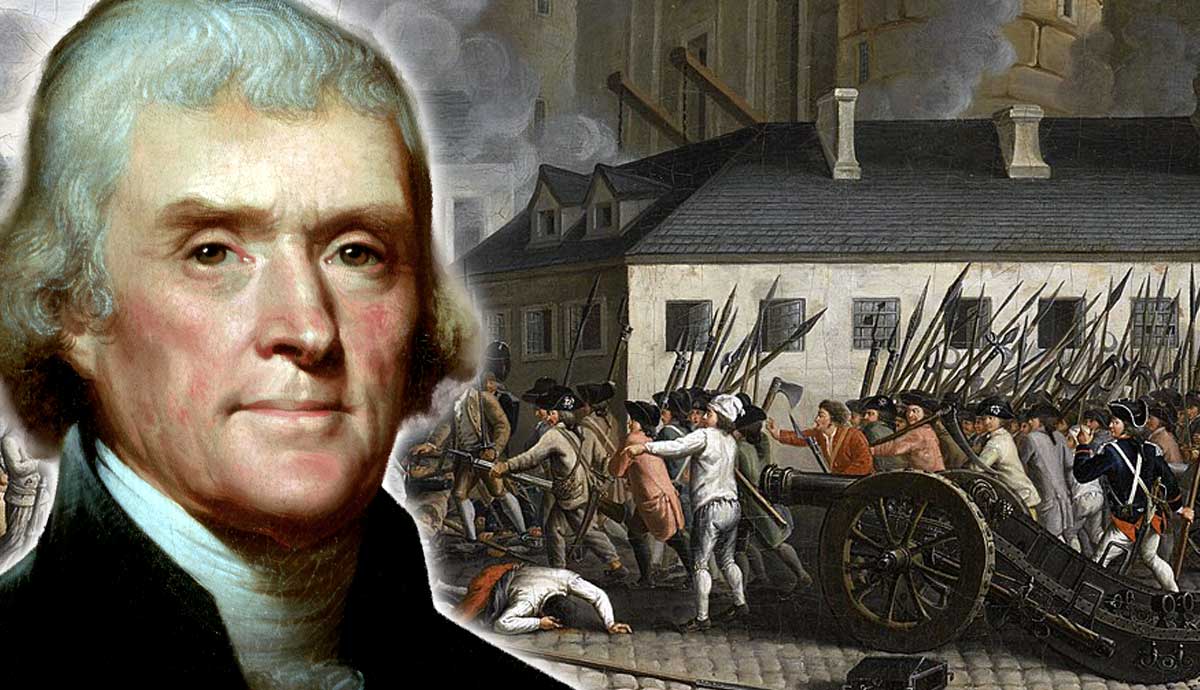
Revolution has been a critical force in global changes throughout world history. The 18th century was a time of vast changes in government in many global locations, bringing the topics of irrevocable human liberties and who has the right to rule to the center of public scrutiny and discussion. Two places where revolution was especially impactful during this era were France and the nascent United States. These two countries would be entangled in one anothers quests for change. While after it gained independence, America was focused on building a new country, its role in the ensuing French Revolution would prove salient.What Was the French Revolution?Storming of the Bastille and arrest of the Governor M. de Launay, July 14, 1789. Painted by an unknown artist. Source: Museum of the History of France via Wikimedia CommonsThe French Revolution, which began in 1789, was primarily driven by economic factors and frustrations with inequalities in French society. As it stood, French society was divided into three estates, or classes, which were taxed unequally. The general public, or Third Estate, paid the most tax compared to the clergy and nobility (First and Second Estates), who were landowners.The way the class system was established, it was nearly impossible to move up the social ladder. Thus, it was no surprise that the Third Estate felt as if they were being taken advantage of by those in power. Resentment of royalty and the nobility grew as the French court lived in luxury within the Palace of Versailles.Jean Jacques Rousseau and other Enlightenment philosophers influenced revolutionary thinking. Source: Musee Antoine-Lecuyer via Wikimedia CommonsPhilosophy played a role in the onset of the revolution as thinkers such as Jean Jacques Rousseau ushered in the Enlightenment period. Human rights and responsibilities were a huge point of discussion among Enlightenment thinkers and provided more fuel for those concerned with societys shortcomings. The first event of the revolution, in June of 1789, was the collapse of the Estates-General (comparable to parliament).The Third Estate formed its own National Assembly and began campaigning for constitutional reform in France, a direct challenge to the authority of King Louis XVI. On July 14, rebels from the Third Estate stormed the Bastille, a fortress-like prison and hallmark of royal authority. Following this event, revolutionary fervor only grew, and debates about the best way to reform the constitution were ignited.The unrest of the French Revolution allowed for Napoleon Bonapartes rise to power. Source: Kunsthistorisches Museum Wien via Wikimedia CommonsThe revolutionaries then arrested the king and his wife, Marie Antoinette, along with other members of the nobility. On September 22, the National Convention was established, stating that the monarchy was abolished and the French Republic was now the status quo.The infamous Reign of Terror began the following year, which included the execution of the king and queen along with thousands of other suspected pro-monarchists. The country remained unstable, with both infighting and conflict with other countries. A new regime called The Directory took control of the government in 1795, with a military led by a young general named Napoleon Bonaparte. Bonaparte rose to power and did away with the Directory in 1799. He declared himself first consul and went on to rule France as a dictator, marking the end of the French Revolution.Critical AlliesGilbert du Motier, Marquis de Lafayette, was a critical contributor to the cause of the American Revolution. Painting by Joseph-Dsir Court, 1834. Source: Palace of Versailles via Wikimedia CommonsThe people of France were no strangers to revolution, though their recent brushes with rebellion had taken place outside their country. The French were key allies of the Patriot cause during the American Revolution, which occurred just before the events in France.The American Revolution took place from 1775-1783, and French intellectuals and politicians closely followed its course from the beginning. The French were instantly intrigued by the possibility of supporting the American cause, both for the example of Enlightenment ideas in action and the chance to do damage to their long-standing enemy, the British Empire.Despite the role that Enlightenment thinking would play in their later demise, the French nobility were especially interested in these ideas and the progress that they could bring to science and societal advancement. France didnt outwardly support the Americans at first, instead choosing to funnel weapons and supplies to the country in secret. French citizens such as the Marquis de Lafayette actually traveled to America to join the Continental Army in the name of freedom. Lafayette used his wealth and influence to secure further resources for the Patriot cause, and in 1778, the Treaty of Alliance formalized the relationship between France and the future United States. Eventually, French soldiers arrived to fight alongside the Americans. Most modern historians argue that France made Americas victory in the Revolutionary War possible.Broken TreatiesAn early depiction of the French tricolor, painted by Louis-Lopold Boilly. Source: Muse Carnavalet via Wikimedia CommonsWith the impact that the French had on the American cause in their Revolution, it would stand to reason that the French would expect American support in their own rebellion. After all, who better to understand the desire for more rights than a country founded on the principles of life, liberty, and the pursuit of happiness? However, America was concentrating on stabilizing its newly-birthed country and did not wish to become involved in European affairs. It was slowly recovering from several years of war, building a financial foundation, and plotting a course for the future.The execution of Robespierre and his supporters in 1794. Robespierre was a lawyer and statesman, and held progressive views during the Revolution, but fell from power. Source: Gallica Digital Library via Wikimedia CommonsThomas Jefferson was appointed Senior Minister in France as the French Revolution was forming. He watched the course of events with interest and wrote that France had been awakened by our revolution. He made friends with many aristocrats who were interested in reform, and they turned to him for advice as they pursued ideas to amend the government.The Marquis de Lafayette, who had returned to France at the conclusion of the American Revolution and become involved in the cause of liberty in his home country, asked Jefferson in 1789 to write a list of recommendations for reform. Jefferson obliged, but his charter of rights, meant as a first step toward a constitutional monarchy, was not acted upon. He later assisted Lafayette in drafting the Declaration of the Rights of Man and of the Citizen, which was presented to the new National Assembly in 1789.A revolution-era painting titled La Libert by Jeanne-Louise (Nanine) Vallain. Source: Museum of the French Revolution via Wikimedia CommonsDespite Jeffersons involvement and his optimism about the French Revolution, not all members of the United States government were as excited about the situation. In 1793, President George Washington released a pivotal document: a Proclamation of Neutrality. It stated that the US would remain neutral in the conflicts that had resulted in Europe as a result of the revolution, including the War of the First Coalition between England and France. The French argued that the 1778 Treaty of Alliance had no end date and that with this proclamation, America was breaking the treaty agreement. Americas congress disagreed, stating that the treaty had been made with Louis XVI. Since he was no longer in power, the contract was moot.Neutral or Not?Citizen Genet pleading his case to George Washington. Source: Library of Congress via Wikimedia CommonsFrance seemed to accept this decision but did not give up attempting to get America on its side. Edmond-Charles Genet, known as Citizen Genet, traveled to the United States to drum up support for the French revolutionaries. He earned the support of Jefferson and other key officials, but Washington shut him down and demanded he return home. Washington dispatched John Jay to England to iron out some inconsistencies in the Treaty of Paris that had concluded the Revolutionary War in America. The Jay Treaty improved the relationship between England and America and enhanced trade. This infuriated the French, and privateers began taking American ships as a result, capturing 6% of the merchant fleet in 1797. France refused to accept US ambassadors, and new president John Adams sent a peace commission on March 4, 1797. The French negotiators demanded bribes, a deal which would later become known as the XYZ Affair. When these demands were made public, some Americans even called for war against France.A British satirical piece mocks America, depicting France taking advantage of her during the XYZ fair. Source: Library of Congress via Wikimedia CommonsIt seemed that Americas attempted neutrality had failed, and there was a mixture of pro- and anti-French sentiment throughout the country. The Alien and Sedition Acts came into effect with the intention of preventing the growth of further French support.Bringing Revolution Home?There was concern that Thomas Jefferson would bring revolution to America once again. Source: The White House via Wikimedia CommonsIt was known that Thomas Jefferson was a supporter of the French cause, but as time went on, he chose to take a more moderate approach. Some worried that allowing Jefferson to attain the role of president would result in more radical revolutionary changes in America like those that were happening in France. However, the implementation of the Alien and Sedition Acts by the Federalist Party caused many swing voters to err on the side of Jefferson. These acts, intended to reduce revolutionary fervor and pro-French sentiment, changed US citizenship requirements and put restrictions on the constitutional freedoms of the press and speech. Recognizing the desires of the majority of American people to avoid further war, Jefferson distanced himself from radical ideas and people as time went on, and fervor quieted as the French Revolution drew to a close.A French revolutionary soldier from an 1888 cigarette company ad. Source: Metropolitan Museum of Art via Wikimedia CommonsWhile America may have inspired the sense of revolution within Frances borders, the country was not eager to become involved in its former allys bloody rebellion. While France found supporters in Jefferson, much of America remained firmly against the French Revolution as it watched events like The Terror and the capture of American merchants unfold. Seeing the radical changes happening in France, America largely chose to stay silent and uninvolved as its European counterpart underwent unprecedented changes.













 English
 French
 Spanish
 Portuguese
 Deutsch
 Turkish
 Dutch
Dutch
 Italiano
 Russian
 Romaian
 Portuguese (Brazil)
 Greek
Greek