Where 1960s Flower Power Blossomed: 55 Vintage Photos Of Haight-Ashburys Counterculture
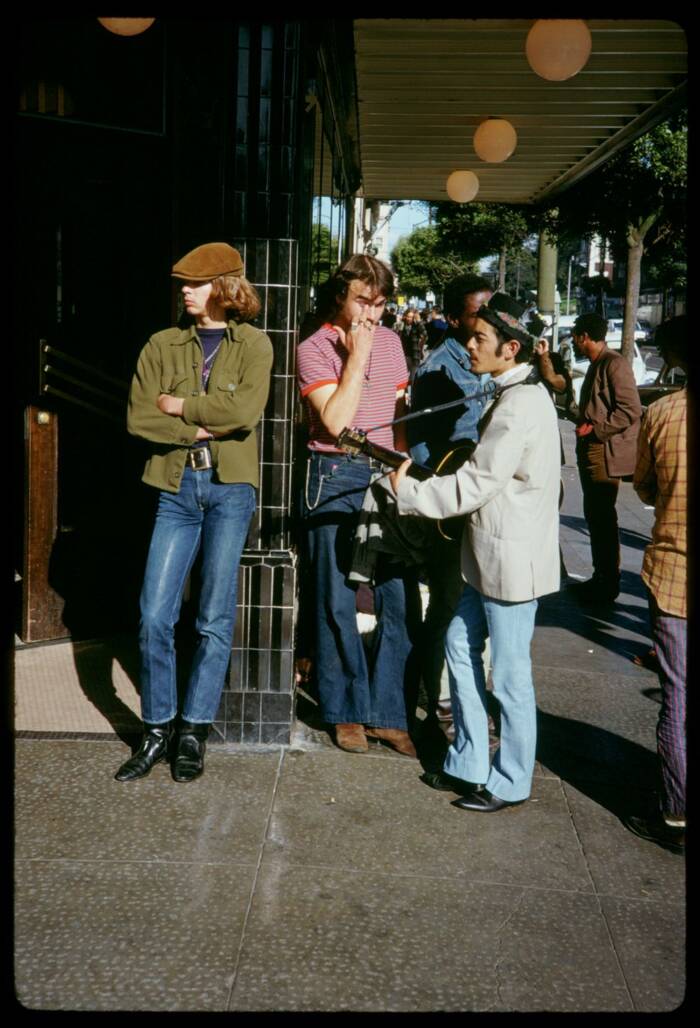
In the mid-1960s, a neighborhood in San Francisco underwent a historic transformation that placed it at the center of the counterculture movement. Haight-Ashbury, named for the intersection of Haight and Ashbury Streets, was now the hippie capital of the United States. Of course, that change didnt happen overnight. It started as an enclave of bohemians and artists drawn to the neighborhood because of its cheap Victorian housing and close proximity to Golden Gate Park. However, the convergence of several large cultural forces psychedelia, opposition to the Vietnam War, and a young generation that questioned mainstream American values turned Haight-Ashbury into fertile ground for the hippie movement. Haight-Ashbury offered something new: a space where young people could create an alternative society based on the principles of peace, love, and communal living. See what it was like in its heyday through our gallery below.Click here to view slideshowInside The Rise Of The San Francisco Hippie Movement In Haight-AshburyThroughout the 1960s, San Francisco had been gaining traction as a creative hub. With media attention focused on the city, thousands of young artists and creatives poured in, many of whom found the affordability and community of Haight-Ashbury enticing. The newcomers had many shared interests: music, art, psychedelic drugs, free love, and antiwar sentiment. As researcher Anthony Ashbolt explained in a piece for the Australasian Journal of American Studies, those who flocked to Haight-Ashbury "sought refuge from an American dream that was crumbling quickly in suburban wastelands and urban hothouses, as well as the jungles of Vietnam." The "flower children" in San Francisco shared much in common with the Beatniks, who mostly settled in New York's Greenwich Village, but while Beatniks had a deeper appreciation for jazz and coffee shops, the community in San Francisco was more interested in growing their hair out, listening to folk music, and embracing the evolution of rock 'n' roll. That community also led to some of the era's most influential rock bands, such as the Grateful Dead, Jefferson Airplane, and Janis Joplin with Big Brother. Indiana University Digital CollectionsHippies photographed in Haight-Ashbury.One other thing slightly separated the hippies from the Beatniks, too: drugs. Beatniks were known to partake in drugs like marijuana, of course, but never before the hippie movement had drug use been such a prominent symbol of an American subculture. LSD in particular was common and legal until 1966. Haight-Ashbury's Psychedelic Shop provided information on LSD and other drugs, and became a sort of support center for the hippie movement. "Suddenly, there was a common fact that everyone could identify with. It was right in the middle of town, and it was called the Psychedelic Shop," said its co-founder Ron Thelin. "And then more people started coming in and then pretty soon it was like the whole Haight-Ashbury was the community."For many hippies, LSD wasn't just a recreational drug they saw it as a tool for spiritual awakening. Aldous Huxley's writings on psychedelics were also highly influential, while people like Timothy Leary a psychologist who strongly advocated for psychedelic drugs became countercultural heroes. Alongside these "awakening" drugs, hippies often pulled from Eastern philosophies and meditation practices, which drew in even more people who had become disillusioned with Western materialism and Cold War anxiety. The result was a peace-emphasizing, creative community that ultimately proved to be largely unsustainable. The movement had simply grown too big, and that was made apparent in 1967, especially during the Summer of Love.The Summer Of Love And The Death Of HippieSan Francisco Public Library ArchivesA man carrying a sign for a Grateful Dead show,.In January 1967, up to 30,000 people gathered in San Francisco's Golden Gate Park for an event called the Human Be-In, a celebration of countercultural ideals. It was partly organized in response to California's ban on LSD just months earlier. Media coverage of the event was constant, broadcasting images of flower children, free love, and what seemed to be a utopian community to countless young people across the country. Upon seeing this celebration, tens of thousands of people made pilgrimages to San Francisco and Haight-Ashbury, specifically. But according to SF Heritage, these pilgrims didn't exactly find what they were hoping to find. Yes, the creative, communal spirit was there. But the neighborhood itself wasn't prepared for such a massive influx of people or the growing pains that accompanied it. Housing became scarce, and crash pads overflowed. The once-plentiful resources of free food and medical services became strained under increased demand. And harder drugs began infiltrating a scene that was previously focused on psychedelics and marijuana.As a result, crime increased, and the darker elements of counterculture exploitation, addiction, and mental health crises, to name a few became impossible to ignore, as the rest of the country observed the aftermath of the Summer of Love through photographs and television screens. By the fall of 1967, many of Haight-Ashbury's original residents recognized that the movement was starting to outgrow its roots. Some locals even held a mock funeral procession, "The Death of Hippie," signaling that the authentic spirit of the community had been largely commercialized and corrupted. Ruth-Marion Baruch/University of California Santa Cruz ArchivesGraffiti that reads "Let's Smoke Dope."The Psychedelic Shop closed its doors. Some who wished to continue their hippie lifestyles dispersed to communes in rural California and Oregon, hoping to preserve their ideals away from media attention and tourism. But even if the movement was considered "dead" by some, its legacy wasn't. The community that formed in Haight-Ashbury challenged American norms and forced people across the country to reconsider and interrogate conventional values about work, success, sexuality, and community. It had proven that young people could create alternative institutions and ways of living. The status quo was not necessarily set in stone. Haight-Ashbury today is a far cry from what it was in the 1960s. Victorian houses still stand, though many of them command prices unimaginable to the young squatters of the hippie era. Vintage stores cater more to nostalgic tourists hoping to re-live the era's rebellious spirit, but that only speaks to how commercial the movement became. The true legacy of Haight-Ashbury in the 1960s isn't found in nostalgia or merchandise, though. Its true legacy is an enduring belief that society's structures aren't fixed, that community can be chosen rather than inherited, and that young people have the power to imagine and create new ways of being in the world. After this look at Haight-Ashbury in the 1960s, read the wild story of Abbie Hoffman, one of the most iconic faces of counterculture. Or, check out these photographs from Woodstock, the 1960s' most famous music festival.The post Where 1960s Flower Power Blossomed: 55 Vintage Photos Of Haight-Ashburys Counterculture appeared first on All That's Interesting.












 English
 Arabic
 French
 Spanish
 Portuguese
 Deutsch
 Turkish
 Dutch
Dutch
 Italiano
 Russian
 Romaian
 Greek
Greek