0 Commentaires
0 Parts
12 Vue
Annuaire
Elevate your Sngine platform to new levels with plugins from YubNub Digital Media!
-
Connectez-vous pour aimer, partager et commenter!
-
Block ads and keep things family-friendly forever for just $16Block ads and keep things family-friendly forever for just $16 TL;DR: A lifetime AdGuard Family Plan that blocks ads, boosts privacy, and protects up to 9 devices — for a one-time $15.97 payment with code FAMPLAN. $15.97...0 Commentaires 0 Parts 29 Vue
-
Cyber Week’s quietly brilliant MacBook Pro offer is just $360Cyber Week’s quietly brilliant MacBook Pro offer is just $360 TL;DR: A Grade A refurbished 2019 MacBook Pro with Touch Bar that still delivers smooth, everyday performance — on Cyber Week sale for $359.97 for a short time. $359.97...0 Commentaires 0 Parts 12 Vue
-
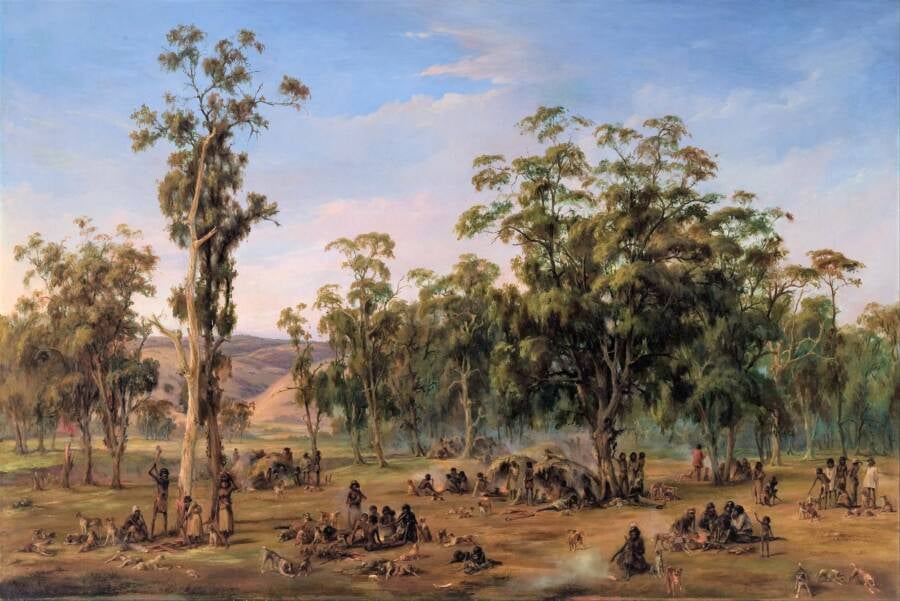
ALLTHATSINTERESTING.COMA New Study Has Just Determined When Humans First Arrived To AustraliaPublic DomainAn 1854 painting by Alexander Schramm of an Aboriginal encampment.Nearly 250 years ago, Europeans established their first permanent settlement in Australia and came into contact with the continents Aboriginal people. Now, a new study published in Science Advances has determined when these Aboriginal inhabitants arrived in Oceania themselves.The study involved the analysis of nearly 2,500 genomes from Aboriginal communities across Australia, New Guinea, and other Pacific islands to clarify the timeline of when the first modern humans landed on Sahul, a prehistoric continent that included modern-day Australia, Tasmania, and New Guinea. Not only did the team find evidence of human habitation as far back as 60,000 years ago, but they also discovered what may be the earliest uncontested example of travel by boat. And some of those early arrivals may have even mated with other species along the way. New Technologies Spark Debate About Humans Arrival In AustraliaBetween the first European contact with Aboriginal Australians and today, numerous leaps in technology have enhanced the scientific understanding of when the continent was first settled. Radiocarbon dating techniques in particular helped to establish a timeline that pointed to thousands of years of occupation, far exceeding initial European estimates. This pushed the time of peoples arrival back to around 45,000 years ironically, now known as the short chronology,' Martin B. Richards, a professor of archaeogenetics at the University of Huddersfield and co-author on the study, writes for The Conversation. However, some archaeologists argued they may have arrived even earlier. The so-called long chronology theory started gaining traction around 2017, as newer scientific dating methods like optical luminescence dating were developed. This theory suggested that the first people arrived in Australia 60,000 years ago, but it was not widely accepted and remained contentious. Then, in 2024, more evidence emerged that once again turned the tide. Public DomainAn Aboriginal camp in Victoria, circa 1858.As Richards explains, geneticists then got involved in the debate, publishing a study that examined the genetic clock of prehistoric Australians. This suggested some interbreeding between early modern humans and Neanderthals, with an overlap of about 5,000 years. This would have occurred less than 50,000 years ago, suggesting the short chronology may actually have been more accurate. All present-day non-Africans carry around two percent Neanderthal DNA, suggesting they must all be descended from that small group, Richards writes. This research therefore supported the short chronology view. One potential explanation for this was that humans arrived in Sahul in two waves: one 60,000 years ago and a second 40,000 years ago, which entirely replaced that first wave. However, this explanation made little sense to some experts. Humans were already widespread in Sahul 40,000 years ago, after all. But the new study offers another explanation: Only one wave of humans arrived in Sahul 60,000 years ago, but they took two distinct routes to get there.The Earliest Seafarers Arrived In Two MigrationsAfter sequencing mitochondrial DNA genomes which are only inherited maternally from nearly 1,000 new samples collected with the help of Aboriginal elders and combining them with another 1,500 sequences that were already available, researchers were able to use what they called a molecular clock to determine that the deepest human lineages in Australia dated back 60,000 years. Our results suggest there were two distinct migrations into Sahul both around the same time 60,000 years ago, Richards writes. This is because the most ancient lineages fell into two groups.These groups were a major set and a minor set, the former having ancestry in the Philippines and the latter hailing from either South Asia or Indochina. Notably, the major sets DNA was distributed throughout both New Guineans and the Aboriginal Australians, while the minor set was only observed in Aboriginal people. Maximilian Drrbecker/Wikimedia CommonsA map of present-day Southeast Asia and Australia overlaid with the prehistoric continents of Sunda and Sahul.The simplest explanation for this was that each group arrived via a different route: a major path in the north and a minor southern one. In modern New Guineans and Aboriginal people, there was also evidence of an additional five percent of archaic human DNA on top of the standard two percent Neanderthal DNA, indicating prehistoric humans interbred with other archaic human species as they traveled.Most remarkably, however, is that despite lower sea levels at that time, the minor group would still have traveled at least 60 miles across the open sea, which marks some of the earliest evidence of human seafaring. They would have traveled on simple watercraft like bamboo rafts or canoes, but that makes their journey no less impressive. The authors noted that this doesnt fully settle the debate, but it certainly offers more compelling evidence for the long chronology. So far, studies have only been able to examine indirect evidence, but if researchers are ever able to recover any prehistoric DNA to apply the models directly, it could provide a definitive answer. After reading about when the first humans arrived in Australia, discover how humans may have arrived in Mexico 20,000 years earlier than previously thought. Then, learn about when the first humans arrived in Sicily.The post A New Study Has Just Determined When Humans First Arrived To Australia appeared first on All That's Interesting.0 Commentaires 0 Parts 8 Vue -
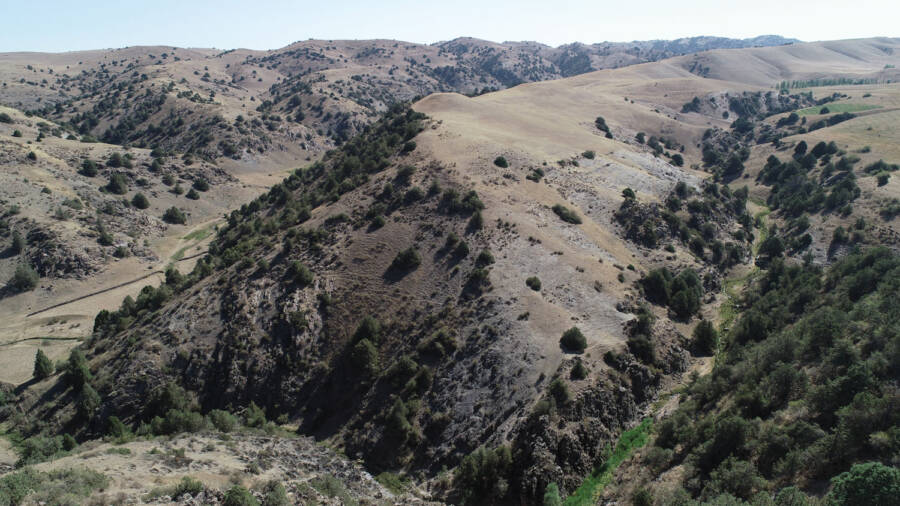
ALLTHATSINTERESTING.COMArchaeologists Believe Theyve Just Found The Fabled Weapon-Producing Capital Of The Silk Road In The Mountains Of UzbekistanMichael FrachettiThe mountainous region of Tugunbulak, where archaeologists now believe the Silk Road city of Marsmanda once sat.When archaeologists traveled to the mountains of Uzbekistan in 2011, they were hoping to find evidence of Bronze Age people whod lived in the region some 4,000 years ago. Instead, they found a sea of artifacts which dated not to the Bronze Age, but to the Middle Ages. Now, they believe that theyve uncovered evidence of a lost Silk Road city at the site, a metropolis known as Marsmanda that has eluded experts for decades.Though Marsmanda appears in 10th-century Arab texts, where its hailed as an advanced producer of prized iron goods and weapons, the city has never been located. However, archaeologists now believe that by using both LiDAR technology and old-fashioned archaeological techniques theyve uncovered this Silk Road city some 6,500 feet above sea level.The Possible Discovery Of Marsmanda In The Mountains Of UzbekistanMichael FrachettiTugunbulak, which archaeologists now believe is the lost Silk Road city of Marsmanda, as seen by drone in 2018.The discovery of what could be Marsmanda came entirely by accident. According to a report from Smithsonian, Michael Frachetti, an archaeologist at Washington University in St. Louis, and Farhod Maksudov, the director of Uzbekistans National Center of Archaeology, first traveled to Uzbekistans Malguzar Mountains in 2011 in hopes of finding evidence of Bronze Age people who might have once lived in the region.Instead, at a site called Tashbulak, they found a sea of ceramic artifacts from the 8th to 11th centuries long after the end of the Bronze Age. These artifacts dated to the time of the Silk Road, a network of trade routes that connected the Far East with Eurasia and Europe until the mid-15th century.From there, the archaeologists learned about an even larger site just nearby called Tugunbulak. By using both LiDAR technology and hands-on archaeological work, they determined that the settlement once spread out over 300 acres twice the size of Pompeii and contained both large fortified structures and hundreds of smaller structures between them. Archaeologists believe that Tugunbulak was likely a thriving metropolis, a center for making iron goods like weapons and tools.SAIE lab/J. Berner/M. FrachettiA LiDAR map of Tugunbulak, which exposed a sprawling network of buildings.Whats more, they believe that this site was once Marsmanda, the Silk Road city that was mentioned in historical accounts but eventually lost to time.The Mysterious History Of Marsmanda, Lost City Of The Silk RoadBut what do experts actually know about Marsmanda? Medieval sources described it as the place where the rivers froze. The 10th-century Arab geographer Ibn Hawqal further described it as a cold mountainous city that has no gardens and no vineyards that nevertheless had pretty meadows and pastures, blooming [flowers], and beautiful places for strolling. Ibn Hawqal also noted that the site drew people from faraway places because of its ironworks.Indeed, archaeologists suspect that Tugunbulak or Marsmanda would have been busiest during the summer months, when people took advantage of the mild weather to travel to the mountains, meet others, and trade. At the site, archaeologists have uncovered evidence of once-thriving iron workshops, as well as artifacts like jewelry, ceramics, and beads.Michael FrachettiExcavations at Tugunbulak in 2022. Archaeologists have found a number of exciting artifacts at the site, including jewelry and ceramics.But what makes the site truly remarkable are the insights it offers about life in the region at the time. Historians have long assumed that the Silk Road wound its way through lowland cities. But the existence of Tugunbulak, and Tashbulak, suggest that the trade network also extended into the mountains.Whats more, Marsmanda upends conventional ideas about the Silk Road, which claim that Central Asia was an untamed land of rural nomads and raiders prone to attacking the merchants attempting to link the economies of China and Europe. Instead, the state-of-the-art facilities at Marsmanda likely supplied everything from swords to axes to plows for everyone from the Scythians to the Huns to the Mongols for hundreds of years.Eventually, however, archaeologists believe that this settlement was abandoned around 1050 C.E. for unknown reasons. Drought, deforestation, or competing ironworks could have all played a role.Nevertheless, there is still plenty to learn about Tugunbulak and Tashbulak, and their possible connection to the lost Silk Road city of Marsmanda. In addition to sifting through the discoveries theyve made at the sites over the past several years, archaeologists also hope to return in 2026 to continue excavations.Then perhaps more of this fabled citys lost story will finally come to light.After reading about Marsmanda, the lost Silk Road city that may have just been discovered in Uzbekistan, learn the story of the Hippie Trail, the counterculture pilgrimage that flourished in the 1960s and 1970s, and followed many old Silk Road paths. Then, look through this collection of fascinating ancient ruins from around the world.The post Archaeologists Believe Theyve Just Found The Fabled Weapon-Producing Capital Of The Silk Road In The Mountains Of Uzbekistan appeared first on All That's Interesting.0 Commentaires 0 Parts 8 Vue -
WWW.DUALSHOCKERS.COMBest JRPG From Every Console GenerationAfter having been introduced to the JRPG genre through Final Fantasy 7 in 1997, I found myself wanting to experience more of this lovely style of game. Everyone has their first JRPG that made them a fan for life, and whichever one it was, it certainly left a permanent, everlasting core memory.0 Commentaires 0 Parts 22 Vue -
WWW.DUALSHOCKERS.COMHow to Get Sound of Leaves Outfit in Infinity NikkiWith the release of the massive Terra's Call (2.0) update in Infinity Nikki, there's plenty to explore throughout Itzaland's many regions, and of course, a huge wardrobe of new outfits to piece together.0 Commentaires 0 Parts 22 Vue -
WWW.BGR.COMAndroid Users Are Getting Checks From Google's $700M App Store Settlement - Here's HowAs part of a $700 million settlement related to purchases on Google Play, Android users are getting checks in the mail in the coming months.0 Commentaires 0 Parts 8 Vue -
WWW.BGR.COMThis Is The Biggest Smart TV You Can Buy On Amazon, And It's Only $20,000It may not be the biggest Smart TV in the world, but this is the biggest available at popular retailers like Amazon, provided you have a cool 20K to buy it.0 Commentaires 0 Parts 8 Vue -
Latin America Residential Water Pumps Market Trends: Growth, Share, Value, Size, and Analysis By 2030As per MarkNtel Advisors The Latin America Residential Water Pumps Market research report reveals the current market standards as well as the latest patterns and strategic developments of the market participants in an unbiased manner. Latin America Residential Water Pumps Market Systems Market Outlook: The Russian Seed Market is rapidly evolving, driven by agricultural modernization, government...0 Commentaires 0 Parts 12 Vue