0 Комментарии
0 Поделились
12 Просмотры
Каталог
Elevate your Sngine platform to new levels with plugins from YubNub Digital Media!
-
Войдите, чтобы отмечать, делиться и комментировать!
-
WWW.IFLSCIENCE.COMAncient Roman Military Officers Had Pet Monkeys, And The Pet Monkeys Had Pet PigletsSome monkeys also had their own puppies and kittens.0 Комментарии 0 Поделились 12 Просмотры -
WWW.THECOLLECTOR.COMWhy Was Joan of Arc Executed in 1431?On May 30, 1431, in Rouen, the capital of Normandy, a large crowd assembled in the marketplace to witness the execution of Joan of Arc, a 19-year-old peasant girl. Two years earlier, Joan had led the French forces in a key victory at Orlans against the English. The win marked a watershed moment in the Hundred Years War, allowing Charles VII to be crowned king. Captured by the Anglo-Burgundian forces, she was accused of heresy in a politically motivated trial. Lets take a look at the events that led to her execution.Joan of Arc & The Hundred Years WarPortrait of Charles VII, by Jean Fouquet, 1444. Source: Wikimedia Commons/Louvre Museum, ParisIn 1429, a young woman wearing mens clothing and accompanied by a group of men-at-arms entered Chinon, a town in the Loire Valley where Charles held court. She had previously sought an audience with the French dauphin at Vaucouleurs, but her attempt was unsuccessful.The daughter of a tenant farmer, Joan of Arc was born in 1412 in Domrmy, on the border between the duchies of Bar and Lorraine. During her childhood years, Charles, the son of the king of France, entered into a bitter dispute with the English monarchy.In 1422, on the death of his father (Charles VI), Charles claimed the throne. However, the Treaty of Troyes, a 1420 agreement signed between his mother, the leader of the pro-English Burgundian faction, and the king of England, had disinherited the dauphin and de facto handed control of France to the English. As a result, the death of the English and French monarchs led to the outbreak of a new wave of fighting in the Hundred Years War.In 1428, John, duke of Bedford, the English regent during Henry VIs infancy, launched a siege against Orlans, hoping to weaken Charles VIIs stronghold in the Loire. Discouraged by the English military success, Charles was close to seeking refuge in Spain or ceding to the English demands. The arrival of Joan of Arc in Chinon, however, changed the dauphins fateand the course of French history.Joan of Arc at the Siege of Orlans, by Eugne Lenepveu, 1886-1890. Source: Wikimedia Commons/Panthon de ParisClaiming to be guided by the voices of St. Michael, St. Catherine of Alexandria, and St. Margaret of Antioch, Joan said she was given the mission to expel the English from French territories. Encouraged by his theologians to trust the young woman, Charles decided to hold his ground. Meanwhile, Joan, known as the Maid, sent a fiery letter to the king of England, declaring:She [Joan] comes sent by the King of Heaven, body for body, to take you out of France, and the Maid promises and certifies to you that if you do not leave France she and her troops will raise a mighty outcry as has not been heard in France in a thousand years. And believe that the King of Heaven has sent her so much power that you will not be able to harm her or her brave army.Joan, outfitted in armor, entered Orlans on April 29, bringing much-needed supplies. Her presence inspired the exhausted French troops, leading to a rousing success. When news of the victory at Orlans spread, morale among the French soldiers soared, and so did Joan of Arcs fame.After another decisive victory at Patay, Charles VII was crowned king at Reims, the traditional place of coronation of the French monarchs, previously firmly controlled by the Anglo-Burgundian forces.Joan of Arcs CaptureCapture of Joan of Arc, by Adolf Alexander Dillens, 1847-52. Source: Wikimedia Commons/Hermitage Museum, Saint PetersburgWhile Joan of Arc had successfully secured Charles VIIs claim to the French throne, the civil war dividing France was far from over. After his coronation, the newly anointed monarch decided not to march toward the Anglo-Burgundian-controlled Paris, a move opposed by Joan. Then, in early 1430, the Burgundian forces, led by Philip the Good, duke of Burgundy, advanced toward Brie and Champagne. In March, he set out to besiege Compigne, a city that had switched sides after the coronation and aligned with Charles VII.Aware of the imminent danger, Joan departed for Compigne and arrived in mid-May. Over the following days, she tried to surprise the enemy forces at Soissons. The townsfolk, however, refused entry to her forces, declaring allegiance to the Burgundians. Upon returning to Compigne, Joan planned an initially successful attack against the Burgundian army on May 23. Later outflanked by an English contingent, she was forced to fall back to the city.However, during the retreat, as she protected the last soldiers crossing the Oise River, she was thrown off her horse. Captured by the Burgundians alongside her brother, she was taken to Margny. Charles VII, set to negotiate a truce with the duke of Burgundy, did not come to her aid.Portrait of Philip the Good, Duke of Burgundy, after Rogier van der Weyden, c. 1455. Source: Wikimedia CommonsJohn of Luxembourg, the commander of the Burgundian soldier who captured the Maid, sent Joan to his castle in Vermandois. When she tried to escape, she was taken to a more remote location, where she made another attempt to avoid her guards by jumping off a tower. Meanwhile, the bishop of Beauvais, Pierre Cauchon, asked the duke of Burgundy to hand over Joan to him in return for a ransom of 10,000 francs. Now in Cauchons hands, Joan was tried in Rouen, Normandy, a region in northern France controlled by the English.The trial began on January 13, 1431. The judges presiding over the court were Pierre Cauchon and the Vice-Inquisitor of France.Why Was Joan of Arc Tried as a Heretic?Pierre Cauchon in a miniature from the manuscript Processus in causa fidei contra quamdam mulierem Joannam, vulgariter dictam, la Pucelle, 15th century. Source: Wikimedia Commons/Bibliothque nationale de France, ParisThe bishop of Beauvais contacted the duke of Burgundy with the backing of the theology faculty of the University of Paris. A rector of the institution since 1403, Cauchon had led the university to take the Burgundianand Englishside. He was also one of the negotiators at Troyes, where Philip the Good and the English monarch agreed to unite France and England in a dual monarchy, with each country retaining its separate institutions. Cauchons animosity toward Joan of Arc stemmed also from personal reasons, as he had been forced to leave Reims, where he lived, before Charles VIIs coronation.Upon learning of Joans capture, the University of Paris agents wasted no time in contacting the duke of Burgundy to request Joan be tried for heresy before an ecclesiastical court: We beseech you that as soon as it can be done safely and conveniently, Joan be brought under our jurisdiction as a prisoner since she is strongly suspected of various crimes smacking of heresy.Joan of Arc in Prison, by Gillot Saint-Evre, 1833. Source: Wikimedia CommonsDuring the trial, Joan of Arc had 70 charges drawn up against her, mainly focusing on the fact that her claim of direct communication with God and the saints was blasphemous. In particular, she was accused of prophesying the future, wearing mens clothing (more on that later), and believing her declaration stemmed from divine revelations. In other words, the judges found fault in her reliance on the direct orders of God rather than the authority of the Catholic Church.At the time, the church was still reeling from the effects of the Western Schism (1378-1417) and the strengthening of the Conciliar Movement that resulted in the decline of papal authority. As a result, the Inquisition targeted those who seemed to move beyond the confines of strict orthodoxy and the institutional church. The accused had a hard time proving their innocence, especially as they were allowed no counsel for the defense. This made the trials highly susceptible to political influences, as was the case for Joan of Arc.Joan had been crucial in securing Charles VIIs coronation. Thus, accusing her of heresy meant undermining the French kings legitimacy. The rules of the Inquisition decreed that the defendant must appear before the bishop of their hometown or be tried where they committed the heresy. Joans trial, however, took place in Rouen, a city in the English-controlled Normandy.Was Joan of Arc Killed for Wearing Mens Clothes?Joan of Arc Enters Orlans, by Jean-Jacques Scherrer, 1887. Source: Wikimedia Commons/Muse des Beaux-Arts dOrlansOn January 3, 1431, shortly before the beginning of Joans trial, an edict was issued in the name of the infant Henry VI. Besides accusing her of professing very dangerous dogmas, most prejudicial and scandalous to our holy catholic faith, the document emphasized her habit of wearing mens clothes:It is sufficiently notorious and well known how for some time, a woman who calls herself Joan the Maid has put off the habit and dress of the female sex, which is contrary to divine law, abominable to God, condemned and prohibited by every law; she has dressed and armed herself in the habit and role of a man.Thomas Aquinas Summa Theologica, the compendium of medieval doctrine, condemned cross-dressing, declaring that it is sinful for a woman to use male clothing or vice-versa. An exemption was granted only for necessity-based circumstances. According to various records from the trial, Joan told the court that she continued to wear mens clothes in prison to protect herself against sexual assault attempts. At the same time, a record of Joans questioning on April 5, 1431, reveals that the voices of the saints instructed this woman, in the name of God, to take and wear a mans clothes.During the trial, Joan tried to skilfully avoid falling in the traps set by the judges, refusing to divulge information about her dealings with Charles or pronouncing herself on matters of faith. Faced with the lack of damning proof of her heresy, the court eventually resorted to the only visible evidence of Joans blasphemous ways: her preference for mens clothes.Joan of Arc, by Albert Lynch, 1901. Source: Wikimedia Commons/Private Collection, Doyon Art Appraisal, Pensacola, FloridaIn May, when the judges threatened to turn her over to the secular authorities, Joan signed a form of abjuration. She was condemned to life in prison and forced to wear womens clothes. Some days later, however, the guards saw her once again donning male attire. Questioned about the fact, she said that the voices of the saints rebuked her for abjuration, adding she had changed her clothes of her own free will. A witness in the 1452 retrial implied that the mens clothes had been purposefully left near her in the prison.After her relapse, the judges turned Joan over to the Anglo-Burgundian authorities. On May 30, 1431, she was burned at the stake at the Place du Vieux-March in Rouen. Joans cross-dressing is one of the most controversial points of her story, with some scholars seeing her preference for male clothes as a rejection of the standard of gendered appearances of her time.Joan of Arc: A Victim of the French Civil War?Joan of Arc, by Dante Gabriel Rossetti, 1882. Source: Wikimedia Commons/Fitzwilliam Museum, University of CambridgeTo this day, Joan of Arc remains one of the most fascinating figures of French history. Over the years, she became a martyr, a French heroine, a feminist icon, and a source of inspiration for artists. While her story lends itself to various interpretations, it is perhaps better understood in the backdrop of the bitter civil war between Charles supporters (known as the Armagnacs) and the pro-English Burgundians.In 1419, the internal strife led to bloodshed, with John the Fearless, duke of Burgundy, murdered on Charless order. The assassination exacerbated the already tense situation, bringing Johns son, Philip the Good, to enter into an alliance with the English. In 1431, it was a court formed almost entirely by Burgundians that tried and condemned Joan of Arc of heresy, hoping to undermine Charles VIIs position.It is not a coincidence that Charles, 20 years later, after he had managed to expel the English from France, ordered an inquiry into the 1431 trial. In 1455, her sentence was revoked. Like the original trial, Joans rehabilitation was similarly politically motivated, aiming to remove any suspicion of illegitimacy from Charles VIIs crown.0 Комментарии 0 Поделились 10 Просмотры -
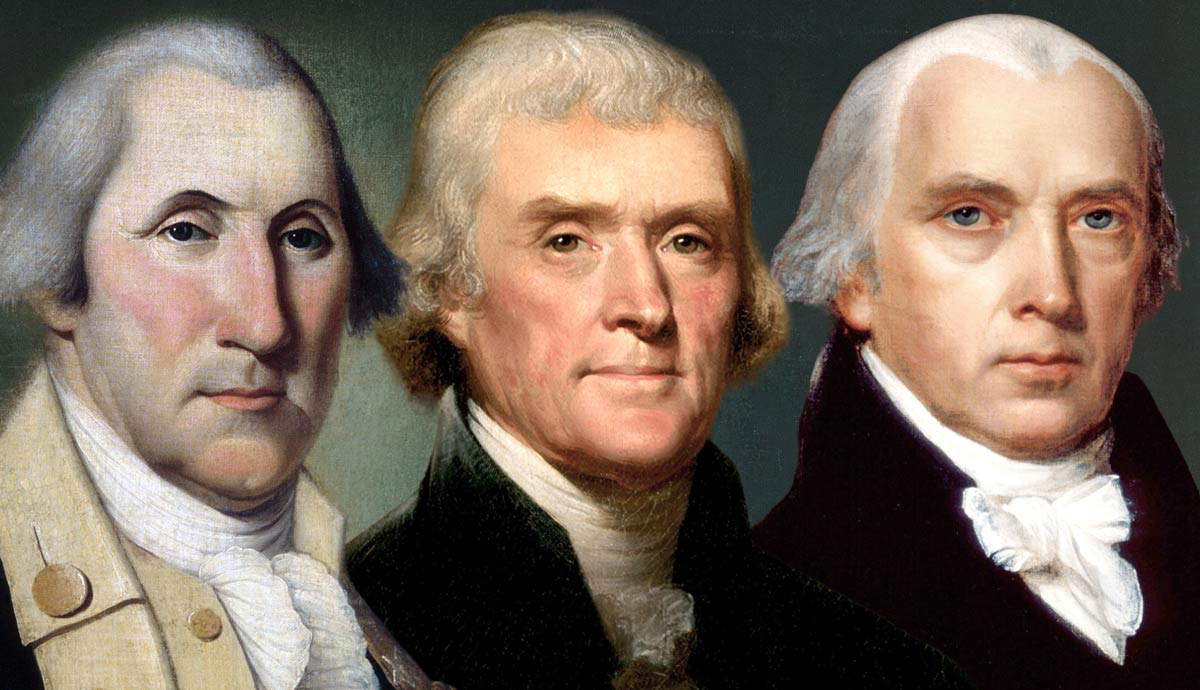
WWW.THECOLLECTOR.COMFounding Father Quotes, Timeless Words That Built a NationThe decades between 1770 and the early 1800s witnessed multiple gatherings of Americas Founding Fathers. Names like Alexander Hamilton, George Washington, Thomas Jefferson, or John Adams led a group that built the American Republic. These men, along with others, took part in the American Revolution and created enduring documents. Their beliefs and philosophies led to timely quotes.If free speech is taken away, then dumb and silent we may be led, like sheep to the slaughterGeorge Washington in military dress, by Charle Peal Polk, 1790. Source: The MET, New YorkAlready famous from his successful stint leading the Revolutions Continental Army, George Washington also became the first President in 1789. Like his compatriots, he left us with this quote as a warning and advice. On free speech: If free speech is taken away, then dumb and silent we may be led, like sheep to the slaughter.Washingtons quote regarding free speech is a cornerstone of the U.S. Constitutions First Amendment. Often quoted, free speech became a fundamental right in American law. His warning that staying silent is a cautionary reminder to speak up, criticize, and question the government, or face the consequences.The course of history shows that as a government grows, liberty decreasesThere was concern that Thomas Jefferson would bring revolution to America once again. Source: The White House. Source: Wikimedia CommonsThe Declaration of Independence is a historically significant document, perhaps among the most important of the past century. And principally authored by Thomas Jefferson. Like the other American Founding Fathers, he offered sage advice. Among his quotes, perhaps this one is the strongest: The course of history shows that as a government grows, liberty decreases.Being an Enlightened thinker, Jeffersons thinking reflected his beliefs. This example states that, should government grow, that growth comes only at libertys expense. Liberty in this context is speaking freely, civic participation, or economic freedom. To Jefferson, liberty only thrives when government is small, decentralized, and under the peoples control.The purpose of the Constitution is to restrict the majoritys ability to harm a minorityU.S. President James Madison (1809-1817) was the first true wartime president in American history, presiding during the War of 1812. Source: The American Battlefield TrustJames Madison, like Jefferson and Washington, was a man of the Enlightenment. Madison played a crucial role in promoting the U.S. Constitution and wrote the Bill of Rights. Like Jefferson, he served as U.S. President and espoused similar beliefs. As Jefferson preferred small government, Madison firmly believed the Constitution prevented tyranny.The Bill of Rights, As of December 15, 1791. Source: Library of CongressAs one of the Constitutions biggest champions, the future 4th American President said thus: The purpose of the Constitution is to restrict the majoritys ability to harm a minority.This quote to Madison is that the majority makes the laws, but not at the expense of the minority. He believed the Constitution restrained the majority, protecting individual and minority rights. The parts of the ConstitutionBill of Rights, separation of church and state, and a judiciaryset limits on what the government can do. The minority in Madisons quote meant dissenters, ethnic groups, or those whose views differed.Government is instituted for the common goodnot for profit, honor or private interest of any one man, family, or class of menJohn Adams by Gilbert Stuart, c. 1800. Source: National Gallery of Art, Washington DCJohn Adams, like Jefferson, emerged as the most vigorous of the Founding Fathers. During his time, hed serve as President, ambassador, and lawyer. Adams authored the 1780 Massachusetts Constitution, which influenced the later famous document. While Jefferson favored small government, Adams believed in a strong central government. Here, citizens accepted government rule that protected their rights and well-being, thereby forming a social contract. Under such a belief, John Adams gave us this quote: Government is instituted for the common goodnot for profit, honor or private interest of any one man, family, or class of men.Breaking down this quote, Adams advocated that the government needed a system of checks and balances to prevent tyranny for the common good. The latter part of Adams quote argued against corruption. He warned against tolerating leaders who used their office for personal gain. They ruled only with the peoples consent.Whoever would overthrow the liberty of a nation must begin by subduing the freeness of speechBenjamin Franklin. Source: National Portrait Gallery, Washington DCBen Franklin stood apart from his fellow Founding Fathers. Besides politics, he dabbled with things, inventing items like bifocals and the lightning rod. While Adams believed in a centralized government and Jefferson in a decentralized one, Franklin opposed political extremism.Franklin personified Enlightened beliefs-civic virtue, liberty, and reason. To him, discourse triumphed over violence. That said, the politically moderate Franklin said, Whoever would overthrow the liberty of a nation must begin by subduing the freeness of speech.To analyze his quote, one must believe free speech is essential. An oppressive government destroys free speech, thus eliminating liberty. Having control over language allows leaders to avoid debate and accountability. Franklins greatest fear was censorship.0 Комментарии 0 Поделились 10 Просмотры -
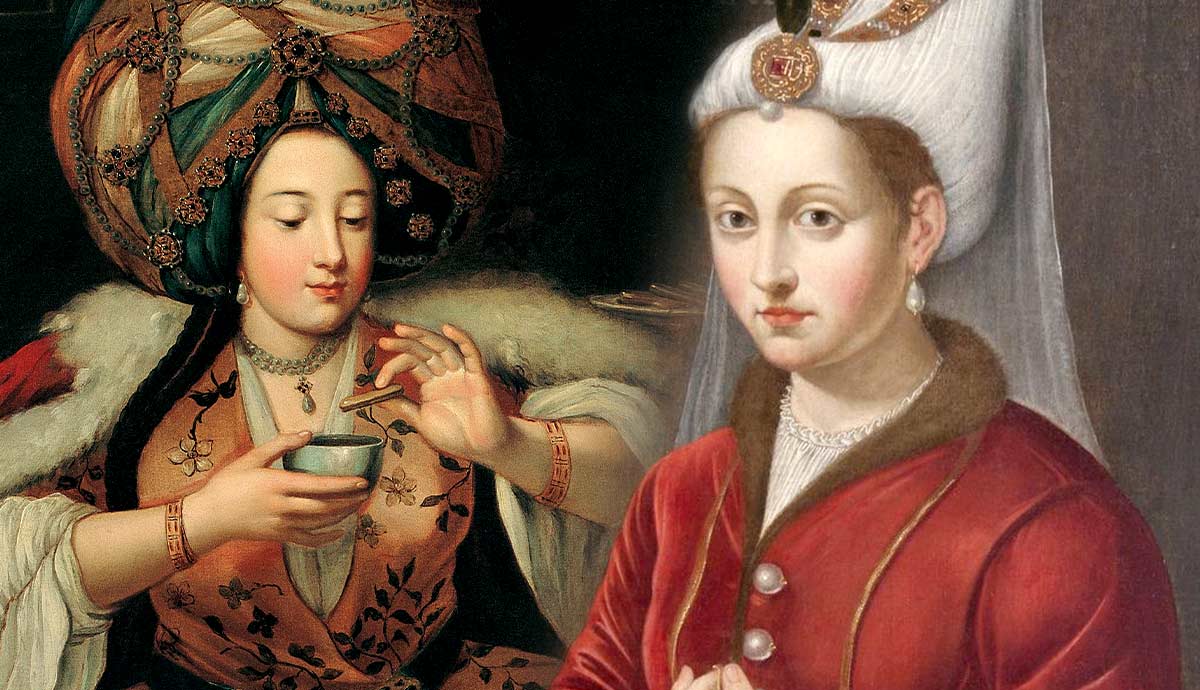
WWW.THECOLLECTOR.COMThe Roles & Lives of Women in the Ottoman EmpireOttoman women from the 16th to 18th centuries lived in a patriarchal society where they had clear-cut gender roles in the household. Although they had limited opportunities for formal education and employment, many women played important roles in politics, arts, medicine, economic production, and governance.Wives and MothersWoman on birthing chair, from Enderunis Zenanname (Book of Women), a work about the women of the world and their qualities, 1793. Source: Wikimedia CommonsIn early-modern Ottoman society, gender was one of the defining factors in a persons life. Women were expected to become dutiful wives and show obedience to male family members, who were considered the heads of household. Ideas like honor were instilled in womens bodies and actions.During the reign of Sultan Sleyman (r. 1520-1566), the Kanunname or secular law was put into place alongside Islamic law to regulate the behaviors of Ottoman citizens. These laws considered order in the household as the basis of order in wider society. Thus, men whose wives were guilty of crimes like adultery, for instance, were also fined for being unable to preserve order and honor in their households.Motherhood was another purpose of a womans life. A good wife was expected to bear healthy children and teach them good manners and morals. In the 16th century Turkish epic The Book of Dede Korkut, the narrator opines that a girl cannot become a lady unless she has good breeding from her mother.Womens WorkFemale musicians, painted by Levni, d. 1732. Source: Wikimedia CommonsWomen were not expected to have careers or professions in the early-modern Ottoman Empire. They were often barred from joining craftsmens guilds and rarely received formal professional training. Yet, many women were exceptions to this rule. Rural and nomadic women were expected by their communities to participate in fieldwork, such as farming, animal herding, and cotton or hazelnut picking.Townswomen often performed work as servitors, that is, as maids, washerwomen, servants, and personal attendants. They worked mainly in baths, hospitals, and for elite households. Some areas, such as midwifery, nursing, weaving, and embroidering, were even female-dominated. Pierre Belon, a 16th-century French traveller and diplomat in the Ottoman Empire, noted that women would frequently sell their handmade goods at markets.Women also performed roles where their voices and opinions could be heard. Belon noted that women were employed as teachers in primary schools for girls. Women like Mihri Hatun (d. 1506) and Ayse Hubbi Hatun (d. 1590) were celebrated court poets who were patronized by sultans. Ayse Hubbi was born into an elite family with close ties to Sultan Sleyman. As a result, she received a fine education in court and eventually became a lady-in-waiting and close friend of future sultan, Prince Selim II. Ayse Hubbis poetry challenged the misogynistic beliefs of her time:Being feminine is no shame to the name of the sun Being masculine is no glory to the crescent moon.Many women also broke the barriers of gender segregation through their work in the medical field. Saliha Hatun was a physician who practiced in Istanbul in the 1620s-30s. Her consent forms, dated between these years, reveal that she performed successful hernia and tumour operations, mostly on men. Interestingly, she had no female patients.Festivities and CelebrationsWedding procession, by Lambert de Vos, ca. 1574. Source: Gennadius LibraryWomen, though to a lesser extent than men, were involved in the public and social arena. They attended celebrations for royal marriages, circumcision festivities, and military campaigns. Since women were not allowed to perform in public, they held gender-segregated dance and theatrical shows.These restrictions did not reach inside the private space, however. In 1524, Istanbuls Italian community organized festivities in celebration of the peace treaty between the Italian states. In the house of the Italian ambassador, a ballet and various other dances were organized and danced by Turkish women.English historian and orientalist Thomas Hyde (d. 1703) also wrote in his book De Ludis Orientalibus (1694) that women dancers, called engi, dressed like men and took part in plays and traditional dances such as the zeybek.Patrons of Art and ArchitectureHrrem Sultan Complex, Istanbul. Source: Wikimedia CommonsWomen were important patrons of art, learning, and architecture. They mostly founded religious buildings like mosques and tekkes (dervish monasteries), rather than secular ones. Royal women patronized buildings as a symbol of their goodwill, religiosity, and power. Having a building patronized in their name immortalized and publicized these women, the majority of whom would never be seen outside the harem.Hrrem, wife of Suleyman the Magnificent, had the Haseki Hrrem Klliye built in 1540. This massive structure consisted of a mosque, medreses (religious schools), a hospital, hamam (bathhouse), and soup-kitchen.Womens patronage was felt all around the empire. Rabia Gln Sultan (d. 1715), consort of Sultan Mehmed IV, and mother of two Sultans, Mustafa II and Ahmed III, established pious foundations, hospitals and soup-kitchens in Mecca for weary pilgrims. After the conquest of the island of Chios in 1695, Rabia Gln had a church converted into a mosque and built a fountain to provide the area with clean, flowing water.Unruly WomenTurkish prostitute, from Travels in Turkey, by Nicolas de Nicolay, circa 1578. Source: Academia.eduIn Ottoman society, womens honor and reputation were policed and considered a communal issue. According to the etiquette of high society, female respectability was linked to public visibility. In the 16th century, scholars considered a respectable woman to be one who was veiled and did not leave the house without a retinue of attendants or servants.Despite these beliefs, women often acted in unseemly ways. Rural women did not have the luxury of being idle and secluded. Field and housework, including going to the river to wash clothes or to the well to collect water, made women visible and active in public. Likewise, Gypsy (Romani) women had a strong public presence. They abided by the moral guidelines of their own community, and thus could be seen in the street without veils, performing dances, and selling goods.Women also engaged in illegalalbeit widespreadwork like prostitution. Women found guilty of prostitution could be fined or exiled, and even being accused of such work was enough to ruin a womans reputation. Those who were accused of prostitution could take their accusers to court. If the accusations were proved to be false, the accuser would receive a hefty fine!Queens and ConcubinesImagined portrait of Hrrem Sultan, by Johann Theodor de Bry (1561-1623), circa 1590s. Source: Wikimedia CommonsWomen in the Ottoman Empire had important responsibilities as the wives, consorts, concubines, mothers, or sisters of sultans. In the early 14th century, it was common for Ottoman sultans to marry princesses of rival empires like the Byzantines. However, by the 16th century, the Ottomans dominated Turkey and the Balkans, and so, sultans preferred to take concubines.Concubines were slaves of the sultan. Many of them, such as Hrrem, were products of the Crimean slave trade. Concubinage allowed sultans to produce heirs and secure their dynastys survival without the need for marriage. Although marriages were acceptable, they were not preferred. This was because local Turkish families could strengthen their influence or lay claim to Ottoman lands and power if their daughters were married to the Sultan.Concubines and wives of the sultan were more restricted than other women in their society. They were free to travel, although their visibility was restricted by enclosed carriages. Until the Early Modern Era, concubines were restricted to having one son with the ruler. This was due to Ottoman governmental practices. Once a prince reached his teenage years, he would be sent to govern another province. His mother would accompany him, acting as the Sultans eyes and ears, and ensuring the court functioned properly.This changed when Sultan Suleyman I married his concubine Hrrem, had several male children with her, and allowed them to live with him in Istanbul. The most powerful position a woman could reach was that of valide sultan, or queen mother. The valide not only ran the harem, but also had a major influence on her sons choice of concubines and even his political decisions.Women of the CourtWomen of the harem, in the Album of Sultan Ahmed I, circa 1610. Source: Topkapi Palace MuseumThe harem was almost like a smaller version of court in court. Some of the roles played by women included mistress of financial affairs, housekeeper, and educator of the ladies-in-waiting.Female members of the royal family, who were raised in the harem, usually married grand viziers, ministers, or princes of other dynasties. After this, they would move into their own palaces or homes. Some, such as Sultan Suleymans daughter Mihrimah, still retained their influence and wealth. When her brother Selim became Sultan, Mihrimah continued to give him political counsel and even lent him a sum of 50,000 gold coins.Most women in the harem, however, played service roles. They sewed and embroidered clothes for the pages of the court. They also ensured the harem remained clean and hygienic. Wet nurses or daye were common in the Ottoman court. The wet nurses of princes held high status and established mosques inscribed with their titles and names, something that many queen mothers themselves were not able to do.The gender segregation in court also meant that males could not freely access the harem. As a result, many women had to perform traditionally male professions. In Suleyman Is era (ca.1514), female physicians were appointed for the women at court. Non-Muslim women were also given specific roles. Jewish women often acted as the political agents or kiras of powerful women at court. As intermediaries and economic advisors for the queen mothers, kiras gained status and wealth, which sometimes led to them being blamed for poor management of finances in court.0 Комментарии 0 Поделились 10 Просмотры -
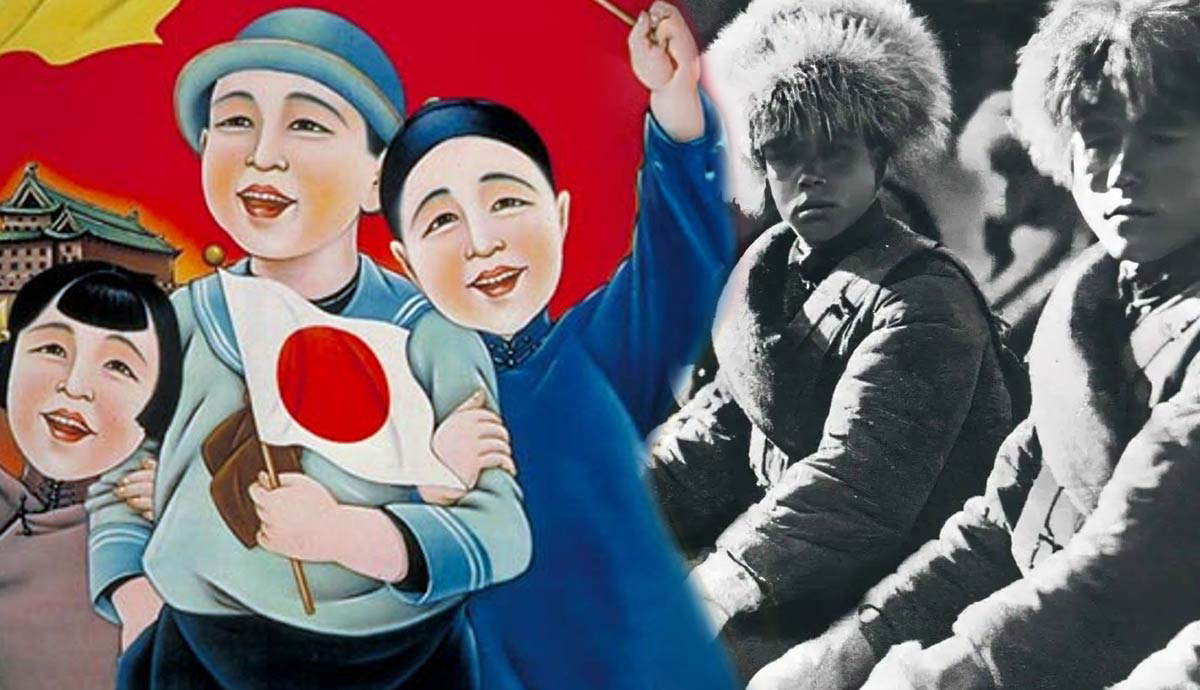
WWW.THECOLLECTOR.COMThe Dark History of Japanese Colonialism in ManchuriaFrom 1931 to 1945, the Japanese Empire ruled over the province of Manchuria in northeastern China. Manchuria was considered a crucial part of the empire because of its access to resources and the presence of several million Japanese settlers on the territory. Only when the USSR invaded in 1945 did Japanese rule end. To this day, China and Japan still spar over the official narrative of what transpired while the Japanese were in Manchuria during the 1930s and 1940s.Japanese Imperial Designs on ManchuriaJapanese cavalry attacking Chinese forces at the Battle of Pyongyang during the First Sino-Japanese War. Source: British LibrarySituated in northeastern China, Manchuria had been the setting for competition between the Russian and Japanese empires for influence in China at the turn of the 20th century. The region controlled large quantities of natural resources and access to East Asian shipping lanes. Japan had arisen from centuries of isolation and chaos to become a modernized empire under the leadership of the Meiji Emperor.As a part of this process, it desired to test its new military capabilities on the Asian mainland and obtain colonies to add to a limited resource base in the Japanese islands. In the First Sino-Japanese War of 1894-1895, Japan defeated the declining Qing Empire to gain control of the Korean peninsula and a sliver of territory in Manchuria. When Russia coerced Japan into giving the main harbor of Port Arthur (Lshunkou District, Dalian, China), Tokyo vowed to get it back.In the Battle of the Sha River, a Company of Our Forces Drives a Strong Enemy Force to the Left Bank of the Taizi River, Yoshikuni, 1904. Source: Museum of Fine Arts, BostonFrom 1904 to 1905, the Japanese army and navy fought an intense war against the Russian Empire known as the Russo-Japanese War. To the surprise of the international community, the Japanese military proved vastly superior, destroying two Russian fleets at sea and inflicting a series of defeats on Russian land armies.As part of the Treaty of Portsmouth brokered by US President Theodore Roosevelt in 1905, Japan gained access to the southern part of Sakhalin Island and gained control of Port Arthur. For Japan, this victory was a major turning point in their development; European countries began to see them as a major regional power. The support from local Chinese in fighting the Russians convinced many Japanese that the local population would welcome them if they took over the territory. This had major ramifications for future Japanese policy.Mukden IncidentJapanese troops gathering outside Mukden, Manchuria, 1931. Source: Heritage ImageJapans decision to enter World War I and the Russian Civil War was intended to lead to Japan gaining control over more territory through the Versailles Conference. While they did gain access to some islands in the Pacific and some concessions on the Chinese mainland, Tokyo was embittered when most of their territorial claims were denied. Many senior officers in the military blamed the civilian government for not insisting on more control over territories in Asia. Additionally, the fear that Japan could be colonized by the European powers was pervasive in Japanese politics. Many Japanese believed that the only way to become a great power was through territorial expansion.From 1916 to 1928, China was in a state of chaos known as the Warlord Era. When Sun Yat-sen formed the Kuomintang Party as part of an effort to unify China, Japanese officials became worried about dealing with an aggressive neighbor. In 1927, Japanese military and political leaders met to discuss plans to take over Manchuria. Tokyo believed that resistance would be minimal due to the weakness of the Chinese army and state. In June 1928 the Japanese Kwantung Army organized the assassination of Manchurian warlord Zhang Zuolin, but Zhangs son and successor Zhang Xueliang proved an ardent opponent of the Japanese. Zhangs opposition to Japanese influence inspired the Japanese military to take a more direct approach.On September 18th, 1931, in what came to be known as the Mukden Incident, an explosion rocked a Japanese-owned railway in the city of Mukden, now Shenyang. Japanese military personnel claimed that Chinese nationalists committed the act and responded by entering the city in force. While Tokyo insisted it was an act of aggression against its interests in the region, evidence surfaced that the Kwantung Army staged the incident.Establishment of ManchukuoPhotograph of the young Xuantong Emperor (Puyi). Source: Smithsonian Institution, Washington DCWithin a couple of months of the Mukden Incident, Japan had seized control over Manchuria. The untrained and ill-equipped Chinese army offered little resistance and Japanese generals were stunned by their success. Tokyos civilian government, hoping to maintain friendly relations with the West, disagreed with the military, but the generals got their way. Ugaki Kazushige, the governor-general of Japanese-controlled Korea, began setting up a puppet state with the assistance of Chinese monarchists who wanted to restore the former emperor Puyi to his throne. Chinese leader Chiang Kai-shek, facing brutal internal battles against warlords and Communist forces, did not use force to push the Japanese out. Instead, he appealed to the League of Nations, causing Japan to withdraw from the League in 1933. This did nothing to change the reality on the ground for the Japanese in Manchuria.Ever since the collapse of the Qing Empire in 1912, there had been a number of Chinese who were loyal to the child emperor Puyi, who was deposed at the age of six. In 1924, he was expelled from Beijing and escaped to the Japanese-controlled port of Tianjin. When he received the offer to be head of state of the newly formed Japanese puppet state of Manchukuo, he happily accepted the opportunity to return to the ancestral homeland of the Qing emperors. He retained a large number of former imperial advisors and was given a palace in Changchun, which was renamed Xinjing or New Capital. While Puyis title was changed to emperor in 1934, the Japanese controlled every facet of government.Japanese Settlement and Security ActionsJapanese women cultivating soy in Manchuria (Manchukuo), 1930s. Source: Wikimedia CommonsMany Chinese were resentful of being dominated by foreigners and a major insurgency had sprung up from the remnants of the Chinese army. From 1932-1940, the Japanese army used ruthless force to crush the rebellion, which at times numbered over 300,000 men. Japan deployed more troops and recruited local collaborators to target the insurgents. This brutal colonial struggle, practically forgotten today, had mostly ended by the Second World War, although some Chinese forces hung on until 1945.Japan began to colonize the territory almost immediately. The South Manchuria Railway Company was set up to expand the railway lines in the region and even opened an office in New York City. Japan upgraded port infrastructure, increased the size of towns and cities throughout Manchukuo, and introduced new farming techniques. However, the local Chinese became an underclass thanks to the arrival of 270,000 Japanese settlers over a 14-year period. Hoping to avoid the effects of the Great Depression, large numbers of Japanese soldiers and civilians moved their families to Manchukuo. Tokyo encouraged this practice, hoping to resolve agricultural problems on the home islands with the importation of crops from its empire. As was the case in Korea and Taiwan, Japanese settlers formed a higher caste in the societies they moved into. Tokyo sought to reengineer the demographics of the territory.Caste Society in ManchukuoA propaganda poster promoting harmony between Japanese, Chinese, and Manchu, 1935. Source: Manchukuo State CouncilJapan claimed that Manchukuo was part of its Greater East Asia Co-Prosperity Sphere, a euphemism for its empire. Tokyo promoted propaganda to people throughout Asia that its rule was benevolent to all Asian peoples and was different from European colonialism. In reality, its rule over Manchuria was not much different from what other empires did in Asia. Japanese settlers were issued rifles and organized into paramilitary units to fight Chinese guerillas. Propaganda in the Japanese homeland urged people to go there as a civilizing force. The Chinese locals were seen as uncivilized, savage people who could not possibly rule themselves.Tokyo followed the model that it had used in Korea and Taiwan. Schools taught in Japanese and Japanese cultural customs were adopted. Even though Chinese loyal to Puyi were allowed to rule over ministries in the Manchukuo government, Japanese officials ruled through internal guidance. Any efforts by Chinese officials to enact policies Tokyo was opposed to were doomed to fail thanks to the massive Japanese military and police presence. Co-prosperity was less about promoting interethnic harmony and more about keeping Europeans out of Japans colonial sphere of influence.Japanese ideology embraced militarism, fascism, and racism as a part of its national ideology starting in the 1930s. Other Asian groups were seen as hostile to the interests of the Japanese people but also partners in the fight against the West. While Puyi may have seen himself as Chinas last emperor, he was nothing more than a useful tool in the minds of policymakers in Tokyo.World War IIThe Kwantung Army, 1940s. Source: histclo.comIronically, Japans desire for more territory became its undoing and meant the end of its colony in Manchukuo. Throughout the 1930s, Chinas long civil war continued between the Communists and the Kuomintang. The intensity of the fighting meant that Japanese military leadership assumed seizing more territory would be an easy gambit.The Second Sino-Japanese War began in 1937 when Japanese forces launched a full-scale invasion of China. By 1941, they had seized most of the Chinese coast and large parts of the interior. In 1938, they attacked Soviet-controlled territory in Mongolia, an action that failed and put Manchukuo at risk of a Soviet invasion. A temporary ceasefire led to a quiet period on the Soviet-Manchukuo border. However, Japans attack on Pearl Harbor and the expansion of World War II led to major changes in the region.Dizzying success in the first several months of the Pacific War was followed by a steady drumbeat of defeats for Japan. By 1943, the Allies were winning on all fronts except in China. Manchukuo was not at risk of direct Allied attack but suffered nonetheless. As part of the Yalta Agreement, the Soviets agreed to invade the territory once Germany was defeated. Days after the atomic bombings of Hiroshima and Nagasaki, the Soviets invaded and finished Manchukuo off once and for all.The End of ManchukuoA journal of poems written on the bark of birch trees by Japanese internees in Siberian camps. Source: Maizuru Repatriation Memorial MuseumThe Soviets destroyed the Kwantung Army in a very short time. Japanese forces crumbled due to the weakness of local defenses and the lack of reinforcements. The Red Army ruthlessly attacked southward and seized the entire territory, even advancing into the Korean peninsula. In September 1945, Emperor Hirohito of Japan recognized the inevitable and ordered his government to surrender to the Allies. Part of the terms included Manchukuo returning to Chinese control and being renamed Manchuria. All Japanese were to be repatriated back to the home islands.Having arrived in Manchuria full of pride as part of Japans colonization mission, the Japanese settlers panicked with the Soviet advance. Many of the young men had joined the military and became casualties. Long lines of Japanese refugees, mainly women and children, fled to the ports for evacuation. The civilian refugees were luckythey were repatriated to Japan on US Navy ships. 575,000 captured soldiers and sailors were taken by the Soviets to forced labor camps in Siberia. With this, the Japanese colonial project in Manchuria came to a brutal end.0 Комментарии 0 Поделились 10 Просмотры -
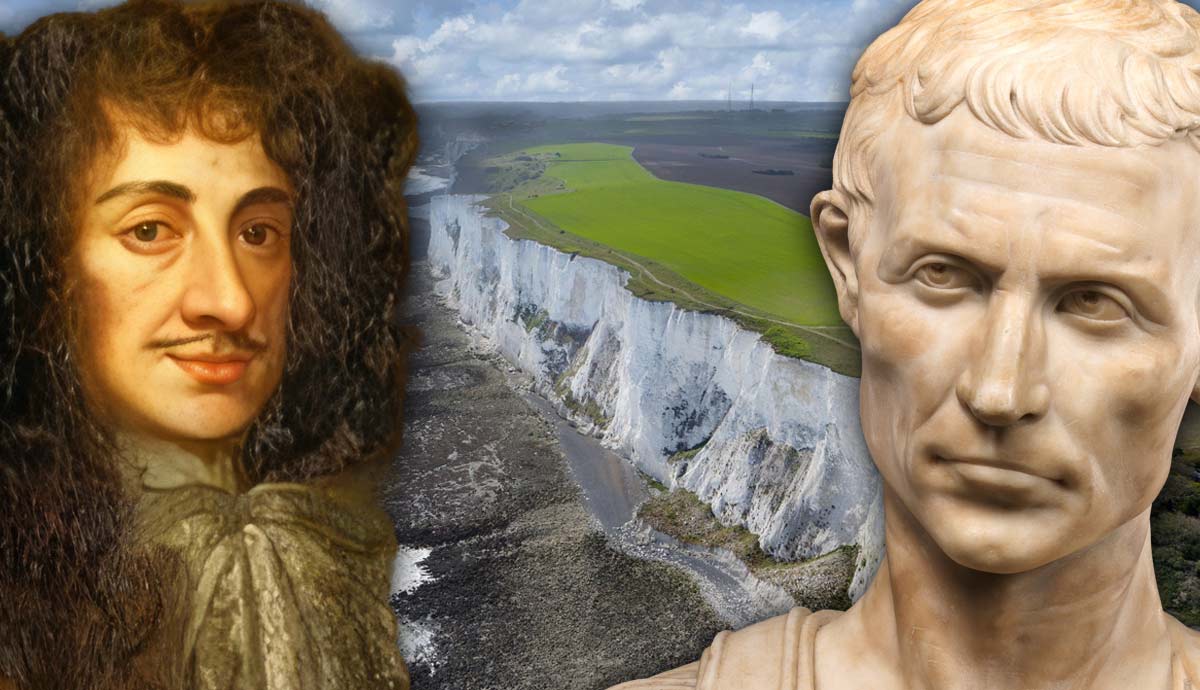
WWW.THECOLLECTOR.COMHow the Famous Cliffs of Dover Defended Medieval England From InvasionsThroughout Englands long and turbulent history, the White Cliffs of Dover have become a symbol of the nation. The vertical white cliff face, facing continental Europe, has stood as a physical barrier and shield against invasion from abroad. Throughout the ages, the Cliffs of Dover and the surrounding area have played a pivotal role in defending the realm and helping steer the course of history.What Are the White Cliffs of Dover?The White Cliffs of Dover. Source: National TrustThe White Cliffs of Dover are located in the southeastern corner of Great Britain in the county of Kent. The minerals for the cliffs formed over 100 million years ago during the Late Cretaceous period. The minerals come from the fossilized remains of algae that have built up over the course of millions of years. Though it is primarily made up of the remnants of these microscopic organisms, the cliffs occasionally contain the fossilized remains of much larger creatures, such as sponges, anemones, and urchins. Changes in sea level and shifts in the tectonic plates eventually raised the geological formation above sea level. At their highest, the cliffs stand around 350 feet above sea level.The stone itself is a white color due to erosion and has layers of grey flint streaked through it. This stratification matches the mineral layers across the channel at the Alabaster Coast of Normandy, France, making them part of the same geological formation. It is a soft stone and is subject to erosion at a rate of about eight inches to a foot per year. However, the formation is large enough that the Cliffs will continue to exist for tens of thousands of years at the current rate of erosion.The White Cliffs of Dover, by Edward William Cooke. c. 19th century. Source: British MuseumThe cliffs are located at possibly the most strategically important location in the British Isles. They stretch along the coast for a length of about eight miles, flanking the port of Dover on the English Channel, the waterway that separates Britain from the rest of Europe. In fact, Dover is the closest point to continental Europe, only 20 miles away from the French port city of Calais, which is close enough to see on a clear day. Because of this location, the White Cliffs of Dover have been the most obvious place to launch an invasion of Britain, and the first line of defense for England.The Cliffs of Dover in Roman BritainMarble bust of Julius Caesar, by Andrea di Pietro di Marco Ferrucci, c. 1512-1514. Source: Metropolitan Museum of ArtThough there is some evidence of an Iron Age hill fort at Dover, the White Cliffs first entered written history in 55 BCE. In his Commentarii De Bello Gallico, or Commentaries on the Gallic War, Julius Caesar wrote about his first attempt to invade Britain. Taking two of his legions across the English Channel from Gaul, Caesar attempted to cross into the mysterious island at the narrowest point. Aided by the White Cliffs, the local Celtic inhabitants did everything in their power to prevent this from happening.As the Roman ships approached, the Britons hurled weapons, stones, and anything else at hand down the sheer cliff face. Because of the height of the cliffs, the Romans were unable to retaliate. Seeing the aggression of the Britons, and the seemingly insurmountable advantage given by the white cliffs, Caesar stated that it seemed to me that the place was altogether unsuitable for landing. Still undeterred, he would lead his fleet to the north, landing on more hospitable terrain. Thus, the first historical record of the White Cliffs of Dover was as a barrier against outside invasions.Caesar would launch another invasion but ultimately leave Britain without conquering the island. But the Romans did not forget the distant island. In 43 CE, the emperor Claudius, in need of a military victory to secure his power, decided to invade Britain and establish a permanent Roman presence in the region. Information about the initial landing place is sparse, though it does not seem to be Dover. After the Romans secured much of Britain, Dover was still seen as a vital location, not only for defense but also as a way to secure shipping in the Strait of Dover. To protect vessels in this often rough and storm-wracked waterway, the Romans would build a pair of lighthouses to guide sailors.Douer (Dover) From English Views, by Wenceslaus Hollar, 1642. Source: Metropolitan Museum of ArtAs the Roman Empire began to crumble, Britain was subject to seaborne raids by Germanic tribes who preyed on the vulnerable coast of the collapsing empire. In response to these repeated attacks, the Romans created what is known as the Saxon Shore, a series of defenses on the coast of southern Britain and northern Gaul, or modern-day France and Belgium. Dover was part of this defensive chain, with a garrison placed to prevent incursions from the raiders. In 410, the Roman legions pulled out of Britain, leaving the inhabitants to look to their own defenses. Information during this era is scarce, but the Saxon Shore eventually crumbled, and Britain was invaded by the Angles, Saxons, Frisians, and other Germanic tribes that pushed the Romano-British to the west and north.Dovers Cliffs in the Middle AgesKing John fights against Prince Louis during the First Barons War, in MS Royal 16 G VI folio 385, c. 1332-1350. Source: British LibraryDuring the time of the Anglo-Saxons, a church was built at Dover, but the White Cliffs were not particularly utilized for the islands defense. After centuries of Saxon rule, Britain was faced with a new group of invaders, the Normans. In 1066, William the Conqueror launched his successful bid for the English crown. While the bulk of the Saxon forces were far to the north, repelling an invasion by Harald Hardrada, William landed at Dover and soon overwhelmed the small garrison left there. A short time later, he would be victorious at the Battle of Hastings, securing himself the English crown. Knowing it was a vital strategic location, William and his descendants kept a permanent garrison at Dover. In 1160, Henry II began construction of a stone castle at the site, which would be the linchpin of the nations defenses.While the White Cliffs of Dover were a formidable barrier against waterborne invasions, Dover Castle would play a major role against another threat. In 1216, barons, rebelling against King John, invited the son of the French king, Prince Louis, to invade England and establish himself as king of England, replacing the hapless John. He and a force of 700 ships would bypass Dover, landing further to the north, before capturing London. With the help of rebellious barons, Louis would eventually capture about half of England, mostly in the south of the country.One bastion that held firm, however, was the castle of Dover, an island of loyalist support in a sea of rebellion. In spite of repeated attempts to take the fortress, the attackers only managed to topple one of the towers before being forced to withdraw. Due to this and other setbacks, the French prince failed in his bid to capture the English throne.A More Peaceful PurposePortrait of Charles II, by Peter Lely, c. 17th century. Source: Royal Museums GreenwichThe White Cliffs of Dover would retain their status as the first land barrier of the British Isles, though they would no longer see any invasion force to repel, well almost. In 1660, after the Interregnum led by Oliver Cromwell, the exiled Stuart scion, Charles II returned to England to reestablish the monarchy. He landed at Dover, reportedly greeted by cheering crowds and the looming Dover castle firing its cannons in salute, welcoming their returned king to his homeland.The next major threat that Dover and the White Cliffs faced was the possible threat posed by Napoleon Bonaparte. In preparation for a potential invasion, British military engineers carved tunnels and garrisons into the soft chalk of the cliff face. Poised to throw back the ambitions of the French, the White Cliffs were fortified, though, after the battle of Trafalgar in 1805, it was apparent that this threat would never materialize.Though still a military installation, the White Cliffs became the site of other purposes. The worlds first electric lighthouse, the South Foreland lighthouse, was built in 1843. It was from this point that Guglielmo Marconi pioneered radio communication, receiving the first international radio broadcast sent from Wimereux, France. But the White Cliffs of Dover had one final military role to play.Where Bluebirds Fly: Dover During WWIIAn artillery piece at Dover prior to commissioning, 1942. Source: National TrustIn 1939, the British Admiralty dug a new operation center and a network of tunnels into the cliffs. Shortly after, the location was used to coordinate Operation Dynamo, the evacuation of the British army from Dunkirk after being surrounded by the Germans in 1940. After the evacuation, the White Cliffs were once again the first land barrier against a possible German invasion. As the closest point between Britain and the continent, it was an obvious location for an amphibious landing. The tunnel network was expanded, and extra defenses were put into place on the orders of Winston Churchill, who was enraged to see German ships plying the waters of the English Channel with impunity. Batteries of artillery were installed, which were used to attack German shipping. Long-range guns were used to bombard occupied Calais. Though Operation Sea Lion, the German invasion, never came about, the defenses at the White Cliffs were a major part of Britains wartime strategy.Perhaps the most famous wartime use of the cliffs was not the rocks themselves but their symbolic meaning. For centuries, they were the last sight of their beloved homeland for leaving soldiers and sailors and the first sight on their return. Stark white stone jutting majestically from the sea, the White Cliffs became associated with Britain as a whole. It is even possible that the ancient name for Britain, Albion, is based on the word alba, or white. Now in their darkest hour, the cliffs became a symbol of resistance against the enemy.A Formation of Supermarine Spitfires, c. WWII. Source: Wikimedia CommonsIn 1941, Walter Kent and Nat Burton composed the song (Theyll be Bluebirds Over) The White Cliffs of Dover. A version of the song would be recorded in 1942 by Vera Lynn and would soon become one of the most popular songs of the war. Incidentally, both Burton and Kent were Americans and did not know that there are no bluebirds in Britain. The migratory house swallow is sometimes called a bluebird by mistake and is often associated with spring and the promise of a more hopeful future. Many others, including Lynn, believed the bluebirds were a reference to the RAF fighter pilots who fought the Luftwaffe tooth and nail in the skies over Britain. The song was a major boost to morale, and the White Cliffs were, once again, a stand-in for Britain as a whole. They were the rock on which the security of the nation and the free world rested.After the success of the Normandy landings, the defenses at Dover were no longer necessary and gradually dismantled. The cliffs eventually fell under the control of the National Trust, and the nations bulwark is now home to museums dedicated to preserving this important part of British history.0 Комментарии 0 Поделились 10 Просмотры -
-
WWW.DUALSHOCKERS.COM8 JRPGs Successfully Funded in Kickstarter CampaignsOne of the best inventions in the gaming community in recent years has been crowdfunding campaigns. Not every developer can secure the financial support of a publisher, which would often mean a premature end to a game's development. That is, if crowdfunding didn't exist.0 Комментарии 0 Поделились 12 Просмотры -
WWW.DUALSHOCKERS.COMOutward 2 Opens Sign-Ups For Holiday Season PlaytestOutward 2 might not be ready for release just yet, but developer Nine Dots Studio has announced sign-ups for a playtest in December 2025.0 Комментарии 0 Поделились 12 Просмотры