0 Yorumlar
0 hisse senetleri
9 Views
Rehber
Elevate your Sngine platform to new levels with plugins from YubNub Digital Media!
-
Please log in to like, share and comment!
-
YUBNUB.NEWSRemembering Rayan Al-NajjarPre-order Jamie Glazovs new forthcoming book, United in Hate: The Lefts Romance with Tyranny, Terror, and Hamas: HERE. Yet another young Muslim girl one of the few that we know of among the0 Yorumlar 0 hisse senetleri 9 Views -
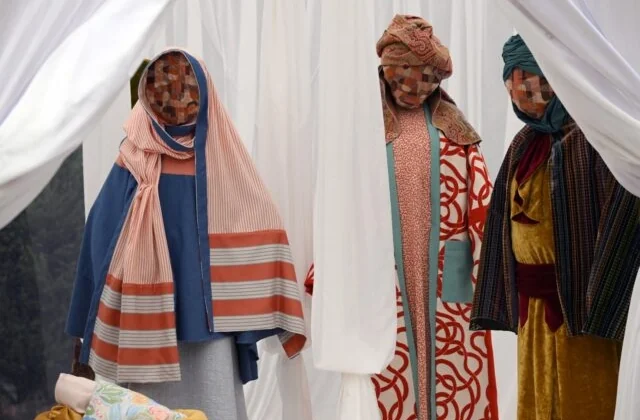
YUBNUB.NEWSIslamized Brussels Defaces Literally Inclusive Nativity SceneOrder Michael Finchs new book,A Time to Stand:HERE. Prof. Jason Hill calls it an aesthetic and political tour de force. Brussels is the most Islamized major city in Western Europe,0 Yorumlar 0 hisse senetleri 9 Views -
YUBNUB.NEWSSan Bernardino Terror Turns TenOrder Michael Finchs new book,A Time to Stand:HERE. Prof. Jason Hill calls it an aesthetic and political tour de force. On December 2, 2015, Syed Farook came to work at the Inland0 Yorumlar 0 hisse senetleri 9 Views -
YUBNUB.NEWSAppeals Court Upholds Decision Disqualifying Alina HabbaA federal appeals court upheld a decision Monday finding Alina Habba is disqualified from serving as U.S. Attorney for the District of New Jersey.The Third Circuit Court of Appeals agreed with the defendants0 Yorumlar 0 hisse senetleri 9 Views -
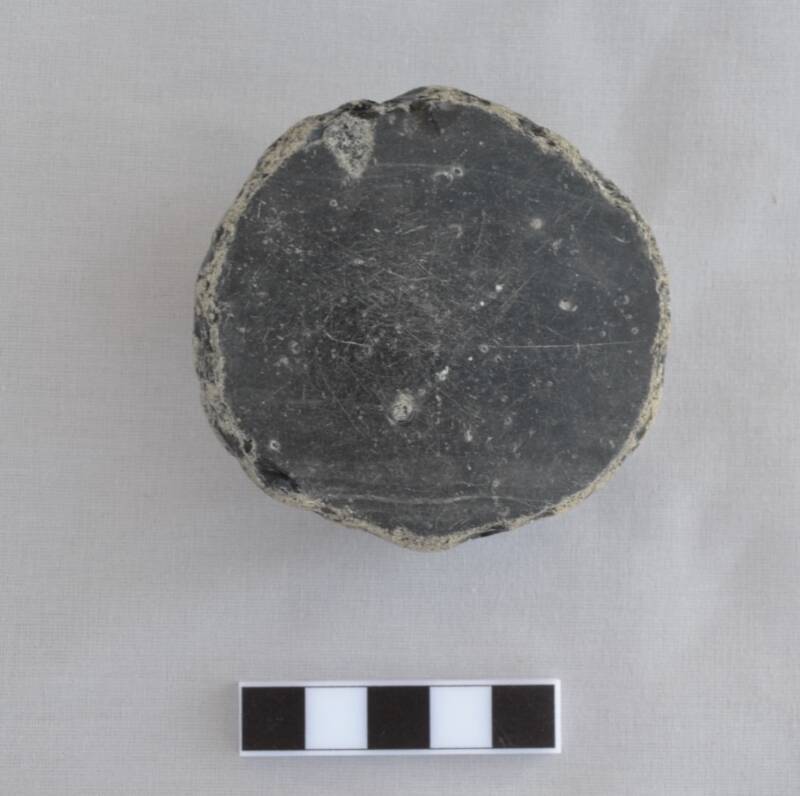
ALLTHATSINTERESTING.COMArchaeologists Just Uncovered An 8,500-Year-Old Obsidian Mirror In Central TurkeyThe Canhasan Archaeological Project/InstagramThe obsidian mirror dates back to around 6500 B.C.E.Archaeologists have uncovered an 8,500-year-old obsidian mirror at Canhasan in central Turkey, one of the oldest settlements in Anatolia. Researchers also discovered several tools made out of obsidian alongside the mirror. These finds are now providing more insight into early Neolithic craftsmanship and the high level of skill the residents of Anatolia had thousands of years ago.The Obsidian Objects Found In CanhasanThe Canhasan Archaeological Project/InstagramEach of the obsidian arrowheads has unique, fine-line patterns engraved on them.The obsidian mirror was discovered during the second round of excavations for the Canhasan Archaeological Research Project. The remarkable find was highly polished and dates back to about 6500 B.C.E.Obsidian was a versatile material in ancient times. It was used across Anatolia for making tools and performing rituals. Its shiny appearance and sharp edges made it a valued resource for Neolithic residents of the region.While obsidian items themselves were not necessarily rare, mirrors made from the volcanic material are. They required an exceptional level of skill to craft, and researchers believe its possible the one found at Canhasan had symbolic or ritual significance.The production process is incredibly challenging obsidian must be carefully shaped and polished using abrasive materials, said Adnan Baysal, the leader of the project, as reported by Arkeonews. This was not a casual craft; it was a specialized technology.The obsidian mirror found in Canhasan is from roughly the same time period as others found in atalhyk, another Neolithic settlement in southern Anatolia. This signifies that obsidian mirror-making may have been a regional specialty. But the mirror wasnt the only obsidian artifact that the archaeologists uncovered. They also found several arrowheads made of the material. The arrowheads were decorated with fine, linear incisions in a pattern specific to the region. Its possible that each of the engraved patterns coincides with a different meaning, indicating social status or ritual significance. These engraved pieces indicate a long-standing local tradition, Baysal explained. While obsidian is found in many Neolithic sites, this specific incised style seems so far to be exclusive to Canhasan.These discoveries are adding to previous finds in Canhasan to paint a picture of the prehistoric settlement and the people who lived there thousands of years ago.Evidence Of Early Urban Planning In AnatoliaResearchers didnt only find obsidian artifacts during their dig. They also made the notable discovery of the earliest known street system from the Pre-Pottery Neolithic period.The Canhasan Archaeological Project/InstagramWorkers excavate the 10,000-year-old street system in Canhasan.The carefully planned streets date back 10,000 years and are some of the first examples of modern urban planning and design in the region.This street concept from the aceramic Neolithic points to the very first steps of urbanization in Anatolia, Baysal said. It suggests an organized community structure that valued accessibility, shared spaces, and architectural planning.The street system and the obsidian artifacts all point to Canhasan being an important spot for craftsmanship, early tool production, and emerging concepts of urbanization. Excavations of the site are ongoing, and archaeologists hope to uncover more of the settlements prehistoric past and how it was connected to greater Neolithic Anatolia. After reading about the obsidian mirror found in Turkey, go inside the Turkish ghost town Burj al Babas. Then, learn about Derinkuyu, ancient Turkeys underground city.The post Archaeologists Just Uncovered An 8,500-Year-Old Obsidian Mirror In Central Turkey appeared first on All That's Interesting.0 Yorumlar 0 hisse senetleri 10 Views -
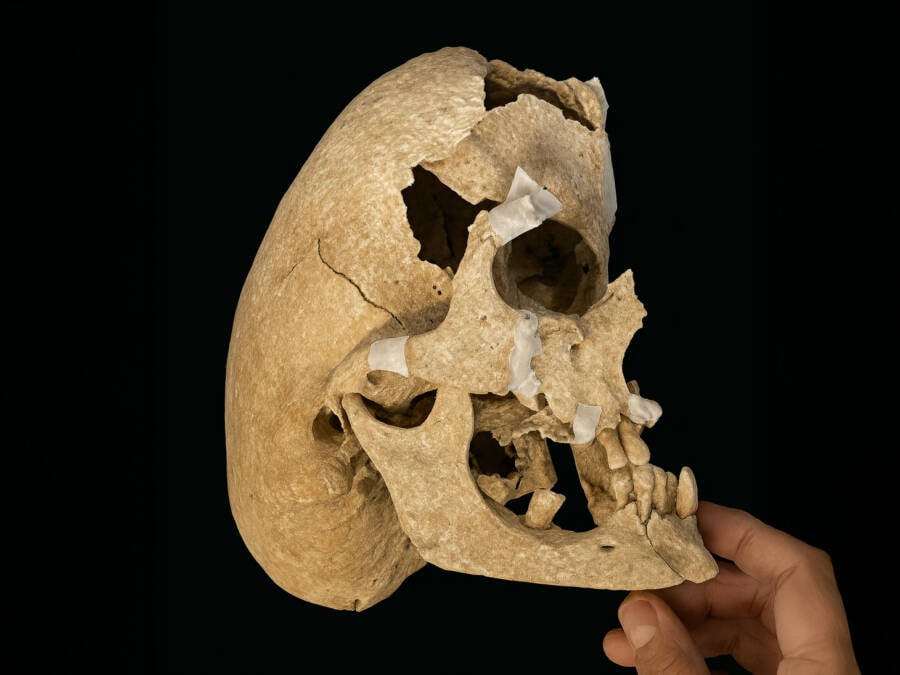
ALLTHATSINTERESTING.COMThe Severely Deformed Skull Of A Medieval Warrior Who Died In Battle Has Been Found In SpainC. Rissech et al., Heritage (2025)The unusually elongated skull of the warrior monk found at the castle of Zorita de los Canes.During excavations at the medieval fortress of Zorita de los Canes in Spains Guadalajara province, archaeologists came across the body of a man who seemingly died violently in battle. Though he was buried in a cemetery with other men who died in a similar fashion, this man stood out. Upon further examination, archaeologists realized that he had an extreme skull deformity.His skull was severely elongated, hinting that he might have had Crouzon syndrome. Though treatable today, most medieval infants born with such a condition died in childhood. This man, however, lived into his mid-40s and died only when he was brought down during a bloody clash sometime between the 13th and 15th centuries.The Warrior Monk Found At Zorita de los Canes With An Extreme Skull DeformityC. Rissech et al., Heritage (2025)Researchers noted asymmetry in the mans skull, suggesting that he likely had Crouzon syndrome.According to a new study published in Heritage, the remains of the man were found during excavations at a cemetery, which was used for centuries during the medieval period, at Spains Zorita de los Canes fortress.Many of the men in the cemetery appeared to have died violent deaths, and researchers suspect that they were warrior monks who belonged to the military-religious Order of Calatrava. But this man was unlike the others.Upon examining his remains, researchers found that he was between the ages of 45 and 49 when he died, and that his cranium was nine inches long yet less than five inches wide. This meant that his skull was ultradolichocephalic, or unusually long and narrow, which is consistent with Crouzon syndrome.This genetic disorder, which can be treated by surgery today, had no such cure in medieval Europe. Most children with the condition died, but this man grew into adulthood.Though the condition of his teeth indicates a long-term asymmetry in his jaw, the state of the mans bones nevertheless suggested that he otherwise lived an active life. His shoulder bones reveal that he often carried bags and his legs indicate that he was a horseback rider.Meanwhile, his remains also illustrated the story of his violent death. Researchers found that the man died of two stab wounds, one to the left temple and the other to the external occipital protuberance [the back of the skull]. He also suffered a blunt wound to his left tibia.C. Rissech et al., Heritage (2025)One of the fatal wounds to the warrior monks skull, consistent with battlefield injuries sustained by the men buried around him.But who was this man? His exact identity is unknown, but he was buried in a cemetery with other men whod died similarly violent deaths, a medieval burial site which primarily served as a burial site for members of the Order of Calatrava.The Order of Calatrava At Spains Zorita de los Canes FortressAs the researchers report in their study, the man with the elongated skull was buried with others whod seemingly died in brutal fashion. The warriors exhibited multiple stab wounds on various parts of the body including the cranium, ilium, ribs, and femur indicating episodes of violence, probably battle wounds, the researchers wrote.They added: These findings are consistent with the interpretation that these individuals were warriors affiliated with the Order of Calatrava.This religious military order was formed in 1158 to replace the Knights Templar and to respond to Muslim attacks in Spain. Though it had humble origins, the Order of Calatrava ultimately began to draw members from the lower nobility or urban oligarchies who saw their membership as both a religious journey toward salvation and a means of economic gain and social advancement.One of their strategic fortifications was Zorita de los Canes, where many of these warrior monks died. But the man with the elongated skull isnt the first unusual burial that researchers found there. Previously, archaeologists also found a woman buried at the site whose injuries suggested that she died in a manner very similar to that of male knights.AdriPozuelo/Wikimedia CommonsThe ruins of Spains Zorita de los Canes fortress.Ultimately, though much is known about the the social origins and composition of the Order of Calatrava, only a handful of studies have actually examined the skeletal remains of its members. So far, from the woman warrior to the man with the elongated skull, these studies have revealed plenty of intriguing surprises about this medieval order of religious warriors.After reading about this warrior monk with an elongated skull, go inside the history of the Reconquista, the centuries-long battle between European and Muslim forces for control of the Iberian peninsula. Then, discover the story of the search for the Holy Grail.The post The Severely Deformed Skull Of A Medieval Warrior Who Died In Battle Has Been Found In Spain appeared first on All That's Interesting.0 Yorumlar 0 hisse senetleri 10 Views -
Nintendo Switch 2 bundles are finally on sale at Amazon for Cyber Monday 2025Nintendo Switch 2 bundles are *finally* on sale at Amazon SAVE $50: The Nintendo Switch 2 + Mario Kart World Bundle is on sale at Amazon for Cyber Monday for $449, down from the list price of $499. That's a 10% discount that matches the fresh price drop we saw at Walmart earlier today. $449...0 Yorumlar 0 hisse senetleri 10 Views
-
Amazon Cyber Monday ends tonight! See 150+ last-chance deals on Bose headphones, Switch 2 bundles, and Ninja air fryersAmazon Cyber Monday 2025: Last-chance deals on Kindles, TCL TVs, Sony headphones Live We found hundreds of record-low prices on Apple, Bose, and Lego products, but time is running short. By ...0 Yorumlar 0 hisse senetleri 11 Views
-
Get a full Office and Windows 11 upgrade for $40Get a full Office and Windows 11 upgrade for $40 TL;DR: Get Microsoft Office 2021 and Windows 11 Pro for $39.97, a discount of over 90% on the bundled software. $39.97...0 Yorumlar 0 hisse senetleri 11 Views