• YUBNUB.NEWS
    The Iran War Is Lose-Lose
    [View Article at Source]A realist analysis of power and interests points to a mutually beneficial outcome.The post The Iran War Is Lose-Lose appeared first on The American Conservative.
    0 Commentaires 0 Parts 11 Vue
  • YUBNUB.NEWS
    Washingtons Unseemly Celebration of Lindsey Graham
    [View Article at Source]The late senator supported foreign policy catastrophes that harmed America. The post Washingtons Unseemly Celebration of Lindsey Graham appeared first on The American Conservative.
    0 Commentaires 0 Parts 11 Vue
  • YUBNUB.NEWS
    The Princess Diaries of Anthony Fauci
    [View Article at Source]Faucis writings reveal a man obsessed with the fame and fortune he received during the pandemic. The post The Princess Diaries of Anthony Fauci appeared first on The American
    0 Commentaires 0 Parts 11 Vue
  • YUBNUB.NEWS
    Major Australian Petrol Firm Eyes 150 Percent Revenue Lift After Iran War
    The conflict in the Middle East has driven a massive spike in earnings for Australias biggest fuel company, which owns one of the nations two remaining oil refineries.Ampol owns the Lytton refinery
    0 Commentaires 0 Parts 11 Vue
  • ALLTHATSINTERESTING.COM
    The Surprising Story Of The Migrant Mother, The Heart-Wrenching Photograph That Embodied The Great Depression
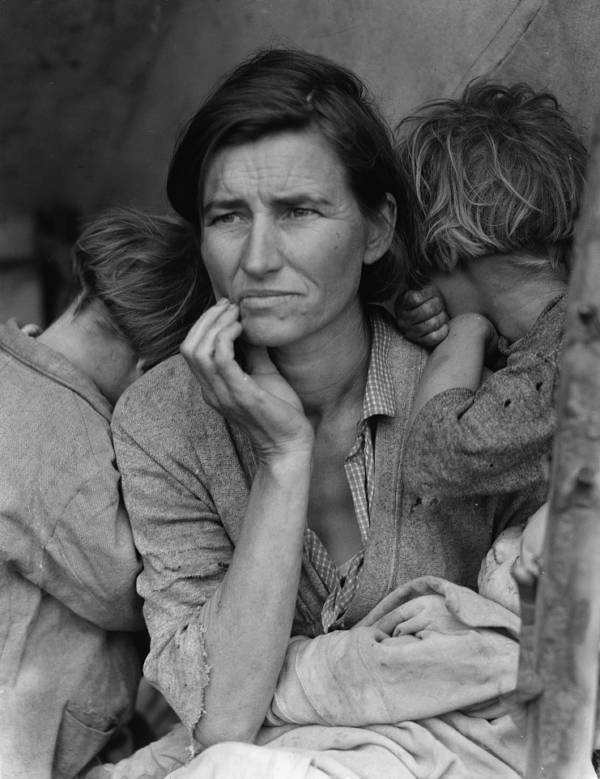
    Dorothea Lange/Library of CongressThe famous Migrant Mother photograph, taken by Dorothea Lange in 1936.On a spring day in 1936, a tired 32-year-old woman named Florence Owens Thompson sat down with a few of her children in a makeshift shelter at a pea pickers camp in Nipomo, California. Her familys car had broken down, and her boyfriend had gone into town to find car parts. Owens didnt know it yet, but she was moments away from becoming the subject of one of the Great Depressions most famous images: the Migrant Mother photo. The Migrant Mother photo, taken by federal photographer Dorothea Lange, is one of the most well-known of the Great Depression. The woman in the picture stares off into the distance, her face creased with worry, as two children nestle into her shoulder. For decades, her identity was unknown. It wasnt until the 1970s that Florence Owens Thompson came forward. At that point, Thompson told a surprising story. Though Langes photo of her had become one of the most iconic in American history, Thompson wished that it had never been taken at all.This is the true story of the Migrant Mother photo.Florence Owens Thompsons Path To CaliforniaFlorence Owens Thompson was born Florence Leona Christie on Sept. 1, 1903, in what was known then as Indian Territory (present-day Oklahoma). Thompson, of Cherokee descent, grew up in the small town of Tahlequah. When she was 17 years old, she married her first husband, Cleo Owens.But the years that followed were hard. The couple had five children together, and Thompson was pregnant with their sixth, when Cleo Owens died of tuberculosis in 1931. Thompson was left raising their children on her own, just as the Great Depression and the Dust Bowl intensified. Arthur Rothstein/Farm Security Administration via Library of Congress/Wikimedia CommonsA dust storm in Texas in 1936.Thompson made her way to California, where she did everything she could to make ends meet. She picked cotton and peas, tended bar, and worked in hospitals. One of her daughters told CNN many years later that though times were hard, Thompson always put her children first. She was the backbone of our family. We never had a lot, but she always made sure we had something, Thompsons daughter, Katherine McIntosh, stated. She didnt eat sometimes, but she made sure us children ate.After having her seventh child, Thompson met Jim Hill, who would father three more of her children. To support their growing family, Thompson and Hill subsisted as migrant farm workers, moving from place to place. Dorothea Lange/Library of CongressFlorence Owens Thompson and her family in Nipomo, California. 1936. In the spring of 1936, they were on their way to pick lettuce when their car broke down. Florence Owens Thompson and her family fatefully pulled into a pea pickers camp in Nipomo, California, where Dorothea Lange would meet Thompson and take her famous Migrant Mother photo. The True Story Of The Migrant Mother PhotoOn the day the Migrant Mother photo was taken, Dorothea Lange was driving home from another photography assignment.A photographer with the Resettlement Administration, tasked with raising awareness about the plight of migrant workers, Lange had spent the day photographing migrant worker camps. When she saw the sign for the Nipomo pea pickers camp, she initially decided to keep driving, having already taken pictures for the day. Public DomainA photo of Dorothea Lange and her camera. Circa 1935.But something compelled Lange to turn around. Arriving at the pea pickers camp, Lange immediately noticed Thompson, who was sitting under a makeshift shelter with her children. Hill had left to try to find parts for their car. I saw and approached the hungry and desperate mother, as if drawn by a magnet. I do not remember how I explained my presence or my camera to her, but I do remember she asked me no questions. I made five exposures, working closer and closer from the same direction, Lange recalled in the 1960s, according to the Library of Congress. Lange continued: I did not ask her name or her history. She told me her age, that she was thirty-two. She said that they had been living on frozen vegetables from the surrounding fields, and birds that the children killed. She had just sold the tires from her car to buy food.Library of CongressAnother of Dorothea Langes pictures of Florence Owens Thompson. March 1936.Shortly after passing through the pea pickers camp, Langes Migrant Mother photo was published in the San Francisco News. It made an immediate impact: the U.S. government announced it would send 20,000 pounds of food to help pea pickers like the woman in Langes photograph. But by then, Florence Owens Thompson and her family had already left.Life For Florence Owens Thompson After The Migrant Mother PhotosThough the Migrant Mother photo swiftly became one of the most famous of the Great Depression, Florence Owens Thompson remained anonymous for decades. According to PBS, she and her family were aware of the photo and often discussed it, but it had little impact on their lives. Thompson settled in Modesto, found work in a hospital, and ultimately married a hospital administrator named George Thompson. She said nothing about the famous photograph until 1978. National Postal MuseumA stamp featuring Dorothea Langes famous Migrant Mother photograph.Then, Thompson opened up to the Modesto Bee, and the story was soon picked up by the Associated Press. I wish [Lange] hadnt taken my picture, Thompson declared. I cant get a penny out of it. She didnt ask my name. She said she wouldnt sell the pictures. She said shed send me a copy. She never did.To be fair, Lange hadnt made any money off the picture either it had been taken in service of the federal government. That said, it did bring her recognition and success, as well as a Guggenheim fellowship. In any case, that wasnt the only problem that Thompson and her family had with the Migrant Mother photograph. The other was that Lange had gotten several details about them wrong. Theres no way we sold our tires, because we didnt have any to sell Thompsons son, Troy, told the San Luis Obispo New Times in 2002. We drove off in them. I dont believe Dorothea Lange was lying, I just think she had one story mixed up with another. Or she was borrowing to fill in what she didnt have.Lange never commented on Thompson; she had died in 1965. And just a few years after coming forward, Florence Owens Thompson died as well. She passed away on Sept. 16, 1983, at the age of 80. Her headstone reads: FLORENCE LEONA THOMPSON Migrant Mother A Legend of the Strength of American Motherhood.After reading about Florence Owens Thompson and the true story of the Migrant Mother photograph, discover the tragic stories of the Dust Bowl Migrants, the millions of Americans who fled the American heartland in the 1930s. Or look through these photos of Hoovervilles, the shanty towns of the Great Depression.The post The Surprising Story Of The Migrant Mother, The Heart-Wrenching Photograph That Embodied The Great Depression appeared first on All That's Interesting.
    0 Commentaires 0 Parts 11 Vue
  • ALLTHATSINTERESTING.COM
    The Bloody Story Of The Harpe Brothers, The First Documented Serial Killers In American History
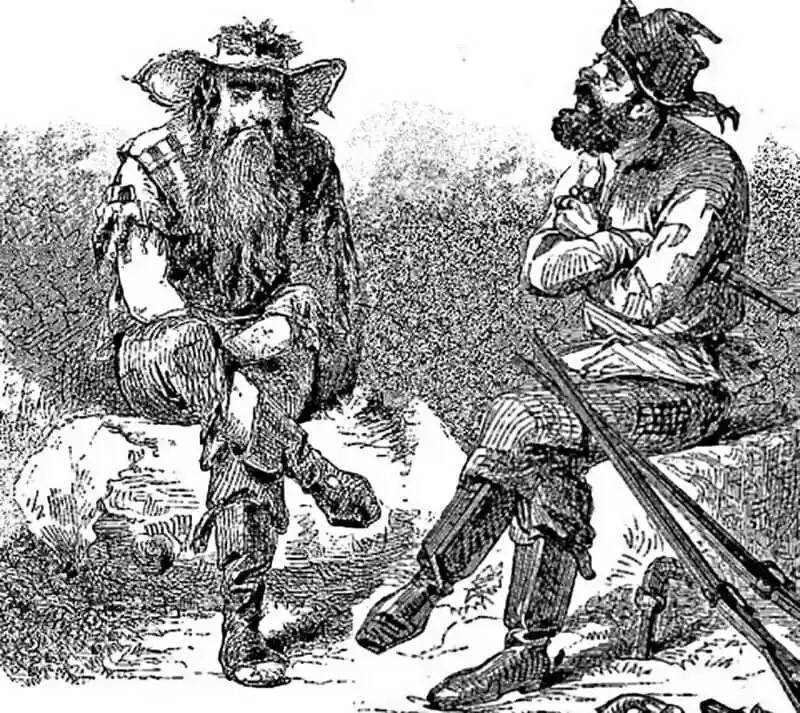
    By the 1790s, the United States was a new nation full of firsts. And at the end of the 1790s, the young country even experienced its first serial killers: the Harpe brothers.Appalachian HistoryA depiction of the Harpe brothers.Between 1797 and 1799, Micajah Harpe Big Harpe and Wiley Harpe Little Harpe killed at least 39 people along the edge of the western frontier. If a body was found with its chest cut open and filled with stones, it was a telltale sign that the Harpe brothers committed the murder. But they used a variety of methods to kill, and targeted men, women, and even children.This is the grisly story of the Harpe brothers, the first documented serial killers in American history.The Early Years Of Micajah And Wiley HarpeMany facts about the Harpe brothers have become obscured over the years, including their origins. For starters, the Harpe brothers were not brothers, but cousins. Micajah Big Harpe was born Joshua Harper around 1748, and Wiley Little Harpe was born William Harper around 1750. Their fathers were Scottish immigrants, and the Harpe brothers may have been born in Scotland before their families immigrated to the American colonies. Public DomainA map from the 1750s, showing North Carolina, South Carolina, and Georgia.After settling in North Carolina, the Harper family threw its support to the British crown. This caused tensions with their Patriot neighbors as revolutionary feeling began to spread and, in the 1770s, Micajah and Wileys families were purportedly killed by a group of murderous Patriots.The two boys escaped into the woods, and legend claims that they were adopted by a band of Chickamauga Cherokees. The Native Americans allegedly taught the boys how to survive, hunt, steal and kill. Then, in the 1790s, the Harpe brothers (they had dropped the r in their names) appeared in Tennessee with three women that they treated as wives as well as several children. As James Hall, one of the first chroniclers of the Harpe brothers wrote in 1828, Micajah and Wiley Harpe soon embarked on a killing spree, spreading death and terror wherever they wentThe Bloody Crimes Of The Harpe BrothersThe crimes of the Harpe brothers seemingly began in 1797, when they murdered a man named Johnson. Johnson, who may have told the Harpe brothers neighbors that Micajah and Wiley were stealing their horses, was found floating in the Holston River. He had been viciously disemboweled, with rocks and gravel placed inside his chest cavity. No one suspected the Harpe brothers suspicion fell instead on the owner of the tavern where Johnson had last been seen and so Micajah and Wiley were able to slip away to Kentucky. On their way, they killed a pair of travelers. Later that year, in December, they also killed a young man named Langford after noticing the thick billfold he carried.Huw Williams/Wikimedia CommonsThe site of one of the Harpe brothers many murders, where they killed a young Black man by slamming his head into a tree.After Langfords murder, the Harpe brothers were briefly jailed in Stanford, Kentucky. According to the Winchester Sun, many even flocked to see Micajah, a devil of a man, as well as his brother and their wives. However, the Harpe brothers were able to escape they left their wives behind and continued on their killing spree. In the spring of 1799, they committed several more murders, even as the governor of Kentucky announced a reward of $300 for their capture. They were vicious killers. The Harpe brothers shot, beat, and cut their victims throats. After joining up with a local outlaw gang lead by criminal Samuel Mason, they even tied a naked traveler to his horse, blindfolded the horse, and sent them both careening over a cliff. This act of cruelty was even too much for the outlaws, who ordered the Harpe brothers to leave. This was too much for their companions, Wallace Edwards wrote in Americas First Serial Killers: A Biography of the Harpe Brothers. Rather than being suitably impressed by the murder, the pirates were stunned by the cruelty which was, even by their standards, shocking. One can assume it was fear of having what we today would call psychopaths in their midst that caused the outlaws to expel the Harpe brothers.Daniel Schwen/Wikimedia CommonsCave-in-Rock on the Ohio River, where the Harpe brothers briefly stayed with a group of outlaws.But the Harpe brothers depravity knew no bounds. Shortly afterward, in the summer of 1799, Micajah even murdered his own daughter after she would not stop crying by smashing her head against a tree. It was the only one of his murders he expressed remorse over.Then, after killing a mother and child, the Harpe brothers were finally caught.The Law Catches Up With Americas First Serial KillersOn August 24, 1799, Micajah and Wiley Harpe were tracked down by a posse lead by John Leiper and Moses Stegall the husband and father of the woman and baby the Harpe brothers had killed. Though Wiley was able to escape, Micajah was shot and fell to the earth. Badly injured, Micajah began to confess to the many crimes he committed. He was slowly beheaded by Stegall, who took Micajahs butcher knife and used it to cut off his head. Once he was decapitated, Big Harpes head was then placed in a tree, at an intersection long known as Harpes Head. Kentucky TourismA sign describing the fates of Micajah and Wiley Harpe.Wiley Harpe, however, had slipped through the posses fingers. He rejoined Masons gang, and lived quietly for a number of years with the other outlaws. After Masons death its unclear if Harpe killed him Harpe tried to turn in his head to the Kentucky authorities in order to claim the bounty money. However, he was swiftly recognized. Arrested, recaptured, and arrested again, Wiley Harpe was put on trial and sentenced to death by hanging. He was executed in January 1804. His head was then cut off and placed on a stake at Natchez Road as a warning to other outlaws. His death marked the end of the Harpe brothers reign of terror. By then, they had killed at least 39 people and perhaps as many as 50. Though perhaps driven by a thirst for revenge born in their boyhood, the Harpe brothers seemed to simply relish murder and violence. They killed whenever they wanted to, until their bloody crimes caught up with them.After learning about the Harpe brothers, the first documented serial killers in United States history, discover the identity of the deadliest serial killer ever. Or, read about some of historys most chilling serial killer couples.The post The Bloody Story Of The Harpe Brothers, The First Documented Serial Killers In American History appeared first on All That's Interesting.

    0 Commentaires 0 Parts 11 Vue
  • 0 Commentaires 0 Parts 11 Vue
  • 0 Commentaires 0 Parts 11 Vue
  • WWW.GAMEBLOG.FR
    Je m'attends voir pas mal de choses Si vous attendez du gameplay de GTA 6, une bonne nouvelle se profile pour trs bientt
    Rest silencieux depuis le lancement des prcommandes, GTA 6 devrait visiblement refaire parler de lui ds le mois daot si lon en croit un insider trs rput.
    0 Commentaires 0 Parts 11 Vue
  • WWW.GAMEBLOG.FR
    L'Epic Games Store vous donne 2 nouveaux jeux gratuits et ils sont excellents
    Comme chaque semaine, lEpic Games Store vous propose de rcuprer un ou deux nouveaux jeux gratuits et le duo de cette semaine est trs bien not des joueurs.
    0 Commentaires 0 Parts 11 Vue