0 Commentarios
0 Acciones
11 Views
Directorio
Elevate your Sngine platform to new levels with plugins from YubNub Digital Media!
-
Please log in to like, share and comment!
-
YUBNUB.NEWSThe Lingering Miasma of Marxism[View Article at Source]No matter how many times its defeated, the politics of resentment always has an audience. The post The Lingering Miasma of Marxism appeared first on The American Conservative.0 Commentarios 0 Acciones 11 Views -
WWW.THEHISTORYBLOG.COMUpdate: Baltic shipwreck champagne was destined for Tsar Alexander IIMeticulous research into the bottles of champagne found in a shipwreck discovered in the Baltic sea south of the Swedish island of land in July 2024, has uncovered that they were destined for the table of Tsar Alexander II.The well-preserved remains of the 19th century ship were found 190 feet deep by technical divers from the Baltictech Association. The ship stayed upright when it sank to the seabed, and the cold waters of the Baltic were ideal storage conditions for dozens of glass wine bottles and stoneware Selters mineral water bottles.An expert in historic pottery identified the stamp on the Selters bottles as the emblem of the German Duchy of Nassau which the company used on its labels between 1836 and 1866. The cork on one of the Champagne bottles bore the faint imprint of Louis Roederer Champagne House of Reims.Baltictech returned to the wreck site for a follow-up dive in 2025. They recovered a ceramic plate of the British Davenport company which could be dated to 1856. Since the plates didnt linger in inventory, the ship must have begun its ill-fated voyage in late 1856 or early 1857.All of this information helped Baltictech researchers to identify the ship as one sent by Adolf, Duke of Nassau, to Tsar Alexander. It was laden with champagne, mineral water, wine leather hides and porcelain. The champagne was an official state gift for the Tsar, who had ascended the throne when the Baltic was under blockade by Britain during the Crimean War. When Russia signed a treaty that ended the war in 1856, the blockade was lifted and heads of state like the Duke of Nassau hastened to reestablish relations.The team reached out to Louis Roederer to find out more about the bottles, perform chemical analyses of the liquid inside the bottle and advise them on recovering a few samples. As luck would have it, one of Roederers champagne experts, Peter Liem, is also an experienced technical diver, so he was able to go down to the wreck and point specific bottles to recover. One was tested in Sweden, and several sent to Louis Roederer Champagne House in Reims for analysis.The champagne contains 110 grams of sugar per liter and 12% alcohol and it is not just still drinkable, according to Peter Liem, it is glorious:[P]atinated, authoritative, and immeasurably complex, this wine is not only alive, but downright vibrant and delicious to drink. Its reminiscent of shiitake, saffron, kombu, saddle leather, cigar box, roasted coffee, with a fervent vitality and piercing intensity like a great amontillado. We believe that its from the 1857 vintage, although we are continuing to try to verify this for certain: if so, it was on its way to Tsar Alexander II in St. Petersburg.Baltictech has requested a permit for a third exploration of the wreck. They hope to locate the ships bell and to excavate deep into the lowest levels of the cargo hold, looking for objects mentioned in the ships manifest that have yet to be found.0 Commentarios 0 Acciones 12 Views -
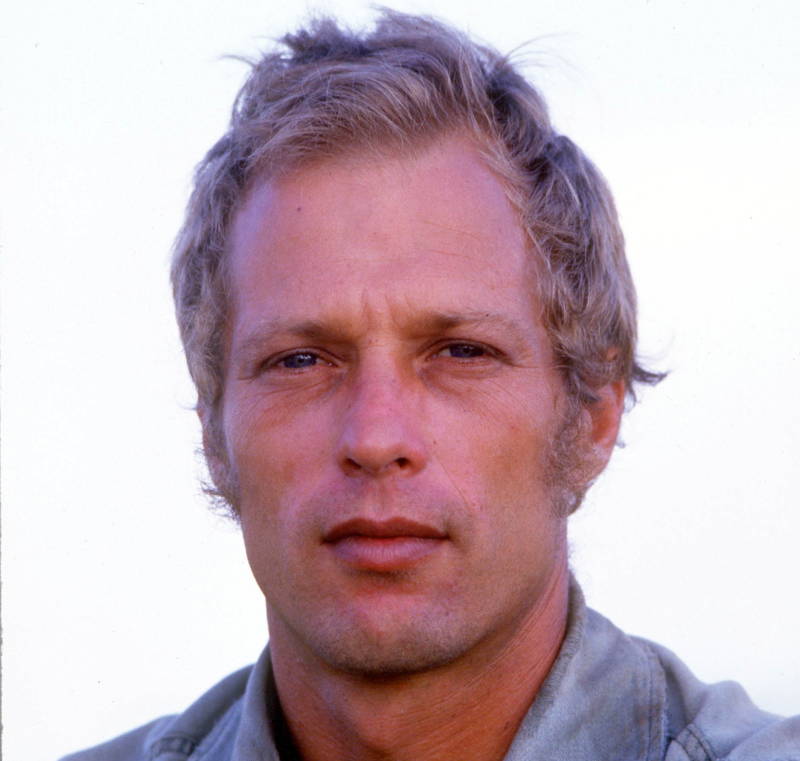
ALLTHATSINTERESTING.COMThe Astounding Yet Tragic Tale Of Rod Ansell, The Real-Life Crocodile DundeeCrocodile Dundee was one of the smash hits of the 1980s. The movie, which tells the story of an Australian bushman named Michael J. Mick Crocodile Dundee, made hundreds of millions of dollars at the box office and stands as the highest grossing Australian-made film of all time. But few know the story of the real man behind the movie: Rod Ansell.Jim Pozarik/Getty ImagesRod Ansell in 1988.A decade before the film dominated box offices around the world, Ansell grabbed headlines in Australia by surviving 56 days deep in the Australian bush. His survival story made him a national celebrity, and the writers of Crocodile Dundee purportedly came up with their idea for the Crocodile Dundee character after seeing him give a barefoot interview in 1981.But Ansell never saw a dime from the movie. And the final years of his life saw him caught in a downward spiral, bitter toward the filmmakers, angry with the Australian government, and addicted to amphetamines.Tragically, Rod Ansell, the real-life Crocodile Dundee, died in a shootout with the police in 1999. This is his story. Rod Ansells 56 Days Of Survival In The BushBorn on Oct. 1, 1954, in Queensland, Australia, Rodney William Ansell found sudden fame by getting lost. In the spring of 1977, Ansell set out on a fishing trip he may have actually been poaching crocodiles when his boat capsized in the Victoria River. The 23-year-old found himself stranded more than 100 miles from the nearest settlement. And since Ansell had planned to be on his fishing trip for months, no one was looking for him. Ansell wasnt totally unprepared. He had a rifle, two knives, a few cans of food, and some tarpaulin. But he was deep in the Australian bush, surrounded by dingos, crocodiles, and snakes. With no hope of immediate rescue, Ansell had to get creative to keep himself and his two dogs alive. YouTubeThe Fitzmaurice River in Australia, where Rod Ansell was stranded for months.He killed buffalo and drank their blood to avoid dehydration; Ansell slept in trees alongside snakes to avoid crocodiles, followed bees to their hive so he could eat their honey, and wrote poetry in his head to keep himself sane. Finally, after 56 days later in the bush, Rod Ansell crossed paths with some Aboriginal men, who brought him back to civilization. And before long, word of his incredible survival story spread across the country. Becoming The Real-Life Crocodile DundeeAfter the press caught wind of Rod Ansells survival story, he became a national celebrity. Ansell capitalized on his newfound fame by reenacting his survival story in the 1979 documentary To Fight the Wild, followed by a book of the same name.Though some doubted Ansells story experienced bushmen wondered why he had not simply followed the river back to civilization Rod Ansells fame only continued to grow. Jim Pozarik/Getty ImagesRod Ansell in 1988.In 1981, Ansell was flown to Sydney to be interviewed by the English television broadcaster Michael Parkinson. He showed up to the interview barefoot he hadnt worn shoes much since his survival experience. And as The Independent reported in Ansells obituary, Ansell told Parkinson that he had eschewed the bed in his five-star hotel, preferring to sleep on the floor. The interview was seen by Paul Hogan, an Australian actor and comedian. As Hogan later acknowledged, Ansells story and his embrace of the wild life over luxury gave Hogan the idea for a screenplay. Alongside two other writers, Hogan wrote Crocodile Dundee, a fish-out-of water film about a crocodile hunter who must navigate a visit to New York City. The 1986 film was a hit: it made $328 million at the box office. At the time, Ansell, his wife, and their two young sons were living deep in the wild, 10 miles from the nearest phone. According to People, Ansell began to hear about the movie and its similarity to his life. Eventually, he made the trek into civilization to see Crocodile Dundee for himself. \Paramount PicturesPaul Hogan as Mick Crocodile Dundee.An excellent movie, hey? Ansell stated. Good fun. But it was so obvious where he got his material from. Rod Ansells Downward Spiral And DeathThough he enjoyed Crocodile Dundee, Rod Ansell soon changed his tune about the movie. For one, he never saw a penny from the filmmakers. For another, when he tried to market himself as the real-life Crocodile Dundee to promote his tourism business, he was threatened with legal action. In the years that followed, Ansells problems multiplied. In the 1980s, he bitterly fought the Australian government over a plan to eradicate wild buffalo, in order to contain the spread of tuberculosis. Ansell lost the battle, and was forced to kill thousands of the buffalo he had hoped to domesticate. Then, in the 1990s, Ansell lost his ranch, his marriage failed, and he was arrested for stealing cattle and assaulting a fellow rancher.To Fight The WildRod Ansells life sadly ended in tragedy. By the mid-1990s, Ansell was bitter with the Crocodile Dundee filmmakers, angry at the government, and living with his girlfriend some 300 miles south of Darwin. The couple also had begun abusing drugs. The Herald Sun reported that Ansell smoked marijuana and injected amphetamines with vengeance, causing him to spiral into a drug-induced psychosis. Sadly, Rod Ansell never recovered from his downward spiral. On August 2, 1999, Ansell shot and wounded two men in Darwin. His motive is unknown. Ansell was seemingly consumed with paranoia, and a coroner later pronounced that wretched drivel (drugs) had spurred Ansell to violence. The next morning, police surrounded the area and set up a roadblock. Though Ansell could have hidden in the bush, or otherwise evaded the roadblock, he chose to confront the police directly. As The Guardian reports, Ansell emerged from the bush with a shotgun and a rifle and opened fire on two police officers, Sergeant Glen Huitson and Constable Jim OBrien. Huitson was killed; OBrien returned fire, killing Ansell. The real-life Crocodile Dundee was 44 when he died. He left behind more questions than answers, and a tragic legacy of loss, drug use, and death. After this look at the tragic life of Rod Ansell, the real-life Crocodile Dundee, discover the story of Juliane Koepcke, the teenager who fell 10,000 feet out of a plane into the Amazon and somehow survived. Or, learn about Tami Oldham Ashcraft, the woman who survived 41 days adrift at sea and whose story later inspired the film Adrift.The post The Astounding Yet Tragic Tale Of Rod Ansell, The Real-Life Crocodile Dundee appeared first on All That's Interesting.0 Commentarios 0 Acciones 12 Views -
ALLTHATSINTERESTING.COMWho Were The Sea Peoples? The Mystery Of The Mediterranean Tribes Who Waged War Against Ancient EgyptPublic DomainThe Sea Peoples terrorized Bronze Age civilizations, but very little is known about them.In the 12th century B.C.E., Bronze Age civilizations began to fall like dominoes.The Hittite Empire, the Mycenaean kingdoms, and the Amorite states collapsed entirely, while societies in Egypt and Assyria weakened dramatically. What caused this collapse? The reasons are myriad, but historians believe that one factor was the Sea Peoples mysterious and violent tribes that raided kingdoms across the Mediterranean.In whats now Syria, a king wrote about enemies whod burned cities and done evil things in my country. In Egypt, ancient records recalled invaders who came from the sea in their war ships and none could stand against them.So, who were the Sea Peoples? They certainly left their mark on the ancient world. But their identity stands as one of the greatest historical mysteries of all time, and scholars debate their origins to this day.Who Were The Sea Peoples?The term Sea Peoples (peuples de la mer) was first coined by 19th-century French Egyptologists. But the history of the Sea Peoples began long before that. Rmih/Wikimedia CommonsSea Peoples taken captive by Ramses III, as seen in a relief at the temple of Medinet Habu.Sources from the 13th and 12th centuries B.C.E. describe several attacks from these oceanic raiders. The Sea Peoples seemingly struck places in Egypt, the Hittite Empire, the Levant, and elsewhere in the Mediterranean. Ancient records give them various names, including Denyen, Ekwesh, Lukka, Peleset, Shekelesh, Sherden, Teresh, and Weshesh.Even to this day, no one knows for sure who the Sea Peoples were. Their name derives from ancient accounts that refer to them as from the sea or the islands though these do not specify which sea or islands. However, present-day historians have some theories. The Sea Peoples may have come from western Asia Minor, the Aegean, the Mediterranean islands, or southern Europe. They could have been Etruscans, Trojans, Italians, Philistines, Mycenaeans, or Minoans. Its likely that they were driven into the Mediterranean by environmental factors, like drought.Empires of Bronze/Gordon DohertyA map of the ancient world showing a number of empires that were attacked by the Sea Peoples, including the Egyptians, the Hittites, and the Assyrians.Sometimes, the Sea Peoples were mentioned as allies, sometimes as mercenaries. But more often than not, they were described as enemies. Curiously, they were seemingly more like migrants than soldiers, as their ships were said to carry women, children, and household goods, as if they hoped to establish permanent settlements.Whoever they were, they had a massive impact on ancient history. As contemporaneous sources recorded, their attacks were sudden, surprising, and devastating.None Could Stand Against ThemMost of what we know about the Sea Peoples comes from Egyptian accounts, specifically those written during the reigns of Ramses II (1279 to 1213 B.C.E.), Merneptah (1213 to 1203 B.C.E.), and Ramses III (1186 to 1155 B.C.E.). Speedster/Wikimedia CommonsA depiction of Ramses II with conquered enemies. He routed the Sea Peoples during a battle, but they would return to challenge his successors. One account from Ramses IIs reign mentions a battle in 1274 B.C.E. between the Egyptians and the Hittites in which Sea Peoples are described as both Hittite allies and Egyptian mercenaries. Another account tells how the Sea Peoples once sailed into the Nile Delta only to be met by the forces of Ramses II. As Kenneth Kitchen notes in his book Pharaoh Triumphant: The Life and Times of Ramses II, the battle was later recorded on the Tanis Stele II, which reads:[T]he unruly Sherden whom no one had ever known how to combat, they came boldly [sailing] in their warships from the midst of the sea, none being able to withstand them.Ramses II neutralized the threat and conscripted some of the Sherden into his army but the Sea Peoples continued to harass his successors. During Merneptahs reign, the Sea Peoples aligned with the Libyans. The Egyptians described them as coming from the seas to the north and dubbed them Ekwesh, Teresh, Lukka, Sherden, and Shekelesh.Merneptah was able to soundly defeat them, an accomplishment he immortalized on the walls of the Karnak Temple Complex and in his funerary temple at Thebes. An article by Egyptologist Mohamed Raafat Abbas translates parts of the pharaohs inscribed Triumph Hymn, which ends: Everyone who travels has been subdued by the King of Upper and Lower Egypt.Public DomainThe Great Karnak Inscription, which includes details about Merneptahs victory over the Sea Peoples.Despite this, attacks by the Sea Peoples were also recorded by Merneptahs successor, Ramses III. One such attack around 1175 B.C.E. and the subsequent Egyptian victory was recorded at the Medinet Habu, the pharaohs mortuary temple. According to the Oriental Institute of the University of Chicago, it reads: Now the northern countries, which were in their isles, were quivering in their bodies. They penetrated the channels of the Nile mouths. Their nostrils have ceased (to function, so that) their desire is [to] breathe the breath. His majesty is gone forth like a whirlwind against them, fighting on the battlefield like a runner. The dread of him and the terror of him have entered into their bodies; (they are) capsized and overwhelmed in their places Their weapons are scattered in the sea.Mohammed Moussa/Wikimedia CommonsThe Temple of Ramses III at Medinet Habu in Thebes, which records the pharaohs triumphs over the Sea Peoples. However, his victory came at great economic cost to the Egyptians.After this point, the Sea Peoples mostly disappear from the historical record, leaving more questions than answers. Where did they come from? Why did they leave their home territory and attack the Egyptians and other ancient societies? How were they so effective in their attacks? And what happened to them after the reign of Ramses III? No one knows for sure. But scholars believe that the Sea Peoples, who harassed societies for centuries, helped trigger the collapse of the Bronze Age in the 12th century B.C.E.The Sea Peoples And The Bronze Age CollapseIn the 12th century B.C.E., a number of civilizations including the Hittite Empire, Mycenaean kingdoms, Kassites, Ugarites, and Amorite states collapsed entirely. Others, including the Egyptians and Assyrians, survived in a greatly weakened state. Some scholars believe that this stunning global collapse which plunged the world into the Greek Dark Ages was caused, in part, by the Sea Peoples. In Egypt, for example, Ramses III drained his treasuries fighting the Sea Peoples. Elsewhere, archaeological evidence suggests that the Sea Peoples burned down entire cities. Hattusa, the ancient capital of the Hittite Empire, and Megiddo, an important city-state in Canaan, were both apparently destroyed by enemy invaders. So were port cities in Cyprus, Syria, and Palestine, as well as Greek palaces in Mycenae, Tiryns, and Pylos. Bernard Gagnon/Wikimedia CommonsThe ruins of Hattusa, the capital of the Hittite Empire. Some believe that raids by the Sea Peoples led to the citys destruction at the end of the Bronze Age.Archaeologists discovered a clay tablet found in Ugarit a wealthy port city in whats now northern Syria that was seemingly written by its last king, Ammurapi. It read: My father, behold, the enemys ships came (here); my cities were burned, and they did evil things in my country May my father know it: the seven ships of the enemy that came here inflicted much damage upon us.Were the Sea Peoples the cause of this widespread destruction? Perhaps. But while they may have been one reason for the Bronze Age collapse, historians agree that the catastrophe had many factors. From 1250 to 1100 B.C.E., the ancient world suffered from a megadrought. Though Egyptians and Babylonians benefited from their proximity to rivers during the dry years, people in other civilizations were forced to flee their native lands. Indeed, this may have been what happened to the Sea Peoples. At the same time, between 1225 and 1175 B.C.E., the world was also rocked by a number of earthquakes. Vclav Moravec/Wikimedia CommonsThe ruins of Tiryns, one of the Greek palaces destroyed possibly by Sea Peoples during the Bronze Age collapse. This, combined with internal strife, the disruption of trade relations, and invasions like those of the Sea Peoples helped lead to the Bronze Age collapse. Civilizations fell, trade agreements ended, and some written languages, including ones used by the Mycenaeans and the Hittites, disappeared entirely. From the ashes of the Bronze Age, other civilizations grew. But the Sea Peoples werent one of them. Maybe they were wiped out; maybe they were assimilated into other societies. But today, their fate and their influence on the Bronze Age remains a lingering historical mystery.After reading about the Sea Peoples, discover some of the most fascinating sunken cities of the ancient world. Then, learn about the Egyptomania craze that gripped the world in the early 20th century.The post Who Were The Sea Peoples? The Mystery Of The Mediterranean Tribes Who Waged War Against Ancient Egypt appeared first on All That's Interesting.0 Commentarios 0 Acciones 12 Views -
-
-
-
-