0 Reacties
0 aandelen
13 Views
Bedrijvengids
Elevate your Sngine platform to new levels with plugins from YubNub Digital Media!
-
Please log in to like, share and comment!
-
YUBNUB.NEWSGOA Sues Pennsylvania After Veteran Denied Carry License Over 1994 Marijuana Conviction[View Article at Source]Air Force veteran Craig Philips can legally own handguns, but Pennsylvania permanently bars him from carrying one because of a 1994 marijuana conviction. GOA says the lifetime0 Reacties 0 aandelen 13 Views -
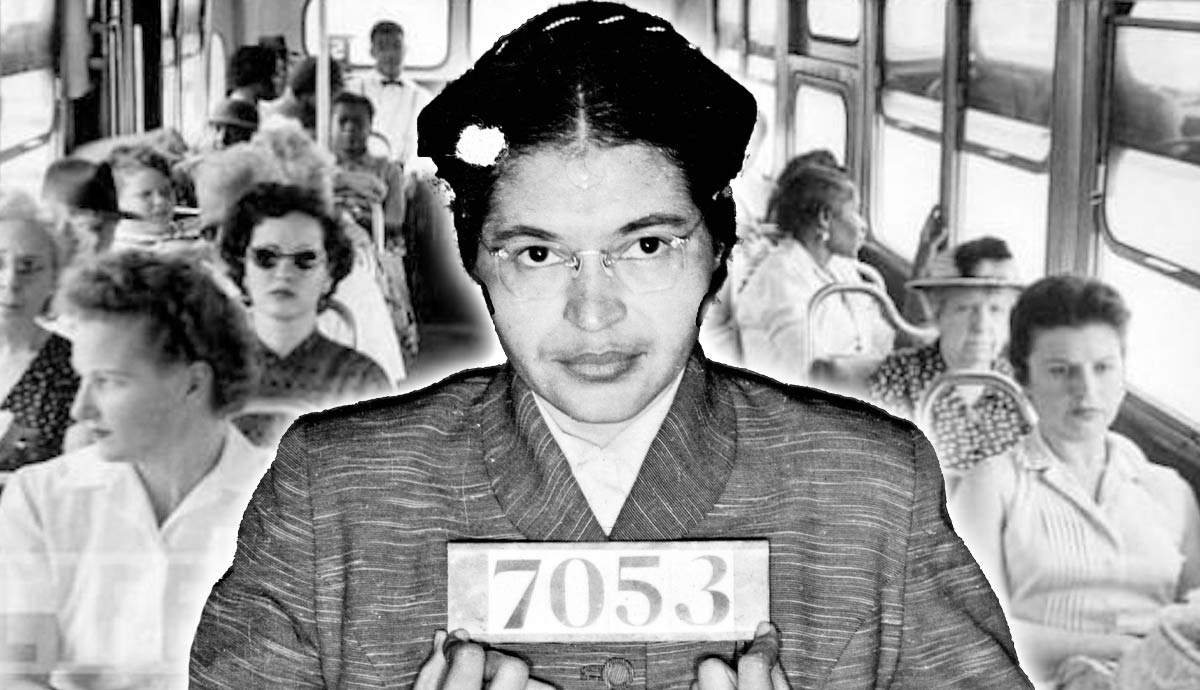
WWW.THECOLLECTOR.COMRosa Parks & the Bus Boycott That Changed AmericaOn December 1, 1955, Rosa Parks refused to give up her seat in a mid-section of a bus when asked to move further back after the white section became full. The police arrested her, sparking an almost 13-month-long bus boycott in Montgomery, Alabama, protesting the segregated seating policy. On December 20, 1956, according to the federal ruling, the United States Supreme Court declared the bus seating segregation policy in Alabama and Montgomery unconstitutional.Background & Bus Segregation in AlabamaThe back of a segregated bus, photograph by Stan Wayman. Source: FSPRacial segregation in the United States was enforced in the late 19th century by the Jim Crow Laws. Introduced in the southern States at the end of Reconstruction, these laws restricted the rights and freedoms of Black Americans. The Montgomery Bus Line was operating under the Jim Crow Laws, prohibiting African Americans from being hired as drivers, forcing them to be seated in the back of the buses or surrender their seats to white people, even though about 75% of Montgomery bus passengers were African American.According to the segregation system installed on Montgomery buses, the first ten seats were reserved for white passengers, and African Americans were required to move further back if white passengers needed seats. In the middle section of the bus, 16 unmarked seats were to be filled by white people from the front to the back, while Black people filled seats from the back to the front until the bus was full. If more Black passengers entered the bus, they had to stand. If a white passenger boarded, Black passengers in the middle section had to give up their seats so that a new row for white people could be created.When Did Rosa Parks Say No? The Bus IncidentRosa Parks and United Press International reporter Nicholas C. Chriss during a symbolic ride in the formerly whites-only section of a city bus in Montgomery on December 21, 1956. Source: Encyclopedia of Alabama/Library of Congress, Washington DCOn the afternoon of December 1, 1955, Rosa Parks left her job on Montgomerys Cleveland Avenue, where she worked at a department store. When she entered the bus, she took a seat in the colored mid-section. When the front seats were filled, the bus driver, James F. Blake, told Rosa Parks and three other African American passengers to vacate their seats and relocate to the back of the bus.The other passengers complied. However, Rosa Parks refused to give up her seat, replying to the bus drivers question about why she did not stand up: I dont think I should have to stand up.Parks later recalled the encounter with the driver: When that white driver stepped back toward us, when he waved his hand and ordered us up and out of our seats, I felt a determination cover my body like a quilt on a winter night.James F. Blake called the police. Rosa Parks was detained and charged with violating Chapter 6, Section 1 of the Montgomery City Code. Later that day, she was released on bail.Rosa Parks Contributions to the Civil Rights MovementPortrait of Rosa Parks. Source: Rosa Parks Biography/Library of Congress, Washington DCEven before the Montgomery bus incident, Rosa Parks and her husband, Raymond Parks, had been well-known figures in civil rights activism in Montgomery. They were members of the local branch of the National Association for the Advancement of Colored People (NAACP). Rosa Parks was actively involved in leading the organizations youth division and held the Montgomery branchs secretary position. Her husband was a charter member of the NCAAP and was involved in raising funds for their legal defense of the nine Black teens falsely accused of raping two white women in the 1930s. They were sentenced to death at their trial held in Scottsboro, Alabama. The case was known as the case of Scottsboro Boys. They were released in 1950 after the Supreme Court overturned their sentence.In the early 1950s, Rosa Parks joined the Womens Political Council (WPC), established in 1946. The organization aimed to increase the representation of African Americans in the socio-political landscape of Alabama, as well as to promote civic involvement and call for city officials to address racist policies. By 1955, the WPC had already protested the segregation policies, particularly regarding the Montgomery bus systems. In 1954, the council members met with city Mayor W. A. Gayle and presented their version of the transportation system.According to the proposal, African Americans should not be forced to stand next to empty seats, pay at the front of the bus, or board from the rear. Additionally, the plan aimed to ensure that buses would stop more often in African American neighborhoods, just like they did in white communities. However, the proposal did not lead to any significant changes or results.Rosa Parks being fingerprinted by Lieutenant D. H. Lacke for her involvement in the Montgomery Bus Boycott, photograph by Gene Herrick, February 22, 1956. Source: Wikimedia CommonsIn May 1954, the president of the WPC, Jo Ann Robinson, wrote a letter to the mayor outlining that: There has been talking from twenty-five or more local organizations of planning a city-wide boycott of buses.Before Rosa Parks, several African-American passengers had already been arrested for refusing to give up their seats, but their cases did not spark a mass movement. On March 2, 1955, 15-year-old Claudette Colvin was arrested for refusing to adhere to the segregation rules of the bus system. Months later, on October 21, 1955, Mary Louise Smith was also arrested for refusing to vacate her seat to a white passenger.Neither of the cases managed to galvanize the Black community to challenge the system, as Rosa Parkss action did. Claudette Colvin was too young to be a public figure. Mary Louise Smith was not only young (18 years old) but had a relatively lower public profile and was not well-known in the community or active in civil rights organizations.American civil rights activist Rosa Parks in her booking photo after being arrested for her act of civil disobedience, 1955. Source: NPROn the contrary, Rosa Parks was a well-known and longtime NAACP secretary and enjoyed a strong reputation as a dedicated civil rights activist.Dr. Martin Luther King Jr., leader of the Montgomery Improvement Association (MIA), later outlined that Mrs. Parks was ideal for the role assigned to her by history, remarking that her character was impeccable and her dedication deep-rooted, she was one of the most respected people in the Negro community.Even though there have been speculations that Rosa Parks act of protest was merely because she was tired after a long day at work, Parks herself denied the claim and later revealed that:People always say that I didnt give up my seat because I was tired, but that isnt true. I was not tired physically, or no more tired than I usually was at the end of a working day. I was not old, although some people have an image of me as being old then. I was forty-two. No, the only tired I was, was tired of giving in.The Montgomery Bus BoycottRosa Parks with Martin Luther King Jr. in the background, c. 1955. Source: Wikimedia Commons/National Archives and Records Administration Records of the US Information Agency Record Group 306When Rosa Parks said no on December 1, 1955, it sparked a movement that changed history. The day after Rosa Parks arrest, on December 2, 1955, the leaders of the NAACP and WPC agreed to organize a one-day boycott on December 5, the day Rosa Parks trial was scheduled.The Womens Political Council (WPC) prepared and distributed leaflets at Alabama State College and throughout Black neighborhoods.The Montgomery Improvement Association (MIA) was founded on December 5, 1955, the day of the first boycott. Dr. Martin Luther King Jr. was elected president of the MIA and later emerged as the boycott leader.On December 5, members of the African American communities gathered to adhere to the city-wide boycott, refusing to board the buses. Reportedly, 90% of Montgomerys Black citizens stayed off the buses. The boycott received unexpected media and press coverage as well, and on the afternoon of the same day, the organizers voted to extend it. The same day, the leader of the boycott, Martin Luther King Jr., gave a speech in front of the gathered protesters:I want it to be known that were going to work with grim and bold determination to gain justice on the buses in this city. And we are not wrong. If we are wrong, the Supreme Court of this nation is wrong. If we are wrong, the Constitution of the United States is wrong. If we are wrong, God Almighty is wrongOn December 8, 1955, the MIA presented a list of demands: courteous treatment by bus operators; first-come, first-served seating for all, with Blacks seating from the rear and whites from the front; and Black bus operators on predominately Black routes.Montgomery Bus Boycott March. Source: Socialist AlternativeThe demands were not met, and African Americans embarked on the 13-month-long boycott throughout 1956. The boycott was not easy. Many did not own a car and were forced to walk for long distances or carpool. Often, they were facing violence and aggression from white communities.In February 1956, city officials indicted 89 boycott leaders, including Martin Luther King Jr., under a 1921 law. He was charged to pay $500 or serve 386 days in jail in the case State of Alabama v. M. L. King, Jr. Despite the challenges, the boycott continued.The boycott posed significant challenges to the Montgomery transportation system, as up to 70% of passengers were African Americans, and Montgomery transport services suffered a considerable loss in revenue.Finally, on November 13, 1956, after381 daysof boycotting the buses, the United States Supreme Court upheld a lower court ruling that declared bus segregation unconstitutional. The boycott continued until December 20, when the ruling was enforced. This meant that the segregation policies were invalida victory achieved through Rosa Parks and her communitys courage, resilience, and dedication.Rosa Parks LegacyRosa Parks in her later years. Source: Wikimedia Commons/Schlesinger Library, RIAS, Harvard UniversityRosa Parks courageous act marked a pivotal moment in the process of ending segregation laws in the United States. For her efforts, Rosa Parks became known as the mother of the civil rights movement. She received the Presidential Medal of Freedom in 1996 and the Congressional Gold Medal in 1999.Despite the victory in Montgomery, after the boycott, Rosa Parks and her husband lost their jobs, often facing harassment and aggression. For these reasons, they eventually settled in Detroit, Michigan, where Rosa Parks continued to actively promote civil rights for those suffering injustice and discrimination.In 1987, Rosa Parks founded the Rosa and Raymond Parks Institute for Self-Development, supporting Detroit youth on their career paths.Rosa died of natural causes on October 24, 2005, at the age of 92. However, she continues to be recognized worldwide as asymbol of freedom and equality.Martin Luther King Jr. wrote, She was anchored to that seat by the accumulated indignities of days gone by and the boundless aspirations of generations yet unborn.0 Reacties 0 aandelen 13 Views -
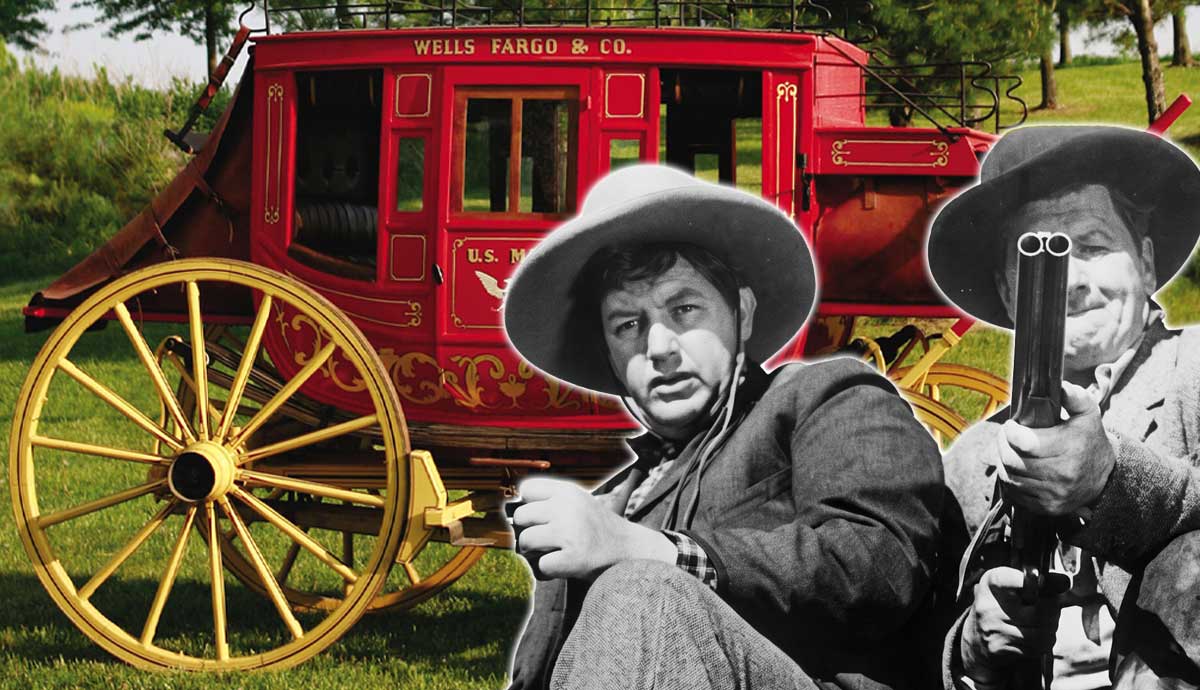
WWW.THECOLLECTOR.COMWhat It Was Really Like to Ride an Old West StagecoachOne of the prevailing images of the Old West is a picture of an enclosed wagon, pulled by four horses, arriving at an old-style frontier hotel with a well-dressed lady or gentleman exiting. Known as a stagecoach, they were one of the primary forms of long-distance transportation both before the railroads and into areas which had not yet been reached by the railroads.Why the First Stagecoaches Transformed Travel in the Old WestHeavy Western concord style stagecoach, from a 2007 auction. Source: Heritage AuctionsStagecoach routes began in the Americas in the mid-1700s as the towns grew in the colonies. As the United States pushed west and made further settlements, stagecoach lines grew to meet the demands of travelers. The US Mail was also a major customer of stagecoach lines, which provided a fast way to deliver mail across the continent. Improving technology and construction of stagecoaches, such as the Concord Stagecoach, increased the speed and usefulness of the system.Why the Legendary Concord Stagecoach Revolutionized Frontier TravelOld West concord style stagecoach. Source: Wikipedia / New York Public LibraryWhen an American pictures a stagecoach, the Concord Stagecoach is probably the one that comes to mind. The Concord Coach, developed in 1827 by the Abbot-Downing Company in Concord, New Hampshire, was a heavy coach, weighing over a ton, which used a particular leather-strap thoroughbrace suspension that made riding at least tolerable over long distances on bad roads. The coaches were ornate and large, with large wheels, and the design was used for over seventy years.How Fast Could an Old West Stagecoach Actually Travel?1860s stagecoach, Nevada. Source: Western Mining HistoryStagecoach travel varied from 5-9 miles per hour, depending on road and weather conditions, and the condition and type of stagecoach. With enough horse changes, a coach could travel about 70-100 miles in a day for a 12-hour ride.How Wells Fargo Monopolized the Frontier Stagecoach IndustryWells Fargo & Company was a business specializing in finance, communications, and transportation, supplying the West with all 3 services in a near-monopoly following the Panic of 1855. Wells Fargo was able to consolidate almost the entire mail delivery system in the Old West by 1866, as well as a majority of stagecoaches, imprinting their name on the collective imagination of Americans for generations.The End of the American Stagecoach EraWestward Ho! by Emmanuel Gottlieb Leutze, 1860. Source: Wikimedia CommonsThe beginning of the end of the stagecoach began in 1861 with the development of the transcontinental telegraph lines and the ability to send messages instantaneously, vastly reducing the need for overland long-distance mail delivery. Upon the completion of the transcontinental railway in 1869, which connected San Francisco to Council Bluffs, Iowa, where the eastern US railway system terminated, the stagecoach effectively became obsolete outside of a few specific uses. Stagecoach travel was significantly more expensive and slower than rail travel, sometimes costing up to ten times the amount, and was more uncomfortable and dirtier than enclosed rail cars. Stagecoaches would still be used to some extent until the automobile became affordable and in wider use in the early 1900s.How Did Frontier Stagecoaches Give Us the Phrase Riding Shotgun?Stagecoach riders with one in the shotgun position. Source: John M. JenningsA couple of modern terms have made their way into modern American slang from stagecoach usage. Hangers-on referred to the stagecoach riders who clung to the outside of the coach during travel, unable to afford the more expensive interior seats. Riding shotgun derives from the position the stagecoach guard rode next to the driver, often carrying a shotgun for protection.The Surprising Truth About Wild West Stagecoach RobberiesStagecoaches were commonly used to move money and valuables across the country until the railroads took over. While the stagecoach robbery is a common subject in westerns, only about 450 robberies occurred among the thousands of stagecoach trips in the Old West. With stagecoaches being easy targets, Wells Fargo and other companies took measures to ensure the safe transport of both passengers and cargo.0 Reacties 0 aandelen 13 Views -
WWW.DUALSHOCKERS.COM8 Best Sports JRPGsI am Brazilian, and if there is one thing that unites my continent more than the World Cup, I don't know what it is. You probably recognize the feeling where everyone, regardless of social class, political stance, or any other difference, is finally united under the same flag, cheering for the team and country - at least, that is how it should be.0 Reacties 0 aandelen 13 Views -
WWW.BGR.COM5 Things You Probably Didn't Know Android 17 Can DoGoogle has already showcased all the cool things that Android 17 can do. Here are some of the best yet underrated features in Android's latest release.0 Reacties 0 aandelen 13 Views -
WWW.BGR.COMCan You Leave Audio Equipment On All The Time?It may be tempting to just leave your audio equipment turned on all the time, but is that a good idea? Here's what you need to know about powering your sound.0 Reacties 0 aandelen 13 Views -
WWW.BGR.COM10 Mini Gadgets That Are Perfect For A Small Home OfficeTurning the home office into a prime workspace involves developing a blend of comfort and efficiency. These mini-gadgets outperform their footprint.0 Reacties 0 aandelen 13 Views -
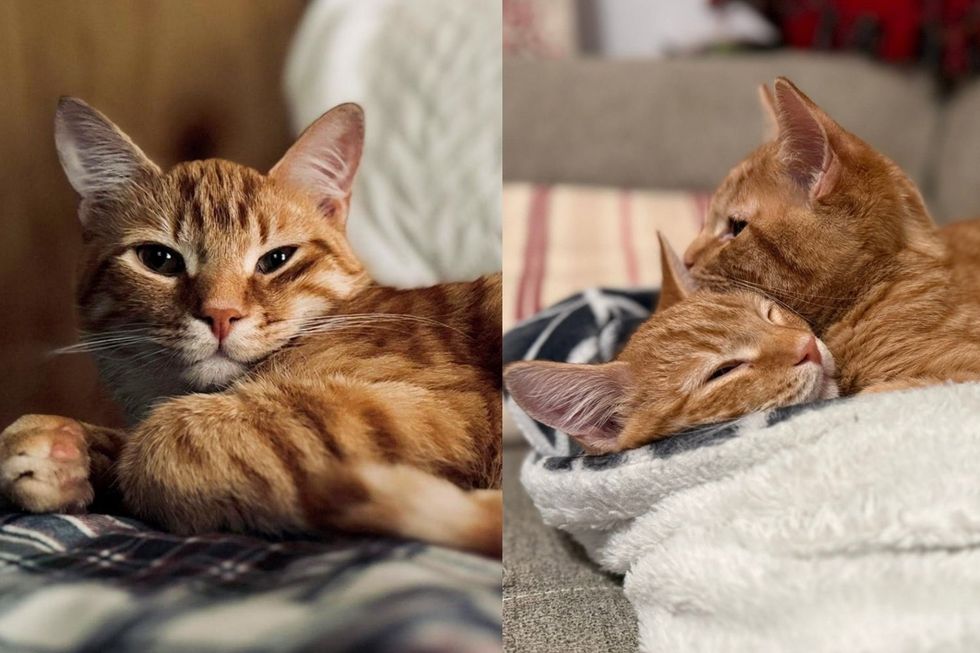
WWW.LOVEMEOW.COMKitten Brothers Who Survived Two Life-Threatening Surgeries Have Decided They Will Only Be Adopted TogetherTwo orange tabby kitten brothers who each survived their own life-threatening surgeries have decided they will only be adopted together. Lemon and TangerineCredit: AMA Animal RescueFour tiny kittens were found as neonatal babies, just days old, after their mother disappeared and never came back. AMA Animal Rescue out of Brooklyn, NY took in the whole litter and began the long work of round-the-clock bottle-feeding.Two of those kittens have already found their forever homes. Lemon and Tangerine, the brothers left behind, grew up close from the very start, the kind of pair who could never quite settle unless the other was nearby.Each of them nearly lost his life before finding a home. Credit: AMA Animal RescueLemon, the bolder of the two brothers, has always been the one tracking every sound in the house, ears pinned forward, determined not to miss a thing.When he is truly happy, he headbutts anything within reach- chairs, hands, his brother's face- and does not seem to notice or care. Credit: AMA Animal RescueTangerine is more easygoing, with a habit of following wherever his brother leads.He also has a habit that makes his foster laugh every time: the moment anyone sits on the floor, Tangerine flops dramatically onto his side, as if standing a moment longer would ask too much of him. Credit: AMA Animal RescueTheir favorite game has always been trying to conquer the tower of storage bins in the laundry room, one boy scaling straight to the top while the other plots his own climb from below.It was the kind of ordinary kitten mischief that made it easy to forget, for a while, just how fragile their beginning had been. Credit: AMA Animal RescueLemon grew into a happy, loving little boy, chasing toys and settling into a normal kitten routine in his foster home.Then his foster noticed something was wrong. He had begun straining constantly to urinate, and what first looked like mild discomfort quickly became alarming. Credit: AMA Animal RescueA trip to the vet brought devastating news. The diagnosis was more serious than anyone had expected."Lemon was born with a severely abnormal urethra. He has almost no opening to pass urine, forcing him to strain painfully every time he tries to go," AMA Animal Rescue discussed with LoveMeow. "This procedure must be done by a board-certified surgeon only." Credit: AMA Animal RescueWithout treatment, the condition could turn life-threatening. Lemon needed a perineal urethrostomy, a surgery that creates a wider opening for urine to pass, along with an additional procedure to correct a related complication that required surgeons to open his abdomen during the same operation.While Lemon recovered, his brother Tangerine seemed fine, until the morning he suddenly was not. He stopped eating and started acting strange, so his foster rushed him to the vet. Lemon (left) : Tangerine (right)Credit: AMA Animal RescueThe news was worse than anyone feared. Tangerine was diagnosed with a severe intestinal obstruction, and whatever he had swallowed was already lodged deep inside him. He was rushed to an emergency hospital, too weak to undergo surgery right away, and doctors placed a feeding tube through his nose to stabilize him."Tangerine swallowed a large piece of a fake plastic plant that became deeply lodged in his intestines," AMA Animal Rescue said. "The blockage was so severe that surgeons had to remove a portion of his intestines." Credit: AMA Animal RescueEach boy pulled through his own surgery on his own timeline, not side by side but separately, and eventually, two brothers who had each faced down their own emergency were ready for the next chapter.Tangerine's story is a good reminder for anyone with young kittens at home. Kittens explore the world mouth-first, and ordinary household items like string, rubber bands, and artificial plants can turn into a life-threatening emergency if swallowed. Swapping out artificial plants for pet-safe alternatives is one of the easiest precautions a cat household can take. Credit: AMA Animal RescueThey were fully vetted and placed into a foster home together, gentle, affectionate, and easygoing from day one. Cuddling, lounging, and staying within arm's reach of each other quickly became their full-time occupation.Now nearly grown, Lemon and Tangerine still do everything together, eating together, playing together, napping together, and generally staying attached at the hip. They have a way of sleeping with their heads tucked against one another, so close it can be hard to tell where one brother ends and the other begins. Credit: AMA Animal Rescue"If you adopt Lemon without Tangerine, we're pretty sure they'll be filing a formal complaint," AMA Animal Rescue joked. "These two have been inseparable since they were tiny kittens found on the streets as newborns."Even with an entire couch to choose from, they tend to end up on neighboring pillows, just inches apart, each keeping half an eye on the other.Lemon and Tangerine are healthy, inseparable, and living together in Brooklyn, as close as they have ever been. Credit: AMA Animal RescueShare this story with your friends. Follow AMA Animal Rescue on Instagram @amaanimalrescue, Facebook, or YouTube @amaanimalrescue to learn more about Lemon and Tangerine.Related Story: They Take in 2 Kittens in Need, From the Very Beginning, the Cat Brothers Clearly Belong TogetherLoveMeow may earn a small commission from purchases made through links in this article at no additional cost to you.0 Reacties 0 aandelen 14 Views -
YUBNUB.NEWSWATCH: Sen. Mike Lee Urges Immediate Passage of SAVE America Act to Honor Sen. Lindsey Grahams LegacyUtah Sen. Mike Lee called on Senate Republicans to immediately advance and pass the SAVE America Act in honor of the late Sen. Lindsey Grahams final push for the legislation, describing it as one of0 Reacties 0 aandelen 13 Views