0 Comments
0 Shares
34 Views
Directory
Elevate your Sngine platform to new levels with plugins from YubNub Digital Media!
-
Please log in to like, share and comment!
-
YUBNUB.NEWSBreaking: Graham Platner Officially Ends Senate Run on Vulgar Note 'F**k ICE. Free Palestine.'All of you mean conservatives won't have Graham Platner to kick around anymore, as he's just officially dropped out of the Maine Senate race. He detailed his withdrawal in a letter dated Friday to Maine0 Comments 0 Shares 34 Views -
YUBNUB.NEWSNew Courtroom Video Allegedly Shows Charlie Kirk's Killer Taking the ShotOn Friday, Turning Point USA (TPUSA) contributor Jack Posobiec, in an on-the-spot interview with Turning Point USA's Taylor Hansen, gave some vivid details of another video shown in the preliminary hearing0 Comments 0 Shares 34 Views -
YUBNUB.NEWSWhen Housing and Immigration CollideThere was a pretty meaningful number that came out during the week of the Great American State Fair, and I didn't get to it with everything else going on. But with today's great discussion in the comments0 Comments 0 Shares 34 Views -
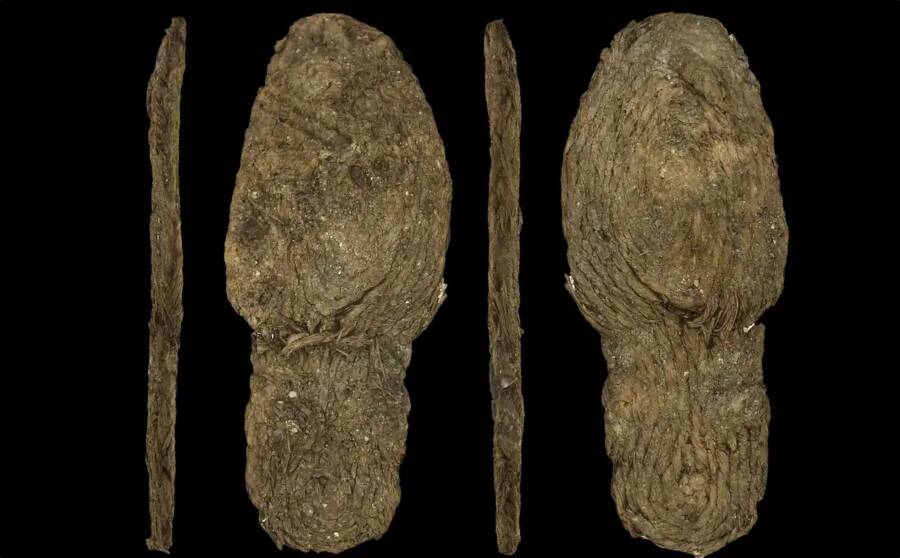
ALLTHATSINTERESTING.COM2,000-Year-Old Roman Sandals Were Just Found In Stunning Condition At An Ancient Mine In SpainUniversity of GranadaFound at the Urium mining site in Minas de Riotinto, these astonishingly well-preserved pieces of footwear were made with esparto grass between 2,000 and 2,400 years ago.Archaeologists just found ancient sandal soles made from braided esparto grass at the remains of a former mine in southwestern Spain and some date back a whopping 2,400 years.Researchers said that the discovery, which remains unparalleled in the Iberian peninsula, shows how footwear traditions in the region stayed consistent between the Iron Age and the Roman era.The Discovery Of Sandals Worn At The Urium Mine Some 2,000 Years AgoThe discovery and analysis of the sandal soles was recently described in the journal Pyrenae by a team of University of Granada researchers.The eight pieces of footwear were found in Nuevo Filn Norte 1 sector of the Urium mining site in the town of Minas de Riotinto. The Urium mine is a part of a large complex of ancient Roman mines.Bustamante-lvarez, M. et al. 2026The sandals were found in the Nuevo Filn Norte 1 sector of the ancient Urium mining complex in southwestern Spain.Researchers unearthed the pieces from two piles of ash the result of cleaning the furnaces used in the mines to extract the metals in their purest form. The ash played a crucial role in keeping the sandal soles well-preserved and defending their plant fibers from decay by maintaining a dry and highly alkaline environment. This rare preservation of the sandals organic material allowed for an unprecedentedly detailed analysis of ancient footwear this old.This organic material consisted of braided esparto grass (Stipa tenacissima), a strong but flexible plant that is abundant in southwestern Spain.Researchers at the site also found mining tools like ropes and baskets made from these same plant fibers, and they were likewise well preserved due to the sites specific environmental conditions.Bustamante-lvarez, M. et al. 2026The researchers were able to recreate the manufacturing process of the sandals, revealing their fine craftsmanship.Researchers noticed that the soles of the sandals showed wear and tear in the forefoot and heel areas, and that most of the sandals were missing the cords that secured them to the foot. All of this suggests that the sandals were worn for long periods, and only discarded once they began to fall apart.After conducting carbon-14 dating on three of the sandals, the researchers determined that they came from three different time periods. One piece is from the 1st century C.E., one is dated to between the 2nd and 1st centuries B.C.E, and the oldest is from somewhere between the 4th and 2nd centuries B.C.E.What This Discovery Reveals About Ancient Footwear In Roman HispaniaThis discovery represents one of the largest collections of Roman-era footwear made from plant fibers thats ever been found in the Iberian Peninsula. Now, researchers hope that theyll be able to compare this find to ancient artifacts unearthed at other mining sites elsewhere in ancient Hispania.For now, this find is allowing researchers to uncover the ancient techniques that people in the Iberian Peninsula used to craft various goods from esparto grass. Furthermore, these discoveries are revealing that certain footwear traditions were used in these mines across many centuries, from the Iron Age and into the Roman era.Bustamante-lvarez, M. et al. 2026Some are missing the straps that secure the sole to the foot and others show heavy wear on the heels, but these sandals otherwise look almost exactly as they did when these mines were operational some two millennia ago.The use of esparto grass in ancient contexts is difficult to analyze due to the fact that it rarely survives over thousands of years. But this new find allows researchers to see how esparto was used day in and day out in ancient Hispania.Researchers were even able to reverse engineer the manufacturing process used to make these sandals a process that required an advanced level of technical knowledge.The analysis revealed that the sandals were constructed according to a specific, consistent plan wherein the strongest and thickest ropes were used for the parts that would withstand the most pressure, while the thinner cords were used for tying those parts together. This suggests to researchers that skilled craftsmanship and a deep knowledge of esparto grass were needed to make these sandals.This level of craftsmanship stayed consistent across several centuries in these mines, as the same types of soles stayed in use for hundreds of years, from the Iron Age to the Roman era.While archaeological work in these ancient mines will now continue, researchers have already made important headway in understanding the everyday life of a miner in ancient Hispania.After reading about the discovery of eight sandal soles in an ancient mine in Spain, learn about the oldest shoes found in Europe. Then, discover this Roman shrine to Minerva found in an ancient Spanish quarry.The post 2,000-Year-Old Roman Sandals Were Just Found In Stunning Condition At An Ancient Mine In Spain appeared first on All That's Interesting.0 Comments 0 Shares 34 Views -
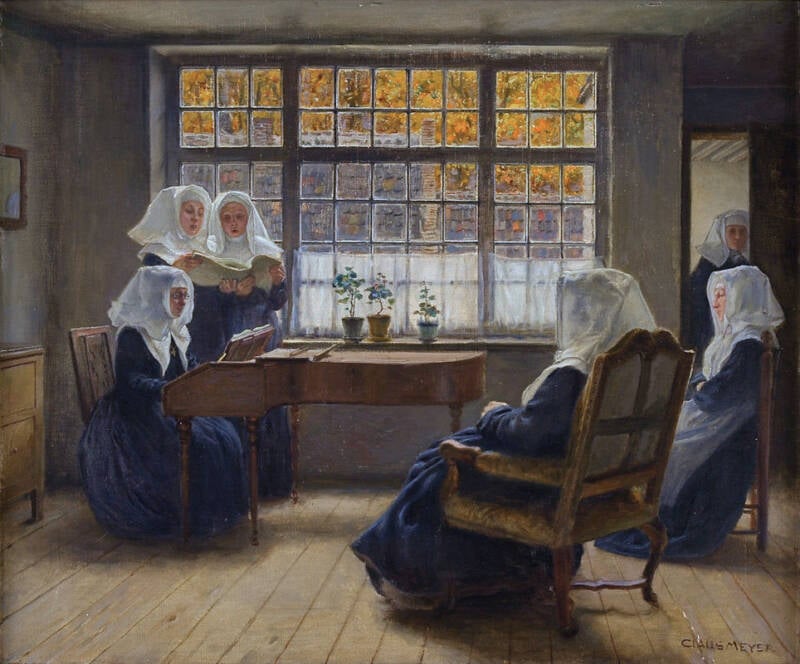
ALLTHATSINTERESTING.COMMost Medieval European Women Could Either Marry A Man Or Become A Nun. Then They Found A Third OptionPublic DomainMusic Lesson in the Beguine Courtyards, an early 20th-century painting by German artist Claus Meyer.Contrary to popular belief, women in Europe were engaged in many different parts of the workforce throughout the Middle Ages. They worked in agriculture, domestic services, textile production, brewing, and family businesses. Some even managed properties and businesses entirely by themselves.However, many of these freedoms were only afforded to women if they were widows or of a certain class. For the most part, once a woman reached a certain age, she was effectively given two options: marry or become a nun.But these two paths were not for everyone. Some women at the time realized this and decided to forge a path of their own.Beguines, The Holy Women Of Medieval EuropeIn a video with over 312,000 views, TikTok user Neloo Naderi (@neloonaderi) explains the history of the Beguines.As told by Naderi, beginning in the 1200s, some women began to choose a life that did not involve fully committing themselves to a man or to the church.Across cities like Bruges, Gent, and Antwerp, many women began communities known as beguinages,' Naderi explains. The women who lived there were called Beguines. They built small homes gathered around shared courtyards and gardens.Public DomainAelfred Faheys 20th-century depiction of a Beguine praying.These women connected with their communities and earned a living by doing things like weaving cloth, nursing the sick, and teaching children. When not working, they would live in and care for their beguinage, which was typically composed of houses, churches, other buildings, and green spaces.Beguines pledged to remain chaste while living in the community, but, unlike nuns, they were not bound by an irrevocable vow. While nuns were committed to a life of poverty, Beguines could retain houses and property. And if a Beguine ever wanted to leave the beguinage and get married, she was free to do so.For many women in medieval Europe, this created something entirely new: a life of faith, work, and community, without fully surrendering their independence, Naderi shares.But this path wasnt always easy.A Challenge For The BeguinesThroughout the 13th century, beguinages began popping up across Germany, northern France, Belgium, and the Low Countries. But while these places could be liberating for the women involved, some people felt threatened by this practice specifically, members of the church.This fear culminated in the Council of Vienne, which took place between 1311 and 1312. At this time, certain Beguine groups were accused of holding beliefs that promoted something called Heresy of the Free Spirit, according to the book The Beguines of Medieval widnica. As such, they were accused of ensnar[ing] many simple people, leading them into various errors. And, by linking themselves with the Church, they generate[d] numerous other dangers to souls under the cloak of sanctity.Public DomainPope Clement V summoned the Council of Vienne in 1311 to address religious concerns like the Knights Templar and enact sweeping changes in the Catholic Church.One of the people affected by the crackdown on Beguines was Marguerite Porete. Porete was a French mystic and the author of a book called The Mirror of Simple Souls, which suggested that a person whose soul was truly filled with love for God could essentially unite with Him. She was placed on trial for heresy and burned at the stake in 1310, and most copies of her book were destroyed. These events put pressure on Beguines to disband, but this didnt happen immediately.What Happened To The Beguines?This pressure from the Church wasnt enough to get rid of the Beguines completely. Indeed, many felt that their practice was exempt from the Churchs strict ruling.Within the ruling was a carveout. A papal bull issued by Pope Clement V after the Council of Vienne read, Of course we in no way intend by the foregoing to forbid any faithful women, whether they promise chastity or not, from living uprightly in their hospices, wishing to live a life of penance and serving the Lord of hosts in a spirit of humility. This they may do, as the Lord inspires them. Some Beguines felt that this accurately described their practice. Thus, they were free to continue living their Beguine lives and they happily did.But if this is the case, why did the Beguines fade away?Herman.vandenbroeck/Wikimedia CommonsA former beguinage in East Flanders, Belgium.It wasnt like the Beguines vanished overnight. Instead, a gradual dismantling took place. After the Council of Vienne, many Beguines felt threatened and, without a central authority to assist them, decided that they should end the practice for their own safety. For some, this meant completely leaving the lifestyle; others simply became affiliated with other communities, such as the Dominicans or the Franciscans.Over time, greater societal change made life as a Beguine less sustainable. Broad religious transformations meant that women were gaining more freedom without the need to join beguinages. This, in addition to added pressure from French occupation that abolished their communities and confiscated their goods, made it difficult for their lifestyle to continue.That said, the Beguines lasted longer than one might think. Many beguinages are still standing, with some marked as UNESCO World Heritage sites. Not only that, but the woman believed to be the last Beguine didnt die until 2013 showing that this practice offered something tangible to those who followed it for centuries. @neloonaderi In medieval Europe, women were expected to marry a man or become a nun. But thousands quietly chose something different. They built communities called Beguinages places where women could live lives of faith, work, and independence. Some of these communities lasted for centuries. @manesse.madness (instagram) @esoterica (YouTube) @mariaoliveira art (instagram) #Wonder #HistoryTok #HiddenHistory #WomenInHistory #MedievalHistory Mountain Breath Celestial Symphony & cinematic atmosphere All Thats Interesting reached out to Naderi via email and Instagram direct message.After learning about the Beguines of medieval Europe, go inside the story of Pope Joan, the alleged female pope. Then, read about the Catalina de Erauso, the cross-dressing warrior nun of 17th-century Spain.The post Most Medieval European Women Could Either Marry A Man Or Become A Nun. Then They Found A Third Option appeared first on All That's Interesting.0 Comments 0 Shares 34 Views -
WWW.DUALSHOCKERS.COMTime-Travel Tactics RPG Gets Atomic Heart CrossoverMundfish probably wasn't expecting Atomic Heart to produce this many spin-offs when it released the retrofuturistic shooter in 2023, but what seemed even less likely then was a seamless crossover with a turn-based tactics RPG.0 Comments 0 Shares 34 Views -
TECHCRUNCH.COMMeta removes controversial AI feature on Instagram after backlashMeta told Dylan Byers, of Puck News, that it had nixed the feature after backlash from its user base.0 Comments 0 Shares 34 Views -
Über Zenless Zone Zero und Zenless Zone Zero Monochrom Zenless Zone Zero Monochrome Film(https://www.lootbar.com/de/top-up/zenless-zone-zero?utm_source=blog ) ist die exklusive Premiumwährung, mit der sich Polychrom für Signalsuchen, Masterkassetten und den Erwerb seltener Agenten oder W‑Engines effizient aufladen lässt.
Dank der 1:1‑Umwandlung entfaltet sie ihr volles Potenzial beim Freischalten von Cinema‑Szenen und beim gezielten Beschaffen von Ressourcen wie Denny.
Um sicher und günstig an Zenless Zone Zero Monochrome Film zu gelangen, bieten sich spezialisierte Aufladeplattformen wie das LootBar‑Zentrum oder andere vertrauenswürdige Spielehandelsplattformen an.
Warum Zenless Zone Zero Top Up bei LootBar?Über Zenless Zone Zero und Zenless Zone Zero Monochrom Zenless Zone Zero Monochrome Film(https://www.lootbar.com/de/top-up/zenless-zone-zero?utm_source=blog ) ist die exklusive Premiumwährung, mit der sich Polychrom für Signalsuchen, Masterkassetten und den Erwerb seltener Agenten oder W‑Engines effizient aufladen lässt. Dank der 1:1‑Umwandlung entfaltet sie ihr volles Potenzial beim Freischalten von Cinema‑Szenen und beim gezielten Beschaffen von Ressourcen wie Denny. Um sicher und günstig an Zenless Zone Zero Monochrome Film zu gelangen, bieten sich spezialisierte Aufladeplattformen wie das LootBar‑Zentrum oder andere vertrauenswürdige Spielehandelsplattformen an. Warum Zenless Zone Zero Top Up bei LootBar?0 Comments 0 Shares 36 Views -
If You're A Beginner Whiskey Drinker These 3 Kinds Can Be The Worst (And What To Pick Instead)If You're A Beginner Whiskey Drinker These 3 Kinds Can Be The Worst (And What To Pick Instead)...0 Comments 0 Shares 49 Views