John Brown the Radical Abolitionist Who Changed America
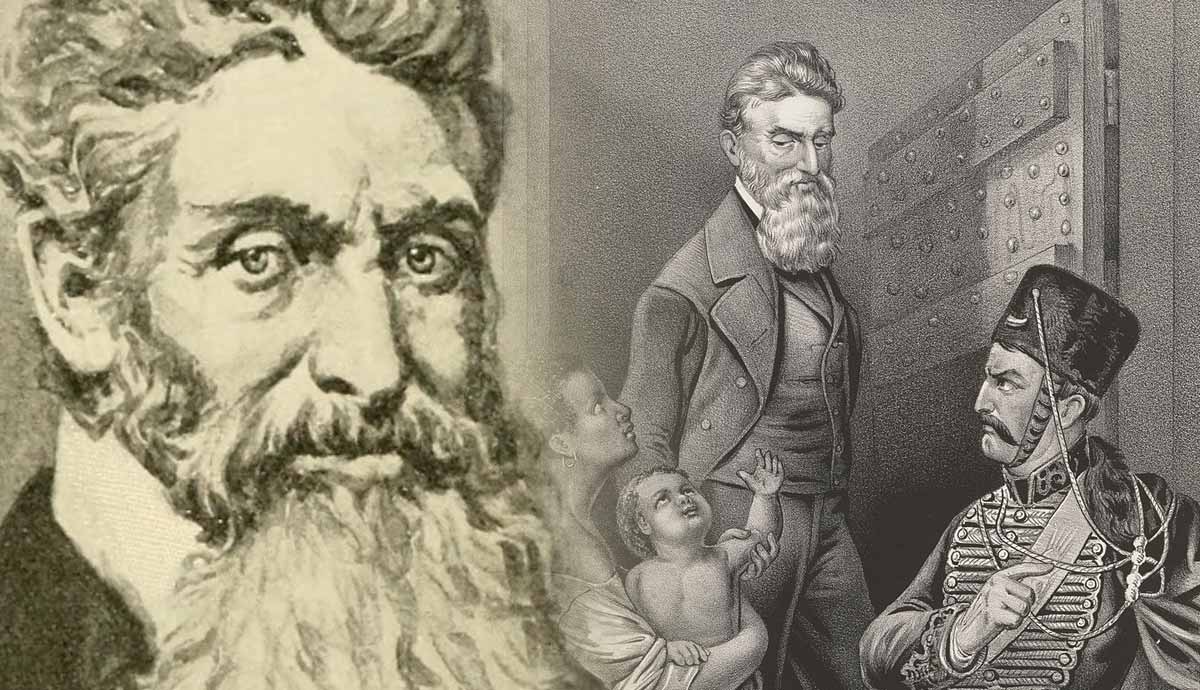
As the 19th century progressed, ripples of unrest began to echo throughout the young country of the United States. Largely relying on the labor of slaves, the country grew powerful and achieved new heights of success and influence on the global stage. However, many were growing dissatisfied with the status quo and sought ways to eliminate the scourge of human bondage from Americas soil. John Brown was one of those who despised the existence of slavery, and he would stop at nothing to see its end.Abolitionist From BirthJohn Brown as pictured in Life and times of Frederick Douglass. Source: Internet Archive Book Images via Wikimedia CommonsJohn Browns fervent dedication to the cause of abolition came as no surprise. He was raised in a family that was staunchly opposed to the idea of slavery. His father, Owen, was a dedicated abolitionist, and the family also held deeply religious views. John was born in Torrington, Connecticut in 1800, but the family moved to Ohio when he was a child.John was a quiet child who often spent time alone, but he was especially close to his mother, Ruth. She died after giving birth to his sister when John was just eight, and he was devastated by the loss. Brown had a rudimentary childhood education before attending preparatory school at age 16 in hopes of attending college. However, he was plagued by eye troubles that made reading difficult, and he eventually gave up his dream of pursuing an education. He returned home to Ohio.A Struggling Family ManA frontispiece of Brown from a book by WEB DuBois in 1909. Source: Wikimedia CommonsIn 1820, John married Dianthe Lusk, a 19-year-old from a family that was just as fervently religious as his own. Throughout their marriage, Dianthe struggled with mental illness, but John supported and cared for her in periods when she was unwell. John referred to Dianthe as a positive influence in his life, and the pair had seven children, though not all would live to see adulthood. Just like they had taken his mother, complications from childbirth would steal Johns wife. She died at age 31, shortly after giving birth to their seventh child.After Dianthes death, John hired a housekeeper to help him maintain his home and care for his five surviving children. He was soon taken with his housekeepers sister, Mary Ann Day. Mary was just 17 when the pair married in 1833. Not only did Mary help John raise his children by Dianthe, but she also gave birth to 13 of her own. Of Browns 20 children, only eleven would see adulthood.Three of Browns sons, Jason, John Jr., and Owen, in 1888. Source: Pasadena Digital History/Wikimedia CommonsDuring his early adulthood, John Brown struggled with his health and finances. He suffered through periods of unknown illness and fever. Brown tried several occupations, opening a tannery, becoming a sheep farmer, working as a merchant, and speculating on land. None of his chosen professions netted much profit, and while in his 40s, he filed for bankruptcy. Despite his lack of funds, Brown invested in causes he believed in and spent his time becoming more involved in supporting them. Most of the groups and efforts he supported were related to the cause of abolition and bringing about a permanent end to slavery in America.Dedicated to the CauseJohn Brown pictured in an 1897 book. Source: Library of Congress via Wikimedia CommonsBrown helped finance a number of anti-slavery publications, including David Walkers Appeal, which was considered wildly radical for the time. He participated in the Underground Railroad and even gave land to escaped slaves. In 1851, he helped create the League of Gileadites, an organization dedicated to protecting fugitive slaves from those pursuing them. It seemed that as time went on, Browns fervor for the cause of abolition only increased. Browns family moved around to different locations that helped facilitate his work, including North Elba, New York, which was a community of Black freedmen.Walkers Appeal. Source: Wikimedia CommonsBrown met and associated with a number of prominent abolitionists in his work, including Gerrit Smith, who was responsible for the establishment of North Elba. He also met former slave and famous abolitionist Frederick Douglass. The pair first met in 1847, and Douglass marveled at how Browns dedication to the cause was as if Browns own soul had been pierced by the iron of slavery, despite the fact that he was a white man.A depiction of Brown and Douglass in discussion by Jacob Lawrence. Source: National Archives at College Park via Wikimedia CommonsIn 1855, Brown became aware of an issue that was heating up on the national stage. The Kansas-Nebraska Act became law in 1854, which allowed new states that were courting admission to the union to decide the issue of slavery within their borders by vote. A popular vote in the state would determine its status as a free or slave state.The issue was especially contentious in Kansas, where a series of events later known as Bleeding Kansas resulted in violent conflict caused by this decision-making. Brown felt compelled to join the abolitionist cause in Kansas. Along with five of his sons, he headed to Kansas territory.He led and participated in a number of bloody attacks in the name of abolition, from retaliatory attacks to nighttime raids. These skirmishes resulted in deaths on both the proslavery and antislavery sides of the question. He took his guerilla style of warfare to Missouri, where his men killed an enslaver and freed 11 slaves.John Brown of Osawatomie by Nahum Ball Onthank. Source: Wikimedia CommonsBrown also spent time in New England, the home of the abolitionist movement, where he made the acquaintance of several prominent figures who took an interest in his activities. Though he was unafraid of violence and thus too radical for some within the movement, he had many supporters within the community, including Franklin Sanborn and Henry David Thoreau. With financial support from some of these friends, Brown began outlining a plan that he hoped would allow the cause to take another step closer to becoming reality.Harpers FerryHarpers Ferry in 1859. Source: Frank Leslies Illustrated News via Wikimedia CommonsBrown set his plan into motion in July 1839. He, along with several supporters, leased a farm near Harpers Ferry, Virginia (now West Virginia) using an assumed name. They spent their time studying the town, its people, and most of all, the workings of the local federal armory. Brown finalized his plan over the following months, and on October 16, Brown and his small army of supporters raided the armory, intending to seize weaponry and start a slave rebellion.The plan did not achieve Browns goals but instead resulted in the deaths of 16, including ten of Browns men. Brown was arrested and imprisoned. His trial began on October 27, and the proceedings captured the attention of the nation. The trial lasted for five days, and at its conclusion, Brown was found guilty of murder, treason, and inciting a slave rebellion. He was sentenced to death. Brown, who was grievously injured during his surrender, was bedridden for much of the trial, but the statements he made during it impacted the nation as pre-war tensions grew. John Brown was hanged on December 2, 1859.Martyr? Terrorist? Hero?A lithograph titled John Brown-The Martyr. Source: Library of Congress via Wikimedia CommonsThe statements that Brown made during his trial propelled him to fame, not only among those who were dedicated to the cause of abolition but also among the general public. He spoke eloquently of his motivations and pleaded antislavery ideas. Browns violent actions, especially those against the federal government, had lost him a great deal of support, even among fellow abolitionists, but his candid words in the courtroom brought former supporters back into the fold and convinced many that his ideals were worth fighting for.While the slaveholding class still considered him a reckless terrorist, perhaps insane, Brown refuted any suggestions of an insanity defense and insisted he was in his right mind. To those of the antislavery faction, Brown was a hero, someone who was willing to stand up for his values, even at the cost of his own life. In some eyes, this made him a martyr, willing to die to propel his cause forward. Famous people like Henry David Thoreau wrote of Browns plight, calling him the most authentic American and abolitionist, as he walked the walk and was truly committed to his values. Centuries later, Brown is still a divisive figure, escaping any definitive categorization.The Legacy of John Browns WorkJohn Brown in Prison by Thomas Hovendon. Source: Metropolitan Museum of Art via Wikimedia CommonsAmerica in John Browns day was rife with tension, particularly over the issue of slavery. Though Brown did not accomplish what he set out to do at Harpers Ferry, his actions helped further the deepening division that would soon turn into a complete split as the country fell into Civil War. Though Brown cannot be blamed for singlehandedly starting the war, his planned raid, along with the public coverage of his trial, furthered the countrys progression toward it.A monument to Brown was erected at his farm in North Elba, New York in 1896. Source: K.F. McClellan via Wikimedia CommonsA controversial figure even today, John Brown played an undeniable role in the development of Americas history. The questions that he forced the government and its citizens to consider disrupted the tradition of quiet discussion about controversial issues. Whether his actions were right or wrong, his life impacted the creation of modern America.











 English
 Arabic
 French
 Portuguese
 Deutsch
 Turkish
 Dutch
Dutch
 Italiano
 Russian
 Romaian
 Portuguese (Brazil)
 Greek
Greek