Where Is the Bridge Over the River Kwai? (Thailand in WWII)
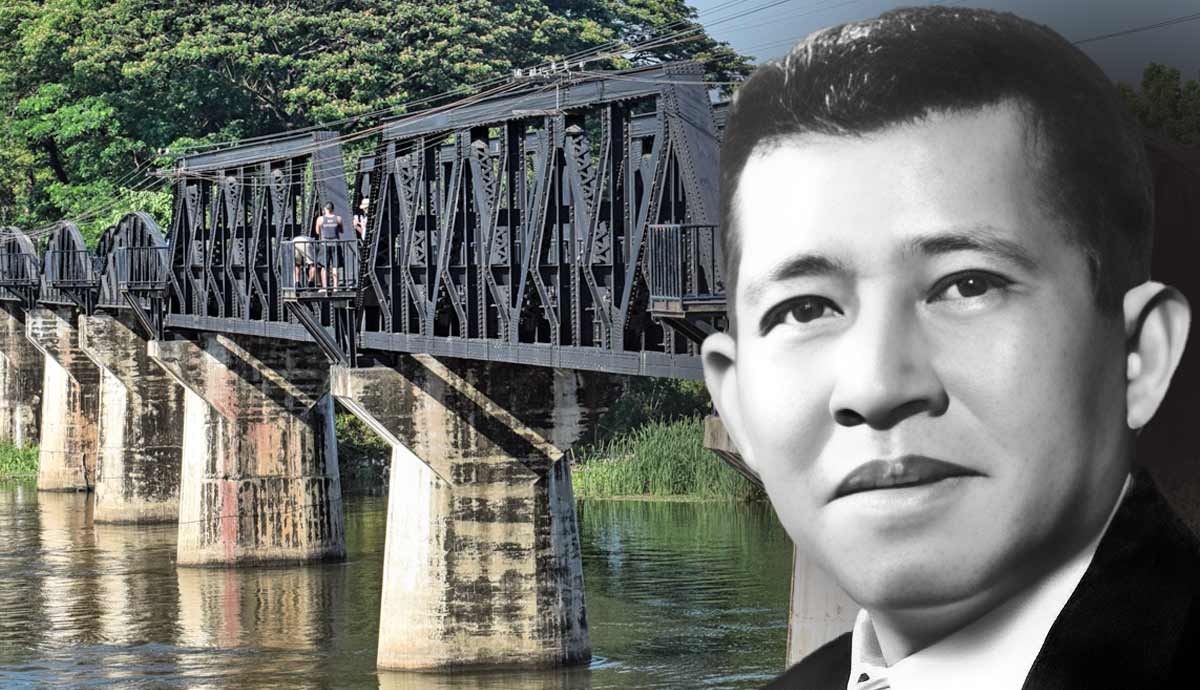
In addition to the major Axis powers of Germany, Japan, and Italy, several smaller states assisted the Axis alliance in their policies of conquest and occupation. From 1941 to 1945, Thailand assisted Japan in its attacks on Malaya, Burma, and Singapore. The country became a major hub of Axis activity, hosting Japanese troops and Allied prisoner-of-war camps, but Thailands best-known contribution to the Second World War was the Bridge over the River Kwai, part of the notorious Burma Death Railway.Field Marshal Phibun: Thailands Wartime LeaderField Marshal Plaek Phibunsongkhram, aka Luang Phibunsongkhram, 1939. Source: Pacific Atrocities EducationIn 1938, the nationalist Thai army officer Luang Phibunsongkhram took power as part of an effort to sideline the Chakri dynasty, which had been ruling the country since the 1780s. Originally known as the Kingdom of Siam, in 1939 Phibun changed the name of his country to Thailand after the predominant language and ethnic group in the country. A supporter of fascism, Phibun saw Hitler, Mussolini, and Tojo as role models and sought to transform Thailand into a fascist state under his leadership. The policies he pursued were known as Thaification.Phibun believed that the Thai economy and upper class was dominated by ethnic Chinese who acted as parasites. The resentment Chinese Thais faced from other Thai peoples was reminiscent of the hostility that Jews faced in Germany and Austria before the Second World War. When Chinese-owned businesses in Thailand began a boycott of Japanese goods in protest to Japans invasion of China in 1937, Phibun used the boycotts as an excuse to take over these businesses in the name of national security. He claimed that the Thai economy was harmed by boycotting Japan. He also pursued education policies to promote the concept of Greater Thailand, a territory encompassing neighboring states such as Laos, Cambodia, Malaya, and Burma.Phibuns admiration of Japan did not immediately mean an alliance between the two countries. Thailand had close relations with a number of other actors in the region and did not sign the Tripartite Pact like other fascist countries. However, the Thais did act on their irredentist impulses by invading French Indochina in 1940. Phibuns government aimed to control disputed territories in what is today part of Laos and Cambodia. This war ended in Thai victory, and the annexed territories were named Phibunsongkhram province in the prime ministers honor.Thailand at the Start of WWIIThai troops fighting in the Burma Campaign, 1943. Source: Wikimedia CommonsJapanese leaders had long spoken of Greater East Asia Co-Prosperity Sphere, a euphemism for its imperial ambitions. Thailand shared a desire with Japan to be a strong Asian power, but feared Tokyo would invade and colonize its territory. In the immediate aftermath of the Pearl Harbor attack, the Japanese ambassador to Bangkok visited Phibun and insisted Thailand join the Axis war effort against the Allies in Southeast Asia. When the Thais declined, Japanese forces invaded the country. Five hours later, Phibun signed a ceasefire and made an alliance with Japan.Phibun faced internal opposition from some ministers for his decision to become an ally of Japan. Foreign minister and fellow revolutionary Pridi Banomyong in particular opposed this course. Phibun responded by purging his cabinet of any pro-Allied minister and replacing all of them with pro-Japanese officials. He then ordered Thai forces to assist the Japanese with the planned invasion of Burma at the end of 1941. When Japans army drove the British and Chinese armies out of Burma and set up an occupation regime, the Thais assisted by seizing a border region known as Saharat Thai Doem or United Former Thai Territories.When Japanese forces drove south into Malaya and towards Singapore, Thailand assisted by supporting Japanese supply lines. Phibun hoped to seize control of territories in northern Malaya, which was controlled by the British before the war. Japans capture of Singapore confirmed its military dominance in the region.The Free Thai MovementFree Thai Movement Patch. Source: CIA MuseumWhen Phibun declared war against the Allies in January 1942, he angered other Thai officials, many of whom were aligned with the US and the British. Pridi, purged by Phibun after his criticism of Japanese policy, quietly began to form a resistance organization devoted to helping the Allies win the war. This organization was formed by members of the Thai military, foreign ministry, and Thais living in the West, and became known as the Free Thai Movement.Even though the United States did not declare war against Thailand in 1942, unlike the United Kingdom, both the Americans and the British agreed to target Phibuns regime. The Allies did not realize that there was an underground movement directed against Phibun until 1943 because the Chinese did not support an Allied presence in Thailand until then. Chiang Kai-sheks government feared that the Thais would assist Japanese forces in their invasion of mainland China. The Office of Strategic Services (predecessor to the CIA) and the British Special Operations Executive had to make do with limited intelligence and resources in the country until Chiang relented.Thai students in the United States and Great Britain faced a quandary. They mostly opposed their governments actions but they also were considered enemy aliens, especially in Britain. Thai officials in exile fought for these students rights and hoped to get them involved with the Free Thais. The OSS and SOE agreed to train many of them to be spies, saboteurs, and commandos. Washingtons and Londons interest in Thailand grew as the Pacific War turned in the Allies favor.The Bridge Over the River KwaiThe Bridge over the River Kwai. Source: Commonwealth War Grave CommissionThailands main contribution to the Axis war effort was to give permission for the construction of the Thailand-Burma railway in its territory. This railway was aimed at ensuring that Japanese troops on the Burma-India border were properly supplied. Nicknamed the Burma Death Railway, it was constructed by Allied POWs and conscripted laborers from all over the empire against their will. From 1942 to 1943, 60,000 Allied POWs and 200,000 civilian laborers (known as Rmusha) from all over Japans empire were herded into a valley where the Japanese and Thai officers forced them to construct a railway through some of the most hellish terrain on earth.The railway extended over 420 miles through jungles and mountains from Ban Pong in Thailand to Thanbyuzayat in Burma, where it connected to the Burmese rail network. Part of the construction included a bridge over the Khwae Yae River in Thailand and carving through a valley known as Hellfire Pass. The toll for workers on this railway was horrendous. When the project was stopped in late 1943, 16,000 Allied POWs and 90,000 Rmusha perished. The railways construction was of limited utility due to the difficult terrain and the general lack of supplies available to the Japanese army. The famed bridge was blown up by an Allied air raid in 1944.Despite some efforts by the Free Thais to assist the workers and POWs, the Thai government proved complicit. Phibuns regime provided funds and green-lighted the construction of the railway. Bangkoks decision to support this project meant that it was implicated in the war crimes that took place there.Allied Air Raids Over ThailandRAF B-24 Liberator bombing the Klong Phasi Charoen canal in Bangkok, 1945. Source: Australian War MemorialDue to the large-scale Japanese troop presence in Thailand, Allied air raids began in earnest in early 1942. Regardless of Americas lack of a declaration of war against Thailand, the USAAF took part in these air raids too. The raids took place all over the country but were mainly directed at Bangkok because of the large number of military targets in the city. B-24 bombers launched raids from India against Japans communications infrastructure and airfields. The arrival of more Allied planes meant that the Japanese struggled to stop the raids and the frequency of these attacks increased as the war went on.The port of Bangkok was a major target because of its utility and importance to the Japanese war effort. Japan brought much of the supplies it needed for its Burma army through this port. The Allies even tested guided bombs on targets in and around Bangkok. The raids were effective in slowing down Japanese operations in Burma and caused damage. Civilian casualties are estimated to number in the thousands.The Royal Thai Air Force was supposed to help the Japanese stop the air attacks as part of the alliance between Bangkok and Tokyo. While Thai aircraft did shoot down Allied planes, they began cooperating with the Allies in 1943. Group Captain Tevarit Panleuk, the force commander, was a Free Thai. He ordered the air force to not attack Allied planes and even facilitated Allied bombing raids by providing them with a list of targets.End of WWII in ThailandPhotograph of Pridi Banomyong, 1945. Source: Wikimedia Commons / Thammasat University ArchivesBy 1944, it was clear that Japan was heading for defeat in the war. Its invasion of India had been a disaster and it was being forced back on most fronts. Tokyo began treating the Thais less as allies and more as a colonized people. The Thai government had failed to address destructive floods in 1942, and the local population resented the significant Japanese presence. These failures, combined with the rising strength of the Free Thai Movement, meant that Phibuns days in power were numbered.In the summer of 1944, Phibun was forced to resign by the Thai National Assembly. The new prime minister, Khuang Aphaiwong, was a Free Thai who had previously served as a minister in Phibuns government. Real political power was in the hands of Pridi, regent in the name of the teenage king Ananda Mahidol, who was studying in Switzerland at the time. While the government did not formally withdraw from the alliance with Japan, it was far less cooperative than Phibun had been. The military, which had been divided in its loyalty between Pridi and Phibun, agreed to respect the evolving political situation.Indian Army Gurkhas in disarming Japanese troops in Bangkok, 1945. Source: Imperial War Museum (UK) ArchivesAfter China relented, the OSS and SOE established missions in Thailand to help POWs and target Japanese garrisons. The Free Thai movement received more aid and reinforcements thanks to increased Allied support. Additionally, the collapse of Japanese forces in Burma meant that a pending invasion of Thailand was near. Fortunately for the Thais, the end of the war spared their country from becoming a total battleground.After the war, Thailand faced a brief reckoning. The War Criminals Act of 1945 meant that Phibun and several of his associates were tried by a Thai court for their involvement in the war. This trial collapsed due to political developments in Thailand, where Phibun returned to power in 1948. The UK, US, and France normalized relations on the condition that Thailand return the territories it seized during the war. Thailands involvement in the war is mostly forgotten today in the West with one notable exception: the Bridge over the River Kwai.











 English
 Arabic
 French
 Spanish
 Portuguese
 Deutsch
 Turkish
 Dutch
Dutch
 Italiano
 Romaian
 Portuguese (Brazil)
 Greek
Greek