0 Commenti
0 condivisioni
2 Views
Elenco
Elevate your Sngine platform to new levels with plugins from YubNub Digital Media!
-
Effettua l'accesso per mettere mi piace, condividere e commentare!
-
YUBNUB.NEWSUS Funded More Than 40 Biolabs in Ukraine, Declassified Documents ShowDirector of National Intelligence Tulsi Gabbard talks to reporters in the Brady Press Briefing Room at the White House on July 23, 2025. Chip Somodevilla/Getty ImagesThe United States has helped build0 Commenti 0 condivisioni 2 Views -
YUBNUB.NEWSGabbard Reveals Taxpayers Foot Bill of Biolab ProgramDirector of National Intelligence (DNI) Tulsi Gabbard revealed evidence that U.S. taxpayers foot the bill for more than 120 biolabs across 30 countries. Until now, evidence regarding the full existence0 Commenti 0 condivisioni 3 Views -
America at 250: A History of Independence JubileesAmerica at 250: A History of Independence Jubilees On a summer morning in Philadelphia, a single sheet of parchment changed the world — or at least announced that it intended to. Two hundred and fifty years later, on July 4, 2026, a nation of 340 million people will gather under fireworks and flags to celebrate that announcement, and to argue, as Americans...0 Commenti 0 condivisioni 24 Views
-
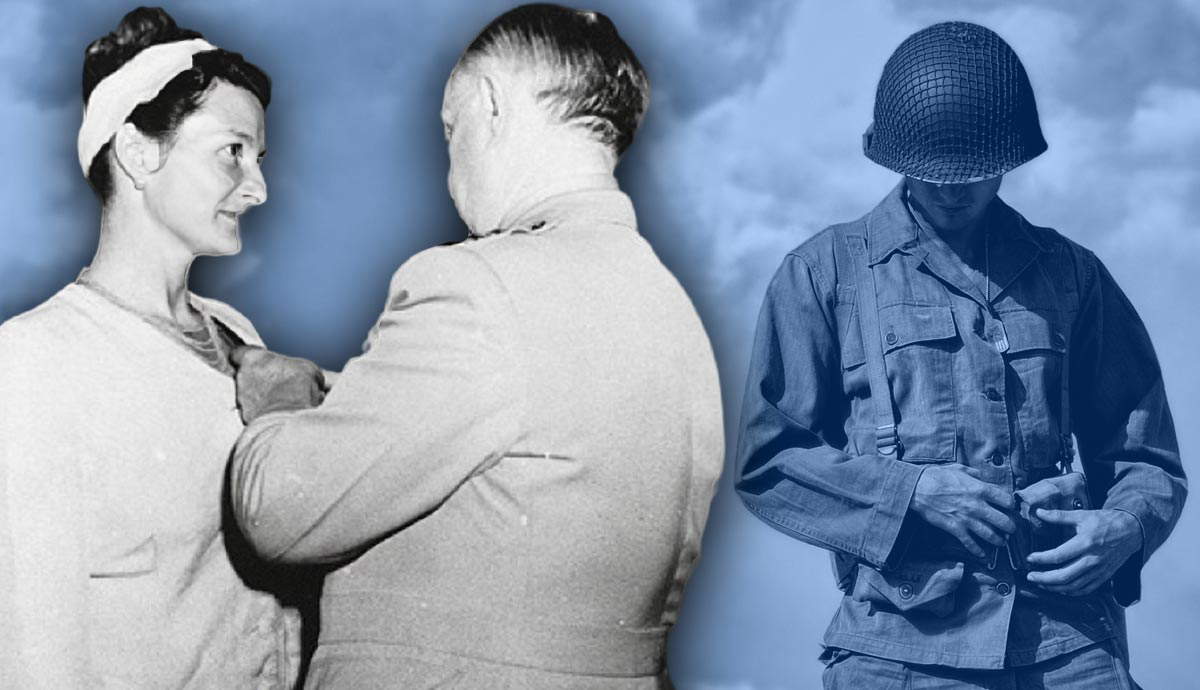
WWW.THECOLLECTOR.COMHow Virginia Hall Built the French Resistance Right Under Nazi NosesVirginia Hall, born into a wealthy American family, served in the British Special Operations Executive in France (SOE) from 1941 to 1942 before joining the United States Office of Strategic Services (OSS). Though her story remained largely hidden until 1970, today, she is recognized as one of the most successful spies of the Allied forces during World War II.Early LifeVirginia Hall before her injury. Source: Heather DemetriosVirginia Hall was born in a wealthy family on April 6, 1906, in Baltimore, Maryland. Her parents were Edwin Lee Hall and Virginia Hammel. Virginia Hall was an intelligent young woman studying French, Italian, German, and economics during different times at Radcliffe College of Harvard University, Barnard College of Columbia University, and George Washington University.From a very young age, Virginia Hall aspired to live in Europe and work for the American diplomatic service. In late 1920, she relocated to Europe and continued studying in Germany and Austria. Eventually, in 1931, she was appointed consular service clerk at the Embassy of the United States in Warsaw, Poland.Virginia was a naturally adventurous person who was constantly seeking out new experiences. She often referred to herself as capricious and cantankerous. Fascinated with nature, she once went to school wearing a bracelet made of live snakes, an episode that highlights her adventurous spirit and courage.After only a few months in Warsaw, she relocated to Smyrna (modern-day Izmir), Republic of Turkey, to work at the United States Embassy. Then, in 1933, a terrible incident would permanently alter her life. She accidentally shot herself in the left leg while hunting for birds, and because of the subsequent medical complications, her limb had to be amputated. Her new leg would be a wooden appendage that Virginia called Cuthbert.Virginia Hall holding a couple of lambs. Source: CIAThe amputation of her leg became a turning point in Virginias life. Sonia Purnell, British writer and author of the book A Woman of No Importance (2019), points out:She had been given a second chance at life and wasnt going to waste it. And her injury, in fact, might have kind of bolstered her or reawakened her resilience so that she was in fact able to do great things.Being disabled, Virginia Hall faced challenges in getting a job as a diplomat. According to the rules of the Department of State, applicants with disabilities could not be hired as diplomatic representatives. Virginia made multiple unsuccessful applications before 1939. In addition to being disabled, she was a woman, and at the time, only six women were serving at American Embassies in Europe out of 1,500 total employees.Becoming a Spy & the Beginning of World War IIPainting of Virginia Hall, by Jeffrey W. Bass, 2006. Source: CIAWorld War II erupted in Europe in 1939. Nazi Germany reached Paris, France, in May 1940. Virginia Hall was in France during this time and decided to volunteer for the ambulance service. France fell to Nazi Germany in June 1940, while Virginia continued to drive wounded French soldiers to different hospitals in the capital city of Paris.Being alone, she applied for the ration cards at the Nazi stations to get food and petrol for transport. Apparently, as a disabled woman and American neutral, she was treated with less caution and more generosity. As a result, Virginia Hall began to seek more ways to help the Allied forces win the war.During this time of uncertainty, she accidentally met with a British agent, George Bellows, while traveling from Spain to London, Great Britain, via train. This small encounter left George Burnell impressed with Virginias courageous personality, intelligence, and aspiration to help Nazi-occupied France. He gave Virginia the telephone number of the head of the F (French) Section from the newly established British secret service, the Special Operations Executive (SOE)Nicolas Bodington. This encounter would play a decisive role in developing Virginia Halls career as a successful spy.Virginia Hall in FrancePhoto of Virginia Hall. Source: CIAAt that time, Nicolas Bodington was building a network of personnel who could build and establish Resistance groups in several Nazi-occupied European territories. Bodington, sensing that Virginia would hold a key place in this endeavor, immediately recommended her for service to his Head of Section.Virginia accepted the offer and joined SOE in April 1941. She underwent a brief and standard period of training and arrived in France in August 1941, disguised as a reporter for the New York Post.The cover enabled her to travel to strategic places, conduct interviews, and ultimately collect information. She relayed all this information to London in the form of newspaper stories. Virginias attempts to collect useful information did not always go smoothly. Indeed, she faced challenges, especially in the early days, when her contacts were frequently arrested or executed.While operating in the city of Lyon in eastern France, she befriended nuns and doctors, the closest one being a doctor named Jean Rousset. Germaine Guerin was another close contact of Virginia. She was the owner of one of the most well-known and popular brothels and shared the information that sex workers collected from Nazi soldiers. Lyon, at that time, was regarded as the center of the French Resistance.Group portrait of a unit of the French Resistance. Source: United States Holocaust Memorial Museum, Washington DCDuring her time in Nazi-occupied France, Virginia assisted in organizing the resistance movement. In particular, she ensured the safety of the resistance members by providing housing, arranging meeting venues and contacts, and providing logistical support.Constantly changing her appearance, Hall proved to be a natural spy, always one step ahead of the German secret police, the Gestapo. Craig Gralley, a former senior officer in the Central Intelligence Agency and a chief speechwriter for three CIA directors, remarked:Virginia Hall, to a certain extent, was invisible. She was able to play on the chauvinism of the Gestapo at the time. None of the Germans early in the war necessarily thought that a woman was capable of being a spy.Through her remarkable achievements, Virginia Hall became known as la dame qui boite (the limping lady) in France. Germans also considered her a top threat, listing her as one of their most wanted individuals.The Mauzac EscapeMauzac prison during World War II. Source: AJPNVirginia Hall closely adhered to the SEO security regulations. She declined an invitation to an SOE agents event in Marseille because she was concerned that it would be noticed. She was correct. In a raid, the Nazi secret office caught twelve SOE agents, leaving Virginia as the sole SOE spy able to communicate with the British side through a radio.One of Virginia Halls greatest career accomplishments was her unwavering commitment to assisting and retrieving captured agents who Nazi officials imprisoned at the Mauzac prison, an internment camp near Bergerac in southwest France.Virginia gave Gaby Bloch, the wife of one of the prisoners, Jean Pierre Bloch, the task of smuggling messages and small equipment, hidden in tins of sardines, to the prisoners. Virginias other contact, Georges Begue, made a key for the door of the building where the prisoners were held.Meanwhile, Virginia prepared safe housing, transportation, equipment, and French police uniforms to execute a successful escape. The prisoners escaped on July 15, 1942, and were able to reach London with Virginias assistance safely. Later, some of the escapees would play a significant role in leading resistance movements in Europe.Discovering The Enemys Most Dangerous SpyPortraits of Virginia Hall. Source: The National Archives, LondonNazi Germany responded to the escape of key SOE spies with the mobilization of more than 500 agents into the unoccupied zones of France, mainly concentrating on Lyon. With increased German security surveillance in Lyon, Virginia could not risk her safety.The feeling of not being safe was further enhanced when, in 1942, a priest, calling himself Robert Alesch, visited Virginia. Robert Alech claimed he represented one of the French resistance networks based around Paris, Gloria. At the same time, news about various members of Gloria being captured erupted. Virginia suspected the priest was a disguised agent from the German side, and she was right.One of the Gestapos most infamous members, Klaus Barbie, known as the Butcher of Lyon for imprisoning and killing thousands of Frenchmen, ordered wanted posters of Virginia Hall to be spread across France, with the following announcement: The Enemys Most Dangerous SpyWe Must Find and Destroy Her!Virginia Hall left Lyon for Spain without informing anyone, even her closest contacts, Jean Rousset or Germaine Guerin.Virginia Hall with a group of Allied soldiers. Source: Strategic Business Alliance/The TimesTo reach Spain safely, Virginia traveled by train to Perpignan, a southern French city near the Mediterranean coast bordering Spain. There, she found a guide and then embarked on a brutal path, crossing the Pyrenees Mountains via a high pass. She walked up to 50 miles a day for three days. The snowy road was hard and full of obstacles, especially with the discomfort of Cuthbert (her wooden leg).Spanish authorities arrested Virginia for crossing the border illegally. However, the United States Embassy negotiated her release and assisted her in returning to London. Maurice Buckmaster, the head of SOEs F Section, did not agree with Virginias decision to return to France. The move would be too dangerous to execute.Instead, Virginia joined the newly formed American Office of Strategic Services (OSS), the precursor to the Central Intelligence Agency (CIA). As part of OSS, she returned to France on March 21, 1944, as a second lieutenant in the Special Operations Branch.Returning to France as a CIA AgentVirginia Halls drivers license, 1942. Source: Spy Museum, Washington DCFor her second time in France as a secret agent, Virginia Hall was given a forged French identification card issued in the name of Marcelle Montagne. Her codename was Diane. She was tasked with training and providing armaments to the resistance group members called the Maquis (also known as maquisards). The Maquis were mainly conducting guerrilla fights to support the anticipated Allied forces invasion of Normandy, scheduled for June 6, 1944.Disguised as an older woman with gray hair, Virginia posed as a milkmaid, sometimes selling cheese to German soldiers. She collected information on the drop zones, made new contacts with resistance members, or re-established old ones. Her support of the resistance groups proved successful during some small-scale attacks on German infrastructure and strategic locations.In July 1944, Virginia Hall was transferred to the Haute-Loire department to lead her headquarters near Le Chambon-sur-Lignon. Despite being given the higher position of second lieutenant, she faced significant challenges in taking control of the Maquis three battalions, consisting of around 1,500 men. Virginia provided material support and arms in exchange for the Maquis pledge that they would follow her strategic and security advice.Virginia Hall being awarded the Distinguished Service Cross. Source: CIAVirginias goal was to form companies of maquisards and training and arming them to execute strategic sabotage operations, and, once the time came, hit-and-run attacks on German convoys.Under Virginia Halls supervision, the maquisards achieved significant success, forcing Nazi soldiers to withdraw from Le Puy-en-Velay to the north, where they joined already retreating German forces. These efforts were hailed as the most effective compared to any resistance group.Following the liberation of Haute-Loire, Virginia traveled to Austria with her partner from OSS, Paul Golliot. Soon, they started to ferment anti-Nazi resistance again, this time in Austria.With the retreat and defeat of Nazi Germany, Hall and Golliot returned to Paris in April 1945. Following the end of World War II, Virginia joined the newly established CIA, mainly working at the headquarters, where she was stuck with writing reports, being largely bound to a desk, and executing administrative work. However, she felt at her best while acting independently in an open field. She ultimately retired from the CIA in 1966 at the mandatory retirement age of 60.Legacy of Virginia HallMannequin of World War II spy Virginia Hall on display at the CIA Museum at the agencys headquarters in Langley. Source: WESA/CIAIn 1945, Virginia received the Distinguished Service Cross for her dedication and heroism during World War II from the United States, the Order of the British Empire from Great Britain, and the Croix de Guerre (French military decoration for bravery) from France. These achievements illustrated her remarkable dedication and efforts to assist the Allied powers in winning World War II, though with setbacks and defiance.In her book, A Woman of No Importance, British authorSonia Purnellexplains the irony of the biographys title. Through a lot of her life, the early life, she was constantly rejected and belittled, said Purnell, she was constantly just being dismissed as someone not very important or of no importance. This was partly because she never appeared in public, never made speeches, and lived a relatively modest life.Virginia Hall died in 1982 in Maryland, aged 77. Her story was still hidden in the CIAs intelligence archives. She commented at one point regarding her personality that too many of her friends were killed because they talked too much. Because of this trait of Virginias exceptional personality, the historical record contains little to no material from her memoirs or personal accounts.Portrait of a young Virginia Hall. Source: Heather DemetriosThe recommendation for Virginia Hall to be awarded the Croix de Guerre outlined:She has been indefatigable in her constant support and assistance for our agents, combining a high degree of organizing ability with a clear-sighted appreciation of our needs. She has become a vital link between ourselves and various operational groups in the field, and her service for us cannot be too highly praised.Today, her name is more widely known and serves as a testament to the courage and resilience of a disabled woman in espionage who broke barriers and helped win World War II.0 Commenti 0 condivisioni 3 Views -
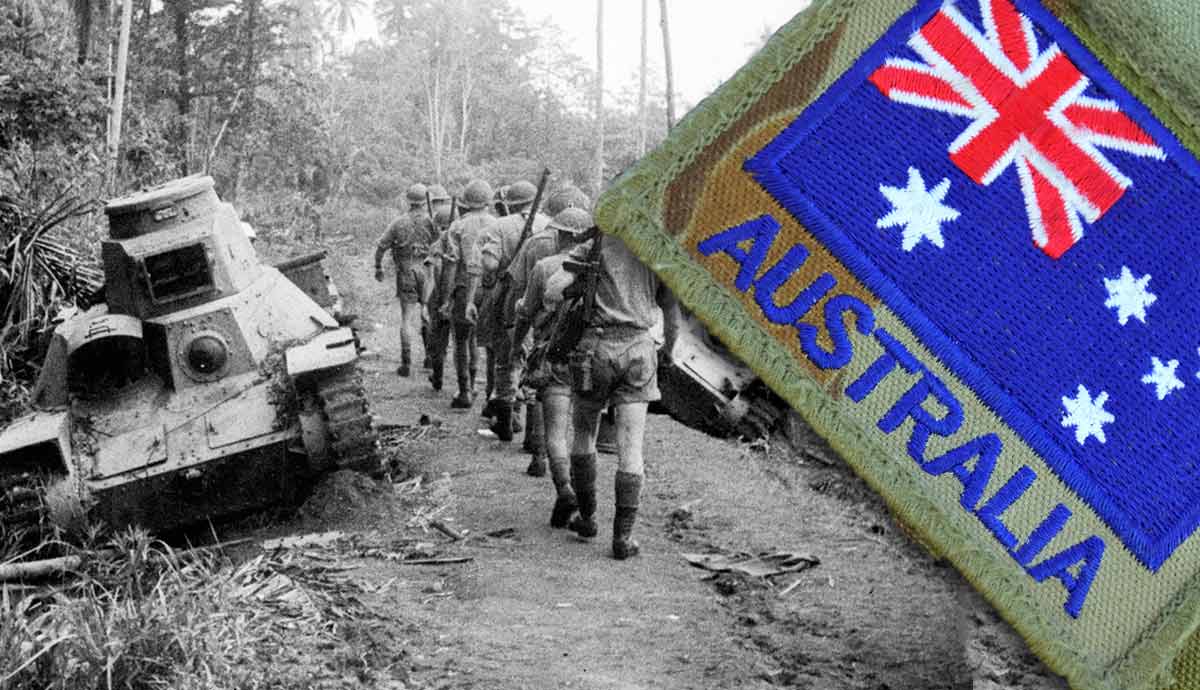
WWW.THECOLLECTOR.COMHow Australia Entered WWII and Became a Major Pacific PowerWhen Prime Minister Robert Menzies announced his decision to enter WWII following the invasion of Poland, he set his country on a fateful course that saw it become a major Pacific power. Australia had a small military that was subordinate to the British. Japans entry into the war in 1941 made it existential for Australia; this fear remained in place for the rest of the war. Its actions during the war created Australias security policy for the rest of the 20th and 21st centuries.Australias Entry Into the War in 1939Prime Minister Robert Menzies and his wife Pattie Menzies. Source: Menzies Research CentreWhen Great Britain went to war with Germany in September 1939, it seemed inevitable that Australia would follow in Londons footsteps. Australia was still a young country wedded to the British Empires security plans. Prime Minister Robert Menzies of the United Australia Party favored a close relationship with Britain and believed that Australia needed to assert itself on the international stage by standing up to Hitler. On September 3, his government in Canberra declared war against Germany.The declaration had little opposition from the country of seven million but Australia started the war with an undermanned and underresourced military. Only a couple of thousand soldiers were immediately available and the reservist force of 80,000 was not prepared for battle. The navy had no battleships or carriers and was not capable of major operations on its own. Its air force was stretched thin and had no long-range strike capabilities. Even when combining forces with New Zealand, Canberras contribution to the initial Allied force in Europe was very weak.Nonetheless, Australia prepared an expeditionary force for service in Europe known as the Second Australian Imperial Force. Reservists flocked to join the 2nd AIF which was to be deployed to southern Europe and the Middle East. Menzies government envisaged that the force would expand from one infantry division to three. The Royal Australian Air Force (RAAF) ordered squadrons to join the British and even sent pilots to directly join British air groups. The Royal Australian Navy (RAN), still largely commanded by British flag officers, sent its ships to join the British Home and Mediterranean fleets.War in Greece and North Africa Until 1941Australian troops in trenches in Greece, 1941. Source: WW2 WrecksWhile Australian sailors and airmen saw action early on, the 2nd AIFs first actions took place in North Africa during Operation Compass. After Italys failed invasion of Egypt, the British counterattacked and drove deep into Italian-controlled Libya. Alongside them was the Australian 6th Division. The Italian Army proved no match for the Allied forces arrayed against them and crumbled very quickly. The Australians struck hard at the Italians, seizing Bardia and Tobruk. Their initial performance gave hope to British commanders that they would be just as effective fighters as they were in the First World War.However, matters became very different soon. British commanders ordered Australian General Thomas Blamey to take the 6th and 7th Divisions into Greece alongside other Allied troops. After beating back Italian offensives, Greek forces found themselves under major attacks by German and Bulgarian troops. Blamey sent the Second AIF north, but it was outflanked and driven back. When Allied troops withdrew, some went to Crete, Germanys next target. In an airborne assault, the Germans overwhelmed the Allied defenses and captured thousands of Australian troops from the 19th Brigade and other units.The war in North Africa resumed when German forces assisted the Italians in driving towards the Libya-Egypt border. The Australian 9th Division came under siege in Tobruk, and the garrison Australian General John Lavarack held off repeated assaults by Erwin Rommels forces. After several months, it was relieved by other Allied units. Alongside the 7th Divisions operations in Vichy French Syria and Lebanon, Australian forces were totally committed in the Middle East.Australias Response to Japanese EntryJapanese air raid on Darwin harbor, 1942. Source: North West StarAs Australian forces battled in the Mediterranean and Atlantic theaters, tensions heated up in Asia. Australia had long been concerned with Japans imperial ambitions but did not believe that Tokyo would seek war with the West. That calculation was shattered with the Pearl Harbor attack. Japan immediately began attacking islands throughout the Pacific. The new prime minister, Labor party leader John Curtin, vowed to stand up to Japan and ordered the 2nd AIF home. When Britain protested the withdrawal, he agreed to leave the 9th Division in Africa and sent the 8th Division to reinforce the British garrison at Singapore.At this point, Australia began expanding its forces to take on the new threat. The RAAF expanded in size, the RAN gained new ships, and the army added several divisions to its force. However, this buildup took time and Japans speedy advances overwhelmed Allied forces. The garrison in New Britain, numbering one battalion with some old artillery, was overwhelmed in January 1942. Across the South Pacific, Japan began entrenching its forces to cut supply lines between the US and Australia/New Zealand. This deeply worried the Australian government.Until December 7, 1941, the war was seen by Australians as a distant affair that would not affect their daily lives much. This changed with Japans entry into the war. Japan had designs on Australian territory that included settling and colonizing the country. In mid February, they launched the largest air raid in Australias history by bombing Darwin in the Northern Territory. The attack shocked the Australian public.Singapore and New GuineaAustralian troops marching near Milne Bay, New Guinea, 1942. Source: Australian War MemorialOne of Japans main targets in its 1941-1942 offensive was Singapore. The island city, along with the rest of Malaya, was garrisoned by a mix of Allied troops who lacked adequate equipment or training. The 8th Division, several RAAF squadrons, and some RAN ships helped with the defense. Despite mounting brave resistance, Allied forces were pushed back into Singapore. As the garrison collapsed, the 8th Divisions commander, General Gordon Bennett, fled the island. The division collapsed and surrendered to Japan very quickly.Japan also pressed onto the town of Port Moresby in New Guinea. Having failed to assault the port by sea, they advanced down the infamous Kokoda Trail against a reservist battalion. Australian and American forces reinforced the defenses of the town and pushed the Japanese back. The 7th Division, fresh from combat in North Africa, spearheaded the counterattack with the US 32nd Division. A Japanese attempt to seize the facilities at Milne Bay was also stopped by strong Allied defenses including the 7th and 18th Brigades.After heavy fighting, Allied forces destroyed the Japanese garrisons at Buna and Gona and pushed along the northern coast towards Japanese-held Lae and Salamaua. The 2nd AIF was reinforced by two reservist divisions: the 3rd and 5th divisions. Japans forces were dug in, but lacked enough weapons and forces to hold off the Allied attacks.General Blamey launched a multi-pronged attack to defeat the Japanese forces in detail. Their victories avenged the loss of the 8th Division at Singapore.El Alamein and the Subsequent Sidelining of Australian ForcesThe Australian 9th Division Memorial at El Alamein. Source: Wikimedia CommonsWhile most of the 2nd AIF was redeployed to the Pacific once Japan entered the war, the 9th Division remained with the British 8th Army. General Leslie Moreheads force was considered an elite unit and British commanders hoped to continue to use it to stop the German-Italian force from attacking Egypt. On October 23, 1942, the 8th Army launched a massive attack with the aim of destroying Axis forces in North Africa. The 9th Division attacked the northern part of the Axis lines near El Alamein. At the cost of tens of thousands of casualties, the Allies managed to break through, liberate Libya, and drive onto Tunisia. The 9th Division went to New Guinea as part of Curtins efforts to change Australias war aims.While some Australian ships and aircrews remained in Europe and Africa, the majority of Australian forces were fighting the Japanese by 1943. John Curtins government aimed to ensure that Canberra played a major role in the Allied victory. Australians distrusted Britain after the loss at Singapore and hoped the United States of America would support their plans.However, General Douglas MacArthur, now Allied commander in the South Pacific, aimed to sideline Australian forces. He did not envisage the Australian playing a major role in the war effort and thought little of their combat abilities. Even though Australian troops were considered elite, both American and British commanders cared little for them. To mollify Curtins government, MacArthurs headquarters assigned them mopping up duty on New Guinea, the Solomons, and New Britain.Australian Commando RaidsRoyal Australian Navy Commandos on the beach at Tarakan, 1945. Source: Royal Australian NavyThe Australian military also took part in special operations throughout the war. In 1940, they formed independent companies that could launch raids on Axis positions, modeled on British commando units. Initially, Canberra hoped to deploy these units in North Africa alongside British units. However, the Japanese entry into the war meant that the independent companies had to deploy closer to home. Apart from some individuals who joined British units in Europe and Africa, most Australian commandos fought in the Pacific and Far East.In battles on Timor, New Britain, and New Guinea, Australian commandos suffered heavy losses but put up a tough fight against the Japanese. They emulated the American Marine Raiders and underwater demolition teams by preparing beaches for assaults by conventional forces. Their training was intense and their attrition rates higher than conventional forces.Two of the most famous Australian commando operations were conducted by Z Force, a special unit designed to raid enemy shipping. In Operation Jaywick, a team of 14 men took a sailing vessel near the entrance to Singapore and used kayaks to enter the harbor. They destroyed several Japanese ships with mines and fled. When another team tried a similar operation called Rimau, it failed after being intercepted by Japanese guardships. Z Force and other independent companies routinely engaged in aggressive operations behind Japanese lines and worked with partisans in occupied Asia to foment anti-Japanese resistance. Their legacy endured long after the war ended with the establishment of units like the Australian Special Air Service Regiment.Mopping up, Mutinies, and the End of Australias WarThe Royal New South Wales Lancers in the Battle for Balikpapan, 1945. Source: Battle of Australia AssociationAs American forces leapfrogged across Pacific islands to isolate Japanese garrisons, they requested that the Australians follow in their footsteps. Australian forces were ordered to blockade Japanese forces on islands the Americans bypassed. MacArthur pressed on with his ultimate goal: liberating the Philippines. The Australian I and II Corps stationed forces in New Britain, Bougainville, and northern New Guinea. The frustration at being assigned duty away from the main action annoyed the Australian public and prompted several mutinies. The Curtin government managed to gain American support for a series of landings on the island of Borneo. By the end of the war, the 7th had occupied the major port city of Balikpapan on Borneo, the 9th Division was deployed elsewhere on the island, the 3rd was on Bougainville, the 5th was on New Britain, and the 6th was on New Guinea.Australian commandos, naval, and air forces did continue to assist the Allies in both Europe and Asia. With most of its forces engaged in mopping up actions, Australia released large numbers of reservists to support the wartime industry. Those that remained in combat fought well, but faded away from media attention. Once the war wound down, Australians were mainly concerned about getting their prisoners of war back, encouraging immigration to support the postwar economy, and demobilizing most of their forces.As part of its successes in the Pacific, Australia regained control of islands Japan had seized as well as a supervisory role over much of the Solomons. By the end of the war, some 600,000 Australians were serving in the military in some capacity, nearly 9% of the population. 39,429 members of the Australian military died from 1939 to 1945 and 40% of the national income went to wartime spending. The country punched well above its weight and became a strong regional power in the Pacific as a result, notwithstanding the sidelining of its forces. It also paved the way for Australias new alliance with the United States, formalized in the 1951 ANZUS Pact.0 Commenti 0 condivisioni 3 Views -
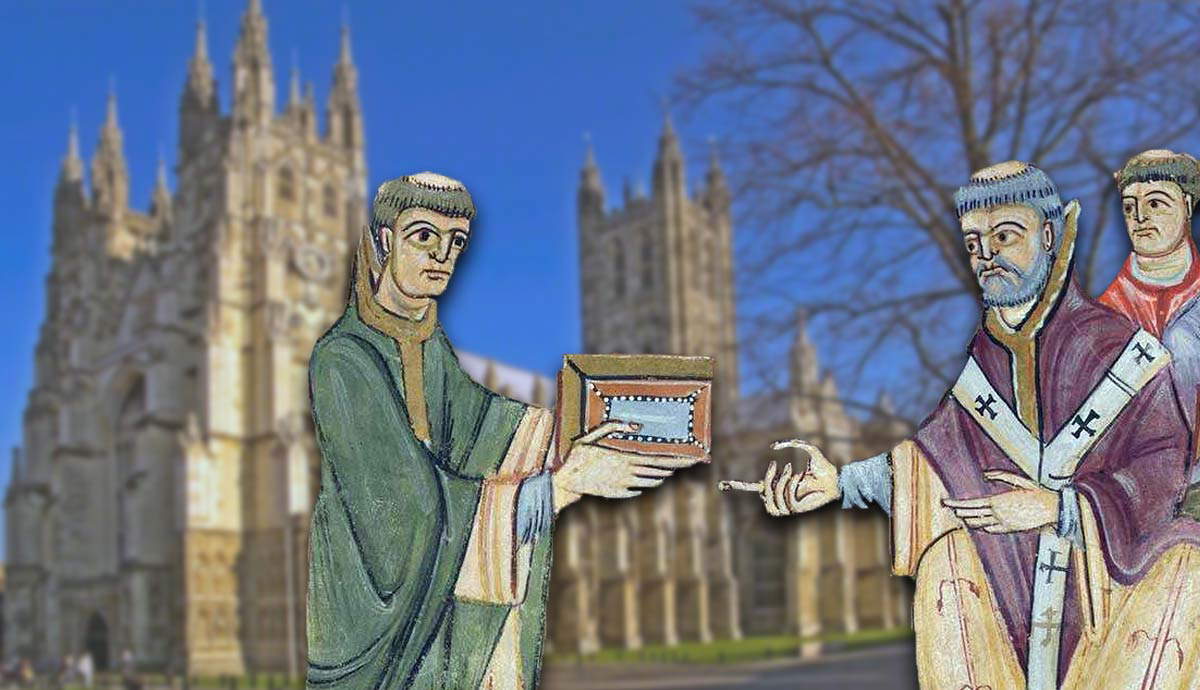
WWW.THECOLLECTOR.COMHow the Archbishop of Canterbury Came to BeA surprising historical development in early Christianity was its northward expansion into Britain and its establishment as a religious staple in British life. One of the earliest leadership roles within Christianity was that of the Archbishop of Canterbury.Christianity in England Before the First Archbishop of Canterbury11th-century manuscript image of Pope Gregory I sending Augustine of Canterbury. Source: British Library Board / English HeritageSome evidence of Christianity being practiced in Britain exists by at least the second century AD. The first British martyr, Alban, was executed in the early 300s AD, and various other accounts show Christianity arriving in Britain well within a few generations of its founding. However, the decline of the Roman Empire and the withdrawal of Roman troops in 410 AD allowed invasions by Anglo-Saxons and Celts, and Christianity declined significantly in the British Isles outside of Wales in the 400s and 500s AD.The Mission to BritainThe Gospels of St Augustine, 5th Century, probably brought by Augustine of Canterbury himself. Source: Wikimedia CommonsAccording to Bede in his Ecclesiastical History of the English People, Pope Gregory I, also known as Pope Gregory the Great, encountered a group of Anglo-Saxon boys for sale in a marketplace. He inquired as to where they were from and whether or not they were pagan, and responded,Alas! what pity, said he, that the author of darkness should own men of such fair countenances; and that with such grace of outward form, their minds should be void of inward grace. He therefore again asked, what was the name of that nation? and was answered, that they were called Angles. Right, said he, for they have an angelic face, and it is meet that such should be co-heirs with the Angels in heavenGregory would go on to send several missions into Britain, among which would be several men who would become Archbishops and lead the church in Britain.The First Archbishop of CanterburySt. Augustine of Canterbury on Canterbury Cathedral. Source: Wikimedia CommonsAugustine of Canterbury (not to be confused with Augustine of Hippo) was assigned by Pope Gregory I to go to England in 597 AD. The Anglo-Saxon King of Kent, Aethelbert, had married the Christian Frankish princess Bertha, and Aethelbert would eventually convert as well. Aethelbert granted property in Canterbury to the church (about 62 miles from London), and Christianity obtained a permanent foothold in Britain from that point forward, beginning under the capable leadership of Augustine.Other Early Archbishops of CanterburyKing Aethelbert. Source: Wikimedia CommonsKing Aethelbert died in 616 AD, and his heirs returned to their previous pagan practices. Augustines successors had to leave at times, with some occasionally residing in Francia. Much of their work was concentrated on missionary activities in converting the pagan Anglo-Saxons to Christianity and establishing the church in Britain. The first five Archbishops of Canterbury Augustine, Laurence, Mellitus, Justus, and Honorius were all members of the Gregorian missions to Britain.Theodore of Tarsus. Source: Wikimedia CommonsTheodore of Tarsus was probably the most influential of the early Archbishops. He had extensively traveled and studied in his youth, particularly in Antioch and Constantinople. When he arrived in Britain in 669, he handled several needed church reforms, particularly at the Synod of Hertford in 673 AD. Seeing the need for education, he established a sort of seminary at Canterbury, where Bede records:They attracted a large number of students, into whose minds they poured the waters of wholesome knowledge day by day. In addition to instructing them in the Holy Scriptures, they also taught their pupils poetry, astronomy, and the calculation of the church calendar.Canterbury Cathedral, Kent, England. Source: WyrdLight.com / Wikimedia CommonsFollowing Theodore, and up through the early medieval period, most of the archbishops were concerned with the spread of Christianity throughout England, as well as administrative matters. A majority of the theological disputes across the church had been dealt with before Augustines arrival in Britain, and the geographical distance from the continent allowed the development of the British church to be somewhat apart from the rest of the other theological and political disputes occurring on the continent. There would be little controversy over the position until after 1000 AD.0 Commenti 0 condivisioni 3 Views -
As I journey through the ever-evolving landscape of gaming, the thrill is not only in discovering new worlds but also in finding great deals that allow me to explore them. In this realm, having a reliable game price tracker(https://dealnesthq.com/ ) can be invaluable. It ensures that the adventures waiting on the horizon are accessible without breaking the bank, offering insights into when to dive into these digital experiences at just the right moment.
Whether it's the latest indie sensation or a blockbuster hit, knowing where and when to purchase can make all the difference. As we continue to seek new narratives and challenges, tools like this help us navigate the financial side of gaming with ease.As I journey through the ever-evolving landscape of gaming, the thrill is not only in discovering new worlds but also in finding great deals that allow me to explore them. In this realm, having a reliable game price tracker(https://dealnesthq.com/ ) can be invaluable. It ensures that the adventures waiting on the horizon are accessible without breaking the bank, offering insights into when to dive into these digital experiences at just the right moment. Whether it's the latest indie sensation or a blockbuster hit, knowing where and when to purchase can make all the difference. As we continue to seek new narratives and challenges, tools like this help us navigate the financial side of gaming with ease.0 Commenti 0 condivisioni 3 Views -
WWW.THEKITCHN.COMI Asked a Beer Expert If Its Better to Buy Beer Thats Already Cold And Her Answer Totally Surprised MeFor your next party. READ MORE...0 Commenti 0 condivisioni 3 Views
-
WWW.THEKITCHN.COMThe Only Way You Should Be Making Pasta Salad This SummerNo soggy pasta here.READ MORE...0 Commenti 0 condivisioni 3 Views