
• WWW.THECOLLECTOR.COM
    The Rise and Fall of the Russian Provisional Government in 1917
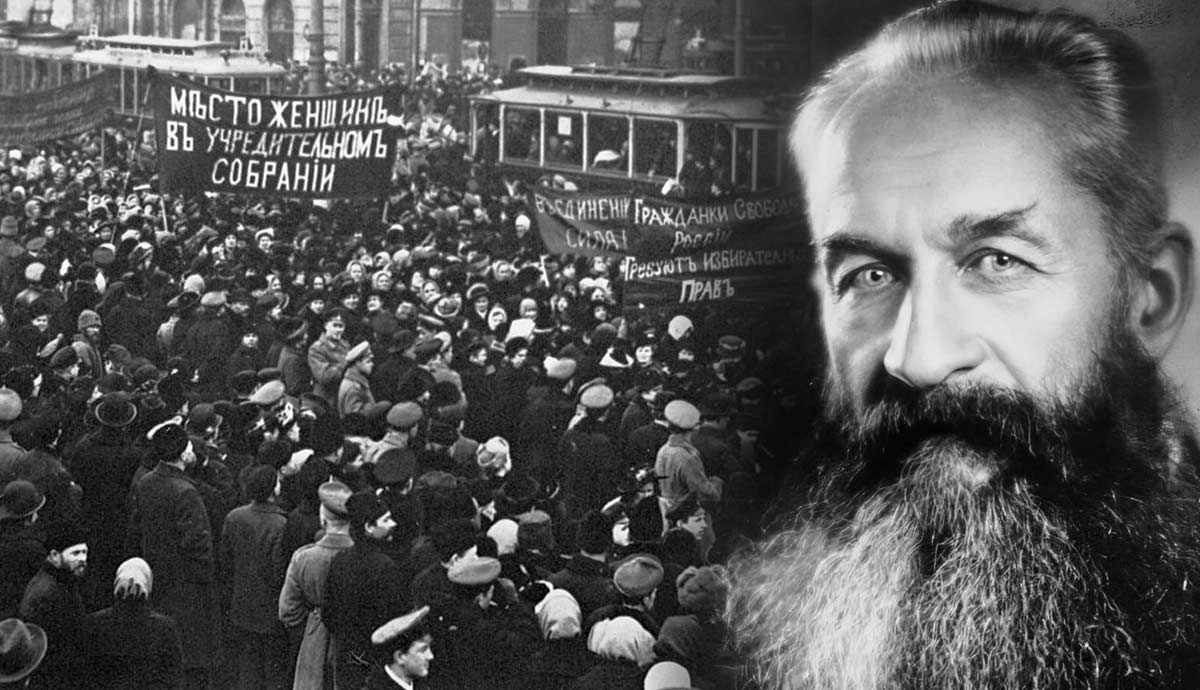
    Following the collapse of the autocratic regime of Tsar Nicholas II, a provisional government filled the political vacuum in Russia. The alleged aims of the new government under Prince Lvov and Alexander Kerensky were to establish liberal democracy, provide civil liberties, and continue Russias involvement in World War I. However, civil unrest continued throughout the country, and the Bolsheviks, led by Vladimir Lenin, violently took the opportunity to seize power.Collapse of Tsar Nicholas IIs MonarchyPortrait of Tsar Nicolas II, by Ernst Friedrich von Liphart, 1897. Source: Wikimedia Commons/Metcalfe Gallery, Ambassador Hotel, Los AngelesBy early 1917, Russia was on the verge of collapse. An unsuccessful revolt and a disastrous war with Japan in 1905 had already weakened the monarchy. Participation in World War I accelerated the decline.There was a steady German advance into Russian territory in the first years of the war. In 1915, against the advice of his political aides, Tsar Nicholas II took direct control over the Russian military. However, militarily humiliating retreats continued, and casualties mounted. As a result, morale among soldiers sank.Meanwhile, on the home front, there was an economic recession, high inflation, food and fuel shortages, transportation disruptions, and ongoing strikes by workers. Poverty was widespread, both in the countryside and the cities. The populations anger against the tsar grew.Grigori Rasputin, an unpopular monk, had become a favorite and an influential political adviser to Nicholas II and Tsarina Alexandra. Both the aristocracy and the peasants believed the royal couple were under Rasputins control and despised his influence.Revolutionary movements within Russia continued to advocate for open revolt. The Imperial parliamentary, Duma, created in 1905, remained politically weak and ineffective.Russians protesting in Saint Petersburg, Nevsky Prospekt, by George Shuklin, 1917. Source: Wikimedia Commons/Museum of Political History of Russia, St. PetersburgThe 1905 revolt brought few changes to Russia. Poverty, hunger, and inflation continued. Revolutionary ideas and parties grew and radicalized. The devastating loss in the Russo-Japanese War of 1905 previewed Russias military debacle in World War I.With the tsar away at the front to command the failing war effort and the economic situation deteriorating further, demonstrations and then riots broke out in the capital, Petrograd (present-day St. Petersburg), in March 1917. The imperial authority dissolved, as Russian soldiers refused to put down the new rebellion, known as the February Revolution. Whereas protesters in 1905 appealed to their tsar for economic relief, in 1917, they openly called for his downfall. The Duma, now supported by the army, demanded that Nicholas II abdicate.On March 15, Nicholas II stepped down, giving royal authority to his brother Michael, who decided to turn down the offer. Into the political vacuum arose an interim provisional government.Provisional Government Under Prince Georgy LvovProvisional Government Leader Prince Georgy Lvov, by Agence de presse Meurisse, 1918. Source: Wikimedia Commons/Gallica Digital LibraryThe Provisional Government inherited a Russian Empire that was weak, poor, and deeply divided. The role of the new government was to stabilize the country and prepare for elections for a new government. At first, there was joy and hope for a political body that would give stability and prosperity to the people.Looking to stabilize the chaotic situation, the Provisional Government sought a leader who could bring the divided country together. Many politicians saw Prince Georgy Lvov as a moderate political figure. As he was not a member of the Duma at the time, Russians hoped he could rise above the political factions and successfully lead the nation. He took on the role of prime minister of the Provisional Government.Most political observers viewed Lvov as a prudent politician. He was from the nobility, but he was not connected to the royal Romanov family. However, many critics also considered him a weak leader.Caption: Russian soldiers on the Eastern Front by S. A. Korsakov, 1914-1918. Source: Russian State LibraryAdditionally, the royalist factions believed Lvov to be a traitor to Tsar Nicholas for taking on the new role. Meanwhile, the workers factions representing the soviets (workers councils) did not trust him as a nobleman either. Thus, Lvov found himself isolated politically.However, Lvov did manage to initiate important reforms for Russia. His government recognized trade unions and eight-hour work shifts for industrial workers. He abolished the tsars secret police. The release of political prisoners commenced. The Provisional Government also passed laws for universal suffrage, as well as freedom of speech, assembly, and a free press.But one key decision continued to haunt Lvov and the Provisional Government: the plan to continue the unpopular war with Germany. In June 1917, a new Russian military offensive was launched. After initial successes, the Germans counterattacked, causing large casualties and further loss of Russian territory. Following widespread unrest, Georgy Lvov resigned as prime minister.The Petrograd SovietPetrograd Soviet Political Commisars, by unknown, 1924. Source: Wikimedia Commons/Krasnay Panorama Issue 21 (39)One of the biggest challenges to the Provisional Government was the Petrograd Soviet. Soviets were working-class socialist councils of workers, soldiers, and sailors. These political organizations formed throughout Russia after 1905. The Petrograd Soviet was the most influential of them, first opposing the tsar and then interfering in the new republic.From the start, the Petrograd Soviet undermined the Provisional Government. In March 1917, the group issued Order Number One, advising all workers to refrain from following the direction of the Provisional Government, unless approved by the Petrograd Soviet first.Essentially, the Petrograd Soviet set up an alternative form of government to the acting Provisional Government. There were now dual opposing forces governing Russia.Caption: Lenin addressing a crowd. Source: Socialist AppealHowever, the Petrograd Soviet, though not a recognized legal entity, wielded more effective political power and control over institutions by running a tight organization with popular support. Lawyer and revolutionary Alexander Kerensky summed up the dilemma, saying the Petrograd Soviet possessed power without authority while the Provisional Government had authority without power.Among the past leaders of the Petrograd Soviet was the Bolshevik Leon Trotsky. Trotsky and the radical Bolsheviks fought for control of the Soviet with their main rivals, the more moderate socialist Mensheviks. While the Mensheviks dominated the Petrograd Soviet at the start of the Revolution, the better-organized Bolsheviks gained influence throughout 1917.Perhaps the biggest division between the two institutions was about the war. Soldiers and sailors made up a significant section of the Petrograd Soviet, and they opposed continuing the fight. The Mensheviks tepid support of the war effort dissolved their influence in favor of Vladimir Lenins Bolsheviks, who wanted to remove Russia from the conflict and promote a socialist revolution.Provisional Government Under Alexander KerenskyProvisional Government Leader Alexander Kerensky, by Karl Bulla, 1917. Source: Wikimedia CommonsAlexander Kerensky replaced Prince Georgy Lvov as prime minister of the fledgling Provisional Government in July 1917. Curiously, Kerensky and Lenin had close connections. They grew up in the same town east of Moscow. They both trained as lawyers. They were each political socialists.However, whereas Lenin embraced radical Marxism, Kerensky adopted the more moderate Menshevik style liberal ideology. For a brief period, Kerensky was even a vice-chairman of the Petrograd Soviet, while also working in the Provisional Government as the only socialist in the cabinet.As war minister, Kerensky led the disastrous offensive of June 1917 that resulted in 400,000 Russian casualties. As prime minister, Kerensky continued to support the failing war effort.Upon becoming leader, Kerenskys first task was to quell Bolshevik-led unrest against the government. In response, Kerensky ordered Bolshevik leaders arrested. Lenin fled the country. Although the threat from the left temporarily eased, a new threat to the government came from the right.In August, Kerenskys newly appointed army commander-in-chief, General Lavr Kornilov, allegedly threatened to stage a military coup. Kornilov claimed he just wanted to bring law and order to Petrograd. Virtually defenseless, Kerensky desperately asked the Petrograd Soviet for armed support. In return, the Soviet demanded the release of Bolshevik prisoners arrested by the government, which they did.These incidents further exposed the Provisional Governments weaknesses. Kerensky attempted further reforms and added more socialist ministers to his cabinet to gain popularity. However, he continued the unpopular war effort despite growing opposition.Towards the fall of 1917, the Bolsheviks dominated the Petrograd Soviet. To prevent their growing influence, Kerensky once again ordered raids on Bolshevik leaders and institutions. However, lacking effective military support meant government orders were mostly ineffective.Fall of the Provisional GovernmentBolshevik Red Guard Military in Petrograd, by Viktor Bulla, 1917. Source: Wikimedia CommonsBy November 1917, the Provisional Government had lost any lasting influence over Russia. Attempts at reforms had mostly failed, and the government stubbornly continued to support the war.Meanwhile, backing for the Bolsheviks multiplied. Controlling the Petrograd Soviet, they once again elected Trotsky to lead the governing body. One of his first acts was to organize a military revolutionary committee to prepare for armed conflict. At the same time, Kerensky attempted to rally forces to support the government.On November 7 (October 25 in the Julian calendar) came the final confrontation between the Petrograd Soviet and the Provisional Government known as the October Revolution. Following Kerenskys unsuccessful crackdown, troops loyal to the Bolsheviks and the Soviet advanced on Petrograd to seize important installations, including government buildings, armories, bridges, and communication centers. The Bolsheviks, led by Lenin and Trotsky, had the support of city workers as they called for peace, land, and bread.Later that day, Bolshevik forces surrounded the Winter Palace, the seat of the Provisional Government. Heavily outnumbered, defenders of the government waited for the attack. A signal for the assault on the palace came that evening. Almost immediately, the defenders fled in panic or joined the assault. Armed militias pillaged the Winter Palace and arrested government ministers hiding inside.Caption: Red Guards in October 1917. Source: Russian State Archive of Social and Political History via AP NewsKerensky fled Petrograd and eventually left Russia to settle in France. The Provisional Government had fallen with little bloodshed or resistance. At the same time, the Congress of Soviets was meeting. The day after the fall of Kerenskys government, Lenin addressed the Congress. He claimed victory for the working masses, promised to immediately end Russias involvement in World War I, and to promote international revolution.The Russian Provisional Government appeared doomed from the start. The government never won the hearts and minds of the people. Legislation for liberties such as freedom of speech and assembly came after the tsars abdication, but this freedom resulted in increasing agitation against the new government.The economy continued to stagnate during 1917, causing further anger. The question remains what might have happened had the Provisional Government taken Russia out of the war. Perhaps they could have stayed in power long enough to form a stable government after a general election. Or that may not have made any difference against the Bolsheviks.
    0 Commenti 0 condivisioni 16 Views
  • WWW.THECOLLECTOR.COM
    What Does Womens Empowerment Really Mean?
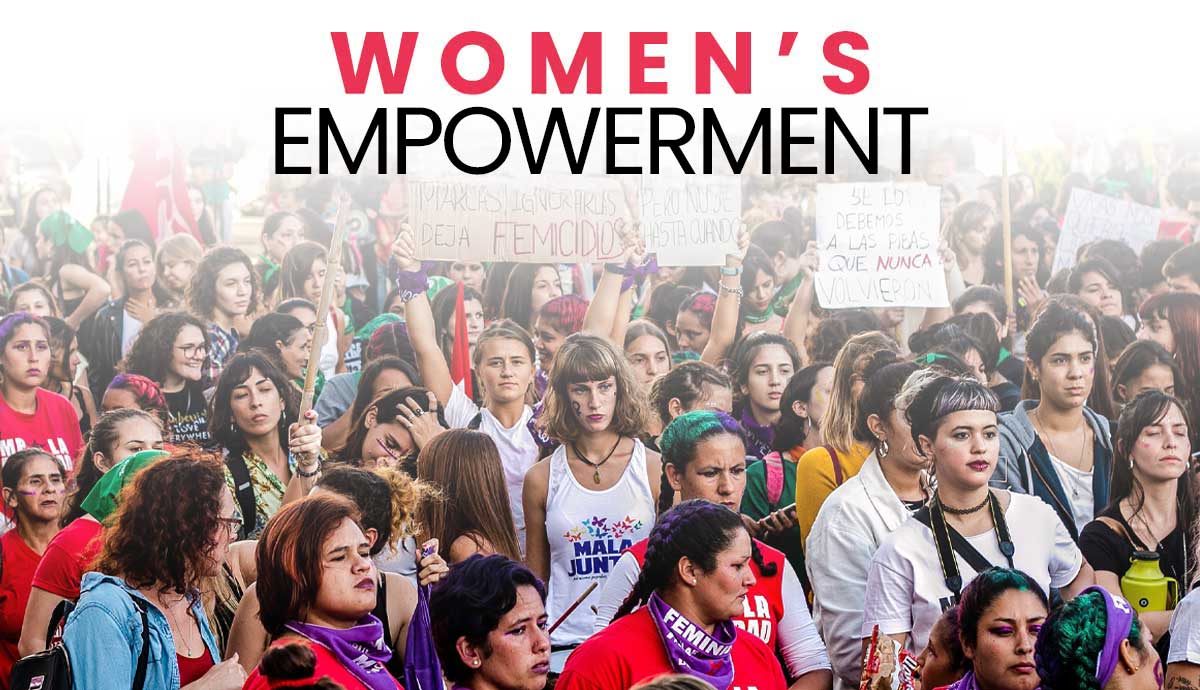
    Womens fight for human rights and equality has significantly progressed in recent years. Some brave women and organizations are changing the course of history by ensuring women are politically engaged, educated, and have access to all the opportunities that will make them financially and physically independent. These goals are accomplished through womens empowerment and breaking gender barriers and stereotypes. Womens empowerment is a multidimensional concept that can only be achieved systematically and inclusively. Read on to discover more about what womens empowerment really is.What Are the Main Aspects of Womens Empowerment?Associate Justice Ruth Bader Ginsburg, by Steve Petteway, January 5, 2016. Source: Wikimedia CommonsWomens empowerment is crucial and is discussed in various fields and dimensions of scholarly and political work. The main aspects of womens empowerment are social, economic, political, and psychological. All of these aspects are equally important, and by working on and implementing measures regarding them, we are building a fairer world where women participate at every level of society.Social empowerment is about eliminating discrimination and ensuring that all women enjoy fundamental human rights, such as the right to education, healthcare, and safety. Reproductive rights are a big part of healthcare access since womens right to bodily autonomy is essential and under attack worldwide. Making decisions about ones body and healthcare is integral to the fight for equality and empowerment.Another important aspect of womens empowerment is economic empowerment, which is related to equal pay and employment opportunities. Because of centuries-long oppression, women often face wage gaps and lack leadership opportunities. Part of womens empowerment is making policies regarding equal pay and preventing gender discrimination. Access to financial and business education and opportunities is crucial in the fight to become independent and close the gender gap economically.International Womens Strike, by Paula Kindsvater, Paran, Argentina, March 8, 2019. Source: Wikimedia CommonsPolitical empowerment also ensures womens participation in political processes and representation. As recently as the 19th century, women started gaining basic political rights such as voting, the right to run for political office, and the right to advocate for political and activist causes that would protect and better their lives.The path to securing political rights was long and arduous. Women like Mary Wollstonecraft (1759-1797) were instrumental in the fight for equal rights. In the 18th century, Wollstonecrafts call for womens access to education and financial independence greatly influenced the later suffrage and feminist movements.The suffrage movement advocated for womens rights in the 19th and early 20th centuries. Through the movement, women gained some political rights and became more involved in policymaking. One of the most significant female voices in the movement was Susan B. Anthony. Together with her fellow activists, she greatly contributed to passing the 19th Amendment in the US in 1920, granting women the right to vote. In Great Britain, Emmeline Pankhurst, a leading figure in the suffragette movement, was influential in granting women the right to vote in 1918 and 1928.An equally important aspect of womens empowerment is psychological. It is based on personal development and overcoming gender norms and expectations. Gender discrimination, sexism, and misogyny can have severe psychological consequences. Thus, mental health and self-empowerment are essential tools in the fight for gender equality.The Role of Education in Womens EmpowermentMalala Yousafzai, by flowcomm, December 4, 2023. Source: Wikimedia CommonsEducation is vital in the fight for womens empowerment and gender equality, as it has a crucial role in empowering women to become economically independent, get higher-paid jobs, and become involved in entrepreneurial endeavors. According to various studies, higher-educated women earn more and have more opportunities in different business and economic sectors.Getting an education empowers women to become more financially independent and helps them thrive in various societal aspects. Additionally, education improves womens overall health, as educated women are more likely to seek healthcare and care about nutrition and family planning. Being able to afford education, plan for the future, and have access to better, more nutritious food is a big part of womens empowerment.Political involvement and civic engagement are closely related to education. According to the Inter-Parliamentary Union (IPU), an international organization of national parliaments, higher educational and literacy rates are connected to female representation in politics. Education has proven to be significant in terms of voting and political engagement, encouraging a greater number of women to take political roles and participate in policymaking.Another study similarly shows that women with higher education are more open to challenging existing discriminatory systems, leveling the field, and promoting policies regarding female employment. In countries with high female education, women are more likely to take roles in political and governmental leadership.Malala Yousafzai with President Barack Obama, First Lady Michelle Obama, and Malia Obama in the Oval Office, photograph by Pete Souza, October 11, 2013. Source: Wikimedia Commons/White HouseAlthough it is evident that education benefits womens empowerment, women often face challenges. Some of those difficulties relate to poverty and the cost of education, books, and tuition. Other obstacles include sexism in some regions of the world, where womens education is not prioritized or even allowed.The importance of education for womens empowerment can be seen through the work of Pakistani activist Malala Yousafzai, the 2014 Nobel Peace Prize winner. As a child, Malala was attacked for pursuing education and activism and survived an assassination attempt by the Taliban. That made her a symbol of perseverance and female empowerment. Malala is one of the founders of the Malala Fund, which aims to support and bring attention to the importance of the education of young women worldwide.The Importance of Political EngagementPhotograph of Gloria Steinem, by Warren K. Leffler, January 12, 1972. Source: Wikimedia Commons/Library of Congress, Washington DCGetting politically engaged is one of the most essential parts of womens empowerment. One of the main aspects of human rights and democracy is political participation and the right to be a part of political decision-making.According to the United Nations Universal Declaration of Human Rights from 1948, all people, regardless of gender, should be granted access to political life and everything that comes with it: voting, running for office, and governing. In most countries, women started gaining political rights only a century ago. Even though womens political positions and leadership are better than 50 years ago, they are still not equal to men. According to the Inter-Parliamentary Union (IPU), in 2024, the worldwide percentage of women in national parliaments is only 26%.Women in political leadership positions allow womens voices and demands to be heard. By actively engaging in political actions and decision-making, women advocate for anti-discriminatory laws, healthcare, childcare, and equal pay policies. Simply having women in political roles benefits everyone and generally makes the world more progressive and inclusive.Unfortunately, in some parts of the world, women are not part of political decision-making and have a low or zero part in policy making. Womens fight for equality and fundamental human rights (such as the right to be politically included) is far from over. Women are still encountering sexism and gender-based biases such as discrimination and misogyny. These kinds of discriminatory occurrences are limiting womens participation in politics and political engagement.Continuous Fight for Equality and EmpowermentWomens March in Washington DC, by Mobilus In Mobili, January 21, 2017. Source: Wikimedia CommonsEven though womens positions in the world are improving, according to studies and findings of the United Nations (UN), the World Economic Forum (WEF), the World Bank, and scholarly work, women still face barriers and discrimination. Those barriers are regarding opportunities, whether in economic or political fields. The gender pay gap, stereotypes, and violence are still present in almost every part of the world, somewhere more, somewhere less.In recent years, more women have started pursuing higher education and careers, which is leveling the field regarding gender equality. However, women still do most of the unpaid work, such as housekeeping, caregiving, child care, and managing family affairs. This takes a mental and physical toll and directly affects womens job opportunities and performance at work.Gender stereotypes, expectations, and norms are still present regarding womens involvement at home. Women are expected to have a family, career, and social life while caring for their children and partners. Nevertheless, women are increasingly breaking these traditional roles, showing the world that they no longer accept this state of affairs and can be more than mothers and homemakers.Articles about feminism by Charlotte Perkins Gilman published in the Atlanta Constitution, December 10, 1916. Source: Wikimedia CommonsHaving men as allies who understand the importance of womens empowerment and taking responsibility is extremely important in womens continuing fight for equality. Realizing that feminism is not a war on men but a battle for equal rights and opportunities is the first step in the right direction. International organizations that promote education and activist programs provide information to millions of girls and women worldwide, ensuring they understand that they are capable of anything and everything.Best Womens Empowerment QuotesOfficial portrait of First Lady Michelle Obama in the Green Room of the White House, by Chuck Kennedy, February 12, 2013. Source: Wikimedia CommonsSome truly inspiring and brilliant women shared their thoughts regarding womens empowerment and brought new ways of understanding womens fight for equality and a brighter tomorrow. These are some of the most inspiring women empowerment quotas.There is no limit to what we, as women, can accomplish, Michelle Obama, former first lady.No one can make you feel inferior without your consent, Eleanor Roosevelt, former first lady.I raise up my voice- not so that I can shout, but so that those without a voice can be heard, Malala Yousafzai, Nobel Prize-winning activist.Women belong in all places where decisions are being made, Ruth Bader Ginsburg, late United States Supreme Court Justice.Well-behaved women seldom make history, Laurel Thacher Ulrich, historian.Women are the largest untapped reservoir of talent in the world, Hillary Clinton, former first lady and United States Secretary of State.Woman with a voice is, by definition, a strong woman, Melinda Gates, American philanthropist and former multimedia developer.If you want something said, ask a man; if you want something done, ask a woman, Margaret Thatcher, late former British Prime Minister.Women, like men, should try to do the impossible. And when they fail, their failure should be a challenge to others, Amelia Earhart, late American aviator.Maya Angelou reciting her poem On the Pulse of Morning at President Bill Clintons inauguration, January 20, 1993. Source: Wikimedia Commons/William J. Clinton Presidential LibraryI am grateful to be a woman. I must have done something great in another life, Maya Angelou, the late poet and civil rights advocate.We realize the importance of our voice only when we are silenced, Malala Yousafzai, a Nobel Prize-winning activist.If they dont give you a seat at the table, bring a folding chair, Shirley Chisholm, late American politician and the first black woman to be elected to the United States Congress.
    0 Commenti 0 condivisioni 11 Views
  • WWW.DUALSHOCKERS.COM
    GTA 6's November Release Date Has Reshaped the Entire 2026 Gaming Calendar
    Taylor Swift knew years ago: GTA is not just a video game. It is a cultural fixture so embedded in how we talk about leisure, masculinity, and youth that it ended up in a pop song about intimacy. That kind of reach does not come from simply being good. It comes from being inescapable.
    0 Commenti 0 condivisioni 29 Views
  • WWW.DUALSHOCKERS.COM
    8 Strangest PC to Console Ports
    The relationship between PC and console gaming has always been a bit of an odd one. Both at odds and working together sometimes, the different cultures between each platform have created a uniquely beneficial experience for both parties.
    0 Commenti 0 condivisioni 29 Views
  • WWW.PCGAMESN.COM
    AMD's next generation of Radeon GPUs might not launch until 2028, according to its partners
    If you've been holding off on a GPU upgrade, not just because graphics cards are really expensive at the moment, but also because you were hoping a new range of cards might arrive later this year, you'll be disappointed in the latest AMD GPU rumor. According to "several manufacturers producing AMD graphics cards," its next-generation RDNA 5 GPUs won't launch until at least late 2027, and possibly not until 2028. This would actually only make for a two to three-year gap between the launch of its current RX 9000 series cards and the new models, which is far from unprecedented. However, because AMD didn't produce a GPU to compete with Nvidia's most powerful RTX 5000 options, coupled with the fact that GPU prices have been so high recently, it is going to feel like a lot longer for those hoping a bit of refreshed competition would drive prices down.
    0 Commenti 0 condivisioni 29 Views
  • WWW.PCGAMESN.COM
    These are our eight favorite games from the PC Gaming Show
    Another Summer Game Fest weekend has been and gone, and, for me, this has been the best year for a hot minute. Showcase after showcase we were treated to banger after banger, and our gaming backlogs are undoubtedly going to balloon as a result. The Xbox Games Showcase was supposed to be Sunday's highlight, but the PC Gaming Show may have topped it, and I'm not the only one on the PCGamesN team who thinks so.
    0 Commenti 0 condivisioni 29 Views
  • WWW.PCGAMESN.COM
    Tomb Raider Legacy of Atlantis system requirements
    The Tomb Raider: Legacy of Atlantissystem requirements are more demanding than many modern games, but should still allow most players to fire up the game, even if it means running it on low settings. With GPU options starting at either an Nvidia GeForce GTX 1070 or RTX 2060 Super, or an AMD Radeon RX 5700, those still stuck on the likes of a GTX 1060 will be out of luck, but any newer, more powerful card should stand you in good stead. In other words, no you won't need to upgrade to the very best graphics card to run Tomb Raider: Legacy of Atlantis, but if you've been holding out on one, you might need to step up to a slightly newer or more powerful system. Both minimum and recommended specs are listed for the Lara's upcoming adventure, but performance expectations aren't mentioned, and there are no suggestions for running the game on Ultra or at 4K, so we'll have to wait until closer to release to find those out.
    0 Commenti 0 condivisioni 29 Views
  • WWW.PCGAMESN.COM
    Hearthstone card reveal - Shaman gets a new weapon card that's both versatile and terrifying
    Uncover the secrets of Dalaran's maximum security prison in the latest Hearthstone expansion, Escape from Violet Hold. Guarding the prison is none other than Maiev Shadowsong, the warden who kept Illidan Stormrage at bay for thousands of years. Running free won't be easy, so you'll need to break the rules of Hearthstone itself to maximize your chances of success. Escape from Violet Hold is set to launch on Tuesday July 7, adding 145 brand new cards to unpack.
    0 Commenti 0 condivisioni 29 Views
  • WWW.BGR.COM
    10 Tech Habits That Will Save You Time
    Modern life is busy, and it's tough to get everything done each day, but there is hope. These 10 tech habits can help you stay organized and save time.
    0 Commenti 0 condivisioni 13 Views
  • Surgical Instrument Tracking Systems Market Size, Share, and Forecast to 2031
    The Surgical Instrument Tracking Systems (SITS) market is experiencing significant growth, driven by advancements in healthcare technology and the increasing demand for enhanced surgical efficiency. These systems facilitate the tracking, management, and maintenance of surgical instruments, ensuring that they are available, sterile, and in optimal condition when needed. The Surgical Instrument...
    0 Commenti 0 condivisioni 109 Views