What Happened to Holocaust Survivors in Europe After WWII?
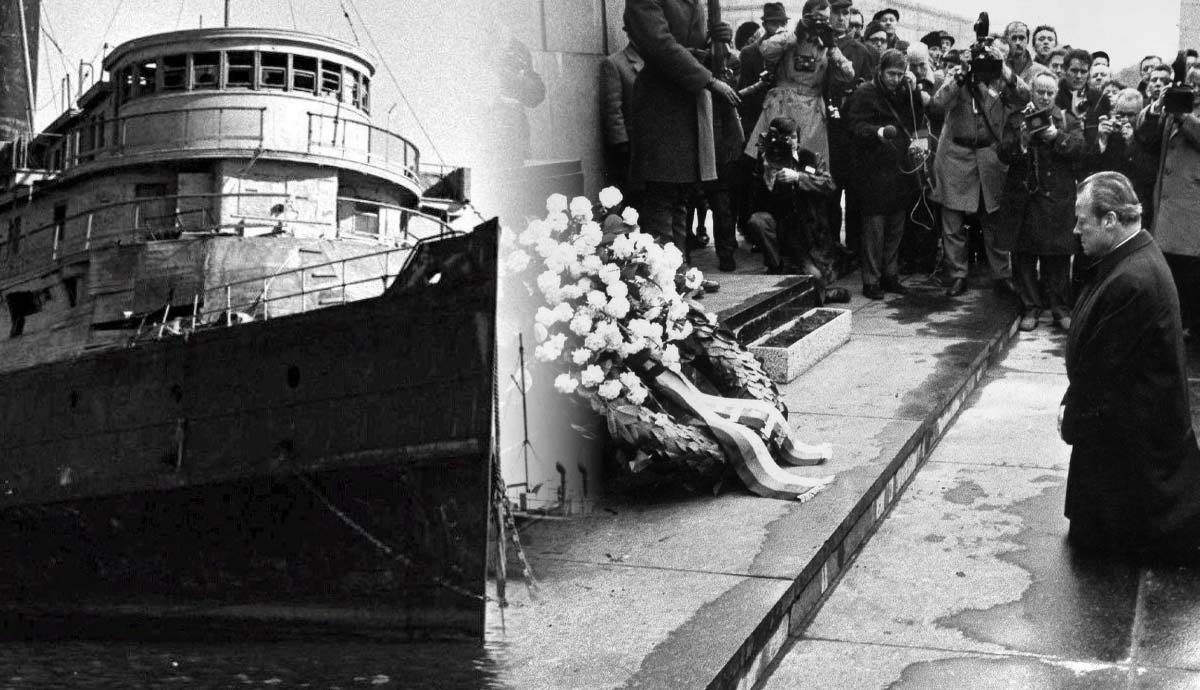
The devastation wrought upon Europes Jews and Roma in WWII did not end with the surrender of the Axis powers. Many Holocaust victims were kept in displaced-persons camps where conditions were terrible. Others attempted to return to their homes, often finding them occupied. The rebuilding of both communities took decades and the scars of their annihilation still remain.The Aftermath of LiberationPhoto of Auschwitz taken soon after its liberation by the Soviets, 1945. Source: AFPThe majority of the concentration camps in Europe were liberated in 1944 and 1945 as World War II came to an end. Despite efforts by Axis officials to destroy evidence of their crimes, the victorious Allies found proof of mass extermination of the Jews, Roma, LGBT, and other victims of Nazi atrocities. The world was in disbelief to learn of the cruelty of the Nazi regime. Many questions were raised about what came next for the survivors of the Holocaust: Would they return home? Could they bring the perpetrators to face justice?The camp survivors were emaciated, traumatized, and confused about what would happen to them. The destruction of much of Europes organized Jewish life meant that there was a void where community leadership used to exist. Additionally, many Jews and Roma feared returning home because they thought their neighbors would attempt to finish the job the Nazis started. The Holocaust was not restricted to the concentration camps; it also involved mass shootings and killings. Survivors also needed to be able to reclaim their property that had been stolen from them.Jewish organizations based outside of Europe vowed to help their brethren who had survived. The Joint Distribution Committee, HIAS (Hebrew Immigrant Aid Society), and other groups rushed aid to the survivors and tried to reconnect them with their families. Roma community members also hoped to aid the survivors of the Porajmos, but struggled because of lack of support. Many survivors ended up in displaced persons camps, waiting for the opportunity to return home or leave Europe altogether.Life in the DP CampsJewish children at Foehrenwald DP camp with a US soldier, 1945. Source: Times of IsraelTwo years after the end of WWII in Europe, nearly 850,000 people remained in displaced persons camps all across the continent. Millions of refugees had already been repatriated to their home countries, but many others were not able or willing to do so. Hundreds of camps were scattered across central Europe and Italy. Most hosted Jewish displaced persons, people from the Baltic states, former partisans from across Europe, Roma people, and Soviet POWs unwilling to return home to Stalins repression.Conditions in the camps were awful. Malnutrition, disease, and poverty were rampant. Some of the camps had been formerly used by the Nazis: Bergen-Belsen was a prominent concentration camp that the British Army used as a DP camp after the war. Even worse than the bad conditions was the fact that Jewish and Roma DPs were mixed in with people who were suspected to have collaborated with the Axis powers during the war. The conditions of the camps began to leak out to the public, causing outrage.In July 1945, American lawyer Earl Harrison commissioned a report on behalf of the US government identifying the problems with the DP camps. His report helped publicize the plight of DPs, especially Jews. Under pressure, the Allied governments began to resettle the DPs or allow them to leave Europe. By 1957 the last of the DP camps, Foehrenwald, was closed. Nearly 250,000 of the DPs after 1946 were Jews; many sought to leave Europe after they were released.Attempts to Return HomeRoma family after returning home to Munich, 1946. Source: National WWII MuseumSome Holocaust survivors hoped to rebuild what they had lost, especially if they had led comfortable lives before the war. However, returning home was very difficult. The widespread destruction of towns and cities across Europe meant that many of their homes were destroyed. Pre-war Warsaw had a sizable Jewish population; by the end of the war, this community was devastated and the city was destroyed. Additionally, Europes border changes caused real problems for people who had been attached to the countries they once lived in.For survivors, going home meant facing the trauma they witnessed during the Holocaust, and dealing with the people who had moved into their homes. The Kurc family returned to Radom in Poland to find their home taken by a Polish family who thought they were dead. Subsequently, they left for the United States and Brazil. The Germans had spread rampant antisemitism amongst the populations they controlled during the war and this played a role in the subsequent antisemitic violence after the war. Roma faced similar situations; they were abused and targeted by bigots long after the war was over.In Western Europe, there was a chance that survivors could regain their homes because of legal protections for doing so. In communist Eastern Europe and the Balkans, this proved more difficult due to changing state borders and nationalization of private property. Property restitution took decades in some countries and only started to appear in the Balkans and Eastern Europe after the end of the Cold War and the collapse of Yugoslavia and the USSR. Even many Jews who remained in Europe were unable or unwilling to return to their country of origin.Flight From EuropeSS Exodus, a ship used to transport Holocaust survivors to Palestine, 1947. Source: PoliticoBefore the war, the Jews of Europe were divided between Zionists and non-Zionists. When the war was over, many of Europes Jews believed that there was no place for them on the continent and vowed to emigrate. America was a popular choice because it already had a large Jewish community, but the 1924 Johnson-Reed Act imposed strict controls on Jewish immigration. The DP Act of 1948 did ease entry, allowing 140,000 survivors to go to the US. Some 27,000 Jews moved to Australia, and thousands more went to Canada, Latin America, or South Africa.For most Jewish DPs that wanted to leave, Mandatory Palestine was the best option. The Jewish Agency had commissioned the Mossad lAliyah Bet to smuggle Jews into Palestine. Britain restricted Jewish immigration because they feared a conflict with the Arabs. From 1945 to 1948, over 100,000 Jews tried to sneak into Palestine. Smuggling networks were established throughout Europe and ships bypassed the British blockade to bring refugees ashore. When Israel won the 1948 War, all limitations were lifted and over 100,000 more survivors entered the new State of Israel.Roma survivors generally tried to return home; there was no state like Israel for them. However, some left Europe hoping for better lives. Brazils Roma community increased with the arrival of some Italian Roma. Most stayed behind, lacking the means or support to travel.Postwar Violence Against Jews and RomaFuneral for the victims of the Kielce Pogrom, 1945. Source: World Jewish CongressCenturies of antisemitism and anti-ziganism meant that the threat to Jews and Roma did not end with the Allied victory in World War II. Many people in Eastern Europe accused Jews of being communists complicit in the Soviet takeover of the region. Additionally, many people had taken over Jewish homes and were reluctant to give them back. This ensured that Jews faced violence across Europe at the end of the war.In Western Europe, there was some hostility to returning Jewish and Roma DPs: for instance, the Dutch intelligence services monitored Auschwitz survivors, thinking that they had become communists in the camps. However, this paled in contrast to Eastern Europe, where postwar fighting put survivors at risk. Jewish partisans found themselves fighting former Nazi collaborators. In the town of Kielce, Poland, 43 Jews were massacred in a pogrom that caused a mass exodus. A hundred Jews were murdered in another riot in Kyiv, Ukraine SSR. This violence and the perception that no one wanted to address it incentivized many Jews to leave Europe. It is estimated that thousands of Jews were murdered in the aftermath of WWII in Europe.Roma also struggled in the face of hostility when attempting to return home. In the new Communist bloc, Roma were harassed by state authorities and had their traditional way of living taken away. Even in France, Roma faced hostility after the war. Conspiracy theories about Roma stealing goods and kidnapping children persisted long after the war. It took many years before the Roma were able to feel a degree of security again.Holocaust Remembrance in EuropeWest German Chancellor Willy Brandt kneeling before a memorial to the victims of the annihilation of the Warsaw Ghetto, 1970. Source: DW NewsFearful that their stories would be forgotten, many Jews and Roma who survived the genocides of their peoples began broadcasting to the world what happened to them and their families. They also demanded acknowledgement and restitution for the crimes they had endured. Three months after the war ended, the prominent Zionist leader Chaim Weizmann demanded that Germany pay reparations to Jewish victims of the camps. West German Chancellor Konrad Adenauer agreed to pay a specified amount and signed an agreement with the State of Israel in 1951. Germanys reparations payments increased over time following lawsuits against companies that used slave labor during the war.In Eastern Europe, remembrance was much more difficult due to Soviet distrust of Jewish communities. As far as the Soviet authorities were concerned, the Nazis carried out atrocities against all Soviet people rather than targeting Jews or other minorities in particular. Communist Poland agreed to recognize the Holocaust but did not offer any restitution for people whose property had been stolen and expelled many remaining Jews in 1968. Even in Western Europe, most people wanted to forget about the horrors of the war, and Holocaust remembrance only started to enter the mainstream in the 1960s when survivors began speaking out more publicly about their experiences and the trial of Adolf Eichmann in Israel.The Roma received even less recognition than the Jews did for their suffering. West Germany initially claimed that there was no mass slaughter of Roma during the war and that their governments actions were justified. Only in 1982 did West German Chancellor Helmut Schmidt acknowledge Germanys actions towards the Roma. To this day, Roma communities struggle to gain recognition for the violence they faced during and after the Second World War.












 English
 Arabic
 Spanish
 Portuguese
 Deutsch
 Turkish
 Dutch
Dutch
 Italiano
 Russian
 Romaian
 Portuguese (Brazil)
 Greek
Greek