• WWW.THECOLLECTOR.COM
    The Brutal Truth About Dentistry in the Middle Ages
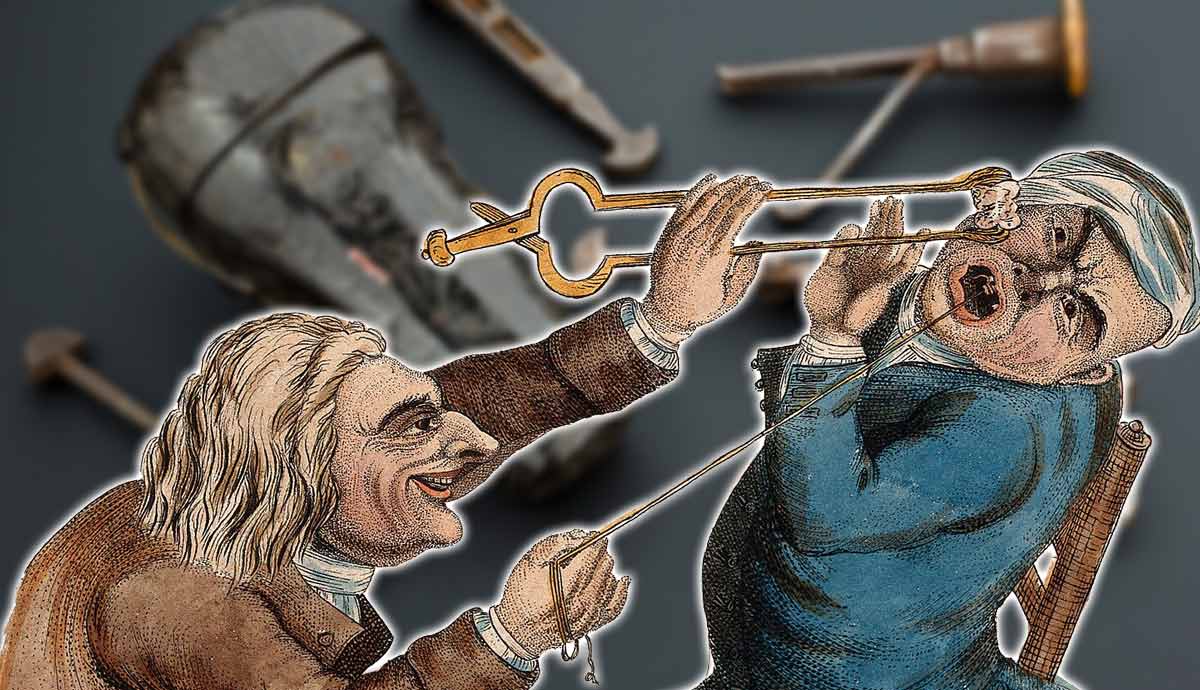
    Toothaches have plagued humans since the dawn of homo sapiens. Archaeological evidence shows that people in the Neolithic period drilled holes in teeth for pain relief. A 6,500 year old Slovenian jawbone reveals a dental filling made from beeswax. More recently, Ancient Egyptians may have prescribed dead mice to treat toothaches. The treatment of infected or hurting teeth is a common thread throughout human history. How was this universal issue dealt with during the Middle Ages?Medieval Diets: Bread and Sugar, or Lack ThereofA medieval baker and his apprentice. Source: Bodleian Library, OxfordAlthough cakes, pastries, and chocolate are European staples today, sugar was not introduced into Europe until the First Crusade at the end of the 11th century. Crusaders first encountered sugar, or sweet salt as they referred to it, during their visit to the Holy Land. Soldiers from the Crusades then carried the sweet substance back with them to Europe. However, it would take several centuries, and colonization of sugar-producing societies, before sugar became the food staple as we know it today.The lack of readily available and refined sugar meant that people in the Middle Ages may have had better teeth than some people in the 21st century. However, tooth pain, decay, and infection were still ailments suffered in the Middle Ages.Although sugar was absent, people in the Middle Ages ate other foodstuffs that decayed teeth. Bread was a staple, but medieval bread was ground by stone and extremely dense, causing teeth to wear down. Additionally, dental care was not a top priority. Despite the existence of medieval manuscripts advising methods of dental care, scholars like Juhani Norri suggest the average person in the Middle Ages likely did not have good dental habits. Diet combined with poor dental tendencies necessitated medical attention, procedures, and the people to administer them.Medieval Barber-SurgeonsA barber-surgeon extracting stones from a womans head, symbolizing the expulsion of folly (insanity) by J. Cats after B. Maton, 1787. Source: Wikimedia CommonsAlthough the treatment of dental pain has existed for millennia, the concept of a physician dedicated solely to teeth is relatively modern. Dentistry was a field spearheaded by French physicians beginning in the 18th century. Before dentists, if you were experiencing tooth pain, you would pay a visit to a physician, or a barber-surgeon, who combined the cutting of hair and the shaving of beards with operations like tooth extraction and bloodletting.This was because these invasive procedures were deemed low status. The university curriculum at Oxford and Cambridge did not even include these surgeries for medical students. Instead, university-enrolled physicians spent their time analyzing the causes of different illnesses and their treatment using herbs and other concoctions.Barbers pole. Source: PexelsThis left operations like teeth-pulling and bloodletting princypally with the handes of the werkman, or barber, as a late Medieval English manuscript reads (Norri, p. 125). Rather than university, these jacks of all trades learned their craft through apprenticeships, which ranged anywhere between five and twelve years. Barbers may have also been the no-brainer choice for invasive procedures due to their readily available access to sharp instruments and tools, which they used for grooming.Bloodletting and the work of barbers became so synonymous with each other that their relationship is symbolically represented today via the red and white barber pole. After bloodletting procedures, the blood-stained rags would be hung outside barber shops possibly as a form of advertisement, informing the public what they could get done in addition to grooming. The way these rags twisted in the wind would become the basis for the spiral shape of the barbers pole, which remains an iconic symbol used by barbershops throughout the world today.The Four HumorsManuscript image depicting bloodletting. Source: Wikimedia CommonsWhy was bloodletting a part of dental care? Medieval medicine perceived the human body as a delicate balance between the four humors, or fluids. These were phlegm, blood, bile, and black bile. Each humor was tied to a specific state of being: cold and wet, hot and wet, hot and dry, and cold and dry, respectively. One became sick when one of these became imbalanced. To reinstate balance, treatment targeted the humor opposite the imbalanced humor: if a hot humor was in excess, the treatment involved increasing cold humors.Bloodletting was used to relieve humors in excess. This procedure was practiced throughout human history in Ancient Egypt, Ancient Greece, and the Islamic world. By the Middle Ages, it was widely accepted as a viable treatment for a number of ailments, not just for dental pain. Bloodletting released the bad or excessive humor from the body. Venesection, or cutting into the arm, was the most common form of bloodletting, but leeches would also be used to drain blood.Worm-Infested TeethManuscript depicting the four temperaments (humors), 1553. Source: Store Norske LeksikonCorrupt humors could also create worms in the brain that trickled down to the teeth, causing toothaches and decay. Like bloodletting, the connection between worms and tooth pain was widely accepted throughout different eras of human history and across different parts of the world. Ancient Egyptians, Sumerians, and people living as far as China all shared this belief. In fact, the association of tooth pain with worms persisted long after the Middle Ages, maintaining a role in medical treatment as late as the 18th century.People believed that the worms first took root in the jaws then migrated into the teeth. Tooth pain would occur as a result of these worms moving. However, worms could also be stagnant, or remain still. When this happened, a person would not feel any pain. Regardless of whether worms were moving or stagnant, they needed to be swiftly expelled from the mouth. One common method to extract them during the Middle Ages was through fumigation. This involved placing henbane seeds on top of smoking coals, which the patient was supposed to inhale via a pipe. By placing smoke beneath the teeth, the worms would eventually drop out from the mouth due to suffocation.A Man blowing Smoke at a Drunken Woman, another Man with a Wine-pot by Jan Steen, 17th century. Source: National Gallery, LondonHowever, unfortunate side effects of this procedure were convulsions and hysteria. This is because henbane was a type of seriously poisonous plant. Surgeons and physicians of the Middle Ages were well aware of this side effect, and medieval physicians were warned not to get too close. However, despite the warnings, this practice was still used in parts of England up until the 20th century. Another poisonous plant used for fumigations was hellebore, which was labeled as venemous & dystourblyng [disturbing] (Norri, p. 132).CauterizationFrench instruments for tooth pulling, 1700s-1800s. Source: Wikimedia CommonsAnother form of dental treatment in the Middle Ages was cauterization. There were many variations, but all generally involved heating an iron or bronze needle and placing it directly on a hurting tooth. Although practiced for millennia, the procedure came to be largely associated with 11th century Arab physician Al Zahrawi. A highly motivated and busy medical scholar, he produced over 200 surgical tools and wrote an extensive 30-volume medical text, the Kitab al-Tasrif. A big proponent of cauterization, Al Zahrawis text references this treatment nearly 50 times.In addition to treating other ailments, Al Zahrawi also proposed cauterization to fill tooth holes. This involved placing a hot iron directly on a tooth hole until it cooled. This was repeated several times, so the pain [would] surely pass, the same day or the day after. Al Zahrawis procedures were widely referenced and practiced throughout European medicine, especially those of cauterization.The Medieval Netherlands even used a variation of cauterization for dental fillings. A hot iron pricker would dipped into a concoction of olive oil, marjoram, and seed of hemlock. Like the procedures of Al Zahrawi, this was applied directly to the hole in the tooth and re-applied several times.ExodontiaA sadistic tooth-drawer frightening his patient with a hot coal causing him to pull away violently and extract a tooth by J. Collier after himself, 1810. Source: Wikimedia CommonsTooth pulling, or exodontia, was the final straw if nothing else worked and pain persisted. However, even in the Middle Ages people understood the risks associated with tooth extraction. This procedure was highly dangerous because it could be fatal. Medical texts warned against extracting teeth that were not loose. A Medieval Dutch physician wrote: If there are holes in teeth with pain and the teeth are not loose the teeth should not be extracted. In many people this resulted in a fatal outcome without healing, many are deceased in this. Wrongly or poorly pulled teeth could also result in jaw abscesses and bone splinters.However, if a patients tooth was bad enough, they would pay a visit to the barber for this risky business. Teeth extraction in the Middle Ages was a public spectacle. Private dentist offices did not exist, so many treatments were done in public spaces, in some cases as part of a public performance. In addition to barbers, there were the journeying tooth-pullers. In most cases they were charlatans, simply taking advantage of peoples pain in order to make a quick buck in the cities they were passing through.Teeth-Pulling CharlatansAn itinerant tooth-drawer performing on a stage. Painting from 1860. Source: Wikimedia CommonsIn fact, the word charlatan comes from the Italian ciarlatano, which meant someone who sold enslaved people, trinkets, and pulled teeth in public spaces (Wynbrandt, p. 30). They would usually be part of a traveling circus, and a wide stage would be set up in the town square. The procedures were made public as a marketing strategy. The more people in the crowd, the higher the chances there were people experiencing tooth pain who would be willing participants.The tooth-puller, decorated with a necklace of teeth, would entice the crowd by first inviting an actor, unbeknownst to the crowd, who would perform having their teeth pulled. This encouraged others to follow suit. There were typically loud instruments being played, which would drown out the sounds of peoples screams. Their lack of credentials did not stop the tooth pullers, who would simply move on to the next town after their performances, leaving behind them a macabre trail of life threatening complications (Wynbrandt, p. 27).Besides bloodletting, purging, and fumigation, some dental treatments incorporated materials that were downright vile. Some concoctions called for excrement, urine, and any kind of dirt as the basic ingredients (Norri, p. 132). The person administering them was encouraged not to reveal the medicines true ingredients. One recipe from a 15th century medical book recommends the physician to take ravens dung and put it in the hollow tooth and color it with the juice of pellitory of Spain that the sick recognize it not nor know what it be (Wynbrandt, p. 29). Like the charlatan teeth-puller, these treatments were based on deceit.The Legacy of Medieval DentistryThe Surgeon by David Teniers the Younger, 17th century. Source: PICRYLThe Middle Ages was a difficult era for toothaches. Surrounded by the bloodstained rags of barbers, cauterizations, and tooth-pulling charlatans, the average person was likely intimidated to seek dental treatment, for good reason. However regressive we may perceive these practices, many persisted well past the Medieval Period, some creating foundations for modern dentistry. Further, this macabre dental history may have bled into the modern psyche; could dental phobia be lingering trauma from medieval dental procedures?BibliographyNorri, Juhani. Dental treatment and related vocabulary in late medieval England. Mmoires de La Socit Nophilologique, 18 Oct. 2024, pp. 123152, https://doi.org/10.51814/ufy.1041.c1457.Wynbrandt, James. The Excruciating History of Dentistry Toothsome Tales & Oral Oddities from Babylon to Braces. St. Martins Press, 2024.
    0 Commentarii 0 Distribuiri 3 Views
  • WWW.THECOLLECTOR.COM
    5 Fearless Women Pirates Who Ruled the Seas
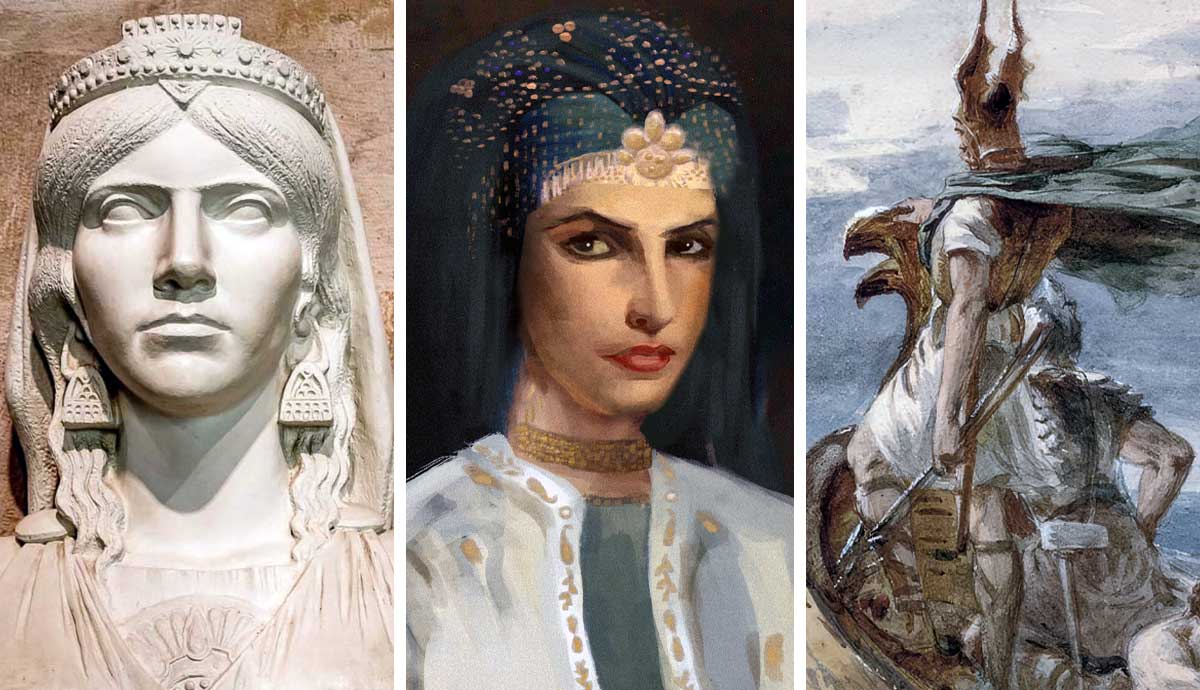
    Piracy is a way of life traditionally associated with men. However, plunder on the high seas was never an entirely male occupation. Over the centuries, women have confounded stereotypes to demonstrate that they could be equally successful pirates. While the history of women pirates is often tangled in myth and legend, the accounts tell of their strength, resilience, and fearsomeness in equal measure to their male pirate counterparts. Despite the obstacles they faced, these women proved their ability as fearless leaders of the seas.Women in Pirate LoreWagers Action off Cartagena, 28 May 1708, Samuel Scott, 18th century. Source: National Maritime Museum, Greenwich, LondonWhere do women fit into tales on the high seas, besides as sirens dragging ships to their deaths? Laura Sook Duncombe, author of Pirate Women: The Princesses, Prostitutes, and Privateers Who Ruled the Seven Seas, attributes womens absence from pirate tales and historical records to pirate women not harmonizing with gendered personifications of the sea, as well as traditional expectations of women.The sea historically has been personified as a feminine force that can be equal parts serene, divine, unpredictable, and dangerous. It followed that men were responsible for, or rose to the challenge to, taming it in some way, a literary trope seen in stories as old as Homers Odyssey to Hemingways 1952 novella The Old Man and the Sea. Female pirates disrupt the personification of the sea as feminine; what does it mean when a woman dominates a feminine object?Female pirates also subverted expectations of women as childbearers, or anchors of the home whose bounds were confined to domestic spaces. Just like men, for women the sea meant freedom, no borders, exploration, and being untethered to any stability or home.1. Queen Artemesia of HalicarnassusBattle of Salamis, by Wilhelm von Kaulbach, 1868. Source: Lenbachhaus Museum, GermanyWhat is known about Queen Artemesia of Halicarnassus is left to us by two ancient texts: The Histories of Herodotus and Stratagems of War by Polyaenus. Herodotus is known as the Father of History, though the reliability of his accounts has long been questioned. However, he was a native of Halicarnassus and wrote admiringly of Artemisia.Artemesia was the widowed queen of Caria in southwestern Anatolia who ruled her kingdom from the city of Halicarnassus in present-day Bodrum, Turkey. While the Carians were Greeks, Artemisia commanded five ships as part of King Xerxes of Persias invasion of Greece in 480 BC. In Herodotuss account, Artemisia is the only female admiral in Xerxes war council, and the only one who advised him against seeking battle with the Greeks at Salamis. When Xerxes decided to launch an attack regardless, Artemisia dutifully led her fleet into the fray.As Artemisia had anticipated, the Greeks were well prepared for the naval attack. With Persian ships trapped in the narrow straits of Salamis, Artemisia rammed into an allied Persian ship to escape. This tricked her enemy into thinking hers was a Greek ship, allowing her to leave the battle unscathed. Xerxes also believed that she had sunk a Greek ship and remarked my men have become women and my women have become men.2. Queen TeutaBust of Queen Teuta of Illyria from the Skanderbeg Museum in Kruj, Albania. Source: Wikimedia CommonsThe exploits of Queen Teuta of Illyria were recorded by several ancient historians, most notably Polybius. She and her husband King Agron ruled the region of Illyria in the western Balkans around 231 BC. After the King died, apparently from a drinking binge, Queen Teuta became his de facto successor in the name of her young stepson Pinnes. Allegedly, one of her first accomplishments was granting all naval ships licenses to essentially loot and steal whatever they could in order to bring plunder to Illyria (Duncombe, p. 15).Queen Teutas fleets blew through the coasts of the Adriatic and Italy (Duncombe, p. 16). They attacked not just enemy ships, but also their own allies. Anyone was fair game. The Queen would sometimes join the raids herself, and showed no more mercy than her subordinates. In one story, Queen Teuta and her ships arrived in a town begging for water with empty jugs. Once the gates were open, she and her forces ditched the containers and grabbed their swords, commencing their attack on the town. She quickly became known as the Terror of the Adriatic, and was a burgeoning thorn in the side of another Mediterranean power (Duncombe, p. 16).Not only would Queen Teutas crews raid Roman merchant vessels, they would also enslave the sailors on board. In one instance, the Roman authorities sent envoys to ask her to stop her attacks on Roman vessels. She refused. To add injury to insult, she had one of the messengers killed. The Queens terror went as far as western coasts of present-day Greece. The Greeks, although enemies with the Romans, temporarily allied with the Romans to confront the threat of the Illyrian pirates.Queen Teutas maritime exploits came to an end when Rome declared war against Illyria and conscripted other cities to join them in 229 BC. She fled to the Illyrian fortress of Rhizon (Risan in present-day Montenegro), where she and her loyal subjects remained in a year-long siege (Dubcombe, p. 18). After supplies ran out, Queen Teuta was forced to surrender, which the Romans accepted.3. Lagertha, the Viking ShieldmaidenVikings Heading for Land, Frank Dicksee, 1873. Source: PICRYLAccording to the 12th century Danish historical text Gesta Danorum, Lagertha was a 9th century shieldmaiden, or a Viking woman renowned for her fierce fighting skills on land and at sea. She is mentioned after a fatal attack by Swedish King Frey on her village, where she and other women were forcefully placed in a brothel (Duncombe, p. 28). Catching word of this, the Danish leader Ragnar Lothbrok set out to save them. According to the text, upon his arrival, Lagertha disguised herself as a man to fight alongside his ranks.In the midst of fighting, Lagertha stands out to Ragnar for her skills and ferocity. So much so he asks for her hand in marriage. Allegedly, after some time Ragnar leaves her for another woman and heads home to Denmark. Later, he becomes so embroiled in a civil war that he calls Lagertha to his aid. She accepts, and along with her 120 ships helps secure Ragnars victory (Duncombe, p. 29). However, after Ragnars safety was sealed, she used a concealed spear to stab Ragnar, claiming the Danish throne for herself. Although Lagerthas story shares similarities with myths of the Norse goddess Theogord, her tale suggests that the Viking women could be successful military leaders.4. Sayyida al HurraPortrait of Sayyida al Hurra. Source: Wikimedia CommonsThe story of Sayyida al Hurra is set in the backdrop of the fall of Granada at the end of the Reconquista. After the fall of the city, Sayyida and her family, the Banu Rashids, returned to North Africa. Sayyidas family was one among many other Andalusian refugees who were forced to leave Spain. The traumatic experience motivated Sayyida to seek revenge against European and Christian ships through piracy.Sayyidas husband Captain Abu al-Hasan al-Mandri, also a refugee, received approval from Moroccos Sultan to establish a settlement on the long-abandoned port city of Tetouan (Mernissi, 19). After his death, Sayyida became a prefect, and was later elevated to governor, or Hakima Tatwan (Mernissi, p. 18). In 1515, she became the last woman in Islamic history to earn the title al-Hurra, meaning the noble lady who is free and independent; the woman sovereign who bows to no superior authority (Mernissi, p. 115).Sayyida al Hurra would eventually contact the famous Ottoman pirate Barbarossa, who helped her furnish a fleet to raid Christian ships in the Mediterranean (Mernissi, p. 19). Sayyida was famous for capturing crew members of Portuguese and Spanish ships, forcing the representatives of the two powerful nations to negotiate their terms of release with her directly. Not much is known about the subsequent fate of Sayyida al-Hurra, but she is mentioned throughout Spanish and Portuguese historical records and logs from this time. Notably, almost no Arabic sources mention her during this time.5. Anne de GraafLaurens de Graaf on a 19th century cigarette card. Source: Wikimedia CommonsLess well known than other female pirates of the age, Anne de Graaf was a French woman whose tales of piracy occurred on the island of Tortuga in present-day Haiti, where she likely arrived between 1665 to 1675 (Duncombe, p. 91). There is much speculation regarding why and how she ended up there. She may have been sent there as part of a group of women to encourage the male population to settle and become farmers. However, it is also likely that Anne may have been deported for prostitution in France. It was common practice for criminals, which at this time included prostitutes, to be sent to the colonies.Conditions of her arrival aside, once in Tortuga, she married French buccaneer Pierre Le Long. Not long after, Le Long was supposedly killed by Dutch buccaneer Laurens de Graaf. There are many versions of how exactly Anne and de Graaf became a pair, and one in particular speculates it was Annes challenging de Graaf to death for revenge that allegedly inspired de Graaf to ask for her hand (Duncombe, p. 92). Anne therefore became Anne de Graaf and joined her new partner aboard his ship.Spanish Engagement With Barbary Pirates, 1650. Source: PICRYLAlthough womens presence was considered bad luck on ships, a common superstition, she was allegedly well-liked by de Graafs crew. She was even nicknamed as Anne Dieu-le-Veut, or God wills it. Whatever Anne wanted, she got (Duncombe, p. 93). Rather than plaguing the ship with bad luck, she apparently became their good luck charm.Anne partook in the buccaneers attacks on Spanish ships. Separately from pirates, who were indiscriminate in their attacks, Buccaneers would solely target Spanish ships in the Caribbean. Not only were their fleets full of high-value cargo from all over the globe, they moved extremely slowly, making them easy to capture. The story goes that when Laurens de Graaf was killed in a battle by a Spanish cannon, Anne took the ships command as captain. The bloody battle ended with Annes defeat. After she and her crew were captured, it is unclear what became of Annes fate.BibliographyDuncombe, Laura Sook. Pirate Women: The Princesses, Prostitutes, and Privateers Who Ruled the Seven Seas. Chicago Review Press, 2019.Mernissi, Fatima, and Mary Jo Lakeland. The Forgotten Queens of Islam. University of Minnesota Press, 2012.
    0 Commentarii 0 Distribuiri 3 Views
  • 0 Commentarii 0 Distribuiri 11 Views
  • 0 Commentarii 0 Distribuiri 11 Views
  • 0 Commentarii 0 Distribuiri 6 Views
  • WWW.DUALSHOCKERS.COM
    Hardest Bosses in Pragmata, Ranked
    There is a lot going on in Pragmata. After everything goes to hell on the moon, Hugh and Diana are forced to work together to take down an army of androids to escape. Among these androids are bosses that can give you a run for your money.
    0 Commentarii 0 Distribuiri 4 Views
  • WWW.DUALSHOCKERS.COM
    One Diablo 4 Patch Came with a Side Effect of Immortality
    Diablo 4 receives regular patches, but not all of them come with bugs that make them as interesting as Blizzard's most recent update to the game. Usually, you see classes, monsters, effects, or any number of in-game features being nerfed, and that makes the rare case of a patch unintentionally buffing classes to the point that you become effectively immortal in the game so much fun. It's also rather hilarious.
    0 Commentarii 0 Distribuiri 5 Views
  • WWW.PCGAMESN.COM
    Lego Batman: Legacy of the Dark Knight is the best Lego game yet
    The Arkham series vibes were strong in the early Lego Batman: Legacy of the Dark Knight trailers. The Joker being dragged down the hallways of the asylum, the ability to glide around an open Gotham, and tons of collectibles are all things that excited fans of Rocksteady's series. However, TT Games' latest doesn't forget what makes the series great, making it the most complete Lego game of all time.
    0 Commentarii 0 Distribuiri 5 Views
  • WWW.PCGAMESN.COM
    Where to find Necrolei Cysts in Subnautica 2
    It can be difficult to keep track of resources in Subnautica 2, especially when you start approaching the late-game areas of early access. It's dangerous to venture far from your base, although that's exactly what you need to do if you want to gather the most valuable materials for the journey ahead. Neocrolei Cysts are vital if you want to start crafting strong acid - a core component for Tadpole upgrades and late-game construction projects. Finding Necrolei Cysts can be difficult, as there is only one farming spot for them in the entirety of Subnautica 2 early access. Here is exactly where to find Necrolei Cysts.
    0 Commentarii 0 Distribuiri 5 Views
  • WWW.MASHED.COM
    The Best Mexican Restaurants Featured On Diners, Drive-Ins And Dives
    Guy Fieri has visited lots of eateries in his search for Flavortown, so we narrowed down the best Mexican restaurants featured on "Diners, Drive-Ins and Dives."
    0 Commentarii 0 Distribuiri 3 Views