• WWW.GAMEBLOG.FR
    Cette astuce mconnue est la meilleure du jour, voici pourquoi vous devriez mettre une pice de monnaie dans votre conglateur
    Une astuce pourrait bien vous sauver la mise. Devenue virale grce aux rseaux sociaux, elle consiste mettre une pice de monnaie dans votre conglateur
    0 التعليقات 0 المشاركات 53 مشاهدة
  • YUBNUB.NEWS
    Justice Department Sues New Mexico, Albuquerque for Obstructing Federal Immigration Enforcement
    New Mexico Gov. Michelle Lujan Grisham at the United Center in Chicago on Aug. 20, 2024. Kevin Dietsch/Getty ImagesThe Department of Justice filed a lawsuit against the State of New Mexico and the City
    0 التعليقات 0 المشاركات 51 مشاهدة
  • YUBNUB.NEWS
    NEW: Putin Hints At Significant Progress In Ukraine Peace Talks: Coming To An End
    Russian President Vladimir Putin announced Sunday that he believes the conflict with Ukraine is approaching an end. The remark came shortly after Russia observed its Victory Day parade in Moscow, an annual
    0 التعليقات 0 المشاركات 50 مشاهدة
  • YUBNUB.NEWS
    A Faint Meow in the Rubble of a Mississippi Tornado Leads to a Stunning Rescue
    Ashton Lemley picks up a kitten he found in the rubble of a trailer park damaged by a tornado in Bogue Chitto, Miss., on May 7, 2026. Ashton Lemley via APAs storm chaser Ashton Lemley picked his way through
    0 التعليقات 0 المشاركات 58 مشاهدة
  • YUBNUB.NEWS
    California Dem Frontrunner Accuses Israel of Genocide
    After Rep. Eric Swalwell got MeTooed, the Democrat side of the California gubernatorial race narrowed down to Rep. Xavier Becerra, Newsoms candidate who shares his slickness and his political
    0 التعليقات 0 المشاركات 64 مشاهدة
  • ALLTHATSINTERESTING.COM
    When Crack Was King: 1980s New York In Photos
    The 1980s greatly tested New York Citys strength: residents fled the city in record numbers, government mismanagement caused near bankruptcy of the city, and the introduction of crack-cocaine unleashed an unprecedented wave of drug addiction and violence.Below, we look at the decade that came to define the city as the Rotten Apple for a generation of Americans:Click here to view slideshowThe police force had dwindled down significantly in response to the city's dire economic recession and budget cuts, which meant that New York was ill-equipped to handle the subsequent barrage of criminal activity that plagued the streets. By 1990, annual homicides in New York peaked at 2,245.Said former NYC DEA agent Robert Stutman, "Crack literally changed the entire face of the city. Street violence had grown. Child abuse had grown hugely. Spousal abuse. I had a special crack violence file that I kept to convince the geniuses in Washington who kept telling me it wasn't a problem."Want more historical New York? Check out this footage of the South Bronx in 1982:And then this documentary short, A Most Violent Year, which explores the multifaceted problems New York City faced in 1981:And if you're fascinated by the history of New York, check out our other posts on when the New York subway was the most dangerous place on earth and startling images of 1970s New York.The post When Crack Was King: 1980s New York In Photos appeared first on All That's Interesting.
    0 التعليقات 0 المشاركات 65 مشاهدة
  • ALLTHATSINTERESTING.COM
    Societys Dropouts: 31 Eye-Opening Photos Of Americas 1970s Hippie Communes
    Throughout the late 1960s and 1970s, a deep-seated social discontent developed among young people in the United States.These were men whod been forced to fight a war they didnt believe in only to return home to a country that didnt want them.This iconic image captures the Bray Family reading bedtime stories at the Mystic Arts commune in Sunny Valley, Oregon in 1969. Photographed by John Olson.The country was filled with college graduates lacking any job prospects, young women who refused to lead their mothers lives, and the myth of an equal society that couldnt seem to shake its nasty history of segregation and inequality.The product of this dissatisfaction was hippie culture, and from hippie culture sprang hippie communes: group living spaces, communities, or villages where like minded individuals could live simply like their agrarian ancestors (usually with the help of some mind altering substances). And, most notably, hippies placed communal needs and values above individual rights.As University of Kansas professor Timothy Miller said, Reason had run its course; now it was time to return to the mystical and intuitional the hippies rejected the industrial for the agrarian, the plastic for the natural, the synthetic for the organic.Click here to view slideshowEach hippie commune was different: some were deeply religious communities while others were completely secular. Drug use was rampant on some hippie communes and forbidden on others. Some were strictly self-sufficient agrarian societies, but other hippie communes participated in capitalism by owning businesses and selling rock albums. There was no "one-size fits all" model, and each hippie commune developed its own culture, rules, and personality over time.By the 1980s, the original fascination surrounding communes had largely faded, and they began dropping off the map. While a few continue to limp along today, all that remains from a majority is photographic evidence of the time in American history when hippie communes thrived.If you want to delve deeper into commune life, check out these videos about hippies, the communes they lived on, and the children they raised there:https://www.youtube.com/watch?v=PJRO0qTlqDgThanks to the Isis Aquarian Archives, Messy Nessy Chic, and Celeste Melody for some of the photographs above.If you liked these photos of hippie communes, be sure to check out ATI's exclusive interview with Isis Aquarian of The Source Family and our other galleries on unforgettable Woodstock photos and a history of hippies. And before you go, like All That Is Interesting on Facebook.The post Societys Dropouts: 31 Eye-Opening Photos Of Americas 1970s Hippie Communes appeared first on All That's Interesting.
    0 التعليقات 0 المشاركات 65 مشاهدة
  • ALLTHATSINTERESTING.COM
    33 Powerful Photos Of The March On Washington That Changed Civil Rights In America
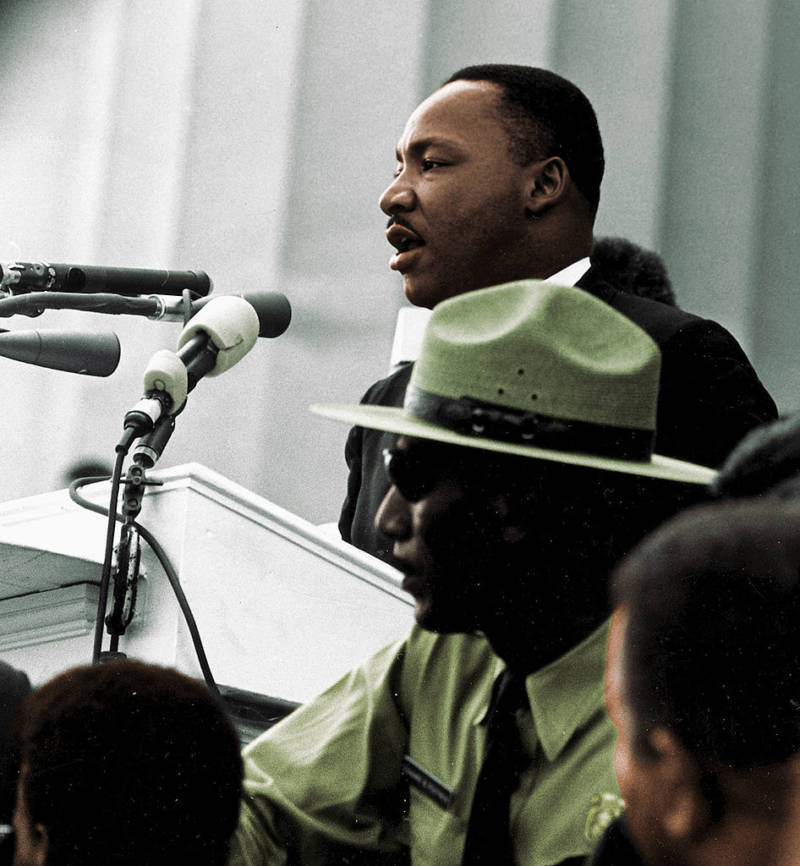
    Click here to view slideshowOn August 28, 1963, an estimated 250,000 people gathered in Washington, D.C. for the March on Washington. The historic demonstration demanded civil rights and economic rights for African Americans as they struggled to achieve true equality in the United States.Although Black people were no longer enslaved in America as they had been in the 1800s, many of them still found themselves victims of injustice and discrimination. Not only did Black people suffer under the pervasive Jim Crow laws in the South, they also struggled with poverty, perennial joblessness, and second-class citizenship all over the country. Many African Americans also faced horrific violence due to police brutality and racist white mobs. It was especially common for Black civil rights activists to experience these traumatic incidents.But despite the many hurdles they faced, civil rights leaders came together to create the March on Washington on that incredible day in 1963. Little did they know that it would become one of the most famous and most revered events in American history. See some of the most memorable moments from the march in the slideshow above.A Closer Look At The March On WashingtonNational ArchivesMartin Luther King Jr. giving his famous "I Have a Dream" speech in Washington, D.C.While the March on Washington is mostly remembered today for Martin Luther King Jr.'s iconic "I Have A Dream" speech, that speech as we know it almost didn't happen. In fact, his adviser Wyatt Walker specifically warned him against using those words: "Don't use the lines about 'I have a dream.' It's trite, it's cliche. You've used it too many times already." Apparently following Walker's advice, King didn't include those words in the original draft of the speech. But when King approached the podium to speak that August day, there was one critical figure standing behind him: gospel singer Mahalia Jackson. Although King initially stuck to his script of prepared remarks, he paused about midway though his speech and looked out toward the crowd. And that's when Jackson cried out, "Tell them about the dream, Martin. Tell them about the dream." It was only after that moment that King went off-script and delivered the most iconic lines of the day.While both the speech and the march are considered powerful moments from American history today, both were extremely controversial at the time. A 1963 poll found that 60 percent of white Americans had an unfavorable view of Martin Luther King Jr.'s March on Washington.Even after the march by all accounts a peaceful demonstration a 1966 poll found that 63 percent of Americans had a negative view of Martin Luther King Jr. in general. But even though the March on Washington didn't unite all Americans when it was actually happening, it was undeniably an important stepping stone for the civil rights movement.Remembering The 1963 March On WashingtonIn 1964, the Civil Rights Act was passed, and in 1965, the Voting Rights Act was passed as well. Both were strongly believed to have been the results of the 1963 march.The March on Washington was an incredible result of extensive planning, peaceful perseverance, and courage on behalf of civil rights activists.While King's speech remains the most famous one of the day, many other notable civil rights activists participated as well. Freedom Rider John Lewis was one of them. Just 23 years old at the time, the future congressman was the youngest speaker there and more than ready to bring his activism to the forefront.Now, almost 60 years later, much has been achieved thanks to the civil rights movement. While the fight for equality continues to this day especially in regard to police brutality and discrimination it's clear that the civil rights movement changed America forever.After you view these captivating photos of the 1963 March on Washington, read the full story behind the March on Washington. Then, learn some fascinating facts about Martin Luther King Jr.The post 33 Powerful Photos Of The March On Washington That Changed Civil Rights In America appeared first on All That's Interesting.
    0 التعليقات 0 المشاركات 65 مشاهدة
  • ALLTHATSINTERESTING.COM
    In The Time Of Victorian Portraits, The Quickest Way To Look Like An Idiot Was By Smiling
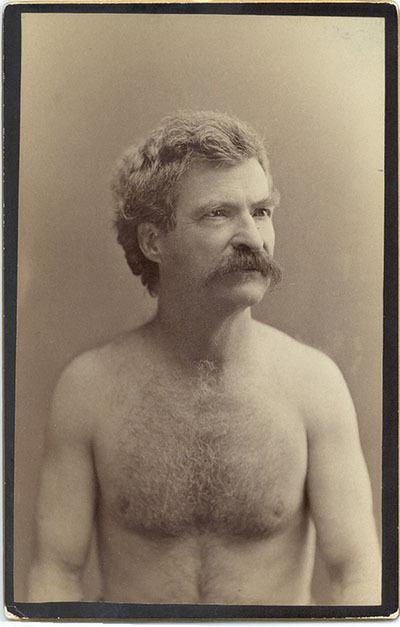
    Click here to view slideshowVictorian life must have been so much fun. If you weren't dead or about to die due to infectious diseases, you were always trying to act or at least look that way.In those early days of photography, exposures were long: The shortest method (the daguerreotype method) lasted 15 minutes. This was actually a major improvement from how long it took to shoot the very first photograph in 1826, which took all of eight hours to produce.Common knowledge has always pointed to these long exposure times as the reason why Victorians were rarely seen smiling in photos. While it was certainly a contributing factor, the real reason that these early Victorian portraits look so somber is that people didn't smile that much in life.Oft quoted was the wisdom "Nature gave us lips to conceal our teeth." Flashing a big ol' toothy grin was seen as classless. The only people to readily do so were either drunk or stage performers. In either case, smiling in Victorian portraits made people appear buffoonish as if they were modern-day court jesters.Furthermore, for some, sealed lips was a very conscious effort to conceal one's teeth orthodontia hadn't yet been invented, nor was dentistry in common practice.Wikimedia CommonsMark TwainThus, in the early days of studio portraiture, the desire to create regal, non-smiling portraits actually gave us the precursor to "say cheese": instead of the wide-mouthed grin of "cheeeeeese," studio photographers encouraged their subjects to "say prunes" instead.Moreover, the idea with long Victorian photo exposures wasn't to capture the moment, but the essence of the individual in a way that represented who they were for their entire life.As Mark Twain said, there would be "nothing more damning than a silly, foolish smile fixed forever."Intrigued by these Victorian portraits? Next, have a look at 37 haunting photos of Victorian-era mental asylum patients. Then, check out this astounding Victorian's guide to sex.The post In The Time Of Victorian Portraits, The Quickest Way To Look Like An Idiot Was By Smiling appeared first on All That's Interesting.
    0 التعليقات 0 المشاركات 65 مشاهدة
  • ALLTHATSINTERESTING.COM
    44 Historic NASA Photos From The Glory Days Of Space Exploration
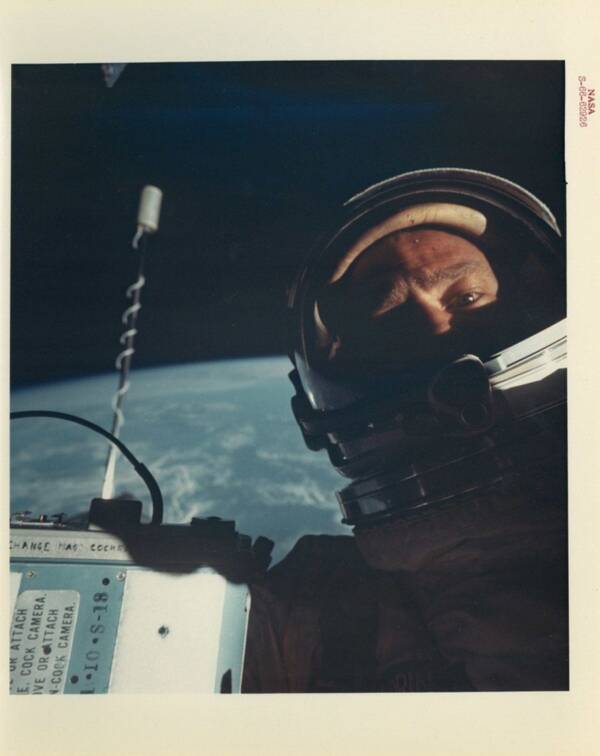
    Click here to view slideshowThe formation of NASA has its origins in the Cold War. When the Soviet Union launched Sputnik a 183-pound, basketball-sized satellite in 1957, American leaders were caught off guard. Since the United States wanted to be a global leader when it came to technology, the country decided to expand the Cold War "battlefield" into outer space.About one year after the Sputnik launch, President Dwight D. Eisenhower signed the National Aeronautics and Space Act of 1958. This officially established the National Aeronautics and Space Administration (NASA), an agency that would help Americans catch up to and hopefully surpass their Soviet rivals in the so-called "Space Race."In the following years, NASA launched a sequence of programs Mercury, Gemini, and Apollo that would systematically check off all the steps needed to explore space. Mercury focused on getting a man into orbit. Gemini put two-men teams into space to maneuver a craft and perform spacewalks. Apollo headed to the Moon and our world would change.These were the glory days of manned spaceflight. On July 20, 1969, the scientists at NASA completed one of the most amazing feats in human history when two astronauts walked on the Moon for the first time. The gallery of NASA photos above celebrates the people who made that milestone happen, and who built on its success in the years afterward.The Early Days Of NASAIn one of the most iconic NASA photos, Buzz Aldrin takes the first selfie in space while aboard Gemini 12 in 1966.Even before NASA, Congress had already founded an agency to help the United States play catch-up when it came to technology. The National Advisory Committee on Aeronautics (NACA) was an independent government agency brought together on March 3, 1915. This agency's primary purpose was to catch up with European airplane technology.But NACA engineers were already dreaming of space travel. So when NASA began operations on October 1, 1958, they absorbed NACA intact: its 8,000 employees and an annual budget of $100 million. Other organizations also consolidated into NASA. One notable group was the Army Ballistic Missile Agency, which had just launched the first U.S. satellite Explorer 1 earlier that same year.According to NACA engineer Robert Hendricks, "The transition between the two organizations was seamless... So in the early days, the attitude was still 'Let's get the job done.'"This isn't to say there weren't issues. "We were having mostly explosions with our rockets, said Charlie Duke, an astronaut in the Apollo program. "It seemed like 5, 4, 3, 2, 1... blow-up more than lift-off back in those days."Eventually, NASA got with the program or, to be more precise, several different programs. NASA Photos: Capturing The Space AgeHuffington PostA photo of the Earth taken from space. July 11, 1969.Project Mercury was NASA's first man-in-space program, and it began in 1958. Its objectives included orbiting a manned spacecraft around Earth, studying human function in space, and returning that human back home safely. A single Mercury capsule held just one astronaut, and a total of six manned spaceflights occurred during the Mercury project. As one might expect, there were usually cameras around to document these exciting moments capturing the attention of everyone from ordinary Americans to top leaders of the United States.In 1961, President John F. Kennedy set the stage for America's emerging space program before a joint session of Congress. He said, "I believe that this nation should commit itself to achieving the goal, before this decade is out, of landing a man on the Moon and returning him safely to Earth."Fueled by the president's enthusiasm and competition with the Soviet Union, NASA began to take shape. As they prepared for lunar missions, they established the Launch Operations Center in 1962. However, the name of that center would soon change. Shortly after Kennedy was assassinated in 1963, the center was renamed the John F. Kennedy Space Center.Just a couple years later, Project Gemini took off in 1965 and lasted until 1966. Named after the constellation with the Latin name for "twins," a Gemini capsule held two astronauts instead of just one. This program boasted 10 crewed flights, a few more than the Mercury program. The Gemini program saw its fair share of accomplishments. Gemini 4 showcased the first American spacewalk, and Gemini 11 flew higher than any NASA spacecraft had at that point. And all along the way, cameras were present to capture these exciting milestones, preserving them forever.The Apollo program is of course known for its Moon missions. Perhaps the most famous was Apollo 11, when Neil Armstrong made a "small step" onto the lunar surface in 1969. Not only was it the first time that mankind left the Earth's orbit to visit another "world," but it also set the stage for further exploration. Apollo put a total of 12 men on the Moon during its run. Sadly, the Apollo 17 mission in December 1972 remains the most recent time that humans have been to the Moon.After checking out these vintage NASA photos, read the true story of Apollo 13 and how it became NASA's most famous "successful failure." Then, learn some fascinating facts about space.The post 44 Historic NASA Photos From The Glory Days Of Space Exploration appeared first on All That's Interesting.

    0 التعليقات 0 المشاركات 66 مشاهدة