0 Kommentare
0 Geteilt
38 Ansichten
Verzeichnis
Elevate your Sngine platform to new levels with plugins from YubNub Digital Media!
-
Bitte loggen Sie sich ein, um liken, teilen und zu kommentieren!
-
WWW.BGR.COMHow To Hide Your Router Without Losing Signal QualityYour Wi-Fi router is one of your most important devices, but no one wants to look at it. Here's how to hide your router without destroying signal strength.0 Kommentare 0 Geteilt 38 Ansichten -
The First Thing You Should Do After Touching A Restaurant MenuThe First Thing You Should Do After Touching A Restaurant Menu...0 Kommentare 0 Geteilt 169 Ansichten
-
YUBNUB.NEWSU.S. sanctions foreign entities accused of sharing satellite imagery, access to arms to prop up IranU.S. Secretary of State Marco Rubio delivers remarks to the Munich Security Conference in Munich, Germany, Saturday, Feb. 14, 2026. (Official State Department photo by Freddie Everett) The U.S. is imposing0 Kommentare 0 Geteilt 36 Ansichten -
YUBNUB.NEWSFlailing Democrats pushing to redefine election in appeal of Virginia lossAsked during President Donald Trumps State of the Union address to stand and affirm their responsibility is to protect Americans, Democrats remained sittingVirginia Democrats are pushing to redefine0 Kommentare 0 Geteilt 35 Ansichten -
YUBNUB.NEWSDid Social Media Kill Girlhood?Painters think in brushstrokes. Directors think in scenes. Women under 30 think in Instagram stories. Young womens travel, clothing, hobbies, and even their romantic relationships are subconsciously0 Kommentare 0 Geteilt 36 Ansichten -
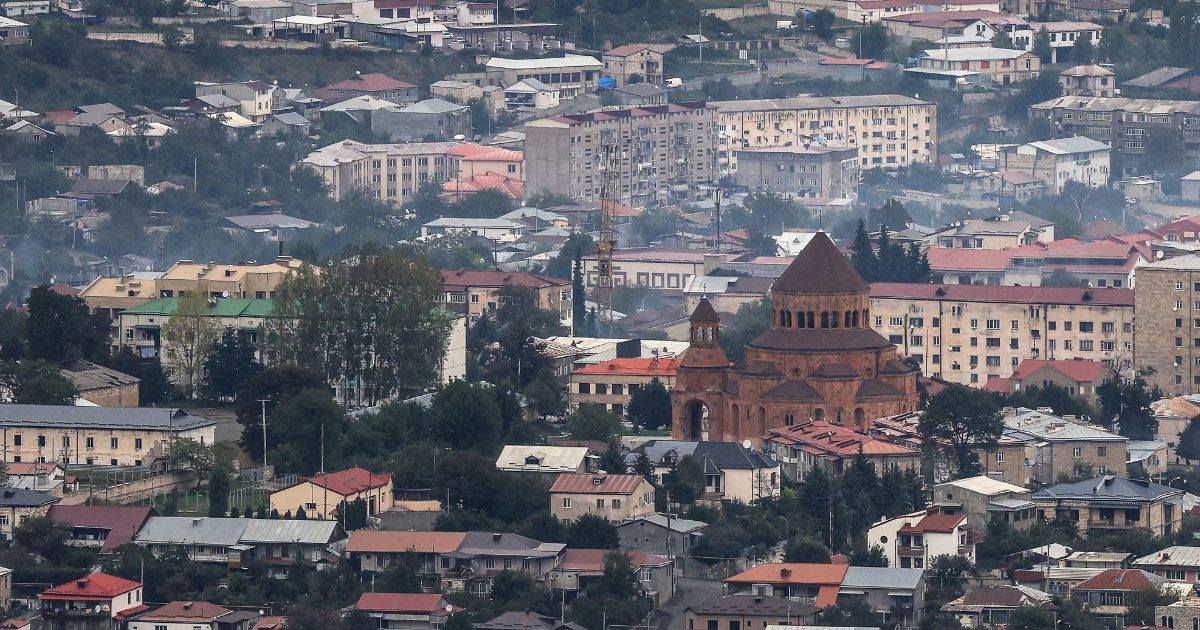
YUBNUB.NEWSAzerbaijan Destroys Two Historic Christian SitesTwo major Christian sites in the nation of Azerbaijan have been destroyed amid conflicting land claims with Armenia. A report from Radio Free Europe said that satellite imagery on April 26 confirmed that0 Kommentare 0 Geteilt 36 Ansichten -
Prime Video is hopping on the short-form video feed bandwagonPrime Video is hopping on the short-form video feed bandwagon Regardless of whether or not anyone wanted such a thing, Prime Video is turning into TikTok.Amazon announced in a press release on Friday that the Prime Video mobile app has a new feed for Clips, which are short, shareable video clips taken from Prime Video content. This...0 Kommentare 0 Geteilt 193 Ansichten
-
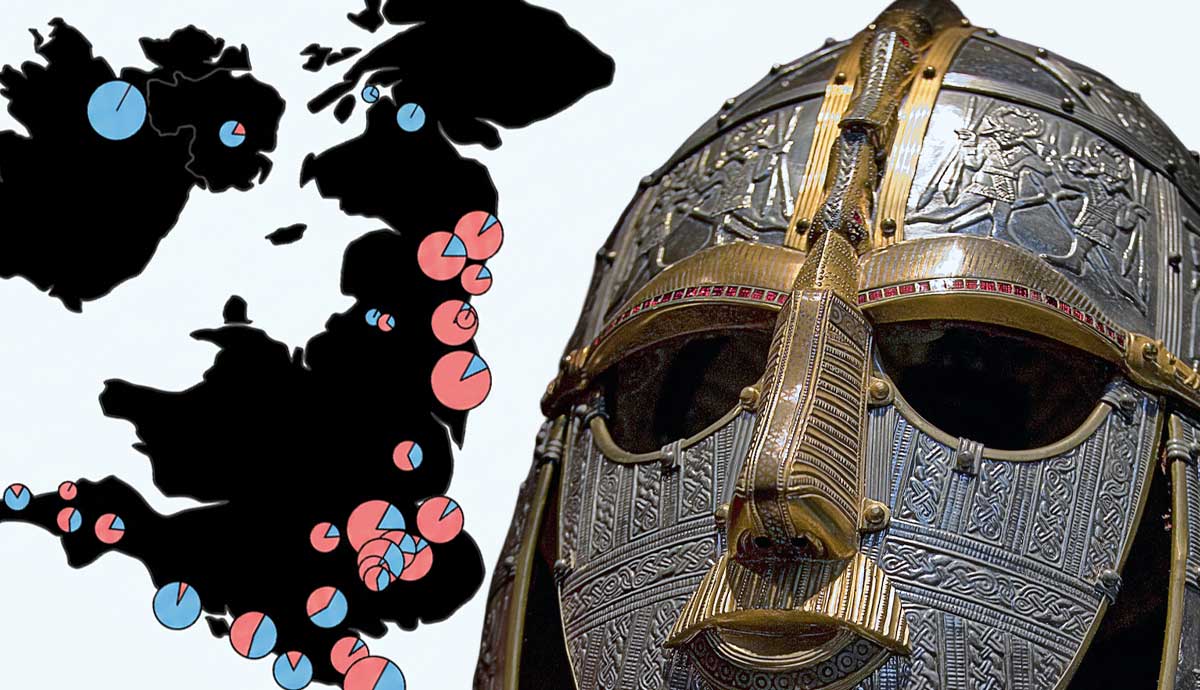
WWW.THECOLLECTOR.COMHow the Anglo-Saxons Created the Identity of EnglandThe Anglo-Saxons invaded Britain in the 5th century. However, it would take many centuries before anything resembling England actually existed. Yet, by the Norman Conquest of 1066, England existed to such a strong degree that the Norman French conquerors came to be absorbed by it rather than the other way around. How was this firm and unshakable English identity created in those intervening centuries? To what degree was it the result of natural processes compared to the conscious effort of a select few? This article takes a look at the evidence.The Venerable Bede: Writing a Nation Into ExistenceDepiction of Bede dictating to a scribe, Gloucester Cathedral. Source: Wikimedia CommonsA unified political entity which can be recognized as England did not emerge until the 10th century. However, even before it was a political reality, it was effectively a literary reality. Or at least, we can identify the presence of a collective English identity in the writings of Bede. He was a historian from the 8th century who wrote a work entitled Historia ecclesiastica gentis Anglorum. It is better known in English as An Ecclesiastical History of the English People.From the very title of the work, we can see that Bede promoted the idea of the various Anglo-Saxon kingdoms being part of one collective English identity. They were, collectively, the English people. This description tore down the barriers that were in place by the existence of various separate and competing kingdoms in the minds of those who read it.We know that Bedes work was extensively read. Even missionaries on the continent in the 8th century requested copies of it. The idea of a distinct English identity was thus quickly and extensively propagated through Bedes Ecclesiastical History of the English People.Old English: The Language of the PeopleMap showing the percentage of Western British and Irish DNA (blue) compared to Continental Northern European DNA (red) in different parts of Britain. Source: Nature, 2022One key factor involved in forming a sense of common identity is the existence of a common language. After all, imagine if the various inhabitants of what is now England spoke different languages, or they spoke one language, but it was the same as that spoken by some other ethnic group. This would tend to work against the formation of a distinct, collective identity.In the case of the early English, we know that the Anglo-Saxons did not entirely wipe out the native Britons from the territory that they conquered in the 5th century. In fact, in some areas of what was gradually becoming England, quite a large percentage of the population were Britons. They had their own language, Common Brittonic. Furthermore, the language of literature was Latin, which was a language used by countless other nations as well.In the next section, we will see how Alfred the Great influenced the adoption of English over Latin as the language of literature. However, in the case of the spoken language of the countless Britons inhabiting Anglo-Saxon territory, the explanation for why they adopted English is unknown. What we do know is that there are almost no identifiable Brittonic loan words in Old English. This suggests that there was immense social pressure for the Britons to adopt Old English and stop speaking their own language.This evident fact dovetails with a 2022 genetic study into the medieval English, which found evidence for significant integration between the Britons and the Anglo-Saxons. Hence, it was evidently a matter of the Britons wanting to adopt the language that would allow them to be better accepted within the communities in which they lived.Alfred the Great: The Architect of EnglalandA pendant depicting Alfred the Great. Source: Ashmolean Museum, OxfordThe social pressure that forced the native Britons to abandon their native tongue and speak Old English is only part of the equation. It does not explain how English won out over Latin as the language of literature.In the 10th century, King Alfred the Great made significant contributions towards creating an English identity. One way was by actively promoting literacy among his people. He did not just promote any kind of literacy, or literacy in Latin. Rather, he specifically encouraged his people to become literate in English. In fact, he promoted the West Sussex dialect as a kind of standardized form of English. This significantly contributed to the sense of shared identity by the population across England.Furthermore, Alfred commissioned the translation of various important Latin works into English. There is even evidence that some translations were done by Alfred himself. By doing this, he enabled his subjects to take pride in themselves as English people and not simply poor imitations of the Romans.As well as promoting a shared language and encouraging literacy, Alfred also contributed to the identity of England by styling himself as the King of the Anglo-Saxons. This was in stark contrast to simply calling himself the king of his own kingdom, Wessex. By referring to everyone as Anglo-Saxons, he was intentionally portraying his subjects as part of one people, with one identity.The Common Law: One People, One JusticeA modern edition of Alfred the Greats Doom Book, 1890. Source: Wikimedia CommonsWhile England was still divided into various Anglo-Saxon kingdoms, the inhabitants were subject to various contradictory laws depending on where they lived. The inhabitants of Northumbria, for example, did not have the same laws as those of Mercia, who did not have the same laws as those of Wessex.When Alfred the Great managed to establish himself as the King of the Anglo-Saxons, he established a law code which, in theory, was supposed to apply to all the English. To what degree it actually did is debatable. In any case, the law code in question is called the Doom Book. This law code is commonly seen as the ancestor to what later became Common Law in the Norman period, and as establishing the concept of a standardized legal system throughout the whole country.Medieval sources make mention of a concept called the witan. The witan was an assembly of men of various positions who would hear a matter in the presence of the king and assist him in making a decision. For a long time, this was viewed as a precursor to the Parliament of modern England. However, scholarship over the past century has emphasized that this particular aspect of Anglo-Saxon governance does not, in fact, appear to have contributed to the identity of England as we know it. In fact, the assembly of the witan appears to have simply been an assembly of the kings royal court. There was nothing substantively democratic about it. Rather, it was a royal institution.The Viking Threat: Unity Through AdversityA Viking round box brooch from 700-900. Source: Metropolitan Museum of Art, New YorkAnother factor that contributed to the formation of the identity of England came about through an external threat. From the late 8th century onwards, the Vikings fiercely and relentlessly attacked Britain. They managed to successfully conquer a large portion of it, which was governed under what was known as Danelaw.Before this time, the different Anglo-Saxon kingdoms battled for supremacy. This cultivated a sense of distinction and otherness between the inhabitants of those kingdoms. However, when the Vikings started to invade, the Anglo-Saxons saw that they all had a common enemy. This had the natural consequence of forcing them to work together and thus come to see themselves as one people fighting against an outside group.Additionally, the Vikings successfully managed to conquer some of the major Anglo-Saxon kingdoms. For instance, they conquered Northumbria, East Anglia, and at least parts of Mercia. Therefore, this removed most of the competition from Wessex, which thus quickly stepped up to become the leading Anglo-Saxon opposition to the Vikings. As a result, the borders that had existed between the separate Anglo-Saxon kingdoms were mostly torn down.The Vikings might have completely snuffed out the identity of England before it had even truly formed if they had been more successful in their attacks. As things turned out, Alfred the Great achieved a decisive victory against the Vikings at the Battle of Edington in 878. The result was a truce between Alfred and Guthrum, the Viking ruler. Due to this, the Anglo-Saxons were preserved as a people, and a distinct, collective identity was able to gain traction and flourish during the rest of Alfreds reign.The Legacy of the AngelcynnDepiction of Anglo-Saxon King Alfred, by C. Steckmest, 1847. Source: British MuseumAs we can see from this brief consideration of the emergence of the identity of England, much of it has to do with Alfred the Great. As well as styling himself the King of the Anglo-Saxons, we also see a surge in the use of the term Angelcynn, meaning English folk. While that may just be a consequence of the greater English literacy that marked his reign, such literacy in itself had a large part to play in fostering the concept of a shared English identity.Alfreds development of a single law code for his kingdom likewise played a large part, as did his defense of the English against the invading Vikings, especially at the Battle of Edington. However, even before Alfred, Bede contributed to the formation of an English identity by writing a history specifically of the English people, which history quickly became enormously popular.These factors, as well as others that we have seen, led to such a strong English identity that it was not snuffed out by the Norman invasion of 1066. Rather, the new ruling class eventually succumbed to that strongly established English identity.0 Kommentare 0 Geteilt 36 Ansichten -
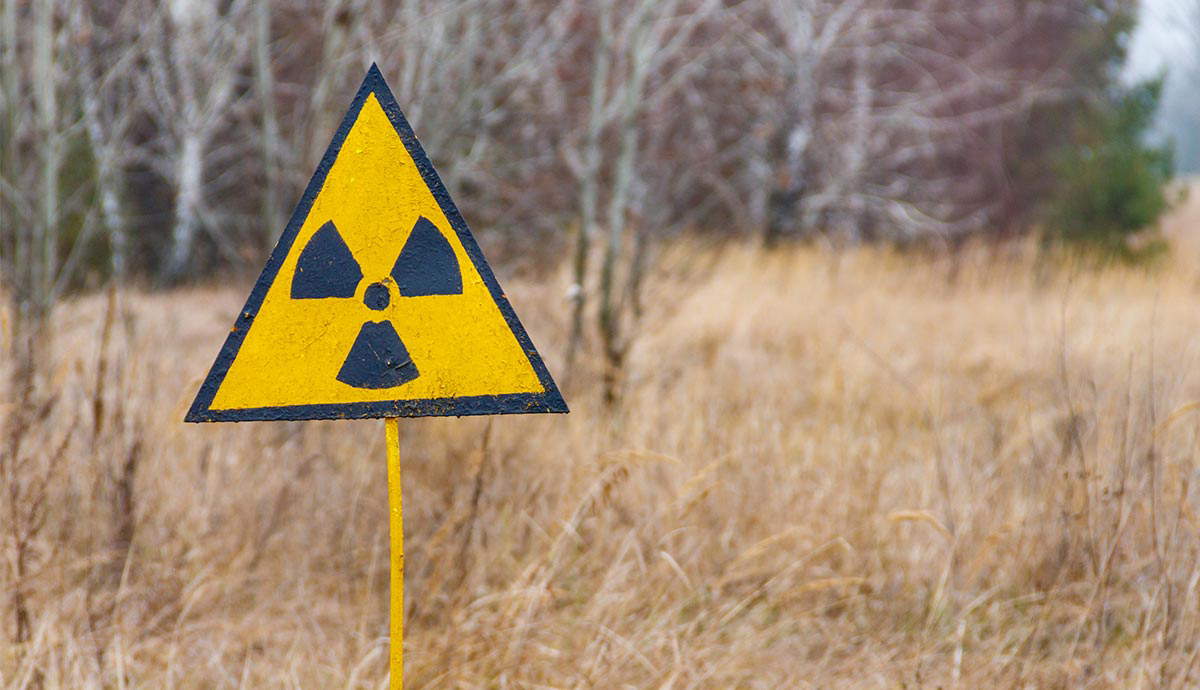
WWW.THECOLLECTOR.COMThe 8 Most Radioactive Places on EarthSince the second half of the 20th century, global superpowers have scrambled to build nuclear weapons and power plants. As a result of inevitable mistakes, radioactivity has left a deadly trail on planet Earth. From disastrous nuclear accidents to reckless waste disposal, the most radioactive places on Earth reveal how mankinds quest to harness nuclear power has had a long-lasting impact on the natural environment.1. The Chernobyl Exclusion ZoneAbandoned amusement park in the Chernobyl Exclusion Zone, 2021. Source: Robin GillhamThe worst nuclear incident in history took place on April 26, 1986, when a reactor at the Chernobyl Nuclear Power Plant in the Soviet Socialist Republic of Ukraine exploded. Massive amounts of radioactive material were thrown into the atmosphere by the blast, contaminating vast swaths of Eastern Europe, Belarus, Russia, and Ukraine. About a hundred Hiroshima bombs worth of radiation was emitted after Reactor No. 4 exploded. As a result, entire communities, including the city of Pripyat, were permanently evacuated. The Soviet Union created an exclusion zone around the power plant.The bulk of the radioactivity present in the exclusion zone is caused by the unstable isotopes Cesium-137 and Strontium-90, each with a half-life of over 30 years. Due to the nature of these isotopes, they still persist in the soil and water of the exclusion zone to this day and present a serious hazard to the health of the nearby population. The amount of radioactive material present within the damaged reactor is still so harmful that the international community was forced to raise hundreds of millions of dollars to help the struggling government of Ukrainebuild a new containment building to cover the crumbling Soviet sarcophagus that was built during the liquidation process.2. The Fukushima Daiichi Radioactive Trace AreaThe damaged Fukushima Daiichi Nuclear Reactor, 2011. Source: The Government of JapanThe Fukushima Daiichi Nuclear Power Plant in eastern Japan became the focus of global attention in March 2011. A record-breaking earthquake caused a tsunami, which triggered a chain reaction that caused the meltdown of three nuclear reactors. While Japanese nuclear technicians raced to resolve the situation, the three damaged reactors released huge amounts of radioactive iodine, cesium, and strontium into the atmosphere and surrounding area.In the wake of the triple meltdown, the Japanese government issued an evacuation warning that affected hundreds of thousands of residents over a wide area. While extensive cleanup efforts are ongoing, a large area surrounding the Fukushima plant remains heavily radioactive, and there continues to be contamination of cooling water used to prevent the damaged reactors from melting down further. Recently, the decision to release this radioactive water into the Pacific Ocean sparked controversy. Second only to the Chernobyl exclusion zone, the Fukushima Daiichi Radioactive Trace area remains one of the most heavily radioactive areas on the planet both in terms of severity and scale.3. Lake Karachay Nuclear Waste SiteA warning sign in the East Ural Radioactive Trace region. Source: Wikimedia CommonsThe next most radioactive place on Earth was not the product of a nuclear accident or an atomic weapon test. It was contaminated from years of negligence that thrived under the secretive Soviet nuclear weapons program. Lake Karachay, located in the heart of Russias Ural Mountains, is one of the most polluted places on the planet. The lake was used as an open-air dumping facility for radioactive waste from the Mayak Production Association, a Soviet facility that produced weapons-grade plutonium. By the late 1950s, after decades of pollution, the lake had absorbed the same amounts of cesium-137 and strontium-90 that were released across the entire Chernobyl exclusion zone.The contamination at Lake Karachay was made considerably worse when, on September 29, 1957, a huge explosion occurred at a nearby nuclear waste processing facility. A failure in the cooling system of the nuclear waste tank storage area caused a chemical explosion equal in size to 70 tons of TNT, and released massive amounts of radioactive material into the surrounding area.The blaze sent a column of radioactive dust into the atmosphere, dispersing fallout across a massive area now known as the Eastern Ural Radioactive Trace region. In the 1960s, a severe drought affected Siberia, exposing the lakebed to the elements. Strong winds carried the radioactive dust across a wide area. Lake Karachay has since been filled in with concrete to prevent further contamination, but the surrounding area remains dangerously radioactive due to years of pollution.4. The Semipalatinsk Nuclear Testing SiteA crater left behind from a nuclear weapon test. Source: Wikimedia CommonsThe Semipalatinsk Nuclear Testing Site, also known as the Polygon, was used by the Soviet Union as a primary testing ground for atomic weapons between 1949 and 1989. Located deep in the heart of the Kazakhstan steppes, the site witnessed 456 nuclear detonations both above and below ground. The constant nuclear testing contaminated a large area and spread radioactive fallout that affected a number of local communities. Notably, residents of villages near the Semipalatinsk testing site have reported increased rates of cancer, birth defects, and other radiation-related ailments. Today, there still remains a number of highly radioactive places at the testing site, despite frequent efforts to decontaminate the Polygon.5. The Hanford Nuclear Weapons SiteThe Hanford nuclear reactor site. Source: Wikimedia CommonsLocated in verdant Washington State, the Hanford Site was one of the most important facilities to the Manhattan Project and later became a key production hub during the Cold War arms race. Hanford housed a number of nuclear reactors that were used to produce the large quantities of weapons-grade plutonium used in the atomic bombs dropped on Hiroshima and Nagasaki. Over the four decades it was used as a nuclear weapons site, the Hanford facility produced massive amounts of highly radioactive waste, most of which was stored improperly.Today, Hanford is considered by many to be one of the most radioactive places in the United States and one of the most contaminated places on Earth. Much of this contamination was caused when storage tanks containing liquid radioactive waste leaked into the soil and groundwater. Large cleanup efforts to decontaminate the Hanford site are ongoing, but the process remains slow and costly due to the sensitive nature of the historic site.6. Sellafield Nuclear Processing CenterThe Sellafield site, 1956. Source: Wikimedia CommonsSellafield, located on the coast of Cumbria in England, has been a hub of nuclear activity since the 1940s. A key component in the United Kingdoms efforts to build a hydrogen bomb, Sellafield was used to develop the raw materials for Britains nuclear arsenal.Sellafield was also used as a nuclear fuel reprocessing center where radioactive waste was broken down and disposed of. However, over the decades, a number of accidents and leaks caused Sellafield to release significant amounts of radioactive material into the surrounding environment.As a result, the Irish Sea became heavily contaminated by radioactive waste; it has since been dubbed the most radioactive sea in the world. While cleanup efforts of the British government have continued to reduce the damage to the local environment, the Sellafield site still remains one of the largest repositories of nuclear waste in the world.7. The Goiania Radioactive IncidentThe radioactive device that caused the Goiania incident. Source: Wikimedia CommonsOne of the most radioactive regions in the world was created as the result of one of the most surprising nuclear incidents in modern times. The Goiania radiation incident was a catastrophic accident that took place in the Brazilian state of Goias on September 13, 1987.The radioactive contamination was caused when a radiotherapy device was looted from an abandoned hospital and taken apart. The accident caused widespread contamination and resulted in the deaths of four people. The source of the radiation was caused by the breach of a capsule containing 93 grams of cesium-137, which was opened by two men looking for scrap metal. As they dismantled the radiotherapy unit that contained the capsule, they encountered a glowing blue powder. The men distributed this powder to their families and sold the scrap metal to a local dealer. The authorities first became aware of the incident when a child died after playing with the glowing blue powder, and multiple individuals ate contaminated food.The cleanup to reduce the levels of radioactivity in Goiania required the demolition and burial of the contaminated homes of the scrap metal scavengers as well as the removal of topsoil. The personal items of the most contaminated individuals were also confiscated and destroyed. The incident sparked a widespread debate in Brazil about the regulation of nuclear materials, and the city of Goiania became ostracized for many years, with multiple products from the region being banned from entering the wider Brazilian economy.8. Mailuu-Suu Uranium Mining CenterA Uranium Miner in Colorado, 1972. Source: Wikimedia CommonsWhile the vast majority of radioactive contamination has been caused by humanitys efforts to refine natural minerals into more hazardous substances, in Mailuu-Suu, a small town in Kyrgyzstan, the majority of radioactive contamination was caused by mining raw uranium. During the Soviet era, byproducts of uranium mining were improperly stored in open-air waste piles. Over time, these haphazard waste dumps have eroded, releasing harmful radiation into local rivers and polluting countless communities. Moreover, the area surrounding the Mailuu-Suu uranium mining complex is prone to frequent landslides and earthquakes, further spreading the harmful byproducts of uranium mining across a wide area.0 Kommentare 0 Geteilt 36 Ansichten