0 التعليقات
0 المشاركات
9 مشاهدة
الدليل
Elevate your Sngine platform to new levels with plugins from YubNub Digital Media!
-
الرجاء تسجيل الدخول , للأعجاب والمشاركة والتعليق على هذا!
-
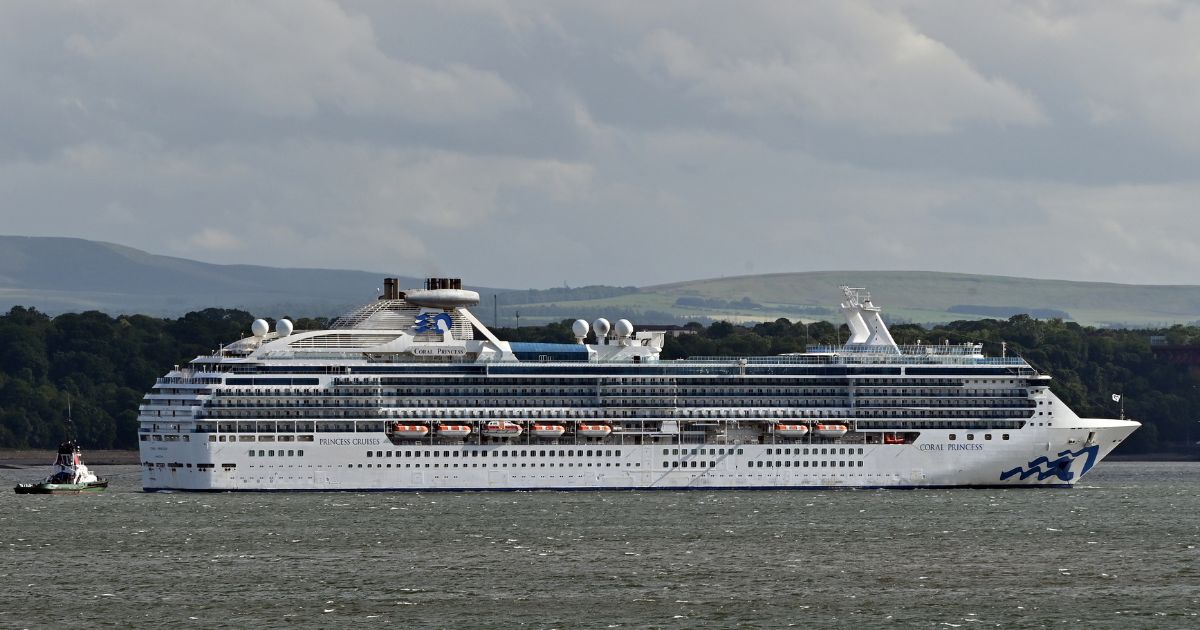
YUBNUB.NEWSCruise Ship Finds Five Dead Bodies in the MediterraneanA cruise ship pulled five dead bodies from the water while taking passengers to Spain. The Sapphire Princess, a Princess Cruises vessel, was on the way to Cartagena when it spotted an orange inflatable0 التعليقات 0 المشاركات 9 مشاهدة -
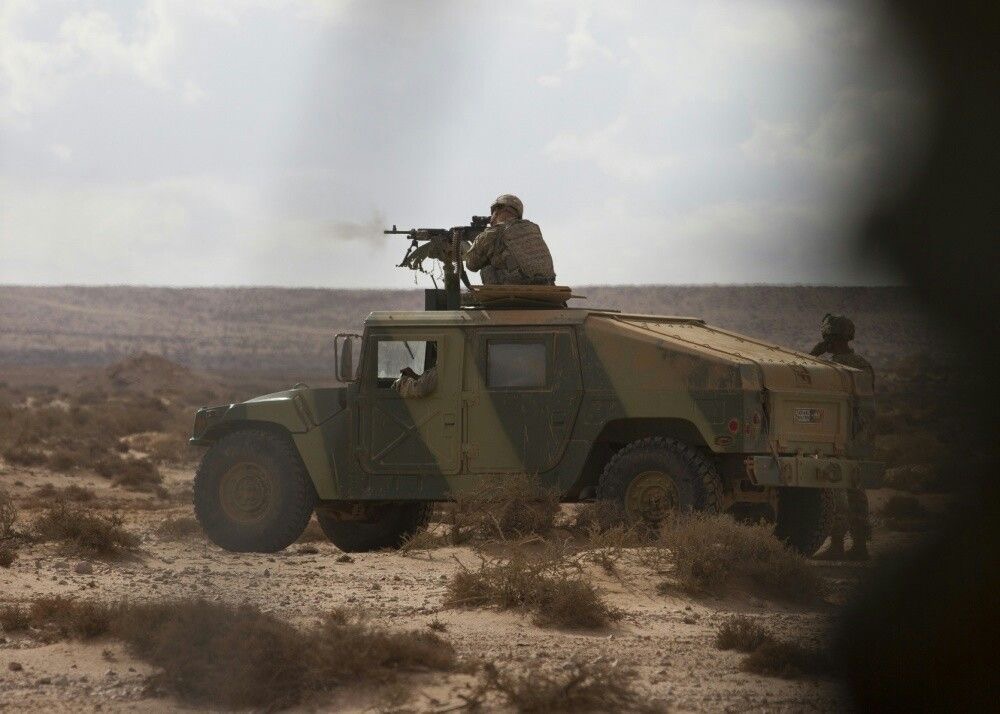
YUBNUB.NEWSSearch Intensifies for Missing U.S. Soldiers in Morocco After Multinational Military ExerciseBy Anietie anii-basseyA large-scale search and rescue operation is underway in southwestern Morocco after two United States service members went missing following their participation in a major multinational0 التعليقات 0 المشاركات 9 مشاهدة -
YUBNUB.NEWSCHINA DRAWS A LINE: AI CANT JUST REPLACE PEOPLE LIKE THATTheres a quiet but powerful shift happening in China, and if you blink, youll miss how big this actually is. While much of the world is sprinting toward automation, replacing everything from customer0 التعليقات 0 المشاركات 9 مشاهدة -
YUBNUB.NEWSTensions Escalate in Gulf as Vessel Attacked Near Strait of Hormuz and Iran Pushes New Terms to End WarBy Anietie anii-basseyA bulk carrier transiting near the strategically vital Strait of Hormuz came under attack from multiple small craft on Sunday, according to the United Kingdom Maritime Trade Operations0 التعليقات 0 المشاركات 9 مشاهدة -
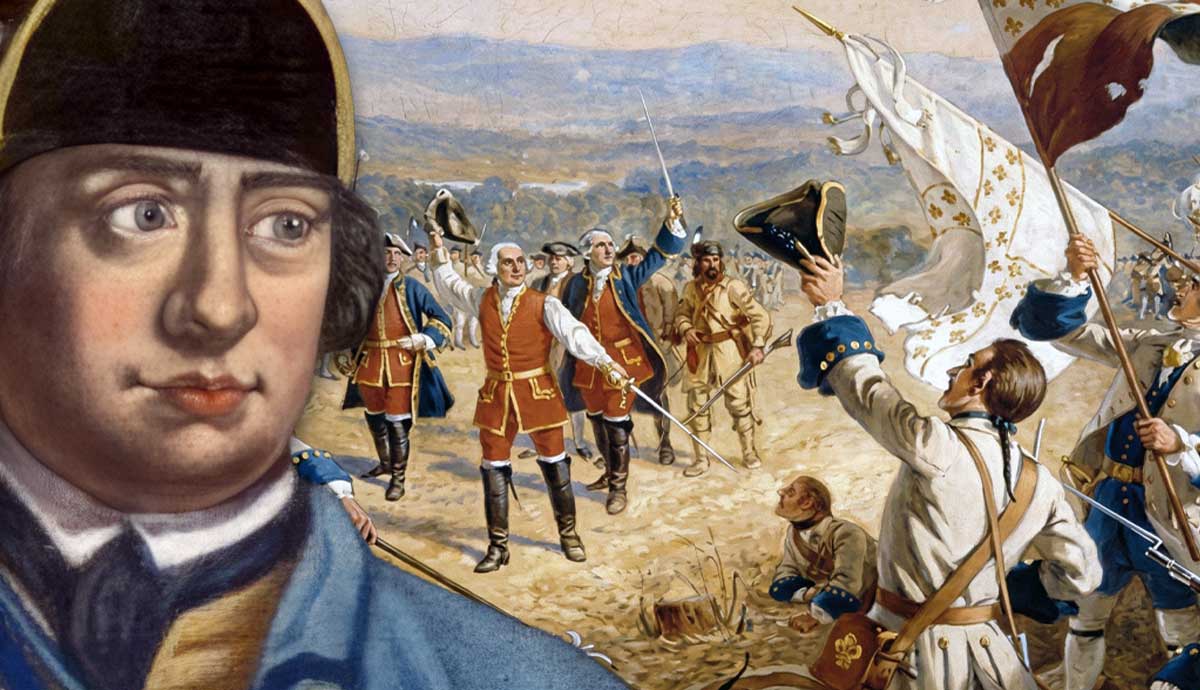
WWW.THECOLLECTOR.COMHow Rogers Rangers Became the Elite Unit That Changed American WarfareDuring the 1700s, warfare in North America exposed the weakness of conventional European military doctrine. Dense forests, vast distances, and resourceful enemies demanded new tactical responses. Rogers Rangers emerged during the French and Indian War as a revolutionary solution to this challenge. Operating far ahead of conventional forces, they conducted reconnaissance, raids, and ambushes using tactics adapted to the frontier environment. Their methods influenced British, American, and later global military practice. Find out how Rogers Rangers were formed, how they fought, and how they inspired modern light infantry and special operations forces.European vs Frontier WarfareThe capture of the Prussian fortress of Kolberg on 16 December 1761 by Alexander von Kotzebue. Source: MeisterdruckeEuropean armies that arrived in North America in the mid-18th century were trained for a style of warfare ill-suited for the continent they were fighting over. Linear tactics, rigid drill, and formal battlefield maneuvers were suited for open terrain, where disciplined volleys and massed formations could be decisive. In the forests of North America, however, visibility was limited, movement was slow, and regular formations quickly broke apart. Dense woodland, swamps, rivers, and harsh winters undermined conventional tactics and eroded the advantages of European discipline.Logistics and intelligence further compounded these difficulties. Armies operated at the end of long and vulnerable supply lines, relying on rivers or narrow trails that were easily disrupted. Accurate maps were scarce, and commanders often lacked reliable information about enemy movements or terrain. Small bands of enemy warriors could disappear into the wilderness, striking supply convoys or isolated outposts before retreating back into the undergrowth. European officers trained for continental warfare struggled to adapt.In contrast, Indigenous warfare emphasised mobility, concealment, and surprise. Small war parties moved quickly, exploited terrain, and relied on attritional ambushes rather than decisive battles. These methods were often adopted by French colonial forces and their Indigenous allies, giving them a marked advantage in frontier fighting. Early British campaigns suffered repeated setbacks as conventional units failed to protect settlements or secure lines of communication. The cumulative effect of these failures created mounting pressure for adaptation. Traditionalists reluctantly admitted a new type of soldier was needed.Rogers RangersRobert Rogers, 1776. Source: Anne S. K. Brown Military CollectionThe creation of Rogers Rangers in 1755 was drawn from the experience of their founder, Major Robert Rogers. Born in New England and raised on the edge of the colonial frontier, Rogers grew up in a world shaped by wilderness travel, hunting, and intermittent conflict. Unlike many British officers, his familiarity with forested terrain and Indigenous modes of fighting was practical rather than theoretical. He understood that success in North America required adaptability, local knowledge, and initiative rather than rigid adherence to European drill.Rogers recruited woodsmen, hunters, trappers, and frontier settlers. These men were accustomed to long-distance travel, marksmanship, and survival in harsh conditions. Physical endurance, fieldcraft, and independence were valued more than formal military appearance or parade-ground discipline. Equipped for mobility rather than spectacle, Rangers carried lighter loads and relied on speed, stealth, and self-sufficiency. This approach produced a force capable of operating deep in contested territory for extended periods without direct support.Equally important was the units semi-independent command structure. Rogers was granted autonomy by British authorities, allowing him to plan and execute operations with minimal interference from conventional commanders. Early British failures had demonstrated that traditional methods were ineffective on the frontier. While the British Army remained institutionally conservative, the pressures of colonial warfare created space for experimentation. Rogers leadership bridged this gap, translating frontier realities into a form the British military could employ.The Rules of RangingBritish forces ambushed at the Battle of Monongahela, 1901. Source: US Library of CongressRogers Rangers fought in small, flexible units designed for reconnaissance and independent action rather than pitched battles. Patrols ranged deep into contested territory, gathering intelligence on enemy movements, terrain, and supply routes. Unlike conventional troops, Rangers were expected to operate for days or weeks without support, navigating forests, rivers, and winter landscapes that defeated regular formations. This emphasis on reconnaissance allowed British commanders to anticipate enemy actions rather than react blindly.Combat relied on surprise and speed. Rangers specialised in ambushes, raids on outposts, and attacks against supply lines, striking quickly before disappearing into the wilderness. Terrain was treated as a weapon: forests provided concealment, frozen rivers became roads, and darkness offered protection rather than danger. Camouflage, dispersed formations, and rapid movement replaced bright uniforms and close-order drill. These methods reduced casualties while maximising psychological impact, forcing enemies to remain constantly alert and defensive.Training reinforced this approach. Rogers codified his experience in Rogers Rules of Ranging, a set of practical instructions covering movement, security, discipline, and survival. The rules stressed awareness and cooperation, encouraging Rangers to think independently while maintaining cohesion. Although simple by modern terms, they represented a radical departure from European military manuals of the period. By formalizing frontier warfare into doctrine, Rogers transformed ad hoc practices into a coherent system. The Rangers methods were revolutionary not because they were entirely new, but because they successfully integrated Indigenous tactics with European military organization, creating a model suited to the realities of North American warfare.The French and Indian WarFrench and British colonies in the 1750s by Pinpin. Source: Wikimedia CommonsDuring the French and Indian War, Rogers Rangers saw continuous service along the contested frontier between New York and Canada, where British and French forces competed for control of forts, waterways, and Indigenous alliances. Operating forward of conventional units, the Rangers screened advances, scouted enemy positions, and disrupted French communications. Their ability to move quickly through difficult terrain made them especially valuable in regions where regular troops struggled to maneuver or even survive. Intelligence gathered by Ranger patrols often proved decisive in planning larger operations.The Rangers frequently operated alongside Indigenous allies, drawing on their knowledge of terrain and warfare. The Ranger Rules seem like common sense to us now but in the context of the 1700s they were revolutionary. In combat against French regulars and their Indigenous allies, the Rangers proved highly effective in small-scale engagements, ambushes, and raids. However, they were never intended to replace conventional forces in major battles or sieges. Their successes depended on mobility, surprise, and favorable conditions. When drawn into prolonged fighting or poorly supported operations, Ranger casualties could be severe. Their battlefield impact was significant, but their role was specialized rather than universal.Although praised by military historians for their fighting abilities, the Rangers were no stranger to controversy. They were involved in enforcing the expulsion of the Arcadian population from Nova Scotia as well as brutal attacks on Indigenous villages.The St Francis Raid of 1759 was a dawn attack on an Abenaki village. The Rangers indiscriminately killed men, women, and children, before torching the village. The Rangers suffered heavy casualties on their retreat pursued by vengeful French and Abenaki forces.Famous ActionsThe Victory of Montcalms Troops at Carillon by Henry Alexander Ogden. Source: Wikimedia CommonsOne of the earliest and most celebrated engagements involving Rogers Rangers was the Battle on Snowshoes in January 1757. While conducting a reconnaissance near Fort Carillon, Rogers force was ambushed by a larger French and Indigenous contingent. Despite heavy casualties, the Rangers executed a disciplined fighting withdrawal, repeatedly turning to ambush their pursuers. Although costly, the engagement demonstrated the Rangers ability to survive and cemented their reputation for resilience, leadership, and small-unit cohesion under extreme conditions. It was a marked contrast to Braddocks defeat at the Battle of Monongahela two years prior.Rogers Rangers also played a critical role in operations around Fort Ticonderoga and the Lake GeorgeLake Champlain corridor. They provided reconnaissance for British advances, mapped routes through difficult terrain, and screened larger forces from surprise attack. Ranger patrols disrupted French communications, captured prisoners for intelligence, and denied the enemy freedom of movement. These actions rarely produced decisive battlefield victories, but they consistently facilitated conventional operations by reducing uncertainty and protecting vulnerable columns.Another notable episode was Rogers 1758 raid along Lake Champlain toward Montreal, a daring winter expedition that pushed the limits of endurance and logistics. Although the mission ultimately failed due to exhaustion and supply shortages, it highlighted both the strengths and limitations of ranger warfare. Rogers willingness to attempt deep penetration raids illustrated the offensive potential of light infantry, but also showed the risks when intelligence or resupply failed. These actions show that Rogers Rangers were most effective not as raiders alone, but as an integrated force supporting wider strategic objectives.LegacyUS Army Rangers. Source: US ArmyThe influence of Rogers Rangers extended well beyond the French and Indian War, shaping the development of frontier and light infantry forces in North America. During the American Revolutionary War, both Patriot and Loyalist units adopted ranger-style tactics, employing small, mobile formations for reconnaissance, raiding, and counterinsurgency. In the centuries that followed, the ranger tradition became embedded in American military culture, most visibly in the United States Army Rangers, who continue to emphasise initiative, endurance, and small-unit leadership.Within the British Army, the lessons of frontier warfare contributed to a growing appreciation for light infantry. Experiences in North America reinforced the value of skirmishers, scouts, and flexible formations operating ahead of the main force. By the late 18th and early 19th centuries, this thinking influenced the creation of dedicated light infantry units and rifle regiments, whose roles echoed many Ranger functions: screening, reconnaissance, and fighting in broken terrain. Although developed in different contexts, these units reflected the same shift away from rigid linear warfare.The Rangers might be mythologized in the popular imagination but they left an enduring influence on modern soldiering. The 28 original Ranger Rules still have relevant knowledge in them. Many long range reconnaissance forces continue to use the techniques pioneered by Rogers and his men almost three centuries ago.0 التعليقات 0 المشاركات 9 مشاهدة -
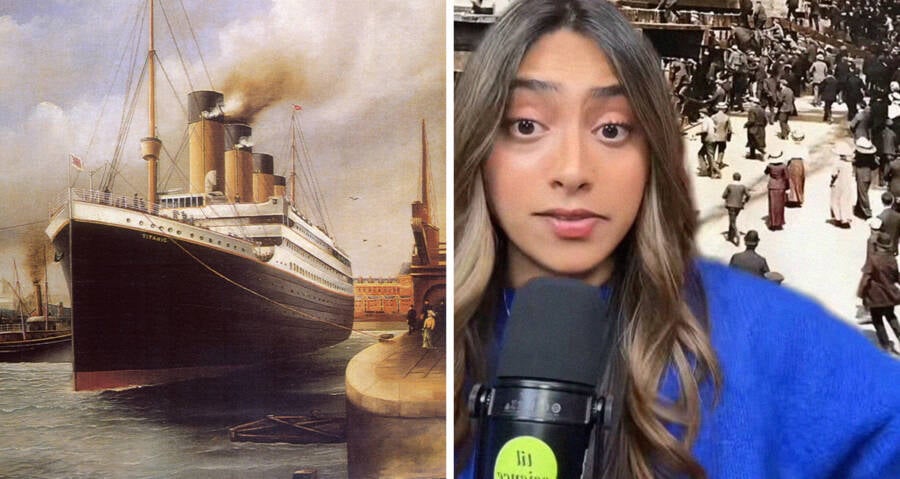
ALLTHATSINTERESTING.COMDid The Titanic Skip This Common Good Luck Ritual Used On Ships?: Doomed Before It Even Left The Dock@tilscience TikTok/Archivist Adobe StockDr. Harini Bhat, a pharmacist turned science storyteller shared how the Titanic skipped the champagne christening.Everyone is familiar with the RMS Titanic and what happened to it on the night of April 14, 1912. But one little-known detail is that the ocean liner skipped the champagne christening, a popular good luck ritual often used on boats. Which begs the question: was it doomed from the start?In a teaser for her upcoming Today I Learned series that takes a deep dive into the history and lore of the RMS Titanic, pharmacist turned science storyteller Dr. Harini Bhat (@tilscience) shares with viewers that footnote-worthy fact. Her video has been viewed over 1.2 million times so far.What Is A Champagne Christening?One of the most recognized traditions for christening a ship is breaking a bottle of champagne across its bow. Its not a new tradition, as many ancient peoples, including Greeks, Egyptians, and Babylonians, offered sacrifices to the gods of the seas. Titanics launch wasnt marked with the traditional good luck ritual of smashing a champagne bottle against the hull, explained Bhat.The owners, White Star Line, didnt believe in bad luck or superstition. They thought it was beneath them, she said. The BBC reports that the line did not christen any of their ships in this manner. The companys reason for not doing so, however, remains unclear.Romolo Tavani/Adobe StockIt is common to christen a ship by breaking a bottle of champagne across its bow.Nonetheless, for thousands of years, people have sent waterborne vessels off with various rituals for good luck and tradition.An early account of an attempt to propitiate the sea gods is found on an ancient tablet. The tablet, dated to about 2,100 B.C.E., describes the sacrifice of oxen to the gods after an arks voyage was completed. In England during the 15th century, a representative of the king would drink a goblet of wine, sprinkle wine on the deck and then throw the goblet overboard.During the modern era, there was a gradual move to champagne. According to the BBC, one of the earliest examples of smashing champagne against a ship was in 1891, when Queen Victoria launched HMS Royal Arthur. A ship with a royal name deserved a regal send-off and champagne is generally considered the aristocrat of wines. So really, the queen was just keeping the ship in good company. Because of its associations with celebration and tradition, we continued smashing bottles of champagne to christen ships. Hopefully, Poseidon likes bubbly. The Crown Jewel Of The White Star LineThe Belfast shipyards, where the Titanic was built by the company Harland & Wolff, shaped the citys economy for over 100 years.First as one of the most prolific shipyards in the world, later through two world wars, and now as home to the Titanic Belfast attraction and other historic maritime sites.nyiragongo Adobe StockA black and white photograph of the RMS Titanic, which sunk on April 14, 1912.The Titanic took over two years to complete, and it is commonly cited that eight men died during the construction. The unsinkable ship was built in direct competition to the Cunard Line, which was considered the most innovative and respected shipbuilder in the world.Designed as a luxury ocean liner with first, second, and third class berths, the ship was meant to cross the Atlantic from Belfast to New York City in style and elegance. Over 900 crew members serviced the ship, of which 679 perished in the sinking. Boiler Room EvidenceHigh-resolution images illustrate the ships current position on the North Atlantic Ocean floor.Bhat explained that where the ship split, its four massive circular boilers are still visible. Two are concave, which she says means they were still running as the ship went under. Researchers also found evidence that the emergency generator was running. It corroborates eyewitness accounts that say the lights were on even as the ship sank beneath them.Engineers continued working despite the desperate situation. Essentially, There was no way out, and they knew that, she says.One Of The Most Famous Early SOS CallsHulton Archive/Getty ImagesThe icy waters where the Titanic sank, as seen 10 days before the doomed ocean liner made its fatal crossing.But the engineers werent the only crew members who sacrificed themselves.Working boilers meant the wireless could be used. The wireless operators, Jack Phillips and his assistant, Harold Bride, sent out distress messages for hours. They even joked that they should use the new call sign, SOS, because it might be their last chance to use it.Despite working in icy water up to their knees, Phillips refused to evacuate when relieved of duty. Then, when the men got life preservers, Phillips was so focused on his task that an unidentified person was able to steal his. He perished in the wreck. For the rest of his life, Bride refused to talk about that night. @tilscience The writing was on the wall with Titanic. They shouldve broken that champagne #truecrime #darkhistory #hiddenhistory #titanic Mysterious and sad BGM(1120058) S and N All Thats Interesting reached out to Bhat via email and TikTok direct message.For more on the Titanic, see haunting photos of its sinkings, recovered artifacts from the shipwreck, and the harrowing stories of twelve survivors.The post Did The <em>Titanic</em> Skip This Common Good Luck Ritual Used On Ships?: Doomed Before It Even Left The Dock appeared first on All That's Interesting.0 التعليقات 0 المشاركات 9 مشاهدة -
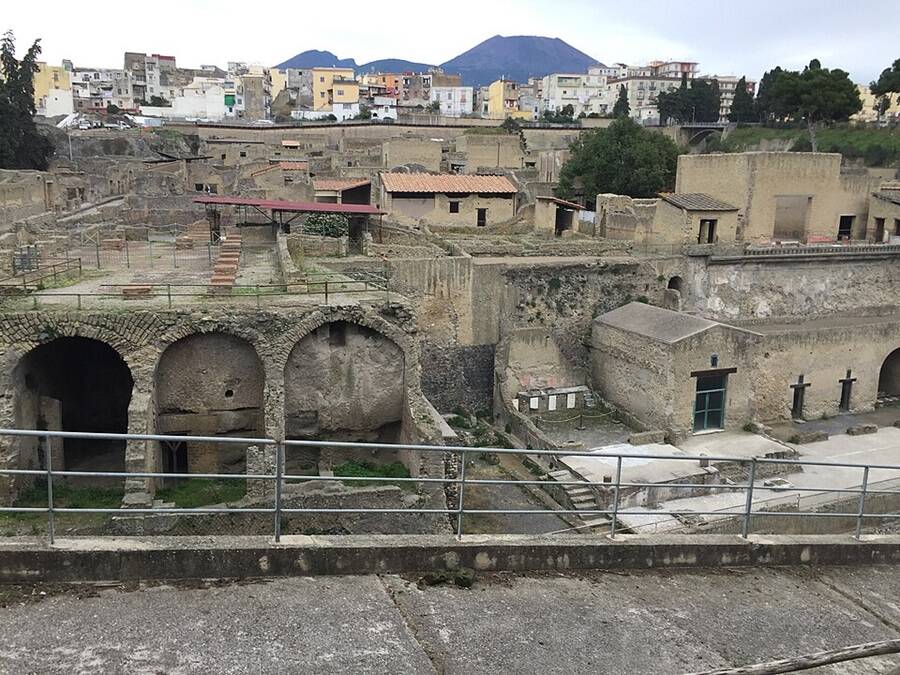
ALLTHATSINTERESTING.COMInside Herculaneum, The Roman City That Was Destroyed Alongside Pompeii During The Eruption Of VesuviusInarajin/Wikimedia CommonsThe ancient ruins of Herculaneum sit in the shadow of Mount Vesuvius, which destroyed the town in 79 C.E.In August 79 C.E., Mount Vesuvius violently erupted, famously destroying the ancient Roman city of Pompeii. But several other towns were also buried beneath volcanic debris, including the small seaside retreat known as Herculaneum.Wealthy Romans flocked to Herculaneum during the summer months, where they vacationed in lavish villas overlooking the Bay of Naples. But the towns serenity was broken one hot August day by rumblings from Vesuvius, a volcano four miles to the west. At the time, there was no real word for volcano in Latin. The tens of thousands of people living in the shadow of Vesuvius had no idea of the devastation that was about to occur.Because of the wind direction when Vesuvius erupted, Herculaneum was initially spared, and many residents had time to evacuate. But deadly pyroclastic flows eventually burst through the town, killing anyone in their path, and ash and mud covered the streets and buildings. This material was different from the volcanic debris that buried Pompeii and it exquisitely preserved Herculaneum for centuries.The lost town was rediscovered in the 18th century, 1,600 years after the eruption of Mount Vesuvius. Archaeologists have been working ever since to uncover Herculaneum and the artifacts that its doomed residents left behind.Herculaneum, The Town Beneath The Shadow Of VesuviusThe ancient town of Herculaneum sat on the Bay of Naples in southern Italy. It was smaller than the nearby city of Pompeii, but it was wealthier and more exclusive, closer to a seaside retreat than a bustling urban center. Its population hovered between 4,000 and 5,000 residents, though elite members of Roman society didnt live there full-time.Its location on the sea provided abundant food and trade opportunities. Merchants, enslaved people, craftsmen, and wealthy Romans moved through its streets. Public baths stood at the center of daily life, with citizens gathering there to discuss business, politics, and local gossip. On the residential side of town, many of the homes were elaborate villas with multiple stories and colorful marble cladding.Carole Raddato/World History EncyclopediaThese columns once surrounded a sports complex in Herculaneum.However, by 62 C.E., the tranquil region was showing signs of instability. That year, an earthquake shook Campania. Seneca the Younger described the event three years later in Naturales quaestiones, writing, Part of the town of Herculaneum fell; the buildings left standing are very insecure.The town was still in the process of rebuilding when disaster struck again.The Destruction And Rediscovery Of HerculaneumIn late August of 79 C.E., Mount Vesuvius erupted, destroying Pompeii, Herculaneum, and the nearby towns of Torre Annunziata and Stabiae. The wind was blowing toward Pompeii, which lay southeast of the volcano, so it was hit first and hardest by falling volcanic debris. Still, there was enough time for some people to evacuate and for news to spread. So, while just a few inches of ash rained down on Herculaneum during the first day of the eruption, residents realized that the tide could turn quickly and started evacuating.It was a good decision. In the middle of the night, the first pyroclastic flow burst into Herculaneum, sending burning hot ash and gas through the town at high speeds. The surge was so powerful that a marble statue was blown 50 feet off its pedestal.Public DomainThe 1944 eruption of Mount Vesuvius as seen from Naples.By the time Vesuvius fell silent once more, Herculaneum lay beneath more than 60 feet of volcanic ash and mud that later solidified into a porous rock known as tuff. As the decades passed, its exact location was forgotten, and a new town was eventually built atop the site.Then, as the story goes, a local farmer named Ambrogio Nucerino was digging a well in the early 18th century when he uncovered ancient ruins. They turned out to be the remains of Herculaneums theater. Subsequent archaeological excavations were slow going. While Pompeii was mostly buried under softer ash, the tuff that covered Herculaneum required chisels and pickaxes to break through. Even after 300 years of work, less than one-third of the site has been revealed.But what archaeologists have found has been nothing short of extraordinary.Inside The Ruins Of The Doomed CityBecause of the unique preservation of Herculaneum, materials like wood and papyrus have been discovered beneath the stone. One multi-level building still has its wooden balcony, and archaeologists once found a wooden table leg engraved with intricate designs related to Dionysus, the Greek god of wine.A residence known as the Villa of the Papyri was unearthed in 1750. It may have belonged to Julius Caesars father-in-law, and it held a library of 1,800 papyrus scrolls the only intact library from the ancient world ever discovered. While they were too charred to unroll, modern technology has started to reveal their contents, mostly Greek philosophical texts.Public DomainOne of the scrolls found at the Villa of the Papyri, which is now held at the British Library.Very few bodies were found in Herculaneum in the first few centuries of excavations, leading archaeologists to believe that nearly everyone escaped before the pyroclastic surges hit the town. Then, in 1980, a boathouse was discovered near the shore that was filled with nearly 300 skeletons. Next to the remains, archaeologists uncovered jewelry, house keys, amulets, and other valuables. One skeleton, called the Ring Lady, was even still wearing jewels set in gold on her fingers. Another had a surgeons tool set. These men, women, children, and slaves were seemingly waiting for a boat to come to their rescue when they were overtaken by a pyroclastic flow.Indeed, the hull of a wooden boat was also found on the beach. The skeleton of a man who appears to have been a military officer was discovered nearby along with his sword and dagger. One theory states that the vessel was part of the fleet of Pliny the Elder.Andrea Schaffer/Wikimedia CommonsHundreds of people died while sheltering in a boathouse on the shore of the Bay of Naples during the eruption.Pliny was commanding a fleet of Roman warships on the north side of the Bay of Naples at the time Vesuvius erupted. His nephew, Pliny the Younger, documented the disaster in a letter to the historian Tacitus.Pliny the Younger recalled the cloud of ash that burst from Mount Vesuvius, writing: I can best describe its shape by likening it to a pine tree. It rose into the sky on a very long trunk from which spread some branches The sight of it made the scientist in my uncle determined to see it from closer at hand.Just as Pliny the Elder was leaving to investigate, he received a letter from a friend who lived at the foot of Vesuvius. She was begging for help, and Pliny quickly changed his plans. After telling his nephew, Fortune favors the bold, he set out toward the looming cloud with several ships. Jebulon/Wikimedia CommonsA mosaic found in the triclinium, or dining room, of a villa in Herculaneum. The art depicts Neptune and his wife, Amphitrite.Unfortunately, Pliny the Elder met his end soon after reaching the shore of Stabiae, several miles south of Herculaneum. They tied pillows on top of their heads as protection against the shower of rocks, his nephew wrote. Then came a smell of sulfur, announcing the flames Supported by two small slaves he stood up, and immediately collapsed. As I understand it, his breathing was obstructed by the dust-laden air, and his innards simply shut down.Whether the boat found at Herculaneum belonged to Pliny or not, the terrified people sheltered in the boathouse there met an end similar to that of the famed Roman author and military commander. While theres no way to know exactly what their final moments were like, the ruins of the doomed town they were trying to leave stand as a chilling reminder of one of historys most notorious natural disasters.After learning about Herculaneum, read about the Armero tragedy, the volcanic eruption that killed 25,000 people in Colombia in 1985. Then, discover the tragic story of photographer Robert Landsburg and his death during the eruption of Mount St. Helens.The post Inside Herculaneum, The Roman City That Was Destroyed Alongside Pompeii During The Eruption Of Vesuvius appeared first on All That's Interesting.0 التعليقات 0 المشاركات 9 مشاهدة -
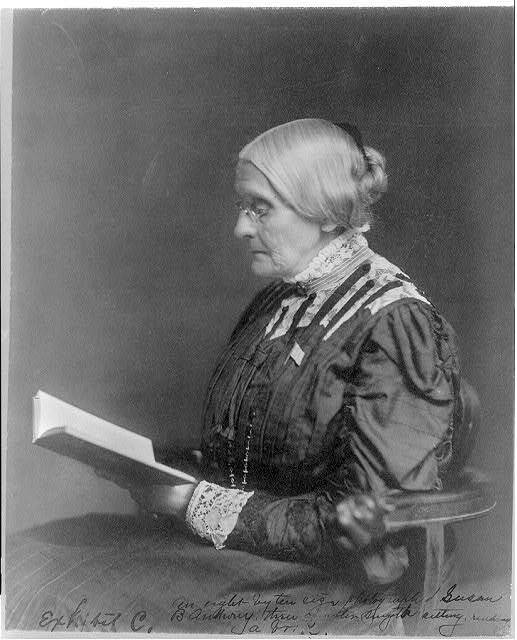
ALLTHATSINTERESTING.COM37 Vintage Library Ads That Perfectly Capture The Joys Of ReadingClick here to view slideshowWhat happens when enthusiasm for literacy meets vintage design? These colorful and amazing posters some with charmingly bad puns or baffling font choices. But these posters also served an important purpose. In the early 1900s, public libraries were beginning to pop up in American cities, offering the public far greater access to books and information than ever before. It's apparent that literacy needed a bump at this time. The oldest of these ads dates back to the turn of the 20th century, when 10 percent of the population was illiterate. As the first libraries opened, these posters advertised possibilities for a new kind of future. Literacy In 1900s AmericaLibrary of CongressWomen's rights activist Susan B. Anthony reading a book, circa 1900. In the past, reading was almost always something reserved for the upper classes, and mostly for white men. For people of color, extra barriers prevented education. Before the Civil War, a tangled web of state laws forbade teaching slaves how to read, and in some states prohibited freed black people from learning or teaching. The effects of these laws still lingered in 1900. Though just 10 percent of the general population could not read, that number rose to 44.5 percent among black people and other people of color. For women, traditional gender roles stood in the way of literacy. The expectation that girls would grow up solely to be wives and mothers meant that often less energy went toward getting them interested in books. Library of CongressA woman reading with her son in 1939. This makes it somewhat surprising that one of the earliest vintage library ads, dated from 1909, features a woman reading. However, the book at her feet is titled The Psychology of the Male Human, which isn't exactly progressive. Though the social attitudes found in some of these posters seem retrograde today, they show some progress. After all, these vintage library posters pushed people of all races, male and female, to reap the benefits of reading in a way that hadn't been encouraged in the past.And with the Great Depression just around the corner, public libraries were poised to provide books and other resources to people suffering from poverty and hunger. The Federal Art ProjectWikimedia CommonsThe WPA employed artists of all kinds, including women like these two who are shown working in a poster shop. Many of these vintage library ads came about several decades after the first libraries thanks to the WPA Federal Art Project. This major effort to provide government support for American artists came along during the Great Depression and ran from 1935 to 1943. President Franklin Delano Roosevelt put $35 million towards the program, which employed more than 5,000 artists at its peak in 1936. The Federal Art Project artists created 2,566 murals, over 100,000 easel paintings, and approximately 17,700 sculptures. Along with this, creators made almost 300,000 fine prints and around 22,000 plates for the Index of American Design. The national director of the project, Holger Cahill, was a former museum curator as well as an American folk art expert. He was able to see the potential for cultural development in the WPA and undoubtedly appreciated that artists would be able to work for a paycheck. As for the artists, many of them saw the program as a much-needed support and an opportunity to create art that reflected their hopes for a better future. Creating work that promoted reading was a natural extension of this desire to improve conditions for all. Wikimedia CommonsArtists employed by the Works Progress Administration also made work promoting national parks, government programs, and the WPA itself. Though the program came to an end in 1943, artists continued to make posters urging people to get into a good book into the 1950s and beyond. And now, with the rise of email, texting, and social media, our literacy skills are on display like never before.Literacy rates among American adults are much higher now than they once were. But, as of 2019, one in five adults still has low English literacy skills. This translates to about 43 million people who struggle to read. With millions still lacking the skills to paraphrase what they've read, compare and contrast written information, and make inferences about a text, perhaps now would not be a bad time for these vintage library posters to make a comeback.Next, take a look at these 55 photos of your parents being cooler than you'll ever be. Then, see just what vintage Soviet propaganda posters were trying to sell you. The post 37 Vintage Library Ads That Perfectly Capture The Joys Of Reading appeared first on All That's Interesting.0 التعليقات 0 المشاركات 9 مشاهدة -
WWW.DUALSHOCKERS.COM8 Pokmon FireRed And LeafGreen Details That Players Appreciate Much More As AdultsOne of the most beloved games from my own childhood is Pokemon FireRed. This game added to the already phenomenal formula of the first-ever games in the Pokemon series. The Kanto region contains many of the most famous Pokemon, even today, and classic elements like Team Rocket to boot that made for many of the elements I and many others consider to be my childhood.0 التعليقات 0 المشاركات 9 مشاهدة