• The best gaming monitor deals to shop this weekend — Alienware, LG, and ASUS on sale right now
    Best gaming monitor deals: Alienware, LG, ASUS on sale this weekend Level up your setup.  By ...
    0 Comments 0 Shares 1 Views
  • The best TV deals to shop this weekend — Samsung, Hisense, and Toshiba at huge discounts
    Best TV deals this weekend: Save on 4K TVs from Samsung, Hisense, and Toshiba Score a 2026 Hisense for $500 off.  By ...
    0 Comments 0 Shares 0 Views
  • WWW.LIVESCIENCE.COM
    City birds appear to like men more than women, but experts have no idea why
    An analysis of 37 urban bird species found that men could get slightly closer to the avians than women could, suggesting that these animals recognize sex differences in humans.
    0 Comments 0 Shares 0 Views
  • WWW.UNIVERSETODAY.COM
    Is the Large Magellanic Cloud a First-Time Visitor?
    Our most massive satellite galaxy, the Large Magellanic Cloud (LMC), has been the center of a heated debate in the astrophysics community over the last few years. That debate centers on whether this is the LMCs first or second pass by the Milky Way itself - and it has huge implications for the evolution of our galaxy given the disruption such a large grouping of stars has. A new paper from Scott Lucchini, Jiwon Jesse Han, Sapna Mishra, and Andrew J. Fox and his co-authors, currently available in pre-print on arXiv, provides what they claim to be definitive evidence that this is, in fact, the first time LMC has encountered the Milky Way.
    0 Comments 0 Shares 0 Views
  • 0 Comments 0 Shares 0 Views
  • WWW.THECOLLECTOR.COM
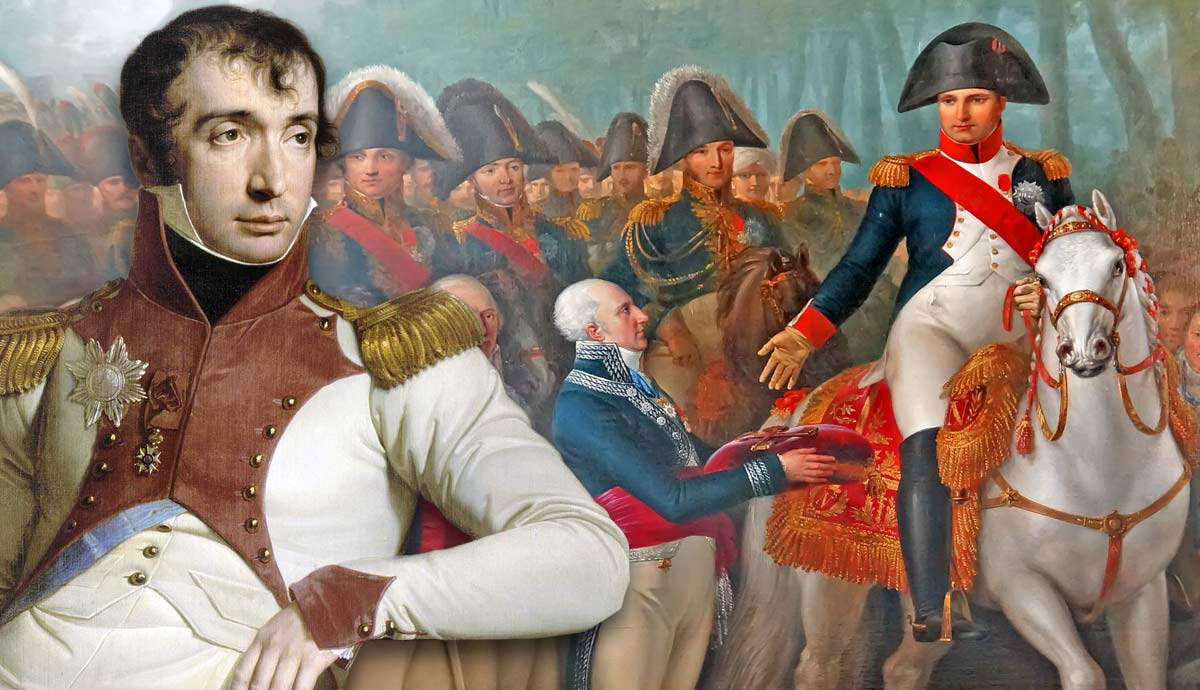
    Why Napoleon Forced His Own Brother to Abdicate the Dutch Throne
    In 1806, Emperor Napoleon made his younger brother Louis Bonaparte King of Holland. During his four-year reign, Louis was caught between the interests of his Dutch subjects and his brothers demands for men and taxes. In 1810, Louiss sympathy with the Dutch prompted Napoleon to abolish his kingdom and absorb the Netherlands into the French Empire. Louis continues to be fondly remembered in the Netherlands for his efforts to defy Napoleons centralizing decrees.Who Was Louis Bonaparte?Bust of Louis Bonaparte by Lorenzo Bartolini. Source: SothebysLouis Bonapartes life was forged under Napoleons stern tutelage. Born in 1778 in Corsica, Louis was the third son of Carlo and Letizia Bonaparte. When Carlo died in 1785, the 16-year-old Napoleon assumed responsibility for Louiss education. Louis, who hoped to become an artist and a poet, decided to follow Napoleon into the French Army. However, he showed a serious reluctance to serve. For instance, when he commanded a cavalry regiment in 1800, he spent long periods of time away from his unit on sick leave.Personally, he was a brave man. Serving as Napoleons aide-de-camp during the First Italian campaign, he rescued his older brother when he had his horse shot out from under him at the Battle of Arcole. He routinely rode through heavy fire to deliver messages to subordinates. However, when he went to Egypt with the rest of Napoleons army, he forced his brother to send him back to France because he detested the desert. His association with his brother and his personal courage meant that he was promoted to Gnral de Division at 25 years old. However, he still harbored artistic ambitions and was reluctant to carry out his brothers bidding.By 1796, Louis began suffering from chronic health issues, including bouts of depression and what he described as neurasthenia. He often sought relief at various spa towns, using his ill health to avoid certain military assignments. In 1802, Napoleon arranged Louiss marriage to his beloved stepdaughter Hortense de Beauharnais. The marriage proved a disaster, although the couple had three children, including the future Emperor Napoleon III.The Collapse of the Batavian RepublicThe Batavian fleet in Vlissingen by Engel Hoogerheyden 1804. Source: Wikimedia CommonsEstablished in 1795 after King William V fled with his family, the Batavian Republic was the Dutch satellite of the French Republic. While it was a democratic republic on paper, it suffered from chronic instability, including several coups detat. For the French government, instability in the Netherlands could be weaponized by Frances enemies against them. After seizing power as First Consul in November 1799, Napoleon began insisting on major changes to enable his government in France to assume greater control over the Netherlands.In 1805, Napoleon tried to centralize power in the Netherlands by installing a single leader, Rutger Jan Schimmelpenninck, as Grand Pensionary. However, Schimmelpenninck proved to be ineffective as a puppet leader and further enraged Napoleon. The Dutch were unable to break the British blockade of French ports in the English Channel, while the British Royal Navy captured a host of Dutch colonies around the world.In early 1806, Napoleon issued the Republic an ultimatum. Either they accept the rule of his brother Louis, or he would directly annex the entire territory into France proper. The Dutch, fearing that Napoleon would destroy their country if they refused, agreed to accept Louis as their new king. On June 5, 1806, the Republic was formally dissolved and replaced by the new Kingdom of Holland under King Louis.King of HollandThe interior of the Royal Palace of Amsterdam, Louiss residence as King of Holland. Source: Royal House of the NetherlandsOne of the grim ironies about Louiss reluctance to take up the role of King of Holland was that he proved to be effective and somewhat popular. Many Dutchmen looked at him as a stabilizing force after years of turmoil in the Republic. Additionally, he sought to ingratiate himself with the public and made a conscious effort to avoid being a French puppet. While this proved to be a positive for his subjects, it led to major tensions with Napoleon, who hoped to use Dutch resources to support his military and political objectives as Emperor of the French.He attempted to learn Dutch to better communicate with his subjects and called himself King Lodewijk. While he famously slipped up and called himself the Rabbit of Holland (Konijn van Olland) instead of King of Holland (Koning van Holland), the gesture earned him immense popular respect. He established the Royal Academy of Sciences and founded the collection that became known as the Rijksmuseum. Additionally, when he introduced the Napoleonic Code, he adapted it to Dutch customs rather than imposing it verbatim. These decisions showed that he considered local sensibilities when ruling the Netherlands.Louis also showed personal sympathy for his subjects. When a barge carrying gunpowder exploded and destroyed much of the city of Leiden in 1807, Louis personally rushed to the scene, funded the reconstruction from his own pocket, and exempted the city from taxes. During major floods in 1809, he donned boots and waded through mud to help victims, a level of royal empathy previously unseen in the Netherlands.Resisting Napoleons DemandsA map of Walcheren during the British expedition in 1809 by Martin Brown. Source: The Late Lord (Dr Jacqueline Reiter)Louiss policies may have worked for him and the Dutch people, but it set him on a collision course with Napoleon. In 1806, Napoleon established the Continental System to blockade British ships from European continental ports. He ordered Louis to crack down on the widespread violation of the blockade by the Dutch and made incessant demands for Dutch conscripts for military service across the French empire.Louis knew that the Dutch economy was dependent on continued trade with Britain. Therefore, he publicly claimed he would stop Dutch merchants from trading with the British while allowing it to continue in private. Napoleon knew about this and derided Louis in private letters, calling the Netherlands nothing more than an English colony. Louis also insisted that no Dutchmen would be forced into military service against their will. When Louis agreed to allow the French to take some Dutch orphans for enlistment, it caused major unrest in the city of Rotterdam and Louis had to stop the practice immediately.In 1809, when 40,000 British troops landed at Walcheren targeting the French fleet at Antwerp. Napoleon had already depleted the Dutch army because he feared that it would turn against him, leaving Louis with only 9,000 untrained men. Napoleon viewed this inability to protect the northern gateway to the Empire as a personal failure of Louiss leadership. While the British expeditionary force was decimated by yellow fever and forced to abandon its campaign, reinforcements arrived from France and began to occupy major institutions throughout the Netherlands, effectively making the territory a French colony.Louiss AbdicationNapoleons arrival in Amsterdam in 1811 by Mattheus Ignatius van Bree, 1812. Source: RijksmuseumWhile the French intervention saved the Netherlands from the British, it spelled the end of Louiss rule. Napoleon and his marshals thought that Louis and his Dutch advisors were incapable of keeping the British out of northern Europe. Additionally, Louis publicly opposed the permanent stationing of French troops on Dutch territory. Once it became clear that Louis was going to be nothing more than a puppet surrounded by French bayonets, he began plotting his escape.On July 1, 1810, Louis wrote up his abdication papers and prepared to hand over the throne to his son, Prince Napoleon Louis. The next evening, he fled his palace at Haarlem in secret. He traveled under the pseudonym Comte de Saint-Leu (after his estate in France) to seek asylum in Bohemia, then part of the Austrian Empire, effectively abandoning his family and throne to escape his brothers reach. The French army entered Amsterdam shortly afterward and Napoleon announced that he planned to annex the Netherlands directly into the French Empire. Governor-General Charles-Franois Lebrun oversaw the occupation from Paris while the French began dragooning Dutch resources and manpower into the war effort.When Napoleon invaded Russia in 1812, Dutch conscripts in the French army suffered heavy losses, enraging the Dutch public. Underground organizations began plotting to rebel against the French while smuggling to the British continued, notwithstanding the French crackdown. After Napoleons disastrous defeat at Leipzig, the French garrison in the Netherlands began to withdraw. This enabled King William I of the House of Orange-Nassau to return, leading to the restoration of Dutch independence.The Legacy of Louiss RulePortrait of Louis Bonaparte in Dutch military uniform painted after his abdication by Carl Christian Vogel von Vogelstein, 1813 or 1815. Source: Chteau de VersaillesAfter a protracted legal battle with his estranged wife over the custody of their eldest son, Napoleon Louis, Louis settled in Florence in 1826, where he finally had the opportunity to pursue his literary ambitions. Initially, he wrote a three-volume work defending his record as King of Holland, and later, he wrote a novel. In 1846, he died in Italy and was buried in the town of Saint-Leu-la-Fort, in France.While Louis was imposed as king by Napoleon, he is fondly remembered in the Netherlands. His willingness to learn the language, his desire to create a Dutch law code that reflected local conditions, and his empathy towards the Dutch people in times of disaster made him popular amongst the locals. Additionally, he established a unified national tax system and the Ministry of Water Management, which remains a vital part of Dutch infrastructure today. Many of the main institutions in Amsterdam today are a legacy of his rule.When King William took over the Netherlands, he instituted a policy of forgetting the Napoleonic period. However, he sought to copy many of Louiss policies. For instance, he insisted on a unitary Dutch state instead of a confederation of provinces. Additionally, he kept the Civil and Land registries in place that Louis had set up. Subsequent Dutch leaders sought to blend local governance practices with Louiss Bonapartist vision of leadership.
    0 Comments 0 Shares 0 Views
  • WWW.THECOLLECTOR.COM
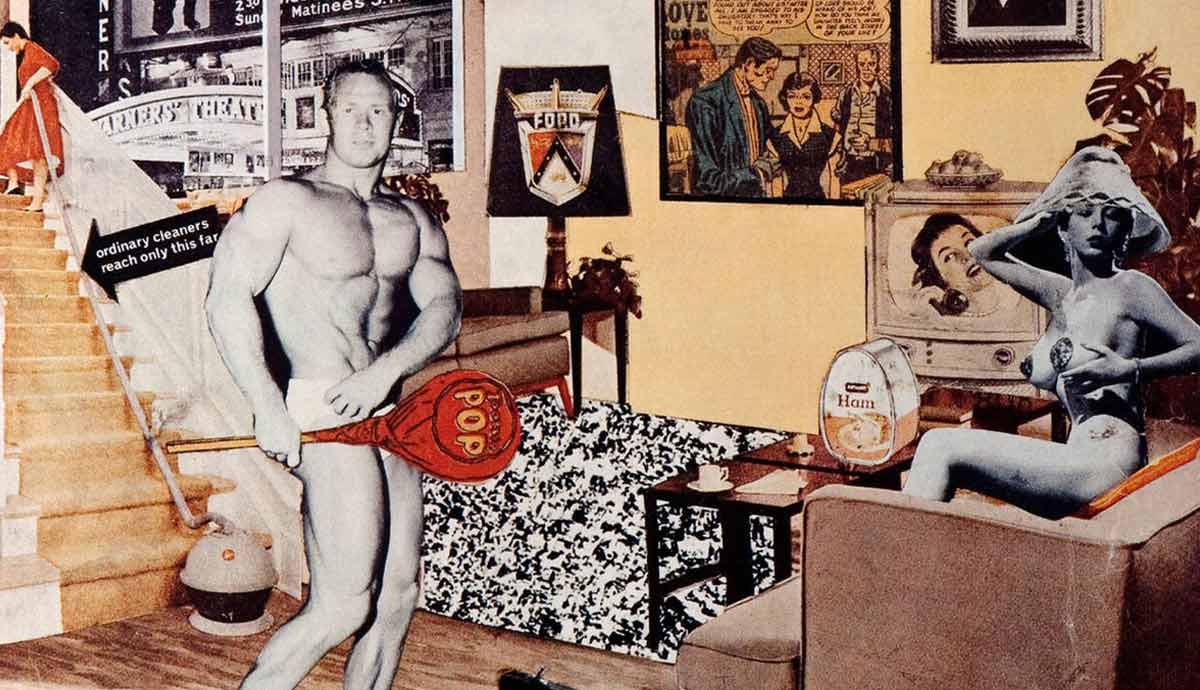
    How Americas Consumer Industry Won World War II
    Just What is it that Makes Todays Homes So Different, so Appealing?, Richard Hamilton, 1956Theres no doubt that Americas entry into World War II brought the worlds largest consumer industry along. While other nations produced consumer items, American industry swamped them in both quality and quantity. No other nation had built such a network of toy and appliance factories, automobile or packaging companies. American consumer culture demanded a system built on efficiency, standardization, and high production.1938 Hoover Vacuum Ad. Source: Internet ArchiveThe Axis knew Americas industrial potential but only with disdain. Axis governments viewed Americans as mongrels, corrupt or decadent, with no stomach for a long war. But by 1943, Americas output rivaled, and sometimes exceeded, the Axis nations combined manufacturing output in critical areas. The swap from civilian to military production would be a hidden engine.The Prewar Consumer EnvironmentAmerican train yard, 1930s, Montana. Source: Library of CongressConsumer demand drove the American economy in the 1930s. The demand remained despite the Great Depressions severe toll. American industry, especially the automotive and household goods manufacturers, figured out mass production. Companies like Chrysler, Ford, Hoover, and GE perfected assembly-line techniques in the prior decades. What worked building a Ford Model A worked equally well in manufacturing sewing machines, vacuums, radios, and packaged foods. Standardization ruled the day. American consumers awaited annual changes or new quality products at affordable prices.And these goods required transportation to the market. Built years before World War II, this unmatched logistical hub spanned North America. The network distributed an unheard-of amount of goods from factory to shelf efficiently. Regions of America specialized in certain products, such as Detroit automobiles, and sent their goods to national markets. When war came, this emplaced network rapidly converted to shipping airplanes, ammunition, and uniforms.Americas decades of working with assembly lines, troubleshooting problems, and meeting quotas made American workers efficient. Repetitive, uniform tasks could be easily performed as factories shifted from making cars to making tanks. These repetitive tasks enabled new workers to train rapidly, thereby scaling up to meet wartime demands.From Toys to Tanks: A Total ConversionThe We Can Do It poster by Westinghouse Electric. Source: National Park ServiceThe government created the War Production Board (WPB) in early 1942. Its purpose: to coordinate Americas biggest industrial shift ever. The WPB halted most consumer production, ordering factories to war production. That meant from automotive to toy factories. It directed critical materials, such as steel and aluminum, to meet military demands.Large factory assembly lines, such as those in car factories, switched to producing tanks or aircraft. Ford completed Willow Run by 1942, making it the worlds largest bomber factory. Appliance companies like RCA or Westinghouse swapped radio production to communications equipment or munition parts. Shipyards built warships by the thousands and eventually produced the easy-to-build Liberty Ship.Smaller companies became important too, able to respond faster than bigger companies to specialized products. Lionel, the toy train maker, now produced compasses, telegraph keys, and shipboard phones. Mattatuck Manufacturing shifted from upholstery nails to rifle cartridge clips, gradually ramping up to three million clips weekly.More Than An Industrial Makeover1944 advertisement for Cadillacs AFV engine. Source: lov2xlr8.noAs Americas factories became the Allies biggest suppliers, a demographic change occurred. While not unanticipated, the rapidity of this did surprise the government. As wartime demands skyrocketed, so did the need for workers. Millions of women, unemployed workers, and African Americans migrated to industrial cities. This changed the ethnic and social makeup of cities, often permanently. With so much government demand and spending, the Great Depression ended.Racial barriers declined more quickly as prewar patterns broke. African-Americans, long excluded from certain industries, filled needed positions. Executive Order 8802 from 1941 helped, banning discrimination in the defense industry.Consumer Industry Becomes StrategicTwo women workers in a factory. Source: National ArchivesAmericas vast consumer industry quickly showed its worth. While Axis countries like Germany produced excellent planes or tanks, Americas sheer output outdid its opponents many times over. This is best exemplified by the Liberty Ship. This quick-to-build ship came down the quays faster than the dreaded U-boats could sink them, reducing the U-boats impact.Americas industrial upswing became a weapon. The production met both American and Allied military needs. Food, weapons, munitions, fuel, and raw materials helped keep Allied nations in the fight, often around the globe. Material losses often got replaced. Axis leadership, though warned by individuals, did not fathom how fast America could switch to wartime conditions. Or, how American production helped win via attrition. In December 1940, FDR described America as the Arsenal of Democracy, which did happen.Americas consumer market demonstrated its flexibility, scale, and speed by swiftly adapting to national emergencies. Consumer production stopped; only 139 cars left factories between 1942 and 1945. Americas consumer industry didnt just support the war, it helped win the conflict.
    0 Comments 0 Shares 0 Views
  • WWW.THECOLLECTOR.COM
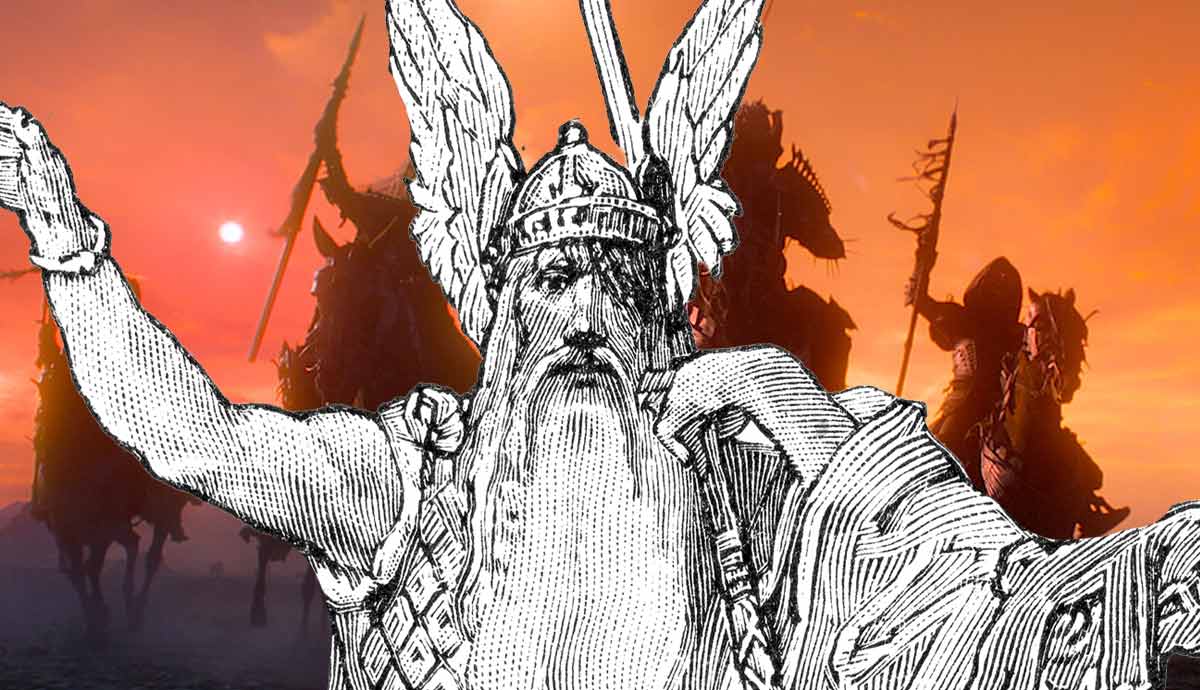
    The Dark Roots of Europes Terrifying Wild Hunt Myth
    Throughout European history, legends tell of a grim cavalcade of spectral riders, chasing prey across the night sky in an eternal procession of ghostly horror. Found in cultures from the Germanic peoples to the Slavs and the Celts, this phenomenon was, and still is, a portent of doom, preceding war, plague, and death.Striking fear into the hearts of all those who witnessed it, this is the Wild Hunt.What Was the Wild Hunt?Wild Hunt of Odin by Peter Nicolai Arbo, 1872. Source: National Gallery of Norway/Wikimedia CommonsFound across many cultures of Europe, including Slavic, Germanic, and Celtic societies, the Wild Hunt was a motif that involved the common idea of a procession of ghostly hunters making their way across the night sky. While the details may have varied from culture to culture, and indeed, from person to person, the theme remained the same, and it was always ominous.It was believed to precede great catastrophes, and those who saw it feared for their lives. Their spirits could be whisked away to join in the eternal procession, or they could be abducted and taken away to some horrific fate in unearthly realms.Tied into regional myth, the Hunt could be led by a wide variety of figures, from gods to legendary heroes and the spirits of people who actually lived. Accompanying them were a host of spirits that were equally diverse across cultures.The Origins of the Wild HuntJacob Grimm, 1857. Source: Wikimedia CommonsThe term Wild Hunt existed for many centuries, but was popularized in modern literature by Jacob Grimm, who documented tales relating to it in his Deutsche Mythologie of 1835. Variations on the theme saw it being referred to as a Wilde Jagd (Wild Hunt), a Wtendes Heer (Raging Host), and a Wildes Heer (Wild Army) in different parts of Germany.Grimm researched medieval and modern texts, as well as oral narratives surrounding the myth, noting how these stories changed over time. He traced the tale back to ancient times before Christianity spread through Germany, and suggested that the leader of the Hunt was actually the god, Wodan (or the Norse version Odin), or a female counterpart named Holda or Berchta. The Hunt could also be led by Wodans wife, whom Grimm called frau Gaude.He further suggested that the Hunt was not always ominous tidings. It was, in fact, quite the opposite and represented good fortune. It was thought that the Hunt visited the mortal realm during Yule and other special occasions, accepting offerings and blessing the land and its people. With the adoption of Christianity, the old ways were recast in an unflattering light, demonized to discredit their support within communities.Wodans Wilde Jagd by Friedrich Wilhelm Heine in Nordisch-germanische Gtter und Helden by Wilhelm Wgner, 1882. Source: Wikimedia CommonsGrimms theories, however, have been challenged in modern times. Historian Claude Leconteux noted that there is no evidence of Odins association with the Wild Hunt prior to the early modern period. This is unsurprising given that early Germanic religion was one of oral tradition.Much of what is believed is based on Grimms assumptions rather than rigorous academic research. There is no evidence that associates the Wild Hunt with similar beliefs across pre-Christian Europe, although certain pre-Christian figures were later incorporated into the myth. A perfect example of this was the god Wodan, also known as Odin in Germanic mythology.The Re-Interpretation of Odin in the Wild HuntOdhin by Carl Gehrts, 1899. Source: Wikimedia CommonsGermanic (including Norse) myths lent themselves to the Wild Hunt myth, and Odin was particularly well-suited to guide it in Christian interpretation over the ages. Odin was the leader of the sir and was immensely powerful, invoked for strength, courage, and wisdom by his worshipers and as an instrument of terror to his foes.In Germanic mythology, Odin was also the god of war and death, who, along with his Valkyries, oversaw the recruitment of fallen warriors into his army. His domain fitted the Christian interpretation of the Wild Hunt, as it struck down mortals and took their spirits to join in its unholy cavalcade.The caveat is that in pre-Christian beliefs, Odin oversaw only those who died in battle, and he did not ride around causing doom and destruction and mass killings of people who were not warriors. As such, Odin and his motives were reinterpreted rather than lifted from ancient beliefs.Other Cultures, Gods, and Legendary FiguresHerne the Hunter by George Cruickshank, ca. 1840s. Source: Wikimedia CommonsThe Wild Hunt is not limited to German tales, and it is found in cultures throughout Europe, from Germanic people to the Latin European countries, the Celtic peoples, and in Slavic culture.In Old English, one of the leaders of the Hunt was Herla, who has been suggested as being a form of Wodan or Odin. The Hunt was referred to as Herlaing (Herles assembly). Another major figure associated with the Hunt in England is Herne the Hunter, a Shakespearean character influenced by folktales around the county of Berkshire.The Hunt has many other names in England, including Herods Hunt, likely referencing the biblical King Herod who murdered infants, as Herod makes an appearance in certain French tales of the Hunt as well.Unsurprisingly, Odin appears in the Scandinavian myths, and the Hunt has many names, including sgrdsrei (Asgards Ride) or Oskoreia (also tentatively translated as Asgards Ride) in Norway, and Odens Jakt (Odins Hunt) and Vilda Jakten (Wild Hunt) in Sweden.In Wales, the myth appeared in the Middle Ages, and is led by either Arawn, who is the king of the Otherworld, or Gwyn ap Nudd, who, according to the tales, ruled the realm in Arawns stead for some time. The Hunt is accompanied by Arawns red-eared hounds and can be found in the tale of Cn Annwn (Hounds of Annwn).In Slavic cultures, the myth is also present, although it is usually considered to have been imported from Germanic culture. In Polish, it is known as Dziki w (Wild Hunt), in Czech, divok hon or tvan (Wild Hunt or Pursuit), and in Belarus, it is known as (Dzikaje PaliavannieWild Hunt).A mural depicting the Santa Compaa in Pontevedra, Galicia. Source: Wikimedia CommonsIn Spain, the myth is first mentioned in literature in 1260 by a deacon named Gonzalo de Berceo, who described the event as a hueste antigua (ancient host), led by the Devil. The Hunt has many references and variations of names, the most imaginative of which are Cortejo de Gente de Muerte (Deadly Retinue) in Extremadura, and Hueste de nimas (Troop of Ghosts) in Len.In the Northwest of Spain and in parts of Portugal, the Wild Hunt is manifested as the Santa Compaa (Holy Company) and involves tormented souls in hooded white cloaks being led through the parish by a cursed, entranced living person who has no recollection of the event.Italy, too, has many variations. Some stories involve the Hunt being led by King Theodoric the Great, who ruled over vast areas of the former Roman Empire. This is in contrast to the Germanic legend of Theodoric as a heroic figure with apocryphal stories. It is said he encountered the Wild Hunt while trying to rescue the maiden Babehilt from a giant named Fasolt.In the Lunigiana region of Italy, the Wild Hunt (Caccia Selvaggia) is known as the Caccia Infernale (Infernal Hunt), and is preceded by icy gusts of wind and involves packs of ferocious hounds and violent spirits.The Wild Hunt in Modern TimesA scene from the television series The Witcher on Netflix. Source: NetflixThe symbolic representation of the Wild Hunt is poignant in that it is malleable and can be interpreted to fit certain traditions. It has found a home in the modern rebirth of paganism, the Wiccan religion. Some Wiccan groups have used the Wild Hunt to inspire their own rituals. Such an example was noted by anthropologist Susan Greenwood, who provided an account of a Halloween ceremony in Norfolk involving a race through a forest.So popular was the idea of the Wild Hunt that it became a widespread trope that endures to the present, if not as a believable phenomenon, then as a form of entertainment. Adapted for fantasy fiction, it forms a central plot of The Witcher books, video games, and television series, created by Polish author Andrzej Sapkowski. One of the biggest-selling video games, The Witcher III: Wild Hunt, follows the story of Geralt of Rivia as he attempts to find his ward, Ciri, who is pursued by the Wild Hunt, a group of powerful elves.Santa Claus by William Holbrook Beard, ca. 1862. Source: Rhode Island School of Design Museum of ArtDespite the immense popularity of the Witcher series, there is a possible derivative of the Wild Hunt that is even more famousthat of Santa Claus. In pre-Christian times, Yuletide was associated with Odin, and when Europe underwent a transition to Christianity, many of Yules traditions were adopted into the tradition of Christmas.A common image of Odin is that of an old fatherly figure with a long white beard, riding his eight-legged horse, Sleipnir, across the night sky through the last days of December. It is easy to see how this would influence popular imagery of Santa Claus, and it is theorized that Odin was a direct inspiration for Santa Claus. Thus, Santa Claus may be connected to the Wild Hunt. The similarities between the Wild Hunt motifs and a reindeer-pulled sleigh riding across the night sky in midwinter are not easy to dismiss.Le Chasse sauvage by Franz von Stuck, 1899. Source: Muse dOrsay, Dist. RMN-Grand Palais/Patrice SchmidtThe Wild Hunt is a case in how mythology evolves, and elements of beliefs are preserved through the traditions of others. To this day, it persists in many forms, reflecting the human fascination with explaining death and the unknown.

    0 Comments 0 Shares 0 Views
  • WWW.PCGAMESN.COM
    Subnautica 2 dev confirms there's no gen AI "at all" in its survival sequel
    Subnautica 2 has been on a real rollercoaster of development in recent years, with Unknown Worlds and publisher Krafton clashing over creative control and the leadership team. With that finally behind us, the long-awaited successor to one of the best survival games is nearly upon us, and the studio creating it has put to bed another potential concern. Unknown Worlds confirms that, despite Krafton's talk of becoming an "AI-first company," there has been absolutely no use of generative AI involved in the creation of Subnautica 2.
    0 Comments 0 Shares 0 Views
  • WWW.PCGAMESN.COM
    Hogwarts Legacy is free on Epic Games Store again, and tinfoil Sorting Hat on, I think it's time for a sequel reveal
    Hogwarts Legacy is currently free on the Epic Games Store. Yes, this has happened before, and yes, it was relatively recently (December 2025, to be precise). However, the store's homepage doesn't promote it, so it seems like publisher Warner Bros. Games is giving it away randomly. Is it kindness? Is it just for Harry Potter Day? Perhaps. But, I've got my fingers crossed that it instead hints at a Hogwarts Legacy 2 reveal.
    0 Comments 0 Shares 0 Views