0 Reacties
0 aandelen
0 Views
Bedrijvengids
Elevate your Sngine platform to new levels with plugins from YubNub Digital Media!
-
Please log in to like, share and comment!
-
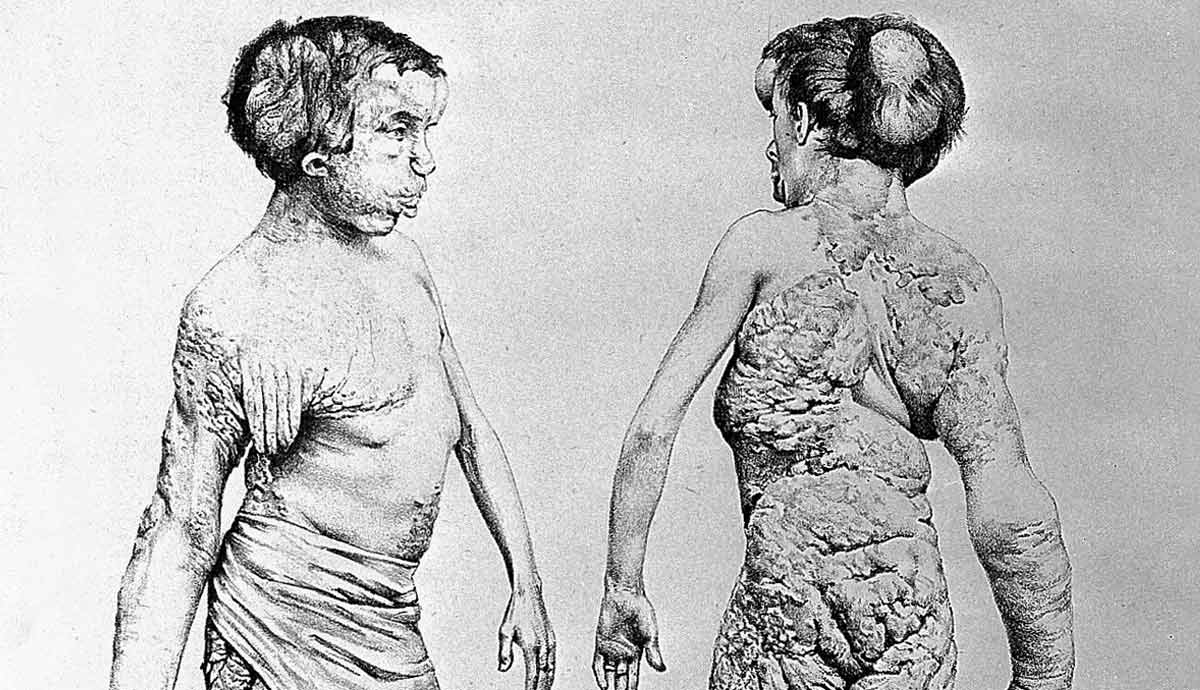
WWW.THECOLLECTOR.COMThe Tragic Life of the Real Elephant Man, Joseph MerrickIn 1980, David Lynch brought the story of Joseph Merrick to public attention in his film The Elephant Man, which took many liberties, including changing the titular characters name to John. Nevertheless, it achieved widespread critical acclaim for its focus on humanity and compassion in the face of prejudice.This dynamic was certainly true in the life of Joseph Merrick, but his story was far more complex than could possibly be told in 123 minutes.From childhood tragedy to freakshows and medical curiosities that amused and baffled Victorian England, Joseph Merrick endures as a symbol of resilience and dignity.Early Life of Joseph MerrickLeicester in the late 19th century. Source: storyofleicester.infoWhen he was born on August 5, 1862, in Leicester, England, Joseph Carey Merrick seemed like a normal infant, with no sign of the deformities that would plague him as the years passed. From a working-class background, Joseph was named after his father, Joseph Rockley Merrick, and given the middle name Carey by his mother, Mary Jane. He had two siblings: a brother, William, who died from scarlet fever at the age of four in 1870, and a sister, Marion, who also suffered from physical disabilities and died at the age of 23 in 1891.At the age of five, Joseph started to display the first signs of his condition, likely a rare genetic disorder later identified as Proteus syndrome, which causes excessive tissue growth, including skin and bone. At the time, this condition had yet to be diagnosed and was only discussed in journals in the 1970s and named in 1983.As he grew older, the syndrome took its toll. The circumference of his head eventually increased to around three feet, and spongy growths appeared, rendering him incapable of normal human expression and impeding his ability to speak. His right arm ballooned up and ended in a fin-like hand, while his lower body fared no better until he was only able to walk with the help of a stick.An 1881 census listing with Joseph Merrick (row 11). Source: storyofleicester.infoDespite his growing deformities, Merrick attended a local school. In 1873, when he was 10 years old, his mother died from a bout of bronchial pneumonia. This tragedy, naturally, hit Merrick hard, and he later described it as the biggest sadness in his life. His father remarried, and Merrick received little compassion from either his father or his stepmother.His father owned a haberdashery and acquired a peddlers license for his son, but Merricks speech was so impaired that people struggled to understand him. In public, he was feared, and one day, his father beat him for not earning enough money.He went to live with his uncle, but financial hardships made things considerably difficult. At the age of 17, he became a resident at the Leicester Union Workhouse, but found life there to be extremely challenging. While there in 1882, he underwent corrective surgery on his mouth to remove a large bony protrusion, which made speech almost impossible. He abhorred this workhouse life, but there was, however, no other dignified means of supporting himself. His only other option was to embrace his deformities and exhibit himself as part of a freak show.Becoming the Elephant Man(Left) Joseph Merrick, ca.1889. Source: Royal London Hospital Archives/Wikimedia Commons; (Right) Showman Sam Torr. Source: Wikimedia CommonsMerrick wrote to Sam Torr, a music hall comedian and local celebrity, and suggested he exhibit him to the public. Torr accepted Merricks offer, and in 1884, at the age of 22, Merrick was joined by three other managers who formed a syndicate with Torr: J Ellis, George Hitchcock, and Professor Sam Roper. They promoted Merrick as the Elephant Man Half a Man and Half an Elephant. Merrick toured Leicester, Nottingham, and London before signing on with Tom Norman, an East London shop owner who displayed oddities and curiosities. Despite the dynamic of exploitation, Norman treated Merrick with respect and split the profits 50/50, also taking care of food and lodging expenses. This was a far cry from the abusive drunkard depicted in the Lynch film.Illustration of Joseph Merrick. Source: Wellcome CollectionMerrick stayed in the back of the shop, and Norman gathered audiences outside and led them in, describing Merrick as someone who was not here to frighten you but to enlighten you! This was a small but noticeable attempt to preserve some semblance of Merricks dignity.Normans shop was conveniently located opposite London Hospital, where Merrick would spend much of his life not only as a patient, but also as a curiosity within the medical community. One day, before Normans shop opened, Doctor Frederick Treves stopped by and asked Merrick if he could come to the hospital for an examination. This was followed by a flurry of medical interest as Treves presented his patient to the medical fraternity. Merrick decided he did not want to continue these examinations, stating that he was stripped naked and felt like an animal in a cattle market.Fame and MisfortuneBlackman Street, London, by John Atkinson Grimshaw, 1895. Source: Wikimedia CommonsJoseph Merrick continued his work as a freak show oddity, but Victorian society was changing, and there was concern that such spectacles were indecent. With this and the distaste for large, unruly crowds that gathered, police began to take action against such events. Normans shop was shut down around the end of 1884, and Merrick went on tour, crossing the Channel, hoping to gain attention on the continent.His new manager (a man possibly known as Ferrari), however, robbed him of his savings and abandoned him in Brussels. Penniless and desperate, Merrick made his way to Ostend, hoping to board a ferry to Dover, but was refused. He then traveled to Antwerp and obtained passage on a ship bound for Essex. After landing in England, he returned to London.Destitute on the streets of London, Merrick asked passersby for help, but his speech was incomprehensible due to his condition, and he drew crowds of onlookers. Eventually, a policeman helped him. The only identifying item on his person was Dr. Treves card.Treves came to fetch Merrick and took him back to London Hospital, where a room was prepared for him in the hospitals attic. Merricks condition had deteriorated, and Treves discovered that his patient also had a heart condition. He estimated that Merrick would only live a few more years at most. Unfortunately, London Hospital was not equipped to accept the permanent residence of incurables, and other hospitals refused to take Merrick. A solution had to be found.The chairman of the hospital committee, Francis Carr Gomm, appealed to the public through The Times, asking if anyone was willing to offer Merrick a place to stay, and the response was overwhelming. Donations poured in, and the hospital was able to build a permanent space for Merrick, affording him considerable comfort. Two rooms in the basement were renovated to accommodate Merricks needs, including access to a private courtyard.Hospital LifeSir Frederick Treves, bt. By Luke Fildes, 1896. Source: National Portrait Gallery/Wikimedia CommonsWith Merrick being examined and visited by a slew of visitors, his former manager, Tom Norman, argued that Merrick must have felt like he were a prisoner living on charity. While this may have been painfully true, the reality was that Merrick could no longer work and was dependent on the hospital. And while the attention may have been difficult at times, there seems to have been a genuine interest from the public, largely driven by compassion.Englands wealthy elite took a special interest in Merrick, and he was even visited by Princess Alexandra of Wales. With the help of his supporters, financial and otherwise, Merrick realized opportunities to fulfill long-held desires. He visited the theater and took vacations in the countryside. When he went outside, he covered himself in a cape so as not to draw attention.Treves noted Merricks intelligence and described him as gentle and affectionate, ennobled by his struggles, and free from cynicism and resentment.Nevertheless, Treves was also patronizing towards Merrick, referring to him as a primitive creature in his memoirs. Treves role was one of Victorian paternalism, viewing Merrick as an object of pity rather than as an equal. Despite this obvious anachronistic dynamic, Treves did show unusual compassion and care for Merrick, affording him the opportunity to live a comfortable life far beyond what could have been expected otherwise. Much of his time, he spent reading and building models of buildings, the latter demanding a great deal of patience and a surprising amount of dexterity.The Death and Legacy of Joseph MerrickThe burial site of Joseph Merrick in the City of London Cemetery and Crematorium. Source: Wikimedia CommonsIn the last years of his life, Merricks condition took its toll. He spent much of his time in bed, with little energy. On April 11, 1890, his body was found by one of Treves house surgeons. His neck was dislocated. Treves performed an autopsy and ruled the death an accident, although there are theories that Merrick was murdered. He was just 27 at the time.Much of what is known of Merrick today comes from The Elephant Man and Other Reminiscences, the memoirs of Frederick Treves, in which Treves refers to Joseph Merrick as John. Quite why this is remains a mystery, as it is certain that Treves would have known Merricks actual name! John was retained for Lynchs film.Display case in the Royal London Hospital Museum, including a replica of Joseph Merricks skeleton and Merricks model of Mainz Cathedral. Source: Wikimedia CommonsJoseph Merricks story is a window into Victorian attitudes to disfigurement and deformity. It is also the story of a real human being with hopes, dreams, and fears. Despite his gentle grace and his calm demeanor, and his final years living with a certain degree of care and compassion, Merricks tale was a sad one, full of mistrust, deception, and suffering.His legacy is a reminder of the human and the humanity behind every face.0 Reacties 0 aandelen 0 Views -
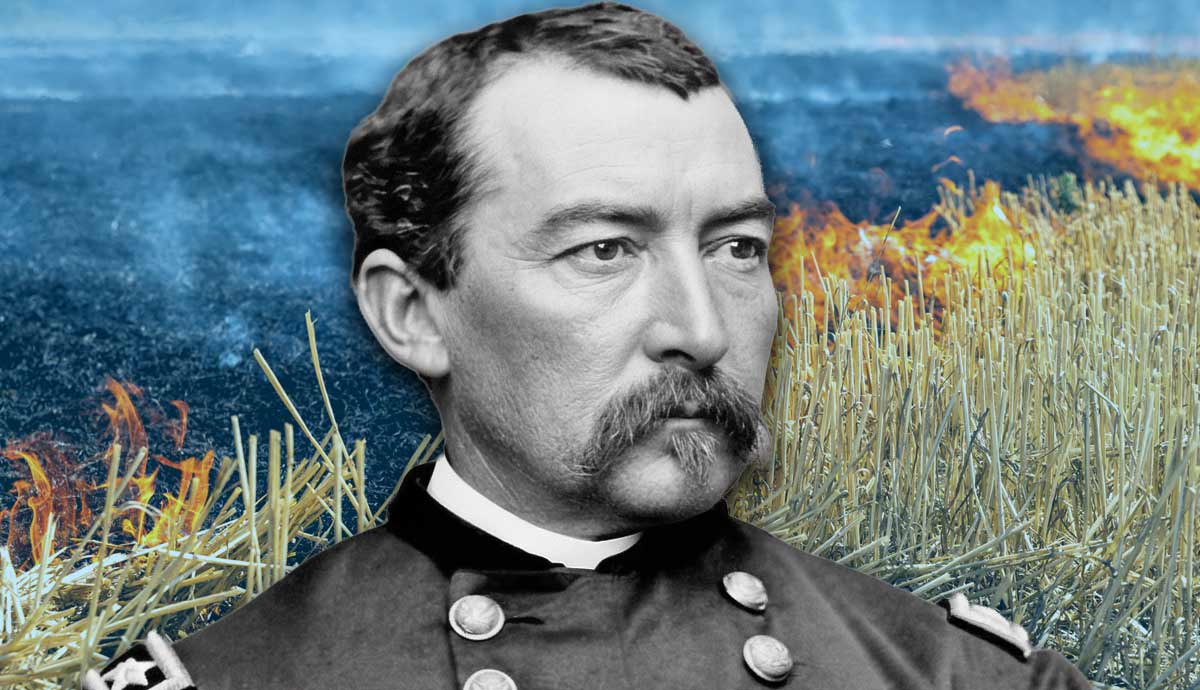
WWW.THECOLLECTOR.COMPhilip Sheridan, the Union General Known for His Scorched Earth StrategyPhilip Sheridan was one of the most aggressive and feared Union generals in the Civil War. His scorched earth tactics broke the Souths will to continue to fight in the war, leading to the conflicts end. Post-war, Sheridan played an important role in Reconstruction before moving on to fight in the Indian Wars. While he undoubtedly helped shape America into the country it is today, his controversial tactics and legacy remain a point of contention among contemporary historians.Early Life: From Shop Boy to CadetPortrait of Philip Sheridan by Matthew Brady, c. 1861-1865. Source: Wikimedia CommonsPhilip Henry Sheridan was born in 1831 in Albany, New York, to John and Mary Meenagh Sheridan. His early years were difficult as his parents often could not afford to provide for their six children. Their growing family and the difficulties of living in early industrial-era New York led the Sheridans to relocate shortly after Philips birth to Somerset, Ohio.At five feet five inches, and from what Abraham Lincoln recalled, a chunky little chap, Sheridan had a determination and a strong temper that would see him in trouble later in life. As a teenager, he worked at a general store in Somerset. It was here where he made an impression on Thomas Ritchey, a U.S. Congressman from Ohio. Ritchey had just removed his first recommendation from the U.S. Military Academy at West Point for having failed the entrance exam and was searching for another.Sheridan earned the nomination from the Congressman and received an appointment to West Point in 1848, but his time there didnt go smoothly. He got into fights and was suspended for a year after attacking a fellow cadet, William R. Terrill, with a bayonet after Terrill allegedly commented on Sheridans Irish heritage. In spite of this, Sheridan graduated in 1853 and was commissioned as a second lieutenant in the United States Army. He spent most of the 1850s serving in the Pacific Northwest, engaging in small battles as part of the larger Yakima War against the Indigenous Yakama of the region.Sheridans Civil War ServiceArtists depiction of the Battle of Stones River in Murfreesboro, Tennessee, December 31, 1862January 3, 1863, c. 1891. Source: Library of CongressWhen the Civil War began, Sheridan was still a junior officer with no battlefield command. But that didnt last long. He was promoted to Captain quickly after proving himself in the battles of Perryville and Stones River in the western theater, even impressing the likes of General William Tecumseh Sherman. These early successes earned him a commission as Colonel of the 2nd Michigan Cavalry, a promotion he accepted despite having no experience as a cavalry commander.Sheridan was eventually promoted to Major General of the regular army, commanding the Army of the Potomacs Cavalry Corps in the more prominent eastern theater. In 1864, he led a brutal yet effective scorched earth campaign in the Shenandoah Valley. Sheridan burned barns, towns, and railroads in an attempt to destroy the local economy and supply chain. The scorched earth campaign worked. The Valley could no longer supply Lees Army of Northern Virginia after what the residents referred to as the burning. Sheridans subsequent pursuit of Lees Army in 1865 helped bring about its surrender at Appomattox and bring the war to a close.Reconstruction Era EffortsMap showcasing the five military districts during the Reconstruction Era. Sheridans district is represented in blue. Source: Wikimedia CommonsAfter the Civil War, the country entered into the Reconstruction Era, a period in which the Federal Government assimilated former Confederate states back into the Union. The plans for doing so, however, changed as the years progressed. Congressional Reconstruction, also referred to as Radical Reconstruction, began in 1866. This plan separated the South into five military districts, each overseen by an army general.In 1867, Sheridan was appointed governor of the Fifth Military District, which included Texas and Louisiana. It was one of the most difficult jobs in the country. The governors were charged with overseeing the creation of new state constitutions that would include the 13th Amendment, which banned slavery with the exception of its use as punishment for a crime.In his new role, Sheridan cracked down on violence against freedmen, removed former Confederate officials who refused to support the 13th Amendment from office, and insisted that the Civil Rights Act of 1866 be enforced and honored by every citizen of his district. He famously removed the governor of Louisiana, calling him unfit for office due to his ties to the old Confederate regime.Sheridans approach to governance won him support from Radical Republicans in Congress but earned him enemies in the South and even the White House. President Andrew Johnson, who wanted a softer approach to Reconstruction, clashed with Sheridan repeatedly. In 1867, Johnson removed Sheridan from the district and reassigned him to the West.Indian Wars: Scorched Earth in the WestA map of the Indian Wars in the western United States showing the general location of tribes and some army posts and battles. Source: Wikimedia CommonsIn his new assignment, Sheridan turned his full attention to the so-called Indian Wars. As commander of the Division of the Missouri, he oversaw operations across the Great Plains during the height of these conflicts. Sheridan applied his proven scorched earth strategies to the Native American tribes in the western United States. He believed that the only way to bring peace to the frontier was to destroy the tribes ability to resist and their means of survival.In the 1870s, Sheridan helped lead the Red River War against the Comanche and Kiowa and backed campaigns against the Lakota and Cheyenne. His quote, The only good Indian is a dead Indian, became symbolic of the eras brutality and inhumanity (though there is debate among historians over whether he actually said it). Sheridan also supported the development of Army forts and railroads in an effort to further control Native lands. His campaigns broke the military resistance of the Plains Tribes and destroyed various communities and cultures.Sheridans Later LifeAn aged Philip Sheridan as General of the Army. Source: Wikimedia CommonsSheridan remained in the Army his entire life. In 1883, he was promoted to General, its highest rank. He kept busy during this time, advising multiple presidents and playing ceremonial roles at national events. He also remained a fierce advocate for a strong Army and pushed for modernization in training and equipment. Sheridan also spent time writing memoirs, following the example set by Ulysses S. Grant.His health began to decline rapidly in the mid-1880s. Years of rough field life and stress took their toll. He suffered a series of heart attacks and was bedridden for months leading up to his death. A final heart attack would lead to his death at age 57 in 1888. Sheridan was buried at Arlington National Cemetery; once the home of Robert E. Lee and now the final resting place of Americas war heroes. In the years following his death, statues and forts would be named after him. Despite what many view as a controversial legacy, Sheridan embodies the American dream. He had gone from a poor boy in Ohio to one of the most powerful military figures in U.S. history.Legacy: Up for DebatePhilip Sheridan Memorial in Washington, D.C. Source: National Park ServicePhilip Sheridan has a complicated legacy among historians and history enthusiasts alike. In a war where the Union struggled to find effective generals, Sheridan was one of its best. His scorched earth campaigns accomplished their goals, but devastated communities. During Reconstruction, he tried to protect Black Americans at a time when citizens both north and south struggled to cope with the enforcement of the 13th Amendment and Civil Rights legislation.Yet in the West, his policies contributed to the destruction of Native American societies. For some, Sheridan is a symbol of progress and unity. For others, he represents the dark side of American expansion and military power. Like many figures of the 19th century, Sheridans story forces readers to confront the dual nature of American history, both its achievements and its injustices.0 Reacties 0 aandelen 0 Views -
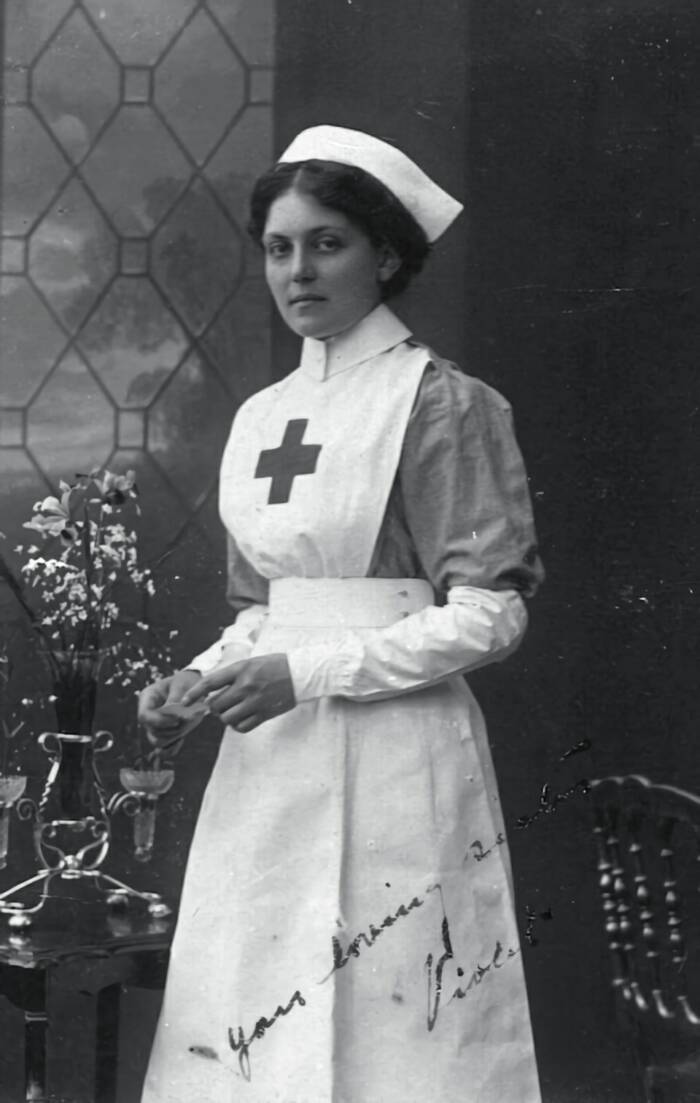
ALLTHATSINTERESTING.COMViolet Jessop, The Woman Who Survived The Sinking Of The Titanic And Its Sister ShipViolet Jessop was a survivor from the beginning. Though three of her siblings died young, and though Jessop contracted a near-fatal case of tuberculosis as a child, she pulled through. But Jessop is best known for surviving a different kind of catastrophe.Public DomainViolet Jessop, the woman who survived disaster on the Titanic and its two sister ships.In 1912, Jessop was working as a stewardess on the RMS Titanic when the ship struck an iceberg and sank in the North Atlantic. Not only did Jessop survive the Titanic, but she also survived a disastrous collision on its sister ship, the Olympic in 1911 and she would go on to survive the sinking of its other sister ship, the Britannic, in 1916.This is the remarkable story of Violet Jessop, Miss Unsinkable who survived disaster on the Olympic, the Titanic, and the Britannic.Life As A Stewardess For White Star LineBorn on Oct. 2, 1887, to an Irish couple living in Argentina, Violet Constance Jessop began her sea career at a relatively young age. She moved with her mother to England as a child after her fathers death, where her mother worked as a stewardess. When Jessops mother became too ill to work, Jessop followed in her footsteps and became a stewardess as well.After working with the Royal Mail Line for two years, Jessop took a job with White Star Line. Her first posting was aboard the RMS Olympic, a luxury ship that was the largest civilian liner of its time. But just a few months after its maiden journey in June 1911, the Olympic met disaster at sea.Library of CongressThe RMS Olympic, the Titanics sister ship. Jessop was onboard the ship on Sept. 20, 1911, when the Olympic collided with the HMS Hawke, a cruiser, near the Isle of Wight. Though the ship was badly damaged, its captain Edward Smith who would later lose his life while captaining the Titanic was able to steer the Olympic back to port.Though perhaps a frightening incident, the collision didnt seem to leave much of an impression on Jessop, and she didnt even mention it in her memoirs. Rather, Violet Jessop would spend much more time recounting her next disaster at sea: the sinking of the RMS Titanic.How Violet Jessop Survived The Sinking Of The TitanicOn April 10, 1912, the RMS Titanic set sail on its maiden voyage to great fanfare. Larger than the Olympic, and filled with luxurious amenities like swimming pools, a squash court, and even a gym, the Titanic drew both wealthy celebrities and immigrants hoping for a fresh start.ullstein bild/ullstein bild via Getty ImagesThe Titanic in Southampton, just before its doomed maiden voyage.One of the most famous passengers aboard was John Jacob Astor IV, one of the richest men in the world, who had recently caused a society scandal by marrying his second wife, 18-year-old Madeleine Astor. Violet Jessop, catching a glimpse of Madeleine, was less than impressed.Instead of the radiant woman of my imagination, Jessop wrote in her memoirs, I saw a quiet, pale, sad-faced, in fact dull young woman arrive listlessly on the arm of her husband.But Jessop had little time to study the passengers. As a stewardess in first class, her responsibilities ranged from making beds to arranging flowers to running errands. The days could be long, and Jessop developed the habit of ending her night on deck, taking a breath of sea air, before going to bed. But on the night of April 14, 1912, shortly after Jessop had retired for the night, the Titanic struck an iceberg and began to sink. After the awful grinding crash, Jessop went to work right away. After passengers were ordered to the lifeboats, she went from room to room, helping them with their lifejackets, and making sure they had warm clothing. All the while, she was in a state of shocking, thinking, Of course Titanic couldnt be sinking! She [was] so perfect, so new.Ordered up onto deck, Jessop recalled watching passengers milling about, and women clinging to their husbands as they were ordered into lifeboats. A ships officer then instructed Jessop and other stewardesses to get into a lifeboat, and handed Jessop a bundle a baby to look after. She and the others in Lifeboat 16 watched as the Titanic snapped in two with a thundering roar of underwater explosions, and slipped beneath the waves, leaving them stranded in the cold, dark ocean. National ArchivesSome of the Titanic lifeboats.The next morning, Jessop and the other Titanic survivors were rescued by the RMS Carpathia. They were the lucky ones 1,500 people had died.As for the baby that the ships officer had handed to Jessop? Jessop writes that she was still frozen and numb when a woman rushed up to her, grabbed the child, and ran off without so much as a thank you. Yet, despite witnessing the tragedy of the Titanic, Violet Jessop continued to work as a stewardess. And just a few years later, she would survive another sinking ship. The Sinking Of The Britannic In 1916During World War I, Violet Jessop worked as a stewardess with nursing duties. She was assigned to the HMHS Britannic the Titanics sister ship, which had been converted from a luxury cruiser to serve as a hospital ship.Public DomainThe Britannic was refitted as a hospital ship during World War I, but struck a mine and sank in 1916.On Nov. 19, 1916, the Britannic set sail for Mudros, Greece, where it planned to pick up patients. There were roughly 1,000 people onboard, including the crew, doctors, and nurses, when the ship hit a German mine two days later. Catastrophically damaged, the Britannic quickly began to sink. Jessop escaped the ship in a lifeboat, only to find that her lifeboat was being pulled toward the ships still-spinning propellers. Thirty people were killed, but Jessop managed to leap into the water. She hit her head on the ships keel, but survived, and managed to make her way to a nearby lifeboat.Then, she watched as the Britannic sank.She dipped her head a little, then a little lower and still lower, Jessop wrote. All the deck machinery fell into the sea like a childs toys. Then she took a fearful plunge, her stern rearing hundreds of feet into the air until with a final roar, she disappeared into the depths, the noise of her going resounding through the water with undreamt-of violenceThough she had survived disaster at sea three times, Violet Jessop was undeterred. She continued working as a stewardess until 1950, when she retired at the age of 63.Violet Jessop spent the rest of her life firmly on land, raising chickens, and died in 1971 at the age of 84.After reading about Violet Jessop, the stewardess who survived disaster on the Titanic and both its sister ships, discover the reasons behind the Titanics catastrophic sinking. Or, learn the heartbreaking stories behind this collection of Titanic artifacts.The post Violet Jessop, The Woman Who Survived The Sinking Of The <em>Titanic</em> And Its Sister Ship appeared first on All That's Interesting.0 Reacties 0 aandelen 0 Views -
-
-
WWW.DUALSHOCKERS.COM10 Great PS4 RPGs That Are Fun ImmediatelyThroughout its existence, the PlayStation family of consoles has had a special place in its heart for RPG fans. The original PS1 was home to many classic (J)RPGs, such as Parasite Eve and the legendary Final Fantasy 7. That tradition has carried on through the PlayStations many interactions. In fact, the PS4 era of RPGs was a prominent one to say the least.0 Reacties 0 aandelen 0 Views -
WWW.PCGAMESN.COM007 First Light perfectly balances cinematic Bond action with Hitman's signature sandbox freedomBefore finally getting hands on with 007 First Light, I was concerned that IO Interactive would miss the mark with the game's structure. I was worried the masterminds behind Hitman would lean too heavily into the open, sandbox game style they're known for, somewhat abandoning the cinematic quality a James Bond story requires. Thankfully, I think they've got the balance between freedom and linear action spot on.0 Reacties 0 aandelen 0 Views -
WWW.PCGAMESN.COMThis week's Epic Games freebie blends Factorio's automation with high fantasy explorationSometimes you just want to build things. Whether it's your own burgeoning metropolis in Cities Skylines, or conveyor belts and factories in Factorio, some of my best days at the PC have been spent crafting huge automation systems that I, quite franky, am too stupid and too monetarily challenged to build in real life. This week's free Epic Games Store game, Oddsparks: An Automation Adventure, allows you to do just that, but throws in some fantasy exploration that's reminiscent of games like Stardew Valley. As someone who loves a sprinkling of fantasy, it's an immediate download.0 Reacties 0 aandelen 0 Views -
WWW.THEKITCHN.COMMy Easy Sandwich Bread Recipe Is Worth the (Minimal) WorkHomemade sandwich bread for busy people.READ MORE...0 Reacties 0 aandelen 0 Views