0 Comentários
0 Compartilhamentos
6 Visualizações
Diretório
Elevate your Sngine platform to new levels with plugins from YubNub Digital Media!
-
Faça Login para curtir, compartilhar e comentar!
-
YUBNUB.NEWSA Real Threat: Democrat Strategist Suggests Fetterman Could Be Close To Switching PartiesSince entering office, U.S. Sen. John Fetterman (D-PA) has made a habit of taking contrarian views and siding with Republicans on a number of pivotal issues. While still retaining many of his far-left0 Comentários 0 Compartilhamentos 6 Visualizações -
YUBNUB.NEWSBREAKING VIDEO Trump fast-tracks FDA review of PTSD drug Rick Perry has been pushing for a long time[View Article at Source]Almost a year and a half ago, we shared an interview between Rick Perry and Joe Rogan about a drug that is said to be very effective at combating disorders like PTSD . . .0 Comentários 0 Compartilhamentos 6 Visualizações -
This 'Helpful' Habit Is Actually A Big No-No At Jersey Mike'sThis 'Helpful' Habit Is Actually A Big No-No At Jersey Mike's...0 Comentários 0 Compartilhamentos 31 Visualizações
-
What Is Christian Nationalism?What Is Christian Nationalism? In January 2011, a student at Southern Methodist University asked former President George W. Bush about the challenges facing democracy. Bush’s answer was simple: the rise of “-isms.” In particular, Bush spoke about isolationism, protectionism, and nativism. These, he warned, have a way of appearing in history together. He described them as corrosive to the...0 Comentários 0 Compartilhamentos 30 Visualizações
-
Meta finally adds direct messages to the web version of ThreadsMeta finally adds direct messages to the web version of Threads Meta is adding a feature to the web version of Threads that, honestly, probably should've been there a while ago.As spotted by Engadget, Threads executive Connor Hayes posted an image showcasing a new redesign for the web browser version of the Twitter-like social network....0 Comentários 0 Compartilhamentos 30 Visualizações
-
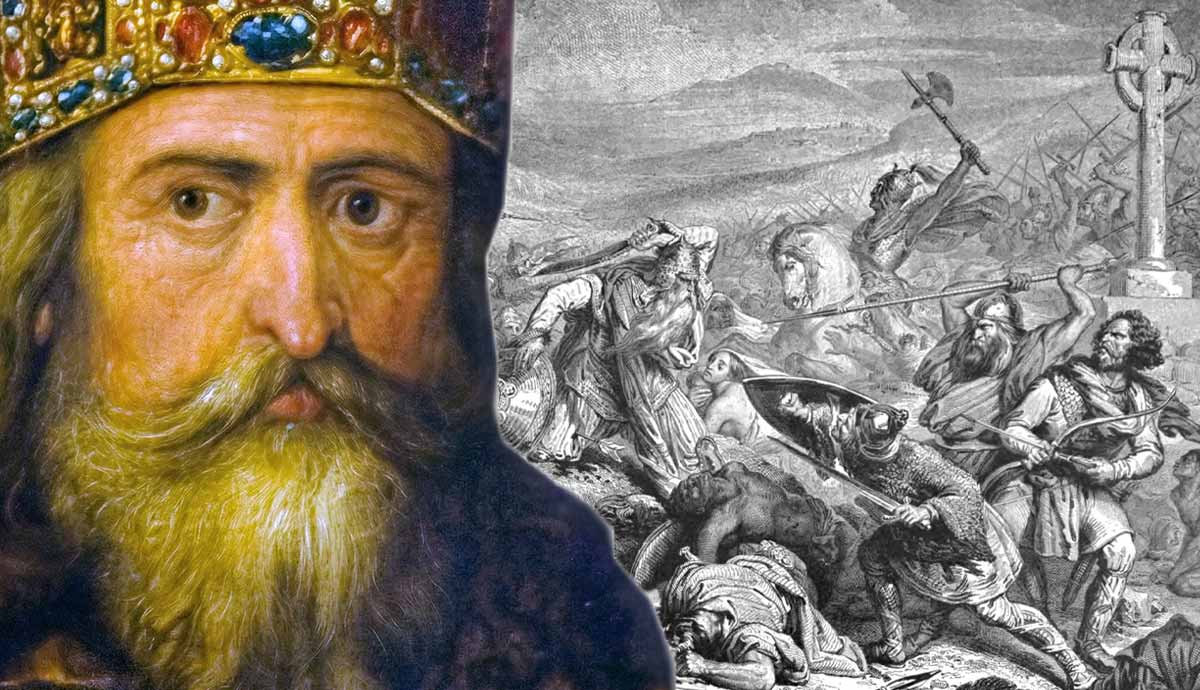
WWW.THECOLLECTOR.COMCharlemagnes Relentless War Against the Saxons That Lasted 30 YearsBetween the years 772 and 804, the Frankish King Charles (most notably known as Charlemagne) waged war against his northeastern neighbors. Centuries before, the Saxons and Franks had been tribes migrating and fighting together for or against Rome. Now their paths had diverged. The Saxons were pagans with tribal leaders, while the Franks were Christians with a charismatic, strong king. By the late 8th century, the inevitable had come, and war ensued. This conflict would result in the eventual absorption of most of Saxony into Francia, the decline of paganism, and the migration of Saxons across the kingdom.The Path to Charlemagnes Wars Against the SaxonsPainting of Emperor Charlemagne by Albrecht Drer, 1860s-1870s. Source: Wikimedia CommonsYou love the lilies of peace and the roses of war; thus you are resplendent in white and red.To fully understand the wars between Charlemagne and the Saxons, it is necessary to revisit the time of his grandfather. This war, which lasted approximately 30 years and took most of Charlemagnes time and energy, was not a religious war. Though religion, like all things at that time, played a large part in the story. It was primarily a territorial war. Charles Martel (Martel means the hammer) first engaged the Saxons in 718 AD because three years previously they had attacked Austrasia (the province Charles was lord over). Until that time, the Saxons and the House of Charles, known as the Carolingians, had been at peace. Charles was, in fact, in prison during their raid and waited until his position had improved to attack.Charles Martel at Tours by Charles Steuben, 1894. Source: Wikimedia CommonsIt is harder to understand the Saxons aggression when factoring in Charless father, Pepin II. During his entire time as Mayor of the Palace (the person who ruled for the king), Saxony and Francia had been at peace. Now that the situation had changed, and the Saxons thought that Charles was weaker than his father, they most likely thought they could take advantage of the situation.While Charles was sick in 723, the Saxons once again took the initiative and invaded Francia. The following year, Charles led a large force to punish them. Little is known from the sources of the time, but it is clear that the peace that Charles formed did not last long after his death.Frankish Kingdoms (Francia) 481-814 AD by William Robert Shepherd, 1911. Source: Wikimedia CommonsAfter Charles died in 741, the war continued sporadically through Pepin IIIs (also known as The Short) reign until 758, after which he secured peace with the Saxons. After many campaigns in Saxony, Pepin made the Saxons surrender, promising a tribute of three hundred horses annually. After 758, the troublesome Saxons would not become a problem until 772, when Charlemagne began his conquest of the provinces of Saxony.Charlemagnes War BeginsCharlemagne destroys the Irmen Column by Franz Kollar, 1872. Source: Wikimedia CommonsThe border between Francia and Saxony runs primarily along a plain with small sections of mountains and forests. This border created tension between the villages closest to the border. Einhard (the close friend and biographer of Charlemagne) wrote that raids were common in both directions. Neither he nor the Royal Frankish Annals (a semi-official yearly chronicle from the 740s to the 810s) mention who fired the first shot, but what we do know is that Charlemagne was ready to channel his namesake and bring the hammer.He started in 772 by invading Saxony, taking Castle Eresburg, and burning the Irminsul (an important religious structure in Saxony). He was so confident that this would deter any future attacks that in 773-774, he led a campaign against the Lombards, besieging their capital, Pavia, and installing himself as their king. However, in 773, a Saxon army invaded Francia and attacked the castle of Buraburg, burning homes and striking fear into the hearts of the locals. Einhard would later add, never was there a war more prolonged nor crueller than this, nor one that required greater efforts on the part of the Frankish people.Zerstrung der Irminsule durch Karl den Groen by Heinrich Leutemann, 1882. Source: Wikimedia CommonsAs a prelude to his invasion, Charlemagne sent four detachments into Saxony in 774. Three found battle while one only returned with treasure. The following year, Charlemagne assembled in Duren and launched his invasion of Saxony. He captured Castle Syburg and restored Castle Eresburg, which the rebels had attacked during the last Saxon incursion. Charlemagne continued his invasion until he reached the bank of the Weser near Braunsberg, where he encountered a Saxon force. A battle ensued, and the Franks, most likely due to superior numbers and weapons, defeated the Saxons.After the battle, Charlemagne divided his army and marched his men toward the River Oker. There, Hassi, an Austreleudi or Eastphalian Saxon lord, gave hostages and swore oaths of fealty to Charlemagne. More Angrian Saxons, under Bruno, also gave hostages. After taking these hostages, Charlemagne went back to the other part of his army, still defending the River Weser. Near Lubbecke, the Franks and Westphalian Saxons fought another battle where the Saxons again lost and were forced to give Charlemagne hostages. An addendum to the Royal Frankish Annals adds that before Charlemagne returned, a group of Saxons was able to enter the camp at Lubbecke and slaughter many soldiers while they were sleeping.The War ContinuesCharlemagne at Witikinds Baptism by Paul Thumann, 1894. Source: Wikimedia CommonsWhile campaigning in Saxony, Charlemagne heard that Hrodgaud was inciting Italy to rebellion. Once again, thinking that he had subdued Saxony, and with winter approaching, thus ending the campaigning season for 775, Charlemagne waited until the following year to handle him. In 776, Charlemagne entered Italy and killed Hrodgaud before Easter. Alas for Charlemagne, the Saxons took this opportunity to attack Castle Eresburg and destroy its walls. They sought to destroy Castle Syburg as well, but they could not enter inside like they had done previously, and their attempts at siegecraft proved futile. As the Saxons labored to destroy Syburg, the Franks regained their courage and launched an attack. They drove the Saxons back to the River Lippe and slaughtered many of them. Once Charlemagne heard of the Saxon attack, he gathered his forces in Worms and launched an attack.Exiled emirs before Charlemagne in Paderborn by Hermann Knackfu, 1871. Source: Wikimedia CommonsThe Royal Frankish Annals suggests that Charlemagnes reaction was becoming increasingly aggressive. Charlemagnes anger burned brighter than before, and he drove the Saxons back, instilling great terror into their hearts. They surrendered, handed over hostages, and converted to Christianity. Conversion was a new stipulation most likely to encourage assimilation into the empire.No battles took place in 777, but Charlemagne did host an assembly in his newly constructed palace at Paderborn, which lay in the heart of Saxony. There, many Saxons came to be baptized (except for Widukind, a Saxon who was still in rebellion and had fled to the Danes). The calm between Saxons and Franks would not last long. For a third time, Charlemagne thought that the Saxons would no longer be a bother. Because of this, he led a campaign over the Pyrenees Mountains into Umayyad Spain to wage war against the Arabs. While he was gone, Widukind led a rebellion against the Franks, burning churches and monasteries. As soon as Charlemagne heard of this breach of loyalty, he raced back to Saxony and met an army near the River Eder. Once again, he was victorious, though he took no hostages. Summer was quickly turning to fall, forcing the king to return to Francia for the winter.The War IntensifiedCollecting tithes from the Saxons by J. / P. Fansten, circa 1871. Source: Wikimedia CommonsIn 779, Charlemagne assembled in Duren and launched another Saxon campaign. This time, the Saxons put up resistance near Bocholt, but once again, Charlemagne put the Saxons to flight. Being early in the year, Charlemagne was able to continue deeper into Saxony, moving into Westphalia, where he received hostages from those on the other side of the River Weser. This battle concluded his campaign for that year. The years 780-781 proved to be peaceful years with Saxon lords submitting to baptism and fealty.Widukind and Charlemagne settling peace by J.P. Fansten, 1871. Source: Wikimedia CommonsThe year 782 proved to be a turning point in the Saxon wars. Not because the war would turn in either the Saxons or the Franks favor, but because King Charlemagne would unleash his harshest measures to subdue his most significant thorn. The year began well with the king assembling Saxons, Avars, and Norsemen. The only face that was wanting was Widukind. When the assembly was over and Charlemagne had headed home, Widukind showed his treachery and launched another rebellion in Saxony. In fact, Charlemagne had already sent an army to deal with some unruly Slavs. However, they turned aside to deal with Widukind, and in the engagement with Widukind, he nearly annihilated the Frankish army. Their actions would unleash the full wrath of Charlemagne.Charlemagne rushed into Saxony and met the rebels near the Aller and Weser rivers. Though Widukind was not present, the Saxons met Charlemagne, and he killed many in battle. He took many captives, and Charlemagne ordered 4,500 Saxons beheaded for their treachery.Peace at LastCharlemagne at Paderborn by Ary Schefferr, 1835. Source: Wikimedia CommonsIn the winter of 784-785, Charlemagne did not return to Francia but instead stayed in Eresburg, where he summoned his wife and children. From there, he continually engaged the Saxon rebels and eventually routed them. By the end of the winter season, Widukind entered Charlemagnes presence and submitted to baptism, swearing fealty.From this point on, the Saxons were part of the Frankish kingdom. They participated in wars with the Franks, such as in 789, when they led a campaign against the Slavs. However, the Saxons would rise again. In 794, a group of Saxons gathered in Sindfeld against two Frankish armies. Charlemagne led one, and the Chronicler did not mention who led the other. Once they knew that they were outnumbered and surrounded, the Saxons surrendered and swore oaths.Another revolt occurred in 798, and Charlemagne caused much destruction between the Elbe and the Weser. Thus ended the Saxon Wars for Charlemagne. For the rest of Charlemagnes life, the Saxons remained pacified, and Saxon lords became increasingly integrated in Francia.0 Comentários 0 Compartilhamentos 6 Visualizações -
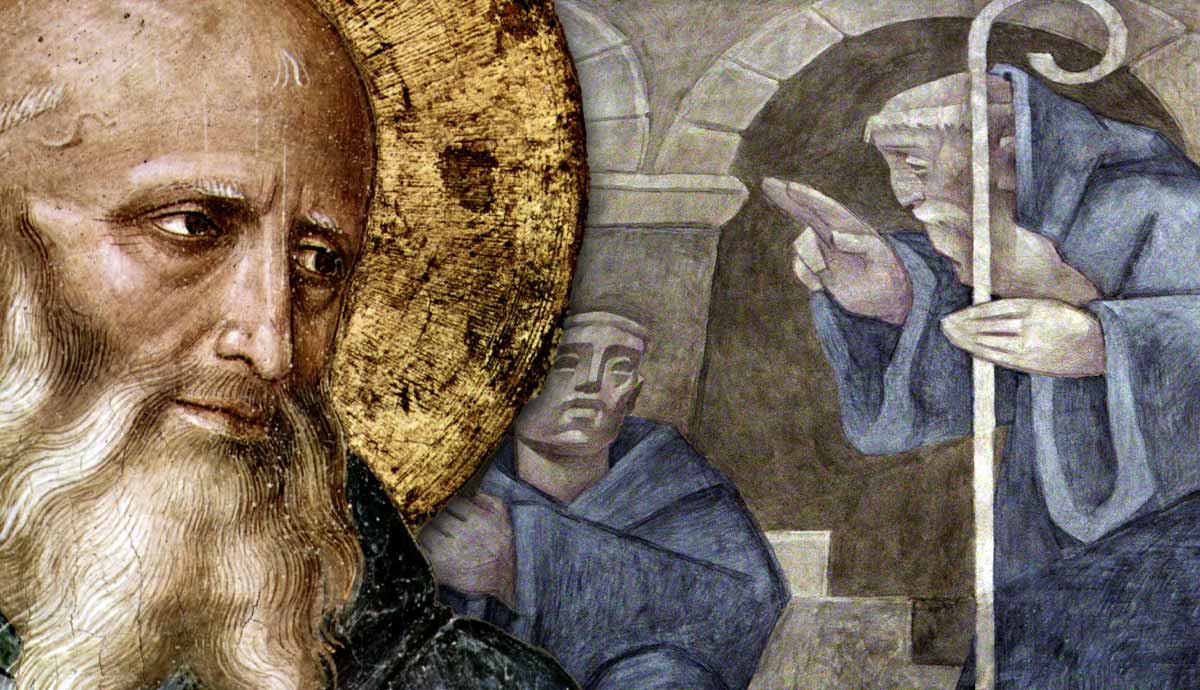
WWW.THECOLLECTOR.COMThe Rule of Saint Benedict That Shaped Medieval EuropeEurope in the Early Middle Ages was a place of change and uncertainty. The order that Rome provided had vanished, and many smaller states jostled for power as they capitalized on new opportunities, creating upheaval in their wake.Into this chaos was born a man who would shape the future of Europe for centuries, a man who promoted community-based ascetic virtues and built the foundation for monastic living, which survives to this day. Saint Benedict was not a military leader or a powerful king. He was a hermit and a monk. And he shaped the future of an entire continent.A World Without RomeRuins of the Roman Forum. Source: Flickr/Wikimedia CommonsThe decline and fall of Rome in the 5th century AD signaled a change in the political and social fabric of Europe. Centralized governance and authority disappeared and were replaced by many proto-feudal societies existing in close proximity. As Rome declined in the 5th century and eventually collapsed, there was a massive shift from urban life to agricultural life. This was due to many factors, such as the disruption of trade networks and the inability of cities to sustain large populations.As a result, Europe suffered a major decline in literary pursuits. Books and libraries were neglected and sometimes intentionally destroyed either by those with little regard for literacy or by those who feared the religious aspects of certain texts. Pagans destroyed Christian works and Christians destroyed pagan works, although the primary cause of the loss of literacy and literary works was the breakdown of the institutions that supported them.This dynamic needed a remedy, and a hermit from Nursia provided it.Benedict the Hermit and Holy ManIllustration of the mountains of Subiaco where Benedict lived as a hermit, from Italy from the Alps to Mount Etna by Karl Stieler et al. Source: University of Illinois Urbana-Champaign/Wikimedia CommonsAccording to the Dialogues, the account of Pope Gregory I, written around 593 AD, Benedict was born into a noble family around 480 AD and was sent to study in Rome. Dissatisfied with what the academic life offered him, Benedict left Rome and traveled eastwards, whereupon he met a monk, Romanus of Subiaco. Romanus had a profound impact on Benedict; so much so that Subiaco gave him his habit, and Benedict spent the next three years living in a cave overlooking a lake.Although he lived the life of a hermit, Romanus visited him frequently, and word of his life spread through the local communities. When the abbot of a local monastery died, the community asked Benedict to take up the position, which he reluctantly agreed to. According to the Dialogues, the monks resented Benedicts stricter rule and put poison in his glass cup. When Benedict made the sign of the cross, the glass shattered, revealing the monks treachery. Benedict calmly resigned his position and went back to his life as a hermit. Although this story is likely an invention or an exaggeration, it speaks to the image of Benedict that was cultivated.Around this time, disciples were drawn to him, and he is said to have founded several small monasteries in or near Subiaco. His fame grew, and patricians and noble families sent their sons to him to become monks under his care. Benedict, with a few disciples, then traveled south and founded the monastery of Monte Cassino, where he instituted his guide for monastic life, known as the Rule.Benedicts RuleSaint Benedict delivering his Rule to monks of his order. Source: Wikimedia CommonsThe life of Saint Benedict is largely characterized by the rules he instituted for monks under his authority. Through this dynamic, he has come to be seen as a wise and benevolent figure; strict, yet fatherly, loving, and calm. Of primary importance in his Regula Benedicti is the sense of community. This life in common, or cenobitic way, was seen as the most reliable way to God, in contrast with the life of a hermit, which Saint Benedict believed was suitable only for those who had mastered community life, although it was not a necessary culmination of the path to godliness.Benedict established a process for those living the monastic life. It began with a years probation wherein a novitiate took part in the monastic community to fully appreciate what the life entailed and whether it really was appropriate for the individual. This ensured that monks were dedicated to the way of life rather than it being a choice based on a passing phase or a whim.The Rule can be defined as having three pillars that form a core value of its practice. These were exemplified in the three vows that monks took upon dedicating themselves to the order. These core vows were those of stability, fidelity to the monastic way of life, and obedience.Detail from a fresco depicting Saint Benedict, from St. Benedicts Abbey, Atchison, Kansas. Source: Flickr/Wikimedia CommonsStability meant a lifelong commitment to the monks community and dedication to the monastery. It meant not looking elsewhere for change or for other sources of pleasure or enlightenment. It represented rootedness, endurance, and loyalty born out of faith in a single community.The dynamics of fidelity to the monastic way of life and obedience meant becoming part of the monastic community and following the laws that governed it. It was a structured life that demanded a schedule of prayer and work (known as Ora et Labora), and of communal life. This schedule was adhered to by the power of the vow.Of course, these werent the only virtues upheld by the Rule. Other aspects included moderation, humility, stewardship, learning, discipline, hospitality, and love, amongst other things. Through all of these tenets, monks were encouraged to follow similar paths, all devoted to God, and in stark contrast to the chaotic and violent world that existed outside the monastery walls. In this, the monastery offered stability and permanence in an uncertain time.Monasteries and Their Role in Rebuilding SocietyThe reconstructed monastery (or more precisely, abbey) of Monte Cassino, founded by Saint Benedict. It was destroyed in WWII and rebuilt. Source: Wikimedia CommonsThe decline and fall of Rome had a huge effect on the socio-political structure of Europe. Urban life decreased, as did central authority and the academic arts. Monasteries, such as Monte Cassino, founded by Saint Benedict, adhered to the Rule and helped preserve much of what was lost. They played a crucial role in guiding Europe through the chaos of a tumultuous era and into an era of greater stability and certainty.In an era heavily reliant on agriculture, monasteries made significant contributions to society. These institutions came to own vast tracts of land and became extremely productive farms in their own right. Monks dedicated much of their lives to their communities, and as such, monasteries were an invaluable aspect of medieval life.Monks worked the fields, pioneering new techniques in agriculture, such as crop rotation. They drained swamps, cleared forests, initiated selective breeding for healthier herds, and improved soil with better irrigation techniques. Through these practices, monks played a major part in providing food for communities and offering a source of comfort during uncertain times.Monks under the guidance of Saint Benedict established a long tradition of preserving literary works. Source: Wikimedia CommonsThe preservation of knowledge was another hallmark of monastic life. Monasteries were centers of learning, and as the Rule highlighted learning through study and literacy, monks spent large parts of their lives hunched over desks copying books and other important manuscripts. Before the invention of the printing press, this was the primary method for replicating the written word. Monastic labor proved invaluable for preserving the ancient knowledge that would have been lost otherwise.This extended not just to texts compatible with Christian doctrine, but to many of the old pagan texts as well, including ancient poetry, plays, and epics. Plato, Virgil, Aristotle, and Ovid all had their works preserved by monks for future generations.This dedication to academic pursuits extended to the education of others, and monasteries took up the mantle of schools, providing an environment of learning for noble and common children alike. Apart from training the future clergy, monasteries were schools for other pursuits as well. Grammar and arithmetic were taught, along with music and astronomy. In an era when education was a privilege rather than a necessity for the common folk, monasteries emerged as centers of academia. As academic institutions, they had a huge influence on education in the Middle Ages, resulting in the establishment of major universities such as Oxford and Bologna.Statue of Saint Benedict. Source: Wikimedia CommonsMonasteries also served as guesthouses, and during a time when there was little in the way of accommodations for visitors and pilgrims, this was an important aspect. Monks and nuns took great pride in being hospitable and providing respite to weary travelers. Hospitality also extended towards the poor, and monasteries proved to be shelters of kindness and humanity.Similar in nature, convents had the same effect, operating as centers of prayer, charity, and learning. According to the traditional stories, the female branch of the order was founded by Saint Benedicts sister, Saint Scholastica.It is unsurprising that monasteries and convents were popular with people from all walks of life. As the Christian faith spread throughout Europe, thousands of such establishments were built, and Saint Benedicts Rule found common ground all over the continent.Detail from Crucifixion with Saints depicting Saint Benedict by Fra Angelico (ca. 13951455). Source: Museum of San Marco/Wikimedia CommonsThrough his works, Saint Benedict provided a foundation for the rebuilding of Europe in a chaotic time. His Rule resulted in the preservation of knowledge, the progression of agricultural techniques, the rebuilding of social order, and a devotion to God, which left a lasting legacy on the continent. It is reasonable to assume that without this one humble man, living a hermits life in a cave above Subiaco, Europe would have turned out very differently, and would have been a lot poorer for it.0 Comentários 0 Compartilhamentos 6 Visualizações -
-