• The Razer Kraken Kitty V3 Pro headphones are adorable — and down to their lowest price ever at Amazon
    Save $68: The Razer Kraken Kitty V3 Pro headphones are at their lowest price ever Save 38%: The Razer Kraken Kitty V3 Pro is on sale at Amazon for $111.52, bringing the gaming headphones down to their lowest price ever — if you pick up the Mercury White colorway. All said, you'll save $68.47 on the usually $179.99 headphones....
    0 Comments 0 Shares 1 Views
  • The Anker Solix power station I take on every camping trip is nearly $400 off at Amazon
    Best portable power station deal: Take 46% off the Anker Solix C1000 Gen2 SAVE $370.01: The Anker Solix C1000 Gen 2 portable power station is on sale at Amazon for $428.99, down from the list price of $799. That works out to a 46% discount. $428.99 at...
    0 Comments 0 Shares 3 Views
  • Looking to run OpenClaw on the cheap? This mini PC deal has got you covered.
    Save $120: Shop Beelink's mini PC to run OpenClaw on the cheap Save $120: As of April 13, you can grab the Beelink SER5 MAX 7735HS mini PC with 24GB of RAM and 1TB of storage for just $539, thanks to an on-page coupon at Amazon. Usually, this mini PC costs $659, so this deal saves you 18%. $539...
    0 Comments 0 Shares 1 Views
  • WWW.THECOLLECTOR.COM
    What Was the Schlieffen Plan And Why Did It Fail?
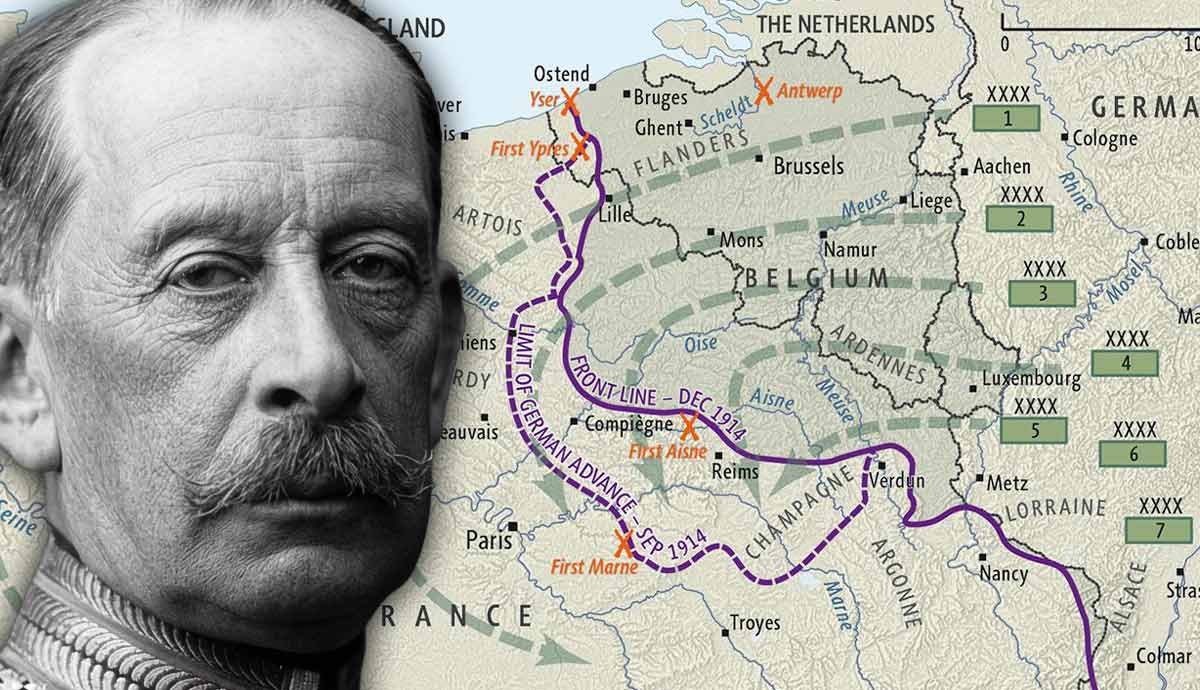
    Graf Alfred von Schlieffen was Chief of the German General Staff from 1891 to 1905 and was the author of the plan which bears his name. In this position, he was responsible for the planning of the armys operations in the event of war. Military planning for a war was dominated by the perceived threat from the Franco-Russian alliance, which, from Germanys perspective, involved a war on two fronts.The Schlieffen PlanCount Alfred von Schlieffen in 1906. Source: Landesarchiv Baden-Wrttemberg/Wikimedia CommonsThe anxiety of a prolonged war caused Von Schlieffen to determine three general precepts:That offense would triumph over a defensive strategy. This was not just Schlieffens belief but was generally held by military thinkers at the time, despite evidence to the contrary.Germany should use a counter-offensive strategy against an invasion. The dense railway system allowed the rapid mobilization and concentration of forces at the critical point.There was a need for a rapid and decisive victory against one opponent. After this, the rail system should be used to transfer the armies to the second front to counter-attack the other enemy.It was deemed that Russia could be dealt with after victory in the west for two reasons. First, it was thought that Russian mobilization would be slow, due to their poor transport system, allowing Germany time to attend to events in the west. Second, Russia had lost its war with Japan (1904-05), from which Schlieffen and other German planners concluded that Russia was not as strong as previously assumed. Therefore, a relatively small German force could hold the Russians while France was defeated, which it was estimated would take six weeks.Genesis of the Plan and ModificationsMap of the Schlieffen Plan and the French Plan XVII (dark blue). Source: Wikimedia CommonsThe plan was to draw the French army to attack in the south and then counter-attack in the north. The first stage of the battle can be visualized by thinking of the front as being hinged on the area just south of Luxembourg. The German southern front, helped by the French offensive (Plan XVII), was to retreat north-east, followed by the northern part (the German counter-attack) moving south-west. This German attack, after entering France, was to swing south and then east, with the aim of destroying the French armies as they were pushed against their own fortified frontier.Dutch, Belgian, and Luxembourg neutrality was to be violated if they did not allow the passage of German armies. The right wing in the north would be much stronger than in the south. This was because the right wing was to provide the scythe, as it swung through the Low Countries and France. The German left wing was weak, partly to lure the French into attack, and also due to a lack of German resources. The plan was adopted as policy in 1905.French infantry marching through Tours, August 1914, some with flags attached to their bayonets. Source: Wikimedia CommonsAfter Schlieffen retired, his place was taken by Von Moltke, who made two important modifications to the plan. The first was to cancel the invasion of the Netherlands. This had the effect of narrowing the gap through which the right wing advanced and reducing the ability of the German armies to outflank the strong Belgian forts in the Liege area. The second major change was that most of the new divisions that became available after 1905 were allotted to the southern front rather than the north, which required overwhelming strength for the plan to work. Moltke lacked the bold vision of his predecessor and reduced the chance of the plan succeeding.The German AdvanceGerman troops on their way to the front in the early days of the war. Source: Wikimedia CommonsThe German army crossed the Belgian border on August 4, 1914, after the German demands for unimpeded passage had been refused. On the same day, Britain declared war on Germany for violating Belgian neutrality, while two days prior, Germany had occupied Luxembourg. Despite strong resistance by the Belgian army, it was forced back, and on August 20, the Germans occupied Brussels. At this stage, they were slightly ahead of schedule. The German infantry advanced at an epic rate, often 30 miles a day in full uniform, and in the summer heat. The Belgians, meanwhile, had destroyed their rail network, which the Germans were hoping to use to supply the advancing armies, and this obviously reduced the effectiveness of the front-line troops.Belgian troops with dog-hauled machine guns move up to the front during the battle for Antwerp, August 1914. Source: Wikimedia CommonsOn the southern part of the front, where the Schlieffen plan called for the Germans to fall back in the face of the French offensive, they instead shattered the French attack. Moltke vacillated and reinforced this success with troops that were designated for the decisive northern front. He then changed his mind and sent them north as originally planned. The French, however, were forced to withdraw in the south and fell back to fortified positions. As a result of these defenses, they were able to pull troops out of the line and send them north to face the main German attack. A crucial part of the plan, to draw the stronger French forces south and east, had failed.German infantry advancing, 1914. Source: US National Archives and Records Administration/Wikimedia CommonsThe Germans crossed the French frontier on August 25, and the French troops, reinforced by the small British Expeditionary Force (BEF), fell back in the face of the massive enemy onslaught. But the German advance also brought problems as a gap developed between their two right-wing (northern) armies as they advanced in a south-westerly direction. To address this issue, Moltke ordered, on September 2, that the two armies drive south-east, rather than south-west as they had been doing. This lessened the gap, but it also reduced the effect of the outflanking maneuver to the west of Paris. Moltke, by issuing such an order, showed a lack of faith in the plan when a bolder commander might have continued with the wider movement. This would have had risks, but it may have brought about the rapid defeat of France. Instead, the German HQ gave in to fear of an enemy counter-attack.For the Germans, additional problems took place on the Eastern Front, where the Russians had mobilized more rapidly than had been planned for. In response, a nervous Moltke transferred two corps from the west to the east on August 25. At the time, there was a feeling on the German side that victory in the west was near, and this adjustment would not affect the final outcome.The Allied Counter-AttackFrench infantry on the charge, 1914. Source: Wikimedia CommonsAt this stage of the battle, both sides were exhausted. The troops were dog-tired after almost a month of continuous marching and fighting. On some days, the infantry had to march for many hours under a hot sun and engage in battle at the end of it. The German troops were also beginning to outrun their supplies, and this was made worse by the scorched earth policy carried out by the French as they retreated. The generals, too, were suffering from nervous fatigue, and several were dismissed, especially on the French side, under the strain of battle. Like the troops, none of the generals had experienced modern warfare on such an epic scale, where the stakes were so high. At this stage, the Germans had achieved many successes but no overall victory. At the highest level, it began to be felt that victory was slipping away, despite the apparent disarray of the retreating French forces.British infantry resting in Mons, Belgium, August 1914. Source: Imperial War Museum/Wikimedia CommonsWhen the German right wing turned south-east, to the north of Paris, rather than enveloping it from the west as in the original plan, the Governor of Paris saw the opportunity. On September 3, he ordered his 6th Army to attack the exposed German flank. The commander-in-chief of all the French armies was Joffre, who was a calm contrast to the twitchy Moltke. On September 5, he ordered a general counter-offensive by the armies that faced the German right. By now, a 30-mile gap had developed between the two armies of the German right wing. The BEF, which had been retreating, turned around and advanced into this gap, although only after its commander was ordered to co-operate more closely with their allies.On September 6, the German 1st Army, separated from the rest of the line and began to retreat. This was followed by the German high command ordering a withdrawal by their entire right wing on September 8. The retreat lasted until September 14, when they dug in and stopped the Allies. Both sides were now too drained for further effort. What became known as the Battle of the Marne was over, and with it went the chance of a rapid German victory.Explaining the FailureA French 75mm field gun of the type used in the 1914 battles. It could fire at a rate of up to 15 shells a minute and was one of the reasons for French success. Source: Wikimedia CommonsThe failure of the Schlieffen plan can be seen at two levels. The first is on the battlefield itself. There was hesitation on the German side at critical times and brave improvisation by the French. General Von Kluck, commander of the German 1st Army, acknowledged the ability of the French infantry to recover from days of retreat and then attack. He saw this as the decisive aspect of the battle.Other contributions to the German failure include not reinforcing the right wing before and during the invasion. The German sweep to the west of Paris never materialized due to fear of separation between their two right-wing armies. Additionally, moving troops to the Eastern Front before they were needed may have tipped the balance in the west. The French, meanwhile, rapidly learned the lessons of the first weeks of the war by changing their frontal assault tactics and weeding out many incompetent commanders. The French high command also ensured the close co-operation of the British and rapidly exploited the opportunity of a flank attack when it came.This shows the maximum German advance and the front line at the end of 1914. The green arrows indicate the planned route of the German armies. Source: New Zealand HistoryThe second aspect that contributed to the breakdown of the plan was that it was intrinsically flawed due to the precision required for success. There was no allowance for one part of the scenario not working correctly. The most obvious of these was the assumption that Russia would be slow to mobilize. As mentioned, Russia mustered its forces more rapidly than had been planned for. Although Russia did not pose an immediate threat to Germany, the German high command thought it did and moved much-needed troops from the west.Another aspect was supplies for the front-line troops. When the railroad ended, there was a reliance on slow and overworked horse-drawn supplies. Although trucks gradually replaced these, the German infantry and cavalry were often poorly supplied as the advance went further into France. A third failure of the plan was overestimating the ability of the German troops to march immense distances and fight a battle afterward. For both sides, tiredness took its toll, but it was worse for the Germans, advancing into hostile territory, while the French were defending their homeland.The result of the impasse on the Western Front. Australian troops at the Battle of Passchendaele, October 1917. Source: Wikimedia Commons/Australian GovernmentThere was both a tactical failure in the German conduct of the battle and a more fundamental flaw in the plan itself. The German strategy for avoiding a prolonged conflict on two fronts had failed. The French and British were strong enough to halt the enemy advance but not powerful enough to defeat Germany. What followed was more than three years of stalemate on the Western Front.
    0 Comments 0 Shares 0 Views
  • WWW.THECOLLECTOR.COM
    What a Geisha Really Is and How Her Role Has Changed
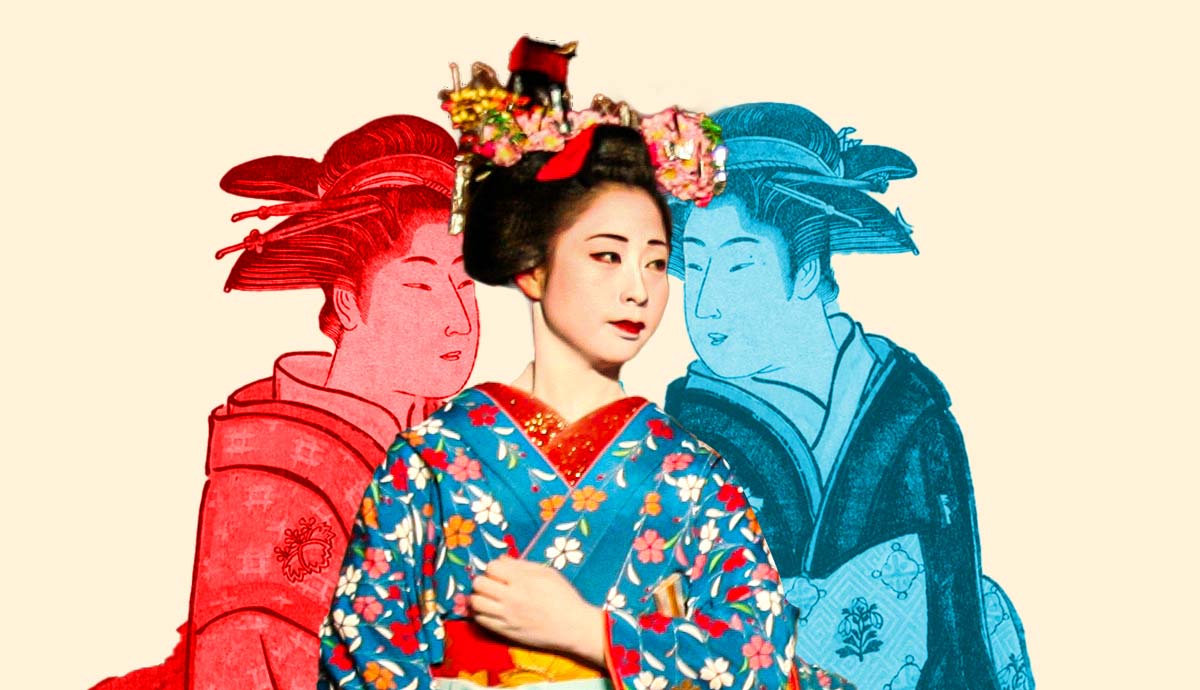
    With a long history dating to the 17th century, geishas are instantly recognizable cultural icons with their bright white make-up and immaculate sculpted black hair. Revered for their artistry and elegance, their craft is a living embodiment of Japans cultural heritage. From the pleasure quarters of Edo Japan to the geisha districts of Kyoto today, geishas have borne witness to the evolution of Japanese society. Yet, this profession remains shrouded in mystery, and many still wonder: what is a geisha and how has their cultural role evolved with time?What Is a Geishas Historical Role?Geisha of the Tachibana Street by Torii Kiyonaga, 1786. Source: The Metropolitan Museum of Art, New YorkThe history of geishas, which literally translates to art person, is generally understood to begin in 17th-century Edo Japan. While their predecessors had been predominantly male, the geisha profession was almost entirely female-centric from the 1800s onwards. In the flourishing government-sanctioned pleasure quarters, geishas plied their trade alongside courtesans and other entertainers. Established as an independent, distinct profession, geishas had been refined companions to patrons of teahouses and upscale restaurants. Traditionally, they would undergo years of rigorous training, beginning in their childhood, in the mastery of dance, music, poetry, tea ceremony, and other traditional arts. As a mainstay in Edos cultural life, geishas were often credited for influencing both the social fabric and artistic expression of the time.The Road to Becoming a GeishaGeisha (left) and Maiko (right), 20th century. Source: Edo-Tokyo MuseumBecoming a geisha was historically a demanding and lengthy process that often began in a girls childhood and continued through adolescence. In the past, poor families would sometimes sell their young daughters to an okiya (geisha house) as shikomi, trainees who performed domestic duties and ran errands. As they matured and moved on to the minarai stage, they would shadow and observe the senior geishas at social gatherings. This allowed the geisha-in-training to pick up the essential skills and mirror the mannerisms of their seniors.A geisha playing the shamisen by Yanagawa Shigenobu II, 1835. Source: Los Angeles County Museum of ArtFormal artistic education would begin when they became a maiko (apprentice) and trained intensively in dance, shamisen (a three-stringed instrument), tea ceremony, singing, and refined conversation. Typically dressed in a kimono with a red collar, a maiko is recognizable by the nape of her neck, which is uncovered by makeup. After years of apprenticeship, a maiko would officially debut as a full-fledged geisha after the erikae, or Turning of the Collar ceremony. An important milestone in the life of a maiko, the erikae would see her symbolically exchanging the red collar for the pure white collar of a geisha.The Golden Age of Geisha CultureTrue View of Prosperity: Roundtrip River Steamship Service of the Rygok Transportation Company by Utagawa Shigekiyo, 1877. Source: MITThe golden age of geisha culture lasted from the late Edo era (mid-19th century) through to the Meiji (18681912) era. Geishas enjoyed a period of heightened popularity and were touted as fashion and cultural icons in society. During this time, legislative and socio-economic changes contributed to the flourishing geisha industry. In particular, the monumental Prostitution Abolition Act of 1872 helped to formally distinguish the geisha profession from that of sex workers in the pleasure quarters. A series of legislation, including taxation, wage standardization, and proper record-keeping of customers and fees, further solidified the geishas status as professional entertainers.Adorning the face with white powder and rouge by T. Enami, 1900-1907. Source: Rijksmuseum, AmsterdamAs the Meiji era saw Japan rapidly modernizing to keep up with international standards, geishas played an essential cultural role in preserving tradition amid widespread change. This period saw geishas being hailed as fashion trendsetters, muses for writers and artists, as well as sought-after companions for political and business elites in social settings. In 1916, the total number of geishas in Japan stood at 1,941, nearly twice that of the figure in 1906. By 1926, a staggering 80,000 geishas were plying their trade in the whole of Japan.Interwar Years: The Fight to Stay RelevantModan garu in Ginza, Tokyo by Kineo Kuwabara, 1930s. Source: Wikimedia CommonsNonetheless, the interwar years in Japan heralded a new era of consumerism that was fueled by the influx of Western influences. Urban entertainment options sprouted everywhere in the cities, with consumers flocking to cafes, cabarets, departmental stores, and theaters. The latest It girl in fashion was no longer the geisha but the modan garu, or modern girl, who sported western-style dresses and flapper hairstyles. Standing as a sharp contrast to the kimono-clad geisha who embodied all things traditional, the modan garu promoted westernized lifestyles and embraced independence.A typical geisha party in Osaka, early 1930s. Source: Modern Kyoto ResearchAt the same time, geishas faced competition from the newly emerging yatona, who were female entertainers performing a simplified function. Similarly clad in a kimono and trained in basic etiquette, a yatona was a popular low-cost alternative, although she lacked the sophisticated artistry of a geisha. In this social climate, geishas were increasingly seen as a relic of the bygone Edo era. Some questioned their cultural relevance, while others went as far as to chastise them for not keeping up with the rapidly westernizing society. In 1929, the industry was impacted by the global financial crisis, which rendered geisha entertainment an unnecessary form of luxury afforded only by a few. Unfavorable socio-economic conditions forced many geishas to reconsider their livelihood during this period, with many leaving the profession altogether.The Interwar Years: Reinventing the ProfessionA maiko (right) in Pontochdressed in a fashionable, western-style outfit, as opposed to her Gion counterpart (left), 1932. Source: Modern Kyoto ResearchIn the face of widespread socio-economic changes, the geisha community recognized the need to reinvent itself to strengthen its cultural role in a modernizing society. Apart from embracing new fashion styles and listening to new music, some even began experimenting with new dances. In Pontoch, Kyoto, this came in the form of reimagining an annual geisha dance performance called Kamogawa Odori, which originally depicted folklore and beautiful scenery.Production from the 1930s onward featured modern choreography and sophisticated set designs, with a fusion of Japanese and Western aesthetics. Odori program leaflets often featured advertisements with geishas promoting modern restaurants, as well as western-style fashion items such as umbrellas and shawls; a sign of how these traditional entertainers have integrated into the evolving commercial and cultural life of modern Japan.Navigating Changes in Wartime and Post-war JapanJapanese schoolgirls conscripted to make balloon bombs, 1937-1945. Source: National Museum of the Pacific War, TexasIn the 1930s, Japan stepped up efforts to militarize the country, emphasizing industrial expansion and nationalistic education to fuel its war machine. With the outbreak of the Second Sino-Japanese War in 1937, the entire Japanese society was geared up for total war, which meant that resource shortage and working restrictions became a reality. Geisha districts were subsequently ordered to close in 1944, and geishas had to survive by finding work in factories manufacturing munitions, vehicles, and pharmaceuticals to support the war effort.Sign reading All of these Geisha girls have a venereal disease of some sort. Be sure to take a pro, circa 1945. Source: National WWII Museum, LouisianaDuring the Allied Occupation of Japan (1945-1952), following the end of World War II, the government established the Recreation and Amusement Association (RAA) to manage organized prostitution. For the benefit of the Allied soldiers, they created comfort facilities such as restaurants and brothels, which were staffed by an estimated 50,000 women. Some sex workers took on the name geisha girls while serving drinks, dancing, and sleeping with the Allied soldiers. Partly due to the language barrier and similar kimono wear, geisha girls became synonymous with prostitution, furthering the harmful and persistent misconception that all geishas were sex workers.Consumer electronics shops were abundant inTokyoin the 1970s, symbolizing the growing middle class in Japan, 1971. Source: Wikimedia CommonsIn the 1950s, post-war Japan quickly embarked on a period of reconstruction and modernization. With that came improved educational opportunities, rapid urbanization, and the sprouting of modern entertainment venues, like hotels and nightclubs, which rendered the geisha profession but one of many career options available. Compulsory education laws in the 1960s made it such that girls could no longer start geisha training at a tender age, impacting the industry significantly. By the 1980s, the number of geishas had dwindled to around 17,000, a sharp dip from the 80,000 active in the 1920s.A Geishas World TodayGeishas at a performance at Miyako Odori in Kyoto, Japan by Eckhard Pecher, 2006. Source: Wikimedia CommonsToday, there are only about 1,000 geishas in Japan, with their presence most prominent in Kyoto. Geishas operating within the handful of geisha districts, such as Gion, Kamishichiken, and Miyagawa-ch, continue to safeguard and showcase Japans cultural heritage. Most geishas today enter the profession out of their own volition, as poor families selling their daughters to the okiya is now a thing of the past. Nonetheless, modern geishas continue to adhere to long-standing customs when it comes to training, performance, and decorum. Regular engagements at tea houses and private banquets remain their primary source of income, complemented by occasional public odori performances and participation in cultural festivals.The Road Ahead: What Is a Geishas Future?Overtourism in Kyoto has led to congested streets and caused a significant strain on public infrastructure, 2016. Source: Wikimedia CommonsAs Japan reels from the devastating impacts of overtourism in recent years, geishas find themselves increasingly at the mercy of bad tourist behavior. Trespassing on private property, physical harassment, and unauthorized photography have caused unnecessary distress and disruption to their day-to-day lives. To combat such unruly behaviour, Kyotos city council banned public access to some parts of the geisha districts in 2024. At the same time, a debate over cultural authenticity ensues with the rising popularity of commercialized maiko experiences in Japan. These paid photography sessions allow tourists to don an elaborate kimono and makeup of a maiko, but critics argue they risk reducing centuries-old art to superficial experiences.A maiko photographed on Pontoch, Kyoto by Pierre-Emmanuel Boiton, 2009. Source: Wikimedia CommonsFor centuries, geishas have played an essential role in preserving the cultural fabric of Japan with grace and refined artistry. Facing the struggle to remain relevant in the modern world today, they have emerged as enduring symbols of Japanese cultural heritage. While the future of the profession remains uncertain, education and legislative efforts aimed at ensuring careful adaptation and promoting authentic cultural preservation could go a long way to sustain this centuries-old tradition.

    0 Comments 0 Shares 0 Views
  • WWW.PCGAMESN.COM
    Warhammer Classics brings dozens of lost games to Steam, including my blursed childhood favorite
    There are dozens of Warhammer games, but not all of them are worth your time. For every mind-blowing strategy sim like Warhammer 40k Dawn of War, there's a flop like Storm of Vengeance. But I remember playing one game as a kid that stuck with me to this day; a game I haven't played since I was about ten years old, but made a huge impact on my young, impressionable mind: Warhammer 40,000 Fire Warrior. Now it's coming to Steam alongside dozens of other games as a part of Warhammer Classics, and I can't wait to see if it lives up to my rose-tinted nostalgia. Yes, I'm purposefully avoiding reading the internet's takes.
    0 Comments 0 Shares 0 Views
  • WWW.PCGAMESN.COM
    Indie Pass, the brand new indie game subscription service, is out now
    It's no secret that, when it comes to videogames as a whole, indie is where the excitement is. A genre that celebrates creativity without the deadlines, costs, and restrictions of triple-A, the indie game space is truly thriving, with the likes of Clair Obscur: Expedition 33, Hades 2, Hollow Knight: Silksong, and Kingdom Come Deliverance 2 all being nominated for Game of the Year back in 2025.
    0 Comments 0 Shares 0 Views
  • WWW.MASHED.COM
    Hot Or Cold Water: What's Best For Brewing Coffee?
    There are many factors to consider when making a cup of joe. Among the most important of these is the temperature of the water used to extract the flavor.
    0 Comments 0 Shares 0 Views
  • 0 Comments 0 Shares 0 Views
  • 0 Comments 0 Shares 0 Views