Why Special Interest Groups Were Crucial to the Fall of European Colonialism
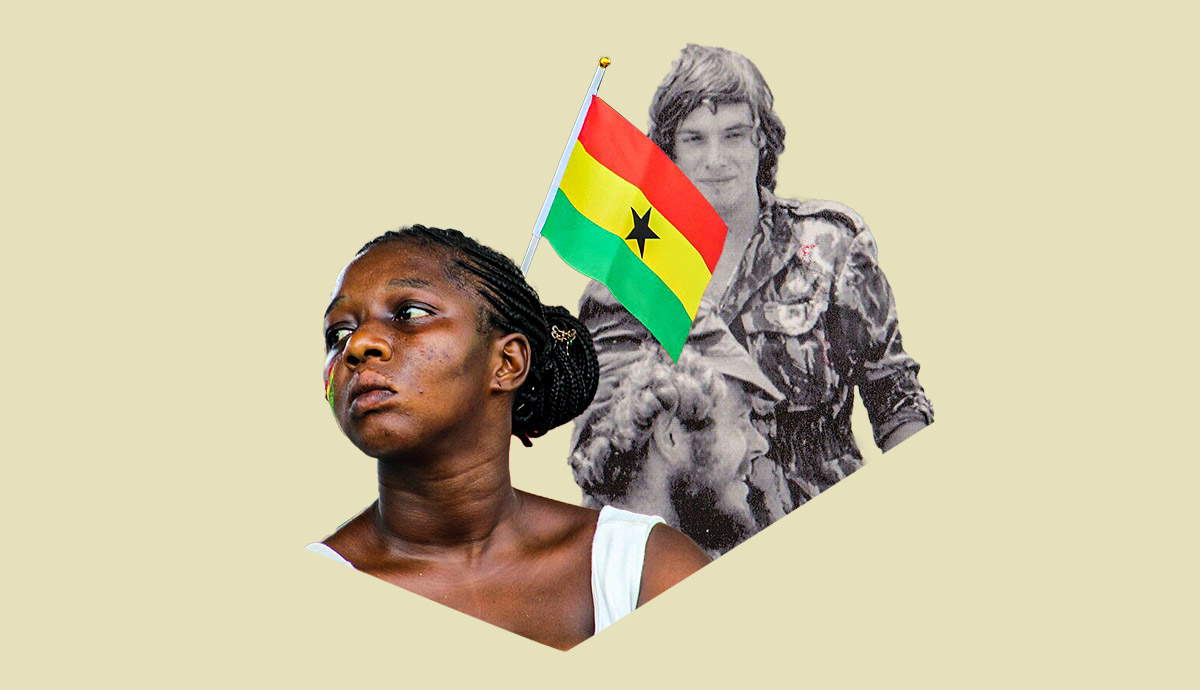
In 1945, as the world emerged from the ashes of the Second World War, little did people know that it was about to be engulfed by a new wave of conflict, destruction, and mass migration. A new wave that historians today call the wars of decolonization (or national liberation). The imperial governments that opposed them at the time steadfastly refused to call them wars, opting for terms like uprising, rebellion, insurgency, and emergency. For about three decades, the efforts of various special interest groups led to the dissolution of several European intercontinental empires and the creation of nation-states all around the globe. But what do we mean by special interest groups and how have they concretely affected the decolonization process?Decolonization, a Complex ProcessSoldiers taking position in a destroyed house during World War II, photograph by Dmitri Baltermants. Source: Smith College Museum of ArtObvious as it may seem, decolonization is the process of reversing colonization, more accurately, the political, economic, and cultural undoing of colonialism. 20th-century decolonization is usually framed between two dates: 1945, marking the end of the Second World War, and 1975, the year of the Carnation Revolution in Portugal and the dissolution of the Portuguese Empire. However, its actual temporal boundaries are more unclear.Colonialism rarely ends with the departure of the colonial authorities from a colonized country. The internalized psychological and cultural effects of colonialism linger on, as generations of the colonized try to shake off the negative and stereotypical self-understandings imposed on them by decades (and sometimes centuries) of colonialism to create what Frantz Fanon (1925-1961) calls the new self.Portuguese soldiers withdrawing from Angola, photograph by Horst Faas, 1975. Source: Wikimedia CommonsDecolonization, he writes in The Wretched of the Earth (1961), never takes place unnoticed, for it influences individuals and modifies them fundamentally. It transforms spectators crushed with their inessentiality into privileged actors, with the grandiose glare of historys floodlights upon them. It brings a natural rhythm into existence, introduced by new men, and with it a new language and a new humanity. Decolonization is the veritable creation of new men.In some countries, independence was achieved peacefully through negotiations, treaties, demonstrations, mass strikes, and boycotts. Ghana, for example, was the first African colony to achieve independence from Great Britain in 1957 through non-violent means. That was also the case in other African countries, such as Botswana and Zambia.A young woman celebrating Ghanas Independence Anniversary in 2017. Source: Wikimedia CommonsIn many former colonies, however, the colonial authorities refused to relinquish power and accept the transition initiated by local leaders. Various nationalist movements in two of Portugals most important colonies, Mozambique and Angola, waged a guerrilla campaign against Portuguese forces for more than a decade before the fall of the Portuguese Empire in 1975. Thousands of people paid with their lives for the blind determination of the French, Portuguese, and British governments to deny them self-determination. Thousands more died in the political instability that followed decolonization, as in Angola, which was plunged into one of the deadliest wars in the history of the African continent, a 26-year-long war that, it could be argued, was the direct result of decades of colonial rule.What Do We Mean by Special Interest Groups?People attending the annual LGBT-even Stockholm Pride parade in Sweden, photographed by Jonatan Svensson Glad, 2015. Source: Wikimedia CommonsSpecial Interest Groups (SIGs) are formally organized associations of people who share the same goals, demands, and concerns. These groups can be made up of specialized individuals or organizations and companies, ranging from Indigenous and non-Indigenous environmental organizations (such as the World Rainforest Movement, which protects and advances the claims of forest-dependent communities in the Global South, or Amazon Watch, a nonprofit organization dedicated to protecting the Brazilian rainforest) to labor organizations (such as the Irish Farmers Association, founded in 1955, which represents the rights and demands of Irish farmers) and civil rights groups (such as the National Association for the Advancement of Colored People (NAACP) in the United States).SIGs also include religious organizations such as the American Jewish Committee (AJC), LGBTQ-rights groups, and international human rights NGOs such as Amnesty International and Mdecins Sans Frontires (Doctors Without Borders).Amazon, Brazil, photograph by Nathalia Segato. Source: UnsplashWhat unites these diverse groups is their determination to influence and/or change government policy on a particular issue. They do so in a variety of ways, from lobbying to mass strikes, from political negotiations to (violent and non-violent) demonstrations. Special Interest Groups can exist at all levels: local, provincial, national, and international. Some are defined as single-issue groups because they promote and raise awareness on a single issue, while others are more broadly based. Sometimes their actions enjoy general public support, particularly in democratic parliamentary systems.Others, such as LGBTQ-rights groups operating in authoritarian or semi-authoritarian regimes, often face discrimination and opposition from both an unsympathetic public and the government and may have to operate unofficially and in secret to protect the physical well-being of their members.Empowerment Through EducationDeer Hunt, painting by Kiowa artist Stephen Mopope. Source: Gilcrease MuseumIn many museums across Canada, visitors are now greeted by explanatory panels written not only in English and French (as in Qubec), but also in the Indigenous languages spoken by the local Indigenous groups. Many museums in North America and Australia include opening messages on their websites to acknowledge the Custodians of the lands on which they were built.For example, the Western Australia Museum and the State Library of Western Australia recognize the strength and culture of the Nyoongar Whadjuk people, while the Museum of Contemporary Art Australia acknowledges the Gadigal people of the Eora Nation, the traditional owners of the land and waters upon which the MCA stands. In Toronto, Canada, the Art Gallery of Ontario (AGO) acknowledges that it operates on land that is Michi Saagig Nishnawbe territory, which over time has also been occupied by other Anishinaabe, Haudenosaunee, and Wendat confederacies.One Way Ticket to Hell, a painting by Aboriginal artist Aunty Fay Moseley remembering the tragedy of the Stolen Generations in Australia, 2012-2020. Source: Australian MuseumThe McCord Steward Museum in Montral/Tiohti:ke not only acknowledges that its building sits on land used and occupied by Indigenous peoples for millennia that has never been ceded by treaty, but also that colonialism has had devastating consequences on First Peoples. Thousands of miles to the west, the Manitoba Museum recognizes that We are on Treaty No.1 land, the ancestral lands of the Anishinaabeg, Ininwak, and Michif, and that these lands, water, and waterways are the unceded territories of the Dakota, and the homeland of the Red River Mtis Nation. The list goes on.These are the most visible results of decades of efforts by Indigenous anti-colonial movements and organizations across North America to raise awareness of the continuing impact of colonialism on their lives and their determination to ensure the revival of their ancestral languages and cultures.The McCord Stewart Museum in Montreal is one of those museums that publicly acknowledge the Indigenous people whose lands it was built on. Source: McCord Stewart MuseumThe Native Womens Association of Canada (NWAC), the Manitoba Mtis Federation (MMF), the Assembly of First Nations (AFN), the Federation of Saskatchewan Indian Nations (FSIN), and the Inuit Tapiriit Kanatami ( ) are just a few of the many political organizations created by First Nations across what is now Canada to defend their rights.By organizing protests, hosting powwows (most of which are open to non-Indigenous audiences), and using their ancestral languages in books and music alongside European languages, Indigenous activists, politicians, and artists continue to prioritize education as a tool for revitalization, self-determination, and, ultimately, empowerment. But Canadas First Nations are not alone.Standing Figure Container, Colombia, 1500 BC-100 AD (Ilama Tradition). Source: Muse des beaux-arts de MontralIn Australia, the Kimberly Land Council (KLC) has been working with Aboriginal people to secure native title recognition, conduct conservation and land management activities and develop cultural business enterprises for over 40 years, since it was established at Noonkanbah Station, on the Fitzroy River in the south-central Kimberley region of Western Australia, in May 1978.In Colombia, the National Indigenous Organization of Colombia (Organizacin Nacional Indgena de Colombia) has been fighting since 1982 to defend the autonomy, history, and culture of Indigenous Colombians, the countrys Indigenous peoples. Similar peaceful organizations exist throughout Central and South America, in Peru, Mexico, and Ecuador, as well as in Africa.Fostering and Celebrating a Pan-African IdentityPostage stamp commemorating Kwame Nkrumah and Ghanas Independence. Source: Wikimedia CommonsIn December 1958, the All-African Peoples Conference (AAPC) galvanized the struggle of African colonies against British (as well as Portuguese and French) colonialism. Held in Accra, Ghana, it lasted six days, from December 8 to 13, 1958, and was the first major pan-African conference to bring together hundreds of leaders of various groups, from youth organizations to nationalist movements, directly on African soil, away from the centers of European power.The location was highly symbolic. Under the leadership of Kwame Nkrumah (1909-1972), the first president of Ghana and father of the influential Ghanaian activist and politician Samia Nkrumah, Ghana became the first African colony to gain independence from Great Britain on March 6, 1957. Nkrumahs opening speech set the tone for the conference as a gathering of Africans speaking for Africa and Africans.Amansuri Lake, Ghana, photograph by Ato Aikins. Source: UnsplashBefore that, Africans had had Pan-African Congresses before in fact, five of them but all of these, by force of circumstances, were carried on outside Africa and under much difficulty.The 1945 Pan-African Congress, for example, organized and made up largely of those outside Africa who had the cause of African freedom at heart, had been held in Manchester, on British soil.By the late 1950s, however, circumstances had changed. The purpose of the 1958 Conference was to promote solidarity and cooperation between colonized nations (and diaspora communities), primarily in Africa, but ideally throughout the world. As Nkrumah said in his opening speech, If we are to attain the major objective to which we are all committed the total liberation of Africa then it is necessary to bury our political hatchets in the interest of Africas supreme need.The stated goal of the Pan African Heritage Museum is to create an environment for people of African descent and all others to discover and experience the true history of the origins of humanity. Source: Pan African Heritage MuseumAt the conference, in a powerful celebration of African identity, Nkrumah urged his fellow African leaders and citizens not to be afraid to proclaim their right to self-determination openly and freely to the world, to make no apology to anyone for seeking self-determination and freedom.By encouraging grassroots participation and involving civil society in the anti-colonial struggle, the 1958 Conference also emphasized the importance of Pan-Africanism in achieving independence. It also served to reinforce the belief that the freedom of an African nation was inextricably linked to the freedom of the African continent as a whole, therefore creating and nurturing a cohesive, all-encompassing anti-colonial narrative.The cause that African nations are called to embrace, Nkrumah said in his opening speech, is a noble and irresistible Cause. As long as we remain true to that Cause the Cause of national freedom and independence we have nothing to fear but fear itself.Paramilitary Groups or Special Interest Groups?Paula Baeza Pailamilla, a Mapuche artist raising awareness on the history of her people and the colonization of Chile, photograph by Irene Arango, Territori Festival. Source: Wereldmuseum LeidenParamilitary groups, like Special Interest Groups, are organizations made up of individuals who are committed to a cause and have a particular political and/or religious agenda. This has led some to include paramilitary groups in the category of SIGs, but it is not that simple. What distinguishes paramilitary organizations from SIGs are the methods the former use to achieve their goals.Paramilitary groups typically operate outside the law and outside the normal military framework. Their heavily armed members use force, coercion, and violence, both physical and psychological, to achieve their goals and punish or kill anyone who does not share their aims or prevents them from achieving them. In many cases, they target members of the police, as well as public and private property. On the other hand, Special Interest Groups are inherently non-violent and determined to abide by the law.Four Araucanians outside their home in Chile, 1920s. Source: Wikimedia CommonsSome paramilitary groups are politically motivated, such as the Irish Republican Army (IRA) or the Kurdistan Workers Party (PKK), while others, such as Boko Haram in Nigeria, pursue an agenda rooted in religion and animated by the belief that state and religion should go hand in hand. Some organizations, such as the Coordinadora Arauco-Malleco (CAM), in Chile, operate on the borderline between violence and non-violence.CAMs actions have a very clear, anti-colonial aim: to regain control of the ancestral lands of the Mapuche, the indigenous people of south-central Chile and south-west Argentina, which were seized during the so-called Pacification of Araucana, and to protect them from the invasive and destructive power of mining and logging companies. These lands are now owned by landowners and corporations. To this end, they have allegedly often resorted to arson attacks and sabotage against the companies machinery and property.Protesters clashing with the British Army in front of an IRA sign during riots in William Street, Derry/Londonderry, Northern Ireland, 1972. Source: The Museum of Free DerrySome paramilitary groups operate in the context of civil war. This was the case with the IRA and the Ulster Volunteer Force (UVF), two of the various paramilitary groups active in Northern Ireland during the Troubles. While Irish Nationalists in the IRA sought Irish unity and the withdrawal of British forces from the island of Ireland, the UVF and its members, Loyalist Protestants, fought to maintain Northern Irelands status within the United Kingdom. While paramilitary groups cant be categorized as special interest groups because of their reliance on violence, physical and psychological, they share with SIGs a determination to champion a cause, in some cases directly linked to decolonization.Aboriginal Australian activist Faith Bandler, celebrating the historic outcome of the 1967 referendum in June 1967. Source: National Museum of AustraliaFrom Africa to Chile, from Australia to North America, the actions of Special Interest Groups (SIGs) have contributed to the dissolution of European empires and the creation (sometimes peacefully, sometimes violently) of nation-states around the world. The process historians call decolonization continues in many countries today, albeit in different ways.When visitors enter a museum and have the opportunity to read explanatory panels in English alongside the language of the indigenous group on whose land the museum was built, they are engaging in a form of decolonization, decolonization through education and culture. Decolonization continues in the form of sabotage, demonstrations, boycotts, and legal battles, such as those many Aboriginal and Torres Strait Islanders have waged since the 1970s to have their connection to their ancestral lands officially recognized.











 English
 Arabic
 French
 Spanish
 Portuguese
 Deutsch
 Turkish
 Dutch
Dutch
 Russian
 Romaian
 Portuguese (Brazil)
 Greek
Greek