• YUBNUB.NEWS
    Search Continues For Missing U.S. Airman From Downed F-15 In Iran
    The search for the second crew member of a downed U.S. Air Force F-15E Strike Eagle in Iran, which is believed to have been caused by enemy fire, has entered its second day. The aircraft, assigned to
    0 Kommentare 0 Geteilt 4 Ansichten
  • YUBNUB.NEWS
    Tom Brady Offers Discipline-Based Alternative to Ozempic Craze
    The market for GLP-1 weight loss drugs like Ozempic is exploding as more Americans turn to the substances for help with getting healthy. In response to the trend, NFL star Tom Brady and former X CEO Linda
    0 Kommentare 0 Geteilt 4 Ansichten
  • YUBNUB.NEWS
    In Charts: US Does Not Rely on Strait of Hormuz Oil While Asia Stands to Lose
    [View Article at Source]Japan, South Korea, and India relied on the Gulf nations for at least half of their imports in 2024.
    0 Kommentare 0 Geteilt 4 Ansichten
  • YUBNUB.NEWS
    Readers Weigh In on Voter ID: Epoch Survey
    Epoch Times readers shared their opinions on the U.S. election system.Add to My ListSaveBy Jacki Thrapp|April 04, 2026Updated:April 04, 2026The Trump administration and Republicans have taken a series
    0 Kommentare 0 Geteilt 5 Ansichten
  • YUBNUB.NEWS
    Francis Bellamy: The Minister Who Gave America Its Pledge
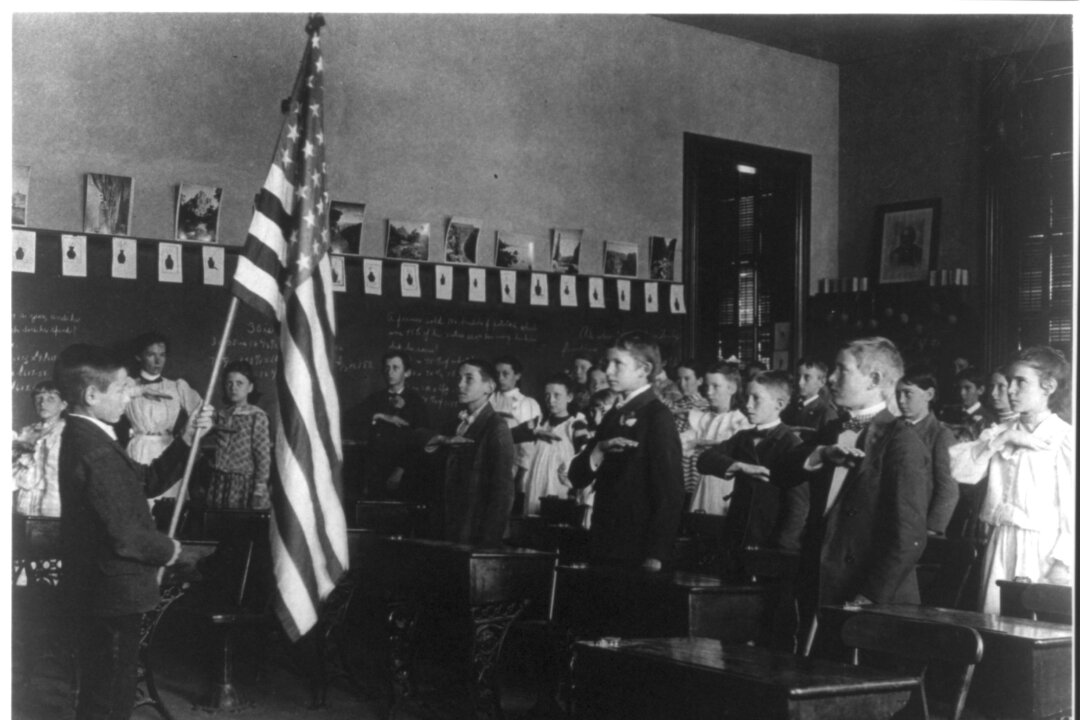
    Students recite the Pledge of Allegiance in 1899. Public domainIn the closing years of the 19th century, as the United States struggled to reconcile its past and define its future, a Baptist minister
    0 Kommentare 0 Geteilt 5 Ansichten
  • New Starfield achievements hint at unannounced secrets in its Terran Armada DLC
    New Starfield achievements hint at unannounced secrets in its Terran Armada DLC The second Starfield DLC, Terran Armada, is still a few days away, but we've just been handed some fresh clues to what we can expect in both the paid expansion and its accompanying Free Lanes update. The hints come courtesy of 20 new Steam achievements for the space game, several of which tie neatly into...
    0 Kommentare 0 Geteilt 9 Ansichten
  • WWW.THECOLLECTOR.COM
    How Three Rights Organizations Cracked Jim Crow
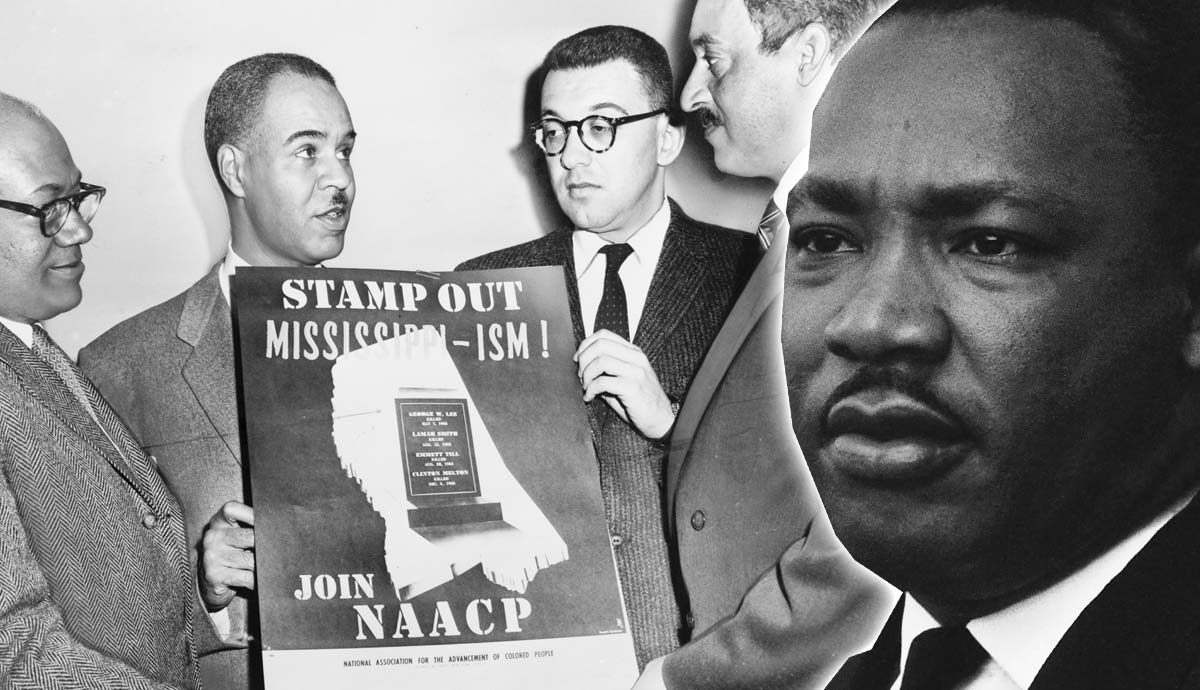
    The Civil Rights Movement was built through the work of three different rights organizationsthe NAACP, SCLC, and SNCC. Each played a unique role in the fight for equality. Legal challenges, nonviolent protest, and student-led activism were the tactics used. Together, they changed the course of American history. From courtrooms to lunch counters, these organizations pushed for desegregation, voting rights, and dignity. They challenged Jim Crow and helped pave the road to the Civil Rights Act and Voting Rights Act. Their legacy lives on in the continued fight for justice.Fighting Jim Crow Through the Courts: The NAACPNAACP leaders Henry L. Moon, Roy Wilkins, Herbert Hill, and Thurgood Marshall in 1956. Source: Library of CongressThe National Association for the Advancement of Colored People (NAACP) was the earliest of the three Civil Rights organizations. Founded in 1909, the NAACP used the Judicial system of the United States against itself during the Civil Rights era. At a time when lynchings, segregation, and voter suppression were widespread, the NAACP took the fight out of the streets and into the courtroom. The strategy, while often slow-moving, was deliberate.While changing the legality of segregation was a lengthy process, the results were often permanent. Due to the supremacy clause, which indicates the supremacy of federal law over state law, the efforts of the NAACP ensured the widespread implementation of legislation that could not be abridged by legislation passed by state congressional bodies. Under the legal leadership of Charles Hamilton Houston and later Thurgood Marshall, the NAACP challenged segregation in the public sector. Their most important success came in 1954 with Brown v. Board of Education, which overturned a previous 1896 Supreme Court case, Plessy v. Ferguson, and declared segregated schools unconstitutional.A young man wearing a NAACP hat during the 1963 March on Washington. Source: National ArchivesMarshall argued the Separate but Equal precedent set by Plessy v. Ferguson was inherently unconstitutional. Separating people by race instilled a sense of inferiority, no matter if the conditions were equal to one another. Marshalls argument swayed the Supreme Court, which ruled in a 9-0 majority against the Board of Education in Topeka, Kansas. The ruling mandated that all school districts in the United States be desegregated, not just in Topeka, Kansas.Their work, however, didnt pertain to just legal battles. The NAACP also organized voter registration drives, challenged housing discrimination, and built a national network of branches to respond to civil rights violations, creating field secretaries in southern states who would oversee various civil rights violations in their districts. Though it didnt organize sit-ins or marches the way SNCC and the SCLC did, which garnered the attention of media outlets, its role in dismantling legal segregation was paramount.Nonviolence and Power Through Prayer: The Rise of the SCLCPoster Advertising Dr. Martin Luther King, Jr.s Visit to Edenton, N.C., c. 1966. Source Wikimedia CommonsThe Southern Christian Leadership Conference (SCLC) was created in 1957, just after the success of the Montgomery Bus Boycott in Alabama. At the center of it was Dr. Martin Luther King Jr., who became its first president. The SCLC gained its following from the Black church, showcasing the importance of religion in the African American community. Church leaders were some of the few people in the South who had both education and a literal pulpit from which to spread their message, and the SCLC used that to its advantage.Dr. King ensured the mission was rooted in nonviolence and Christian values. Taking direction from the nonviolent efforts of Gandhi in India, the SCLC protested by marching and boycotting.Martin Luther King Jr., leader of the SCLC, during the 1963 March on Washington for Jobs and Freedom, during which he delivered his historic I Have a Dream speech, calling for an end to racism. Source: National ArchivesWhile not initially seen as effective, King knew that violent resistance would be used as an argument to prolong segregation. One of its most important campaigns came in Birmingham in 1963. With sit-ins at lunch counters, marches, and protestors facing down police dogs and fire hoses, the campaign forced national attention. Birmingham, as the summer of 1963 became known, showed the world the brutality of segregation and pushed the Kennedy administration to act.Later that year, the SCLC helped organize the March on Washington to further demonstrate to the government that change needed to happen. The image of Dr. King delivering his I Have a Dream speech on the steps of the Lincoln Memorial to a crowd of over 250,000 men, women, and children of all races wasnt accidental. The SCLC understood that the fight for civil rights needed to be brought to peoples attention.The Power of the Youth: SNCCs Grassroots RevolutionBrochure for the Student Nonviolent Coordinating Committee, c. 1963. Source: Wikimedia CommonsThe Student Nonviolent Coordinating Committee, better known as SNCC (pronounced snick), started in 1960. Unlike the NAACP and SCLC, SNCC wasnt built by lawyers or pastorsit was a grassroots organization started by students at southern segregated universities. Today known as HBCUs. They didnt have money, offices, or national connections, but were driven by the desire to see change. They launched sit-ins, registered voters, and traveled into some of the most dangerous towns in the Deep South.What made SNCC different was its approach. They trained locals to become organizers themselves. Their crowning achievement took place in Mississippi in the summer of 1964. Known as the Mississippi Freedom Summer. SNCC volunteersprimarily students from northern universitiesknocked on doors and taught people how to pass voter literacy tests, paid their poll taxes, and offered rides to polling locations. They risked beatings, jail, and worse. Three SNCC organizersJames Chaney, Michael Schwerner, and Andrew Goodmanpaid for their actions with their lives.The deaths of Chaney, Shwerner, and Goodman did not dissolve SNCC. As the movement progressed, the grassroots organization helped with some of the eras most influential moments. From the Freedom Rides to the March on Selma, the SNCC gave ordinary people an avenue to demand equality.Tensions, Strategy Splits, and Growing PainsPhoto of Eldridge Cleaver, Bobby Seale, Huey Newton, and Fred Hamptonmembers of the Black Panther Party, c. 1969. Source: Newspapers.comAs the movement matured, differences between these organizations became more visible. The NAACP preferred cautious, courtroom battles. The SCLC emphasized a moral approach and large-scale demonstrations. SNCC wanted direct, community-based action. These strategies didnt always align.Tensions grew during major campaigns where these organizations joined their efforts, like the March on Washington, where SNCC leader John Lewis was asked to soften his language and tone to avoid offending allies in Congress. Lewis resisted claiming that if he was to get in trouble for his language, it would be good trouble. Some SNCC members felt the SCLC was too cautious or too eager to compromise.In contrast, NAACP leaders occasionally criticized younger activists in SNCC for what they saw as reckless actions of prideful youth. These disagreements reflected real debates about the direction of the movement. Was it better to appeal to the federal government or build local power? Should the focus be on integration or on economic justice?Should the movement remain strictly nonviolent as newer groups like the Black Panthers, who felt the Civil Rights movement up to this point had been too passive and needed to be more militant, began to rise? The answer was that there was never one way to advocate for Civil Rights. Each of these organizations fought hatred with a different approach. Together, they were able to accomplish their shared goal of legal equality for African Americans.Landmark Victories and National LegislationPresident Lyndon B. Johnson meets with Martin Luther King, Jr., at the signing of the Voting Rights Act of 1965. Source: Wikimedia CommonsDespite their differences, the work of the NAACP, SCLC, and SNCC helped achieve some of the most significant legal victories for equality in American history. The Civil Rights Act of 1964 banned segregation in public places and outlawed employment and housing discrimination. The Voting Rights Act of 1965 struck down literacy tests, poll taxes, and the grandfather clause used to keep African Americans from voting.The NAACPs courtroom victories built the legal groundwork. The SCLCs televised marches and moral appeals forced the federal government to act. SNCCs work in Southern towns exposed the brutality of Jim Crow to the nation. Together, they created pressure that politicians had to act upon. While the laws they helped pass didnt solve every problem, they represented a turning point in the nations history. For the first time, civil rights were guaranteed by the full force of federal law.Impact and LegacyCitizens celebrating Dr. Martin Luther King Day on January 15, 2018. Source: Wikimedia CommonsThe work of the NAACP, SCLC, and SNCC didnt end in the 1960s. Their legacy lives on in the fights for justice happening today. The NAACP continues its legal advocacy, challenging voter suppression and racial discrimination in the courts, such as racial gerrymandering laws. The SCLC, though smaller, still promotes nonviolence and faith-based activism.The SNCC, officially disbanded, left behind a model of grassroots organizing that influences movements today like Black Lives Matter. The different approaches of these organizations showed that change takes different forms. They also showed that movements must evolve to meet the moment.Voter suppression, police brutality, and systemic inequality didnt vanish with the Civil Rights Act. Their combined legacy is a reminder that real progress is never the work of one leader or one marchits the result of thousands of people, each doing their part, for years on end.

    0 Kommentare 0 Geteilt 3 Ansichten
  • ALLTHATSINTERESTING.COM
    What Happened To Sophia Koetsier? Inside Her Haunting Disappearance At A Wildlife Refuge In Uganda
    Find Sophia Koetsier/FacebookSophia Koetsier was a 21-year-old medical student from Amsterdam who disappeared in Uganda under mysterious circumstances.In the fall of 2015, a 21-year-old medical student from Amsterdam named Sophia Koetsier traveled to Uganda for an internship at a hospital in Kampala. Before returning to Europe after the program, Koetsier and two friends decided to take a two-week trip around the African country.From the beginning, Koetsiers friends noticed that she was acting strange. She had previously been diagnosed with bipolar disorder, and her actions became more and more manic as the days went on.Then, on Oct. 28, 2015, Koetsier vanished at Murchison Falls National Park. She had walked from her sleeping quarters to a nearby bathroom and never returned. After an extensive search, the young womans belongings were found strewn along a riverbank, but there was no evidence of a struggle.So, what happened to Sophia Koetsier? Some believe she was eaten by a wild animal, while others think she tried to go for a swim and drowned. No sign of her body was ever discovered, and more than a decade later, her disappearance remains one of the most puzzling mysteries in recent history.A Young Medical Students Journey To UgandaSophia Koetsier was born and raised in Amsterdam, and after completing secondary school, she remained in the city to study medicine at university. In 2015, she was accepted to an eight-week internship in Kampala. She wanted to specialize in tropical medicine, so she was thrilled for the opportunity.FindSophia.orgSophia Koetsier loved the people and culture of Uganda, and she reportedly wasnt ready to return to Amsterdam at the time of her disappearance.After arriving at the hospital in Uganda, Koetsier frequently spoke with her parents about how much she loved the country and its culture. When the internship came to an end, she wasnt ready to go home, so she joined two fellow students on a tour through the Ugandan wilderness.While her family was happy for her, they were also worried. Koetsier had been diagnosed with bipolar disorder, which is characterized by periods of intense depression and manic episodes that can sometimes cause reckless behavior. She seemed to have her mental health under control during her internship, but shortly after the start of her two-week trip, she began experiencing symptoms of mania.When Koetsiers friends woke up one morning, she was nowhere to be found. When she eventually turned up, she told her travel companions that shed spent part of the night in a lookout tower in the wildlife park they were visiting.We asked her why she had done it, one of Koetsiers friends told the Dutch newspaper De Volkskrant in 2016. She said shed had a really cool evening and that she had set a kind of mission for herself. It was a challenge to survive a night out there.Josefito123/Wikimedia CommonsHippos in the river at Murchison Falls National Park, where Sophia Koetsier vanished in 2015.That same evening, Koetsier told a friend back in the Netherlands that she was worried about her lack of sleep and that there was too much stimulation She just wanted to be alone.The next day, the young women traveled to Murchison Falls National Park for a boat trip along the Nile River. At one point, Koetsier walked away for a quick bathroom break, but she didnt return. When her friends went to look for her, they found her talking to a mother and a child. We asked if she was coming with us, but she refused, they recalled. She found them more interesting. Eventually, it turned into a bit of an altercation.Sophia Koetsiers odd behavior continued on the boat. She kept tampering with the equipment onboard and spent much of the ride in the restroom. Her friends decided that they would call her parents that evening.But by the time they got the chance, Koetsier had vanished for good.The Disappearance Of Sophia KoetsierKoetsier, her two friends, and their travel guide arrived at their lodging at Murchison Falls National Park around 6 p.m. on Oct. 28, 2015. Shortly after, before night fell, Koetsier walked to the nearby bathroom facility. The other women took the opportunity to call Koetsiers mother, but as they were on the phone, the guide approached and asked, Have you seen Sophia?Park rangers launched a search within 15 minutes of her disappearance, but Sophia Koetsier was nowhere to be found. The following morning, a plastic bottle that Koetsier kept her trash in was found near a river about 600 yards away.Police HandoutSophia Koetsiers clothing was perplexingly found torn into strips and tied to branches on the ground.The next day, several more of her belongings were discovered scattered along the bank. Strips of fabric from her pants had seemingly been tied onto branches, and her underwear was hanging high in a tree.Helicopters, search dogs, and a drone were brought in to help with the search, but they never found Koetsiers body or any evidence of what had happened to the young medical student. Her disappearance remains a mystery to this day.What Happened To Sophia Koetsier?Investigators first assumption was that Koetsier had been attacked by a wild animal. But there was no blood on the ground or the clothing, and no drag marks were present in the dirt near the bathrooms or in the area where Koetsiers belongings had been found. The animal theory also didnt explain the strange strips of fabric tied to sticks.A later report determined that Koetsier had likely fallen into the river or been dragged in by an animal and drowned, but again, that doesnt account for the state of her clothes or how her underwear got into a tree. Perhaps Koetsier walked down to the river of her own accord and tried to go for a swim in a state of mania or maybe something more sinister happened.I had a strong sense that things were not right, Sophia Koetsiers mother, Marije Slijkerman, told the Daily Beast in 2023. That feeling has remained, to this day, very strongly.FindSophia.orgSophia Koetsiers parents continue to work ceaselessly to find out what happened to their daughter.Koetsiers belongings were found just a few yards from where her water bottle had been spotted 24 hours earlier. Why hadnt investigators seen them the first time? Had someone planted them there overnight?We have been in touch with a few Dutch policemen, who immediately said that this looked like a manipulated or staged scene, Slijkerman said. She has come to the conclusion that foul play may have been involved in her daughters disappearance.Indeed, an independent lab analyzed Koetsiers clothing and discovered male DNA that couldnt be linked to the Ugandan police or any members of the search party. Was Sophia Koetsier attacked in the Ugandan wilderness and murdered? Or could she still be alive and held captive today? These are the questions her family hopes to find the answers to.After reading about the disappearance of Sophia Koetsier, learn about Julie Ward, the British woman who was killed on a Kenyan safari. Then, discover how Alison Botha survived a horrific attack in South Africa.The post What Happened To Sophia Koetsier? Inside Her Haunting Disappearance At A Wildlife Refuge In Uganda appeared first on All That's Interesting.
    0 Kommentare 0 Geteilt 4 Ansichten
  • ALLTHATSINTERESTING.COM
    Meet 10 Of The Weirdest People In History Who Became Infamous For Their Unconventional Lifestyles
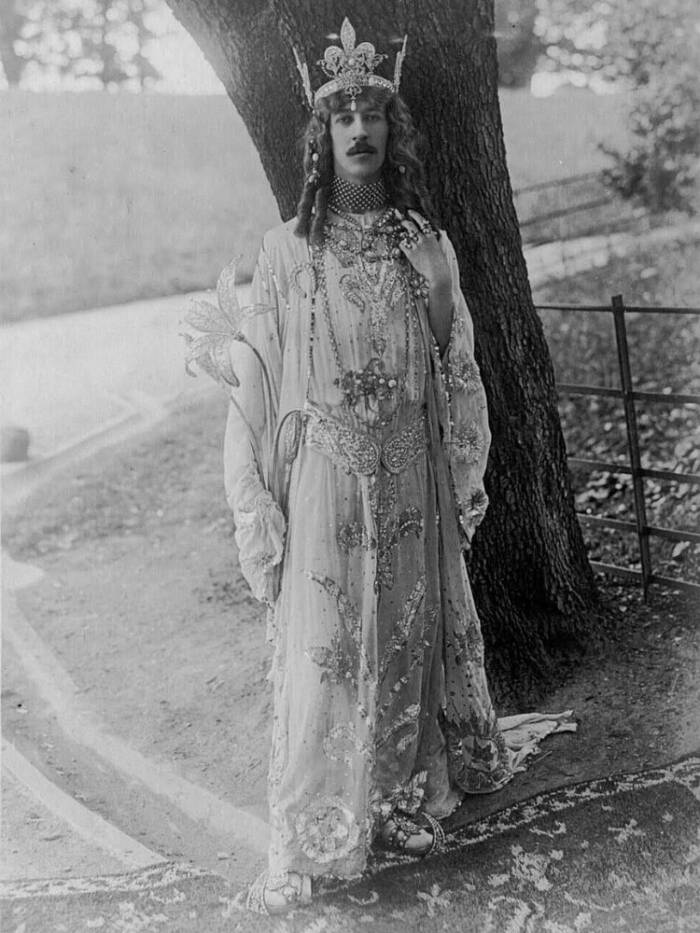
    Were all a little bit weird, some of us more than others. There are those, however, who blaze past casual weirdness and enter the ranks of the epically bizarre. The behaviors exhibited by these individuals rank them as the weirdest people history has ever seen.Public DomainHenry Cyril Paget, the 5th Marquess of Anglesey also known as the dancing marquess was perhaps one of the strangest figures in history.Henry Cyril Paget was a British aristocrat who blew through a significant inheritance in just a few years with odd purchases and extravagant parties. On the opposite end of the spectrum, Hetty Green was one of the wealthiest women in American history, but she was so miserly that she refused to seek medical care for her son after he injured his leg and he ultimately had to have it amputated.Then there were historical figures like Diogenes, an ancient Greek philosopher who was notorious for his public defecation, and Tarrare, a French soldier with an insatiable appetite who may have once eaten a toddler.These are the stories of historys weirdest people and the eccentric lifestyles that made them infamous.Diogenes, The Offbeat Philosopher Who Criticized PlatoIn the fourth century B.C.E., a Greek philosopher named Diogenes became renowned not for his teachings but for his bizarre lifestyle. He was born in Sinope, but he either fled or was banished after he and his father were accused of devaluing coins during the minting process. Diogenes ended up in Athens, where he took up shelter in a large ceramic jar and survived as a beggar. His life of poverty inspired his philosophy, and he became one of the founding figures of Cynicism, the school of thought that states humans are reasoning animals who should live simply and disregard social norms to achieve happiness. Diogenes sometimes sat in on Platos classes at the Academy of Athens, often criticizing the famed philosophers teachings. When Plato described man as an animal, biped and featherless, Diogenes reportedly brought a plucked bird into his lecture room and proclaimed, Here is Platos man.Public DomainDiogenes purportedly lived in a piece of pottery on the streets of Athens.According to Plutarchs Parallel Lives, Diogenes once met Alexander the Great. And when that monarch addressed him with greetings, Plutarch wrote, and asked if he wanted anything, Yes, said Diogenes, stand a little out of my sun.'The odd philosophers notoriety was only enhanced by his troubling behavior, such as masturbating, urinating, and defecating in public. One legend even claims that he once peed on Platos stool.Diogenes died sometime between 324 and 321 B.C.E., but stories of where and how he spent his final days differ. Some say he died by suicide, while others believe he perished after eating raw octopus. Regardless, his absurd life made him one of the weirdest people in history.Historys Weirdest People: Tarrare, The Frenchman Who May Have Eaten A BabyPublic DomainThere are no known depictions of Tarrare, but he was a polyphage like his fellow Frenchman Jacques de Falaise, seen here, who was also known to eat live animals.Tarrares real name is unknown, but his title as one of historys weirdest people is undisputed.He was born near Lyon, France, around 1772, and he developed an insatiable appetite at an early age. By the time he was a teen, he could reportedly eat his own weight in food in a single day, though he remained slim at just 100 pounds.Unable to support his expensive eating habits, his parents kicked him out, and he survived by eating bizarre things in front of crowds for money. Some of his more memorable meals included stones, an entire basket of apples, and live animals.When the War of the First Coalition began in 1792, Tarrare joined the French Revolutionary Army, but the meager military rations werent enough for him. He resorted to searching through dungheaps for scraps and eventually became sick.An 1819 volume of the London Medical and Physical Journal reports that Tarrare was admitted to the military hospital, where he devoured the poultices in the apothecary room and worse:One day, in the presence of the chief physician of the army, Dr. Lorence, he seized by the neck and paws a large living cat, tore open its belly with his teeth, sucked its blood, and devoured it, leaving no part of it but the bare skeleton: half an hour afterwards he threw up the hairs of the cat, just as birds of prey, and other carnivorous animals do.Doctors also witnessed Tarrare eat a live eel and the entirety of a meal that had been prepared for 15 men. These feats gave his military superiors an idea. They fed Tarrare a wooden box with a piece of paper inside, and when it passed through his body two days later, the note was still legible. Could Tarrare be used to smuggle messages across enemy lines? On his first mission, Tarrare was sent into Prussian territory, where he was immediately captured. They imprisoned him until he confessed why he was there, and his captors then chained him to a latrine until he defecated. He returned to the French hospital, where he was allegedly caught drinking blood that had been drawn from other patients and trying to feast on the bodies of corpses. When a 14-month-old child vanished, all suspicions turned to Tarrare, though he never admitted to the crime.Tarrare died from consumption in his mid-20s, and his subsequent autopsy revealed intestines that were filled with pus, a massive stomach covered in ulcers, and an unfathomably foul stench. The surgeon was so disgusted that he cut the examination short, bringing an abrupt end to the story of one of historys weirdest people.The post Meet 10 Of The Weirdest People In History Who Became Infamous For Their Unconventional Lifestyles appeared first on All That's Interesting.
    0 Kommentare 0 Geteilt 4 Ansichten
  • 0 Kommentare 0 Geteilt 5 Ansichten