
• ALLTHATSINTERESTING.COM
    The Little-Known Story Of The Palomares Incident, When America Accidentally Dropped Four Nuclear Bombs On Spain
    U.S. Navy, Courtesy of the Natural Resources Defense CouncilThe recovery of one of the hydrogen bombs dropped near Palomares, Spain in 1966. This device was recovered from 2,850 feet of water in the Mediterranean Sea and brought aboard the USS Petrel.At the height of the Cold War, U.S. bombers loaded with nuclear weapons were a common sight in the sky. They were meant to discourage the Soviet Union from launching a strike and they were prepared to attack at the first sign of a potential battle with the Soviets. But their presence ultimately led to a number of catastrophic accidents.One of the most infamous was the Palomares incident, which took place on Jan. 17, 1966. That day, an American B-52 bomber accidentally collided with a KC-135 jet tanker over Spain, killing seven airmen and dropping four nuclear bombs near the remote village of Palomares. None of those bombs were armed at the time of the accident, but explosive material in two of the devices still exploded upon impact when they hit the ground, leading to massive craters and the spread of toxic, radioactive plutonium dust.It wasnt the only incident of its kind during the Cold War. But even though the Pentagon eventually admitted to over three dozen accidents that involved bombers crashing or catching on fire, the Palomares incident continued to attract a notable amount of attention since it happened in a foreign country and it also impacted thousands of civilians.The resulting contamination meant that the U.S. and Spain had to launch a massive cleanup effort, and up to 1,750 tons of radioactive soil were shipped to America for disposal. But the cleanup was never fully completed, and shockingly, some of the land in the region remains contaminated to this day.How The Palomares Incident UnfoldedWikimedia CommonsA B-52 bomber refueling mid-air with a KC-135, like what was supposed to happen over Palomares in January 1966.In the early 1960s, the United States launched Operation Chrome Dome. The Cold War operation aimed to have nuclear-armed B-52 bombers in the air at all times. Specifically, they were supposed to be flying the bombers in locations that would allow them to strike the Soviet Union if necessary.Naturally, this meant that these planes would need to refuel often.In January 1966, one B-52 bomber was on its way back to its base in North Carolina when refueling became necessary. The aircraft tried air-to-air refueling with a KC-135 tanker plane, which should have been a routine process. But things went far from routine that day. U.S. Maj. Gen. Delmar Wilson, who was tasked with responding to the Palomares incident, later told the BBC: I believe what happened was the bomber was closing at a too-high rate of closure speed and he didnt stabilize his position, with the result that they got too close and collided.The result of the two planes colliding was catastrophic. The B-52 was ripped open, and the jet fuel that the KC-135 was carrying ignited. The subsequent explosion killed all four members of the KC-135 crew. Wikimedia CommonsA recovered thermonuclear bomb from the Palomares incident, displayed on the USS Petrel.The accident also killed two men in the B-52s tail section. A third man was able to eject out of the aircraft, but he unfortunately also died when his parachute failed to open. Meanwhile, four members of the B-52 crew were able to parachute to safety and survive the harrowing incident.The collision also meant that the nuclear weapons held onboard the B-52 aircraft came crashing to the Earth. As the dangerous cargo and the destroyed aircraft fell to the ground, a massive fireball emerged, but luckily, there was no nuclear explosion triggered by the crash.However, there was some explosive material in two of the bombs that exploded on impact, which created huge craters in the ground and leaked toxic, radioactive plutonium dust across Spains Mediterranean coast.The Impact Of The Nuclear Accident On Palomares ResidentsWikimedia CommonsAn exclusion zone in Palomares, Spain, pictured in 2019.Witnesses were horrified to see the collision of the B-52 and the KC-135 and the devastation that followed on the ground. One local woman known as Seora Flores remembered, My little girl was crying, Mama, Mama, look at our house, it is burning. Because of all the smoke I thought what she said must be true. There were a lot of stones and debris falling around us. I thought it would hit us. It was this terrific explosion. We thought it was the end of the world.A farmer named Pedro Alarcn recalled seeing an explosion unfold in his own tomato field, while he was out walking with his grandchildren. As Alarcn remembered: We were blown flat. The children started to cry. I was paralyzed with fear. A stone hit me in the stomach, I thought Id been killed. I lay there feeling like death with the children crying.Incredibly, no one from the village was killed. But in the aftermath of the Palomares accident, fear swarmed about the resulting radiation and contamination. According to a New York Times article from 1966, farmers in Palomares found their daily lives turned upside down after the incident.In the last two weeks, more than 1,000 persons from a population of 3,000 in the Palomares district have been checked for radiation, the article reported. Thus far, no signs of radiation have been detected.However, farmers in Palomares, which was known for its tomato crops, were prohibited from picking the produce in a 37-acre area around the scene of the accident. Before long, many markets were turning away all tomatoes that came from Palomares, even those picked outside of the crash site. The U.S. military claimed that they were willing to pay the farmers for any tomatoes destroyed in the accident or any tomatoes unable to be sold from the restricted area. But their attention would soon be turned to other issues. A Tumultuous Cleanup And Lingering Contamination At The SiteWikimedia CommonsBarrels filled with radioactive soil after the Palomares incident.Though one of the four bombs had landed safely in a nearby riverbed and was recovered still intact the next day, the situation with the other three bombs was far more perilous. Since two of the bombs had cracked open and spread the dangerous plutonium dust, the United States and Spain had to figure out how extensive the damage and radioactive contamination was.Authorities also had to find the last bomb, which was missing. It would ultimately take the U.S. military 80 days to recover the device, an agonizing process that involved carefully removing it from a depth of 2,850 feet in the Mediterranean Sea and later disarming it on the USS Petrel.But even with those concerns, both the American and Spanish governments were determined to keep the public calm. Francisco Franco, then the dictator of Spain, was especially eager to downplay the incident, as he feared it would have an impact on the countrys tourism industry.As part of the effort to prevent panic amidst the cleanup, Angier Biddle Duke, the U.S. Ambassador to Spain, swam in the sea near Palomares on camera. When a journalist asked Duke if any radioactivity had been detected in the water, he responded, If this is radioactivity, I love it!But while both American and Spanish officials tried to appease the press, a massive cleanup operation was underway. When workers found areas that were contaminated with radiation, they scraped up the first three inches of topsoil in the regions, sealed it in barrels, and sent it to the U.S. Many of these drums ended up at the Savannah River Plant in South Carolina.Ultimately, between 1,400 tons and 1,750 tons of contaminated soil were removed in this manner. From there, the Palomares incident was widely forgotten, especially after more infamous nuclear catastrophes unfolded, such as the Chernobyl disaster and the Fukushima nuclear accident.Eventually, however, the Palomares incident re-emerged in the news. Though the initial cleanup efforts may have appeared to be thorough, it was later revealed that the U.S. had missed some areas with contamination and may have even accidentally spread contamination further in some cases. As recently as 2025, it was reported that there were still some regions in Palomares that were fenced off due to the presence of plutonium. Sandia National LaboratoriesThe initial cleanup effort after the Palomares incident was later revealed to be incomplete.The long-term health impacts of the accident on local residents and the U.S. airmen recruited to help clean up remain the subject of controversy.Though many officials claimed that the health risk was minimal in the area, it was eventually revealed that the U.S. settled some 500 claims by locals who said their health was adversely affected. On the other hand, some residents have insisted that the anxiety around health in the town is over-exaggerated.One local bartender, Andres Portillo, said, Every time the story hits the media, it hurts tourism. A lot of people dont want to come here because they think the quality of life must be low, that cancer rates are higher, when thats not the case at all.However, in 2016, dozens of former U.S. airmen who were involved in the cleanup at Palomares came forward to publicly discuss their struggles with cancer and other serious health issues that they believed were caused by plutonium poisoning. By 2020, these Air Force veterans had won the right to sue collectively for health benefits, but sadly, many who had raised complaints in prior years had already died.Meanwhile, the cleanup in the Palomares region is still yet to be completed, despite Spain and the United States signing an agreement back in 2015 to properly clean up the area once and for all.Though the Palomares incident may not be as well known as other nuclear accidents, its clear that its troubling legacy extends far beyond the town itself.Next, go inside the story of Tsar Bomba, the biggest nuclear weapon in history. Then, read about the tragic and horrific death of Hisashi Ouchi, the man who suffered historys worst radiation burns.The post The Little-Known Story Of The Palomares Incident, When America Accidentally Dropped Four Nuclear Bombs On Spain appeared first on All That's Interesting.
    0 Σχόλια 0 Μοιράστηκε 82 Views
  • ALLTHATSINTERESTING.COM
    A Rogue Elephant In India Has Killed More Than 20 People Since The Start Of The Year
    Yathin S Krishnappa/Wikimedia CommonsAn Indian bull elephant not the rampaging elephant as seen at Bandipur National Park.Over the past two weeks, several villages in the Indian state of Jharkhand have been terrorized by an elephant. The creature appears at night, tearing through vulnerable communities. So far, hes trampled at least 22 people. Officials are now on the hunt for the elephant. They hope to safely capture him and return him to his herd but hes proving to be elusive.The Rampaging Elephant In Jharkhand, IndiaAccording to reports from the Times of India, the elephant attacks began on Jan. 1, 2026, in the Indian state of Jharkhand, and have occurred in the villages and towns of Chaibasa, Kolhan, Saranda, Noamundi, Tonto, and Goilkera.The attacks mostly take place at night, when the young male elephant emerges from the forest and rampages through fields and residential areas. So far, most of his victims have included men who were sleeping outdoors or guarding their fields. But the elephant has also killed three members of a single family, including two young children, as well as a man who was returning from work. Google MapsThe elephant killed a father and his two young children near Goilkera, India.Officials have launched an urgent search for the animal, but so far its been difficult to track it down. After its nightly rampages, the elephant slips back into the forest, where its virtually impossible to locate. And even the elephants daytime attacks have not been consistent over the past two weeks, meaning that no one knows where the creature will appear next. The elephants movement pattern suggests that it is haphazardly running around a [62-mile] circumference across three forest divisions, an official told the Times of India. Accordingly, teams are on its trail.So, what has caused this elephant to go on a rampage?The Theories Behind The Elephants AttacksElephants will attack humans for a number of reasons, including habitat loss, stress from human encounters, and even out of revenge for human actions. In 2022, an elephant in Thailand tore its handler in two after it was forced to work in extreme heat. That same year, an elephant in India trampled a woman to death for an unknown reason then returned to attack her body as her family conducted her funeral. And in 2023, elephants in Malaysia trampled a car after the vehicle ran over one of the herds calves. Whats more, elephants and humans have increasingly clashed in India, where industrialization has driven elephants from their natural habitats and disrupted their migratory paths. This has led to an increase in violent human-elephant encounters, and Jharkhand alone has seen an estimated 1,300 deaths caused by elephant attacks in the last 23 years. Elephants also have fatal encounters with humans: Recently, eight elephants were killed when their herd tried to cross railway tracks in the state of Assam.Bernard DUPONT/Wikimedia CommonsAn elephant foraging along a road in India.But the most recent elephant attacks in India dont seem to have been inspired by revenge or habitat loss. Rather, experts suspect that the rampaging elephant is in musth, or a mating phase during which its testosterone levels spike. This stage, which can last up to 15 to 20 days, can make male elephants more aggressive.The elephant appears to have turned rogue and our focus now is to tranquilize it at the earliest, Chaibasa divisional forest officer Aditya Narayan explained to the Times of India. We are certain it is in musth, which explains its heightened aggression. Were trying our best to control the situation.Officials suspect that the rogue elephant may also have gotten separated from its herd and wandered into human territory. Their goal is to locate the animal and return him to the others. Hopefully, this and the end of the elephants musth phase will help bring an end to its rampage. After reading about the violent, rampaging elephant in India thats killed almost two dozen people in two weeks, discover the story of the Gulabi Gang, Indias all-female vigilante group. Or, learn about Mumtaz Mahal, the woman whose death inspired the construction of the Taj Mahal.The post A Rogue Elephant In India Has Killed More Than 20 People Since The Start Of The Year appeared first on All That's Interesting.
    0 Σχόλια 0 Μοιράστηκε 73 Views
  • ALLTHATSINTERESTING.COM
    The Prehistoric tzi The Iceman Mummy May Have Just Upended Experts Theories About The Origins Of HPV
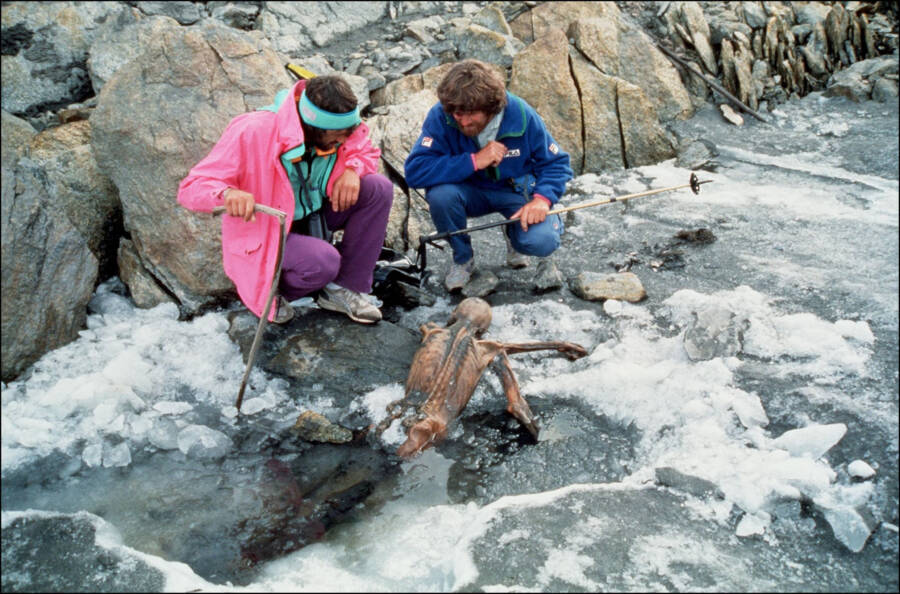
    Paul HANNY/Gamma-Rapho via Getty ImagesNew research found evidence of HPV16 in tzis genome, revealing groundbreaking insights into the virus evolutionary history.Both tzi the Iceman, the oldest well-preserved human ever found, as well as a prehistoric man who lived in Siberia 45,000 years ago were recently found to be carriers of a cancer-causing strain of human papillomavirus (HPV), according to new research posted to bioRxiv.Since his discovery along the Austrian-Italian border in 1991, tzi has been the subject of several scientific analyses that have revealed details of his life some 5,300 years ago. Researchers have, for instance, learned that he was likely killed after an arrow struck him in the shoulder, uncovered what his last meal was, and even revealed what ailments had plagued him, including broken bones, intestinal parasites, and lungs blackened by soot.Now, analysis of genetic data from tzi and another prehistoric individual has revealed that both were likely infected with HPV16, which would mark the earliest molecular evidence of the disease in human history, researchers say. The research has yet to be peer-reviewed, but if the findings are accurate, they could help to identify when and how humans first came into contact with the virus.Pushing Back The Historical Timeline Of HPVWikimedia CommonsA reconstruction of an early Neanderthal man.Our results suggest that HPV16 was already present in modern humans during the Upper Paleolithic, indicating a long-standing host-virus independent of Neanderthal transmission, the researchers wrote in the new preprint paper.This is an especially notable finding, as it is commonly believed that Neanderthals, who overlapped with modern humans in Eurasia from 60,000 to 34,000 years ago, were responsible for transmitting the virus to Homo sapiens. The teams sample size is admittedly small, and so the origins of HPV are still largely shrouded in mystery, but the research does at least challenge the Neanderthal-transmission theory to a considerable degree.This is a very nice finding, Ville Pimenoff, a computational geneticist at the University of Oulu who was not involved in the study, told Science. Homo sapiens was basically infected by these viruses for all of its existence.Scientists are starting to gain a better understanding of just how intertwined the evolutionary history of HPV is with that of humankind itself. Viruses in the Papillomaviridae family are prehistoric and have co-diverged with their vertebrate hosts over extensive timescales, exhibiting strict host specificity that mirrors the phylogeny of their hosts. In other words, the virus and its host evolved in lock step, side by side.South Tyrol Museum of Archaeologytzi is one of the best-preserved prehistoric mummies ever found.Phylogenetic studies suggest that the timescale of papillomavirus evolution spans millions of years, largely inferred from a model of virus-host co-divergence. This means, essentially, that as different species evolved, their associated papillomaviruses evolved with them. And while general papillomaviruses are very old, the specific high-risk types that affect humans today and can cause cancer, such as HPV16, have divergence times that align with significant events in human prehistory.Research into how these specific high-risk HPV lineages evolved can also provide insight into how ancient human populations interacted and spread viruses. Modern analyses indicate that the major variant lineages of HPV16 (A, B, C, and D) split apart around 500,000 years ago predating the emergence of Homo sapiens and coinciding with the evolutionary divergence between Neanderthals and modern humans.The results indicate that HPV16 has been associated with anatomically modern humans for a very long time, likely well before major population splits outside Africa, study co-author Marcelo Briones told Live Science.This supports the idea that oncogenic human papillomaviruses are not recent pathogens but long-term companions of their hosts, evolving alongside primates and humans over extended evolutionary timescales.Potential Challenges To The Neanderthal-Transmission Theory Of HPVBoth tzi and the prehistoric Siberian man also studied here, known as Ust-Ishim, were chosen for this analysis because they represent two of the most well-preserved early human genomes ever found. tzi died roughly 5,300 years ago and was naturally mummified, but Ust-Ishim, who was found in 2008, was much older. He lived around 45,000 years ago in what is now Siberia, and all that remains of him is a single leg bone. Still, that was enough material to sequence one of the oldest human genomes known to science.Through these genomes, Briones and colleagues were able to find multiple DNA fragments matching HPV16, indicating both men were afflicted with the virus.Were pretty confident theres a signal there We have the oldest evidence of HPV, said study first author Juliana Yazigi.Wikimedia CommonsA map of potential sites of Neanderthal-human interbreeding.Given how far apart tzi and Ust-Ishim lived, both geographically and in the historical timeline, both men showing signs of HPV16 provides further evidence that this disease has been with humanity for perhaps millions of years. It could also indicate, Briones says, that perhaps Homo sapiens transmitted the cancer-causing virus to Neanderthals, and not the other way around, contrary to popular belief.Other experts feel this claim may be overstated, however. Koenraad Van Doorslaer, interim co-chair of the immunobiology department at the University of Arizona, tells Live Science that because Ust-Ishim also has Neanderthal DNA in his genome, it does not prove that HPV16 does not come from Neanderthals.Still, Van Doorslaer says he is genuinely excited about the implications of this study because it supports some critical assumptions about the history of this family of important viruses.Is this gonna make better vaccines, better treatments, better cures? Probably not. But not all science should be about that, he says. It should just be about learning cool things.After reading about this discovery, learn more about nine of historys most fascinating mummies. Then, read about six of the most interesting diseases to ever ravage humanity.The post The Prehistoric tzi The Iceman Mummy May Have Just Upended Experts Theories About The Origins Of HPV appeared first on All That's Interesting.
    0 Σχόλια 0 Μοιράστηκε 70 Views
  • ALLTHATSINTERESTING.COM
    Scientists Discover A Plant Thats Evolved To Be Able To Hide From Humans
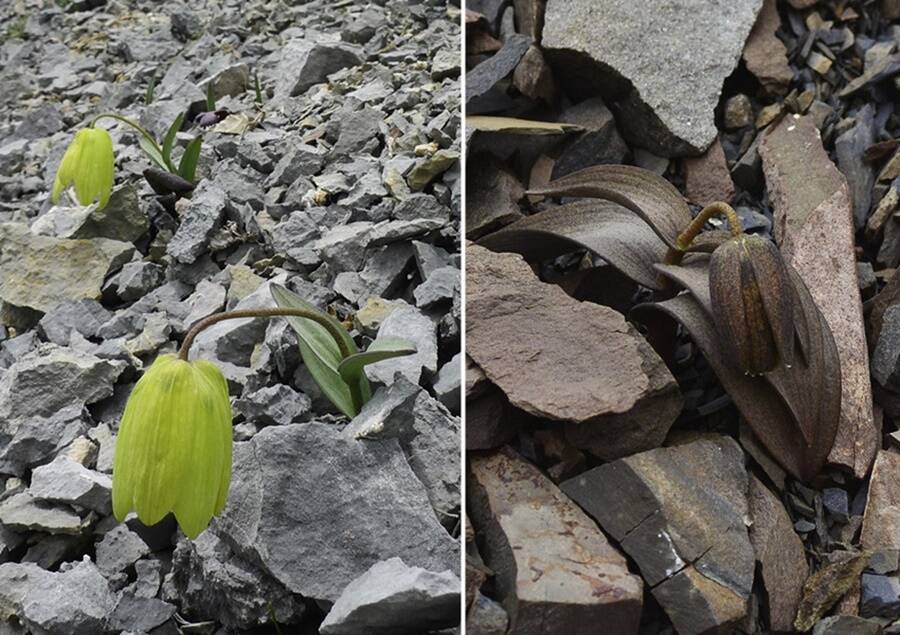
    Niu et alFritillaria delavayi has scientists wondering what other plants may have been forced to change their coloring to avoid humans.In China, one hillside-growing plant has long been harvested to make traditional medicine. But a new study has found that the plant may have evolved in order to camouflage itself from humans.According to Live Science, researchers studying the Fritillaria delavayi, a greyish-brown plant that produces a green flower every five years, have discovered that it is gradually losing its bright mature coloring in exchange for a more subtle hue. The researchers think that this is a defense mechanism that the plant has developed in order to hide from the hands of humans.Like other camouflaged plants we have studied, we thought the evolution of camouflage of this fritillary had been driven by herbivores, but we didnt find such animals. Then we realized humans could be the reason, said Yang Niu, a co-author of the study.F. delavayi grows amid the rocky landscape of Chinas Hengduan mountains and parts of Nepal. The plants bulb is believed to have properties that can treat coughs and other respiratory illnesses.However, this recent study has shown that some populations of the plant appear to be keeping their juvenile grey-brown coloring as a way to blend in with its rocky surroundings, thus remaining out of sight of pickers. Niu et alThe green petals are much easier to spot against the rocks than the brownish ones.Researchers investigated the plants shift in coloration by interviewing locals about which areas were most harvested. Then they examined records that counted the annual weight of bulbs harvested in the last five years. A computer-based experiment confirmed that the green-colored plants were a lot easier to detect by collectors compared to the grey-brown varieties, especially against the rocky background. The study shows that the plants which stick to their dark coloring are also located in the most heavily harvested areas, suggesting a direct correlation between the plants coloration and human intervention.Its remarkable to see how humans can have such a direct and dramatic impact on the coloration of wild organisms, not just on their survival but on their evolution itself, said co-author Martin Stevens, a researcher from the Center for Ecology and Conservation on Exeters Penryn Campus in Cornwall.Many plants seem to use camouflage to hide from herbivores that may eat them but here we see camouflage evolving in response to human collectors.Wikimedia CommonsThe medicinal plant grows on the hillsides of Chinas Hengduan mountains and parts of Tibet.The plant has been used for medicinal purposes for over 2,000 years and its increasing value has made it an even more sought after commodity, fueling an increase in its harvesting.It also takes 3,500 individual flowers to produce one pound of the medicinal powder made from the plants, as such, it is a heavily-harvested plant. It is also valuable, costing about $218 per pound.The study is a damning piece of evidence about the extent of the impact that human activity has had on our planet. Scientists in the study are awed by how our footprint on Earth has been consistent and large enough to influence an organisms evolutionary adaptation. There could be many more examples of this that we have yet to learn about, as well.Its possible that humans have driven the evolution of defensive strategies in other plant species, Stevens continued, but surprisingly little research has examined this. The research project on F. delavayi was a collaboration between the Kunming Institute of Botany (also known as the Chinese Academy of Sciences) and the University of Exeter. It was published in the journal Current Biology.Now that youve learned how the high-volume harvests of a medicinal plant have influenced its survival strategies, read about the three-toed skinks versatile reproductive method. Then, learn how the Aldabra railbird went extinct then re-evolved back into existence.The post Scientists Discover A Plant Thats Evolved To Be Able To Hide From Humans appeared first on All That's Interesting.
    0 Σχόλια 0 Μοιράστηκε 79 Views
  • 0 Σχόλια 0 Μοιράστηκε 117 Views
  • TECHCRUNCH.COM
    Google pitches Gemini to students studying for Indias most competitive college entrance exam
    Google's launch of practice tests for JEE follows its recent move to offer full-length SAT practice tests in Gemini.
    0 Σχόλια 0 Μοιράστηκε 66 Views
  • 0 Σχόλια 0 Μοιράστηκε 66 Views
  • 0 Σχόλια 0 Μοιράστηκε 66 Views
  • 0 Σχόλια 0 Μοιράστηκε 66 Views
  • 0 Σχόλια 0 Μοιράστηκε 66 Views