• WWW.LOVEMEOW.COM
    Cat with a Missing-tooth Grin Found Alone in Apartment Now Hopes to Be the Center of Someone's World
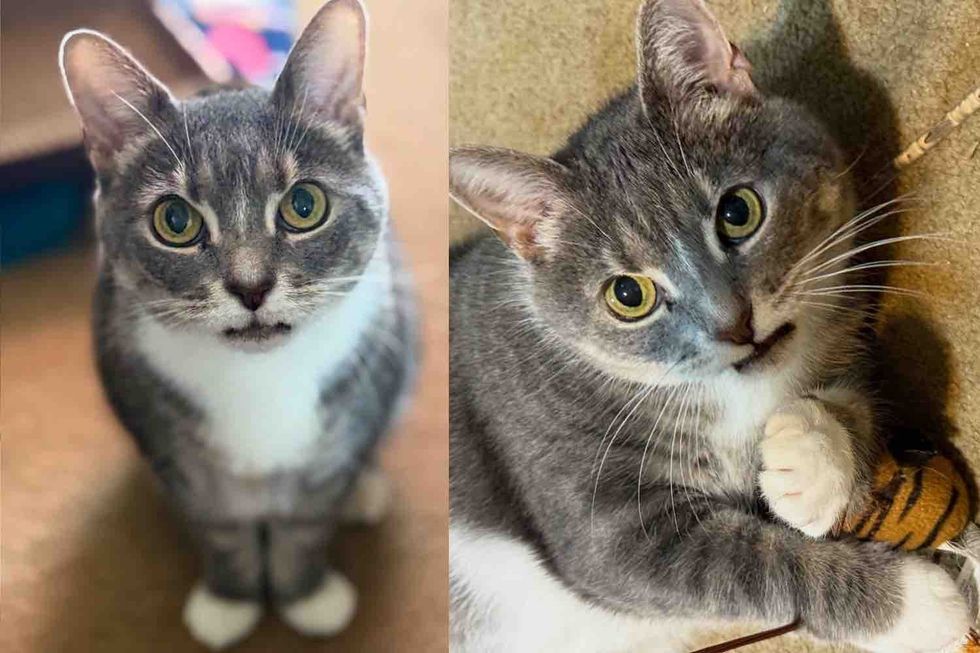
    A cat with a missing-tooth grin was found alone in an apartment. Now, she hopes to be the center of someone's world again. BlairTails HighBlair the cat arrived at Tails High, an all-volunteer rescue, wearing a grin that never leaves her face. "This is always her expression, and we can't get enough of it," the rescue shared."Although she appears to be smiling that quirky smile, her story is one of resilience." Blair spent several months alone in an apartment after her beloved owner suffered a stroke and was unable to return home.Kind friends stopped by daily to feed her, but her world had grown small and quiet, and she missed having a human companion. Tails HighAs the lonely days stretched on, Blair's future became uncertain. Knowing she deserved so much more, Tails High didn't hesitate to help when they were contacted.At nine years old, Blair left the quiet apartment she had spent her life in and moved into a foster home. She was welcomed by a caring family who provided soft beds, toys, and an abundance of food. Tails High"When she first arrived, it was clear she was stressed from being left behind, and she quickly showed us she prefers to be your one and only."No longer alone, she relaxed, sought out her people, and leaned into pets and affection. She wanted every bit of attention she could get, as if trying to make up for lost time. Before long, her true personality began to shine through. Tails High"She has a funny habit of lying right on top of her toy pile as if it's her throne. She burrows under the covers when it's time to snooze, making her naps as cozy as can be. Once she feels safe, Blair rubs against your legs for attention and melts into the affectionate sweetheart she truly is."Her signature smile is the result of a previous dental surgery. "It left her with the cutest expression that we absolutely adore." Tails HighOver the next few months in foster care, Blair continued to blossom. She met new people, rebuilt her confidence, and learned that humans could be trusted again. Soon, she was greeting visitors with a soft meow and happy purrs, politely asking for attention the moment they walked in."She is affectionate, social, and clearly ready to be someone's everything." Tails High"She's a very round girl with an active side, especially when wand toys are involved. She loves to play, loves to lounge, and has plenty of extra love to give. When her environment is calm and predictable, her sweet and loving personality shines."Now, Blair waits patiently for her forever family to walk through the door, ready to greet them with her charming little grin. Tails HighWith the support of a loving foster family, Blair has rediscovered her inner kitten and found a new zest for life. Whenever she spots her snake toy, her eyes light up, and she's ready to pounce."She's been through a hard time, but she's ready to leave her lonely past behind and spend her years in the loving home she was always meant to have. She has healed quietly and kept smiling through it all." Tails HighBlair feels like herself again, surrounded by kind people who remind her every day that she's loved and are committed to helping her find the happily ever after she deserves."A new year is all about fresh starts, and Blair is more than ready for hers." Tails HighShare this story with your friends. More on Blair and Tails High (in the DC area) on Instagram @tailshigh and Facebook.Related story: Cat Curls Up Between a Couple After 848 Days Wishing for a Home from the Time He was Just a Kitten
    0 Commentarii 0 Distribuiri 51 Views
  • WWW.LOVEMEOW.COM
    Cat Has Been His Brother's Greatest Protector Since They Were Found Together as Kittens
    A cat has been his brother's greatest protector since the two were rescued together as tiny kittens. Saku and Suke (formerly Wellie and Wally)Frankie @frankies_fostersTwo kittens were brought to Best Friends Animal Society in Los Angeles after being rescued from a harsh life outdoors.One of them had a severely infected eye, and his tabby brother clung to his side the entire time. In just four weeks of their lives, they had already faced more challenges than most.No one could have known then that these two, named Suke and Saku (formerly Wally and Wellie), would share a bond so strong it was unlike anything their foster mom had seen before. Frankie @frankies_fostersFrankie, a devoted fosterer, welcomed the pair into her home. She gently cleaned the flea dirt from their coats and settled them into a cozy space filled with soft blankets and toys.Suke, the little house panther, refused to let his ruptured eye hold him back. With his brother always nearby, he played, explored, and ate with enthusiasm. Before long, the room was filled with the steady rhythm of their purrs. Frankie @frankies_fostersAt first, Saku tucked himself behind Suke, but once he realized they were safe, his true personality emerged. He became an affectionate cuddle bug, lavishing his brother with endless hugs. "They've always been affectionate with each other," Frankie told Love Meow.However, after Suke's eye surgery, Saku's protective instincts grew even stronger. "I catch them cuddling now more than ever." Frankie @frankies_fostersSaku fully stepped into the role of protector and caretaker, curling up beside his brother while he slept in a cone and wrapping his arms around him. Suke took great comfort in his brother's presence, soothed by the healing vibration of his purrs.It was as if Saku knew exactly what his brother needed. He rarely left his side. Frankie @frankies_fostersFor a week following the surgery, Saku showered Suke with nonstop cuddles. Together, they produced some of the loudest purrs Frankie had heard in all her years of fostering. They were happiest whenever they were together.When it came time for adoption, Frankie knew these two were a package deal. Frankie @frankies_fosters"I could not bear the thought of these two bonded brothers being separated."Though they went through several meet-and-greets without success, Frankie never lost hope. Then one day, she received an application from Glynnis, who fell in love with the feline brothers and knew they belonged together. Glynnis @gloriette80"She saw the beauty in these perfectly imperfect boys, recognizing them for exactly who they are."Suke and Saku moved into their new home and settled in immediately. They explored every nook and cranny and claimed their human's bed as their own. With plenty of lounging options, they still insisted on sharing one chair, one hammock, and one basket, even after outgrowing them. Glynnis @gloriette80They've grown into handsome cats, and their baby blues have turned amber. But some things have never changed. "Saku continues in his caretaking ways," Glynnis shared.Throughout their journey, Saku stayed close, gentle, and watchful. The love between them was deep and unwavering. Glynnis @gloriette80Now, their mom wakes up to them cuddled on her pillow, purring into her ears. "Without exaggeration, I can say that these two babies saved me."Suke and Saku are living their very best life together, as it was always meant to be. Glynnis @gloriette80Share this story with your friends. More on Frankie's fosters on Instagram @frankies_fosters, and more on Suke and Saku @gloriette80. Thanks to Best Friends in L.A. @bfas_la.Related story: Man Goes to Adopt a Kitten But Ends Up Bringing Home Another Cat Too, Turns Out It's the Best Decision
    0 Commentarii 0 Distribuiri 50 Views
  • WWW.LOVEMEOW.COM
    Cat Shows Up in a Garden and Sticks Around Until Kind Person Notices Him and Changes His Life
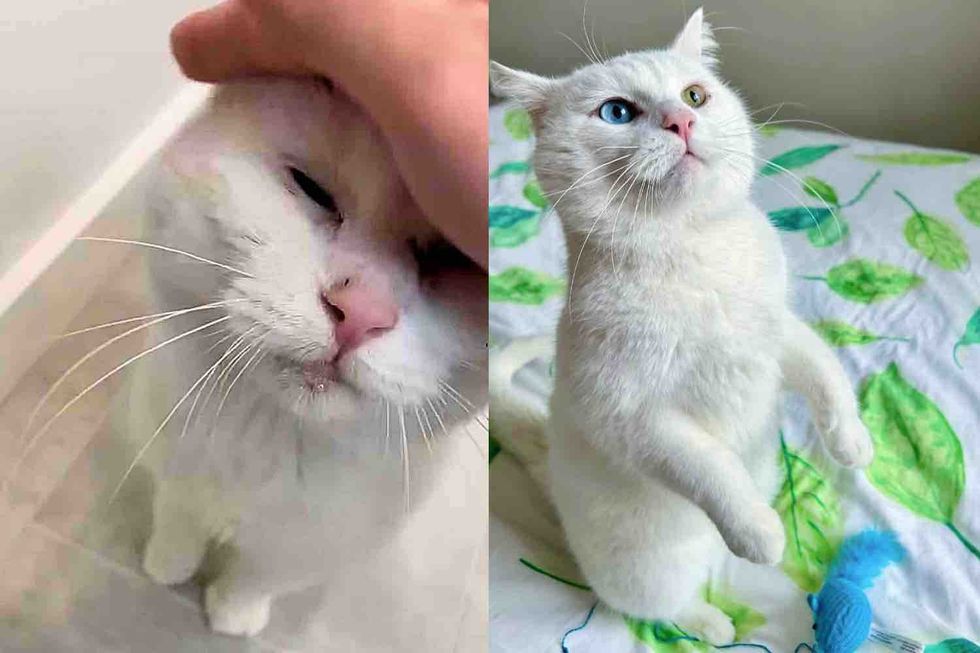
    A cat showed up in a garden and stuck around until a kind person noticed him, changing his life forever. KenzoChatonsOrphelinsMontrealA white cat wandered into the garden of a family who regularly cared for neighborhood strays, drawn by the scent of food left outside.Starved and exhausted, he settled into a quiet corner and decided to stay. Soon, the family noticed the newcomer and approached to see if he was friendly. To their surprise, he showed no fear and walked right up to them for attention.It was immediately clear that he needed help and was ready for a fresh start. He wandered into a family's garden one day and decided to stayChatonsOrphelinsMontrealThe family quickly realized the cat was injured and walking with a limp. Despite everything he'd been through, he remained affectionate and trusting. As freezing temperatures set in, concern for his safety grew.After what was likely a long and lonely life on the streets, the cat spent his final night outdoors before a local rescuer arrived to bring him to safety. He walked right up to his finder for attentionChatonsOrphelinsMontrealChatons Orphelins Montreal, a volunteer-run rescue, welcomed the cat into their care and named him Kenzo. For the first time in a long while, he was safe and warm. "He has heterochromia, two different-colored eyes," the rescue shared.Kenzo was treated for an eye infection and placed in a foster home, where he could finally begin to heal. Kenzo was finally safeChatonsOrphelinsMontreal"For the first few days, he was scared and unsure of all the changes. He stayed hidden, spending most of his time resting and rebuilding strength. Once he realized he was safe, he quickly came out of his shell."His striking blue-and-amber eyes cleared up, and his injured leg healed beautifully. As his health returned, he started to feel like himself again. He quickly turned into a love bugChatonsOrphelinsMontreal"When he trusts someone, he purrs instantly. He's a big cat with the heart of a teddy bear. He adores attention, loves cuddles, and never says no to food."He flopped onto his side and stretched his toes contentedly, loving his new life filled with endless cuddles. ChatonsOrphelinsMontrealFor most of his life, Kenzo wandered the streets, surviving one day at a time. Now, those struggles are behind him. He seems grateful to have a roof over his head and kind humans who make sure he's fed and loved every day."He always wants to be close to his people, ready for affection at any moment." He has heterochromia - two different-colored eyesChatonsOrphelinsMontrealWhen Christmas rolled around, Kenzo fully embraced the holiday spirit, lounging beside his humans near the Christmas tree. He never missed an opportunity for cuddles, and the room hummed with his soothing purrs.Though he can be shy around strangers, once he feels safe, he transforms into a nonstop purring machine. ChatonsOrphelinsMontrealWhenever he's in the mood for affection, he closes his eyes, rolls onto his back, or stretches his legs in pure bliss, floating on cloud nine as his people shower him with love.The days of hunger, cold, and loneliness are long gone. Now, he rests peacefully with a full belly, knowing he will never be without love again. ChatonsOrphelinsMontreal"This big cat with different-colored eyes was incredibly lucky to be rescued from a life of hardship. He's thriving and ready to find his forever family, who will cherish him for the rest of his life." ChatonsOrphelinsMontrealShare this story with your friends. More on Kenzo and Chatons Orphelins Montreal on Instagram and Facebook.Related story: Cat Makes Guy His Forever Human By Standing on Him After Waiting Nearly Half a Year for a Home
    0 Commentarii 0 Distribuiri 50 Views
  • WWW.DOGINGTONPOST.COM
    How to Foster Dogs: A Practical Guide to Short-Term Care
    Dog shelters across the country are overwhelmed. Right now, fostering is one of the most effective ways to help rescue organizations free up space and resources for dogs in crisis.At DogingtonPost, weve put together this guide to show you exactly how to foster dogs-from preparing your home to building trust with your temporary companion. Whether youre a first-time foster or looking to refine your approach, youll find practical steps that work.What Fosters Actually Do for Dogs and SheltersHow Foster Homes Solve the Shelter CrisisFoster homes solve a concrete problem that shelters face every single day: space and resources run out. When a dog arrives at a shelter, it occupies a kennel, requires staff time, and consumes food and medical supplies. A foster home removes that dog from the shelter equation entirely, freeing up space for another animal in crisis. MaxFund in Denver has operated its foster program since 1988 and demonstrates exactly how this works-their Foster Coordinator and Veterinary Technician support foster families while the shelter itself maintains control over the dogs medical care and placement. This structure matters because it means shelters can intake more dogs without expanding their physical facilities.Why Dogs Thrive in Foster HomesThe dogs benefit equally from foster placement. A shelter kennel creates stress through noise, confinement, and limited human interaction. Foster homes provide the opposite: one-on-one attention, a calm environment, and exposure to normal home life. A dog recovering from surgery or showing anxiety in a shelter thrives in a foster home where it can decompress and regain confidence. Puppies especially gain from foster placement because they need socialization with people and other animals before adoption-something nearly impossible in a kennel setting.The Information Foster Families ProvideFoster families become the shelters eyes and ears, observing how a dog behaves around children, other pets, and in real situations. That information is invaluable when matching dogs to permanent homes. Foster caregivers document a dogs reactions in different contexts, which helps rescue organizations identify possible triggers and place dogs with families that fit their needs.Fostering Versus Adoption: Understanding the DifferenceThe distinction between fostering and adoption matters practically. Fostering is temporary and voluntary; you commit to weeks or months, not years. Adoption is permanent and legal. Fostering carries zero financial burden because shelters typically cover food, supplies, medications, and veterinary care. Adoption requires you to assume all costs and responsibility indefinitely. This difference makes fostering accessible to people who cannot afford permanent pet ownership or arent ready for that commitment.The Ripple Effect of Foster ProgramsSome fosters do adopt their dogs-what the rescue community calls a foster fail-but thats optional. The real impact happens when a foster dog moves into a permanent home with a different family, freeing the foster home to help another dog in need. This cycle matters at scale. For every dog in a foster home, a shelter bed opens for an animal pulled from the streets or surrendered by an owner. Rescue organizations depend on this model to function. Without foster homes, shelters would turn away dogs or euthanize animals they cannot accommodate. With foster homes, they expand capacity without building new facilities. Understanding this foundation prepares you to take the next step: getting your own home ready to welcome a foster dog.Getting Your Home Ready for a Foster DogBefore a foster dog arrives, your home needs to shift from human-centered to dog-safe. Secure breakable items, hide electrical cords, and remove anything small enough to swallow. A foster dog doesnt know your house rules yet, and many test boundaries through chewing or exploring. Create a dedicated space where the dog can decompress during the first week-ideally a separate room with minimal foot traffic, a crate, food and water bowls, and a comfortable bed. This isolation area matters more than people realize. Getting your home ready for a foster dog requires preparation that helps foster pets transition smoothly, and youll need space where a stressed or recovering dog can rest without constant stimulation.Introduce Your Foster Dog CarefullyIf you have existing pets, plan neutral-ground introductions carefully. Dont throw a foster dog directly into your household pack. Instead, let them meet in a hallway or on a walk before entering shared spaces. Supervise every interaction for at least the first two weeks. Keep your resident dogs routine stable-foster dogs settle faster when they observe calm, established household patterns. Food is another area where people make mistakes. Try to maintain whatever diet the shelter provided; if you need to switch food, consult your veterinarian and consider probiotics like FortiFlora to support digestion during the transition. Some shelters provide food and supplies, while others expect foster families to purchase items, so clarify whats covered before the dog arrives.Build a Consistent Daily RoutineA consistent daily routine reduces anxiety dramatically. Feed at the same time every day, schedule walks at predictable hours, and maintain a quiet evening wind-down. Dedicate at least 15 minutes daily to teaching a command or trick-this builds trust and gives the dog mental stimulation. Two walks per day is the minimum for most dogs; this burns energy and provides socialization opportunities once the dogs vaccines are current. During meals and downtime, use enrichment strategies like puzzle feeders or sniff mats to prevent boredom and destructive behavior. If a foster dog shows anxiety, calming aids like Adaptil diffusers can help, though always consult the shelter before introducing any products.Monitor Health and Manage BehaviorTrack the dogs eating, bathroom habits, and energy levels, then report changes to the rescue organization immediately. Some behavioral issues emerge during foster care-food guarding, jumping, or anxiety-and the shelter expects you to follow their guidance on training rather than improvise solutions. Prepare yourself for property damage. Foster dogs may chew furniture, scratch doors, or have accidents indoors. Use crates when youre away, confine the dog to durable spaces, and accept that some wear is part of fostering. Before bringing home a foster dog, discuss regular vaccines and veterinary exams with your veterinarian to ensure your existing pets are protected.Document and Report ObservationsYour observations as a foster become the rescues most valuable tool for matching dogs to permanent homes. Document how the dog reacts around children, other pets, loud noises, and strangers. Note triggers, progress with training, and personality quirks. Share regular updates with the shelter-weekly written reports work better than vague verbal updates. This information helps rescues place dogs with families equipped to handle their specific needs, which means fewer returned adoptions and happier outcomes. If you have other pets at home, note how the foster dog interacts with them in different situations. A dog that guards toys might need a household without young children. A dog that shows fear around men might thrive with a single woman or childless couple. These details matter enormously. Be emotionally honest in your reports, even if youre hoping someone falls in love with the dog. Rescues depend on accuracy to succeed.Clarify Costs and ResponsibilitiesUnderstand what youre responsible for versus what the shelter covers. Different organizations operate differently, so clarify costs upfront. Some foster families must supply their own crate and bedding; others dont. Knowing these boundaries prevents frustration and ensures you can commit fully to the foster dogs care. With your home prepared and expectations clear, youre ready to welcome your foster dog and begin the daily work that transforms a shelter animal into an adoptable companion.Caring for Your Foster Dog During Their StayBuild Trust Through Predictable RoutinesTrust builds through consistency, not force. The first week is critical-your foster dog needs predictability to decompress from shelter stress. Feed at the exact same times daily, walk at consistent hours, and maintain a quiet evening routine. A dog that knows when food arrives and when walks happen settles faster than one facing random schedules. Spend at least 15 minutes daily teaching a command or trick; this creates positive interaction and mental engagement without overwhelming a stressed animal. Two walks per day is your baseline for most dogs-this burns physical energy and provides socialization once vaccines are current. During meals, use puzzle feeders or enrichment bowls rather than plain dishes; this slows eating and occupies the dogs mind. If anxiety emerges, Adaptil diffusers work effectively for many foster dogs, though consult the rescue before introducing any calming product.Report Behavioral Issues AccuratelyBehavioral issues often surface during foster care-food guarding, jumping, or destructive chewing. Dont improvise solutions. Follow the shelters training guidance precisely. Some rescues have specific protocols for managing resource guarding or anxiety, and deviating from their approach confuses the dog and undermines their placement strategy. Document what actually happens rather than what you wish happened. If the dog guards food, report it. If it shows fear around men or children, note that. Your observations directly determine which permanent home will succeed with this dog. Rescues depend on honest reporting to place dogs correctly the first time.Track Health Changes DailyHealth monitoring requires daily attention to small details that matter enormously. Track eating patterns, bathroom habits, and energy levels-changes signal problems before they become serious. Report any vomiting, diarrhea, or lethargy to the rescue immediately. Most organizations cover veterinary care during their operating hours, so use that resource rather than delaying treatment hoping the issue resolves itself. Some foster dogs arrive with dietary sensitivities; if you switch food from what the shelter provided, introduce probiotics like FortiFlora to support digestion during the transition. Maintain whatever diet the shelter used initially unless the rescue explicitly approves a change.Provide Detailed Written UpdatesWeekly written updates to the rescue organization outweigh vague verbal reports; write down how the dog interacts around children, other pets, loud noises, and strangers. Note specific incidents-did the dog jump on visitors, hide during vacuum cleaning, or show interest in the cat? These details matter far more than general descriptions. A dog that steals food from counters needs a household without young children who might leave snacks accessible. A dog showing fear around unfamiliar people thrives with a quiet single person or couple rather than a family hosting frequent visitors. Your role as a foster is to provide accurate information that enables the rescue to match each dog with a family equipped for success. Inaccurate or incomplete reporting leads to adoption failures and dogs returning to the shelter.Final ThoughtsFostering a dog transforms two lives simultaneously. The dog gains a safe space to decompress, build confidence, and learn what home life feels like before adoption, while you gain the satisfaction of directly solving the shelter crisis. Each foster dog that moves into a permanent home frees shelter space for another animal in crisis, and this cycle compounds across your community. Your role as a foster extends beyond daily care-the observations you document, the behavioral notes you provide, and the honest updates you share become the foundation for successful adoptions (rescues depend on this information to match dogs with families equipped for their specific needs).Starting with how to foster dogs begins with contacting your local rescue organization to ask about their foster requirements, what supplies they provide, and what kind of dog matches your household. MaxFund in Denver and similar organizations nationwide have streamlined processes designed to support foster families at every step. Visit DogingtonPost for additional resources on dog care, training, and adoption support as you begin your fostering journey.The decision to foster is simple: you have space in your home and time in your schedule, while a dog in a shelter has neither. That mismatch is exactly what foster programs solve, and your commitment, however temporary, changes the trajectory of a dogs life and opens shelter capacity for animals that desperately need it.

    0 Commentarii 0 Distribuiri 50 Views
  • WWW.DOGINGTONPOST.COM
    How to Handle Dog Behavioral Issues: Expert Tips for Owners
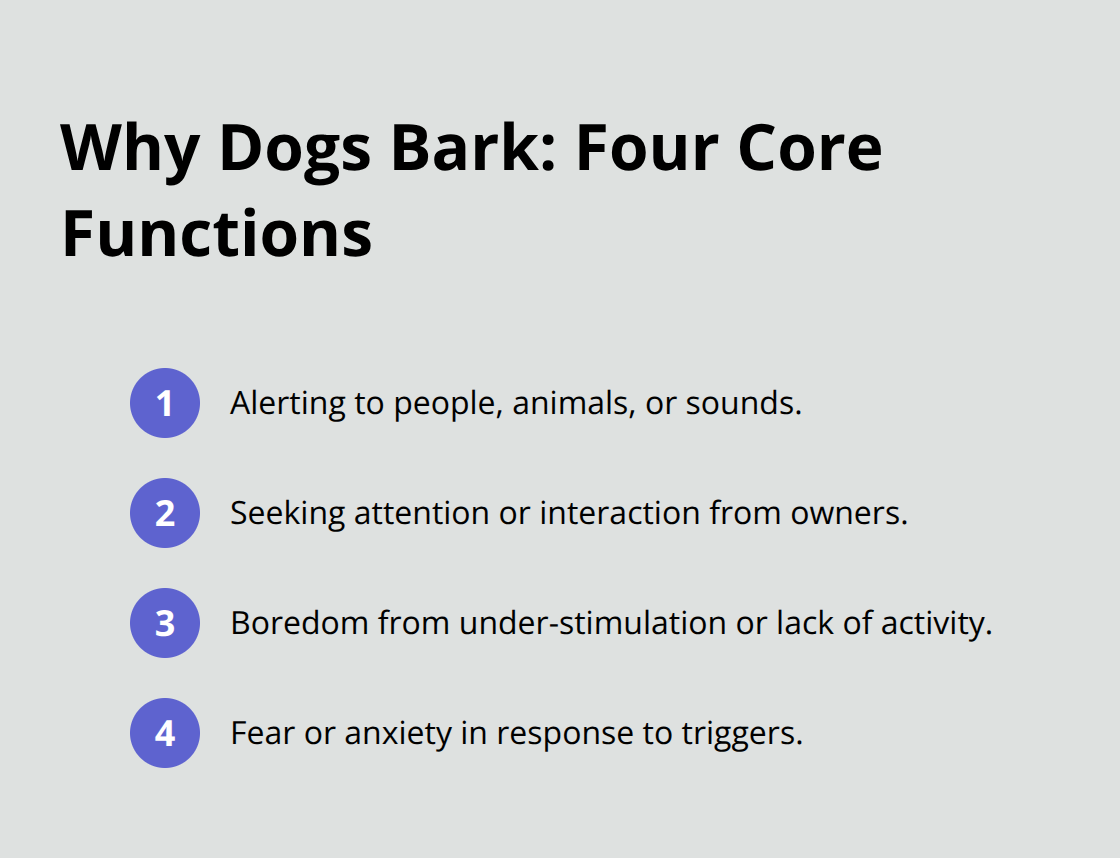
    Dog behavioral problems frustrate owners and strain the bond you share with your pet. At DogingtonPost, weve seen firsthand how aggression, excessive barking, and anxiety can turn daily life into a challenge.The good news is that most behavioral issues are manageable with the right approach. This guide walks you through proven techniques, environmental fixes, and when to call in a professional.What Causes Dogs to Act OutAggression and Fear-Based BehaviorsAggression ranks as the most serious behavioral problem dog owners face, and it takes multiple forms that require different responses. Conflict-related, fear, possessive, protective, territorial, and maternal aggression all demand distinct strategies. The ASPCA emphasizes that aggression always warrants a veterinary evaluation first to rule out medical causes like pain or neurological issues. Once medical problems are eliminated, you must identify your dogs specific triggers. A dog that guards food bowls behaves differently than one reacting to strangers, and treating them the same way wastes time and money.Fear-based behaviors often stem from insufficient socialization or past trauma, making gradual exposure to triggers paired with positive rewards the most effective approach. Punishment-based methods backfire spectacularly with fearful dogs, intensifying anxiety rather than resolving it. The AKC recommends avoidance of trigger situations while you work with a qualified professional to build your dogs confidence through counterconditioning.Excessive Barking: Identifying the Root CauseExcessive barking typically signals unmet needs rather than defiance. Dogs bark for distinct reasons: alerting, attention-seeking, boredom, or fear. The AKC notes that identifying the function of barking before attempting correction prevents wasted effort on wrong interventions. A dog barking at the window needs environmental management and mental enrichment, not punishment for noise.Destructive Chewing and Separation AnxietyDestructive chewing serves multiple purposes. Puppies explore their world through their mouths, while adult dogs chew to relieve stress, combat boredom, or self-soothe. You should provide appropriate chew toys, puzzle feeders, and rotate toys to keep dogs engaged. Separation anxiety creates destructive chewing patterns, often accompanied by house soiling, pacing, and escape attempts. The ASPCA recommends counterconditioning by pairing your exit with high-value items like frozen peanut butter-filled toys or puzzle feeders.Jumping and Anxious BehaviorsJumping on people and separation anxiety frequently overlap with anxious dogs that seek reassurance through contact. These behaviors worsen without structured management and consistent training. You should ignore jumping while rewarding calm greetings, since attention of any kind reinforces the jumping behavior. This approach works faster than any corrective technique.Understanding what drives your dogs behavior sets the stage for selecting the right training method. The techniques you choose matter far more than the intensity with which you apply them, and the next section reveals which approaches actually produce lasting results.What Actually Works: Training Methods That StickReward-Based Training Produces Superior ResultsReward-based training produces measurably better outcomes than punishment-based approaches. Research consistently shows that dogs trained with positive reinforcement develop fewer behavioral problems and display less fear compared to those subjected to punishment or dominance-based methods. The reason is straightforward: your dog learns what to do rather than what not to do. When you reward calm behavior during greetings, your dog understands that sitting quietly earns treats and attention. When you punish jumping, your dog only learns to fear the moment someone arrives at the door.Clicker Training and High-Value RewardsClicker training, a form of positive reinforcement using a secondary reward marker, helps dogs understand exactly which behavior earned the reward. You click the moment your dog performs the desired action, then immediately deliver a treat. This precision accelerates learning significantly compared to delayed rewards. High-value rewards matter tremendously. A piece of kibble fails to motivate a dog distracted by another dog or a squirrel, but freeze-dried liver or cheese often does. Rotate your rewards to prevent habituation, and always use the highest-value item when training around distractions or introducing new behaviors.Consistency and Clear Training CriteriaConsistency transforms training from frustrating to effective. If you reward your dog for sitting sometimes but not others, your dog stops sitting reliably. The CCPDT certification standard requires trainers to maintain clear criteria for what earns rewards, and this same principle applies to your home. Everyone in your household must enforce the same rules using identical cues. Inconsistent expectations undermine learning faster than nearly any other mistake owners make. Your dogs brain doesnt distinguish between your leniency on Tuesday and strictness on Friday; it only recognizes unpredictable outcomes.Building Behaviors Through Gradual ProgressionStart training in low-distraction environments where your dog can succeed, then gradually increase difficulty as the behavior becomes automatic. Short, frequent sessions work better than long, sporadic ones because dogs retain information more effectively through repetition spaced over time. This approach builds strong foundations that transfer to real-world situations.When Professional Expertise Becomes EssentialWhen aggression, severe anxiety, or safety concerns emerge, professional intervention becomes non-negotiable. A board-certified veterinary behaviorist holds a DACVB credential and completes years of post-veterinary training before certification. Certified Applied Animal Behaviorists hold CAAB credentials requiring either a doctoral degree with five years of professional experience or a veterinary degree with a residency plus three additional years. Both can assess your dogs specific issues and design tailored plans, often combining behavior modification with medications like fluoxetine or clomipramine when anxiety or aggression warrants pharmaceutical support. General trainers lack this scope and cannot prescribe medication or diagnose underlying medical causes. Your next step depends on your dogs specific situation-some issues respond well to owner-led training, while others demand expert assessment before you proceed.The Hidden Causes Behind Problem BehaviorsMost dog owners skip the most important step when tackling behavioral issues: ruling out medical causes. A sudden change in behavior often signals pain, thyroid dysfunction, or neurological problems rather than a training failure. Your veterinarian must evaluate your dog before you invest time in training techniques that wont address an underlying illness. Dogs experiencing pain from ear infections, dental disease, or arthritis frequently display aggression, excessive barking, or destructive chewing as their only way to communicate discomfort. The ASPCA emphasizes that a full veterinary workup prevents months of wasted effort on behavioral training when medication or treatment would solve the problem in weeks.Exercise and Mental Stimulation Drive BehaviorBeyond medical issues, exercise and mental stimulation directly determine whether your dog develops behavioral problems in the first place. Dogs require daily physical activity tailored to their breed and age, and insufficient exercise ranks as the primary driver of destructive behavior, jumping, and excessive barking. High-energy breeds like Border Collies require 1.5 to 2 hours of vigorous activity daily, while low-energy breeds like Bulldogs may only need 30 minutes. The AKC recommends matching exercise intensity to your dogs breed characteristics: herding dogs need jobs and mental challenges, retrievers benefit from swimming or fetch, and working breeds thrive with structured activities like agility training or dock diving.Puzzle toys, sniff games, and rotating enrichment toys prevent boredom-driven destruction more effectively than any correction technique. These tools occupy your dogs mind and body simultaneously, addressing the root cause rather than treating symptoms. Try introducing new toys weekly to maintain your dogs interest and prevent habituation to the same items.Nutritions Impact on BehaviorNutrition matters equally to exercise when addressing behavioral problems. A diet lacking essential fatty acids, adequate protein, or balanced micronutrients can intensify anxiety and aggression, yet few owners connect food quality to behavior. Feed your dog high-quality protein sources, maintain consistent meal schedules to reduce anxiety around food, and avoid feeding table scraps that create begging behaviors. Poor nutrition compounds stress responses and makes training significantly harder.Predictable Routines Calm Anxious DogsA predictable daily routine calms anxious dogs and prevents many behavioral problems before they start. Dogs thrive on knowing when meals arrive, when walks happen, and when your departure is coming. This predictability allows your dogs nervous system to relax rather than remain in constant uncertainty. For dogs with separation anxiety, hide kibble around your home before leaving, use puzzle feeders that occupy them for 2030 minutes, and practice departures without actually leaving so your dog stops anticipating abandonment. The ASPCA found that dogs given frozen peanut butter-filled toys or long-lasting chews immediately before their owners departure showed significantly reduced destructive behavior.Environmental Design Reduces StressYour home environment itself influences behavior: excessive noise, chaotic schedules, and constant activity stress dogs into reactive states. Establish a quiet space where your dog can retreat, maintain consistent feeding and potty times, and reduce environmental chaos that triggers anxiety-driven behaviors. A calm home with clear boundaries and predictable patterns prevents many issues from developing in the first place. Dogs living in structured environments with designated rest areas and consistent schedules display fewer behavioral problems than those in unpredictable, high-stress households.Final ThoughtsHandling dog behavioral issues successfully requires patience, consistency, and a willingness to address root causes rather than symptoms. Medical problems, insufficient exercise, poor nutrition, and unpredictable routines create the foundation for aggression, anxiety, and destructive behavior. Fix these fundamentals first, and many behavioral problems resolve without formal training.Reward-based training works because it teaches your dog what to do instead of what not to do. Your dog learns faster when you mark correct behavior with a clicker and follow with high-value rewards. Consistency matters more than intensity-everyone in your household must enforce identical rules using the same cues, or your dog receives conflicting signals that undermine learning.When aggression, severe anxiety, or safety concerns emerge, professional help becomes essential rather than optional. Board-certified veterinary behaviorists and Certified Applied Animal Behaviorists possess credentials and expertise that general trainers lack. They can prescribe medication when behavior modification alone proves insufficient and design tailored treatment plans based on your dogs specific issues. Your veterinarian can refer you to qualified professionals in your area who understand how to handle dog behavioral issues properly.
    0 Commentarii 0 Distribuiri 51 Views
  • WWW.CATSTER.COM
    The Kitten Clues That Tell You Exactly How Old They Are
    If you ever find a tiny kitten, or maybe you just brought home a two-month-old from a shelter, but something feels off about that estimate because the kitten seems too small, too unsteady, too young, were here to help.Knowing a kittens real age isnt just trivia for curious cat parents. Its critical information that determines everything from what they eat to how often they need to be fed to whether they can survive on their own. Get it wrong, and you could be making dangerous care decisions.Kittens are terrible at keeping secrets about their age, so you dont need to worry. Their bodies tell you exactly how old they are if you know what to look for.Why Age Matters More Than You ThinkImage Credit: Mario_Hoppmann, ShutterstockA three-week-old kitten needs bottle feeding every few hours and cant eliminate waste without stimulation. A six-week-old kitten can eat wet food and use a litter box independently. Thats a massive difference packed into just three weeks of life.If you assume a younger kitten is older, you might not feed them frequently enough or provide the warmth they desperately need to survive. If you treat an older kitten like a newborn, you might delay important developmental milestones like socialization and weaning.So lets walk through the telltale signs, week by week.The First Week: Completely HelplessNewborn kittens are impossibly tiny and utterly dependent. Their eyes are sealed shut, their ears are folded flat against their heads, and they cant see or hear anything. If theres still an umbilical cord attached or even just a small dried remnant youre looking at a kitten under five days old.They cant regulate their own body temperature at all, which means they need constant warmth from a mother cat, littermates, or a heating pad. Without it, theyll become hypothermic fast. They also cant eliminate waste on their own someone has to gently stimulate the area with a warm, damp cloth after every feeding to make them go.Feeding happens every one to two hours, around the clock. This is the most intensive care stage, and its exhausting.Week Two: The Eyes Have ItAround days eight through twelve, those sealed eyes start cracking open. Its always the same at first a cloudy, deep blue that every kitten is born with, regardless of what color theyll eventually become. Their vision is still blurry and useless for much beyond sensing light and shadow.Their ears begin unfolding slightly, though they still cant hear well. Theyre awake a bit more often but mostly just wake up, eat, and fall back asleep. Temperature regulation is still impossible, so warmth remains non-negotiable. Feedings can stretch to every two or three hours now a slight relief if youre doing overnight shifts.Image Credit: Nataliabiruk, ShutterstockWeek Three: Baby Teeth and Bold MovesThis is when things get interesting. Tiny incisors start poking through the gums like little white specks. The ears are fully upright now, and kittens start toddling around on wobbly legs, exploring beyond their nest for the first time.Some brave souls will even investigate a litter box at this stage, though theyre not reliably using it yet. If youre bottle feeding, you can space feedings out to every four or five hours, which finally means you might get some sleep. They still need help going to the bathroom, but theyre clearly becoming more independent.Week Four: Playtime UnlockedFour weeks is when kittens really start acting like kittens. They run, they pounce, they wrestle with their siblings. Their canine teeth begin emerging, and their vision sharpens considerably.This is prime socialization time. Gentle handling, exposure to household sounds, and interaction with humans help them grow into confident, well-adjusted cats. Theyre getting better at regulating temperature, but still appreciate a warm spot to retreat to. Bottle feedings drop to every five hours.Image Credit: Sharomka, ShutterstockWeek Five: The Weaning Window OpensThose premolars start appearing, and thats your signal: this kitten can handle wet food. Theyll still nurse or take a bottle if available, but you can start offering high-quality wet kitten food to see if theyre interested.Some kittens dive right in. Others take a few days to figure out that this mushy stuff is food. Either way, make sure fresh water is always available, and keep monitoring their weight to confirm theyre growing steadily.Week Six: Independence DayBy six weeks, kittens have a full set of baby teeth and are confidently eating wet food on their own. They start grooming themselves and their siblings a huge developmental leap that shows theyre learning proper cat behavior.This is a great age to expand their world a little. Let them explore new rooms under supervision. Start very gentle introductions to calm, cat-friendly dogs if you have them. And schedule that first FVRCP vaccine to protect against feline viral rhinotracheitis, calicivirus, and panleukopenia.Image Credit: Top Photo Engineerm ShutterstockWeek Seven: Eye Color Reveals ItselfThat baby blue starts shifting toward their adult eye color, which could be green, gold, copper, or staying blue, depending on their genetics. Energy levels are through the roof. Theyre eating enthusiastically throughout the day, playing hard, and crashing into sudden naps.This is peak kitten chaos, and its delightful.Week Eight: Adoption ReadyEight weeks is the magic number. This is when kittens are physically, emotionally, and developmentally ready to leave their mother and littermates. Most weigh around two pounds by now, which is the minimum weight for spay and neuter surgery at many clinics.Theyre social, playful, curious, and forming deep bonds with their humans. They seek out affection, respond to their names (or at least to the sound of a food can opening), and are ready to settle into their forever homes.What If You Still Cant Tell?Image Credit: Rembolle, ShutterstockSometimes kittens dont fit neatly into these categories. Poor nutrition can slow development, making a kitten seem younger than they are. Conversely, well-fed kittens from healthy mothers might hit milestones early.When in doubt, a vet can give you a more precise estimate based on teeth, weight, and overall development. They can also check for health issues and get your kitten started on vaccines and deworming if needed.Why Guessing Wrong Is RiskyUnderestimating age means you might not provide adequate nutrition or warmth, which can be fatal for very young kittens. Overestimating age might lead you to adopt out a kitten too early, before theyve learned crucial social skills from their mother and siblings.Getting it right means giving your kitten exactly what they need, when they need it.The Bottom LineKittens grow impossibly fast from blind, helpless newborns to rambunctious little furballs in just eight weeks. But each stage has distinct markers that make determining age surprisingly straightforward once you know what to look for.Whether youre rescuing a stray, fostering a litter, or just confirming the shelter got the age right, these clues will guide you. And with the right care at the right time, youll watch that tiny kitten transform into a confident, healthy cat who thinks you hung the moon.Feature Image Credit: Chendongshan, ShutterstockDid You Know? Our brand-new posts are rounded up and included in our weekly emails. Dont miss out on the latest sign up for our newsletter below!
    0 Commentarii 0 Distribuiri 50 Views
  • WWW.CATSTER.COM
    Catster Photo Contest: Cats of the Week Winners (January 15, 2026)
    In this articleWinnerSleepiestMost DignifiedBest Action ShotCutestMost ExpressiveSilliestEnter Your CatView 7More +Less -This Weeks WinnerName:RileyBreed:Turkish angora mixIG:@CaspercaspurrcatFun Fact:Riley was born in an old car wreckage site and was rescued shortly after his birth. His outgoing personality won him over by everyone at the rescue and we were the lucky ones who got to adopt him. He loves his bug bite treats, catnip toys and atching birds right outside the window.SleepiestName:NoahFun Fact:Noah likes to sleep with me. Hes loving and loves attention. He took my place when I got up.IG:@buckeyevic1Most DignifiedName:Don GatoIG:@Ara_ramirez12Best Action ShotName:SibbieBreed:Siberian and Maine CoonIG:@KatieBratieFun Fact:Loves his special treats from NanaCutestName:TetleyFun Fact:Tetley impersonating a Meerkat!IG:@iamtetleyMost ExpressiveName:AbangBreed:Domestic ShorthairIG:@auliapspaFun Fact:Abang demanded second meal (he ate his first meal 5 minutes before)SilliestName:ApolloFun Fact:Apollo is full of love! He is very affectionate and loves to nap. Apollo is 5 years old, and is very spoiled and loved by all of us IG:@ama_ndahhhhhhhhEnter Your CatClick here to submit your kitty for a chance to be featured!This article is a part of our Weekly Photo Contest View our previous weeks winners here: January 8, 2025 Click here to view our full list of past winners Did you know our newsletter features the latest photo contest winners? Sign up below and get the contest sent straight to your inbox
    0 Commentarii 0 Distribuiri 50 Views
  • WWW.CATSTER.COM
    Mange Spreads Fast in Feral Colonies Heres How to Stop It
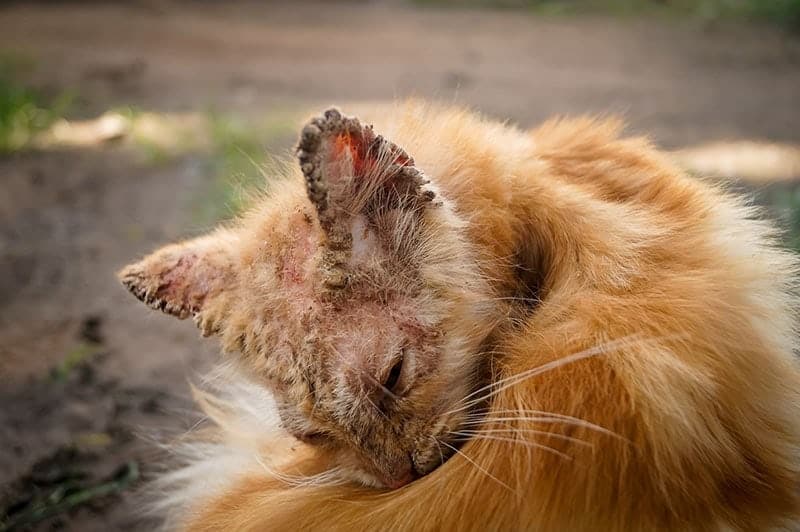
    In this articleWhat Is Mange in Cats?Why a Vet Diagnosis Matters8 Vet-Approved Tips for Treating Mange in Feral CatsCan Humans Catch Mange From Feral Cats?View 3More +Less -If you care for feral cats, or if you interact with them every so often, you likely already know how tough it can be to keep them healthy. When intense itching, hair loss, and scabby skin enter the picture, things get even more stressful. Mange spreads quickly, makes cats miserable, and is especially common in feral colonies where close contact with wildlife is unavoidable.Treating mange in friendly house cats is challenging enough. Treating it in cats that cant be handled? Thats a whole different level. The good news is that with veterinary guidance and a few smart strategies, mange can be managed, even in feral populations. Lets walk through what mange really is and eight vet-approved tips to help you get it under control.What Is Mange in Cats?Image Credit: Casey Elise Christopher, ShutterstockMange is caused by mites, and it often looks as bad as it feels. Many people picture a severely hairless, scabby cat, but there are actually several different types of mange in cats, and they dont all look the same. Some are mildly itchy, while others cause intense discomfort.The most common types of mange in cats include sarcoptic mange (scabies), notoedric mange (feline mange), ear mites, cheyletiellosis (often called walking dandruff), and trombiculosis (chiggers). Each type causes itching and skin changes to varying degrees. Other skin problems like fleas, allergies, bacterial infections, and fungal infections can look very similar, which is why veterinary input is essential.Why a Vet Diagnosis MattersMange cannot be diagnosed based on appearance alone. A veterinarian needs to examine the cat and, if possible, take skin scrapings to look for mites under a microscope. This step is critical because some treatments for allergic skin disease can actually make mange worse.Prescription-strength medications are required to treat the most serious forms of mange, and vets cannot legally prescribe them without examining the animal. That makes veterinary involvement unavoidable, even when dealing with feral cats.8 Vet-Approved Tips for Treating Mange in Feral Cats1. Separate Affected Cats When You CanMange spreads rapidly through close contact. If youre able to isolate cats showing signs of infection, you may be able to limit how many individuals become affected. This isnt always possible in feral colonies, but even partial separation can help slow the spread.2. Work With a Veterinarian EarlyA vet visit is essential for both diagnosis and treatment. Over-the-counter shampoos, sprays, and home remedies are unlikely to work against feline scabies or ear mites. Mange often comes with secondary bacterial infections, so antibiotics may also be needed in some cases.Image Credit: Yaya Photos, Shutterstock3. Treat the Entire Colony If PossibleIt may feel overwhelming, but treating only a few cats often leads to reinfection. Any cats in the colony should be assumed to be infected or at high risk. Treating the entire group with vet-prescribed topical medications gives you the best chance of breaking the infection cycle.4. Soothe Inflamed, Painful SkinSeverely itchy and inflamed skin heals more slowly. While sprays like EcoMange wont eliminate mites, they may help reduce itching and discomfort, which can speed recovery. This is especially helpful when bathing feral cats isnt an option.5. Clean or Replace BeddingIf you provide bedding or blankets, wash them on a hot cycle and tumble dry to kill mites. Items in poor condition are best discarded. Mites cant survive off a host for more than a couple of days, so environmental treatment beyond bedding isnt necessary.6. Reduce Contact With WildlifeWild animals such as raccoons, foxes, and possums commonly carry mites. While its impossible to eliminate wildlife contact entirely, small changes help. Adjust feeding times, remove leftover food, and use fencing where possible to reduce visits from other animals.Image Credit: RJ22, Shutterstock7. Stay Consistent With Parasite PreventionOnce mange is under control, ongoing parasite prevention is key. Regular application of topical flea and mite preventatives helps stop future outbreaks before they start. Prevention is far easier than managing another infestation.8. Support Skin Health With SupplementsHealthy skin and a strong immune system can help cats recover more quickly. Liquid supplements containing fish oil and essential fatty acids can be safely added to communal food bowls. While supplements wont prevent mange on their own, they can support healing and overall skin health.Can Humans Catch Mange From Feral Cats?Some mites that cause mange in cats, particularly notoedric mange and sarcoptic mange, can spread to humans. They can cause intense itching and red, raised spots, but they cannot reproduce on human skin. In most cases, the infestation is self-limiting and resolves once exposure stops.Humans are unlikely to become infected unless they have close, repeated contact with affected cats. People with allergies, weakened immune systems, or underlying health conditions should seek medical advice promptly if symptoms develop. Pet cats living near feral colonies should be protected with regular parasite prevention.Wrap-Up: Compassion, Planning, and Persistence MatterCaring for feral cats is a generous and meaningful commitment, and dealing with mange can feel overwhelming. With veterinary guidance, consistent treatment, and a few practical steps, mange can be controlled and future outbreaks reduced.Your efforts make a real difference in the comfort and health of these cats. Stay patient, stay informed, and dont hesitate to lean on your vet for support along the way.Feature Image Credit: Suharji-Esha_ShutterstockDid You Know? Our brand-new posts are rounded up and included in our weekly emails. Dont miss out on the latest sign up for our newsletter below!
    0 Commentarii 0 Distribuiri 51 Views
  • WWW.GAMEBLOG.FR
    The Witcher : un nouveau jeu pas comme les autres annonc, a va vous changer
    Geralt et ses compagnons seront bientt de retour et pas comme vous le pensez. Un tout nouveau jeu The Witcher vient tout juste d'tre annonc, c'est prometteur.
    0 Commentarii 0 Distribuiri 83 Views
  • WWW.GAMEBLOG.FR
    GTA 5 s'offre une grosse mise jour aprs toutes ces annes, quoi de neuf ?
    En attendant la relve venir en fin d'anne, GTA 5 s'est rcemment offert une grosse mise jour, quoi de neuf Los Santos de la part de Rockstar Games ?
    0 Commentarii 0 Distribuiri 81 Views