• ALLTHATSINTERESTING.COM
    Inside Jeffrey Dahmers Childhood And The Tragic Life Of His Mother, Joyce Dahmer
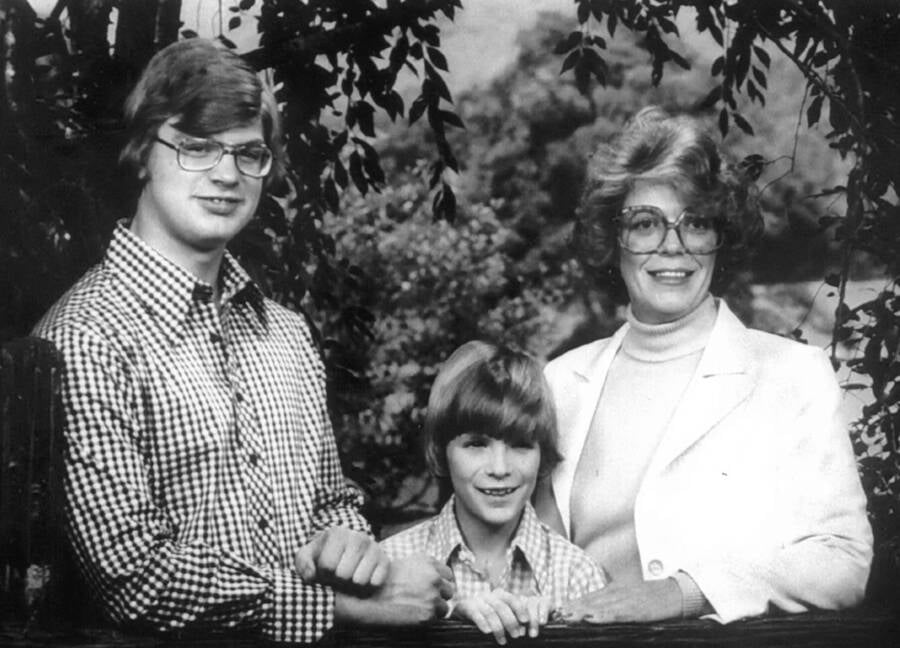
    When society tried to comprehend the case of Jeffrey Dahmer, the cannibalistic serial killer convicted of murdering 17 boys and men from 1978 to 1991, criminologists turned to his mother, Joyce Dahmer, for insight.Joyce FlintJeffrey Dahmers mother Joyce Dahmer along with Jeffrey (left) and her other son, David.Did she create an environment that fostered this behavior? Was there anything she could have done differently? Did her own addictions play a role in turning a veritable monster loose?This is the true story of Joyce Dahmer a woman whose story is either tragic or enraging, depending on who and what you believe about Jeffrey Dahmers childhood.Joyce Dahmers Role In Young Jeffrey Dahmers LifeFamily PhotoJoyce Dahmer holding her son, Jeffrey Dahmer.Joyce Flint was born on February 7, 1936, in Columbus, Wisconsin. Her parents, Floyd and Lillian, were of German and Norwegian ancestry. She also had a younger brother, Donald, who died in 2011.Its unclear when she got married to Lionel Dahmer, but the two had their first son, Jeffrey Dahmer, on May 21, 1960, in Milwaukee, Wisconsin.To classify the Dahmer family as an all-American family would be a bit of a misnomer. By Lionels own admission in his memoir, A Fathers Story, the family unit was anything but a happy one. RedditJoyce Dahmer with infant Jeffrey Dahmer.Because Lionel was busy with his own doctoral studies, he was often absent from the Dahmer house. And Joyce Dahmer, according to Lionel, was far from an ideal mother. He alleged that she was on prescription drugs while pregnant to Jeffrey, and was mentally unstable after she gave birth to him.As a scientist, [I] wonder if [the] potential for great evil resides deep in the blood that some of us may pass on to our children at birth, he wrote in the book. He also alleged that his now-former wife was a hypochondriac who suffered from depression, spent increasing amounts of time in bed, and refused to touch baby Jeffrey for fear of contracting germs and diseases.FacebookAn undated family photo featuring Lionel Dahmer with his sons David (left) and Jeffrey (right).But Joyce Dahmer had a very different story. In 1993, after Jeffreys 17 murders had come to light, she gave an interview to MSNBC wherein she challenged the narrative about her son. Despite his fathers claims that during Jeffrey Dahmers childhood he was shy and timid, Joyce claimed that there were no warning signs of what Jeffrey would ultimately become. And she also claimed that after he was sentenced, he became fatalistic about his prospects.Public DomainJeffrey Dahmer killed 17 people before his capture in 1991.I always asked if he was safe, she told People Magazine. Hed say, It doesnt matter, Mom. I dont care if something happens to me.'Jeffrey Dahmers Mother Wrestles With Her Sons Grisly LegacyOn Nov. 28, 1994, a fellow inmate and convicted murderer named Christopher Scarver beat Dahmer to death with a metal bar in the prison bathroom, alongside fellow inmate Jesse Anderson. According to Scarver, Jeffrey seemed to accept his fate. The same, however, cannot be said for Jeffrey Dahmers parents especially his mother, Joyce Dahmer, who was racked with guilt about all her son had done.I still love my son. Ive never stopped loving my son. He was a beautiful baby. He was a wonderful child. He has always been loved, she said at the time.Family PhotoJoyce Dahmer in a family photo.Jeffreys father, however, was a little less sanguine about his sons legacy. It is a portrayal of parental dread the terrible sense that your child has slipped beyond your grasp, that your little boy is spinning in the void, swirling in the maelstrom, lost, lost, lost, he wrote in his memoir.Joyce Dahmer reportedly spoke to her son at least once a week from prison according to the Milwaukee Journal Sentinel. I said to him, I asked him, `Do you still have these urges?' Jeffrey Dahmer said, Yes, Mom, Im so glad Im locked up. Id be afraid what Id do if I werent locked up.'After Jeffrey was killed in prison, Joyce Dahmer and her now ex-husband Lionel waged war in court. Joyce wanted her sons brain examined for any possible biological factors tying him to his murderous streak. Lionel, who objected, ultimately won out on his request. Jeffrey was ultimately cremated.I want something useful to come from this nightmare, she said, according to the Milwaukee Journal Sentinel. I havent seen one speck of light with all the horror that happened to everyone. Its the last and only thing I can do for Jeff. I want to make some, small usefulness for my own nightmare. Ive located experts who feel research on Jeffs brain could be useful.But as racked with guilt as Joyce was, Jeffrey didnt blame her or his father for the way he was. Carl Wahlstrom, a forensic psychiatrist who interviewed and evaluated Dahmer and served as an expert witness in his trial, said that the serial killer had nothing but good things to say about his parents. He said he had very loving parents, he said. [And] that blaming [his] parents for these issues was completely off the mark.The Tragic Story Of Joyce Dahmers Later Life And DeathWilliam JanzJoyce Dahmer after her sons arrest.Whether it was the fault of Jeffrey Dahmers parents or not, Joyce Dahmer felt guilty enough to attempt suicide. Just months before Jeffrey was killed in prison, Joyce Dahmer attempted to commit suicide via carbon monoxide poisoning.Its been a lonely life, especially today. Please cremate me I love my sons, Jeff and David, read her suicide note. Ultimately, she survived the attempt due to strong winds blowing carbon monoxide out of her garage. David Dahmer, for his part, wanted no part of his brothers notoriety. According to People Magazine, he changed his name and moved far away from his parents and brother, desperate to escape the legacy that his brother left behind.What few people were aware of, however, was that Joyce Dahmer had moved to the Fresno, California, area shortly before her son Jeffrey Dahmers crimes were uncovered.Contrary to her husbands assertion that she was an extreme germaphobe who dreaded disease, she worked with HIV and AIDS patients at a time when they were considered untouchable, and continued to work with him after her son was killed in prison.In fact, when she ultimately died of breast cancer in 2000, at the age of 64, Joyce Dahmers friends and colleagues told The Los Angeles Times that they preferred to remember her for the work she had done with the less fortunate. She was enthusiastic, and she was compassionate, and she turned her own tragedy into being able to have a great deal of empathy for people with HIV, said Julio Mastro, executive director of the Living Room, an HIV community center in Fresno.YouTubeJoyce Dahmer during an interview.But Gerald Boyle, who was another lawyer of Jeffreys, believed that despite her sons best efforts to absolve her of responsibility, she carried the guilt of his crimes and the memory of Jeffrey Dahmers childhood around with her for the remainder of her days.It was clear she bore no responsibility, he said. She had to live with the idea that she was the mother of a monster, and it drove her crazy.Now that youve read all about Jeffrey Dahmers mother Joyce Dahmer, read about Jeffrey Dahmers victims Konerak Sinthasomphone and Tracy Edwards.The post Inside Jeffrey Dahmers Childhood And The Tragic Life Of His Mother, Joyce Dahmer appeared first on All That's Interesting.
    0 Commentarios 0 Acciones 34 Views
  • ALLTHATSINTERESTING.COM
    Why Police Said Rey Riveras Death Was A Suicide And Why The Puzzling Evidence Says Otherwise
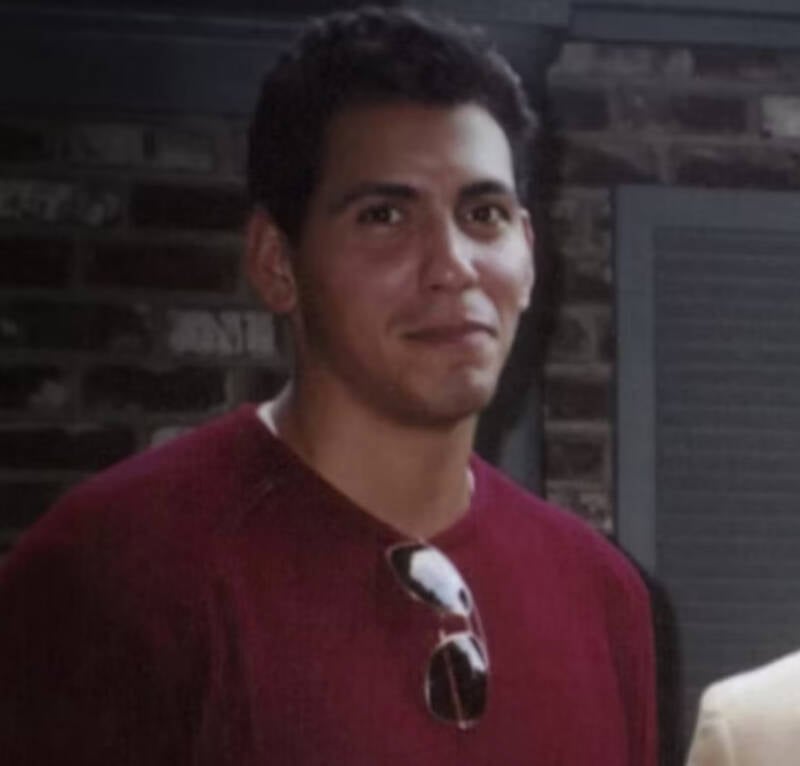
    When Rey Riveras death first made headlines in 2006, it originally seemed like a suicide. About a week after the 32-year-old aspiring screenwriter vanished, his body was found inside an abandoned conference room at Baltimores historic Belvedere Hotel. Having plunged through the roof of the room, his corpse had been lying there for days.Authorities concluded that Rivera had jumped off the top of the 14-story building and crashed straight through a lower roof of the empty meeting room, landing on the floor.NetflixWhen Rey Riveras body was found in Baltimores Belvedere Hotel in 2006, it was ruled a suicide, but several strange notes suggest it could have been murder.But did Rey Rivera really take his own life? His family members and loved ones think otherwise. And theyre not the only ones.What could make a stable, gregarious, newly married man who had just made plans for the weekend suddenly jump off a building? author Mikita Brottman questioned in her 2018 book An Unexplained Death: The True Story of a Body at the Belvedere.Nearly 20 years after the incident, nobody has found the answer yet. This is the haunting story behind the death of Rey Rivera.Who Was Rey Rivera?NetflixWhat happened to Rey Rivera, the man found suspiciously dead inside Baltimores Belvedere Hotel in 2006?Rey Rivera was a 32-year-old writer and videographer based in Baltimore, Maryland. He lived a comfortable life with his longtime partner and newly-wedded wife, Allison. The couple had moved to the city from Los Angeles and had lived in Baltimore for a little over two years.Rivera had a job as the financial newsletter editor of The Rebound Report. The newsletter was started by his longtime friend Porter Stansberry and was produced under the publishing wing of Agora, an umbrella corporation for companies based in the Mount Vernon neighborhood.In addition to his writing job, Rivera was also an assistant coach for the mens water polo team at Johns Hopkins University.According to Riveras wife Allison, the two were planning to move back to Los Angeles, where Rivera could pursue his dreams of screenwriting.Many sources later confirmed that Ray Rivera was unhappy with the job he held shortly before he died, especially since the stocks he wrote about often didnt rebound as hed hoped.Rivera was also described as the kind of person who wouldnt take off without telling his wife and loved ones but he did.The Sudden Disappearance Of Rey Rivera In 2006Mikita Brottman/An Unexplained DeathRay Riveras missing person poster offered a $5,000 reward for any tips on his whereabouts.Rey Rivera was last seen leaving his home in the middle-class neighborhood of Northwood on May 16, 2006. The last person known to see him alive was Claudia, his wifes work colleague who was staying over as a houseguest. Allison, meanwhile, was out of town on a business trip in Richmond, Virginia.According to Claudias account, as Brottman laid out in her book, Rivera seemed preoccupied with an assignment. At about 4 p.m., Claudia heard Rivera answer a call on his cellphone and reply, oh sh, and run out the back door as if he was late for an appointment.Rey Rivera left driving his wifes car only to come back briefly and run out again, leaving the lights and the computer on in his office.That is what is so crazy about this: Were planning on moving and starting a new life. He had a future; why would he decide just then to kill himself?Allison RiveraAllison tried to reach her husband on his cellphone that day but couldnt get ahold of him. She finally called Claudia at 10 p.m. to ask about her husband, but Claudia said she hadnt seen him since he had left earlier that evening. At that point, Bottman wrote, Allison assumed her husband was just out drinking. It wasnt until the next day that she began to worry.Mikita Brottman/An Unexplained DeathBuilt in the early 20th century, the Belvedere has a long history of questionable deaths and suicides.After spending the whole day calling friends and family looking for Rivera, his wife filed a missing persons report at about 3 p.m. on May 17.Then, on May 23, Allisons car was discovered at a parking lot in Mount Vernon. The next day, Rey Riveras body was found.His Eerie Death At Baltimores Belvedere HotelNetflixHis wife Allison (right) said the newlyweds had planned to start anew back in Los Angeles.The body of Rey Rivera, who had been missing for just a little over a week, was found in an abandoned meeting room in the Belvedere Hotel. His body was badly decomposed, indicating that he had been deceased for quite some time. A hole in the rooms roof suggested he had leapt off the top of the Belvedere 14 floors up.The Belvedere Hotel was built in the early 1900s and had a macabre history of unfortunate incidents on its grounds, including a number of suicides. In more recent years, its been largely converted into a condo building.News of Rey Riveras death reached Burbank, California, where he had worked as an aquatics coach at a local high school.Burroughs High School in Burbank, California, where Rey Rivera was a popular aquatics coach.I remember the players would sprint to the side of the pool during timeouts just to listen to what Rey had to say, recalled George Akopyan, who was the assistant coach under Rivera for two seasons. The kids really responded to him because they knew he knew what he was talking about.Authorities firmly believed Rey Rivera had jumped from the 14th floor of the hotel. However, the coroners autopsy stated his cause of death was undetermined. Meanwhile, his wife and family suspected foul play.Not my brother, said Angel, one of his relatives skeptical of the suicide theory. Its ironic, because he was terrified of heights.Rivera had no history of mental illness or sudden shock. On top of that, he had actually booked an office space for a weekend during his disappearance to finish up a project, signaling no intent of suicide.The Disturbing Theories About What Happened To Rey RiveraNetflixAlthough the Baltimore Police Department ruled Rey Riveras 2006 death a suicide by jumping, the evidence in this case paints a different picture.Like many unsolved cases, the uncertainty surrounding Rey Riveras death spawned several theories online. But even those involved in the case have admitted there were really bizarre elements to his death.First, authorities were unable to retrieve video footage from the highly-secure building to see what happened when Rivera made his way to the higher floors due to a technical problem.Then, there was an obscure note uncovered from Rey Riveras computer. The note was typed in small print, folded up in plastic, and taped to his home computer screen along with a blank check.The note was addressed to brothers and sisters and referred to a well-played game. It also named famous people who had died, including Christopher Reeve and Stanley Kubrick, as well as ordinary people who Rivera knew in real life. The note included a request to make them and himself five years younger.The finding was so puzzling that investigators sent the letter to the FBI, who determined it wasnt a suicide note.The cryptic letter pointed to another weird detail about Rey Riveras circumstances: his growing interest in the Freemasons. The note he left behind began and ended with phrases used in the Masonic order.A representative at a local Maryland lodge confirmed that Rivera inquired about membership on the same day he went missing, but didnt recall anything unusual about their conversation. Shortly before his death, Rivera was also reading books related to masonry, such as The Builders.Lingering Unanswered Questions In The Rivera CaseKathleen JonesAspiring screenwriter Rey Rivera was just 32 years old when he disappeared on May 16, 2006. About a week later, he was found dead under strange circumstances at Baltimores historic Belvedere Hotel and the mystery remains unsolved to this day.To muddy things further, his wife described a growing paranoia in Rey Rivera in the weeks leading up to his disappearance. She told police that Rivera was unusually anxious when their home alarm had gone off and that an encounter with an unknown man at the park left her husband visibly distraught.Were these signs of psychological stress, or did Rey Rivera believe that someone was truly after him?Perhaps the creepiest detail of all is that Riveras sandals and phone were later found intact on the lower roof. How did they manage to survive such a big drop when their owner clearly did not?Some conspiracy theorists have pointed to Stansberrys strange behavior during the investigations, particularly his avoidance of the police. His reluctance could simply be a matter of protecting his business from bad publicity. However, if Stansberry was indeed covering something up, no one knows exactly what it was.Despite the strange details of his case, the police and some amateur sleuths remain unmoved from the investigations conclusion that Rey Rivera committed suicide. But those who were closest to him still seek answers to his death.After reading about the mysterious death of Rey Rivera, read the unsolved mystery behind the disturbing death of Elisa Lam and the tragic story of Joyce Vincent, the dead woman who went unnoticed for two years.The post Why Police Said Rey Riveras Death Was A Suicide And Why The Puzzling Evidence Says Otherwise appeared first on All That's Interesting.
    0 Commentarios 0 Acciones 34 Views

  • ALLTHATSINTERESTING.COM
    10 Of The Most Interesting Stories From History And The Captivating Figures Behind Them
    Throughout history, some figures have become famous for their leadership, their beauty, or their courage in battle. Others have risen to fame simply because they have interesting stories.The people on this list didnt invent objects that changed the world or write prize-winning novels. They werent renowned movie stars, industrialists, or television chefs.Olive Oatman was a Mormon teenager who was enslaved by Native Americans after they slaughtered her family. Ignaz Semmelweis was one of the first physicians to discover that handwashing prevents infection. And Grady Stiles Jr. was a sideshow performer who was arrested for murder and then killed in a hit arranged by his wife.These were simply ordinary people with extraordinary stories that put their names in history books.The Interesting Story Behind The Human Head Preserved In A JarCity Hall of Lisbon/FacebookThe purported head of Diogo Alves on display at the University of Lisbon alongside other anatomical specimens.Inside the Faculty of Medicine at the University of Lisbon, a wide-eyed human head floating in a jar of formaldehyde sits on display. As the story goes, it belongs to Diogo Alves, a serial killer who was arrested in Portugal and executed in 1841.Alves was likely born in Spain around 1810, but he moved to Lisbon when he was in his 20s. Little is known about his life until October 1839, when he was arrested for murder.While robbing the home of Dr. Pedro de Andrade, Alves killed a mother and three children who were under the physicians care. He then murdered another man in an attempt to cover up his initial crimes. Alves was ultimately caught and put to death on Feb. 19, 1841, and his severed head was preserved, supposedly so scientists could study his delinquent tendencies. Other legends claim that Diogo Alves was also the infamous Aqueduct Murderer who robbed victims and then threw them from the top of Lisbons guas Livres Aqueduct. However, he was never charged with these crimes during his lifetime, and the accounts are likely fictionalized.Whats more, the head in the jar at the University of Lisbon probably isnt Alves, either. Formaldehyde wasnt used for preservation until the late 19th century, well after the criminals time. The head also doesnt particularly resemble contemporary depictions of Alves.Its possible that Alves skull was kept at the university and confused with the jarred head of another man after a massive fire in 1978 destroyed the catalog for the schools anatomy collections. Or perhaps his head was never preserved at all. Either way, it seems that the interesting story of Diogo Alves is nothing but a myth.The Vicious Crimes Of Lobster BoyGrady Stiles Jr.s interesting story started on the very day of his birth in 1937. He was born into a family that was already famous for their ectrodactyly, a genetic condition that causes fingers and toes to fuse together into claw-like appendages.Public DomainGrady Stiles was born with ectrodactyly, a genetic condition that caused his fingers and toes to form in the shape of claws.Stiles father capitalized on this deformity by joining traveling carnivals as a sideshow attraction, and young Lobster Boy joined him when he was just seven years old. Stiles case was so severe that he wasnt able to walk and either used a wheelchair or dragged himself along with his arms.He married a woman named Mary Teresa and had two children, but she later left him for another sideshow performer, Harry Glenn Newman, who was advertised as the Smallest Man in the World. Their divorce was likely caused by Stiles heavy drinking, which often led to physical abuse. He had a terrible temper, and it made a lethal appearance in 1978 when he shot and killed his daughters fianc because he didnt approve of their relationship.While Stiles confessed and was convicted of third-degree murder, he was sentenced to just 15 years of probation because no prison in the area could accommodate his disability. Then, in an even more shocking turn of events, he reunited with his first wife, Mary Teresa, in 1989.Pittsburgh Post-GazetteAn article about Grady Stiles murder conviction in the Feb. 23, 1979 issue of the Pittsburgh Post-Gazette.Their marriage was no better the second time around. Stiles was still abusive, and Mary Teresa began to fear for her life. So, in 1992, she and her son with Harry Newman paid a 17-year-old carnival worker named Chris Wyant $1,500 to shoot Stiles in the head as he was watching TV one night.Mary Teresa and her son were imprisoned, but she had no regrets about her actions. My husband was going to kill my family I believe that from the bottom of my heart, Mary Teresa said in court, as reported by the Los Angeles Times in 1994. Im sorry this happened but my family is safe now At least I know theyre alive, and I thank God for that.The post 10 Of The Most Interesting Stories From History And The Captivating Figures Behind Them appeared first on All That's Interesting.
    0 Commentarios 0 Acciones 34 Views
  • ALLTHATSINTERESTING.COM
    The Story Of Ken McElroy, The Vicious Town Bully Who Was Eventually Killed By The People He Terrorized
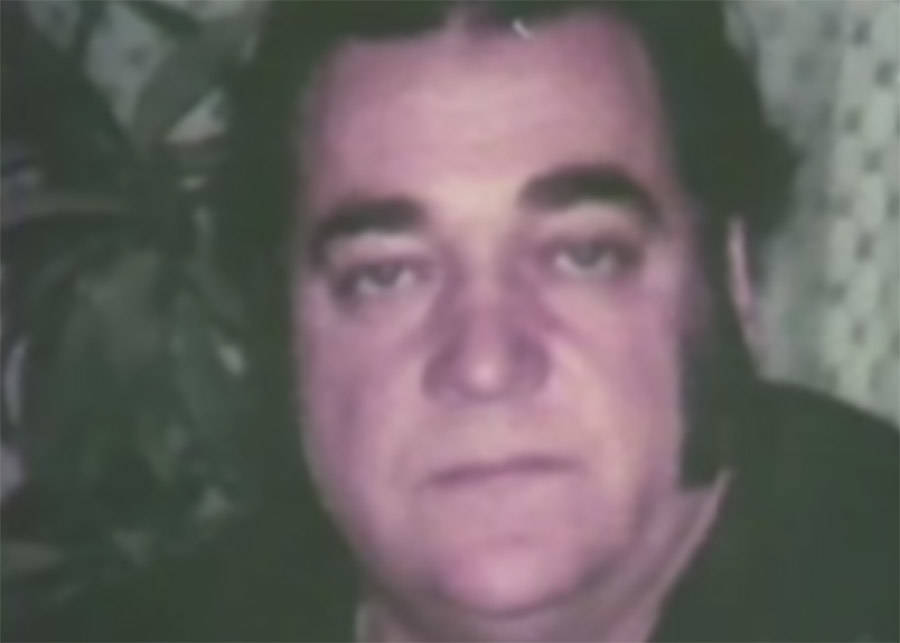
    I heard shooting and got down. Didnt see a thing.This was the response investigators received time and time again when they questioned residents of the small community of Skidmore, Missouri about the death of Ken McElroy.Ken Rex McElroy.It wasnt a secret that McElroy was disliked in his community. Throughout his life, McElroy had been accused of dozens of crimes, including but not limited to assault, child molestation, statutory rape, arson, burglary, and animal cruelty.Despite his litany of crimes, however, McElroy always managed to avoid conviction. Then, on July 10, 1981, McElroy finally got what was coming to him when a mob of around 50 people accosted McElroy outside the local tavern and the shooting began.How He Terrorized A Small Missouri TownBorn in 1934, Kenneth Rex McElroy was a resident of Skidmore, Missouri. To the residents of the tight-knit town, he was the local bully.After dropping out of school in the eighth grade, it didnt take long for Ken McElroy to fall into a life of delinquency. What started with hunting raccoons escalated into petty crime until McElroy ultimately emerged as a full-fledged criminal.Kenneth McElroy was a career criminal and a pedophile.According to Fox2Now, McElroys status as the town bully may have been something of an understatement. While he was charged 21 times in theft cases, he never saw any time behind bars usually because he intimidated any witnesses. But it only gets worse from there.McElroy raped a 12-year-old girl, but managed to avoid statutory rape charges by divorcing his wife and marrying the young girl when she was 14 and pregnant with his child. To get the girls parents to agree to the marriage, McElroy set their house on fire and shot their dog.Then, in July 1976, McElroy shot a farmer named Romaine Henry in the stomach with a shotgun. Thankfully, Henry survived, and McElroy was charged with assault with intent to kill. Yet again, however, McElroy avoided any consequences. In this instance, his attorney produced two witnesses who claimed they were out hunting with McElroy that day, and that they were nowhere near the scene of the shooting.Somehow, Ken Rex McElroy was found not guilty.But not being one to rest on his laurels, McElroy was involved in another shooting in 1980. This time, he shot the 70-year-old town grocer, Ernest Bo Bowenkamp, in the neck over an argument about whether McElroys child had stolen a piece of candy. The grocer lived in this case, too, and McElroy was eventually convicted of assault.Unfortunately, he was let out of jail while awaiting appeal, and then threatened the grocer publicly while holding a rifle.As author Harry MacLean later wrote in his book on McElroys story, In Broad Daylight, the most baffling component of McElroys story was, He didnt have a bank account, didnt have a Social Security number, he didnt read. How did this uneducated person how is he able to outwit the criminal justice system for 20 years?The Killing Of Ken McElroyWhile nearly everyone in the town of Skidmore may have despised Ken McElroy, there was at least one person who had good things to say about him: his attorney, Richard McFadin, who routinely defended Ken McElroy in three or four felonies a year.Best client I ever had, McFadin said in an interview with the Kansas City Star. He was punctual, always said he didnt do it, paid in cash and kept coming back I was the only friend he had. He told me he would pay me whatever I needed to keep him out of jail.YouTubeThe towns local bar in Skidmore, Missouri.But for the town, McElroys row with Bowenkamp was the last straw. For more than two decades, McElroy had been a plague on the town of Skidmore, and somehow, he just kept getting away with it. We were so bitter and so angry at the law letting us down that it came to somebody taking matters in their own hands, Bowenkamps daughter Cheryl Huston told the New York Times. No one has any idea what a nightmare we lived.So the townspeople held a meeting. On July 10, 1981, they gathered together and met with the Nodaway County sheriff to discuss the situation with McElroy. The sheriff suggested they form a neighborhood watch and refrain from confronting McElroy.The townsfolk had other plans. Ken Rex McElroy posing for a photo with his dog.Once the sheriff had gone, the group walked down to the local tavern where McElroy was having a morning drink with his wife. Again, keep in mind that this was the same wife he victimized when she was a child. After some time, McElroy decided to leave, and the mob followed. Outside, they surrounded his pickup truck and confronted him then, several shots rang out.In the crowd, it was impossible to say who had shot McElroy. He was struck by two different firearms and bled out behind the wheel of his truck. No one called an ambulance.And although several investigators would come knocking, trying to find out who had killed Ken McElroy, the truth would remain the towns most coveted secret.Decades Later, The Town Of Skidmore Refuses To Say Who Killed Ken McElroyOnce the shroud of silence fell, there was going to be no one talking, Cheryl Huston later said of the killing. The people of Skidmore had long put up with McElroys intimidation, thievery, and abuse. In a sense, they felt that his murder had been their justice.Of course, law enforcement couldnt view it the same way. Police, and even the FBI, tried to get to the bottom of the murder, but the townspeople kept their lips sealed. Thirty years later, prosecutor David Baird retired from his office with the case file still open.Ken McElroys pickup truck after the shooting.You could talk to everybody in this case, and theyd give you a different answer, he later said. Im never going to answer that question. Its never going to happen.Speaking about the incident decades after it occurred, retired Missouri Highway Patrol trooper Richard Stratton said he understood why the people of Skidmore felt they needed to take matters into their own hands.Those were fathers and grandfathers on the street in Skidmore that day, he said. Ordinary, hardworking people. They did what they did because we didnt do our job. Then they went home and kept their mouths shut and kept them closed all these years. There wasnt much David Baird could do about that.To this day, no one will say who murdered Ken McElroy.His former lawyer summed it up best when he said, I know why they didnt talk they were all glad he was dead. That town got away with murder.If you liked reading this story on Ken Rex McElroy, the bully who was killed by his town, check out the story of Buford Pussers cold-blooded revenge. Then you can read about chilling cold cases where the murderers and victims were both unknown.The post The Story Of Ken McElroy, The Vicious Town Bully Who Was Eventually Killed By The People He Terrorized appeared first on All That's Interesting.
    0 Commentarios 0 Acciones 28 Views
  • ALLTHATSINTERESTING.COM
    Ella Bennett, The Four-Year-Old Girl Whose Big Brother Murdered Her Because He Was Mad At Their Mom
    Find a GraveElla Bennett lost her life when she was just four years old.On the night of Feb. 4, 2007, four-year-old Ella Bennett was asleep in her bedroom in Abilene, Texas. It was Super Bowl Sunday, and her mother, Charity, was working a late shift at Buffalo Wild Wings. Ella and her teenage brother, Paris Lee Bennett, were home with a babysitter.Around 10 p.m., Paris convinced the babysitter to leave the house, assuring her that he would be fine on his own until his mom got home. Once she was gone, he crept into Ellas bedroom and murdered her.Paris initially pretended to be insane and claimed that hed thought his little sister was a demon. However, he later pleaded guilty and admitted that hed killed Ella because he wanted to hurt their mother.He was sentenced to 40 years in prison with the possibility of parole after 20 years,meaning he could be released as early as 2027. Meanwhile, young Ella Bennett faced a horrific death and had her future ripped away from her all at the hands of her brother.The Fractured Home Of The Bennett FamilyElla Lee Bennett was born in Georgia on April 12, 2002. During her mothers pregnancy, her older brother, Paris, was eight years old and reportedly deeply unhappy about welcoming a new sibling. According to their mother, Charity Lee Bennett, he withdrew from her almost completely and showed clear resentment.But when Ella was born, his attitude seemed to change. Paris Lee Bennett became affectionate and attentive toward his baby sister. Family members later described the two as inseparable. Ella adored her older brother, and he seemingly enjoyed playing with her.Ella was growing up as the youngest child in a family that had already experienced instability. Charity had endured a difficult upbringing her own mother had once been accused of hiring a hitman to kill Charitys father and she struggled with addiction as a young adult. In 2005, the family moved back to Texas to be closer to Charitys mother, and old tensions quickly resurfaced. Charity started using cocaine again. This took a toll on Paris, who was entering the chaos of adolescence.Charity Lee/FacebookCharity Lee holding baby Ella in May 2003.It was like a good six-month period I was back using, Charity told the San Antonio Current in 2013. I know it had an impact on him.Paris behavior began escalating. In one incident, after he was scolded for breaking one of Ellas toys, Paris grabbed a kitchen knife and waved it at his mother and grandmother. They chased him through the house before finally calming him down and taking the knife away. Charity later admitted Paris Lee Bennett to a psychiatric facility for evaluation. The doctors there noted that he was obsessed about shooting and killing and had homicidal/suicidal ideation, but he stayed for just a week before he was discharged without a long-term treatment plan, and his concerning behavior continued. Not long after this incident, Charity, Paris, and Ella Bennett relocated to Abilene, Texas. On the surface, life appeared stable in their new home but that all changed in February 2007. The Vicious Murder Of Ella BennettOn the evening of Feb. 4, 2007, Charity was scheduled to work the Super Bowl Sunday shift at Buffalo Wild Wings, so she hired a local college student to watch Paris and Ella Bennett. The night started normally: The kids ate Chinese food and watched a movie, and then Ella went to bed while Paris did his homework.Then, around 10 p.m., Paris convinced the babysitter to leave since Ella was asleep, insisting that he could take care of himself until their mother got home. The young woman believed his lie and it would cost four-year-old Ella Bennett her life.Once he was alone, Paris watched explicit material online, including violent pornography. Afterwards, he entered Ellas room as she slept. He sexually assaulted her and then stabbed her 17 times.Investigation DiscoveryA childhood photo of Ella Bennett and her brother, Paris Bennett, shortly before Ellas murder.After killing Ella, Paris called a friend from school and told him what hed done before dialing 911. The teen first informed the dispatcher that hed experienced a hallucination that his sister was a demon covered in flames. When they instructed him to start performing CPR on Ella, Paris only pretended to give her chest compressions while counting out loud. Once the police arrived and took Paris Lee Bennett into custody, they began doubting his initial claims. At times during the interview process, Paris would appear as if he were attempting to cry, one officer noted in his report, according to the Current, however, he did not appear to be sincere with these attempts. At no time did he have tears come to his eyes.Meanwhile, officers headed to Buffalo Wild Wings to inform Charity about the tragedy. They arrived around 12:30 a.m., roughly an hour after Ella Bennetts death. As the New York Post reported in 2017, Charity recalled, [The police] told me that my daughter had been hurt. And I was saying, You need to take me to Ella now, and they were like, You cant go shes dead.'Charity Lee Bennett would lose both of her children that night.Remembering Young Ella BennettIn the aftermath of Ella Bennetts death, Paris Lee Bennett was sentenced to 40 years in prison with the possibility of parole after 20 years, the maximum sentence allowed in juvenile court. In 2019, Paris spoke with Piers Morgan about his decision to murder Ella. As reported by The Guardian at the time, Paris said, For years, there was this hot, flaming ball of wrath in the pit of my stomach directed at my mother. And one of the reasons why I chose to kill my sister and not someone else is because I knew that, by doing that, I could hurt my mother in the worst possible way I found a way to take away both her children in one fell swoop.Indeed, Paris had reportedly planned to kill Charity when she got home from work, too, but he changed his mind because he wanted her to suffer for the rest of her life not just a few minutes.Charity Lee/FacebookCharity Lee Bennett started a foundation in her daughters memory to help others who have experienced such a tragic loss.So, with her son in prison and her daughter dead, Charity Lee Bennett had to find a way to move on. In 2011, she founded the ELLA Foundation, a non-profit organization for the victims of violent crimes. She spoke at events across the country and helped counsel people whose loved ones had either been murdered or were behind bars for murder.As Charity told the Current, Violent crime rips families apart. There are no sides. Just a whole lot of suffering for anybody connected to it.Charity also had another child in 2012, a son named Phoenix. After his birth, she made the painful decision to sever all ties with Paris.As for Ella Bennett, she was robbed of her future. She never got the chance to grow up or even start kindergarten. Yet those who loved her continue to remember her, ensuring that her short life is never forgotten.After learning about the tragic murder of Ella Bennett, go inside the disturbing story of Erin Caffey, the teen who convinced her boyfriend to kill her entire family. Then, read about nine teenage serial killers and their horrendous crimes.The post Ella Bennett, The Four-Year-Old Girl Whose Big Brother Murdered Her Because He Was Mad At Their Mom appeared first on All That's Interesting.
    0 Commentarios 0 Acciones 31 Views
  • ALLTHATSINTERESTING.COM
    How Photographer Kevin Carters Work During The Sudan Famine Drove Him To Suicide
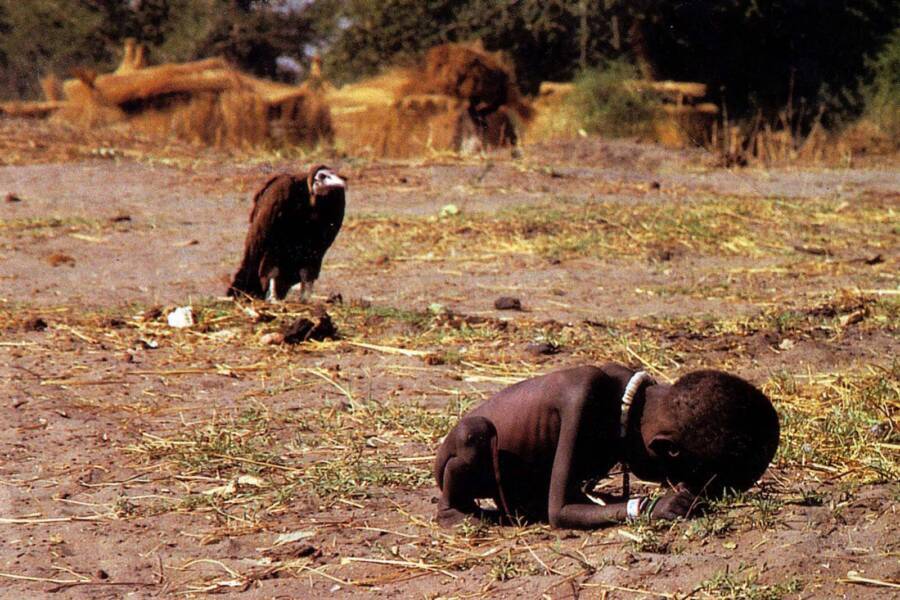
    Kevin Carter, a photojournalist who captured the horrors of apartheid in South Africa, is best known for his 1993 photo of the Sudanese famine, The Vulture and the Little Girl. However, his legacy extends far beyond this Pulitzer Prize-winning image.Kevin Carters work led to debates about the ethics of photojournalism. Where was the line between reporting on a situation and intervening to help those in need?Critics claimed Carter was inhumane and that he should have dropped his camera to run to the aid of the child he had photographed. But at the same time, the image he captured helped reveal the reality of the situation in Sudan to the outside world, leading to more aid for the country.Kevin Carter/Wikimedia CommonsKevin Carters most famous photo, The Vulture And The Little Girl, captured during the 1993 famine in Sudan.Still, he was consumed by guilt and trauma. He was haunted by what hed seen and photographed in South Africa, Sudan, and beyond, and he suffered from depression in the months following the publication of the photo.In the end, Kevin Carter was unable to move past his internal ethical dilemmas and personal struggles. He died by suicide on July 27, 1994, just a year after taking The Vulture And The Little Girl, the photograph that won him the Pulitzer Prize, but his impact on photojournalism has not been forgotten.How Kevin Carters Early Life Inspired His PhotojournalismThe Bang-Bang Club And The Horrors Of Apartheid-Era South AfricaThe Story Behind Kevin Carters Controversial Photo, The Vulture And The Little GirlThe Fame, Guilt, And Moral Dilemmas That Followed Carters Prize-Winning PhotographThe Devastating Suicide Of Kevin CarterHow Kevin Carters Early Life Inspired His PhotojournalismKevin Carter was born in Johannesburg, South Africa, on September 13, 1960, in the midst of apartheid. From a young age, he was appalled by the racial segregation and violence he witnessed around him on a daily basis.Carter initially planned to become a pharmacist, but he had to drop out of school after he was drafted into the South African Army. He decided to enlist in the Air Force instead, and he soon discovered that racism was just as rife in the military as it was in the civilian world. While defending a Black mess hall employee from insults in 1980, Carter was badly beaten by his fellow servicemen.YouTubeA Pulitzer Prize winner and part of the Bang-Bang Club of photojournalists in South Africa, Kevin Carter died by suicide following his work during Sudans 1993 famine.He deserted his post for a time following the incident, but he ultimately returned to finish out his required service, and he was on guard duty at the Air Force headquarters in Pretoria during the Church Street bombing of May 20, 1983. The attack killed 19 people, and the grisly scene inspired Carter to become a photojournalist and expose the brutality of apartheid to the world.After leaving the Air Force later that year, Carter took a job at a camera supply store and began making contacts in the world of journalism. He first worked as a sports photographer for the Johannesburg Sunday Express and then moved on to capturing gritty images of apartheid-era violence for the Johannesburg Star.By 1990, he was part of the Bang-Bang Club, a group of four conflict photographers who traveled through South Africa documenting the brutal attacks that continued even as the apartheid system officially came to an end.The Bang-Bang Club And The Horrors Of Apartheid-Era South AfricaThe Bang-Bang Club consisted of Kevin Carter, Greg Marinovich, Ken Oosterbroek, and Joo Silva. The name was born from an article in a South African newspaper and referred to the violence that the men put their lives on the line to document.Indeed, their work was dangerous. The four photographers werent afraid to step right into the action to get the best shot if it meant revealing the reality of life in South African townships to a wider audience.Carter and his colleagues witnessed vicious political unrest, protests, and bloody clashes between apartheid supporters and anti-apartheid comrades. In the mid-1980s, Carter became the first person to photograph the violent necklacing execution method in which a tire filled with gasoline is placed around a victims neck and lit on fire.Paul Weinberg/Wikimedia CommonsKevin Carter and the Bang-Bang Club captured the violence that gripped South Africa in the 1980s and 90s.As Harold Evans reported in an essay titled Reporting in the Time of Conflict for the Newseum, Kevin Carter later explained the ethical dilemma hed faced while documenting the incident. I was appalled at what they were doing, he said. I was appalled at what I was doing. But then people started talking about those pictures then I felt that maybe my actions hadnt been at all bad. Being a witness to something this horrible wasnt necessarily such a bad thing to do.It wasnt the last time Carter would question the ethics of his work, however. Many of those same feelings arose once more in 1993, when he traveled to South Sudan to report on the famine ravaging the country.The Story Behind Kevin Carters Controversial Photo, The Vulture And The Little GirlIn March 1993, Carter was given the opportunity to document the famine that had been brought about by political unrest and civil war. He and Joo Silva traveled to Sudan and flew to the town of Ayod with a group that was providing food aid. There, they snapped photos of the masses of people who were starving to death, but the most poignant image Carter captured featured just one tiny subject.In the photo, popularly known as The Vulture and the Little Girl, an emaciated child collapses in the dirt while trying to reach a nearby food center. A vulture looks on from several yards away, waiting for the youth to die.The image was first published in The New York Times on March 26, 1993, and it immediately sparked an intense reaction. Hundreds of concerned readers called and wrote letters to the newspaper demanding to know the fate of the child. While some people praised Carter for capturing the moment and raising awareness of the harsh reality of the situation in Sudan, others criticized him for taking photos instead of helping.People were very quick to label Kevin Carter a vulture, Dan Krauss, the director of the Oscar-nominated documentary The Death of Kevin Carter, told NPR in 2006, but they didnt take the opportunity to try to understand the complexity of the situation in the Sudan and the complexity of being a journalist faced with that degree of suffering.The New York TimesThe Vulture and the Little Girl as printed in The New York Times on March 26, 1993.Indeed, the response to the photograph was so strong that The New York Times issued an update on March 30, stating, The photographer reports that she recovered enough to resume her trek after the vulture was chased away. It is not known whether she reached the center.This answered some lingering questions, but many remained. Had Kevin Carter done anything to help the child?Silva revealed to TIME in 1994 that Carter had watched the little girl (who was later revealed to be a boy named Kong Nyong) struggle for 20 minutes, waiting for the vulture to raise its wings so he could get the perfect shot. The bird never did, though, and Carter ultimately shooed it off.He was depressed afterward, Silva said. He kept saying he wanted to hug his daughter.In 2011, Kongs father revealed that he had actually survived the famine but died from an illness much later, in 2007. Tragically, Carter would never learn of the childs ultimate fate.The Fame, Guilt, And Moral Dilemmas That Followed Carters Prize-Winning PhotographKevin Carter and the Bang-Bang Club witnessed the unthinkable on a daily basis, which naturally took a toll on them. However, Carter would never recover from the internal turmoil he experienced in the aftermath of his trip to Sudan.Carter went through a roller coaster of emotions in the months that followed the publication of the photo. In April 1994, he was awarded the Pulitzer Prize for the image, a distinction that should have brought him pride. However, he instead felt guilt, shame, and sorrow that were only intensified by the backlash and ethical criticism the photograph received.Ilagardien/Wikimedia CommonsPhotographer Rebecca Hearfield snapping a picture of Kevin Carter.That very same month, his friend and fellow Bang-Bang Club member Ken Oosterbroek was shot and killed while on location. He was documenting a violent clash between the National Peacekeeping Force and the anti-apartheid African National Congress when the peacekeepers opened fire, fatally striking Oosterbroek and injuring Greg Marinovich.Carter was being interviewed about his Pulitzer Prize at the time. He felt that he should have been with the group, and his survivors guilt was almost unbearable.The following month, Nelson Mandela was elected the president of South Africa. Kevin Carter had built his life around exposing the evils of apartheid, and now, in a way, it was over. He didnt know what to do. On top of that, he felt a need to live up to the Pulitzer hed won. Soon after, in the fog of his depression, he made a terrible mistake.The Devastating Suicide Of Kevin CarterWhile on assignment for TIME in July 1994, Carter traveled to Mozambique. On the flight back to Johannesburg, he left all of his undeveloped film some 16 rolls on the plane. It was never recovered. For Carter, this was the last straw.YouTubeKevin Carter shooting in the midst of conflict, doing what he did best.Less than a week later, Carter was dead. On the night of July 27, he drove to a park, ran a garden hose from the exhaust pipe of his truck and into the window, and took his own life via carbon monoxide poisoning.The note he left behind painted a painful image of the guilt and feelings of helplessness that had plagued him. I am haunted by the vivid memories of killings & corpses & anger & pain of starving or wounded children, of trigger-happy madmen, often police, of killer executioners, Carter wrote.He concluded, I have gone to join Ken [Oosterbroek] if I am that lucky.Kevin Carter was just 33 years old. However, his short time on Earth left an indelible mark on humanitys consciousness. The Vulture and the Little Girl spread awareness of the reality of life in parts of Africa in a way that no other photo had before.Carters death also sparked discourse on ethics in photojournalism, challenging the standard for reporters to simply document without intervening. Conversation surrounding the psychological toll that conflict photography had on journalists expanded as well. In that way, Carters legacy survives far beyond the photo hes best known for.What Happened To The Child In Kevin Carters Famous Photo?In 2011, the father of the child featured in The Vulture and the Little Girl revealed that the little girl was actually a boy named Kong Nyong. Kong didnt die from starvation during the famine, but he passed away from an undisclosed illness in 2007.Did Carter Ever Explain Why He Didnt Help The Child?While Carter did shoo the vulture away, he didnt help Kong Nyong further because of journalistic guidelines at the time, which discouraged reporters and photographers from interfering in most situations. However, he was deeply affected by the experience.Why Was Carters Photo Of Necklacing So Important?Necklacing, a brutal execution method used during apartheid that involved placing a tire full of gasoline around a victims neck and igniting it, hadnt been photographed before Carter documented it in the mid-1980s. His image brought global attention to the unfathomable violence occurring in South Africa.Why Did Kevin Carter Take His Own Life?Depression, survivors guilt, possible post-traumatic stress disorder, financial stress, and backlash from his work all contributed to Carters suicide. In the note he left behind, he said that he was haunted by the things hed seen.What Impact Did Kevin Carters Work Have On Photojournalism?Carters work led to debate about ethics in photojournalism when it came to documenting the suffering of innocent people as well as where to draw the line between reporting and intervening. His death also drew attention to the trauma conflict photographers faced.Where Can I See Carters Full Photo Collection?Kevin Carters full collection is available to view in the Getty Images photo archives and The Bang-Bang Club book.After reading about the life and death of Kevin Carter, look through more of the most influential photos in history. Then, see Mathew Bradys groundbreaking photos of the American Civil War.The post How Photographer Kevin Carters Work During The Sudan Famine Drove Him To Suicide appeared first on All That's Interesting.
    0 Commentarios 0 Acciones 32 Views
  • WWW.PCGAMESN.COM
    Bee Garden codes March 2026
    March 26, 2026:We had another look around the hives for new Bee Garden codes to redeem. This list of Bee Garden codes gives you un-bee-lievable free gifts to use in the game, which come in very handy and save you some cash. For instance, the free sprinklers will water your plants for you, and keep everyone happy - that means bees make more honey, which turns into more money. Fill your plot with flowers of all kinds, then watch as your bees visit them and deposit that golden honey in the pot. Don't forget to visit the queen from time to time, too, as they can give you different types of plants.
    0 Commentarios 0 Acciones 29 Views
  • WWW.PCGAMESN.COM
    Anime Overload codes March 2026
    March 26, 2026:Why won't you find any new Anime Overload codes for a few days? Because the game has gone back into testing ahead of a second public release on March 28. You know how tough it is to be a hero in the world of anime, which is why you need to use our Anime Overload codes guide. The universe is in danger, and it's up to all of us to step up to the plate. No matter who you choose to be your allies, they need to be up to the task; yes, they all have unique abilities, but that doesn't mean that they all suit your approach or playstyle. You'll recognize many of the faces you see in Anime Overload, with it featuring some iconic heroes and villains from the likes of One Piece and Chainsaw Man. Honestly, you don't need to ask us twice to take down Makima; our deep hatred of her is a strong motivation to track down new codes, so we can all put her in her place once and for all.
    0 Commentarios 0 Acciones 31 Views
  • WWW.PCGAMESN.COM
    AMD Ryzen 5 7500X3D review - peak frame rates for under $300
    The AMD Ryzen 5 7500X3D should have been one of the most exciting CPU launches in some time, as this relatively budget chip brings AMD's game-performance-enhancing 3D V-Cache tech to a new low price point on its AM5 platform. However, while its gaming performance is very solid, it's not a particularly cheap option and is weak for non-gaming tasks. This balance of power means the 7500X3D still earns a place on our best gaming CPU guide, but not as a value champion, as such, or an all-around performer. Instead, if you're simply after peak frame rates, particularly for competitive gaming where frame rates push well beyond 300fps, this chip delivers the X3D goods for far less than any other modern AMD CPU. While the 7500X3D came out at the end of 2025, our delayed review means we've had the chance to compare it to Intel's two new price-competing options, the 270K Plus and 250K Plus. Read on to see how they all stack up.
    0 Commentarios 0 Acciones 29 Views
  • WWW.PCGAMESN.COM
    Mysterious Arc Raiders Flashpoint trailer teases an electrifying new enemy that we may have seen before
    I'm not necessarily a care bear. Nor am I bloodthirsty, or a rat for that matter. I'm not really sure I fit into any of the labels that the Arc Raiders fanbase has created to determine whether someone loves fighting or not. I'd say my excursions topside are mainly vibes-based. Well, as vibes-based as you can get when dealing with soulless robots and, sometimes, soulless people.
    0 Commentarios 0 Acciones 31 Views