0 Comentários
0 Compartilhamentos
37 Visualizações
Diretório
Elevate your Sngine platform to new levels with plugins from YubNub Digital Media!
-
Faça Login para curtir, compartilhar e comentar!
-
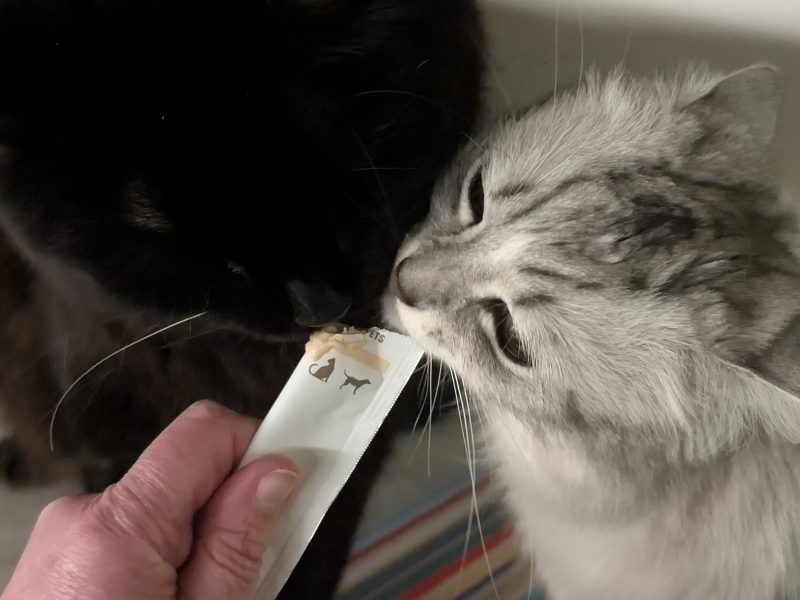
WWW.CATSTER.COMLicky Treats: A Scientific Investigation into the Tube-Based Delights Taking Over Modern Cat HouseholdsIn this articleThe Power of the LickAppetite Magic and Medical MischiefThe 10 Percent Rule (A Tragic But Necessary Fact)When Treats Become SupplementsThe Social Power of the TubeThe Licky Treat ChallengeFinal Thoughts from Professor FluffovichView 6More +Less -By Professor Lucifer Fluffovich, Department of Applied SnackologyHuman civilisation has produced many inventions of questionable usefulness: vacuum cleaners, pyramids, and the laser pointer dot we will absolutely catch someday. But occasionally, humans achieve true progress.One such breakthrough is the licky treat: a creamy pure delivered from a slender tube directly to the waiting tongue of a highly deserving cat. As a senior researcher in household science, I have conducted extensive testing. My assistant, Miss Wuffovna aka Missy, has also contributed important field observations, mostly involving enthusiastic licking and occasional attempts to steal the entire tube. The results are compelling.The Power of the LickUnlike crunchy biscuits, lickable treats activate one of a cats most natural behaviours: licking.Cats lick to groom, to bond, and sometimes to calm themselves. Because of this, the act of licking itself can be soothing and enriching. Behaviour specialists note that licking activities can reduce stress and provide positive stimulation for indoor cats.In scientific terms, this means the licky treat is not merely a snack.It is interactive enrichment disguised as food.Cats are famously poor drinkers. This is not stubbornness (although that also exists). It is an evolutionary design. Domestic cats evolved from desert ancestors who obtained most of their water from prey. As a result, many modern cats drink less water than veterinarians would prefer. Because lickable treats are moist pures, they provide a small but useful amount of additional fluid intake. So, while the human believes they are giving a treat, the cat may quietly be receiving hydration support. We approve of this kind of clever engineering.Image Credit: Kirsti HarefalletAppetite Magic and Medical MischiefLickable treats are also highly effective when a cat needs encouragement to eat. Veterinarians often recommend palatable foods during illness, recovery, or periods of stress. Because lickable treats are soft, aromatic, and easy to consume, they can help stimulate appetite. They are also frequently used to hide medication. From the feline perspective, this is deeply suspicious. But unfortunately delicious.The 10 Percent Rule (A Tragic But Necessary Fact)Despite their excellence, lickable treats must be used responsibly. Veterinary nutrition guidelines recommend that treats make up no more than about 10% of a cats daily calorie intake. For example: A typical adult cat needs roughly 200250 calories per day Treats should therefore provide no more than about 2025 caloriesThe rest must come from balanced cat food. I realise this rule is controversial. But science can be difficult.Image Credit: Kirsti HarefalletWhen Treats Become SupplementsModern lickable treats have evolved beyond simple snacks. Some now contain functional ingredients that support feline health.Taurine SupportMany include taurine, an essential amino acid that cats must obtain from their diet. Taurine supports: heart health vision and retinal function digestion and neurological healthWithout enough taurine, cats can develop serious problems, including heart disease and vision loss. Adding taurine to treats can help support overall nutrition, though it does not replace a balanced diet. A snack that protects ones eyesight while watching birds through the window? Excellent planning.Calming IngredientsSome lickable treats also contain calming nutrients such as L-theanine or L-tryptophan. These ingredients are sometimes used to help cats cope with stressful events like travel, vet visits, or unfamiliar guests. They may promote relaxation without making a cat sleepy.That said, if the human moves the sofa without permission, no snack in the world will fully resolve the situation.Image Credit: Kirsti HarefalletThe Social Power of the TubeThe greatest benefit of licky treats may not be nutritional at all. Because they are often fed directly from the tube, they create a shared moment between cat and human. The cat receives a reward while the human participates directly in the ritual. This strengthens the bond between species. Or, more precisely, it trains the human to hold the tube at the correct angle and to squeeze faster,The Licky Treat ChallengeRecently, an important new research initiative has appeared across the internet: the Licky Treat Challenge. In this experiment, cats are presented with a tube of treats while humans film the results. Findings so far include: Some cats lick with delicate precision Some attempt to consume the tube at an alarming speed Some grab the tube and runAll are valid techniques. But the real joy of the challenge is simple: it captures that small moment of delight when a cat and a human share something fun together. And if science happens along the way, so much the better.Image Credit: Kirsti HarefalletFinal Thoughts from Professor FluffovichThe humble licky treat may look like a simple snack. But in reality, it combines enrichment, hydration, bonding, and sometimes even nutritional support in one small tube. Which proves a fundamental principle of feline research: The best innovations are rarely complicated. They are creamy, deliciousand held by a human who has finally learned their proper role.Now, if you will excuse me, further participation in the Licky Treat Challenge is required. Strictly for research purposes, obviously. Lucifer Fluffovich, Feline Lifeform, Senior Researcher in Snackology, Apex Predator of Licky Treats, Destroyer of String, and DEFINITELY NOT Mummys Little Bum-Bum.0 Comentários 0 Compartilhamentos 37 Visualizações -
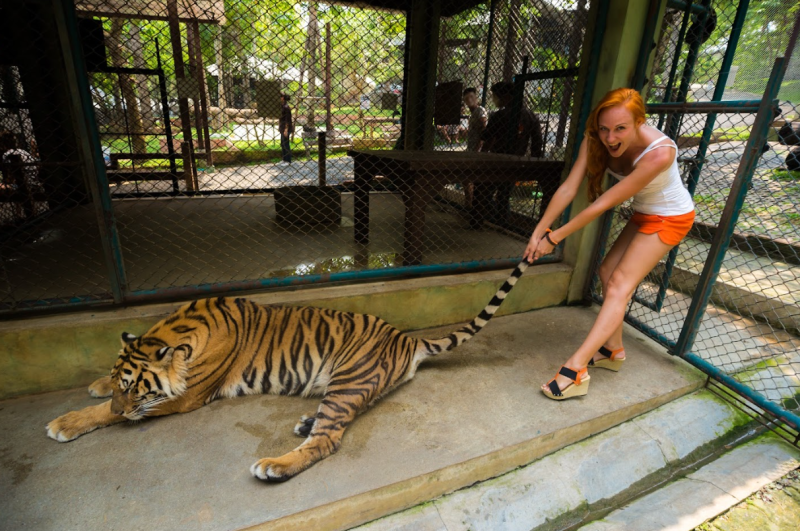
WWW.CATSTER.COM72 Dead Another Nail in the Coffin of Tiger TourismGraceful, fearsome, and powerful, the majestic tiger may not be the king of the jungle but perhaps should enjoy the position of queen. So to have 72 of these beautiful creatures succumb to a completely preventable disease whilst in the supposed care of humans is nothing short of a travesty. Though perhaps the real travesty lies in the fact that these wild animals have been kept as sideshow entertainment for nave and irresponsible tourists for far too long. Sadly, this is not the first incidence of large-scale fatalities of captive tigers, and unless we wake up to the inherent cruelty in this form of entertainment, it is likely to happen again.The Real Price of the Ultimate SelfieFor years, a major draw for many visitors to the beautiful and exotic nation of Thailand has been the chance to have an up-close and personal encounter with a full-grown tiger. There are very few places in the world where you can sit with, pose with, or pet these magnificent big cats, and far too many people are willing to look the other way when it comes to the harsh realities of how these animals are kept to obtain the ultimate selfie. But its time we open our eyes, stop declaring our love for tigers, and start doing something to protect them.At the end of February, officials from Thailands Tiger Kingdom in Chiang Mai reported that 72 of their captive tigers across their two facilities, Mae Rim and Mae Taeng, had died.1 Initially, there were concerns about a potential avian influenza outbreak, but post-mortem examinations revealed the cause of death to be infection with Canine Distemper Virus (CDV), complicated by the bacteria Mycoplasma. Despite its name, CDV can infect a range of species, and is typically included in zoo vaccination protocols for tigers and other animals2. The fact that the overall health of the tigers has been severely compromised due to the high level of inbreeding is undoubtedly also a factor, just as it was in 2019 when 86 tigers that had been seized by the Thai government from the controversial tourist trap Tiger Temple also succumbed to the deadly combination of CDV and mycoplasma.Image Credit: AB Photographie, ShutterstockBig Cats in CaptivityThe keeping of wild animals like the tiger in captivity is often viewed as something of a necessary evil. Zoological specimens act as both a genetic reservoir for a species under constant threat of poaching and habitat loss, whilst also acting as ambassadors for the plight of the species and those that share their habitat. However, there is a not-so-fine line between maintaining captive tigers in enclosures that are designed for enrichment and parading them out for the entertainment of tourists.It has long been speculated that the big cats in facilities like those at Tiger Kingdom and Tiger Temple are kept chemically sedated to ensure their submission and the safety of the hordes of people that visit daily. Even tigers that have been born into captivity and hand-reared by humans are very rarely considered safe, particularly not with strangers, and it is therefore only logical that these tourist-friendly tigers must be under an immense amount of oppression or sedation or both. Although this has been adamantly denied by officials, myriad anecdotal reports suggest otherwise. Equally concerning is the report that the remaining tigers are only now being administered CDV vaccinations as a precaution. Talk about shutting the gate after the horse has already bolted!How has this been allowed to happen? Why are hundreds of tigers, a species whose wild territories span hundreds of miles, being kept sedated in cramped facilities, with inadequate health provisions? The answer is simple: supply and demand. Just as the illegal poaching of critically endangered animals will continue as long as there are people willing to purchase the ill-gotten wares, whilst tourists continue to turn up in droves for their close encounter with these broken big cats, there are organizations happy to take their money.Image Credit: Borkin Vadim, ShutterstockInformation Is PowerWhat can you do? Spread the word, tell your friends, tell your family, tell a stranger. Resist the temptation for a photo op with an animal you wouldnt dare approach in the wild. Do not finance attractions and organizations that force the animals in their care into completely unnatural interactions purely for profit. Instead, look into ecotourism options that prioritise the protection and conservation of tigers and their habitat, and enjoy the magic of seeing one of these incredible cats in their natural environment. And if youre desperate to get up close and personal with a tiger? You can always adopt a domestic feline that resembles one!Feature Image Credit: Alexander Gorban, ShutterstockDid You Know? Our brand-new posts are rounded up and included in our weekly emails. Dont miss out on the latest sign up for our newsletter below!0 Comentários 0 Compartilhamentos 37 Visualizações -
7 Canned Green Beans You Should Buy & 6 You Shouldn't7 Canned Green Beans You Should Buy & 6 You Shouldn't...0 Comentários 0 Compartilhamentos 141 Visualizações
-
What Happened To Peter's After Kitchen Nightmares?What Happened To Peter's After "Kitchen Nightmares"?...0 Comentários 0 Compartilhamentos 168 Visualizações
-
The History Behind Blanton's Iconic Jockey Bottle StoppersThe History Behind Blanton's Iconic Jockey Bottle Stoppers...0 Comentários 0 Compartilhamentos 139 Visualizações
-
Sprinkle This On Hard-Boiled Eggs To Enhance The FlavorSprinkle This On Hard-Boiled Eggs To Enhance The Flavor...0 Comentários 0 Compartilhamentos 158 Visualizações
-
What To Know Before Asking For Extra Sauce At McDonald'sWhat To Know Before Asking For Extra Sauce At McDonald's...0 Comentários 0 Compartilhamentos 136 Visualizações
-
The Blunt Reason Anthony Bourdain Said He'd Never Eat With Donald TrumpThe Blunt Reason Anthony Bourdain Said He'd Never Eat With Donald Trump...0 Comentários 0 Compartilhamentos 140 Visualizações
-
Should Kids Drink Raw Milk?Should Kids Drink Raw Milk?...0 Comentários 0 Compartilhamentos 164 Visualizações